Search results
Search for "stability" in Full Text gives 1337 result(s) in Beilstein Journal of Nanotechnology. Showing first 200.
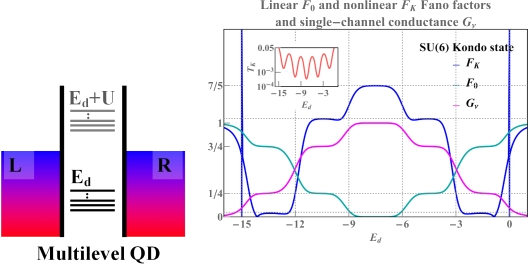
Fractional shot noise of an SU(N) Kondo system
Beilstein J. Nanotechnol. 2026, 17, 515–540, doi:10.3762/bjnano.17.34


![[Graphic 127]](/bjnano/content/inline/2190-4286-17-34-i187.svg?max-width=637&scale=1.18182)

Upcycling agroindustrial waste into graphene oxide supports for gold nanoparticles: toward sustainable nanomaterials
Beilstein J. Nanotechnol. 2026, 17, 489–504, doi:10.3762/bjnano.17.32
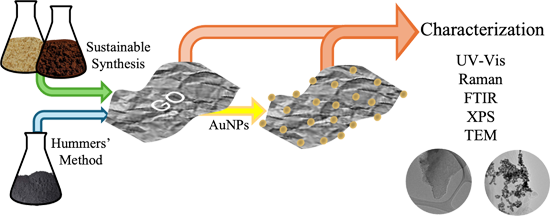
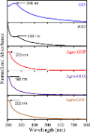
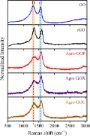
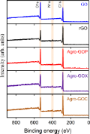
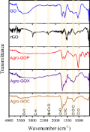
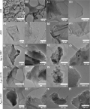
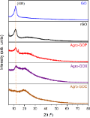
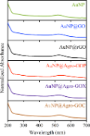
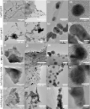
- biomass precursors. Overall, these thermal stability trends are in good agreement with XRD, XPS, Raman, UV–Vis, and TEM characterizations, collectively supporting the coexistence of GO-like domains and amorphous carbon in the agroindustrial waste-derived materials. The corresponding derivative



Defects and defect-mediated engineering of two-dimensional materials: challenges and open questions
Beilstein J. Nanotechnol. 2026, 17, 454–488, doi:10.3762/bjnano.17.31
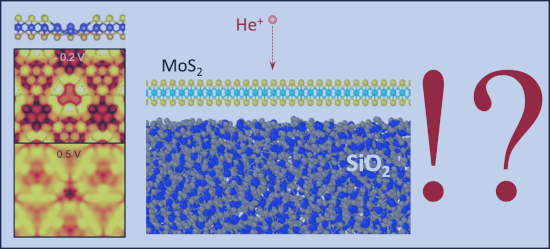
- atoms are generally supplied in excess, and the film will adopt the lowest-energy composition. In these cases, the stoichiometry of the film is not determined by the composition of the source materials but by the thermodynamic stability of the film. So again, in thin film growth, obtaining compositions

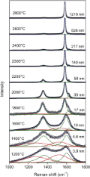


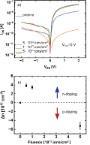


Nanocarrier-integrated multilayer films produced by 3D printing for improved skin adhesion and curcumin photostability
Beilstein J. Nanotechnol. 2026, 17, 440–453, doi:10.3762/bjnano.17.30
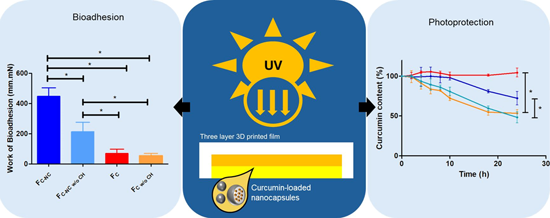
- presented a negative zeta potential. In addition to the low magnitude of the negative zeta potential, physical stability was further ensured by steric stabilisation, resulting from the presence of a non-ionic polymer (polysorbate 80) at the nanocapsule–water interface. The curcumin concentration in the
- . The three-layer 3D-printed films were rationally designed by combining hydrogels with complementary mechanical and biological functions to optimise skin adhesion, printability, and curcumin stability. The bottom layer, composed of chitosan, was selected to ensure direct contact with the skin
- intermediate layer consisted of a blend of Na-CMC and alginate, serving as the drug-loaded compartment. Na-CMC provides appropriate rheological properties for SSE, including shear-thinning behaviour and adequate yield stress, enabling accurate layer deposition and structural stability after printing, as


First-principles study on elastic properties of Cu, (Cu1−x,Nix)3Sn and interfacial mechanical properties of (Cu1−x,Nix)3Sn/Cu in the lead-free solder joint
Beilstein J. Nanotechnol. 2026, 17, 428–439, doi:10.3762/bjnano.17.29
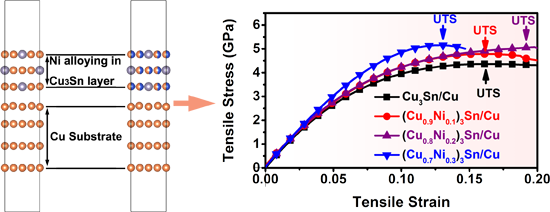
- efficiency without losing the accuracy by reducing the model size of the alloy systems. Considering the phase stability of (CuxNi1−x)3Sn [22], the content of Ni was set within the range from 0 to 30 atom %. As far as the calculations of the structure optimizations and elastic properties are concerned, a
- further increase of Ni content, the tensile strain corresponding to the UTS of (Cu0.7Ni0.3)3Sn/Cu decreases to 0.13. As far as the interfacial stability is concerned, it is generally characterized by the work of adhesion, that is, the work required to separate the interface structure into two parts [34
- deterioration of the interfacial toughness of (Cu0.7Ni0.3)3Sn/Cu may be the thermodynamic stability of (Cu0.7Ni0.3)3Sn. Basically, within the thermodynamically stable domain of (CuxNi1−x)3Sn, the interfacial toughness of (CuxNi1−x)3Sn/Cu increases with the increase of Ni content is dominated by mechanical


Biomimetic nanoparticles in cancer photodynamic therapy: a review of targeted delivery systems and therapeutic outcomes
Beilstein J. Nanotechnol. 2026, 17, 396–422, doi:10.3762/bjnano.17.27
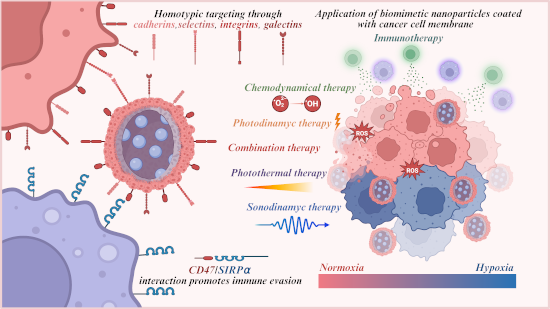
- , nanoencapsulation strategies for PSs are being actively developed [7][8]. Encapsulation of hydrophobic PSs in nanocarriers such as liposomes, polymeric nanoparticles, or micelles addresses solubility and stability, preventing aggregation [9]. Nanoparticles with sizes of 10–200 nm passively accumulate in tumor
- generation requires efficient excitation and minimal competing non-ROS-producing relaxation pathways. Low dark toxicity minimizes harm in the absence of light. High stability and low aggregation under physiological conditions are essential for maintaining photochemical activity [22]. A balanced
- broad range of molecular therapeutics, including small molecules [34], RNA [35], plasmids [36], CRISPR/Cas systems [37], and other bioactive agents. Several key advantages of nanocarriers in PDT can be highlighted: (i) improved solubility and stability of PSs, (ii) enhanced delivery through both passive


Eco-efficient materials for agricultural crops based on a mineral rich in MOR- and HEU-type zeolites
Beilstein J. Nanotechnol. 2026, 17, 381–395, doi:10.3762/bjnano.17.26
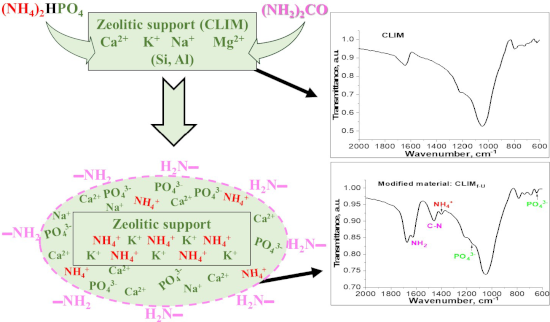
- atoms of the framework, and so on [18][19]. It is the number of these bonds that affects their stability [19][34]. NH4+ interacts with Brønsted acid sites, acting as a hydrogen bond that anchors the NH4+ ions to oxygen atoms in zeolite, and forms coordinated bonds only when interacting with terminal




Polycatecholamine nanocoatings on stainless steel: the effect on attachment of human fibroblasts and platelets
Beilstein J. Nanotechnol. 2026, 17, 365–380, doi:10.3762/bjnano.17.25
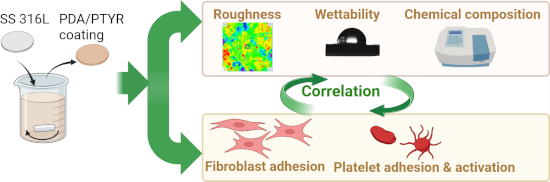
- in the nanometer range for PTYR and in the micrometer range in case of PDA. Compared to PDA, PTYR coatings exhibited a nanoparticulate surface morphology and higher stability under physiological conditions. Wettability, roughness, and amine group density were systematically analyzed to determine
- stability. Consequently, a variety of surface modifications have been developed to improve cell–material interactions, including anodized nanopit arrays, hydroxyapatite–collagen layers on polydopamine-modified steel, nanoporous coatings influencing integrin/ERK signaling, and bilayers comprising graphene
- (iv) reduce bacterial adhesion and thromboinflammatory responses [9][10][11]. In terms of stability, coating damage, such as cracking, delamination or peeling, not only impairs healing, but may also enhance platelet attachment, or release fragments into the bloodstream [12]. Thus, there is a clear




Beam shaping techniques for pulsed laser ablation in liquids: Unlocking tunable control of nanoparticle synthesis in liquids
Beilstein J. Nanotechnol. 2026, 17, 309–342, doi:10.3762/bjnano.17.22
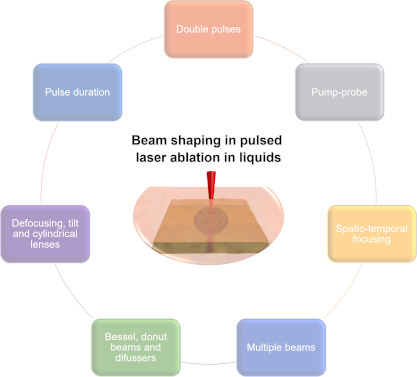
- controlling NP size and shape but often require reducing agents and stabilising or capping agents to ensure colloidal stability, which may introduce impurities and raise environmental concerns. Biological routes for synthesising nanomaterials, such as those based on plant extracts, bacteria, or fungi, are
- efficiency, throughput, and colloid stability. Therefore, optimising ablation conditions (e.g., using high-repetition-rate lasers, flow-through cells, and improved cavitation management) will be critical for enabling commercially viable production [94]. One promising strategy to overcome these limitations
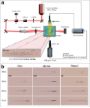
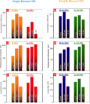
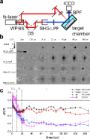
- synthesis and the underlying optical mechanisms including its influence on ablation efficiency, size control, and colloidal stability. Refractive elements rely on the interaction of light with a transparent material with a different refractive index than air. Standard refractive optics elements such as







Advancing nanolithography: a comprehensive review of materials for local anodic oxidation with AFM
Beilstein J. Nanotechnol. 2026, 17, 275–291, doi:10.3762/bjnano.17.19
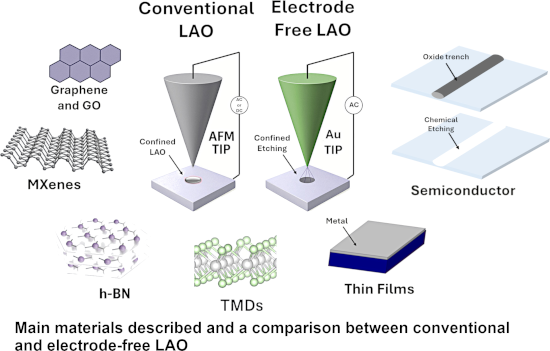
- . Additionally, the stability and integration of SiO2 within semiconductor workflows make it a reliable choice for robust electronic devices. However, silicon’s limitations include dependence on stringent surface preparation, Si crystal orientation (higher reaction rate on the (111) surface than on the other
- , which often requires high voltages that can compromise stability. The study revealed that thinner titanium oxide layers enhance resistive switching performance by providing higher resistance ratios and more uniform switching behavior. Furthermore, compositional analysis showed that TiO2 dominates the
- material is crucial for achieving high image and pattern resolution during LAO. A suitable tip must meet three key criteria: (i) high electrical conductivity, (ii) strong mechanical stability (durability), and (iii) an optimal geometry characterized by a sharp apex and appropriate cone angle. Traditional


Durable antimicrobial activity of fabrics functionalized with zeolite ion-exchanged nanomaterials against Staphylococcus aureus and Escherichia coli
Beilstein J. Nanotechnol. 2026, 17, 262–274, doi:10.3762/bjnano.17.18
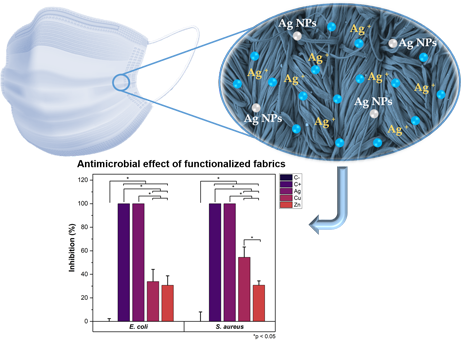
- antimicrobial activity observed after five washing cycles further supports the strong adhesion and stability of the metal-loaded zeolites on the fabric surface. Based on those experiments, only minimal metal leaching during washing is expected. Conclusion This study successfully demonstrates the
- , consistent with their known antimicrobial properties. Notably, the treated fabrics retained substantial biocidal activity even after multiple washing cycles, indicating the strong adhesion and stability of the zeolite-based nanomaterials. These findings highlight the potential of zeolite-supported metal ions




Comparative study on 3D morphologies of delignified, single tracheids and fibers of five wood species
Beilstein J. Nanotechnol. 2026, 17, 239–250, doi:10.3762/bjnano.17.16
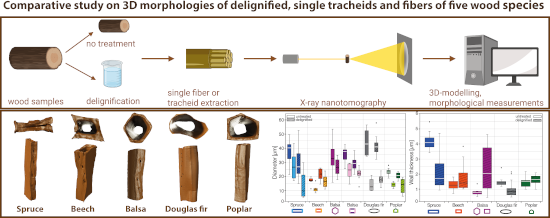
- enhance water transport efficiency during growth seasons, enabling the trees to support rapid growth. Conversely, narrower lumina in latewood provide superior mechanical support during periods of reduced growth, ensuring structural stability. However, across the five species studied here, the hardwood
- delignification (Figure 6B). This increase might be due to differences in wood samples and possible discrepancies between EW and LW. The stability of the tracheid/fiber dimensions after delignification suggests that hemicellulose and cellulose may play an important role in maintaining the basic single tracheid
- /fiber structure after removing lignin [54][55]. This is also reasonable from a materials perspective since the elastic modulus of cellulose is 15 times that of lignin [56][57]. Moreover, lignin might contribute more to the bonding of fibers or tracheids instead of increasing the stability of a single


Gold nanoparticle-decorated reduced graphene oxide as a highly effective catalyst for the selective α,β-dehydrogenation of N-alkyl-4-piperidones
Beilstein J. Nanotechnol. 2026, 17, 218–238, doi:10.3762/bjnano.17.15
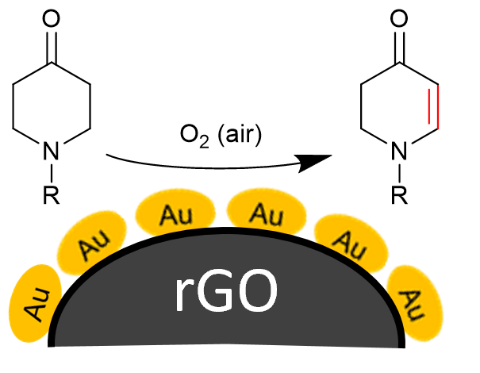
- tunability, making AuNPs highly versatile in catalytic applications [5][6]. Traditional ligands such as thiols and citrates are commonly used in the synthesis of AuNPs due to their ability to control particle size, prevent aggregation, and enhance stability in solution [7]. Also, polyoxometalates (POMs) have
- coated with strong ligands that provide initial stability over time, ligand desorption, ligand exchange, or environmental factors such as pH and ionic strength can weaken the protective layer, leading to nanoparticle aggregation or structural degradation [14][15]. An important aspect of expensive noble
- filtration and where the NPs are further stabilized against coalescence, aggregation, sintering, or Ostwald ripening under the catalytic reaction conditions. By anchoring AuNPs onto a solid support, such as metal oxides, polymers, or carbon-based materials, their stability is significantly enhanced


Micro- and nanoscale effects in biological and bioinspired materials and surfaces
Beilstein J. Nanotechnol. 2026, 17, 214–217, doi:10.3762/bjnano.17.14

- nanostructures play a crucial role in shaping the physical and functional properties of living organisms. They are the basis of key biological phenomena, such as coloration, adhesion, and mechanical stability, and influence the way how organisms interact with light, fluids, and forces at different scales. The
Time of flight secondary ion mass spectrometry imaging of contaminant species in chemical vapour deposited graphene on copper
Beilstein J. Nanotechnol. 2026, 17, 200–213, doi:10.3762/bjnano.17.13
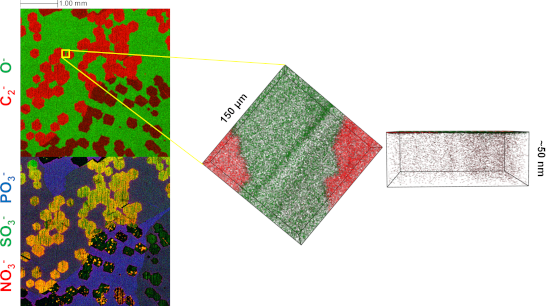
- corresponding sulphur compound is likely to be volatile under the annealing conditions. This all suggests that it is unlikely possible to prevent P buildup at the surface or interface between graphene and Cu foils, where P is present within the foils prior to growth, due to the apparent stability of these





Structure-dependent thermochromism of PAZO thin films: theory and experiment
Beilstein J. Nanotechnol. 2026, 17, 186–199, doi:10.3762/bjnano.17.12
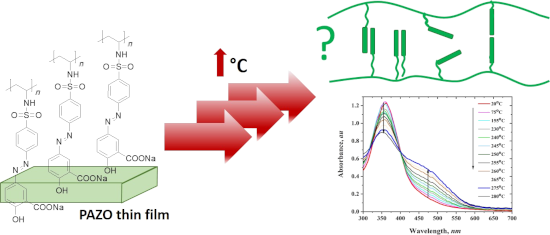
- hydrochloride)) layer-by-layer films examined over a range of temperatures [14][16]. Collectively, these studies highlight that the magnitude and stability of birefringence are strongly influenced by the supramolecular organization of the polymer chains. Despite these advances, a systematic understanding of how


From shield to spear: Charge-reversible nanocarriers in overcoming cancer therapy barriers
Beilstein J. Nanotechnol. 2026, 17, 159–175, doi:10.3762/bjnano.17.10
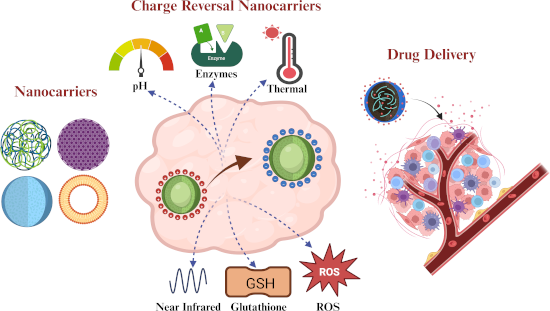
- , drug resistance, and poor tumour selectivity. In response to these limitations, nanotechnology-based drug delivery systems have gained prominence for enhancing solubility, improving molecular stability, enabling controlled drug release, and prolonging systemic circulation, offering superior therapeutic
- theranostics. Despite these promising developments, challenges related to nanocarrier stability, safety, manufacturing scalability, and regulatory approval still impede clinical translation. Nevertheless, emerging trends in nanocarrier design, the advancement of personalised medicine, and integration with
- pressing need for innovative solutions. An example would be smart nanocarrier drug delivery systems that enhance targeting precision and mitigate adverse effects [9][10]. Nanotechnology-based drug delivery systems have revolutionised cancer treatment by improving drug solubility, stability, and


Influence of surface characteristics on the in vitro stability and cell uptake of nanoliposomes for brain delivery
Beilstein J. Nanotechnol. 2026, 17, 139–158, doi:10.3762/bjnano.17.9
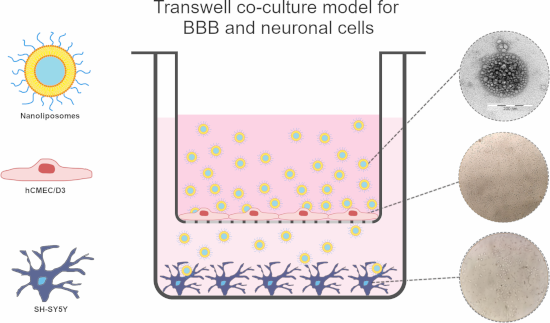
- neurons (ranging from 25.17% to 27.54%). Fluorescence and confocal microscopy micrographs revealed that, once internalized, NLs were concentrated in the perinuclear cell regions. Keywords: blood–brain barrier; cell co-culture; cell uptake; internalization; nanoliposomes; stability; surface
- stability, toxicity, and therapeutic potential of nanodelivery systems, thus improving the translation of study results to real biological systems. In this direction, some of the prerequisites for establishing a relevant in vitro model for cell uptake studies include precise control over factors like
- particularly important when conducting studies that will later be informative for clinical or therapeutic applications [15][16]. It is important to emphasize that the literature data on the physical stability of NLs during their passage through different physiological barriers and compartments is limited


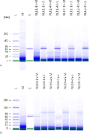


Development and in vitro evaluation of liposomes and immunoliposomes containing 5-fluorouracil and R-phycoerythrin as a potential phototheranostic system for colorectal cancer
Beilstein J. Nanotechnol. 2026, 17, 97–121, doi:10.3762/bjnano.17.7
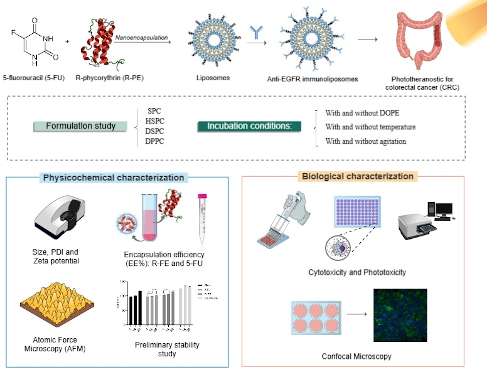
- stability hampers its clinical use. Thus, the present work aimed to develop co-encapsulated liposomes system for co-delivery of 5-FU and R-PE as theranostic nanosystems for CRC, as well as immunoliposomes targeted with the anti-EGFR monoclonal antibody, cetuximab, as a strategy for targeted delivery to EGFR
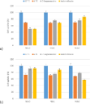
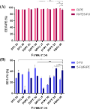
- polydispersity index (PDI) (0.100 ± 0.022), small size (103.43 ± 1.31 nm), and slightly negative zeta potential (−12.23 ± 0.35 mV). The encapsulation efficiency (EE%) was 94 ± 2.4% for R-PE and 42 ± 2.8% for 5-FU. Regarding the stability study, the liposomes maintained vesicle size, PDI and zeta potential values
- lipophilic substances. Furthermore, liposomes can also act as a protein delivery system, reducing enzymatic degradation of proteins and enhancing their stability and their permeability through cell membranes [7]. Immunoliposomes provide many advantages by surface functionalization with targeting biomolecules



Functional surface engineering for cultural heritage protection: the role of superhydrophobic and superoleophobic coatings – a comprehensive review
Beilstein J. Nanotechnol. 2026, 17, 63–96, doi:10.3762/bjnano.17.6
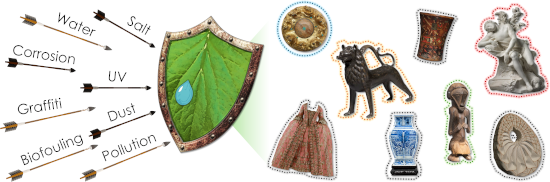
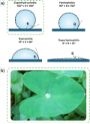
- [59]; also, there are varnishes against graffiti vandalism [60]. In Table 1, different types of heritage mineral-based substrates, along with the base materials of the successfully applied coatings, the resulting functional properties, and the respective ICOM criteria (transparency “Tr”, stability “St
- fabrication. Thus, using the ICOM nomenclature, and accordingly to the reported results, the hydroxyapatite–polyelectrolyte multilayer system fulfils several key conservation criteria. It provides optical transparency with minimal alteration of the substrate’s appearance, demonstrates high chemical stability
- ). The experimental coatings exhibited superior durability, being able to provide oleo/hydrophobic and anti-graffiti properties, also withstanding the action of bird excreta. Regarding the ICOM criteria, both studies demonstrate that the criteria of transparency and stability are satisfactorily achieved




Subdigital integumentary microstructure in Cyrtodactylus (Squamata: Gekkota): do those lineages with incipiently expressed toepads exclusively exhibit adhesive setae?
Beilstein J. Nanotechnol. 2026, 17, 38–56, doi:10.3762/bjnano.17.4
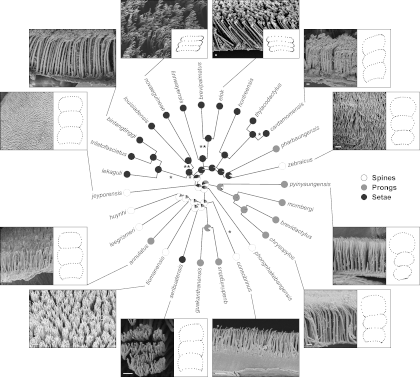
- habitats, in contrast, can vary considerably in roughness and stability of the substrate (e.g., sandstone outcrops are generally less stable and rougher than granite boulders) [31][33][34]. However, some plant surfaces can be even rougher than saxicoline ones [30]. The questions of how a fully functional


Reduced graphene oxide paper electrode for lithium-ion cells – towards optimized thermal reduction
Beilstein J. Nanotechnol. 2026, 17, 24–37, doi:10.3762/bjnano.17.3
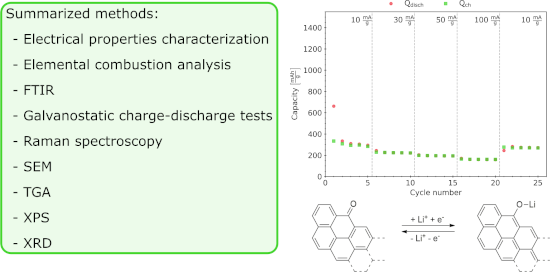
- preparation [33] is scalable and does not require any toxic solvents, binding agents or chemicals for the reduction process. Moreover, one expects the functionalization to improve the stability and capacity of the final material. Experimental Graphene oxide paper preparation To begin with, the G-Flake
- stability of the cell’s performance was improved with increasing reduction temperature. Changes in structural properties revealed by Raman spectroscopy influenced the electrochemical properties of these materials, probably due to the decreased charge transfer resistance and balanced electronic and ionic



Quantitative estimation of nanoparticle/substrate adhesion by atomic force microscopy
Beilstein J. Nanotechnol. 2026, 17, 1–14, doi:10.3762/bjnano.17.1

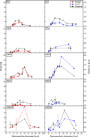
- , Leoben, Austria 10.3762/bjnano.17.1 Abstract Understanding nanoparticle adhesion to substrates is the key for their stability and performance in many applications, including energy systems, nanofabrication, catalysis, and electronic devices. In this study, we present a methodology for examining adhesion
- NPs and significantly enhancing their interfacial adhesion. Their mechanical stability was tested utilizing scanning probe microscopy nanomanipulation [12]. Another approach tested for SiO2 NPs was functionalizing their surfaces for improved adhesion on epoxy film-covered substrate surfaces [13]. In
- acting during AFM nanomanipulation [24][25][26][27]. Thus, there is little information available on the adhesion forces involved, which is critical for understanding the correlation between NPs’ positional stability and deposition conditions. In this study, we have investigated the adhesion between Cu



Internal 3D temperature mapping in biological systems using ratiometric light-sheet imaging and lipid-coated upconversion nanothermometers
Beilstein J. Nanotechnol. 2025, 16, 2306–2316, doi:10.3762/bjnano.16.159
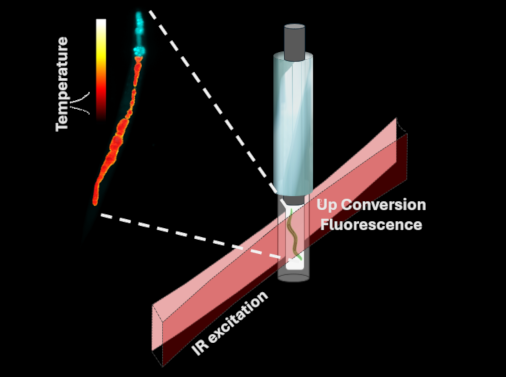
- demonstrated volumetric temperature measurements in C. elegans by combining LSFM with lipid-coated NaYF4:Yb3+/Er3+ upconversion nanoparticles. The lipid coating strategy proved crucial, enhancing biocompatibility and colloidal stability while enabling precise localization of the thermal probes within the


Improving magnetic properties of Mn- and Zn-doped core–shell iron oxide nanoparticles by tuning their size
Beilstein J. Nanotechnol. 2025, 16, 2285–2295, doi:10.3762/bjnano.16.157
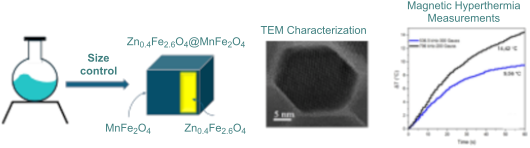
- core provides a strong magnetic moment and the shell enhances magnetic anisotropy and stability. Core–shell NPs offer a pathway to improving SLP, SAR, and stability under physiological conditions [13]. The core–shell configuration allows for the tuning of magnetic properties through the choice of core