Search results
Search for "thermal analysis" in Full Text gives 53 result(s) in Beilstein Journal of Nanotechnology.
Sulfur-, nitrogen- and platinum-doped titania thin films with high catalytic efficiency under visible-light illumination
Beilstein J. Nanotechnol. 2018, 9, 1629–1640, doi:10.3762/bjnano.9.155
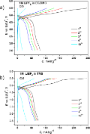
- determined by XPS measurements. The platinum in sample S3_N0.5+0.015 M Pt was added as the final layer in the form of chloroplatinic acid by dip-coating. The last number describes molar concentrations of the deposited solution. Thermal analysis The purpose of thermal analysis measurements (TGA-DSC-MS) was to
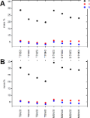
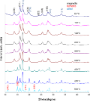
- determine the crystallization temperature of different xerogel samples and the course of their thermal decomposition. The thermal decomposition of the amorphous xerogels, followed by the complementary techniques of thermal analysis of different samples are shown in Figure 1. The thermal decomposition of


P3HT:PCBM blend films phase diagram on the base of variable-temperature spectroscopic ellipsometry
Beilstein J. Nanotechnol. 2018, 9, 1108–1115, doi:10.3762/bjnano.9.102
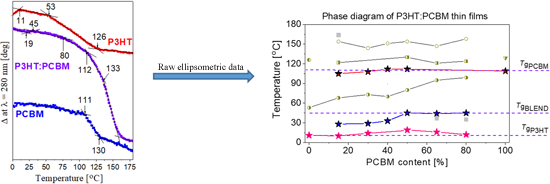
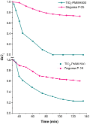
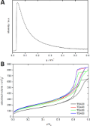
- . They also related the value of the optimum annealing temperature for a given sample to their content of PCBM. What is important, these results were confirmed using two different experimental methods that allow for the determination of Tg. Namely, dynamic mechanical thermal analysis (DMTA) and
- good agreement with that reported by Hopkinson et al. [47] obtained by dynamic mechanical thermal analysis. Conclusion In this work we have presented an in-depth study of the influence of the composition of poly(3-hexylthiophene) (P3HT):[6,6]-phenyl-C61-butyric acid methyl ester (PCBM) blend films on


A review of carbon-based and non-carbon-based catalyst supports for the selective catalytic reduction of nitric oxide
Beilstein J. Nanotechnol. 2018, 9, 740–761, doi:10.3762/bjnano.9.68
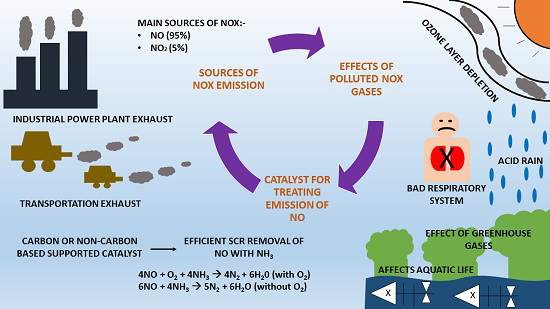
- chemisorption The behaviour of the SCR-NH3 catalyst deposition is typically characterised by: temperature-programmed surface reaction (TPSR) mass spectroscopy (MS) differential thermal analysis (DTA) thermogravimetric analysis (TGA) temperature-programmed hydrogenation (TPH) temperature-programmed oxidation
Photocatalytic and adsorption properties of TiO2-pillared montmorillonite obtained by hydrothermally activated intercalation of titanium polyhydroxo complexes
Beilstein J. Nanotechnol. 2018, 9, 364–378, doi:10.3762/bjnano.9.36
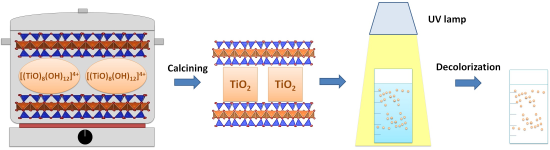
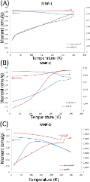
- titanium dioxide. The results of a synchronous (thermogravimetric analysis (TGA) and differential scanning calorimetry (DSC)) thermal analysis of the samples are shown in Figure 4. As seen in Figure 4, the MM, Ti-MM and Ti-MMH samples yield similar thermogravimetric curves, in which the loss of mass for
- temperature using a Fourier transform IR spectrophotometer 360 Avatar ESP in the wavenumber range 400 to 4000 cm−1 with a resolution of 2 cm−1 and averaging over 64 scans. A synchronous thermal analysis was performed using a NETZSCH STA 449F3 Jupiter (Netzsch, Germany) at a sample heating rate of 5 K/min






One-step chemical vapor deposition synthesis and supercapacitor performance of nitrogen-doped porous carbon–carbon nanotube hybrids
Beilstein J. Nanotechnol. 2017, 8, 2669–2679, doi:10.3762/bjnano.8.267
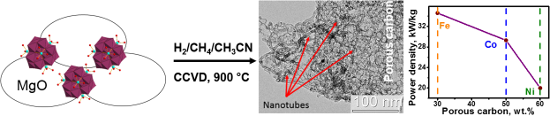
- flushed with N2 for 30 min. The MgO support and all accessible (not carbon-coated) metals were eliminated from the products using an overnight treatment by a diluted aqueous hydrochloric acid solution. A general synthesis scheme is proposed in Figure 1. Instrumental methods The simultaneous thermal
- analysis of the synthesized samples was carried out on a STA 449 F1 Jupiter® thermal analyzer (NETZSCH) in an O2 (10 mL/min)/Ar (40 mL/min) atmosphere. The sample weight was about 10 mg and the heating rate was 10 °C/min. Nitrogen adsorption experiments were conducted at 77 K on an ASAP 2400 (Micromeritics


Laser-assisted fabrication of gold nanoparticle-composed structures embedded in borosilicate glass
Beilstein J. Nanotechnol. 2017, 8, 2454–2463, doi:10.3762/bjnano.8.244
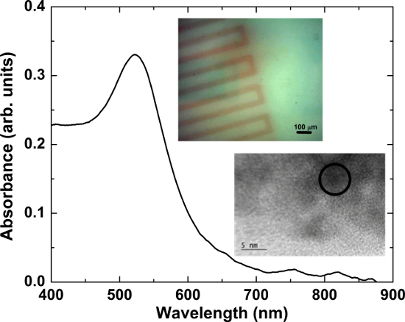
- prepared were determined by differential thermal analysis (DTA) (Setaram, Labsys Evo 1600) at a heating rate of 10 °C/min (±1 K) in air. The glass structure after the laser processing and thermal annealing was investigated by transmission electron microscopy (TEM) (JEOL JEM 2100). The EMCAT/EMFIT computer


In situ controlled rapid growth of novel high activity TiB2/(TiB2–TiN) hierarchical/heterostructured nanocomposites
Beilstein J. Nanotechnol. 2017, 8, 2116–2125, doi:10.3762/bjnano.8.211
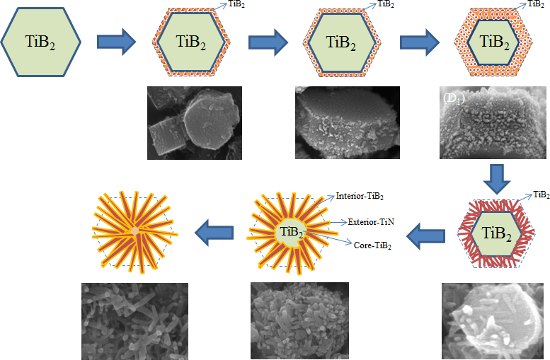
- /heterostructured nanocomposites, thermogravimetric and differential scanning calorimetry analyzer (TG-DSC) thermal analysis comparison experiments have been employed in flowing air. Figure 6a–c shows the TG-DSC results of three representative samples (#1 commercial high purity TiB2 powders with an average particle


Preparation and characterization of polycarbonate/multiwalled carbon nanotube nanocomposites
Beilstein J. Nanotechnol. 2017, 8, 2026–2031, doi:10.3762/bjnano.8.203
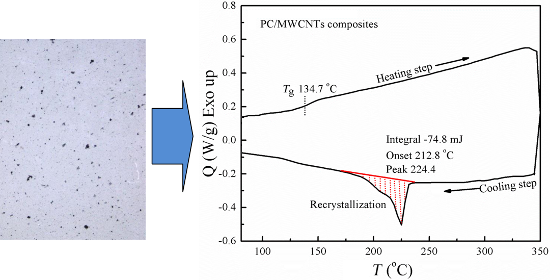
- base polymer. Keywords: multiwalled carbon nanotubes; nanocomposites; polycarbonate; thermal analysis; vibrational spectroscopy; Introduction Polycarbonate (PC) is a polymer with remarkable mechanical and optical properties, broadly used for water bottles, monitor screens and aircraft interiors but
- . Instrument calibration was performed using silicon samples. To investigate the stability, purity and thermal resistance of the materials, thermogravimetric analysis (TGA) was used [11][12][13][14] (TGA/DSC-1, Mettler-Toledo, Italy). Simultaneous differential thermal analysis (DTA) was used to characterize
- can see that upon increasing the MWCNT loading, the peaks characteristic of PC are depressed. Also, the peak around 1600 cm−1 undergoes doublet formation with overall shifting towards lower wavenumbers, which reveals the interaction between MWCNTs and PC [23]. Thermal analysis Figure 5 shows the TGA


Low-temperature CO oxidation over Cu/Pt co-doped ZrO2 nanoparticles synthesized by solution combustion
Beilstein J. Nanotechnol. 2017, 8, 1546–1552, doi:10.3762/bjnano.8.156

- nanoparticles were dispersed in 2-propanol and ultrasonicated for about 30 min and finally deposited on carbon-coated Cu grids for TEM analysis. Thermal analysis of the synthesized Cu/Pt co-doped ZrO2 nanoparticles was done on TGA thermal analyzer (STA-1500 Model) instrument at a heating rate of 10 °C/min in




Fully scalable one-pot method for the production of phosphonic graphene derivatives
Beilstein J. Nanotechnol. 2017, 8, 1094–1103, doi:10.3762/bjnano.8.111
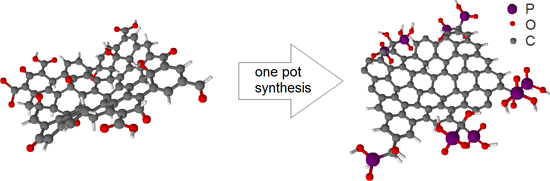
- characterized by using spectroscopic methods along with thermal analysis. The morphology of the samples was examined by electron microscopy. The electrical studies revealed that the functionalized graphene derivative behaves in a way similar to chemically or thermally reduced graphene oxide, with an activation
- first derivatives of TGA and DSC, denoted as DTG and DDSC, respectively, were calculated using Netzsch Proteus Thermal Analysis program. In order to investigate the electrical properties of obtained GO structures, the total surface conductivity (σ) was measured by a conventional DC four-wire method with


First examples of organosilica-based ionogels: synthesis and electrochemical behavior
Beilstein J. Nanotechnol. 2017, 8, 736–751, doi:10.3762/bjnano.8.77
- attenuated total reflection (ATR) mode on a Thermo Nicolet FT-IR Nexus 470 with ATR probe head. Spectra were taken from 500 to 4000 cm−1 with a resolution of 2 cm−1 and 32 scans per measurement. Elemental analysis (EA). EA was done on an Elementar Vario EL III elemental analyzer. Thermal analysis
- . Simultaneous thermogravimetric analysis-differential thermal analysis (TGA-DTA) experiments were done on a Linseis L81 thermal balance and on a Linseis STA PT-1600 thermal balance in air from 20 to 900 °C with a heating rate of 10 °C/min. Differential scanning calorimetry (DSC) measurements were done on a








Liquid permeation and chemical stability of anodic alumina membranes
Beilstein J. Nanotechnol. 2017, 8, 561–570, doi:10.3762/bjnano.8.60
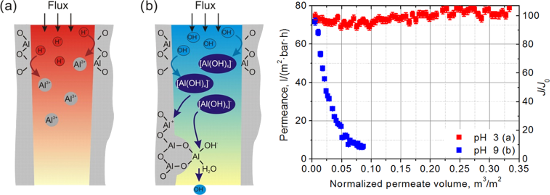
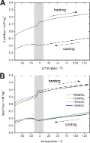
- ). Composition of buffer solutions used in permeation experiments and chemical stability measurements. Supporting Information Supporting Information File 1 contains the thermal analysis data of membranes obtained under “hard” and ”mild” anodization conditions, in addition to experimental details regarding the
- carbon coating and Raman spectrum of the obtained carbon coating. Supporting Information File 28: Thermal analysis and membrane modification via CVD process. Acknowledgements The work is partially supported by the Russian Science Foundation Grant No. 17-13-01271 in part of membranes microstructure
- . 16-33-60195_mol_a_dk. We thank P.V. Evdokimov for help with the thermal analysis and I.A. Kasyanov for help with the NMR study of the anodic alumina membranes.


Diffusion and surface alloying of gradient nanostructured metals
Beilstein J. Nanotechnol. 2017, 8, 547–560, doi:10.3762/bjnano.8.59
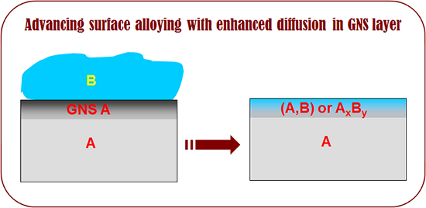
- concentrations in both systems. This mechanism might also contribute to the promoted growth kinetics of a compound layer in GNS samples. Stored energy and reaction thermodynamics Thermal analysis (see Figure 4b) of the reaction between Zn and GNS Fe showed that an exothermic peak appears at about 309 °C, which




Tailoring bifunctional hybrid organic–inorganic nanoadsorbents by the choice of functional layer composition probed by adsorption of Cu2+ ions
Beilstein J. Nanotechnol. 2017, 8, 334–347, doi:10.3762/bjnano.8.36
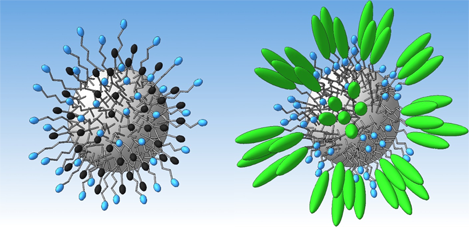
- ) belongs to T3 and T2 structural units, respectively (≡SiR’ and ≡Si(OR)R’, where R’ is a functional group –(CH2)2(CF2)5CF3 or –(CH2)3NH2) [40][41]. The contents of the functional groups present in mono- and bifunctional samples were quantified using thermal analysis (Figure S7 and Table S1, Supporting
- N4 procedure at 0 °C and 50 °C, respectively. The labels F1 and F2 stand for the RT procedures with TEOS/PFES = 3:1 and 3:0.5, respectively. Characterization techniques Thermal analysis was performed on the MOM Q-1500 D (Paulik–Paulik–Erdey) derivatograph operating in the range of 20–1000 °C, with a


Nanocrystalline ZrO2 and Pt-doped ZrO2 catalysts for low-temperature CO oxidation
Beilstein J. Nanotechnol. 2017, 8, 264–271, doi:10.3762/bjnano.8.29
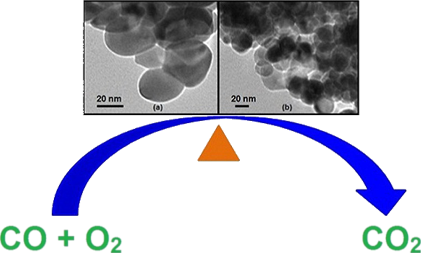
- thermal analysis of the prepared ZrO2 and Pt(1%)-ZrO2 nanoparticles is shown in Figure 3. The TGA curve shows an initial small weight loss between 50 and 100 °C, which may be due to evaporation of water adsorbed in the sample. After the initial weight loss, there was a small weight loss leading to a total
- absorbance measurements were carried out on a Shimadzu spectrophotometer (model UV-1800) in the range of 200–700 nm. Thermal analysis of the prepared ZrO2 samples was performed using TGA thermal analyzer (STA-1500 Model) at a heating rate of 10 °C/min under ambient atmosphere. TEM micrographs were obtained


Effect of nanostructured carbon coatings on the electrochemical performance of Li1.4Ni0.5Mn0.5O2+x-based cathode materials
Beilstein J. Nanotechnol. 2016, 7, 1960–1970, doi:10.3762/bjnano.7.187
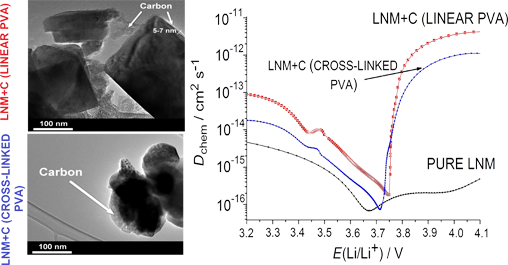
- . The thermal analysis of the linear and cross-linked PVA was performed in argon by heating to 700 °C at a rate of 10 °C·min−1 (STA 209 PC Luxx thermal analyzer (Netzsch)). The morphology of the composites and their electron diffraction patterns were analyzed by transmission electron microscopy (Libra



Analysis of self-heating of thermally assisted spin-transfer torque magnetic random access memory
Beilstein J. Nanotechnol. 2016, 7, 1676–1683, doi:10.3762/bjnano.7.160
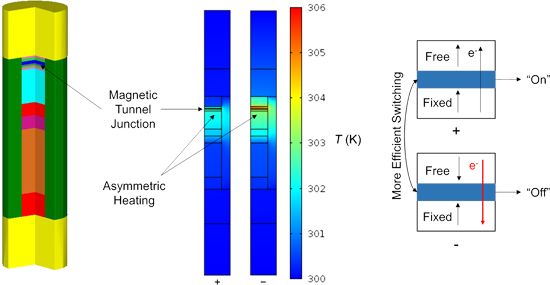
- we perform an electro-thermal analysis of the self-heating process for a standard perpendicular magnetic anisotropy STT-MRAM device (Figure 1) to understand the relative contributions of the different heat mechanisms involved and the effect of external device parameters such as passivation material





Sb2S3 grown by ultrasonic spray pyrolysis and its application in a hybrid solar cell
Beilstein J. Nanotechnol. 2016, 7, 1662–1673, doi:10.3762/bjnano.7.158
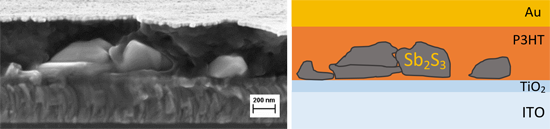
- thermal analysis of the Sb(tu)2Cl3 with tartaric acid as the complexing agent. Besides the requirement stemming from the use of the precursor, temperatures of above 225 °C are required for the crystallization of Sb2S3 [44]. Samples were prepared with the number of Sb2S3 growth cycles ranging from three up




Mesoporous hollow carbon spheres for lithium–sulfur batteries: distribution of sulfur and electrochemical performance
Beilstein J. Nanotechnol. 2016, 7, 1229–1240, doi:10.3762/bjnano.7.114
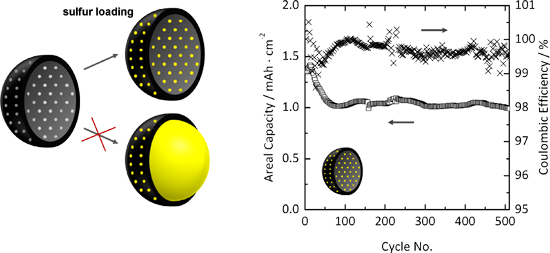
- Information Supporting Information contains characterization of the silica template (SEM, pXRD, nitrogen physisorption), CO2 physisorption of HCS as well as thermal analysis, SEM/EDX analysis and nitrogen physisorption of HCS/sulfur composites and derivation of Equation 3 and Equation 4. Supporting


Reasons and remedies for the agglomeration of multilayered graphene and carbon nanotubes in polymers
Beilstein J. Nanotechnol. 2016, 7, 1174–1196, doi:10.3762/bjnano.7.109
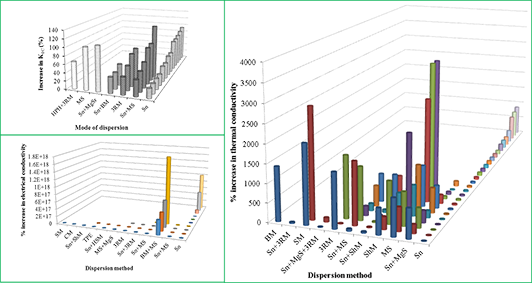
- al. attached carboxy groups on CNTs and then dispersed these surface-modified CNTs in an epoxy resin without curing agent. Spectroscopic and thermal analysis showed covalent interfacial bonds [124]. Physical or non-covalent functionalization: Supermolecular complexes of filler are formed through


Thermal treatment of magnetite nanoparticles
Beilstein J. Nanotechnol. 2015, 6, 1385–1396, doi:10.3762/bjnano.6.143
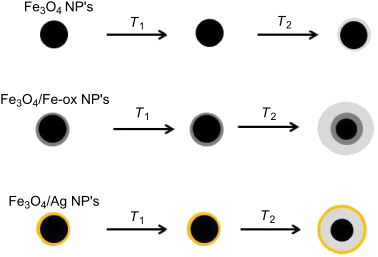
- cm−1. The quality of the nanopowders was observed using a Tecnai G2 X-TWIN transmission electron microscope (TEM). The analysis of the crystal structure was carried out using an Agilent Technologies SuperNova X-ray diffractometer (XRD) with a Mo microfocused source (Mo Kα = 0.713067 Å). The thermal
- analysis of the magnetite and core–shell nanoparticles was performed on a Mettler Toledo differential scanning calorimeter (DSC). A Quantum Design MPMS SQUID magnetometer was used for the magnetization measurements. Mössbauer spectra (MS) were obtained using a conventional spectrometer working in constant




Anticancer efficacy of a supramolecular complex of a 2-diethylaminoethyl–dextran–MMA graft copolymer and paclitaxel used as an artificial enzyme
Beilstein J. Nanotechnol. 2014, 5, 2293–2307, doi:10.3762/bjnano.5.238
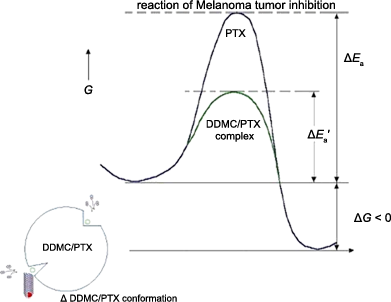
- . Thermal analysis of the supramolecular DDMC/PTX complex The differential scanning calorimetry (DSC) measurements of the DDMC/PTX supramolecular complex and PTX are shown in Figure 2. Sample 4 exhibits three characteristic endothermic and one additional exothermic peak. A description of the peaks is given


Ionic liquid-assisted formation of cellulose/calcium phosphate hybrid materials
Beilstein J. Nanotechnol. 2014, 5, 1553–1568, doi:10.3762/bjnano.5.167
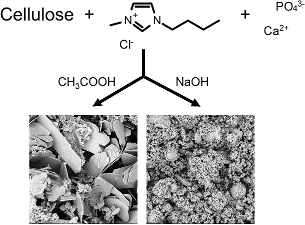
- thermogravimetric analysis/differential thermal analysis show that, depending on the reaction conditions, cellulose/hydroxyapatite, cellulose/chlorapatite, or cellulose/monetite composites form. Preliminary studies with MC3T3-E1 pre-osteoblasts show that the cells proliferate on the hybrid materials suggesting that
- . Thermogravimetric analysis/differential thermal analysis was done on a Linseis STA PT-1600 thermal balance in air from 20 to 600 °C with a heating rate of 10 K/min and air flow of 50 mL/min. Results Calcium phosphate precipitated without cellulose Table 1 summarizes the samples obtained after reaction in [Bmim][Cl
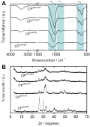
- especially the intensity of the phosphate vibration bands is fairly low in the samples prepared at higher cellulose concentrations. Figure 10 shows thermogravimetric analysis/differential thermal analysis (TGA/DTA) data. Table 5 summarizes the results from elemental analysis (CHN analysis) and TGA/DTA. TGA


Characterization and photocatalytic study of tantalum oxide nanoparticles prepared by the hydrolysis of tantalum oxo-ethoxide Ta8(μ3-O)2(μ-O)8(μ-OEt)6(OEt)14
Beilstein J. Nanotechnol. 2014, 5, 1082–1090, doi:10.3762/bjnano.5.121
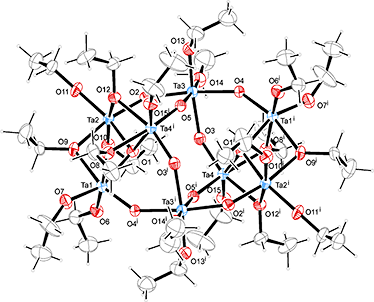
- chloroform. A TEM image of the so obtained particles is shown in Figure 5. Thermal analysis of the prepared Ta2O5 nanoparticles Thermogravimetry, differential thermal analysis and differential scanning calorimetry (TG/DTA/DSC) with a heating rate of 10 °C/min in a static air atmosphere were used to study the
- chloroform dispersion. TEM image of the TOPO-coated Ta2O5 nanoparticles. The scale bar corresponds to 200 nm. Thermogravimetry (TGA), differential thermal analysis (DTA) and differential scanning calorimetry (DSC) of the as-synthesized Ta2O5 nanoparticles. Solid state diffuse reflectance UV–vis spectra of


Synthesis and electrochemical performance of Li2Co1−xMxPO4F (M = Fe, Mn) cathode materials
Beilstein J. Nanotechnol. 2013, 4, 860–867, doi:10.3762/bjnano.4.97
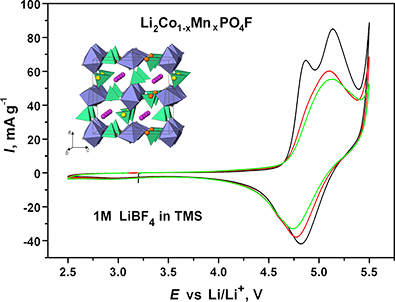
- , as in the case of M = Mn, to the products obtained from cryogranulates by annealing at 350 °C. The amount of residual carbon in the obtained composites was determined by thermal analysis and taken into account during the preparation of the electrodes. Mechanical grindings (180–200 rpm for 2–3 h) were
- carried out in a Fritsch planetary micro-mill Pulverisette 7 while using a WC bowl, ZrO2 balls and acetone media. Thermal analysis was performed in the temperature range of 20–750 °C (10 °C/min heating rate) by using a thermo-gravimetric differential scanning calorimetry (TG-DSC) apparatus STA-449