Search results
Search for "vapor phase" in Full Text gives 43 result(s) in Beilstein Journal of Nanotechnology.
Self-assembly of silicon nanowires studied by advanced transmission electron microscopy
Beilstein J. Nanotechnol. 2017, 8, 440–445, doi:10.3762/bjnano.8.47
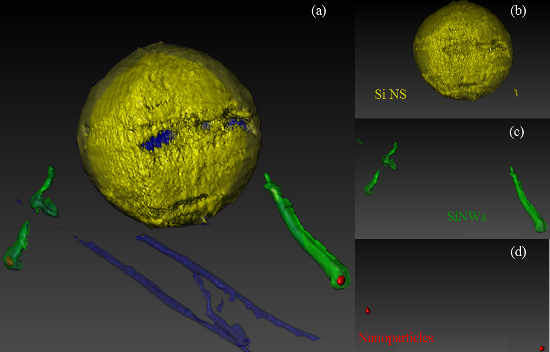
- , re-condensate as silicon spheres due to the surface-energy minimization principle. During the formation of the microspheres, a fraction of the Si feedstock sublimates and the molecules in the vapor phase aggregate in the form of lighter Si nanostructures. These are transported downstream in the


Electron energy relaxation under terahertz excitation in (Cd1−xZnx)3As2 Dirac semimetals
Beilstein J. Nanotechnol. 2017, 8, 167–171, doi:10.3762/bjnano.8.17
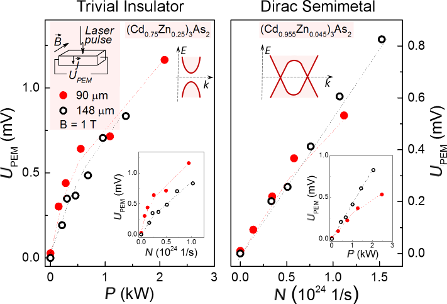
- apply this approach to the solid solutions of Dirac semimetals (Cd1−xZnx)3As2 undergoing an analogous transition from the inverted to the direct spectrum in the bulk at x > 0.08 [13]. The samples under study were single crystals of (Cd1−xZnx)3As2 grown from the vapor phase. The sample composition was


Viability and proliferation of endothelial cells upon exposure to GaN nanoparticles
Beilstein J. Nanotechnol. 2016, 7, 1330–1337, doi:10.3762/bjnano.7.124
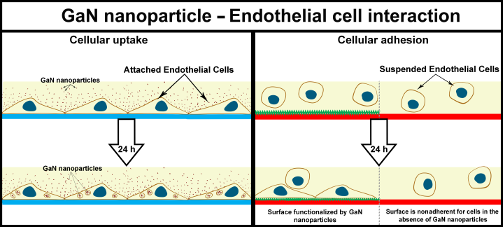
- nanoparticles were synthesized on a sacrificial layer of zinc oxide (ZnO) nanoparticles using hydride vapor phase epitaxy. The uptake of GaN nanoparticles by porcine endothelial cells was strongly dependent upon whether they were fixed to the substrate surface or free floating in the medium. The endothelial
- functionalized surfaces of implants or prosthesis could be easily modulated from the exterior (e.g., with an ultrasound field), making surfaces either more or less attractive for desired types. Experimental Preparation of GaN nanoparticles Thin layers of GaN were grown on ZnO nanoparticles by hydride vapor phase



Hydration of magnesia cubes: a helium ion microscopy study
Beilstein J. Nanotechnol. 2016, 7, 302–309, doi:10.3762/bjnano.7.28
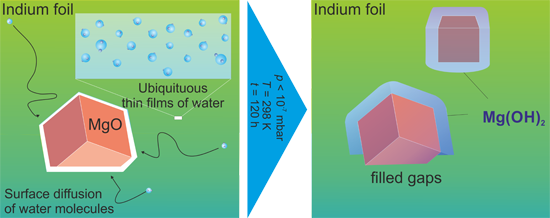
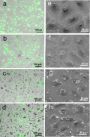
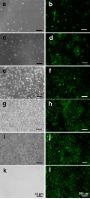
- these oxides are in physical contact with a solid substrate such as the ones used for immobilization to perform electron or ion microscopy imaging. We used helium ion microscopy (HIM) and investigated morphological changes of vapor-phase-grown MgO cubes after vacuum annealing and pressing into foils of
- microscopy images of vapor-phase-grown MgO cubes before (a,c) and after (b,d) exposure to liquid water. The sample areas imaged in (a) and (c) are the same as the ones imaged in (b) and (d), respectively. Clearly, different types of nanostructures can result from the interaction of MgO particle surfaces with


Case studies on the formation of chalcogenide self-assembled monolayers on surfaces and dissociative processes
Beilstein J. Nanotechnol. 2016, 7, 263–277, doi:10.3762/bjnano.7.24
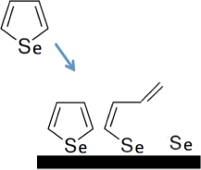
- at room temperatures it was close to 161 eV. Thus there exist rather different accounts on thiophene adsorption on Au. Studies of 3,4-ethylenedioxythiophene (EDOT) and its derivatives [62] (Figure 6a) on polycrystalline Au, Au(111) and Au nanoparticle (AuNP) surfaces from vapor phase and solution has


Nanostructured superhydrophobic films synthesized by electrodeposition of fluorinated polyindoles
Beilstein J. Nanotechnol. 2015, 6, 2078–2087, doi:10.3762/bjnano.6.212
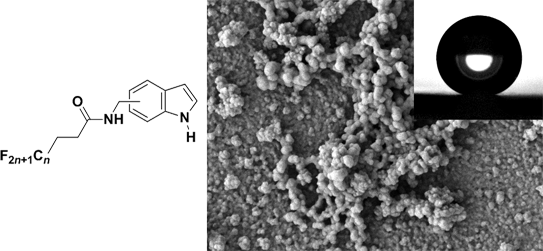
- extremely various shapes can be produced in solution by self-assembly [19][20][21] or directly formed on substrates by different strategies such as preferential growth [22], grafting [23], vapor phase polymerization [24], plasma polymerization [25] and electropolymerization [26][27][28][29][30]. The last




Framework for automatic information extraction from research papers on nanocrystal devices
Beilstein J. Nanotechnol. 2015, 6, 1872–1882, doi:10.3762/bjnano.6.190
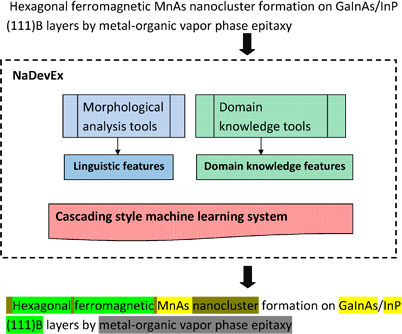
- , such as peak energy. Evaluation parameter value (EvPVal): Value of an evaluation parameter, such as 1.22 eV. Manufacturing method (MMethod): Method used in the experiment to achieve the desired product, such as selective-area metalorganic vapor-phase epitaxy. Target artifact or final product (TArtifact


Charge carrier mobility and electronic properties of Al(Op)3: impact of excimer formation
Beilstein J. Nanotechnol. 2015, 6, 1107–1115, doi:10.3762/bjnano.6.112
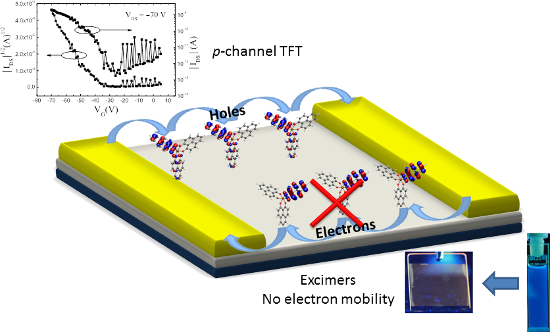
- and modified with trichloro(octadecyl)silane (OTS, ≥90%, Aldrich) by the vapor-phase modification method. This process was carried out in a vacuum oven placed inside a glove box with an inert N2 atmosphere (H2O and O2 concentration <0.1 ppm). Finally, a 40 nm Al(Op)3 layer was deposited on the OTS


Magnetic properties of self-organized Co dimer nanolines on Si/Ag(110)
Beilstein J. Nanotechnol. 2015, 6, 777–784, doi:10.3762/bjnano.6.80
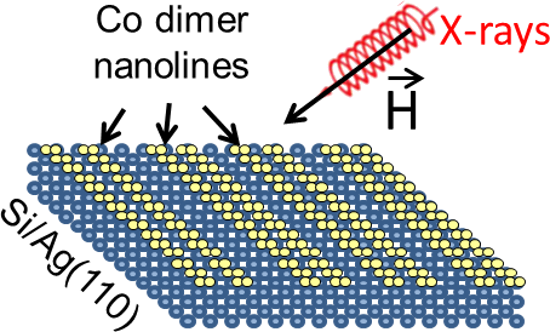
- molecules are deposited from the vapor phase onto surfaces. Taking advantage of the intrinsic structural properties of atomically well-defined surfaces, the self-ordering of atoms and molecules allows the fabrication of patterns with nanometer dimensions and precise control over the shape, composition and


Morphological and structural characterization of single-crystal ZnO nanorod arrays on flexible and non-flexible substrates
Beilstein J. Nanotechnol. 2015, 6, 720–725, doi:10.3762/bjnano.6.73
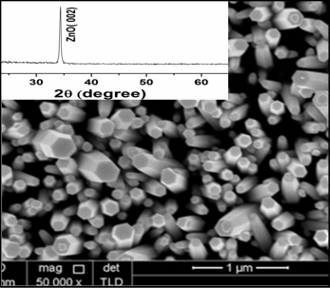
- (CVD) [7], molecular beam epitaxy (MBE) [8], pulsed laser deposition (PLD) [9], vapor phase transport (VPT) [10], and thermal evaporation [11]. However, these methods are considered to be high-cost techniques since they require complex, expensive equipment, high vacuum conditions and high operation


Sequence-dependent electrical response of ssDNA-decorated carbon nanotube, field-effect transistors to dopamine
Beilstein J. Nanotechnol. 2014, 5, 2113–2121, doi:10.3762/bjnano.5.220
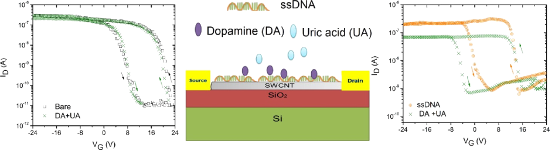
- such as ligands, hormones, proteins, enzymes, and vapor-phase odorants, in addition to being economical and readily available [10][11]. ssDNA is a biopolymer composed of a deoxyribose sugar, a phosphate and one or more of the four nitrogenous bases, namely, adenine (A), guanine (G), cytosine (C), or


On the structure of grain/interphase boundaries and interfaces
Beilstein J. Nanotechnol. 2014, 5, 1603–1615, doi:10.3762/bjnano.5.172
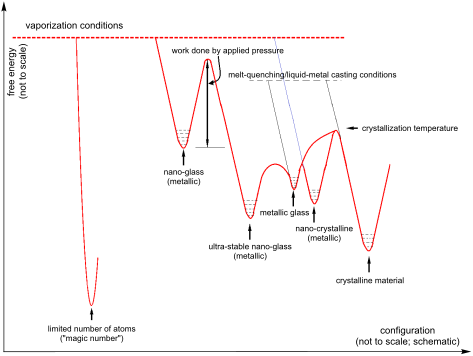
- different from the rest, as the others deal with a situation in which the number of atoms is above a critical value (not yet predicted). When one quenches the atoms from the vapor phase, depending on the elements present, concentration and experimental conditions, one may get (2) a nano-crystalline material
- the much larger energy release (energy stored as a result of quenching from the vapor phase and triggered by subsequent application of pressure) and the consequent local temperature rise, the transformation becomes non-adiabatic. Therefore, an entropy-dominated transformation, in which the atoms are
- as a plane, this has been done by using elegant geometrical/crystallographic notions. The “ultra-stable” nanoglasses, produced by quenching from the vapor phase and the powders subsequently compacted, seem to be in a category of their own, whose quantitative description would require the conversion



Nanoglasses: a new kind of noncrystalline materials
Beilstein J. Nanotechnol. 2013, 4, 517–533, doi:10.3762/bjnano.4.61
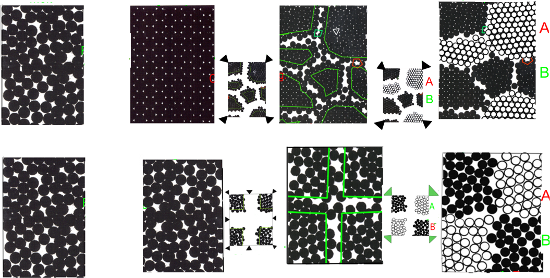
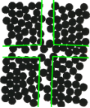
- ]. For example, if metallic clusters are prepared from the vapor phase, certain cluster sizes (called “magic clusters”) are known to be more stable than other sizes due to their low energies. Comparable effects have been reported for polymer glasses as well as glasses made up by individual atoms or small






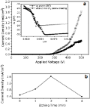
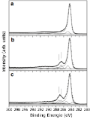
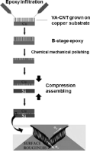
Functionalization of vertically aligned carbon nanotubes
Beilstein J. Nanotechnol. 2013, 4, 129–152, doi:10.3762/bjnano.4.14








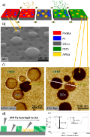
Polymer blend lithography: A versatile method to fabricate nanopatterned self-assembled monolayers
Beilstein J. Nanotechnol. 2012, 3, 620–628, doi:10.3762/bjnano.3.71
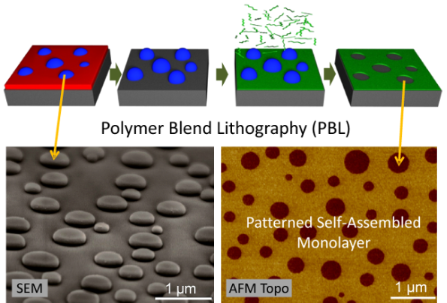
- growth of ZnO nanostructures [1]. Keywords: breath figure; nanopatterned template; polymer blend lithography (PBL); self-assembled monolayer (SAM); self assembly; spin coating; vapor phase; Introduction Self-assembled monolayers (SAMs) are well-known and have been intensively studied for many years
- remaining polymer phase (PS) is removed. The deposition of the SAM is performed by vapor-phase deposition [54] in a vacuum desiccator (Figure 2). During deposition, the samples are mounted face down on the lid of the desiccator. After the SAM is formed, the sample is removed from the vessel and the
- acetic acid, the CF3-terminated FDTS-SAM was deposited in the vapor phase. Next, we removed polystyrene by snow-jet treatment as described before. The FDTS as well as the APTES-SAMs withstand this cleaning procedure without any detectable change at their surface, as can be seen in Figure 5c. The three


Self-assembly of octadecyltrichlorosilane: Surface structures formed using different protocols of particle lithography
Beilstein J. Nanotechnol. 2012, 3, 114–122, doi:10.3762/bjnano.3.12
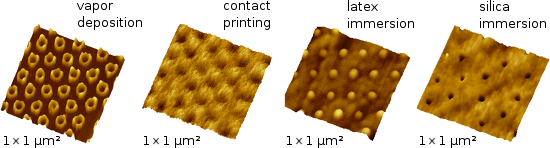
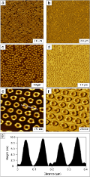
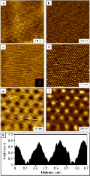
- deposition of OTS on surfaces to form nanopatterns. Essentially, the physical state of the molecule was changed for the three protocols. Molecules were applied either in a vapor phase, as a liquid film, or under dilute-solvent conditions, to enable nanoscale studies of the surface organization and self




Manipulation of gold colloidal nanoparticles with atomic force microscopy in dynamic mode: influence of particle–substrate chemistry and morphology, and of operating conditions
Beilstein J. Nanotechnol. 2011, 2, 85–98, doi:10.3762/bjnano.2.10
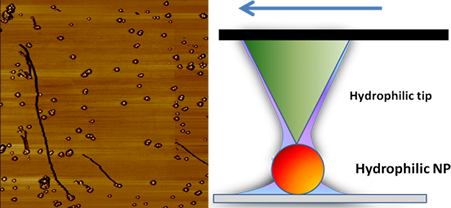
- compounds were methyl terminated hexadecyltrichlorosilane (–CH3), and the amine terminated 6-aminohexylaminopropyltrimethoxysilane (–NH2). Homogeneous films were obtained by vapor-phase deposition in a dynamically evacuated chamber (1 h at 10−3 torr), using a mineral oil as dispersing solvent for the
- molecules. This consists of mixing the organosilanes in paraffin oil before evacuating the atmosphere in the dessicator enabling the molecules to pass into the vapor phase and stick to the substrate placed above the mixture [33][34][35][36][37][38][39][40][41][42][43][44][45][46][47][48][49][50