Search results
Search for "vibration" in Full Text gives 337 result(s) in Beilstein Journal of Nanotechnology. Showing first 200.
Graphene oxide–chloroquine conjugate induces DNA damage in A549 lung cancer cells through autophagy modulation
Beilstein J. Nanotechnol. 2025, 16, 316–332, doi:10.3762/bjnano.16.24
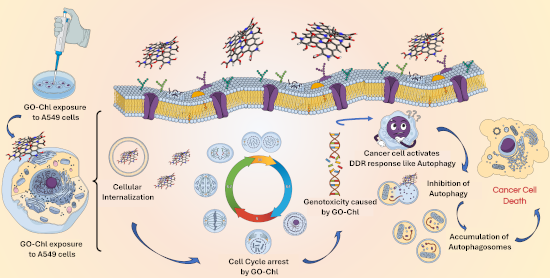
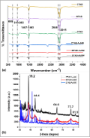
- , respectively. The presence of a broad peak around 3200–3400 cm−1 and other characteristic bands around 1720 cm−1, 1620 cm−1, 1150 cm−1, and 1050 cm−1 for GO, correspond to the stretching vibration of –OH, C=O, C=C, C–OH, and C(O)C bonds, respectively [26][43]. The appearance of a peak around 2980 cm−1 in both

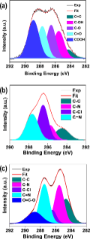


Radiosensitizing properties of dual-functionalized carbon nanostructures loaded with temozolomide
Beilstein J. Nanotechnol. 2025, 16, 229–251, doi:10.3762/bjnano.16.18
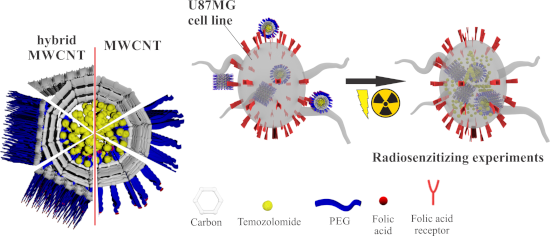
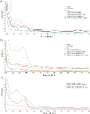
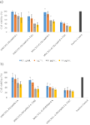
- of the CNTs; the bands from the Raman modes that result from the vibration of all carbon atoms in the CNTs; and the 2D band occurring between 2600 and 2800 cm−1, which is sensitive to the number of graphene layers and their arrangement. The intensity ratio between the D and the G band was analyzed




Recent advances in photothermal nanomaterials for ophthalmic applications
Beilstein J. Nanotechnol. 2025, 16, 195–215, doi:10.3762/bjnano.16.16
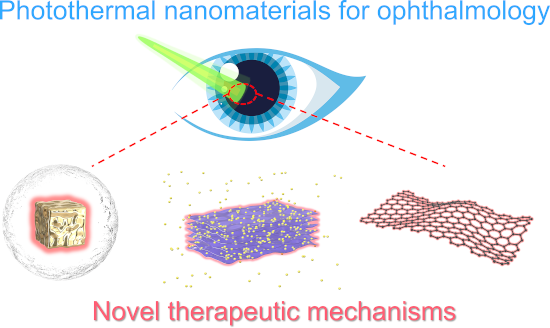
- categorized into three distinct types based on their different photothermal conversion mechanisms, which arise from their unique electronic structures [23][24]. The types include metals exhibiting localized surface plasmon resonance (LSPR), carbon and polymer materials undergoing molecular thermal vibration
- biological tissues, thereby minimizing photothermal damage to non-pathological areas [54]. 2.2 Carbon and polymer materials Carbon and polymer materials primarily undergo photothermal conversion through a mechanism known as molecular thermal vibration. This process is initiated when the energy of incident
- ) Carbon/polymer materials: These materials undergo photothermal conversion via molecular thermal vibration, displaying full-spectrum absorption [55][56][57][58][59][60][65][66]. This broad absorption range reduces the energy and diversity requirements for therapeutic light sources, enhancing the


A nanocarrier containing carboxylic and histamine groups with dual action: acetylcholine hydrolysis and antidote atropine delivery
Beilstein J. Nanotechnol. 2025, 16, 11–24, doi:10.3762/bjnano.16.2

- vibration bands at 2700–3000 cm−1. A vibration of C=O is fixed at 1744 cm−1. Stretching of C–C in aromatic rings is evident at 1610 and 1501 cm−1. The p(Hist-RA) IR spectrum also exhibits boronate bond stretching bands at 1066 and 543 cm−1, which are not present in the Hist-RA and CA-RA spectra (Figure 2


Facile synthesis of size-tunable L-carnosine-capped silver nanoparticles and their role in metal ion sensing and catalytic degradation of p-nitrophenol
Beilstein J. Nanotechnol. 2024, 15, 1576–1592, doi:10.3762/bjnano.15.124
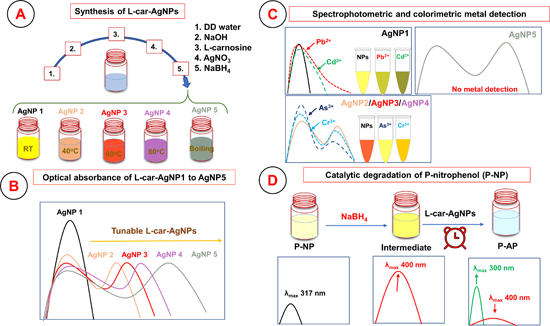
- NH bend, imz ring breathing, imz ring C–N stretching, CH2 twist, CH2 rock, imz ring deformation, C–CO2 stretching, and NH2 wagging, respectively. The symmetric CO2 stretching vibration in ʟ-carnosine at normal (alkaline) pH appears weakly at 1388 (1391) cm−1. The observed shift in the Raman bands of




Various CVD-grown ZnO nanostructures for nanodevices and interdisciplinary applications
Beilstein J. Nanotechnol. 2024, 15, 1390–1399, doi:10.3762/bjnano.15.112
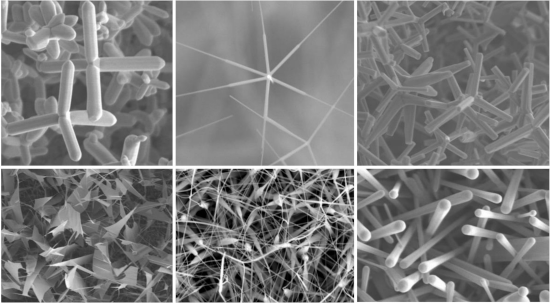
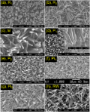
- include vibration modes centred at approx. 331, 380, 409, 437, and 582 cm−1. They are known as characteristic modes of the P63mc hexagonal structure of ZnO [17][62]. It has been assigned the strongest mode at ≈437 cm−1 to E2(L) while the others 331, 380, 409, and 582 cm−1 are in turn associated with E2(H
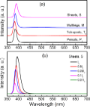
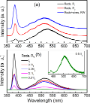
- analysis for characteristic vibration modes proved that the collected ZnO nanostructures are single phase in the P63mc hexagonal structure. The study of characteristic PL spectra revealed that the fabricated samples could be classified into two groups with different crystal qualities. The first one with a



Hymenoptera and biomimetic surfaces: insights and innovations
Beilstein J. Nanotechnol. 2024, 15, 1333–1352, doi:10.3762/bjnano.15.107
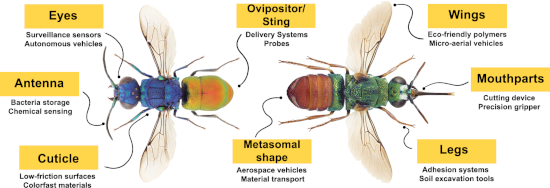
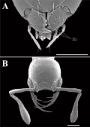
- for the advancement of sophisticated acoustic and vibration technologies. In nature, this acoustic strategy is likely employed for alarm signaling, sexual behavior, and as a versatile communication channel among eusocial insects (i.e., ants) [175][176][177][178]. By studying and mimicking these
- signals in other individuals [178]. Moreover, the precise control over vibration frequencies observed in stridulation can inspire advancements in industrial applications where vibration control is essential. This includes machinery that operates more quietly and efficiently, reducing noise pollution and







Nanoarchitectonics with cetrimonium bromide on metal nanoparticles for linker-free detection of toxic metal ions and catalytic degradation of 4-nitrophenol
Beilstein J. Nanotechnol. 2024, 15, 1312–1332, doi:10.3762/bjnano.15.106
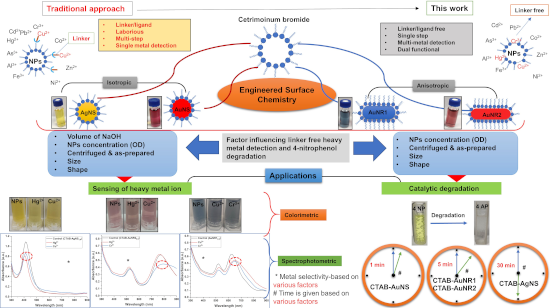
- nanoparticles (AuNS, AuNR1, and AuNR2). The characteristic [C–H–Ag] vibration was missing, indicating the absence of C–H binding to the metal surface. The new minor peaks of CTAB-capped AgNS and AuNS at 828, 1004, and 1130 cm−1, which are not present in parent CTAB molecules, are also considered as stretching




Interaction of graphene oxide with tannic acid: computational modeling and toxicity mitigation in C. elegans
Beilstein J. Nanotechnol. 2024, 15, 1297–1311, doi:10.3762/bjnano.15.105
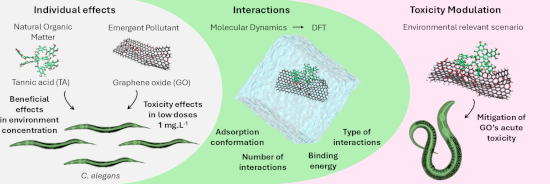
- with TA for 24 h. Furthermore, the C–O related bands at 1180 and 1230 cm−1 in the spectra of TA and GO, respectively, appeared at 1215 cm−1 in the interacting system and had a decreased signal when GO was dispersed in EPA medium in absence of TA. The changes in the vibration energy of these chemical
- [45][46]. In the absence of TA, the modulation of the C=0 stretching vibration intensity may indicate coordination of the divalent metal ions Ca2+ and Mg2+ present in EPA medium [47]. The intensity ratio between ID and IG bands in Raman spectroscopy analysis ranges from 0.94 ± 0.01, for the GO sample


Mn-doped ZnO nanopowders prepared by sol–gel and microwave-assisted sol–gel methods and their photocatalytic properties
Beilstein J. Nanotechnol. 2024, 15, 1283–1296, doi:10.3762/bjnano.15.104
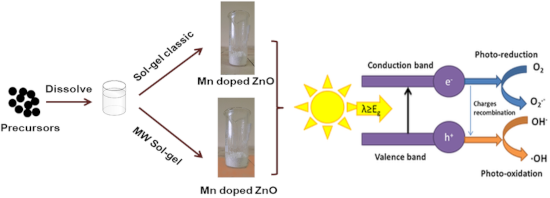
- and MW) lies in the intensity of the vibration bands, which is twice as high in the sample synthesized via MW. This difference can be attributed to the influence of microwave irradiation on the reaction rates within the sol–gel solutions, leading to enhanced vibrational band intensity. Differential
- characteristic of organic groups after thermal treatment. Notably, the main vibration band of Zn–O–Mn is observed at 420 cm−1, as reported in previous studies [23]. The higher intensity of this band in the nanopowder synthesized via MW is evident. This increased band intensity at 420 cm−1 suggests enhanced


New design of operational MEMS bridges for measurements of properties of FEBID-based nanostructures
Beilstein J. Nanotechnol. 2024, 15, 1273–1282, doi:10.3762/bjnano.15.103
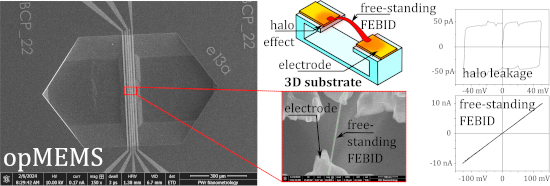
- [38], but this technique is difficult to apply in SEM chambers (the ultimate working environment for opMEMS) because of the difficulty of obtaining a controlled magnetic field inside. In the experiments, the resonance of the opMEMS was measured outside the vacuum chamber using a SIOS nano vibration
- analyser to assess the properties of the active device. The measured level of vibration of the MEMS bridge at a known temperature allows its stiffness to be determined with an accuracy of 5% [38]. First, the thermomechanical noise of the structure vibration was measured, then the displacement of the


The role of a tantalum interlayer in enhancing the properties of Fe3O4 thin films
Beilstein J. Nanotechnol. 2024, 15, 1253–1259, doi:10.3762/bjnano.15.101

- annealed at a temperature of 723 K for a duration of 2 h under a base pressure of 2.3 × 10⁻⁸ Torr. The Fe3O4 films were analyzed regarding their surface morphology, magnetic properties, and structural properties using atomic force microscopy (EasyScan2, Nanosurf), vibration sample magnetometry (Quantum


Photocatalytic methane oxidation over a TiO2/SiNWs p–n junction catalyst at room temperature
Beilstein J. Nanotechnol. 2024, 15, 1132–1141, doi:10.3762/bjnano.15.92
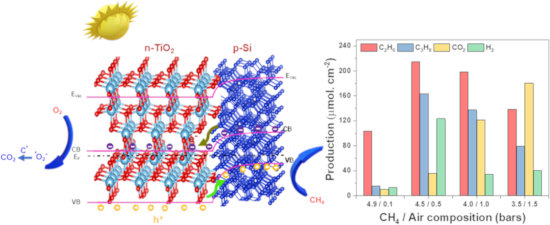
- photocatalysts. As depicted in Figure 4a, the Raman spectrum of Si exhibits a single peak located at 519 cm−1, corresponding to the first-order transverse optical (TO) mode of Si [46]. For the TiO2/Si photocatalyst, two distinct peaks were observed, namely, (i) the characteristic Eg vibration of TiO2, located at


Effect of wavelength and liquid on formation of Ag, Au, Ag/Au nanoparticles via picosecond laser ablation and SERS-based detection of DMMP
Beilstein J. Nanotechnol. 2024, 15, 1054–1069, doi:10.3762/bjnano.15.86

- the impact of different Raman excitation wavelengths, specifically 325, 532, and 633 nm. The prominent peaks of MS (810 cm−1) and DMMP (710 cm−1) molecules were observed in all cases, shown in Figure 11a and Figure 11b, respectively. The peak at 810 cm−1 is due to the stretching vibration of C–H [69


Facile synthesis of Fe-based metal–organic frameworks from Fe2O3 nanoparticles and their application for CO2/N2 separation
Beilstein J. Nanotechnol. 2024, 15, 897–908, doi:10.3762/bjnano.15.74
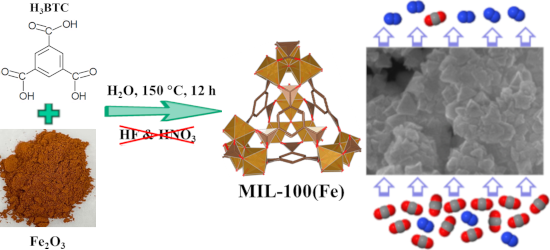
- -prepared M-100Fe@Fe2O3 samples. Characteristic peaks, including vibration bands in the region of 550 to 630 cm−1, were assigned to Fe–O bonds in the Fe2O3 structure [33], and a signal at 620 cm−1 was attributed to the vibration of Fe(III)–O bonds in oxo-centered trinuclear iron complexes (Fe3–O) within the





Intermixing of MoS2 and WS2 photocatalysts toward methylene blue photodegradation
Beilstein J. Nanotechnol. 2024, 15, 817–829, doi:10.3762/bjnano.15.68
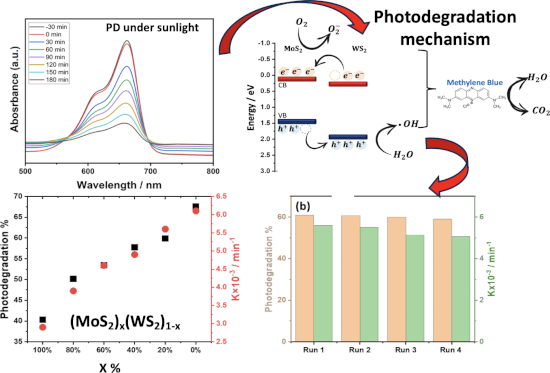
- 410 cm−1, respectively, for MoS2, 350 cm−1. It can be further resolved into two sub-peaks at 324 cm−1 and 351 cm−1, corresponding to the 2LA(M) and E12g modes, the A1g mode at 420 cm−1 for WS2, and the presence of combined vibration modes for the composite MoS2/WS2 as shown in Figure 1. Interestingly


Electrospun polysuccinimide scaffolds containing different salts as potential wound dressing material
Beilstein J. Nanotechnol. 2024, 15, 781–796, doi:10.3762/bjnano.15.65
- main peaks of the PSI at 1709 cm−1 (νCO of –(OC)2N– asymmetric stretching vibration) and 1393 cm−1 (C–O bending vibration, δ) were perceptible [21][49]. FTIR images of the Sr(NO3)2 and 20 PSI + Sr(NO3)2 salts show that the characteristic peaks of this salt appeared in the salt-containing scaffold at
- of the peak. The 1338 and 1434 cm−1 peaks are attributed to the vibration of N–O, and the 810 cm−1 peak is accountable for the bending mode of NO3 [50]. At 1709 cm−1, the added Sr(NO3)2 salt caused a slight shift in the polymer peak. With the increasing salt concentration, the intensity of the peak
- increased, which was also observed by Sim and collaborators in the case of polymer electrolyte films containing LiCF3SO3 [51]. At 1634 cm−1, rising peaks also appeared as the concentration of salts increased. It was presumably the peak corresponding to bending vibration of water, H–O–H (Supporting



Elastic modulus of β-Ga2O3 nanowires measured by resonance and three-point bending techniques
Beilstein J. Nanotechnol. 2024, 15, 704–712, doi:10.3762/bjnano.15.58
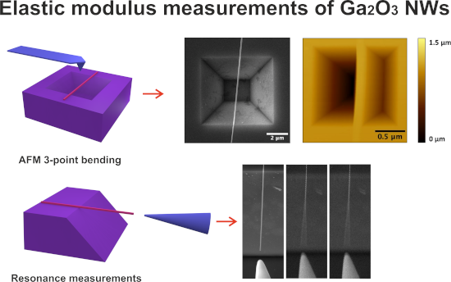
- excitation signal was generated by a waveform generator (RIGOL DG4162). For each NW, a resonance at its fundamental frequency was visually observed in SEM (Tescan Lyra, Figure 6a). If the applied frequency coincided with the frequency of the natural vibration, mechanical resonance was created due to an


Enhancing higher-order modal response in multifrequency atomic force microscopy with a coupled cantilever system
Beilstein J. Nanotechnol. 2024, 15, 694–703, doi:10.3762/bjnano.15.57

- applied the bridge/cantilever coupled structure to microcantilevers with different sizes and found that the modal vibration shapes were all in accordance with the vibration characteristics of the coupled system; also, the modal frequencies and higher-order modal responses were enhanced. This indicates
- that the model has no special requirements for the cantilever size. The first two orders of the simulated modal vibration shapes for different sizes of microcantilevers are shown in Supporting Information File 1. Considering the need to scale up and experiment, we selected cantilevers of the same size
- response is highest near 38 μm. This is an approximate match to the scaled-up values of the macroscale cantilevers. This indicates that it is feasible to represent the microcantilever by studying the vibration characteristics of the macroscale cantilever. Experimental Experimental platform The macroscale


Gold nanomakura: nanoarchitectonics and their photothermal response in association with carrageenan hydrogels
Beilstein J. Nanotechnol. 2024, 15, 678–693, doi:10.3762/bjnano.15.56

- stretching, respectively, as well as C–H scissoring of H3C–N+ at 1407–1463 cm−1. The peaks around 910–960 cm−1 featured C–N stretching of the surfactants as well as the bending of four CH2 groups at 718 cm−1. The C–H scissoring vibration of H3C–N+ and C–N+ stretching is relatively less intense and slightly






Functional fibrillar interfaces: Biological hair as inspiration across scales
Beilstein J. Nanotechnol. 2024, 15, 664–677, doi:10.3762/bjnano.15.55
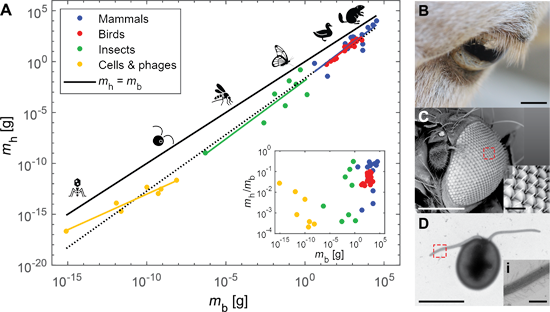
- outside world or determine body or appendage orientation [128]. Mechanosensation Hairs, as mechanical receptors, are capable of perceiving and distinguishing a multitude of external stimuli such as touch, vibration, or fluid flows [129][130]. The mechanosensation of hairs relies on the sensory cells at
- detecting the presence and alteration of chemicals [142], which differs from the way hairs sense touch and vibration. The binding of receptor proteins on sensory cells to chemicals in the air or solution initiates a sequence of biochemical reactions, resulting in the production of electrical signals, which


Exfoliation of titanium nitride using a non-thermal plasma process
Beilstein J. Nanotechnol. 2024, 15, 631–637, doi:10.3762/bjnano.15.53
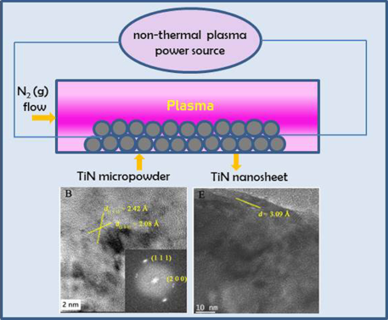
- is attributed to the vibration of heavy titanium ions around nitrogen vacancies, while the 592 cm−1 peak arises from nitrogen ion vibrations near titanium vacancies [22][23][24]. Remarkably, the Raman spectra for both bulk and exfoliated TiN samples are similar. This consistency suggests that the non



AFM-IR investigation of thin PECVD SiOx films on a polypropylene substrate in the surface-sensitive mode
Beilstein J. Nanotechnol. 2024, 15, 603–611, doi:10.3762/bjnano.15.51
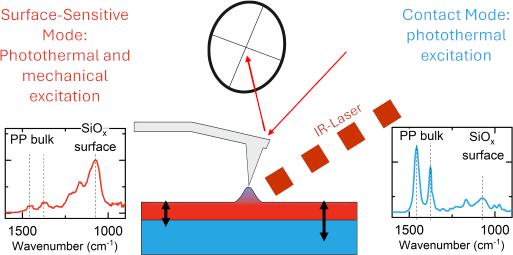
- mode) and Figure 6 (surface-sensitive mode). The spectra are normalized for a better comparison. The contact mode AFM-IR spectra in Figure 5 show peaks according to CH3 asymmetric deformation vibration and CH2 bending at 1455 cm−1, CH3 symmetric deformation vibration at 1376 cm−1, and CH3 rocking bands
- underneath the SiOx layer, improved surface sensitivity is achieved for both samples. Upon a closer look at the spectra, the broad peak corresponding to the TO Si–O–Si vibration at 1080 cm−1 can be clearly identified and even dominate the overall spectra [23][26]. The peak at 1168 cm−1 corresponding to the
- hyperspectral image (Figure 7c) shows the ratio of the Si–O–Si stretching band at 1080 cm−1 (blue) and the absorption band according to the CH3 asymmetric deformation vibration and the CH2 bending at 1455 cm−1 (green). As expected, the intensity of the polypropylene peak over the full image is more intense. It


Vinorelbine-loaded multifunctional magnetic nanoparticles as anticancer drug delivery systems: synthesis, characterization, and in vitro release study
Beilstein J. Nanotechnol. 2024, 15, 256–269, doi:10.3762/bjnano.15.24
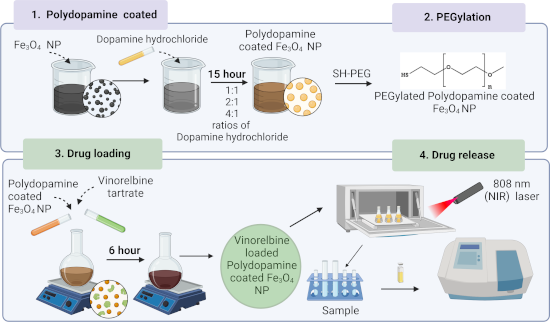
- Instruments, UV-1800) at a wavelength of 268 nm. Magnetic properties of nanoparticles were evaluated by vibration sample magnetometry (VSM, Lake Shore, Model 7410) using field-induced magnetization measurements at 298 K. The average diameters of nanoparticles were determined using ImageJ (US National
- illustrated in Figure 3d. A study by Feng et al. noted a peak at 1259 cm–1 in the IR spectra of PDA/Fe3O4 NPs, attributed to the extension vibration of the C–O band. The obtained results are supported by the resemblance to the peak observed at 1221 cm−1 in this observation. Furthermore, the peaks observed at
- 1520 and 1595 cm–1 can be attributed to the stretching vibration of C–O units, which is further supported by the peak at 1221 cm–1 [48]. Studies in the literature have demonstrated that the coating of iron oxide nanoparticles, commonly employed in creating multifunctional particles with the capability


Modification of graphene oxide and its effect on properties of natural rubber/graphene oxide nanocomposites
Beilstein J. Nanotechnol. 2024, 15, 168–179, doi:10.3762/bjnano.15.16
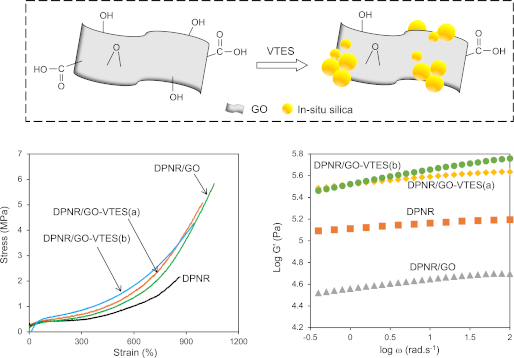
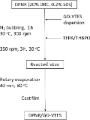
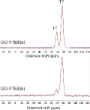
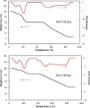
- removal of the –COOH group during GO modification. In the spectrum of GO, the absorption peak at 1624 cm−1 was ascribed to vibration of the C=O bonds on the ketone group [33]. Nevertheless, for GO-VTES(a) and GO-VTES(b), this absorption peak overlapped with the absorption peaks at 1600 cm−1, which
- appeared due to the appearance of C=C bonds in VTES [17]. In the fingerprint region, the absorption peaks at approx. 950 to 1300 cm−1 for GO were due to the vibration of C–O and C–OH bonds in GO. These absorption peaks decreased for GO-VTES(a) and increased for GO-VTES(b) after modification. The increased
- in these peaks for GO-VTES(b) was due to the asymmetrical vibration of Si–O–Si linkages in silica particles during modification. This suggested that the silica particles were more efficiently formed in basic conditions than in acidic conditions. Note that the absorption at 780 cm−1 was due to the