


Search results
Search for "wood" in Full Text gives 41 result(s) in Beilstein Journal of Nanotechnology.
Bio-inspired micro-to-nanoporous polymers with tunable stiffness
Beilstein J. Nanotechnol. 2017, 8, 906–914, doi:10.3762/bjnano.8.92
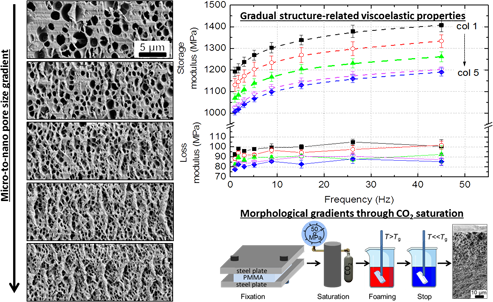
- several examples of porous structures and composites having excellent mechanical properties that surpass the properties of the constituent materials. Prominent examples are wood, bone, or bird beaks [1]. The outstanding properties of the pomelo peel, though, are less known. The pomelo (Citrus maxima) is a


Biomechanics of selected arborescent and shrubby monocotyledons
Beilstein J. Nanotechnol. 2016, 7, 1602–1619, doi:10.3762/bjnano.7.154
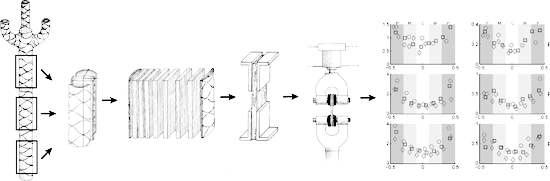
- Dracaena to other massive monocotyledon stems, we also compared our measured data with data from hollow culms of bamboo, horsetails and grasses as well as with massive herbaceous plants such as tobacco and with data from the wood of dicotyledons in order to present our data in a broad context. 1 Young’s
- plants. The Young’s modulus in D. marginata increases linearly with density for both primary and secondary tissues. This general trend is also known for bamboo [2][26] and wood [27], though a linearity of the correlation – as found in D. marginata – was only found in older stems of the black locust
- abundance of wood is also interpreted as one of the causes of the higher values for the axial Young’s modulus in conifers and dicotyledonous trees such as Douglas fir, white spruce and northern oak [35] as compared to stems of D. marginata. Another reason is the less dense arrangement of the fibrous bundles



Development of adsorptive membranes by confinement of activated biochar into electrospun nanofibers
Beilstein J. Nanotechnol. 2016, 7, 1556–1563, doi:10.3762/bjnano.7.149
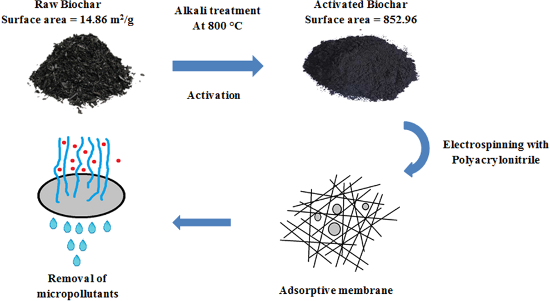
- from pine white wood (80%) purchased from Belle-Ripe in Princeville and the rest was spruce and fir (20%). This biochar was produced at 525 ± 1 °C under atmospheric pressure for 2 min and used as obtained from the reactor outlet. Sodium hydroxide and hydrogen chloride with 98% purity and N,N




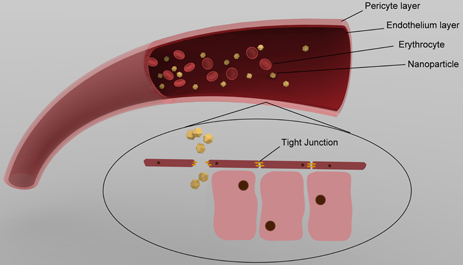
Tight junction between endothelial cells: the interaction between nanoparticles and blood vessels
Beilstein J. Nanotechnol. 2016, 7, 675–684, doi:10.3762/bjnano.7.60
- the Sperm Laboratory in Zhejiang University for valuable discussions. This project was supported in part by the National Natural Science Foundation of China (Nos. 41276151 and 31572603). The authors thank Chris Wood for his effort on linguistic polishing of this review.

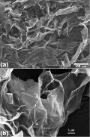
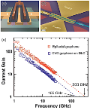
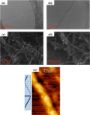
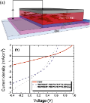
Synthesis and applications of carbon nanomaterials for energy generation and storage
Beilstein J. Nanotechnol. 2016, 7, 149–196, doi:10.3762/bjnano.7.17















Formation of stable Si–O–C submonolayers on hydrogen-terminated silicon(111) under low-temperature conditions
Beilstein J. Nanotechnol. 2015, 6, 19–26, doi:10.3762/bjnano.6.3
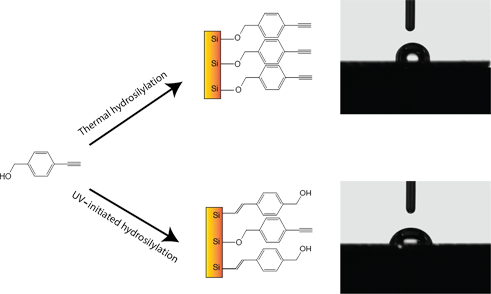
- undisputed. However, as early as 2005, Wood et al. brought to attention that the cleavage of Si–H to form initial silyl radicals might not be the only mode for hydrosilylation to occur [12]. Typically, the commonly accepted notion is that thermal hydrosilylation requires temperatures above 150 °C in order to
- cleave the silicon–hydrogen bond at the surface to form surface radicals. However previous studies had shown that hydrosilylation could also proceed at a lower temperature (110 °C). Wood et al. further suggested a reaction mechanism in which trace oxygen is involved in the extraction of hydrogen off from


Aquatic versus terrestrial attachment: Water makes a difference
Beilstein J. Nanotechnol. 2014, 5, 2424–2439, doi:10.3762/bjnano.5.252
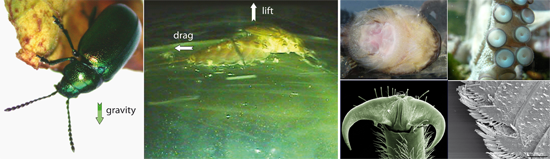
- interplay with the substrate, and the properties of the substrate also must be taken into account [17]. Common solid substrates in aquatic systems are stones, plants, wood pieces, artificial substrates and even other animals. Stones (Figure 2), artificial substrates and plants have large variation in


Carbon nano-onions (multi-layer fullerenes): chemistry and applications
Beilstein J. Nanotechnol. 2014, 5, 1980–1998, doi:10.3762/bjnano.5.207
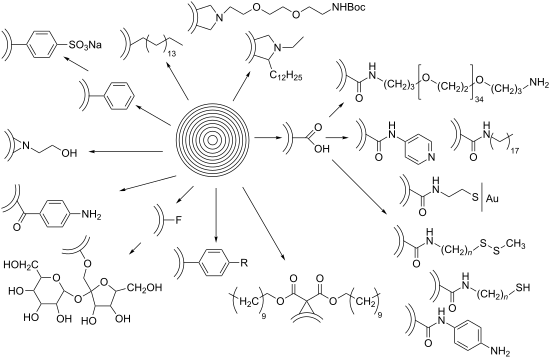
- of graphite in liquids such as liquid nitrogen or water [14][15]. A recent novel method for the preparation of large CNOs (30 nm diameter) includes the use of inorganic starting material, such as CuCl2·2H2O and CaC [16]. Large CNOs with distinct fluorescence emission were produced from wood wool, a
- 300 μg·mL−1, and a minor reduction of approx. 15% for 3,000 μg·mL−1. Thus, it follows that small CNOs are not cytotoxic and can be used safely for biological studies. In two other reports, highly oxidized CNOs, derived from pyrolized wood wool, were used for in vivo imaging of Drosophila melanogaster
- using large, defect rich CNOs, synthesized from wood waste, for imaging the life cycle of D. melanogaster (Figure 5) [17]. The authors claim that solubility in water was achieved by the presence of a large number of carboxylate groups on the CNO surface that originate from the production process. These


One-step synthesis of high quality kesterite Cu2ZnSnS4 nanocrystals – a hydrothermal approach
Beilstein J. Nanotechnol. 2014, 5, 438–446, doi:10.3762/bjnano.5.51
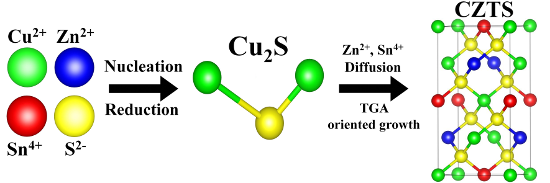
- analysis of CZTS nanocrystals synthesized with different TGA content in the precursor solution of the hydrothermal reaction. Quantitative elemental analysis of CZTS nanocrystals synthesized at different reaction duration. Acknowledgements The authors appreciate the technical assistance by Dr. Barry Wood




Modeling and optimization of atomic layer deposition processes on vertically aligned carbon nanotubes
Beilstein J. Nanotechnol. 2014, 5, 234–244, doi:10.3762/bjnano.5.25
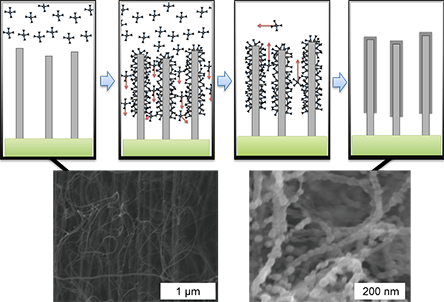
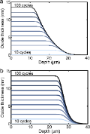
- Nuri Yazdani Vipin Chawla Eve Edwards Vanessa Wood Hyung Gyu Park Ivo Utke Nanoscience for Energy Technology and Sustainability, Department of Mechanical and Process Engineering, ETH Zürich, Zürich CH-8092, Switzerland Laboratory for Nanoelectronics, Department of Information Technology and



Nanoparticles of novel organotin(IV) complexes bearing phosphoric triamide ligands
Beilstein J. Nanotechnol. 2013, 4, 94–102, doi:10.3762/bjnano.4.11
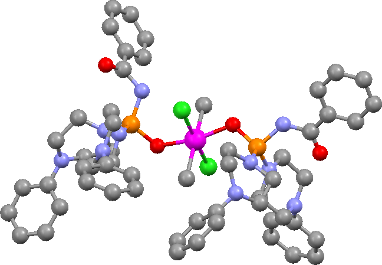
- compounds [4][5][6]. For example, they can act as potential antitumor agents [7][8], wood preservatives, agrochemical fungicides and biocides [9][10], as well as catalysts [11]. The organotin(IV) complexes with phosphorus-based ligands bearing the P(E) group (E = O, S, or Se) are especially important




Paper modified with ZnO nanorods – antimicrobial studies
Beilstein J. Nanotechnol. 2012, 3, 684–691, doi:10.3762/bjnano.3.78
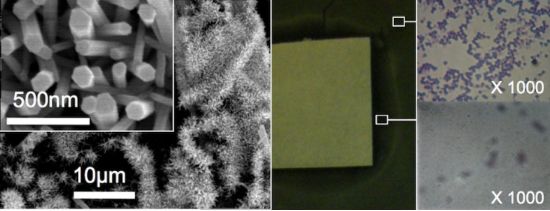
- tissue papers. Conclusion Antimicrobial paper has been successfully prepared by growing ZnO nanorods on paper prepared from bleached soft wood kraft pulp by using a simple hydrothermal process at low temperature. The antimicrobial paper inhibits the growth of harmful microbes due to a slow release of
- , writing paper and as a facemask material. Experimental Circular sheets of paper of 15.9 cm diameter were prepared following a process explained in detail in a previous work [21]. The raw material used was bleached soft wood kraft pulp, which was refined by using a port fuel injection (PFI) mill to form


Synthesis and catalytic applications of combined zeolitic/mesoporous materials
Beilstein J. Nanotechnol. 2011, 2, 785–801, doi:10.3762/bjnano.2.87
- aerogels are inherently less porous than the carbonized ones. Another option is to use polystyrene [113], latex [114] or resin spheres or beads [115], although they are mostly used for macrotemplating. Also biological templates, such as starch [116], bacterial threads [117], wood cells [118], leaves and




Infrared receptors in pyrophilous (“fire loving”) insects as model for new un-cooled infrared sensors
Beilstein J. Nanotechnol. 2011, 2, 186–197, doi:10.3762/bjnano.2.22
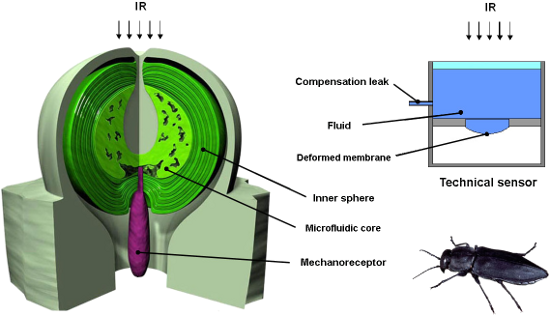
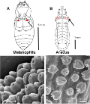
- behaviour and belong to the same family of jewel beetles, their IR receptors are very different from each other. On a freshly burnt area, the males of both genera often stay on the stems of trees close to burning or glowing wood or hot ashes. As soon as they become aware of a conspecific female, they try to
- copulate vigorously. After mating, the females deposit their eggs under the bark of burnt trees. The main reason for the pyrophilous behaviour is that the wood-boring larvae of Melanophila and Merimna can only develop in the wood of burnt trees [3][5]. As a morphological speciality, both pyrophilous
- wood as larval food [5][13][14][15]. Therefore, it must be postulated that the sensory organs, which are used for fire detection, have been subjected to a strong evolutionary pressure, especially with regard to sensitivity. The individual IR receptors (called sensilla in insects) are situated in two


Functional morphology, biomechanics and biomimetic potential of stem–branch connections in Dracaena reflexa and Freycinetia insignis
Beilstein J. Nanotechnol. 2011, 2, 173–185, doi:10.3762/bjnano.2.21
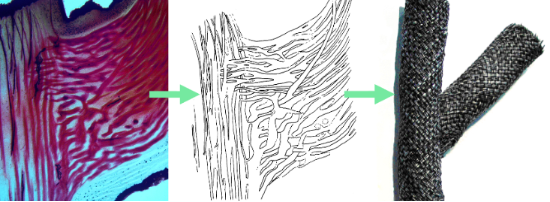
- large amount of secondary wood from the main stem is in direct connection with the branches, in arborescent monocotyledons vascular bundles with fibre caps (both summed up as ‘fibrous bundles’ in this study) are isolated, i.e., with no or little tangential or radial interconnection, and arranged in a




Fabrication and spectroscopic studies on highly luminescent CdSe/CdS nanorod polymer composites
Beilstein J. Nanotechnol. 2010, 1, 94–100, doi:10.3762/bjnano.1.11
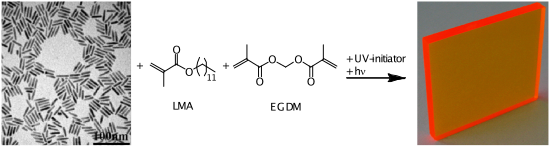
- thermal stability. It can be obtained from renewable resources such as wood or cotton. Moreover, it has already been found to be a suitable matrix for embedding CdSe/ZnS QDs [11][12][13]. The structure of CTA is shown in Figure 1. We used CdSe/CdS nanorods with two different sizes, longer rods with an





