


Search results
Search for "zeta potential" in Full Text gives 238 result(s) in Beilstein Journal of Nanotechnology. Showing first 200.
Quantification of lead through rod-shaped silver-doped zinc oxide nanoparticles using an electrochemical approach
Beilstein J. Nanotechnol. 2025, 16, 422–434, doi:10.3762/bjnano.16.33
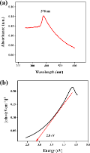
- ZnO frequently causes a reduction in the bandgap, leading to a shift toward longer wavelengths in the absorption spectra. The smaller bandgaps of the samples in optoelectronic devices provide a significant advantage [21]. Zeta potential of Ag@ZnO nanorods Surface properties of the synthesized Ag@ZnO
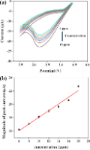
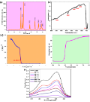
- NRs were studied using dynamic light scattering analysis, and their zeta potential was determined. Figure 5 represents the zeta potential of Ag@ZnO NRs. The samples were collected in the liquid state and the Ag@ZnO NRs zeta potential of ≈30 mV accounts for the stability of the nanoparticles in water
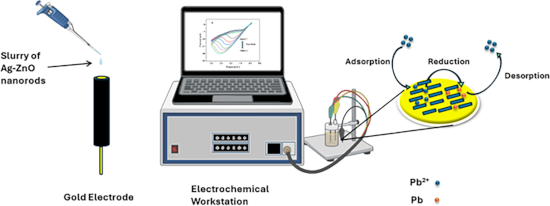
- vibrations, rotational energy, electronic energy levels, and scattering characteristics of Ag–ZnO nanorods. The Malvern Nano-ZS90 was utilized to determine the zeta potential of synthesized nanorods. Fabrication of the lead sensor / (Ag@ZnO nanorods/gold electrode) The obtained Ag@ZnO NRs served as an





Engineered PEG–PCL nanoparticles enable sensitive and selective detection of sodium dodecyl sulfate: a qualitative and quantitative analysis
Beilstein J. Nanotechnol. 2025, 16, 385–396, doi:10.3762/bjnano.16.29
- suggests a small degree of polydispersity, indicating that while the nanoparticles are relatively uniform, there is a slight variation in their sizes. The zeta potential of the PEG–PCL nanoparticles was measured to be −10.8 ± 4.50 mV (Figure 2b), suggesting that the nanoparticles possess a moderate
- negative surface charge. The zeta potential is a critical parameter for evaluating the stability of colloidal dispersions; typically, values greater than ±30 mV are associated with high stability due to strong electrostatic repulsion between particles [31]. Despite the zeta potential being less than ±30 mV
- hydrophobic PCL [34]. The positive charge on the G-250 dye or the Bradford reagent can form ionic interactions with PEG–PCL NPs due to their negative surface charge, which is confirmed through the zeta potential. We also observed when the PEG–PCL nanoparticle concentrations decreased from 10 to 0.005 mg/mL


Development of a mucoadhesive drug delivery system and its interaction with gastric cells
Beilstein J. Nanotechnol. 2025, 16, 371–384, doi:10.3762/bjnano.16.28

- Eudragit polymer. Particle size and zeta potential distribution The particle size distribution is an important parameter in drug delivery applications because it determines the transport across membranes. The Z-average diameters of Alg NPs and EudAlg NPs were 206.14 ± 32.31 and 219.22 ± 41.61 nm
- particles is also very important. The zeta potential of Alg nanoparticles is negative (−25.85 ± 7.7 mV), as expected, because of the presence of –COOH and –OH groups in the polymer. This may hinder its interaction with negatively charged surfaces like mucus because of charge repulsion [42]; in contrast
- , positively charged nanoparticles have more potential to induce adherence to the mucus layer [43]. Thus, for this study, Eudragit RS100 polymer was chosen as a coating polymer to obtain positively charged nanoparticles. Upon coating the Alg nanoparticles, the zeta potential shifted to positive values (39.72


Preferential enrichment and extraction of laser-synthesized nanoparticles in organic phases
Beilstein J. Nanotechnol. 2025, 16, 254–263, doi:10.3762/bjnano.16.20
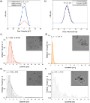
- preferred phase of the nanoparticles either. The particle zeta potential is a third aspect that may affect the phase preference of the nanoparticles. Consequently, the zeta potential of the respective copper and iron colloids was measured for the colloids present in the PC and alcohol phases. While the
- particles in PC showed a negative zeta potential for copper and a fluctuating zeta potential ranging from negative to positive values for iron (Supporting Information File 1, Figure S2), the zeta potential of the particles in the alcohol phases was almost zero for both metals (Figure 3a,b). Further, a size
- glycerol carbonate and 1-nonanol for copper and iron. Zeta potential of copper nanoparticles in (a) 1-nonanol and (b) propylene carbonate obtained by LAL at 85 °C in the monophasic TMS of 1-nonanol and propylene carbonate. Size distribution and TEM images of the respective (c, d) copper and (e, f) iron




Radiosensitizing properties of dual-functionalized carbon nanostructures loaded with temozolomide
Beilstein J. Nanotechnol. 2025, 16, 229–251, doi:10.3762/bjnano.16.18
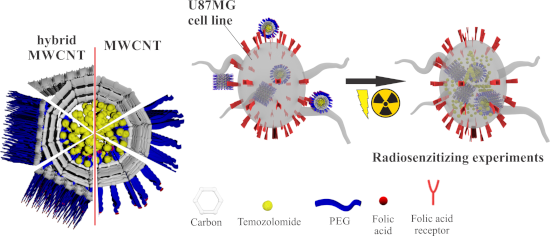
- loading efficacy and content in these formulations (around 42% and 11%, respectively, for MWCNTs-PEG6000-FA-TMZ and 46% and 13%, respectively, for MWCNTs-G-PEG6000-FA-TMZ; Table 1). When the CNs were PEGylated, an increase in zeta potential was observed (−38.38 and −46.05 mV vs −21.40 and −22.30 mV for
- MWCNTs-PEG6000 and MWCNTs-G-PEG6000, respectively) (Table 1) due to modifications of the carboxylic groups on the surface of CNs. The additional functionalization with FA decreased the zeta potential (−33.10 and −38.10 mV for MWCNTs-PEG6000-FA and MWCNTs-G-PEG6000-FA, respectively), which can be ascribed
- to the ionized carboxyl groups of FA in the corresponding medium. Incorporation of TMZ in the CNs did not change their zeta potential significantly, confirming the assumptions regarding the TMZ loading (Table 1). The mean particle size for the parent CNs (MWCNTs-COOH and MWCNTs-G-COOH) was 136 and




Nanocarriers and macrophage interaction: from a potential hurdle to an alternative therapeutic strategy
Beilstein J. Nanotechnol. 2025, 16, 97–118, doi:10.3762/bjnano.16.10

- unique physicochemical properties of these mannose-decorated hybrid NPs, such as controlled particle size (≈265 nm) and stability ensured by negative zeta potential, make them highly effective for receptor-mediated endocytosis and intracellular drug delivery [57]. Similarly, hyaluronic acid-coated NCs


Characterization of ZnO nanoparticles synthesized using probiotic Lactiplantibacillus plantarum GP258
Beilstein J. Nanotechnol. 2025, 16, 78–89, doi:10.3762/bjnano.16.8
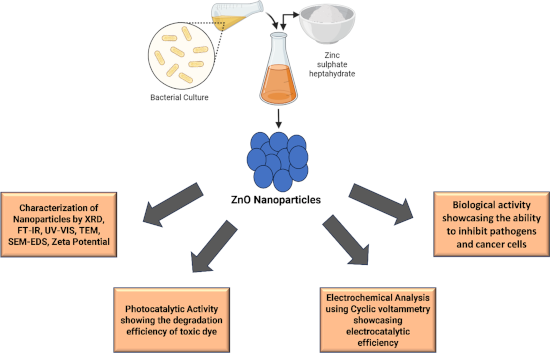
- nanoparticles (ZnO NPs), utilizing lactic acid bacteria isolated from curd as the key biological agent. Bacteria function as agents for both reduction and capping processes, which aids the synthesis of ZnO NPs. Various characterization techniques including XRD, FTIR, UV–vis, TEM, SEM-EDX, and zeta potential
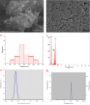
- wrinkled pattern, and it was found that the NPs average size was 72 nm. The presence of ZnO NPs on the surface was confirmed through EDX, which showed characteristic elemental peaks validating the composition (Figure 4a–d). Zeta potential The ZnO NPs synthesized using GP258 showed good stability as
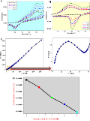
- colloidal system. Our biosynthesized nanoparticles showed a zeta potential of −60 mV. It is considered that a NP colloid with a zeta potential of more than ±30 mV shows good stability against aggregation. The zeta average size was found to be 99 nm (Figure 4e,f). Electrochemical analysis Cyclic voltammetry



Instance maps as an organising concept for complex experimental workflows as demonstrated for (nano)material safety research
Beilstein J. Nanotechnol. 2025, 16, 57–77, doi:10.3762/bjnano.16.7

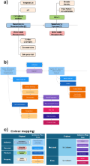
- nanomaterial properties, which can change as the surroundings change (such as zeta potential, which depends on the pH value and ionic strength of the surrounding medium [17]), and intrinsic nanomaterial properties, which are not affected by the surroundings (such as bandgap and structural arrangement) [18


Mechanistic insights into endosomal escape by sodium oleate-modified liposomes
Beilstein J. Nanotechnol. 2024, 15, 1667–1685, doi:10.3762/bjnano.15.131
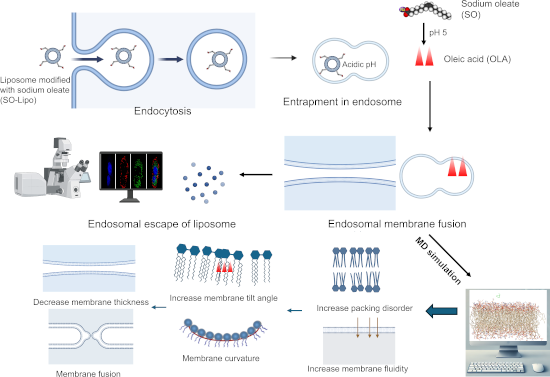
- distinct liposomal variants to evaluate key nanocarrier quality attributes, including particle size, polydispersity index (PDI), and zeta potential. These assessments were conducted at both physiological pH (7.4) and acidic pH (5), as summarized in Table 1. At physiological pH (7.4), the unmodified
- liposomes (Unmodified-Lipo) exhibited a stable physicochemical profile, with an average particle size of 102.2 ± 3.30 nm. Their PDI of 0.239 ± 0.046 indicated a uniform and consistent size distribution, supported by a mean negative zeta potential of −4.47 ± 2.34 mV. For sodium oleate-modified liposomes (SO
- uniformity. However, the zeta potential significantly decreased to −24.12 ± 5.75 mV, reflecting a substantial change in surface charge due to the anionic nature of SO, which may enhance colloidal stability through electrostatic repulsion. The Aurein 1.2-modified liposomes (AUR-Lipo) showed a notable increase




Facile synthesis of size-tunable L-carnosine-capped silver nanoparticles and their role in metal ion sensing and catalytic degradation of p-nitrophenol
Beilstein J. Nanotechnol. 2024, 15, 1576–1592, doi:10.3762/bjnano.15.124
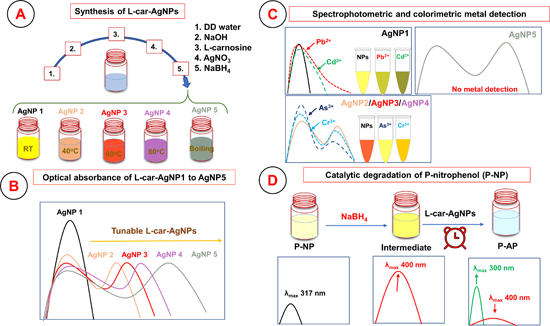
- (Nano ZS, Malvern, UK). The hydrodynamic size of ʟ-car-AgNPs was measured by placing them in 1 mL disposable cuvettes (DTS0012), while the zeta potential was measured using zeta cuvettes (ZEN1020). The ʟ-car-AgNPs samples were observed under a transmission electron microscope (TEM, 120 kV, FEI Tecnai
- pristine silver nanospheres upon interaction. The appearance of the redshifted peak might be due to charge transfer or aggregation [7]. An increased nanoparticle size leads to a further redshift of the plasmonic peak [26]. Hydrodynamic size, zeta potential, and morphology of the ʟ-car-AgNPs are shown in
- confirmed via zeta potential measurements. The zeta potential values of ʟ-car-AgNP1, ʟ-car-AgNP2, ʟ-car-AgNP3, ʟ-car-AgNP4, and ʟ-car-AgNP5 were −40.9 ± 3.42, −39.5 ± 3.43, −40.9 ± 3.94, −38.6 ± 4.58, and −40.9 ± 4.80, respectively. Zeta potentials beyond ±30 mV indicate excellent colloidal stability due to




The round-robin approach applied to nanoinformatics: consensus prediction of nanomaterials zeta potential
Beilstein J. Nanotechnol. 2024, 15, 1536–1553, doi:10.3762/bjnano.15.121
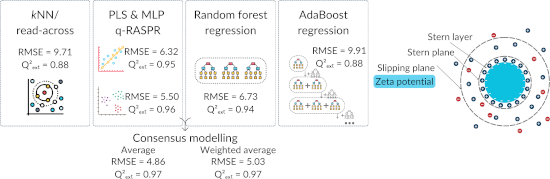
- “modelling equivalent” of a RR. We demonstrate here a novel approach to evaluate the performance of different models for the same endpoint (nanomaterials’ zeta potential) trained using a common dataset, through generation of a consensus model, leading to increased confidence in the model predictions and
- underlying models. Using a publicly available dataset, four research groups (NovaMechanics Ltd. (NovaM)-Cyprus, National Technical University of Athens (NTUA)-Greece, QSAR Lab Ltd.-Poland, and DTC Lab-India) built five distinct machine learning (ML) models for the in silico prediction of the zeta potential
- ; read-across; QSPR; round-robin test; zeta potential; Introduction Nanotechnology, defined as the ability to manipulate matter at the nanoscale, has opened an array of possibilities for multiple applications that take advantage of the unique properties of nanomaterials (NMs). From targeted drug


Polymer lipid hybrid nanoparticles for phytochemical delivery: challenges, progress, and future prospects
Beilstein J. Nanotechnol. 2024, 15, 1473–1497, doi:10.3762/bjnano.15.118
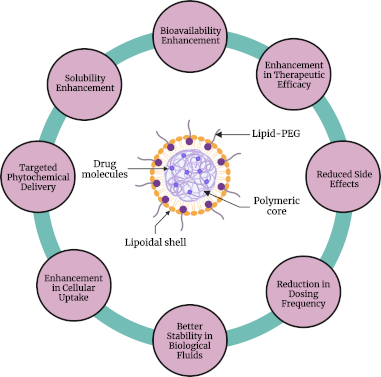
- showed excellent pharmaceutical attributes with small particle size (PS), high zeta potential (ZP), and high entrapment efficiency (EE). The CUR-PLHNPs were tested for hemocompatibility in the drug concentration range of 60–12000 μg/mL, and the results indicated that the CUR-PLHNPs were non-hemolytic


Nanotechnological approaches for efficient N2B delivery: from small-molecule drugs to biopharmaceuticals
Beilstein J. Nanotechnol. 2024, 15, 1400–1414, doi:10.3762/bjnano.15.113

- mucin. While the presence of the mucin did not significantly alter the negative surface charge of the PLGA NPs, the more negative zeta potential values of the PLGA-chitosan NPs showed that there was an interaction with mucin. Following this, the RH-loaded NPs showed 3.22-fold enhanced drug permeation


Green synthesis of carbon dot structures from Rheum Ribes and Schottky diode fabrication
Beilstein J. Nanotechnol. 2024, 15, 1369–1375, doi:10.3762/bjnano.15.110
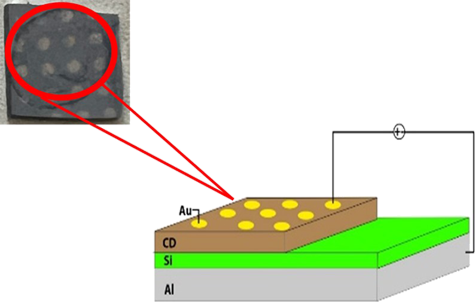
- synthesis, which is commonly used in the literature. TEM and zeta potential measurements were used to determine morphology and sizes of the CDs, and XRD, XPS, and FTIR and micro-Raman spectroscopy were used for structural characterization. Optical characterization of the CDs was done by absorption and
- Cary Eclipse fluorescence spectrophotometer were used for transmission electron microscopy (TEM), zeta potential measurements, X-ray diffractometry (XRD), Fourier-transform infrared spectroscopy (FTIR), X-ray photoelectron spectroscopy (XPS), micro-Raman spectroscopy, PVD thermal evaporation, scanning
- that the prepared CDs exhibited comparable amounts of the two carbon species [19]. In addition, the surface charge of the CDs was found to be −5.77 mV by zeta potential measurements. This value shows that there are more negatively charged carboxyl and hydroxy groups on the surface of the CDs than




Nanoarchitectonics with cetrimonium bromide on metal nanoparticles for linker-free detection of toxic metal ions and catalytic degradation of 4-nitrophenol
Beilstein J. Nanotechnol. 2024, 15, 1312–1332, doi:10.3762/bjnano.15.106
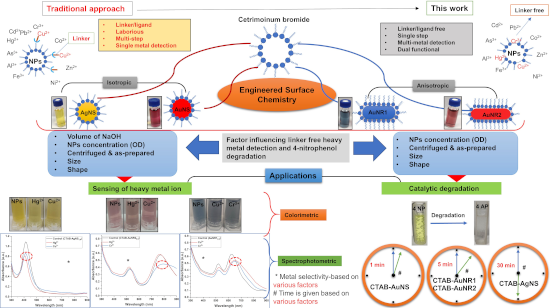
- nanostructures were measured using an Epoch2 spectrophotometer (BioTek, USA). Hydrodynamic radius and polydispersity index (PDI) were measured using dynamic light scattering (Zetasizer Nano ZS, Malvern, UK). The zeta potential measurements were conducted to determine the surface charge for both isotropic and
- forces between the particles. This repulsion prevents particles from getting too close to each other, thus minimizing aggregation. The CTAB-capped AgNS, AuNS, AuNR1, and AuNR2 showed positive zeta potential values of 30.2 ± 4.3, 30.9 ± 9.6, 36.2 ± 9.6, and 31.9 ± 9.1 mV, respectively (Figure 2c). Zeta
- potential values beyond −30 mV and +30 mV indicate excellent colloidal stability due to strong repulsive forces among the nanoparticles [41]. The positive zeta potential values are caused by the having positively charged head groups of CTAB molecules, which are attracted to the negatively charged surfaces




Mn-doped ZnO nanopowders prepared by sol–gel and microwave-assisted sol–gel methods and their photocatalytic properties
Beilstein J. Nanotechnol. 2024, 15, 1283–1296, doi:10.3762/bjnano.15.104
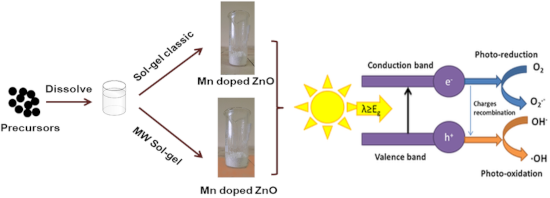
- FTIR post-reaction spectra (Supporting Information File 1, Figure S1). Zeta potential measurements revealed values of +17.48 mV and +11.09 mV for SG and MW samples, respectively, suggesting a better adsorption of oxalate ions on the SG sample than on the MW sample. The ability of the photocatalysts to
- investigated every 30 min by a gas chromatograph (Buck Scientific) equipped with molecular sieve 5 Å and Haysept columns. The photocatalytic experiments were triplicates, and the represented data are the mean values. Zeta potential measurements were conducted using a Beckman Coulter Delsa Nano C analyzer (Brea


Dual-functionalized architecture enables stable and tumor cell-specific SiO2NPs in complex biological fluids
Beilstein J. Nanotechnol. 2024, 15, 1238–1252, doi:10.3762/bjnano.15.100
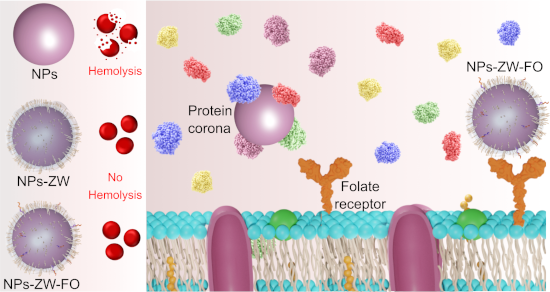
- sputter-coated with Au using a Bal-Tec SCD050 Sputter Coater. Secondary electrons were collected after backscattering of the Au-coated samples attained by electron beams with a 5 kV acceleration voltage. The particle hydrodynamic diameter and zeta potential were evaluated on a Malvern Zetasizer ZS
- equipment (Malvern Instruments Ltd., UK – detection angle of 173° and laser wavelength of 633 nm). For DLS measurements, NPs were dispersed in MilliQ water (1.0 mg·mL–1). To determine the zeta potential, the NPs were diluted in 10 Mm of phosphate buffer at a concentration of 1.0 mg·mL–1. All measurements
- potential measurements indicated negative charges for the SiO2NPs. This charge is justified by the silanol groups on the surface that are deprotonated at pH values above 4 [13][38][39][40]. After the addition of ZW (SiO2NPs-ZW), theoretically, the zeta potential value should approach zero since silanol


Enhanced catalytic reduction through in situ synthesized gold nanoparticles embedded in glucosamine/alginate nanocomposites
Beilstein J. Nanotechnol. 2024, 15, 1227–1237, doi:10.3762/bjnano.15.99
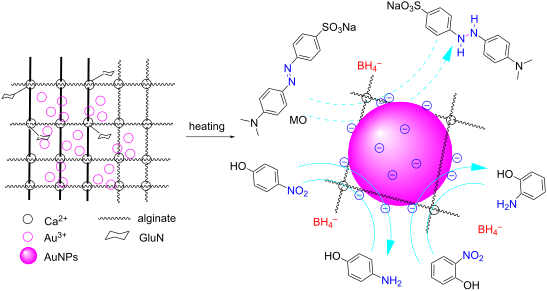
- microscopy (TEM) and selected area electron diffraction (SAED) were carried out using a JEOL JEM-2100 instrument. Crystal structure characterizations of AuNPs were carried out via XRD diffraction. Zeta potential and dynamic light scattering (DLS) measurements were carried out on gel solutions (1.0 mg·mL−1
- for synthesizing AuNPs@GluN/Alg were determined to be a Au3+ ions-to-gel ratio of 7% and heating at 70 °C for 100 min. These optimal samples were further characterized and evaluated regarding their catalytic activity. Characterization of AuNPs@GluN/Alg Zeta potential analysis was employed to assess
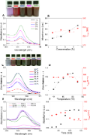
- the stability of nanoparticles in the colloidal solution. Figure 3A shows that both the blank and AuNPs@GluN/Alg nanocomposites exhibit negative zeta potentials of −22 and −35 mV, respectively. The increased negativity in the zeta potential of AuNPs@GluN/Alg is attributed to the presence of AuNPs



Realizing active targeting in cancer nanomedicine with ultrasmall nanoparticles
Beilstein J. Nanotechnol. 2024, 15, 1208–1226, doi:10.3762/bjnano.15.98
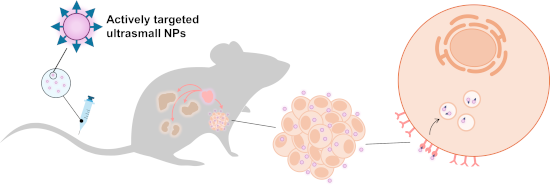
- 6). 64Cu-AuNCs-ECL1i had a uniform core size of 2.5 nm, hydrodynamic diameter of 5.1 nm, and zeta potential of 6.8 ± 1.6 mV. Notably, the ECL1i peptide (DLeu-Gly-DThr-DPhe-DLeu-DLys-DCys) was previously shown to selectively inhibit CCL2-induced chemotaxis (IC50 = 2 µM) [112]. In fact, the CCL2/CCR2


Synthesis, characterization and anticancer effect of doxorubicin-loaded dual stimuli-responsive smart nanopolymers
Beilstein J. Nanotechnol. 2024, 15, 1189–1196, doi:10.3762/bjnano.15.96
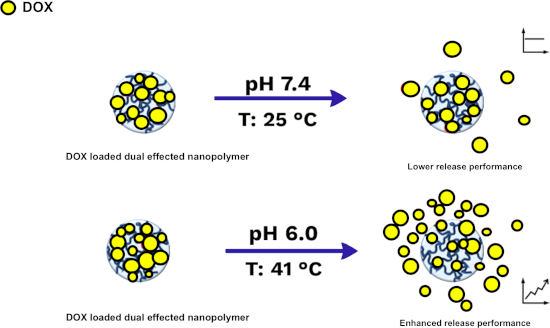
- . Characterizations of the synthesized nanostructures were carried out including zeta potential measurements, Fourier-transform infrared spectroscopy, and scanning electron microscopy. The loading capacity of the nanopolymers for DOX was investigated, and encapsulation and release studies were carried out. In a final
- are sensitive to two factors, such as pH and temperature, can be engineered to enhance targeting efficacy while minimizing systemic side effects [31][32]. Here, a strategy for the production and application of DOX-SNPs is proposed. FTIR, SEM, and zeta potential measurements were performed to
- . Scanning electron microscopy (SEM, Leo 440) was utilized for morphological characterizations of the SNPs; lyophilized SNPs were coated with gold, and the samples were placed in the SEM. The zeta potential the of DOX-SNPs was measured by using a Nano Zetasizer (NanoS, Malvern Instruments, London, UK


Recent updates in applications of nanomedicine for the treatment of hepatic fibrosis
Beilstein J. Nanotechnol. 2024, 15, 1105–1116, doi:10.3762/bjnano.15.89
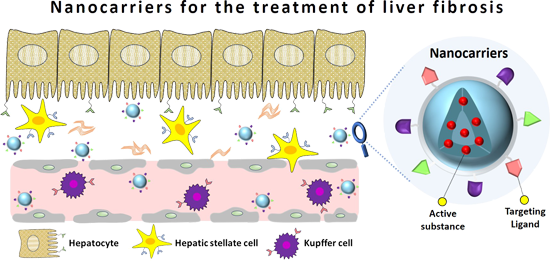
- , siCol1α1 and siTIMP-1 siRNAs were used to inhibit collagen synthesis and to promote collagen degradation, respectively. The spherical lipid NPs with a mean particle size of 140 ± 0.12 nm and negative zeta potential (−12.9 mV) were constructed from amphiphilic cationic hyperbranched lipoids for siRNA


Unveiling the potential of alginate-based nanomaterials in sensing technology and smart delivery applications
Beilstein J. Nanotechnol. 2024, 15, 1077–1104, doi:10.3762/bjnano.15.88
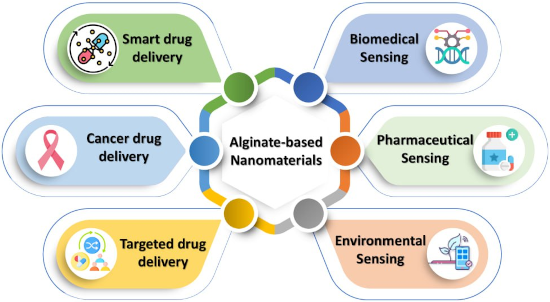
- ensure efficacy and safety [58]. The most crucial characteristics of nanoparticles are particle size, morphology, zeta potential, and surface area. Morphology of nanoparticles: There are many tools available for determining the morphology of nanomaterials. However, the most commonly used methods are
- a monolayer of gas coverage. The surface area of nanomaterials can also be determined by X-ray photoelectron spectroscopy and secondary ion mass spectroscopy [64][65]. Zeta potential: The zeta potential of nanoparticles can be calculated from the electrophoretic mobility of particles in a particular
- solvent using the Doppler approach, which measures particle velocity as a function of voltage. The determination of the zeta potential is crucial in understanding the mechanism of drug–nanoparticle interactions [66]. In addition to the methods described above, Fourier-transform infrared spectroscopy is


Entry of nanoparticles into cells and tissues: status and challenges
Beilstein J. Nanotechnol. 2024, 15, 1017–1029, doi:10.3762/bjnano.15.83
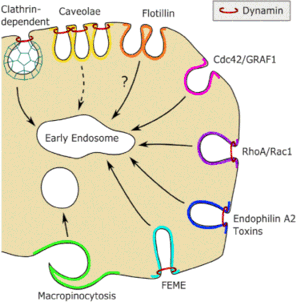
- different types of material, and even NPs with slight differences in chemical composition but having the same size and zeta potential have turned out to have very different effects on cells. They have for instance very different effects on autophagy in a cellular system [73], and it can be difficult to


Therapeutic effect of F127-folate@PLGA/CHL/IR780 nanoparticles on folate receptor-expressing cancer cells
Beilstein J. Nanotechnol. 2024, 15, 954–964, doi:10.3762/bjnano.15.78
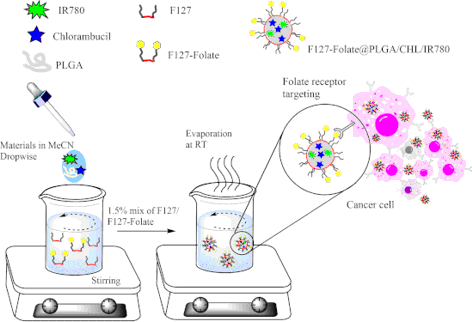
- scattering (DLS) and zeta potential spectra measurements were carried out in three replicates on a nanoPartica Horiba SZ-100 (Japan) with a scattering angle of 90° at 25 °C to determine the size distribution and stability of the nanocomposites. Scanning electron microscopy (SEM) The F127-folate@PLGA/CHL
- system. A zero charge or a slightly negative charge on the nanoparticles would prevent them from aggregating and interacting with blood proteins [43]. Our nanoparticles’s zeta potential in ten-time diluted PBS was −84.3 ± 2.5 mV and −77.4 ± 3 mV for F127-folate@PLGA/CHL/IR780 and F127@PLGA/CHL/IR780
- folate to the terminal PEO block increased the targeting efficiency. The externalization of the PEO chain would enhance the likelihood of folate binding to the overexpressed folate receptor on the surface of cancer cells. The difference in zeta potential between F127-folate@PLGA/CHL/IR780 and F127@PLGA

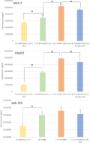


A review on the structural characterization of nanomaterials for nano-QSAR models
Beilstein J. Nanotechnol. 2024, 15, 854–866, doi:10.3762/bjnano.15.71
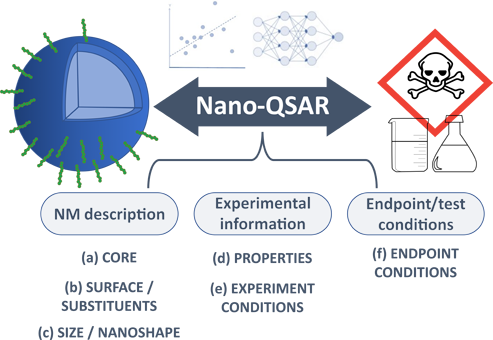
- consequence of the structure of the nanoform (e.g., wavelength or zeta potential, (d) in Figure 3) or whether they represent experimental conditions that contribute to the formation of nanoforms and are the cause of their structure (such as the synthesis medium or the time span between preparation and testing
- involved in the activity modelled or that have a structural origin related to the activity mechanism. A very common property included in several models [23][44][60][68][76] is the zeta potential (a measurement of the charge at the surface of the NMs). The zeta potential value used as a descriptor can be
- measured in a test medium or in different media, such as water at a specific pH or purity level [15][64][77]. A further step, proposed as an example of combining preexisting structure–activity predictive models in networks, is the prediction of the zeta potential in the relevant medium using a model that





