Search results
Search for "Anchoring" in Full Text gives 141 result(s) in Beilstein Journal of Nanotechnology.
A novel polyhedral oligomeric silsesquioxane-modified layered double hydroxide: preparation, characterization and properties
Beilstein J. Nanotechnol. 2018, 9, 3053–3068, doi:10.3762/bjnano.9.284
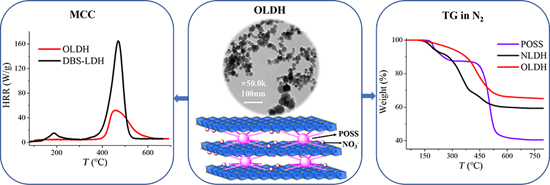
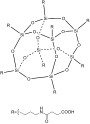
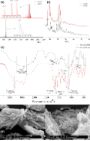
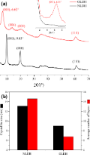
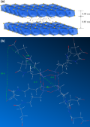
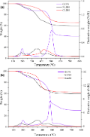
- –Al LDH in this work. Herein, OCPS was chosen as the candidate POSS intercalator because of the following advantages: (i) The long alkyl chains anchoring on the rigid POSS cage are flexible, reducing the resistance against the formation of layered structure. (ii) The OCPS molecule is rich in







Impact of the anodization time on the photocatalytic activity of TiO2 nanotubes
Beilstein J. Nanotechnol. 2018, 9, 2628–2643, doi:10.3762/bjnano.9.244
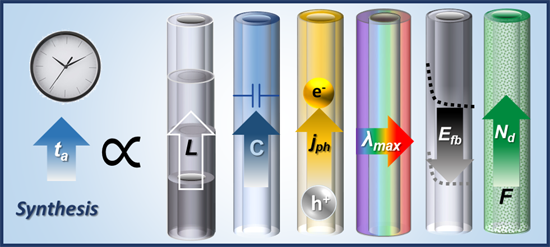
- beneficial effect for the degradation of MB, which could be also facilitated by an anchoring mechanism to a more hydrophilic TiO2 surface [90]. Further information on the degradation of MB was obtained with Raman spectroscopy. Figure 9e shows the spectra recorded for the solutions at the end of the treatment
- the TNTs does not correspond directly to their length, but more to the amount of surface hydroxy groups (induced by the fluorination and N dopant atoms) observed by XPS, which is related to the anchoring process. Thus, while the total exposed area (inner or outer walls of the tubes) remains important


Cr(VI) remediation from aqueous environment through modified-TiO2-mediated photocatalytic reduction
Beilstein J. Nanotechnol. 2018, 9, 1448–1470, doi:10.3762/bjnano.9.137
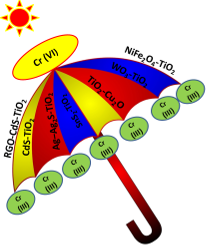
- reduction of Cr(VI) under UV light irradiation. The anchoring of TiO2 over Fe3O4 resulted in (i) high dispersion of the active site, which is important for achieving higher reaction rate, (ii) enhancement of the photoreduction rate by decreasing the recombination of electron−hole pairs due to significant


Semi-automatic spray pyrolysis deposition of thin, transparent, titania films as blocking layers for dye-sensitized and perovskite solar cells
Beilstein J. Nanotechnol. 2018, 9, 1135–1145, doi:10.3762/bjnano.9.105
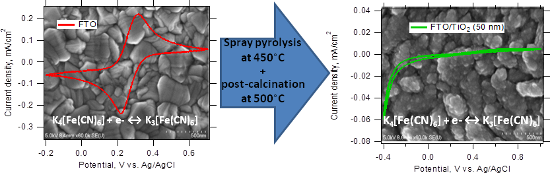
- anchoring of TiO2 to FTO. This hypothesis is rationalized by the well-known chelating effect of acetylacetone on both organometallic complexes and on oxidic surfaces. The optimization through compositional variation is limited by the growth of complicated species, particularly if the acetylacetone


Optical orientation of nematic liquid crystal droplets via photoisomerization of an azodendrimer dopant
Beilstein J. Nanotechnol. 2018, 9, 870–879, doi:10.3762/bjnano.9.81
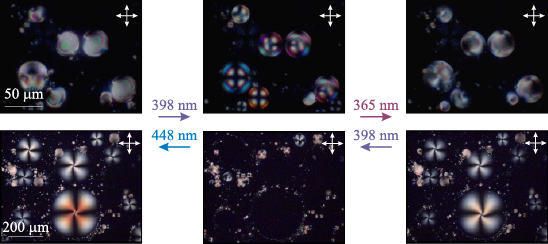
- homeotropic anchoring of the NLC film. The boundary conditions can be changed to planar and then return to homeotropic again by photoisomerization processes. The effects of NLC film orientation are very similar to the bulk mediated photoalignment [26][27], which are influenced by exchange of the dopant
- ) tends to turn the radial structure of the droplets to the one (Figure 2c) that is close to the initial bipolar structure (Figure 2a). The NLC droplet orientation is caused by planar anchoring conditions or anchoring conditions tilted at a small angle [34][35]. It is possible to induce the orientational
- (or close to planar) anchoring of NLC with glycerol (Figure 3c). The reverse changes from planar to homeotropic anchoring of NLC with glycerol can be produced by light irradiation with λmax = 398 nm (or 406 nm), and then, from homeotropic to degenerated planar anchoring, by light irradiation with λmax


Anchoring Fe3O4 nanoparticles in a reduced graphene oxide aerogel matrix via polydopamine coating
Beilstein J. Nanotechnol. 2018, 9, 591–601, doi:10.3762/bjnano.9.55
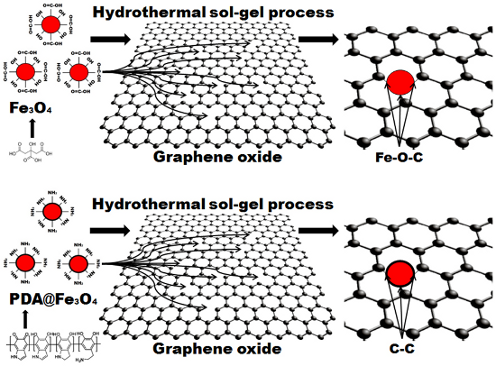
- intensity decreased due to anchoring of Fe3O4 nanoparticles at the defect sites. All the spectra are featured by the C=C aromatic double bond at 1667 cm−1 (V) and the C–C bond at 1447 cm−1 (VII). However, only hybrid aerogels exhibit C=O and C–O vibrations at 1723 cm−1 (IV) and 1205 cm−1 (VIII
- corresponding to metal oxide (grey arrows). This indicate that Fe3O4 and PDA@Fe3O4 nanoparticles are replacing the above mentioned functional groups and attach at the defects sites at the graphene lattice. In that way, the defects act as anchoring centers for the particles. This assignment was further confirmed
- polydopamine coating of magnetite nanoparticles on the structure and properties of rGO-Fe3O4 aerogels was studied. It was found that the polydopamine coating has a positive effect on the aerogel structure by supplying carbon atoms to the defected hexagonal structure and anchoring of PDA-coated Fe3O4


Dynamic behavior of nematic liquid crystal mixtures with quantum dots in electric fields
Beilstein J. Nanotechnol. 2018, 9, 399–406, doi:10.3762/bjnano.9.39

- nanoparticles [6], quantum dots (QDs) [7][8][9][10][11][12] or other nanomaterials [13][14][15][16][17] that can be effectively used in electro-optical devices. When added to liquid crystals, quantum dots may seriously influence their behavior under an electric field due to the anchoring forces acting on the
- liquid crystal is acting like a continuous fluid and the interaction forces between its molecules are elastic. Taking into account a strong anchoring on the glass support, the free energy density of such a system with added quantum dots is: where fN is the liquid crystal free energy density, fE is a term
- and the configuration given in Figure 3, as well as homeotropic anchoring of liquid crystal molecules on the QD surface [12], the interaction energy for a particle can be obtained using a similar procedure as presented by Burylov [22]: where w is the anchoring energy on the surface of the nanoparticle


Periodic structures on liquid-phase smectic A, nematic and isotropic free surfaces
Beilstein J. Nanotechnol. 2018, 9, 342–352, doi:10.3762/bjnano.9.34
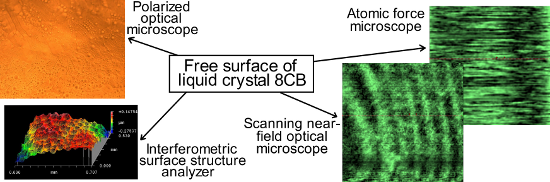
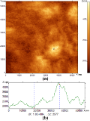
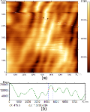
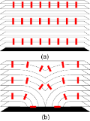
- ; liquid crystals; microscopy; smectic A phase; Introduction The considerable interest in studies of liquid crystalline free boundaries that has recently arisen is due to their intrinsic free surface properties which are not influenced by the substrate anchoring [1][2]. This is very important for many
- amplitudes by the program MetroPro. A piece of LC display was used as a substrate (Figure 12), which provides two main advantages. First, it has a large anchoring energy for theliquid crystal director field, and second, helps to better focus at the bottom edge of the liquid crystal layer. During the









Wafer-scale bioactive substrate patterning by chemical lift-off lithography
Beilstein J. Nanotechnol. 2018, 9, 311–320, doi:10.3762/bjnano.9.31
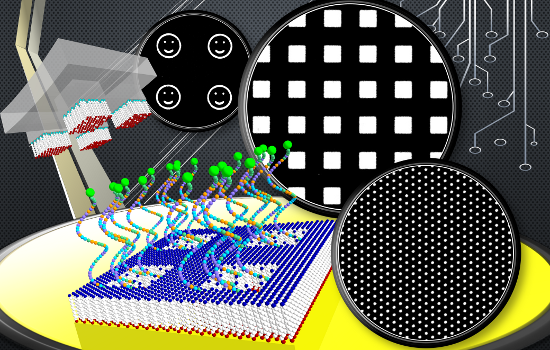
- biological species recognition with minimum nonspecific attachment. Herein, a straightforward approach utilizing chemical lift-off lithography to create a diluted self-assembled monolayer matrix for anchoring diverse biological probes is introduced. The strategy encompasses convenient operation, well-tunable
- -arrangement of silane or thiol molecules on silica or Au surfaces, which has been proven as a convenient route for the fabrication of functional surfaces toward versatile targets [12][13][14][15][16]. In addition to direct surface modification, the versatility of anchoring molecule tail groups provides
- steps, and biomolecule anchoring. It should be noted that the conformal contact reaction requires no external pressure, and the lift-off operation is performed under ambient conditions. As shown in the AFM images of Figure 1, the SAM-modified Au surface reveals a depressed square pattern after CLL


Anchoring of a dye precursor on NiO(001) studied by non-contact atomic force microscopy
Beilstein J. Nanotechnol. 2018, 9, 242–249, doi:10.3762/bjnano.9.26
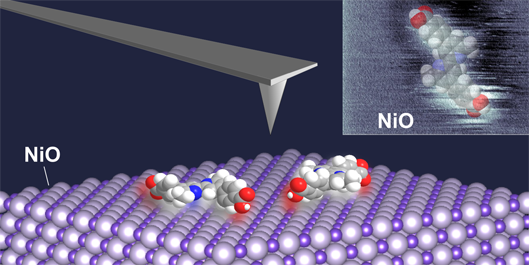
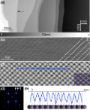
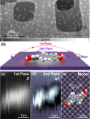
- ligand to complete the active dye [43][44][45]. We present in this paper, high-resolution structural and electrical measurements obtained by nc-AFM of a typical anchoring ligand (DCPDMbpy), based on a 6,6′-dimethyl-2,2′-bipyridine metal-binding domain with two 4-carboxyphenyl anchoring groups (see Figure
- (001) surface, we investigated the adsorption properties of the anchoring ligand DCPDMbpy, at various coverages. Depending on the deposition conditions and post-deposition treatments of the sample, DCPDMbpy molecules remain separated or form molecular clusters or islands on the surface of NiO(001) at
- between the NiO surface and the dye precursor molecule DCPDMbpy. Conclusion We have presented high-resolution topographic measurements using bimodal nc-AFM at room temperature of the anchoring part of a larger dye molecule (DCPDMbpy) adsorbed on a NiO(001) crystal surface. The surface structure of NiO(001



Dynamic behavior of a nematic liquid crystal with added carbon nanotubes in an electric field
Beilstein J. Nanotechnol. 2018, 9, 233–241, doi:10.3762/bjnano.9.25
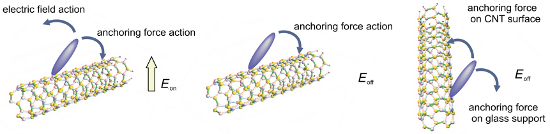
- models have to be developed for their characterization [5][6][9][10][11]. When nanoparticles are inserted in liquid crystals, nematic molecules are attached to the particle surface due to anchoring forces. Experimental studies revealed that carbon nanotubes have a strong interaction with liquid crystal
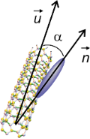
- we consider the interaction free energy between nanoparticles and nematic liquid crystal molecules given by the model proposed by Burylov and Zakhlevnykh [17], we get: where f is the volumetric fraction of nanotubes, R is the nanotubes radius, w is the average anchoring energy density at the nematic
- Dierking and co-workers [13][14] proved an alignment of CNTs parallel to the liquid crystal molecules, so we may assume that the anchoring angle α is neglectable. Thus, Equation 11 becomes: When exposed to an external electric field higher than the critical Fréedericksz transition threshold the molecules

![[Graphic 1]](/bjnano/content/inline/2190-4286-9-25-i33.svg?max-width=637&scale=1.18182) is the undistu...
is the undistu...



Nematic topological defects positionally controlled by geometry and external fields
Beilstein J. Nanotechnol. 2018, 9, 109–118, doi:10.3762/bjnano.9.13
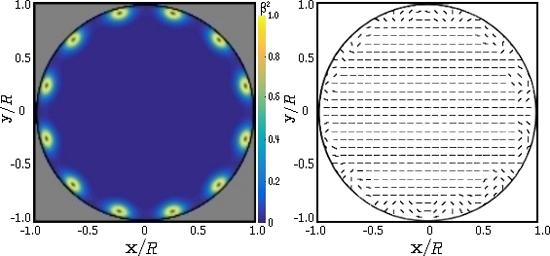
- interaction strength, is the surface normal of the local confinement, and describes preferred nematic ordering of the surface. The surface term given by Equation 8 enforces for w > 0 (w < 0) degenerate tangential (homeotropic) anchoring. On the other hand, the contribution in Equation 9 is minimized for
- the Cartesian (x,y,z) or cylindrical geometry (r,φ,z), as illustrated in Figure 1. Accordingly, we use two different boundary conditions, to which we refer as “boundary anchoring condition” (BAC) [18] and “surface anchoring condition” (SAC), respectively. We use BAC in the “Cartesian” cells. We assume
- Equation 10, in which we set m = 1. At the bottom plate we enforce homeotropic anchoring conditions using the ansatz in Equation 8. At the lateral boundaries we assume free boundary conditions. These conditions impose a boojum topological defect at the top plate [19][20]. Note that in our simulations we


![[Graphic 25]](/bjnano/content/inline/2190-4286-9-13-i36.svg?max-width=637&scale=1.18182) with the largest positive eigenvalue, corresponding to the 2D biaxi...
with the largest positive eigenvalue, corresponding to the 2D biaxi...


Nematic liquid crystal alignment on subwavelength metal gratings
Beilstein J. Nanotechnol. 2018, 9, 42–47, doi:10.3762/bjnano.9.6
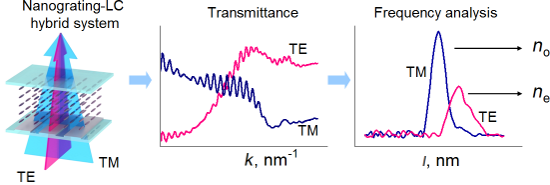
- have also obtained a 90° twisted LC director distribution, implying sufficiently strong azimuthal LC anchoring at the grating surface. Keywords: alignment; Fourier analysis; nematic liquid crystal; subwavelength metal grating; Introduction In the age of nanotechnology, various nanostructured
- twisted distribution of the LC director takes place in the layer. The appearance of the twist demonstrates that the subwavelength aluminum gratings are capable of aligning liquid crystals along their slits with rather small pretilt angles and that the anchoring energy is high enough to balance the elastic
- torque at the surface, which is provided by the twisted deformation across the LC layer. The azimuthal anchoring strength can be estimated from the fact that the angular deviation from the 90o twist is not higher than our experimental accuracy (δφ ≈ 3°). Our analysis shows that in the case of such small


![[Graphic 3]](/bjnano/content/inline/2190-4286-9-6-i7.svg?max-width=637&scale=1.18182) , the sample axis (rubbing direction) ...
, the sample axis (rubbing direction) ...


Magnetic field induced orientational transitions in liquid crystals doped with carbon nanotubes
Beilstein J. Nanotechnol. 2017, 8, 2807–2817, doi:10.3762/bjnano.8.280
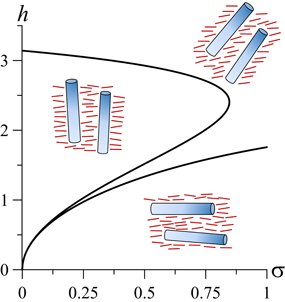
- absolutely rigid anchoring of NLC molecules with the boundaries. We set the origin of the coordinate system at the middle of the layer (see Figure 1). We use the unit vectors n and m, the so-called directors, to describe the preferential orientation of the LC molecules and CNTs, respectively. We assume soft


![[Graphic 43]](/bjnano/content/inline/2190-4286-8-280-i72.svg?max-width=637&scale=1.18182) for the Fréedericksz transition as a function of the couplin...
for the Fréedericksz transition as a function of the couplin...

![[Graphic 58]](/bjnano/content/inline/2190-4286-8-280-i87.svg?max-width=637&scale=1.18182) and (b)
and (b) ![[Graphic 59]](/bjnano/content/inline/2190-4286-8-280-i88.svg?max-width=637&scale=1.18182) on the coupling energy of CNTs w...
on the coupling energy of CNTs w...
Inelastic electron tunneling spectroscopy of difurylethene-based photochromic single-molecule junctions
Beilstein J. Nanotechnol. 2017, 8, 2606–2614, doi:10.3762/bjnano.8.261
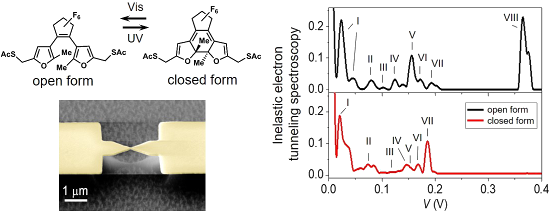
- HOMO energy is closer to the Fermi energy than the LUMO level, as typical for sulfur anchoring groups [37]. In Figure 2c, we show the wavefunctions of the dominant eigenchannel at EF for the closed and open forms for electrons that enter from the left side. The electric transport mainly proceeds


Nanoprofilometry study of focal conic domain structures in a liquid crystalline free surface
Beilstein J. Nanotechnol. 2017, 8, 2544–2551, doi:10.3762/bjnano.8.254
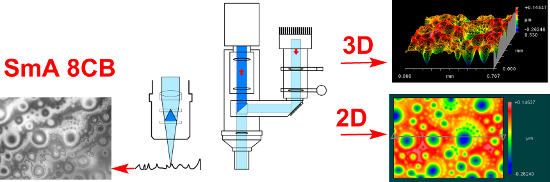
- substrate anchoring [1][2]. This understanding is important for display-quality technology and production enhancement. The study of the free liquid crystalline boundary is interesting for applications such as liquid crystalline colors and coatings as well as cosmetics. To study liquid crystalline free
- liquid crystal display was used (Figure 7). For this, we have broken a commercial Samsung PC display, cleaned and dried it. The LC PC display substrate brings two main advantages. First, it has a large anchoring energy for the liquid crystal director field and it makes for better conditions for FCD




Dynamic behavior of a nematic liquid crystal mixed with CoFe2O4 ferromagnetic nanoparticles in a magnetic field
Beilstein J. Nanotechnol. 2017, 8, 2467–2473, doi:10.3762/bjnano.8.246
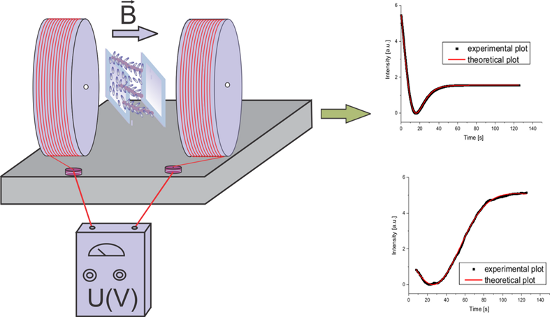
- variations of transition thresholds [27][28] or response time [29]. Ferromagnetic nanoparticles are good candidates for LC improvement due to their significant positive magnetic anisotropy and strong anchoring energy [30][31] on a large surface provided by chain clustering. All these effects help the
- nanoparticles are agglomerating in long chains on which LC molecules are attached like leaves on a tree branch. Previous results [32] and microscopy images indicate that CoFe2O4 nanoparticles are gathering in long chains which align themselves parallel to the rubbing directions indicating a strong anchoring to
- interaction of the liquid crystal with the applied field, the interaction of the ferromagnetic nanoparticles with the magnetic field and the LC molecules anchoring on the surface of the added particles. The deviation angle θ between the glass plates is given by: where z is the Oz coordinate of the LC


Adsorbate-driven cooling of carbene-based molecular junctions
Beilstein J. Nanotechnol. 2017, 8, 2060–2068, doi:10.3762/bjnano.8.206
- adsorbate is fundamentally different from that of anchoring groups in molecular junctions (R–NH2): here NH2 acts as an acceptor, while as anchoring group, amines are electron donors [42]. In Supporting Information File 1, we show a comparison of the plane-averaged electron density difference upon adsorption
- of NH2 for reference, and its saturated counterpart NH3 (which is similar to the role as anchoring group R–NH2). Similar shifts of molecular levels are expected for other adsorbates, whose donor or acceptor character could be used to gate NHC conducting orbitals. We now turn to the spectral features


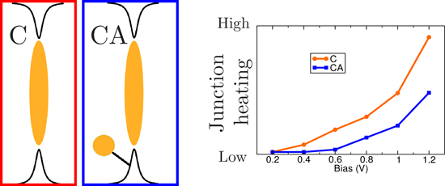
![[Graphic 14]](/bjnano/content/inline/2190-4286-8-206-i21.png?max-width=637&scale=1.18182) = 176 meV as a function of applied bias for the C and CA junctions, a...
= 176 meV as a function of applied bias for the C and CA junctions, a...

Application of visible-light photosensitization to form alkyl-radical-derived thin films on gold
Beilstein J. Nanotechnol. 2017, 8, 1863–1877, doi:10.3762/bjnano.8.187
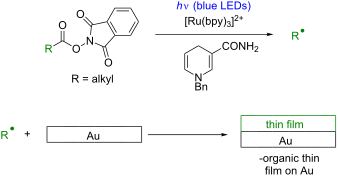
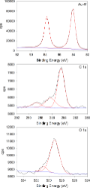
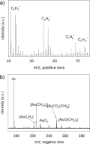
- demonstrated with radical initiators [44]. Therefore, crosslinking is a possible underlying reason for robustness (see proposed mechanism, Scheme 3). In addition, formation of Au–C and CO2–Au bonds at the surface is evidenced by TOF-SIMS but not by XPS, suggesting that limited anchoring of the film may be



Methionine-mediated synthesis of magnetic nanoparticles and functionalization with gold quantum dots for theranostic applications
Beilstein J. Nanotechnol. 2017, 8, 1734–1741, doi:10.3762/bjnano.8.174
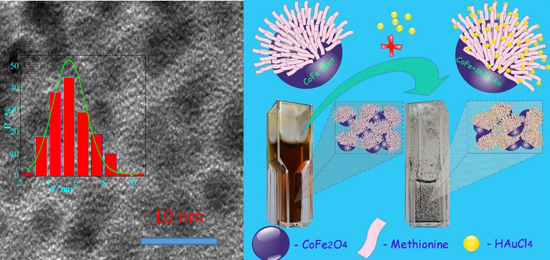
- stabilization of cobalt ferrite NPs as the capping ligand and reducing agent of gold ions. The interest in NPs capped with methionine was based on the current understanding that methionine can reduce chloroauric acid from alkaline solutions anchoring Au0 at the surface of the NPs [18]. As-synthesized NPs were


Two-dimensional carbon-based nanocomposites for photocatalytic energy generation and environmental remediation applications
Beilstein J. Nanotechnol. 2017, 8, 1571–1600, doi:10.3762/bjnano.8.159
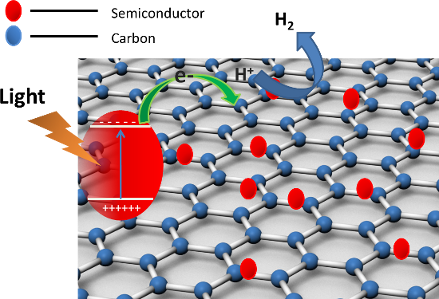
- reactions, mainly controlled hydrolysis and condensation, to form the desired photocatalyst. The major advantage of using the sol–gel method is the in situ growth of nanostructures so that the various functional groups on the surface of GO sheets are available to provide reactive and anchoring sites for the
- properties with unsaturated N-atoms for anchoring active sites [69]. Furthermore, the stacked 2D layered structure of g-C3N4 consists of single-layer nitrogen heteroatom-substituted graphite nanosheets, formed through sp2 hybridization of C and N atoms, and various layers are bound together by van der Waals


Nano-engineered skin mesenchymal stem cells: potential vehicles for tumour-targeted quantum-dot delivery
Beilstein J. Nanotechnol. 2017, 8, 1218–1230, doi:10.3762/bjnano.8.123
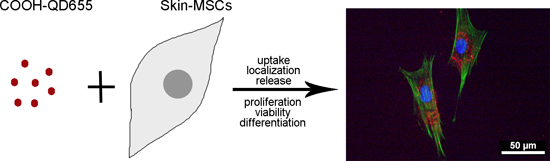
- through the anchoring of the clathrin and adaptor protein 2 (AP2) complex to endosomes, thereby preventing the assembly of coated pits at the inner plasma membrane [42]. In serum-free medium, QD uptake was decreased by CPZ and nystatin (Figure 7b,d). nystatin is an inhibitor of caveolin/lipid raft





Stable Au–C bonds to the substrate for fullerene-based nanostructures
Beilstein J. Nanotechnol. 2017, 8, 1073–1079, doi:10.3762/bjnano.8.109
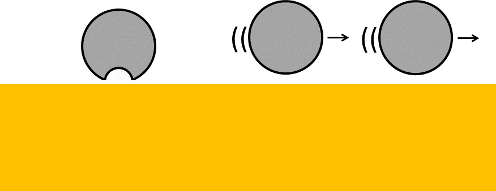
- as well as anchoring groups [9][10][11][12]. They have featured in spin transport studies, where spin currents can be achieved by encapsulating magnetic atoms or impurities inside the fullerene cage [13][14][15][16][17][18]. The adsorption of C60 on the metal surface determines the strength and


CVD transfer-free graphene for sensing applications
Beilstein J. Nanotechnol. 2017, 8, 1015–1022, doi:10.3762/bjnano.8.102
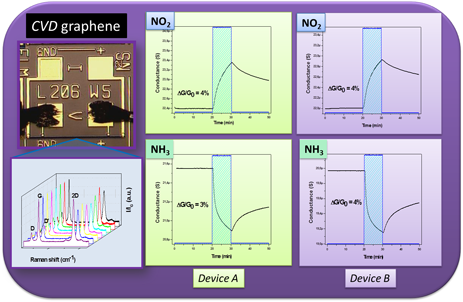
- temperature at 1000 °C, the pressure at 25 mbar and using Ar/H2/CH4 as feedstock. At the end of the CVD growth, the Mo has been selectively etched away underneath graphene employing phosphoric acid. Due to anchoring at the sides of the patterned catalyst, the graphene layer sticks directly to the underlaying


Triptycene-terminated thiolate and selenolate monolayers on Au(111)
Beilstein J. Nanotechnol. 2017, 8, 892–905, doi:10.3762/bjnano.8.91
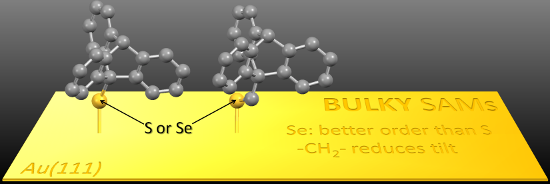
- larger domains and lower defect densities than their sulfur-based analogues. The most prominent example likely is anthraceneselenolate [5] vs anthracenethiolate [26] on Au(111). The selenolate anchoring group is believed to experience a smaller corrugation of the Au(111) interaction potential, enabling