


Search results
Search for "Au" in Full Text gives 746 result(s) in Beilstein Journal of Nanotechnology. Showing first 200.
Effect of additives on the synthesis efficiency of nanoparticles by laser-induced reduction
Beilstein J. Nanotechnol. 2025, 16, 464–472, doi:10.3762/bjnano.16.35
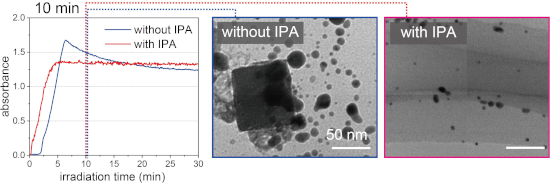
- the oxidative radicals into reducing species. Based on the evaluation of the synthesis efficiency of Au nanoparticles, it was confirmed that the addition of IPA increased the synthesis efficiency of nanoparticles by about five times, and the addition of glycerin increased it by about nine times
- synthesize 160 mg/h of Au nanoparticles in the current system. It was also shown that non-equilibrium solid–solution alloy nanoparticles could be synthesized even when a radical scavenger was added. Furthermore, the addition of a radical scavenger also made it possible to synthesize base metal nanoparticles
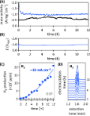
- the change in the absorption peak at 520 nm in the UV–vis absorption spectrum caused by the localized surface plasmon resonance (LSPR) of the Au nanoparticles as a function of the laser irradiation time. The black line shows the change in absorbance for the solution without IPA, and the red line shows


Synthetic-polymer-assisted antisense oligonucleotide delivery: targeted approaches for precision disease treatment
Beilstein J. Nanotechnol. 2025, 16, 435–463, doi:10.3762/bjnano.16.34


Quantification of lead through rod-shaped silver-doped zinc oxide nanoparticles using an electrochemical approach
Beilstein J. Nanotechnol. 2025, 16, 422–434, doi:10.3762/bjnano.16.33
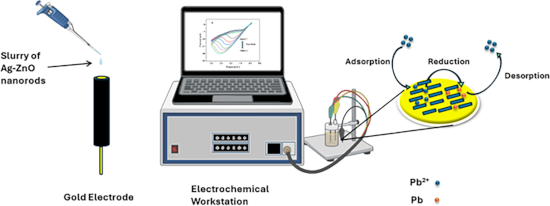
- (FRA) potentiostat on both fabricated Ag–ZnO/Au electrodes and bare gold electrodes. The modified Ag@ZnO NRs electrode exhibits higher impedance than that of the bare gold electrode. This higher impedance leads to better sensitivity, better electron exchange, and can provide more information about the
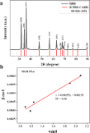
- three-electrode configuration. The working electrode consisted of the modified Ag@ZnO NRs/Au electrode, a platinum wire used as the counter electrode, and the reference electrode was an Ag/AgCl electrode. A 0.1 M phosphate buffer solution with a pH of 7.0 was used for all measurements. (a) XRD of Ag@ZnO
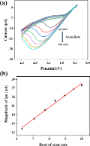
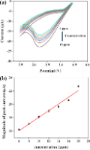
- Ag 3d, (c) scan of oxygen 1s, and (d) scan of Zn 2p. Electrochemical impedance spectroscopy (EIS) Nyquist plots of modified Ag@ZnO NRs/Au and bare Au electrode. Cyclic voltammetry sweep curves for a modified electrode (black curve) or a bare electrode (red curve) in lead solution. Schematic diagram





Size control of nanoparticles synthesized by pulsed laser ablation in liquids using donut-shaped beams
Beilstein J. Nanotechnol. 2025, 16, 407–417, doi:10.3762/bjnano.16.31
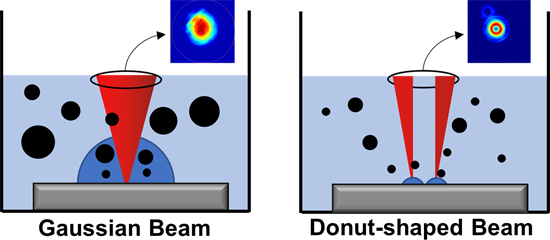
- most elegant, surfactant-free size quenching method by micromolar anion addition only works for soft Lewis-acid nanoparticle materials, in particular, Au, Pt, and Pd, as the process is driven by anion adsorption Hofmeister effects, but not for oxide or multi-base metal materials such as the Cantor


Pulsed laser in liquid grafting of gold nanoparticle–carbon support composites
Beilstein J. Nanotechnol. 2025, 16, 349–361, doi:10.3762/bjnano.16.26
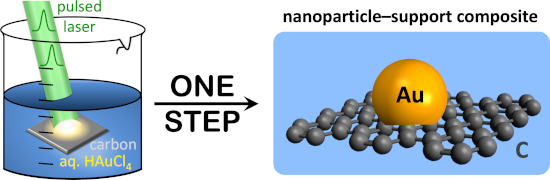
- bonds in solid materials are of the order of nanoseconds to microseconds [40]. For comparison, typical timescales expected for laser-induced growth of Au nuclei are hundreds of femtoseconds to a few nanoseconds [41], and the metal–cluster nucleation rate for the formation of ca. 5 nm gold nanoparticles
- was reported as 3.0 × 10⁻⁶ s−1 [25]. This suggests that pristine graphite surfaces, generated by the in situ decontamination and activation by nanosecond laser cleaning, can exist for Au embedding during the pulsed laser grafting process. However, this microscopic surface decontamination and
- treatment that enabled the embedding of gold atoms. Gold was additionally present in XPS data of the pulsed laser-grafted gold nanoparticle–carbon fiber paper composites (Figure 4B). High-resolution Au 4f data were fitted using a Gaussian–Lorentzian doublet with an orbital splitting of (3.5 ± 0.14) eV of Au


Preferential enrichment and extraction of laser-synthesized nanoparticles in organic phases
Beilstein J. Nanotechnol. 2025, 16, 254–263, doi:10.3762/bjnano.16.20
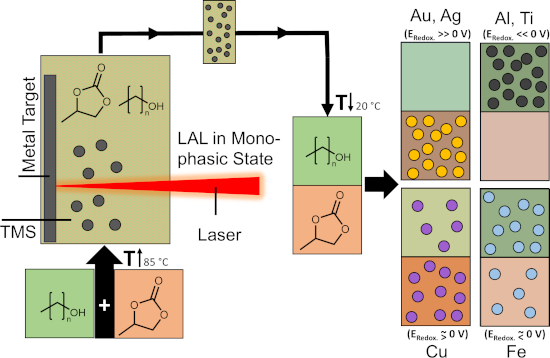
- unaddressed in literature. To tackle this knowledge gap, the present study investigates the phase preference of laser-generated noble metal (Au and Ag) and base metal (Cu, Fe, Al and Ti) nanoparticles within propylene carbonate/alcohol (PC/A) systems. Alcohols of increasing chain length (C6–C11) and hence
- , polarity of the solvent, or even physical attributes (e.g., boiling point), phase transfer methods are essential. To close this knowledge gap, we have performed ablation of six different metals (Au, Ag, Cu, Fe, Al, and Ti) ranging from high to low standard electrochemical reduction potentials in a
- with varying standard electrochemical reduction potential (Au, Ag, Cu, Fe, Al, and Ti) was performed in the TMS of 1-nonanol and propylene carbonate under monophasic state conditions (85 °C). The gained colloids were cooled to room temperature by disabling the heating plate as it was observed that




Recent advances in photothermal nanomaterials for ophthalmic applications
Beilstein J. Nanotechnol. 2025, 16, 195–215, doi:10.3762/bjnano.16.16
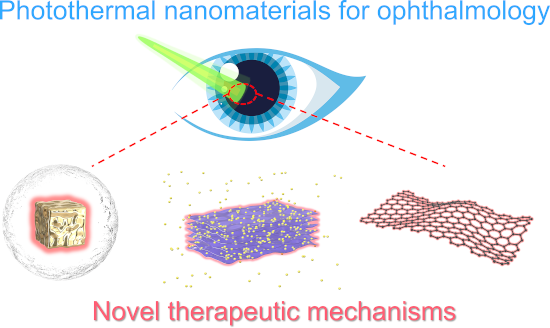
- photothermal gel, composed of Au nanorods, geraniol, chitosan, and the gene-targeted drug DC_AC50 can be activated by NIR light. Photothermal activation softens the hydrogel composed of geraniol and chitosan, controlling drug release and facilitating PTT at moderate temperatures, thus yielding exceptional anti
- -tumor efficacy both in vitro and in vivo [106]. Additionally, Au nanoparticles synthesized using fucoidan (Fu-AuNPs) loaded with the chemotherapy drug doxorubicin (DOX), effectively inhibit choroidal melanoma via a synergistic PTT–chemotherapy approach [107]. Fu, as a reducing agent, assisted in the
- , aiding in the precise identification of treated areas. Au nanorods, when combined with anti-epithelial cell adhesion molecule (EpCAM), accurately target EpCAM+Y79 retinoblastoma cancer cells [108]. The targeted cells are deemed to be destroyed by VNBs induced by optimally parameterized femtosecond


Comparison of organic and inorganic hole transport layers in double perovskite material-based solar cell
Beilstein J. Nanotechnol. 2025, 16, 119–127, doi:10.3762/bjnano.16.11
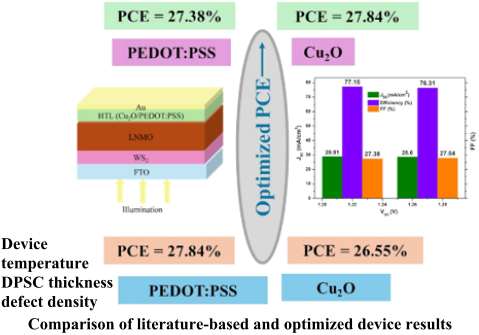
- and shunt resistance, interfacial defect density, and various metal electrodes were studied. An efficiency of 18.89% with VOC = 0.7919 V, JSC = 27.89 mA/cm2, and FF = 85.52% was reported for the device structure FTO/WS2/La2NiMnO6/Cu2O/Au [15][16]. In 2023, the highest optimized efficiency of 24.08
- % was reported for the device configuration FTO/WS2/LNMO/Cu2O/Au, representing La2NiMnO6 as an eco-friendly and non-toxic oxide material usable for further applications [17]. In literature, DPSCs with inorganic Cu2O have been studied, but in this manuscript we also consider organic materials. The
- optimized PSC device displays a higher efficiency of 27.84% with Cu2O and 27.38% with PEDOT:PSS for the planar n-i-p FTO/WS2/LNMO/HTL/Au device structure. However, highly efficient organic HTLs have a few disadvantages over inorganic HTLs, including multistep synthesis requiring additional doping, leading


Precursor sticking coefficient determination from indented deposits fabricated by electron beam induced deposition
Beilstein J. Nanotechnol. 2025, 16, 35–43, doi:10.3762/bjnano.16.4

- dynamics of larger precursor molecules. Methods A dual-beam microscope Nova 600 (FEI Company, the Netherlands) at Goethe University Frankfurt was used for the nanofabrication process. Structures were deposited on a 500 nm thick Au surface on top of a SiO2-terminated Si substrate in order to prevent


The round-robin approach applied to nanoinformatics: consensus prediction of nanomaterials zeta potential
Beilstein J. Nanotechnol. 2024, 15, 1536–1553, doi:10.3762/bjnano.15.121
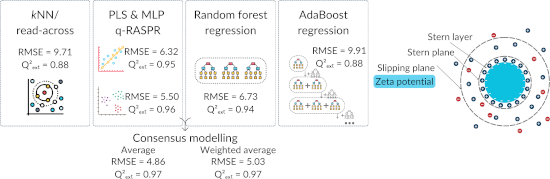
- CuO) were represented as 0 and metals (e.g., Ag, Au, and Cu) were represented as 1. For the shape group descriptor, the string names “Spherical”, “Square Plates” and “Rod” were one-hot encoded. Lastly, out of 22 unique coatings, five categories were created (sodium citrate, ʟ-arginine, PVP, uncoated


Polymer lipid hybrid nanoparticles for phytochemical delivery: challenges, progress, and future prospects
Beilstein J. Nanotechnol. 2024, 15, 1473–1497, doi:10.3762/bjnano.15.118
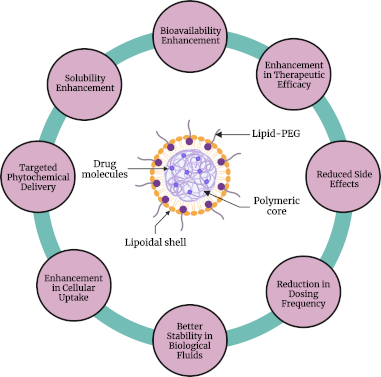
- studies in AsPC-1 and BxPC-3 cells suggested that the fabricated UA-PLHNPs exhibited much higher cellular internalization and cytotoxicity. Further, the developed AU-PLHNPs revealed negligible erythrocyte hemolytic activity. Similarly, Wang et al. fabricated UA-encapsulated chitosan-coated liposomes for


Effect of radiation-induced vacancy saturation on the first-order phase transformation in nanoparticles: insights from a model
Beilstein J. Nanotechnol. 2024, 15, 1453–1472, doi:10.3762/bjnano.15.117

- . However, in cases where the structure is rebuilt, the role of vacancies becomes less obvious. This suggests that other factors must be considered to better understand the transformations in HDCMs under irradiation. A recent study reported a phase transformation in a 25 nm thick nanocrystalline Au thin


Various CVD-grown ZnO nanostructures for nanodevices and interdisciplinary applications
Beilstein J. Nanotechnol. 2024, 15, 1390–1399, doi:10.3762/bjnano.15.112
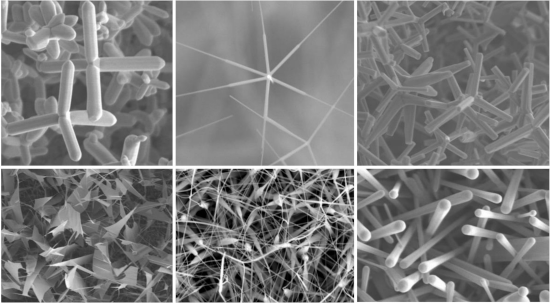
- prepare ZnO nanostructures. A commercial Zn powder was used as the starting material (a vapour source) which was loaded in a ceramic bath. Clean Au-coated Si(001) substrates were arranged upstream on an alumina plate that was placed on the bath, nearby the vapour source. This system was placed in the
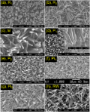
- on Au-coated Si substrates with various sizes and interesting morphologies. In general, these structures were sensitive to temperature change and were usually formed at temperatures in the range of T = 620–650 °C. Hereafter, we shall in turn present nanostructures obtained by CVD. Figure 2a–f show



Green synthesis of carbon dot structures from Rheum Ribes and Schottky diode fabrication
Beilstein J. Nanotechnol. 2024, 15, 1369–1375, doi:10.3762/bjnano.15.110
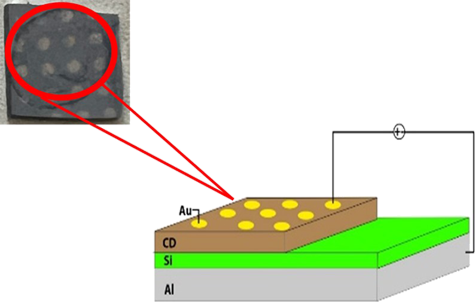
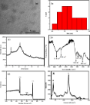
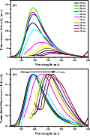
- , the quantum yield of the CDs was calculated as 0.03. Schottky diode fabrication The usability of these newly synthesized CDs in an application area was also discussed. For this purpose, a metal (Au)–semiconductor (CDs) junction-based thin film device was produced. SEM images were taken to determine
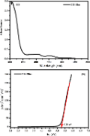
- bandgap value of the CDs layer was 5.25 eV (Figure 6b). The current–voltage (I–V) characteristics of the Si/CDs/Au-based Schottky diode were investigated. I–V measurements of the CDs-based thin film device were carried out using a semiconductor parameter analyzer between −2.5 V and +2.5 V at room
- temperature (Figure 7). The interface between Au and CDs exhibited a nonlinear rectification behavior, indicating the formation of a Schottky diode [24]. The electrical properties of the Si/CDs/Au diode were determined using standard thermionic emission theory [25]. According to this theory, where n, IRs, V




Out-of-plane polarization induces a picosecond photoresponse in rhombohedral stacked bilayer WSe2
Beilstein J. Nanotechnol. 2024, 15, 1362–1368, doi:10.3762/bjnano.15.109
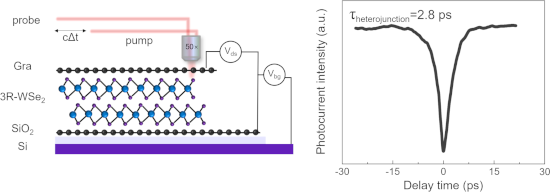
- monolayers of WSe2 were aligned at a 0° angle to form the 3R phase. The graphene/3R WSe2/graphene heterojunctions were aligned and assembled onto a SiO2/Si substrate by the all-dry transfer method. Au/Cr (50/10 nm) electrodes were patterned using standard electron-beam lithography (EBL, Raith 150 Two) and


Nanoarchitectonics with cetrimonium bromide on metal nanoparticles for linker-free detection of toxic metal ions and catalytic degradation of 4-nitrophenol
Beilstein J. Nanotechnol. 2024, 15, 1312–1332, doi:10.3762/bjnano.15.106
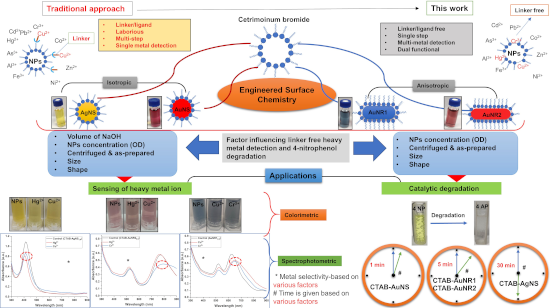
- , metal composition, centrifugation, and NaOH amount, were investigated for their impact on the performance of CTAB-capped nanoparticles in heavy metal detection and 4-NP degradation. CTAB-Au nanospheres demonstrated limited heavy metal ion detection capability but exhibited remarkable efficiency in
- ascorbic acid. A typical synthesis involved the synthesis of CTAB-capped Au seeds of less than 4 nm. Addition to the growth solution in step 2 resulted in the formation of gold nanorods. The seeds were prepared using 200 µL of HAuCl4·3H2O (25 mM) with 2 mL of 0.1 M CTAB at 80 °C, followed by 800 µL freshly




Dual-functionalized architecture enables stable and tumor cell-specific SiO2NPs in complex biological fluids
Beilstein J. Nanotechnol. 2024, 15, 1238–1252, doi:10.3762/bjnano.15.100
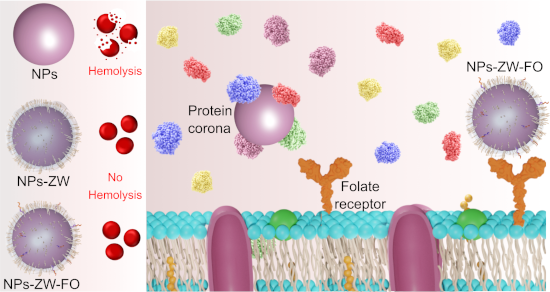
- sputter-coated with Au using a Bal-Tec SCD050 Sputter Coater. Secondary electrons were collected after backscattering of the Au-coated samples attained by electron beams with a 5 kV acceleration voltage. The particle hydrodynamic diameter and zeta potential were evaluated on a Malvern Zetasizer ZS


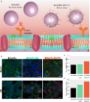
Enhanced catalytic reduction through in situ synthesized gold nanoparticles embedded in glucosamine/alginate nanocomposites
Beilstein J. Nanotechnol. 2024, 15, 1227–1237, doi:10.3762/bjnano.15.99
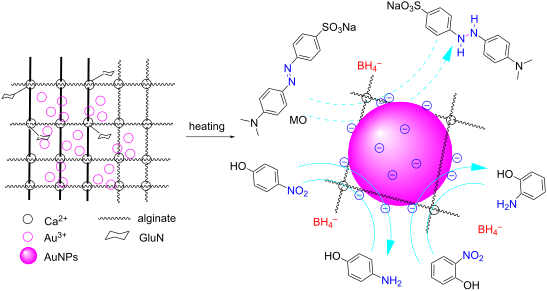
- Au3+ into Au(0) during the synthesis of the nanocomposite AuNPs@GluN/Alg without additional chemicals. Alginate serves as a stabilizing agent. In the ionotropic gelation mechanism, the cross-linking matrix of Ca–alginate, formed by Ca2+ ions and carboxyl groups in sodium alginate, becomes insoluble
- gel solution. The resulting solution is heated to facilitate the in situ reduction of Au3+ to Au(0). The synthesis conditions for AuNPs@GluN/Alg were optimized, followed by physicochemical characterizations using various analytical techniques. Finally, the application of the nanocomposite in
- crystalline structure of AuNPs was determined through XRD and SAED analysis. The XRD pattern showed Bragg reflections at 2θ values of 38.1°, 44.1°, and 64.5°, associated to, respectively, the (111), (200), and (220) planes of face-centered cubic (fcc) Au (card no. 96-901-1613) [39][40]. Moreover, the SAED

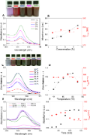


Realizing active targeting in cancer nanomedicine with ultrasmall nanoparticles
Beilstein J. Nanotechnol. 2024, 15, 1208–1226, doi:10.3762/bjnano.15.98
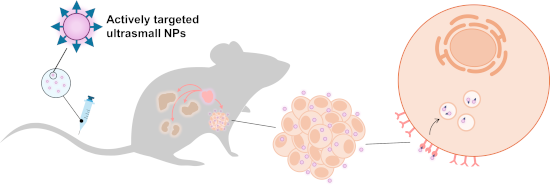
- inorganic core, exemplified by the S–Au bond formed between cysteine-containing molecules and gold NPs [90][91][92]. Actively targeted AuNCs can also be prepared using bioactive peptides or proteins via a one-step biomineralization process, in which case the peptide or protein serves the purpose of both
- clearance. In vivo experiments performed in tumor-bearing mice revealed that the Au content in PSMA-expressing tumors was two- to threefold higher than in tumors lacking PSMA expression. Furthermore, the targeted AuNCs reached a tumor accumulation of around 8.9% ID/g compared to 2% ID/g for non-targeted


Photocatalytic methane oxidation over a TiO2/SiNWs p–n junction catalyst at room temperature
Beilstein J. Nanotechnol. 2024, 15, 1132–1141, doi:10.3762/bjnano.15.92
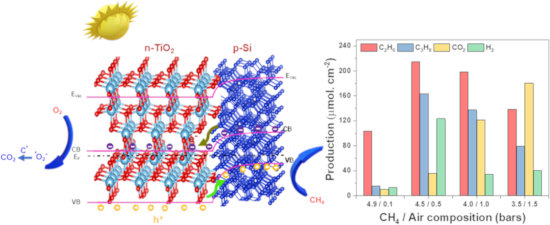
- photocatalytic efficiency. For years, doping of metal nanoparticles (NPs) into a semiconductor matrix has been extensively studied to enhance photocatalytic CH4 oxidation performance. Metal NPs in, for example, Au/TiO2, Au@Pd/ZnO, and Pt@Cu/TiO2 composites act as electron scavenger centers and own more free


Local work function on graphene nanoribbons
Beilstein J. Nanotechnol. 2024, 15, 1125–1131, doi:10.3762/bjnano.15.91
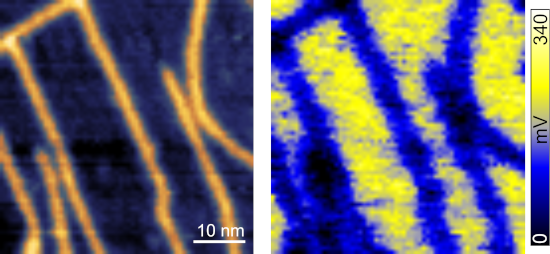
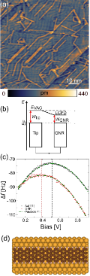
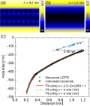
- difference (LCPD) between a probe tip and a surface, related to the work function. Here we use this technique to map the LCPD of graphene nanoribbons grown on a Au(111) substrate. The LCPD data shows charge transfer between the graphene nanoribbons and the gold substrate. Our results are corroborated with
- ] and p-doping by Bi, Sb, and Au substrates [2]. Confining graphene to nanostructures [6][7], for example, to graphene nanoribbons (GNRs), that is, few nanometers wide stripes of graphene, opens additional possibilities of tuning the electronic properties by creating quantum-confined states [8] and
- bandgap [12], which is also related to the work function. GNRs can be synthesized with atomic precision in an ultrahigh-vacuum environment using on-surface synthesis [13]. This synthesis is well known on coinage metals, namely, Cu, Ag, and Au, which possess a high electron density. To study these unique

![[Graphic 1]](/bjnano/content/inline/2190-4286-15-91-i4.svg?max-width=637&scale=1.18182)
Unveiling the potential of alginate-based nanomaterials in sensing technology and smart delivery applications
Beilstein J. Nanotechnol. 2024, 15, 1077–1104, doi:10.3762/bjnano.15.88
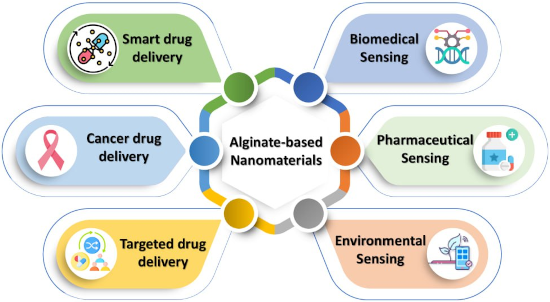
- , leading to superior functionality and enhanced metal sensing capabilities [111]. He et al. developed fluorescent fibers from alginate reinforced with gold (Au) nanoclusters by using a wet-spinning technique [112]. The fluorescent fibers exhibited good selectivity and sensitivity towards Cu2+ and Hg2
- +. Based on the quenching effect, a design for a “turn-off” fluorescent sensor for Cu2+ and Hg2+ detection with detection limits of 187.99 and 82.14 nM, respectively, was developed. Furthermore, the Au-loaded alginate-based fibers outperformed the pristine Ca-ALG fibers in terms of mechanical properties


Effect of wavelength and liquid on formation of Ag, Au, Ag/Au nanoparticles via picosecond laser ablation and SERS-based detection of DMMP
Beilstein J. Nanotechnol. 2024, 15, 1054–1069, doi:10.3762/bjnano.15.86

- Abstract The present study investigates the effects of input wavelength (1064, 532, and 355 nm) and surrounding liquid environment (distilled water and aqueous NaCl solution) on the picosecond laser ablation on silver (Ag), gold (Au), and Ag/Au alloy targets. The efficacy of the laser ablation technique
- ) laser melting in liquid (LML), and (iii) laser defect engineering in liquid (LDL) [16]. In our previous work, we fabricated Ag–Cu alloy NPs using the femtosecond (fs) laser irradiation approach [17]. Similarly, Ag/Au alloy NPs were fabricated by laser ablation of single metal targets in water followed
- et al. [20] achieved size-controllable Au NPs in stable solutions via femtosecond laser fragmentation, tuning sizes by adjusting fluence. This technique is employed to create various categories of alloy NPs [21]. Alloying by LASiS can mitigate undesired features associated with plasmonic materials


Bolometric IR photoresponse based on a 3D micro-nano integrated CNT architecture
Beilstein J. Nanotechnol. 2024, 15, 1030–1040, doi:10.3762/bjnano.15.84
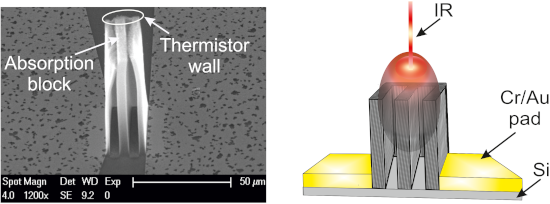
- presented in the conference proceedings [12]. This configuration 1 (called sample 1) had additional parasitic contact resistances to the M-shaped CNT block. The new configuration 2 (called sample 2) used direct Au whisker contacts to the CNT block with much lower contact resistances for reliable
- of the M-shaped bolometer design. The final design with a micro-nano integration using optimized contacts between the Cr/Au pads and the M-shaped CNT block can then be achieved with additional CNT blocks on the Cr/Au pads as shown in [7]. Furthermore, this research embarks on a comprehensive
- was deposited by atomic layer deposition to support the elongated growth of CNTs (Figure 1a). The contact pad regions were opened by an optical lithography process prior to the evaporation of Cr/Au (20 nm, e-beam/100 nm, thermal) (Figure 1b). The overall M-shape for the CNT growth as shown in Figure


Entry of nanoparticles into cells and tissues: status and challenges
Beilstein J. Nanotechnol. 2024, 15, 1017–1029, doi:10.3762/bjnano.15.83
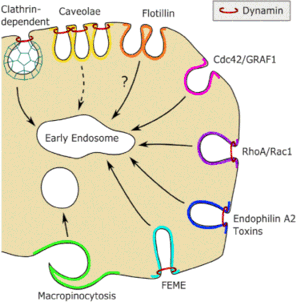
- , exposure to various types of NPs (Au, Ag, SiO2, and Fe3O4) was found to change the content of EV-containing miRNAs [72]. It is important to understand the mechanisms involved to analyze exosome markers with and without incubation with NPs. Nanoparticles under development for drug delivery are made from





