Search results
Search for "EDX" in Full Text gives 291 result(s) in Beilstein Journal of Nanotechnology. Showing first 200.
A TiO2@MWCNTs nanocomposite photoanode for solar-driven water splitting
Beilstein J. Nanotechnol. 2022, 13, 1520–1530, doi:10.3762/bjnano.13.125
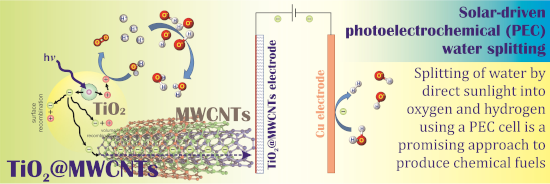
- the photoelectrochemical activity in aqueous environment [18][19][20]. Figure 4 shows the EDX spectra of MWCNTs and the TiO2@MWCNTs nanocomposite. The EDX spectrum for TiO2@MWCNTs confirms the presence of Ti, which accounts for 28.76 wt %. Small amounts of Fe, Al, and Si exists in as-synthesized
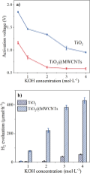
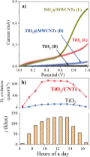
- performance of the TiO2@MWCNTs electrode for water splitting. Schematic of the photoelectrochemical water splitting experimental apparatus. SEM images of (a) MWCNTs, (b) TiO2, and (c) the TiO2@MWCNTs nanocomposite. TEM images of (a) MWCNTs, (b) TiO2, and (c) the TiO2@MWCNTs nanocomposite. EDX spectra of



In search of cytotoxic selectivity on cancer cells with biogenically synthesized Ag/AgCl nanoparticles
Beilstein J. Nanotechnol. 2022, 13, 1505–1519, doi:10.3762/bjnano.13.124
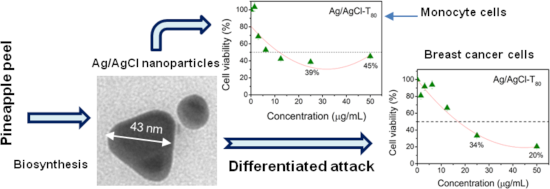
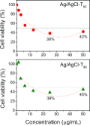
- -dispersive X-ray spectroscopy (EDX), and transmission electron microscopy (TEM) techniques were used to characterize nanoparticle development. The breast cancer cell line MCF-7 was used as a test model to study the cytotoxic behavior of Ag/AgCl nanoparticles and, as a counterpart, the nanoparticles were also
- crystallites at 100 °C. On the other hand, the different contents of Ag and AgCl depend on the presence of chloride ions in the extract and their ability to form AgCl instead of metallic Ag. The qualitative and quantitative energy-dispersive X-ray (EDX) chemical analysis of Ag/AgCl products at different
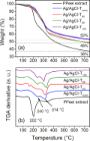
- percentage of biosynthesized Ag/AgCl nanoparticles (52% − 36% = 16%). The degradation of the product with respect to temperature exhibited a behavior similar to that of nanoparticle biosynthesis, as shown by XRD, EDX, and TEM. That is, there is a difference in the degradation at intermediate temperatures (Ag





Hydroxyapatite–bioglass nanocomposites: Structural, mechanical, and biological aspects
Beilstein J. Nanotechnol. 2022, 13, 1490–1504, doi:10.3762/bjnano.13.123
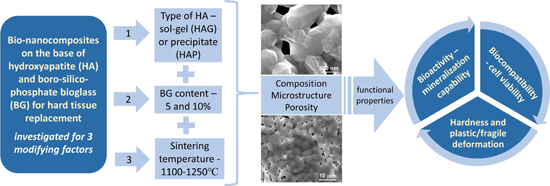
- special cleaning process for 6 min in a nitrogen plasma jet in a FISCHONE Plasma Cleaner. A FEI QUANTA INSPECT S SEM was used to observe structure and morphology of the samples after their treatment in simulated body fluid, as well as to acquire the energy-dispersive X-ray (EDX) spectra and the elemental
- ). The EDX analysis demonstrated that the precipitate layer contained Ca, P, Na, Mg, and K, with highest fractions of Ca and P (Figure 8d). The Ca/P ratio takes values between 1.23 and 2.33 with generally lower values for HAG-based composites and the tendency to increase with soaking time in SBF for both
- obtained values of Ca/P ratio higher than 1.67 suggest the formation of B-type CHA, characteristic for biological hydroxyapatite, in which the PO43− ions are substituted by CO32− ions, accordingly increasing the Ca/P ratio [56]. This is confirmed by the EDX analysis showing the presence of C (Figure 8d
Rapid and sensitive detection of box turtles using an electrochemical DNA biosensor based on a gold/graphene nanocomposite
Beilstein J. Nanotechnol. 2022, 13, 1458–1472, doi:10.3762/bjnano.13.120
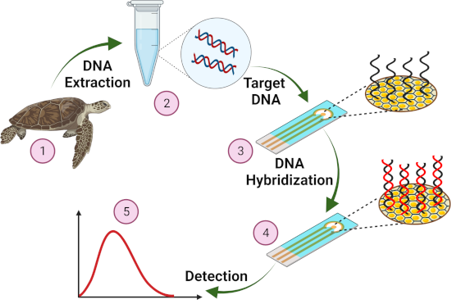
- with graphene. The spectrum of Gr in Figure 2c obtained by energy dispersive X-ray spectroscopy (EDX) clearly demonstrates the presence of a high amount of carbon with a minimum amount of oxygen, indicating the purity of Gr. Figure 2d clearly shows the presence of carbon, oxygen, and AuNPs in the
- composite. The weight and atomic contribution of each of these elements in the nanocomposite were given with their corresponding EDX spectrum. The use of AuNPs–Gr as a DNA immobilisation matrix enhances the active surface area of the modified SPCE, allowing for a stronger DNA hybridisation detection signal
- of different nanoparticles and their composites. FESEM images of (a) Gr and (b) AuNPs/Gr; EDX of images of (c) Gr and (d) AuNPs/Gr; UV–vis spectra of (e) Gr and (f) AuNPs/Gr; and FTIR spectra of (g) Gr, AuNPs/Gr, and DNA/AuNPs/Gr. AuNPs were taken (33.33%, 1:3) in the AuNPs/Gr nanocomposite

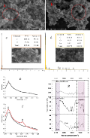


Near-infrared photoactive Ag-Zn-Ga-S-Se quantum dots for high-performance quantum dot-sensitized solar cells
Beilstein J. Nanotechnol. 2022, 13, 1337–1344, doi:10.3762/bjnano.13.110
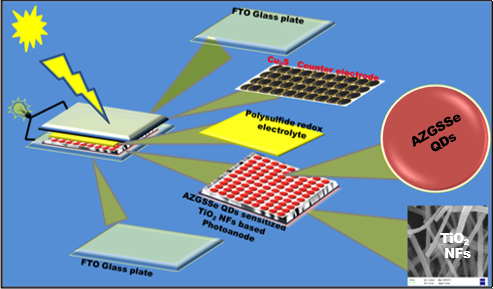
- JSM-7600F. The electronic states of the elements and their atomic ratio in the prepared samples was analyzed by using XPS (Kratos AXIS Ultra DLD) and EDX (Bruker Nano XFlash detector attached to the HRTEM). Optical properties were examined by using a UV–vis–NIR spectrophotometer (Perkin Elmer L-650 UV
- the crystalline nature of AZGSSe QDs. Figure 2b shows the EDX spectrum of AZGSSe QDs. The fractions of Ag, Zn, Ga, S, and Se were found to be 16.74, 16.92, 16.73, 24.39, and 24.94 atom %, respectively. The corresponding stoichiometric ratio was calculated as 1:0.99:1.01:1.46:1.49, which is
- ]. Studies of Ag-Zn-Ga-S-Se QD-sensitized TiO2 NFs The surface morphology of AZGSSe/TiO2 was examined through HRTEM and EDX analysis. The HRTEM image (Figure 5a) shows the presence of AZGSSe QDs on the TiO2 NFs. The EDX spectrum (Figure 5b) shows the peaks of Ti, O, Ag, Zn, Ga, S, and Se. These analyses


Electrocatalytic oxygen reduction activity of AgCoCu oxides on reduced graphene oxide in alkaline media
Beilstein J. Nanotechnol. 2022, 13, 1020–1029, doi:10.3762/bjnano.13.89
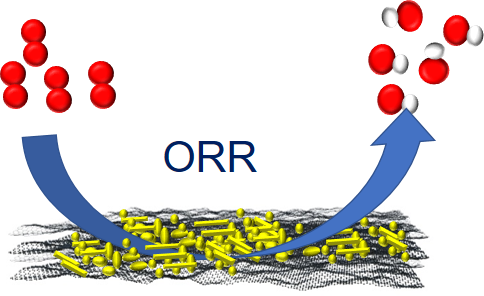
- , wherein we notice irregular morphologies besides agglomeration of the particles (Figure S3f, Supporting Information File 1). The increasing silver fraction in the trimetallic assemblies was observed from EDX analysis as shown in Figure S4, Supporting Information File 1. After examining the composition of


Effects of focused electron beam irradiation parameters on direct nanostructure formation on Ag surfaces
Beilstein J. Nanotechnol. 2022, 13, 1004–1010, doi:10.3762/bjnano.13.87
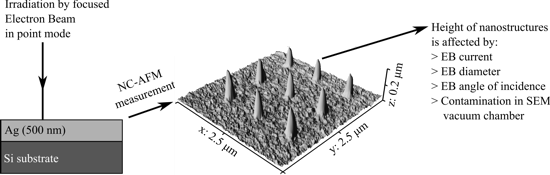
- material greatly affects the growth rate of the nanowires, with the Cu surface providing the fastest growth. Energy-dispersive X-ray spectroscopy (EDX) revealed the presence of both carbon and substrate materials in the nanowires. The effect of substrate material on nanowire growth rate could be attributed
- to different adhesion coefficients between the surface and hydrocarbons. Results from EDX measurements strongly suggest that metal atoms or ions are capable of moving within carbon–metal nanowires under the influence of EB. High Ag ion mobility under electric fields or EB has also been reported in




Hierarchical Bi2WO6/TiO2-nanotube composites derived from natural cellulose for visible-light photocatalytic treatment of pollutants
Beilstein J. Nanotechnol. 2022, 13, 745–762, doi:10.3762/bjnano.13.66
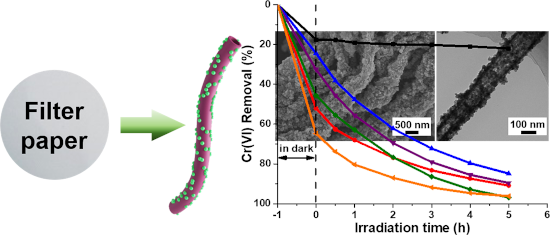
- ). Meanwhile, selected area electron diffraction (SAED) patterns and energy dispersive X-ray spectrometry (EDX) mapping images were obtained via HR-TEM. The instrument models used in FE-SEM, TEM, and HR-TEM were Hitachi SU-8010, Hitachi HT-7700, and JEM-2100F, and the working voltages were 5.0, 100, and 200 kV
- nanocomposites were measured by EDX to be 38.4, 54.3, 72.9, and 95.2 wt %, respectively, as displayed in Supporting Information File 1, Figure S1 and Table S2. As shown in Figure 2a, the XRD patterns of the Bi2WO6/TiO2-NT nanocomposites all exhibit characteristic diffraction peaks at 2θ = 28.3, 32.7, 47.1, 55.9
- ) plane of the russellite phase Bi2WO6 and the (101) plane of the anatase phase TiO2, the thick ring 1 is ascribed to these two planes. Figure 4c−h exhibit the EDX element mapping images of Bi, W, Ti, and O elements of the composite nanotube surface in the hierarchical 70%−Bi2WO6/TiO2-NT nanocomposite


Sodium doping in brookite TiO2 enhances its photocatalytic activity
Beilstein J. Nanotechnol. 2022, 13, 599–609, doi:10.3762/bjnano.13.52
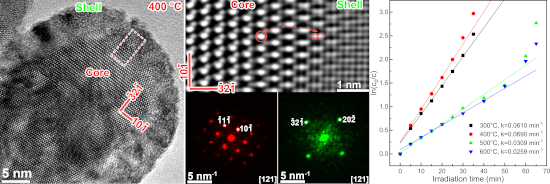
- ). (1) Brookite—platy grains. Energy-dispersive X-ray spectroscopy (EDX) results of platy grains (Figure 4b) indicate that Na can be well identified besides Ti and O (note that the characteristic peak of C comes from the carbon conducting resin, Al from the sample holder, and Si from the silicon wafer
- ), the Na content in the brookite significantly decreases. Details are displayed in Supporting Information File 1, Figure S3. (2) Anatase—fine grains. Only Ti and O can be identified in the EDX spectra of fine grains. The electron diffraction pattern of the fine crystallite (Figure 4c2 and Supporting
- Information File 1, Figure S1b) can be determined as the [021] zone axis of the anatase phase with the HOLZ ring radius of 25.02 nm−1 and the primitive cell volume of 71 Å3 in comparison to 68.2 Å3 of the standard anatase structure. (3) Rutile—block grains. Only Ti and O can be resolved in the EDX spectra of


Zinc oxide nanostructures for fluorescence and Raman signal enhancement: a review
Beilstein J. Nanotechnol. 2022, 13, 472–490, doi:10.3762/bjnano.13.40




Tubular glassy carbon microneedles with fullerene-like tips for biomedical applications
Beilstein J. Nanotechnol. 2022, 13, 455–461, doi:10.3762/bjnano.13.38
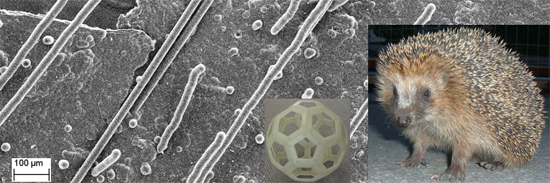
- -like tips of the microneedles can clearly be seen in the SEM micrographs in Figure 2a and Figure 2c. Figure 2b shows a model of a fullerene, which highlights the requirement of pentagons as well as hexagons in order to close the microneedle tips. SEM-EDX measurements (EDX INCA 400, Oxford Instruments
- Raman spectroscopy (WiTec CRM200, laser excitation at 632.8 nm), scanning electron microscopy (SEM Leo 1530, with a spatial resolution of 1 nm at 20 kV and 3 nm at 1 kV, equipped with an energy-dispersive X-ray analysis system EDX INCA 400 from Oxford Instruments), and X-ray diffraction (STOE STADI-P


Low-energy electron interaction and focused electron beam-induced deposition of molybdenum hexacarbonyl (Mo(CO)6)
Beilstein J. Nanotechnol. 2022, 13, 182–191, doi:10.3762/bjnano.13.13
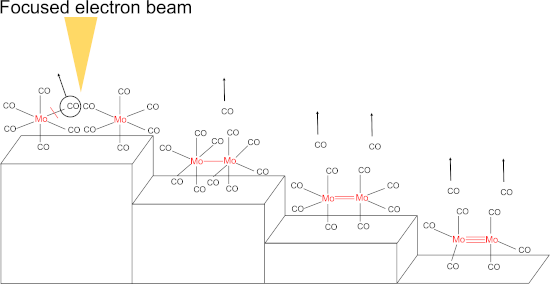
- the underlying resonances. Thermochemical threshold energies are calculated at the DFT level of theory for carbonyl loss from Mo(CO)6 through DEA and discussed in relation to the current and previous studies. We present EDX analyses of the composition of FEBID deposits from Mo(CO)6 and compare the
- on the SF6− formation from SF6 at 0 eV and the energy resolution was estimated from the full width at half maximum (FWHM) of that signal and was found to be ca. 150 meV. Deposition and EDX analysis Focused electron beam-induced deposition was performed with a ZEISS photomask repair tool MeRiT
- ®. Energy-dispersive X-ray analyses was done with a ZEISS Crossbeam system with an integrated Oxford EDX detector. Deposits for EDX analysis were prepared on a 100 nm thick polycrystalline gold substrate on a 4 inch silicon wafer, purchased from Georg Albert PVD. The Au-based substrate was chosen because of


Measurement of polarization effects in dual-phase ceria-based oxygen permeation membranes using Kelvin probe force microscopy
Beilstein J. Nanotechnol. 2021, 12, 1380–1391, doi:10.3762/bjnano.12.102
- and cleaning were performed with an Ar ion beam in a Fischione Nanomill 1040 at 900 eV and 500 eV beam energy, respectively. TEM and energy-filtered TEM (EFTEM) imaging were performed with a FEI Tecnai F20 at 200 kV. High-resolution HAADF imaging and energy-dispersive X-ray (EDX) chemical mapping were
- , Figure 2b displays the EDX chemical mapping results with atomic resolution, indicating no chemical disorders except the slight enrichment of Sm at the edge of the CSO grain. Tilting FC2O along its [101] direction, Figure 2c shows another CSO-FC2O interface, where rock salt structures within several
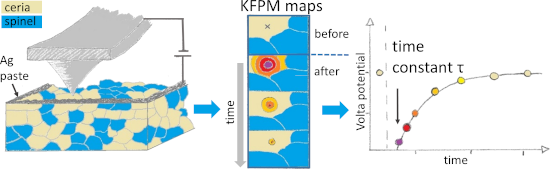
- behavior by means of Kelvin probe force microscopy is a way to work out diffusion coefficients of respective constituents in a composite material. The next step concerning the AFM-based analysis of composite materials is the combination of local chemical analysis methods (e.g., EDX or EELS) with local


Chemical vapor deposition of germanium-rich CrGex nanowires
Beilstein J. Nanotechnol. 2021, 12, 1365–1371, doi:10.3762/bjnano.12.100
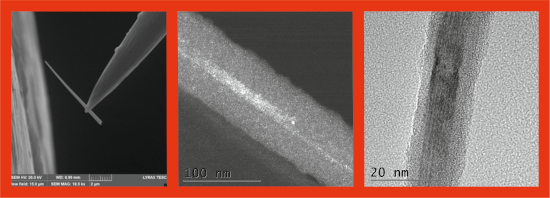
- , nanowires grew in a tapering manner (Figure 1b and Supporting Information File 1, Figure S2). Linear EDX analysis (Figure 2) and elemental mapping (Supporting Information File 1, Figure S3) of a single nanowire showed that it was composed of Cr, Ge, O (from an oxidized surface) and C (a standard impurity in
- EDX instruments). HRTEM analysis showed three types of synthetized nanoobjects: tapered NWs (Supporting Information File 1, Figure S4a) and objects of irregular (Supporting Information File 1, Figure S4b) and globular shape (nanoballs, Supporting Information File 1, Figure S4c). The nanoballs are
- nanowire using SAED, dark-field HRTEM, and EDX analysis showed that it consisted of a crystalline germanium core sheathed with an amorphous Cr/Ge coating (Figure 3 and Supporting Information File 1, Figure S7) resembling SiNWs with similar structure [12]. The determined d-spacing of 0.326 nm fits precisely



Enhancement of the piezoelectric coefficient in PVDF-TrFe/CoFe2O4 nanocomposites through DC magnetic poling
Beilstein J. Nanotechnol. 2021, 12, 1262–1270, doi:10.3762/bjnano.12.93
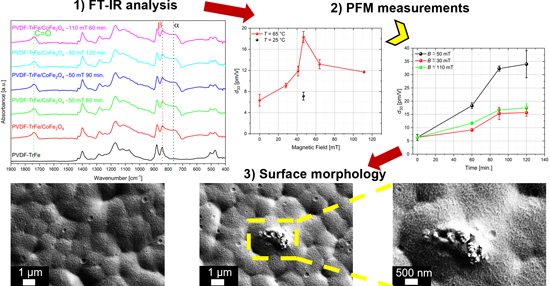
- 6b,c shows the aggregation of CoFe2O4 nanoparticles in some areas, in analogy with what has been reported in [25]. The formation of aggregates was confirmed by energy-dispersive X-ray spectroscopy (EDX). In correspondence with the agglomeration we observed a higher intensity of the O, Fe, and Co
- composition analysis was performed through EDX using the FESEM, equipped with a Bruker Quantax EDX setup capable of an energy resolution of 123 eV at Mn Kα. In order to prevent charging the samples were metalized with 20 nm of Cr using a Quorum Technologies Q150T ES sputter coater. All FTIR absorption spectra
- /CoFe2O4 with 5 wt % of CoFe2O4. FESEM images of PVDF-TrFe/CoFe2O4 nanocomposites with 5 wt % of CoFe2O4 magnetically poled at 111 mT for 1 h at 65 °C. (a) SEM image and (b–d) EDX maps of (b) oxygen, (c) cobalt, and (d) iron of the PVDF-TrFe/CoFe2O4 nanocomposite with 5 wt % of CoFe2O4 magnetically poled


The effect of cobalt on morphology, structure, and ORR activity of electrospun carbon fibre mats in aqueous alkaline environments
Beilstein J. Nanotechnol. 2021, 12, 1173–1186, doi:10.3762/bjnano.12.87
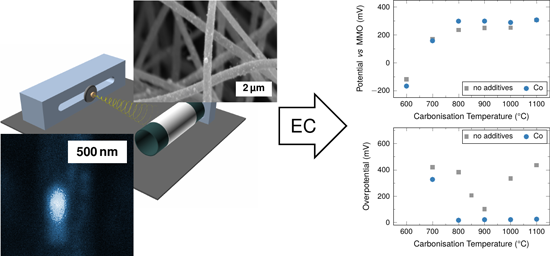
- electron microscopy (SEM), energy-dispersive X-ray spectroscopy (EDX), X-ray diffraction (XRD), X-ray photoelectron spectroscopy (XPS), Raman spectroscopy, elemental analysis, and inductively coupled plasma optical emission spectrometry (ICP-OES). In addition, the fibres were analysed in terms of their
- further improved by applying a copper tape connecting the sample and the graphite tape. To identify the particles decorating the nanofibres, EDX was performed using an Octane Super EDX detector (EDAX). The programme “monte CArlo SImulation of electroN trajectory in sOlids” (CASINO) [23], which simulates
- the surface of the fibres that are larger than the ones visible at lower temperatures. Particle identification EDX, as a method of elemental analysis of surfaces on a microscopic scale, was performed to elucidate the cobalt distribution further. EDX maps of fibres carbonised with cobalt at 700 and


Revealing the formation mechanism and band gap tuning of Sb2S3 nanoparticles
Beilstein J. Nanotechnol. 2021, 12, 1021–1033, doi:10.3762/bjnano.12.76
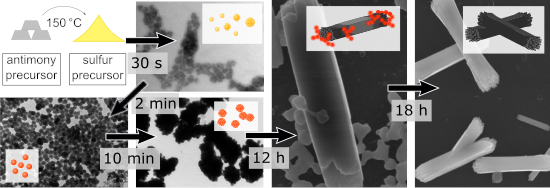
- /aggregates, the size and aspect ratios of the crystalline particles, the corresponding molar ratio of Sb and S obtained by EDX, and the associated band gap obtained by reflectance measurements (see discussion of the optical data below). XRD measurements of an orange-red (30 min) and a grayish-black (18 h
- composition of the amorphous particles, an EDX analysis was performed in conjunction with SEM for selected samples obtained after reaction time points from 2 min to 30 h. It was not possible to examine the samples obtained after 30 s since the yield was too low at this reaction stage. The sample that had
- sample in the form of a highly diluted solution. The drive frequency was kept constant during the imaging, while the drive amplitude was set to 7171 mV. EDX Elemental analysis was performed with an EDAX X-ray detector (Octane Elect Plus) attached to the SEM. The SEM was run with an acceleration voltage


Progress and innovation of nanostructured sulfur cathodes and metal-free anodes for room-temperature Na–S batteries
Beilstein J. Nanotechnol. 2021, 12, 995–1020, doi:10.3762/bjnano.12.75
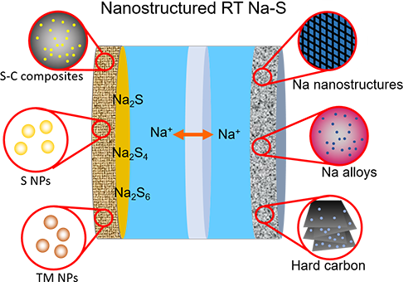


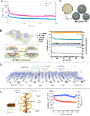


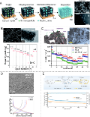
A Au/CuNiCoS4/p-Si photodiode: electrical and morphological characterization
Beilstein J. Nanotechnol. 2021, 12, 984–994, doi:10.3762/bjnano.12.74
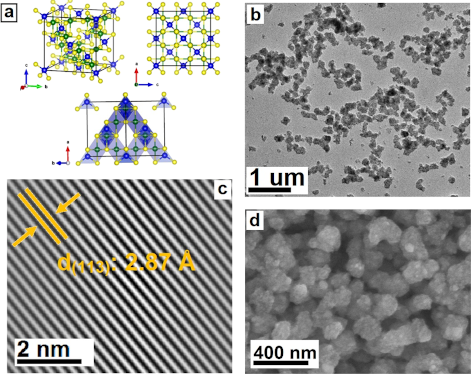
- understand the structural and morphological characteristics of the nanocrystals. A Zeiss-Evo SEM-EDX was employed to determine surface morphology and EDS patterns of the nanocrystals. I–V measurements were carried out on a Fytronix FY-7000 in the dark and under illumination of 20 to 100 mW in 20 mW intervals
- 2.87 Å. The EDX analysis confirmed the composition of the CuNiCoS4 nanocrystals. The CuNiCoS4 nanocrystals were inserted between Au and p-Si to fabricate a Au/CuNiCoS4/p-Si photodiode and characterized by I–V and C–V measurements for different illumination power densities and frequencies, respectively



Fate and transformation of silver nanoparticles in different biological conditions
Beilstein J. Nanotechnol. 2021, 12, 665–679, doi:10.3762/bjnano.12.53
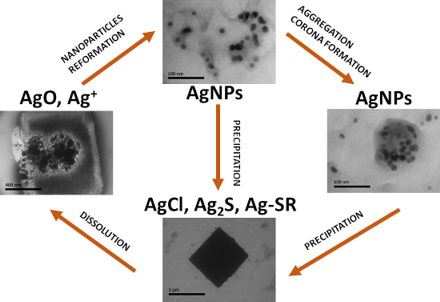
- TEM data revealed quite interesting results. Incubation of AgNO3 in the liver and brain homogenates led to the formation of small AgNPs as presented in Figure 4d and Figure 4e, which was confirmed by energy-dispersive X-ray spectroscopy (EDX) (Figure 4f and Figure 4g). Transformation of different
- media. Similar to tissue homogenates, small AgNPs were again found by TEM examination (Figure 7). The elemental mapping of newly formed particles was done via EDX. The EDX spectra (Figure 7c) showed Ag, S, Na, C, O, and Cu. The signals corresponding to C, O, and Cu resulted from the carbon copper grid
- ) detector and enabled to work in scanning transmission (STEM) mode to perform EDX analysis. NMR experiments As the incubation of ionic Ag in mGSH media showed the appearance of AgNPs (observed both visually and by TEM), the interaction between AgNO3 and GSH was evaluated by NMR spectroscopy. The spectra of




On the stability of microwave-fabricated SERS substrates – chemical and morphological considerations
Beilstein J. Nanotechnol. 2021, 12, 541–551, doi:10.3762/bjnano.12.44
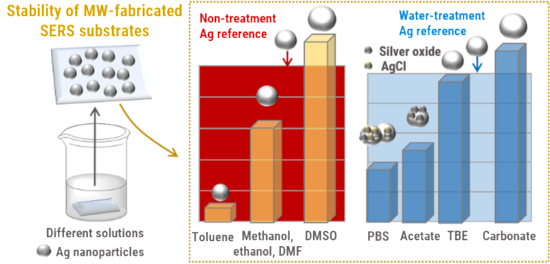
- nanoparticles when they are subjected to chloride-containing biological media [34]. The generation of AgCl leads, for example, to a partial passivation of the silver surface for further reactions. Energy-dispersive X-ray spectroscopy (EDX) was used to confirm the presence of chloride on the Ag SERS substrates
- calibration curve to obtain a monolayer of 4-ATP (Figure S4), a reference Raman spectrum of 4-ATP self-assembled on a non-treated substrate (Figure S5), a table indicating the corresponding peak assignment (Table S1), a reference Raman spectrum of 4-ATP acquired on a water-treated substrate (Figure S6), EDX


Boosting of photocatalytic hydrogen evolution via chlorine doping of polymeric carbon nitride
Beilstein J. Nanotechnol. 2021, 12, 473–484, doi:10.3762/bjnano.12.38
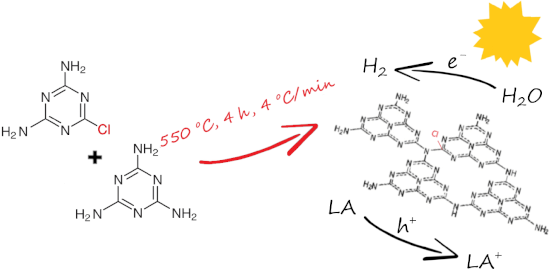
- energy-dispersive X-ray spectroscopy (EDX) elemental mappings of N, C, O, and Cl in Cl-PCN (f). AFM images and height profile of PCN (a, b) and Cl-PCN (c, d). (a) FTIR spectra and (b) XRD patterns of PCN and Cl-PCN. C 1s and N 1s XPS spectra of polymeric carbon nitride (a, b) and Cl-PCN (c, d). Structure


Spontaneous shape transition of MnxGe1−x islands to long nanowires
Beilstein J. Nanotechnol. 2021, 12, 366–374, doi:10.3762/bjnano.12.30
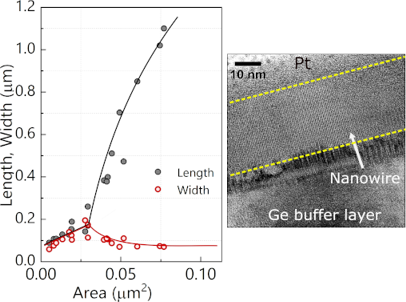
- . Despite the relatively wide range of length, these NWs exhibit a narrow distribution in the lateral size, with a mean value of (80 ± 10) nm (Figure 3c). The EDX analysis of a NW in plane-view configuration (Figure 4a) exhibits both Mn and Ge with a homogeneous distribution along the NW length (Figure 4b
- , obtained by deposition of a 4.5 ML thick Mn film followed by annealing at 650 °C for 15 min. (b) Mn and Ge EDX line profiles along the yellow line drawn in (a). EDX elemental map (Kα line), carried out on a cross-section of a NW on the surface of the 4.5 ML thick Mn film showing the distribution of Mn, Ge


Structural and optical characteristics determined by the sputtering deposition conditions of oxide thin films
Beilstein J. Nanotechnol. 2021, 12, 354–365, doi:10.3762/bjnano.12.29
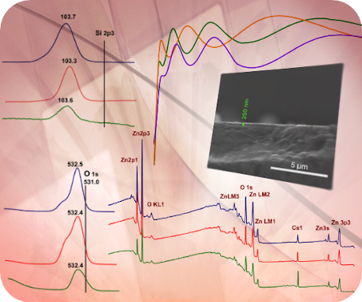
- ). The system is equipped with an X-ray source and an EDX unit with elementary energy dispersion spectroscopy (EDS). These analyses employ different magnifications depending on the quality of the thin films and the structure of their surface. Using cross-section imaging and a magnification of 20000×, it


Characterization, bio-uptake and toxicity of polymer-coated silver nanoparticles and their interaction with human peripheral blood mononuclear cells
Beilstein J. Nanotechnol. 2021, 12, 282–294, doi:10.3762/bjnano.12.23
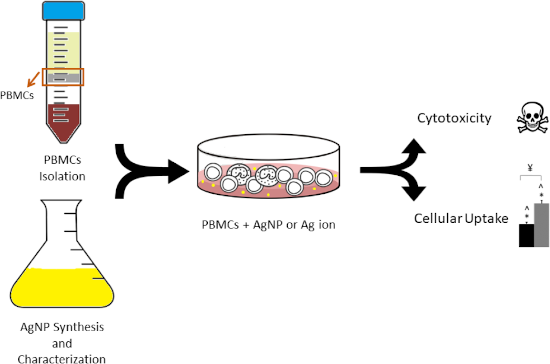
- ), which were shown to be silver by using EDX analysis (Supporting Information File 1, Figure S1e). Peaks of other elements (C, Cu, and O) in EDX analysis were observed due to grid material that was used for sample preparation. DLS estimates the hydrodynamic size of NPs, which includes the polymer and