


Search results
Search for "MTT assay" in Full Text gives 67 result(s) in Beilstein Journal of Nanotechnology.
Cationic PEGylated polycaprolactone nanoparticles carrying post-operation docetaxel for glioma treatment
Beilstein J. Nanotechnol. 2017, 8, 1446–1456, doi:10.3762/bjnano.8.144
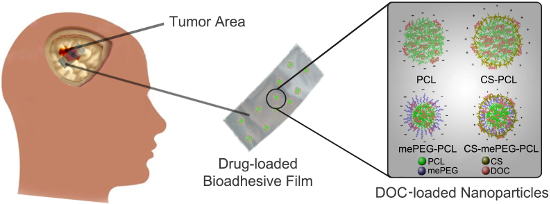
- recurrence during the first 2 days. Cell culture studies Cytotoxicity assay for blank nanoparticles Mouse fibroblast cell lines L929 (recommended by the USP for the cytotoxicity evaluation of polymeric systems) were used to determine the cytotoxicity of blank nanoparticles with MTT assay. According to MTT
- . Then, DMEM was replaced with fresh medium containing blank nanoparticle formulations and incubated for 48 h. MTT assay was applied to determine cell viability. 20 µL of MTT solution in PBS (5 mg/mL) were added in each well and incubated for 4 h. 80 µL of MTT lysis solution containing SDS (23% w/v) and
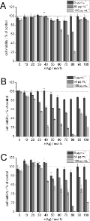
- assay, cell viability for L929 cells is given in Figure 6 for 24 h and 48 h. When compared with the control group, the blank formulations were found to have no cytotoxic effect on L929 fibroblast cells (the differences between groups were statistically insignificant, p > 0.05), and it can be suggested




Facile fabrication of luminescent organic dots by thermolysis of citric acid in urea melt, and their use for cell staining and polyelectrolyte microcapsule labelling
Beilstein J. Nanotechnol. 2016, 7, 1905–1917, doi:10.3762/bjnano.7.182
- (CV assay) and the (3-(4,5-dimethylthiazolyl-2)-2,5-diphenyltetrazolium bromide) staining technique (MTT assay) [59]. The CV assay, with some modifications [60], was used to assess the total number of adhered cells. The MTT assay, with modifications [61], was used to assess the activity of NADP-H
- also known that the MTT assay is typically used for quantifying metabolically active cells, independently of proliferation [63]. Therefore, the highest concentration of sample that caused, in the treated cells, the activation of NADP-H-dependent oxidoreductases, not more than in the intact cells, was
- adjudged to be the metabolic maximum concentration (Maxmet). Each experiment was repeated three times, with four replications. The cytotoxicity of the microcapsules decorated with O-dots The toxicity of the microcapsules was studied using two tests, the aforementioned MTT assay, and the lactate




Chitosan-based nanoparticles for improved anticancer efficacy and bioavailability of mifepristone
Beilstein J. Nanotechnol. 2016, 7, 1861–1870, doi:10.3762/bjnano.7.178
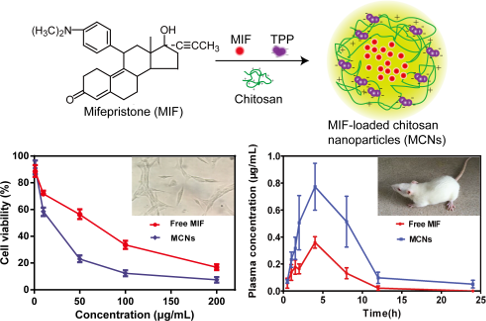
- . MTT assay A549, Hela, RL95-2 and HepG2 cells were seeded in a 96-well plate (8000 per well) and incubated for 24 h at 37 °C with 5% CO2. Blank CNs, free MIF, or MCNs were added to the well at predetermined drug concentrations (1, 10, 50, 100, 200 μg/mL), and incubated for 48 h at 37 °C with 5% CO2
- for 48 h at 37 °C before subjecting them to MTT assay. *p < 0.05 and **p < 0.01 compared with the MIF group by the Student’s t-test. In vivo plasma concentration vs time of different MIF formulations. Male SD rats were given a single 30 mg/kg dose of MIF (in soybean oil solution) or a single dose of


Multiwalled carbon nanotube hybrids as MRI contrast agents
Beilstein J. Nanotechnol. 2016, 7, 1086–1103, doi:10.3762/bjnano.7.102
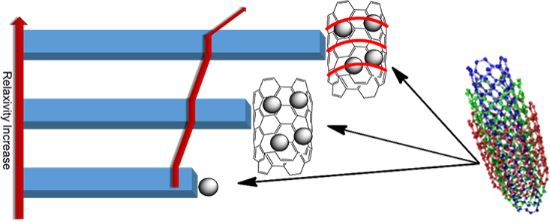
- which component of the hybrid was responsible mainly for the cytotoxicity impact. The classical MTT assay is usually applied for this purpose. However, there have been reports of high measurement error in this method with MWCNT [40], thus Trypan Blue staining of the dead cells could be more reliable



Improved biocompatibility and efficient labeling of neural stem cells with poly(L-lysine)-coated maghemite nanoparticles
Beilstein J. Nanotechnol. 2016, 7, 926–936, doi:10.3762/bjnano.7.84
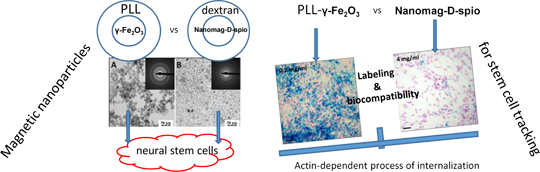
- effect on NSC, treated cells were assessed with regard to viability, proliferation and cytotoxicity. The MTT assay was applied to demonstrate NSC viability and proliferation. A constant amount of starting cells for culture was used and compared after 48 h of NSC proliferation in the culture. The non
- to assess the percentage of living cells (labeled with Calcein AM) and dead cells (labeled with PI). In contrast to the MTT assay, the obtained result was standardized on number of stained cells. The mean number of living cells in all tested conditions was higher than 90%. There was no difference




Synthesis, characterization and in vitro biocompatibility study of Au/TMC/Fe3O4 nanocomposites as a promising, nontoxic system for biomedical applications
Beilstein J. Nanotechnol. 2015, 6, 1677–1689, doi:10.3762/bjnano.6.170
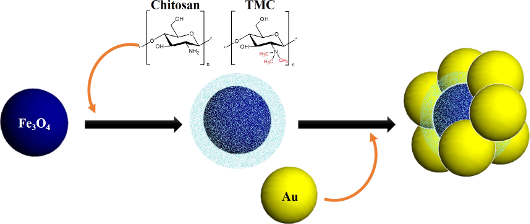
- . Moreover, the results of the MTT assay showed no significant cytotoxicity effect when the Au/TMC/Fe3O4 nanocomposites were applied in vitro. These TMC-containing magnetic nanoparticles are well-coated by Au nanoparticles and have good biocompatibility and can thus play the role of a platform or a label in
- addition, the nontoxic nature of this nanocomposite (which was explored by a 3-(4,5-dimethylthiazol-2-yl)-2,5-diphenyltetrazolium bromide (MTT) assay), facilitates its application in various in vitro and in vivo settings. This work focuses on the preparation process of the novel, gold-coated, iron oxide
- viability were assessed using the MTT assay. The assay was based on the reduction of the dye MTT to formazan crystals (an insoluble, intracellular, blue product) by cellular dehydrogenases. The MTT results demonstrated that no significant decrease in cell viability occurred in presence of different




Synthesis, characterization and in vitro effects of 7 nm alloyed silver–gold nanoparticles
Beilstein J. Nanotechnol. 2015, 6, 1212–1220, doi:10.3762/bjnano.6.124
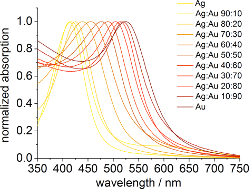
- , determined by atomic absorption spectroscopy. The cell viability was analyzed by the MTT assay. 3-(4,5-dimethylthiazol-2-yl)-2,5-diphenyl-2H-tetrazolium bromide (MTT; Sigma, Taufkirchen, Germany) was dissolved in PBS (5 mg mL−1) and then diluted to 1 mg mL−1 in the cell culture medium. After incubation, the


Tattoo ink nanoparticles in skin tissue and fibroblasts
Beilstein J. Nanotechnol. 2015, 6, 1183–1191, doi:10.3762/bjnano.6.120

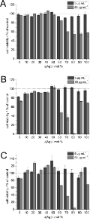
- adult skin dermal fibroblast cells (the cells targeted in skin tattooing) with both filtered and unfiltered commercially available black ink. The MTT assay results (shown in Figure 8) indicated that at an ink dilution of 1:100 the dermal fibroblast viability was reduced significantly after a one week
- exposure. A reduction in viability was also noted from similar work on gingival fibroblasts exposed to a different tattoo ink source [37]. As the MTT assay is a colourimetry-based technique, the use of dark pigments can be problematic. It was found that the lowest dilution of tattoo ink for the MTT assay
- , the MTT assay using 1:100 diluted tattoo ink showed considerable fibroblast death. The amount of cell death with filtered tattoo ink was greater than the amount of cell death using unfiltered ink, which can be attributed to the subsequent reduction in tattoo ink particle size. Experimental Particle


Novel ZnO:Ag nanocomposites induce significant oxidative stress in human fibroblast malignant melanoma (Ht144) cells
Beilstein J. Nanotechnol. 2015, 6, 570–582, doi:10.3762/bjnano.6.59
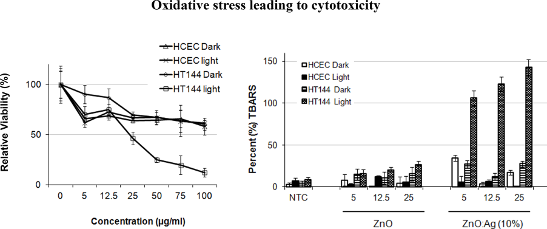
- (565)NP control and Abs(565)blank represent the background optical density and was measured in NPs only and media only samples. HCEC cells were included as a normal control cell line. Mitochondrial function: cell survival and proliferation assay MTT assay was used to investigate mitochondrial function
- measured relative to the NTC by using MTT assay. Statistical analysis The results are presented as mean ± SD. ANOVA and two tailed t-test were used to investigate the differences between NTC, nanoparticles treated and solvent exposed samples. The photo-oxidative effect of the NPs was measured by comparing
- scavengers mannitol, NaN3 and DMSO on the photo-oxidative activity of ZnO and ZnO:Ag nanocomposites as measured by MTT assay in HT144 (skin cancer) cells. Viability (mean ± SD) was calculated relative to the NTC samples. (a) ZnO, (b) ZnO:Ag (10%), (c) ZnO:Ag (20%), and (d) ZnO:Ag (30%). *p < 0.01, **p




Oxygen-plasma-modified biomimetic nanofibrous scaffolds for enhanced compatibility of cardiovascular implants
Beilstein J. Nanotechnol. 2015, 6, 254–262, doi:10.3762/bjnano.6.24
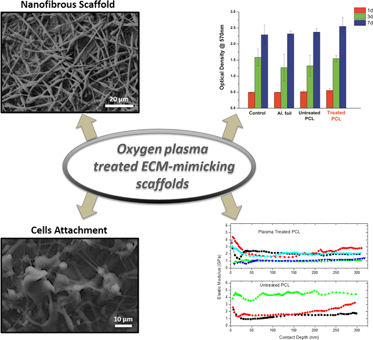
- may lead to improved surface properties without affecting the morphology or the mechanical behaviour of the system. In depth nanoindentation measurements were conducted for the scaffolds under optimal conditions to assess the mechanical performance. MTT assay along with imaging techniques were used to
- locations of the samples to 300 nm maximum penetration depth. The nanoindentation load–displacement curves were analyzed by using the Oliver–Pharr model to calculate the elastic modulus of the samples versus the indenter penetration (contact) depth [31]. Cell studies MTT assay: MTT assay (Sigma-Aldrich
- the O2-plasma modified ones, with P = 20 W and P = 40 W. The elastic modulus values of the untreated PCL electrospun scaffolds and the plasma-modified ones (20 W) versus the contact depth. Every curve comes from a nanoindentation measurement to a different surface location of the samples. (a,b) MTT


Release behaviour and toxicity evaluation of levodopa from carboxylated single-walled carbon nanotubes
Beilstein J. Nanotechnol. 2015, 6, 243–253, doi:10.3762/bjnano.6.23
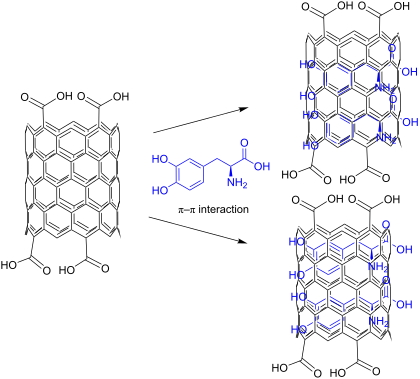
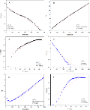
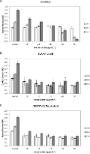
- well-described by a pseudo-second-order kinetic model. A cytotoxicity assay of the synthesized nanohybrid was also carried out in PC12 cell lines (a widely used, in vitro Parkinson’s model for neurotoxicity studies) using 3-(4,5-dimethylthiazol-2-yl)-2,5-diphenyltetrazolium bromide (MTT) assay in order
- carbon nanotubes; levodopa; MTT assay; nanomedicine; Parkinson’s disease; PC12 cells; sustained release; Introduction Over the past few years, the revolutionary development of nanomedicine has emerged as one of the most prominent research areas in biomedical science. This interdisciplinary technology is
- neurons more susceptible to LD. In another related work, conducted by Kura et al. [31], viability of PC12 cells was found to decrease with increasing concentration of LD after 72 h, as determined by MTT assay. In contrast, SWCNT–COOH and SWCNT–LD did not compromise the cell viability of PC12 cells and the




Synthesis of boron nitride nanotubes and their applications
Beilstein J. Nanotechnol. 2015, 6, 84–102, doi:10.3762/bjnano.6.9
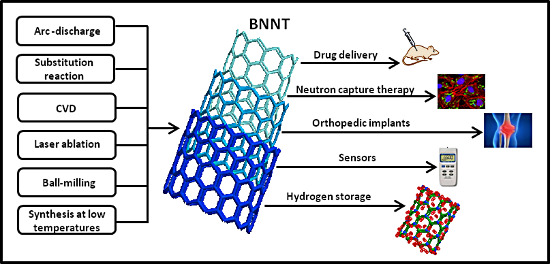
- normal MRC-5 fibroblast lung cells were investigated [76]. The hemolytic activity of the pure BNNTs was investigated by UV–vis spectroscopy and the results showed no significant hemolysis of cells that were exposed to the BNNTs. The metabolic activity of the BNNT-exposed cells using an MTT assay was




Anticancer efficacy of a supramolecular complex of a 2-diethylaminoethyl–dextran–MMA graft copolymer and paclitaxel used as an artificial enzyme
Beilstein J. Nanotechnol. 2014, 5, 2293–2307, doi:10.3762/bjnano.5.238
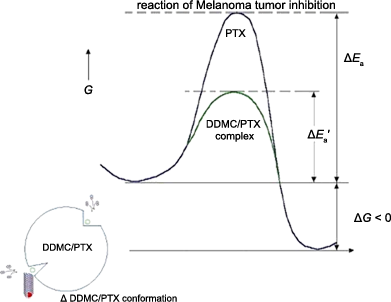
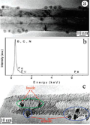
- elasticity [32], such as a self-structural change, so that it may become advantageous functionally according to the structural change of a substrate and an intermediary body. MTT assay (WST8) The WST-8 (2-(2-methoxy-4-nitrophenyl)-3-(4-nitrophenyl)-5-(2,4-disulfophenyl)-2H-tetrazolium) method is superior to
- the traditional MTT assay with regard to sensitivity and cell cytotoxicity. The results of survival analysis in vitro by a direct MTT assay (WST8) are shown for PTX-resistant melanoma B16F10 cells (Figure 5a). The resistance of this melanoma cell line to PTX changed clearly, as can be seen from the


Influence of surface-modified maghemite nanoparticles on in vitro survival of human stem cells
Beilstein J. Nanotechnol. 2014, 5, 1732–1737, doi:10.3762/bjnano.5.183
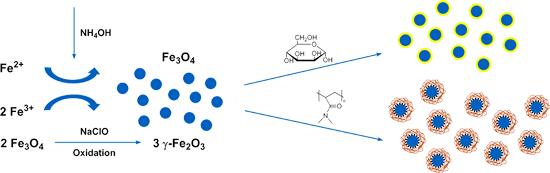
- the modified particles were characterized by transmission electron microscopy and dynamic light scattering with regard to morphology, particle size and polydispersity. In vitro survival of human stem cells was then investigated by using the methyl thiazolyl tetrazolium (MTT) assay, which showed that D
- -mannose- and poly(N,N-dimethylacrylamide)-coated γ-Fe2O3 particles exhibit much lower level of cytotoxicity than the non-coated γ-Fe2O3. Keywords: maghemite; magnetic; MTT assay; nanoparticles; stem cells; Introduction One of the most important applications of nanoparticles in biomedicine is the direct
- zero remanent magnetization of the particles, the risk of formation of aggregates in physiological liquids is reduced. MTT assay In order to achieve an efficient cell labeling, the response of intracellular γ-Fe2O3 content on the metabolism of the cells should be taken into account because the


Protein-coated pH-responsive gold nanoparticles: Microwave-assisted synthesis and surface charge-dependent anticancer activity
Beilstein J. Nanotechnol. 2014, 5, 1452–1462, doi:10.3762/bjnano.5.158
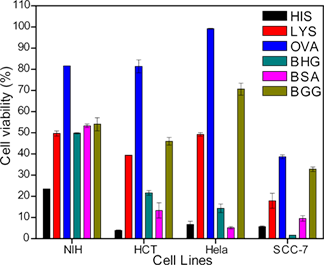
- OVA > BGG > LYS > BSA > BHG > HIS, OVA > BGG > LYS > BHG > BSA > HIS and OVA > BGG > BSA > BHG > LYS > HIS for the HCT116, HeLa and SCC-7 cell lines, respectively (Table S3, Supporting Information File 1). The MTT assay on the blank proteins showed cell viabilities greater than 80% (Figure S7
- cytotoxicity studies. The reactions were also carried out in the absence of AgNO3, keeping all of the other conditions the same as above. Cell culture and cell viability test (MTT assay) In a similar manner to the methods described in [61], Mouse embryonic fibroblasts (NIH-3T3), human colorectal cancer cells
- and (F) BGG. Scale bar: 20 nm. Variation in the zeta potential of AuNPs prepared by using different proteins as a function of the pH in aqueous medium. Cell viability studies by using MTT assay on (A) NIH-3T3, (B) HCT116, (C) HeLa and (D) SCC-7 cells treated with AuNPs prepared by using different


The protein corona protects against size- and dose-dependent toxicity of amorphous silica nanoparticles
Beilstein J. Nanotechnol. 2014, 5, 1380–1392, doi:10.3762/bjnano.5.151
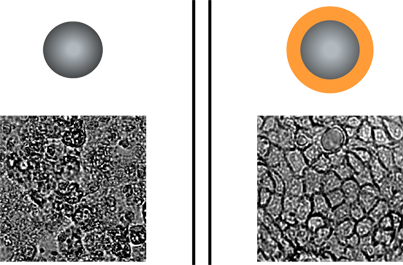
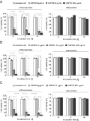
- MTT assay (Figure 6). Similar to the lung surfactant [32], also epithelial cell of the GI tract are covered by an additional biobarrier, i.e., by mucous matrices [33]. To investigate the impact of mucus associated to GI tract cells on the observed effects, we included the mucus-secreting colorectal
- 3-(4,5-dimethylthiazol-2-yl)-2,5-diphenyltetrazolium bromide (MTT) assay as described in [54]. Briefly, following NP exposure, cells were incubated with MTT (400 μg/mL; 965 μM; Life Technologies, Carlsbad, USA) for 4 h. The MTT was removed, the cells were washed with PBS and solubilized in dimethyl
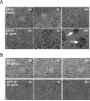
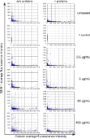
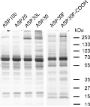
- by using the MTT assay. Data are depicted as percentage compared to untreated control cells, which was set to 100% vitality. Results are shown as means ± SD (n = 3). *P < 0.05, **P < 0.01 and ***P < 0.001. Automated microscopy to analyze the impact of exposure to ASP30 on the cell viability. Caco-2




Magnetic-Fe/Fe3O4-nanoparticle-bound SN38 as carboxylesterase-cleavable prodrug for the delivery to tumors within monocytes/macrophages
Beilstein J. Nanotechnol. 2012, 3, 444–455, doi:10.3762/bjnano.3.51
- of the nanoparticles in the cells and compared to the side scatter of control cells. 10,000 cells were counted and analyzed. This procedure was repeated three times. Data were analyzed by using Cytosoft software (Guava Easycyte Plus System, Millipore Corporation, MA). MTT Assay The MTT assay [46] was
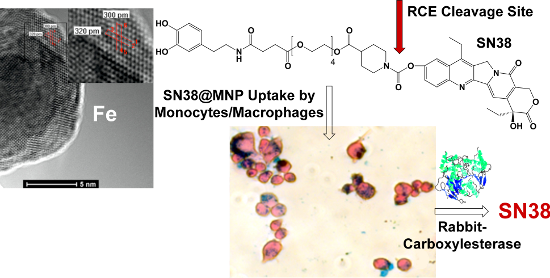
- . Different concentrations of nanoparticles were taken up by double-stable Mo/Ma cells over 24 h; the nanoparticle-concentration ranged from 0 to 320 μg/mL MNP-SN38 in fresh medium. After 24 h, the inhibition of cell proliferation was measured by using the MTT assay (Figure 4). We found only 20% of inhibition
- of nanoparticles contained 0.427 mg of iron, indicating that this amount of iron would be high enough for alternating magnetic field hyperthermia in combination with chemotherapy [54]. The MTT assay indicated that 8 pg of iron can be easily loaded in each cell (20% inhibition of cell proliferation





