


Search results
Search for "Si" in Full Text gives 841 result(s) in Beilstein Journal of Nanotechnology. Showing first 200.
Feasibility analysis of carbon nanofiber synthesis and morphology control using a LPG premixed flame
Beilstein J. Nanotechnol. 2025, 16, 581–590, doi:10.3762/bjnano.16.45
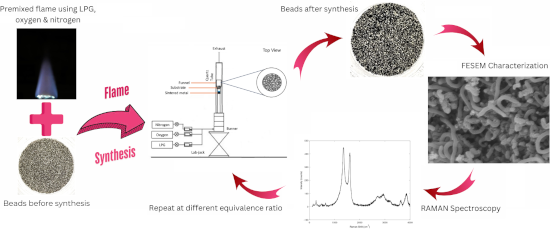
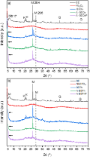
- at 1607 cm−1 and a few broad peaks, indicating less graphitization [14]. In another work, a high-density inductively coupled plasma chemical vapor deposition method yielded vertically aligned CNFs using acetylene and hydrogen on a p-type Si wafer with a 10 nm Ni catalyst layer at 20 mTorr and 550 °C



Retrieval of B1 phase from high-pressure B2 phase for CdO nanoparticles by electronic excitations in CdxZn1−xO composite thin films
Beilstein J. Nanotechnol. 2025, 16, 551–560, doi:10.3762/bjnano.16.43

- oxygen ion irradiation, while it entirely disappears with silver ion irradiation, confirming the amorphization of the Zn2SiO4 phase. Complementary observations from X-ray photoelectron spectroscopy (XPS), specifically O 1s and Si 2p peaks in XPS spectra, support these findings. Additionally, the track
- irradiated thin films was performed with X-ray diffraction and Raman spectroscopy. Additionally, X-ray absorption near-edge structure (XANES) spectroscopy was conducted at the Zn L3,2 and O K edges for all the thin films. X-ray photoelectron spectroscopy (XPS) on Si 2p and O 1s core levels provided direct
- the presence of the B2 phase. In the Zn L3,2 edge (inset of Figure 4b), the B1 feature is magnified, clearly illustrating the changes in the B1 feature corresponding to the willemite Zn2SiO4 phase across all three thin films. Influence of irradiation on Zn2SiO4 phase from Si 2p XPS spectra Figure 5a–d


Electron beam-based direct writing of nanostructures using a palladium β-ketoesterate complex
Beilstein J. Nanotechnol. 2025, 16, 530–539, doi:10.3762/bjnano.16.41
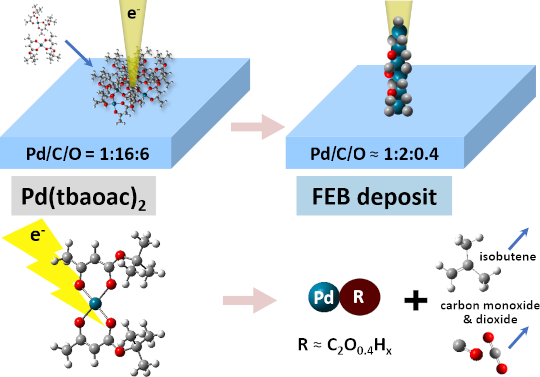
- following the method outlined by Butrymowicz and colleagues [42]. FEBID was performed using a Hitachi S3600 scanning electron microscope (SEM), which features a high-vacuum chamber and a tungsten filament electron source. Native-oxide Si(100) was employed as a substrate, which was thoroughly cleaned with
- duration. A 20 keV electron beam was used with a probe current of 0.7 nA, as measured on a Faraday cup using a Keithley picoamperemeter. This corresponds to a current of 0.5 nA on the native-oxide Si(100) substrate, with the remaining 0.2 nA attributed to BSEs and SEs emitted from the substrate. The
- these k-ratios, Stratagem then recalculates the composition for a thin film (multi)layered structure. The native-oxide Si(100) substrate was accounted for by including a 1 nm thick SiO2 layer of density 2.65 g·cm−3 between the Si substrate and the deposit for the thin film correction. This way, the


Zeolite materials with Ni and Co: synthesis and catalytic potential in the selective hydrogenation of citral
Beilstein J. Nanotechnol. 2025, 16, 520–529, doi:10.3762/bjnano.16.40
- elements, as well as the Si/Al ratios for the obtained materials are shown in Table 1 and/or Figure 3. The Si/Al ratio shows no significant change (Table 1), indicating a high degree of stability for the clinoptilolite–heulandite and mordenite phases after the applied hydrothermal treatments. Additionally
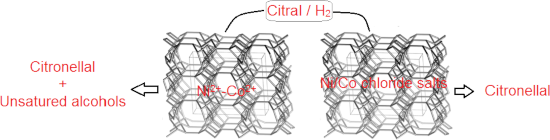
- Imp. TPR profiles for the mono- and bimetallic materials obtained by (a) Imp and (b) IE. Main pathways of citral hydrogenation. Citral hydrogenation results on the mono- and bimetallic catalyst materials obtained by IE and Imp. Cobalt and nickel contents and Si/Al ratio values for the materials


N2+-implantation-induced tailoring of structural, morphological, optical, and electrical characteristics of sputtered molybdenum thin films
Beilstein J. Nanotechnol. 2025, 16, 495–509, doi:10.3762/bjnano.16.38
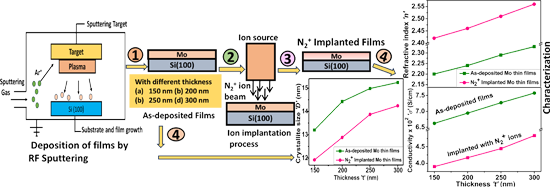
- remarkable thermal stability, high melting point, and chemical inertness. In the present study, Mo thin films of different thicknesses (150, 200, 250, and 300 nm) have been deposited on Si(100) substrates via radio frequency sputtering in an argon atmosphere at room temperature. Some of these films have been
- for various applications in photovoltaics, sensors, optoelectronics, and electronic devices. In the present work, Mo thin films with varying thickness of 150, 200, 250, and 300 nm were deposited on Si(100) substrates using radio frequency (RF) sputtering in an argon environment at ambient temperature
- this study, molybdenum thin films of varying thickness were deposited at room temperature on Si(100) substrates via RF sputtering using a pure 2″ diameter Mo target (99.99% purity) in Ar gas atmosphere with a flow rate of 10 sccm. The plasma was obtained by setting the RF power to 100 W, while careful


Performance optimization of a microwave-coupled plasma-based ultralow-energy ECR ion source for silicon nanostructuring
Beilstein J. Nanotechnol. 2025, 16, 484–494, doi:10.3762/bjnano.16.37

- power, and extraction grid voltage is documented for different ion energies. Additionally, the manuscript establishes the relationship between ion beam current and ion energy. Irradiation of p-type single crystal Si(100) surfaces at off-normal angles (60° and 72.5°) with 450 eV Ar ions results in the
- current with the target position, known as the beam profile, is also presented in Figure 4e. The beam profile is Gaussian for concave grid beam extraction optics. Nanostructuring on Si surface by 450 eV Ar-ion bombardment The morphological evolution of Si after the off-normal bombardment with 450 eV Ar
- ions at different incidence angles and for various irradiation times is investigated using AFM in tapping mode. Si cantilevers with tip radii of 10 nm were employed, with scan rate of 1 µm/s and a fixed scan size of 5 µm × 5 µm. Quantitative analysis of the surface topography was conducted using WSxM


Impact of adsorbate–substrate interaction on nanostructured thin films growth during low-pressure condensation
Beilstein J. Nanotechnol. 2025, 16, 473–483, doi:10.3762/bjnano.16.36

- were observed for Si/Si(100) [13], as well as during Ge deposition on Si [14]. Additionally, elongated metallic islands were detected during the deposition of Cu on Pd(110) [15] and Ag on Cu(110) [16]. Small separated adsorbate islands of Al and Cu condensates were obtained on glass substrates [17][18
- , even for monoatomic layers [34]. The patterns may serve as templates for the later evolution of film textures. Relevant examples of such systems are Al or Cu layers deposited on Si substrates, or SiO2 and TiN layers deposited on Ti or Al substrates [31]. In this article, we perform a computational


Tailoring of physical properties of RF-sputtered ZnTe films: role of substrate temperature
Beilstein J. Nanotechnol. 2025, 16, 333–348, doi:10.3762/bjnano.16.25
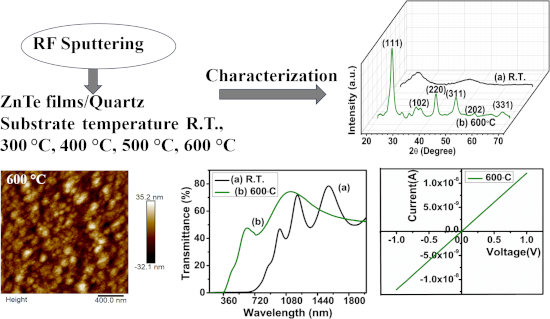
- used for this purpose. However, the requirement of very pure material for making these devices leads to high production cost. Metal chalcogenide-based solar cells, because of their low cost and comparable efficiency, can act as a substitute for the Si-based technology. Metal chalcogenide (II–VI




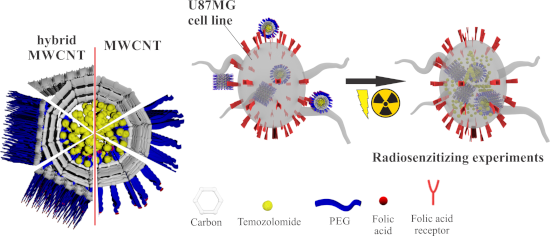
Radiosensitizing properties of dual-functionalized carbon nanostructures loaded with temozolomide
Beilstein J. Nanotechnol. 2025, 16, 229–251, doi:10.3762/bjnano.16.18




Synthesis and the impact of hydroxyapatite nanoparticles on the viability and activity of rhizobacteria
Beilstein J. Nanotechnol. 2025, 16, 216–228, doi:10.3762/bjnano.16.17
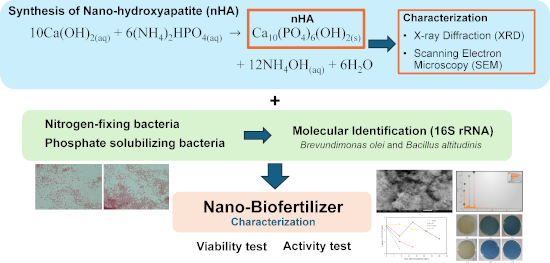
- clear zone (halo) and the bacterial colony. The solubilizing index (SI) was then calculated using the formula: SI = (colony diameter + clear zone diameter)/colony diameter. Assessment of nitrogen-fixing activity of rhizobacteria-nHA The nitrogen-fixing ability of rhizobacteria was assessed qualitatively
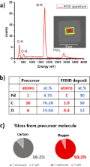
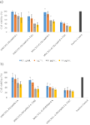
- composition of the Pd-nHA sample. Elemental composition of the Tb-nHA sample. Solubilizing index (SI) of rhizobacteria loaded onto the nHA carrier. Nitrogen-fixing activity of rhizobacteria loaded onto the carrier.a Supporting Information Supporting Information File 16: Activity tests of Pd and Tb


Clays enhanced with niobium: potential in wastewater treatment and reuse as pigment with antibacterial activity
Beilstein J. Nanotechnol. 2025, 16, 141–154, doi:10.3762/bjnano.16.13
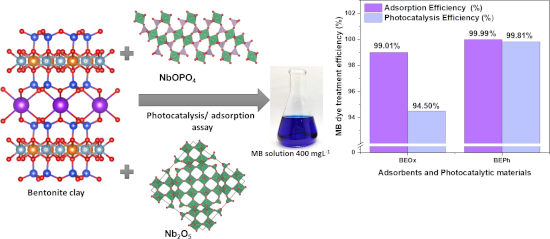
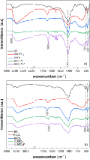
- angular deformation of the water molecule, respectively [7][17]. The band in the region of approximately 1115 cm−1 is related to the stretching vibrations of Si–O. Bands in the region of 520 and 463 cm−1, which appear in all spectra of bentonite and bentonite modified with niobium, are attributed to the
- stretching and bending of Si–O present in the clay layers [7]. The spectra for Nb2O5 and NbOPO4 and the bentonite modified with niobium before and after adsorption/photocatalysis present an intense band in the region of 630 cm−1 related to the stretching of the Nb–O bond. The A-BEPh, A-BEPhP, A-BEOx, and A
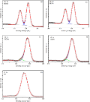
- at 530.9 and 533.5 eV. The component centered at 531.0 eV can be attributed to photoelectrons emitted from oxygen atoms in Si–O, Al–O, or Nb–O bonds, whereas the low-intensity component at a higher binding energy can be associated with the hydroxyl OH− group of Nb–OH located in the interlayer region



TiO2 immobilized on 2D mordenite: effect of hydrolysis conditions on structural, textural, and optical characteristics of the nanocomposites
Beilstein J. Nanotechnol. 2025, 16, 128–140, doi:10.3762/bjnano.16.12
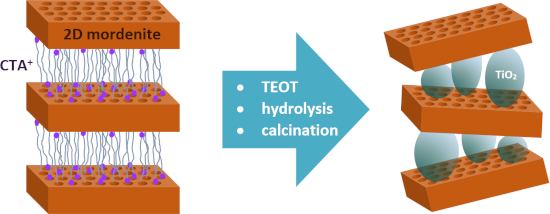
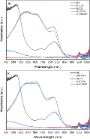
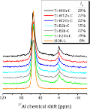
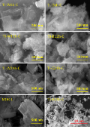
- mesoporosity after calcination due to anatase nanoparticles of about 4 nm preventing the collapse of the interlamellar space. Immobilization of TiO2 on the zeolite surface is evidenced by the formation of Si–O–Ti bonds. The bandgap width of the synthetized nanocomposites was found to be sensitive to the
- that direct synthesis of TiO2 in mesoporous silica or zeolites provides strong immobilization of TiO2 nanoparticles through Ti–O–Si bonding [21][22][23]. Previously, we reported the results of the trial synthesis of a new TiO2/2D mordenite nanocomposite [28]. The material was obtained from a composite
- most important chemical property. For various reasons, the sol–gel method is mainly associated with the hydrolysis of Si(OR)4; this reagent is readily available, inexpensive, and its hydrolysis proceeds relatively smoothly, as discussed in numerous original papers and reviews [29]. However, the



Theoretical study of the electronic and optical properties of a composite formed by the zeolite NaA and a magnetite cluster
Beilstein J. Nanotechnol. 2025, 16, 44–53, doi:10.3762/bjnano.16.5
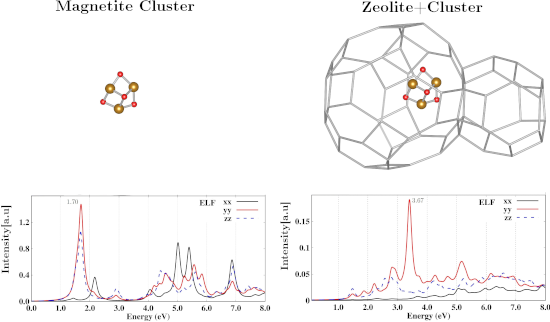
- characteristics of zeolites depend largely on the chemical composition of the framework, specifically the Si/Al ratio [1][2]. These characteristics make zeolites highly appealing for a wide range of applications, including the production of fine chemicals [3][4], gas separation [5][6][7], ion exchange [8][9][10
- magnetic materials. Computational Details In the current study, the dehydrated sodium LTA zeolite, commonly denoted as NaA in the literature, with a ratio of Si/Al = 1 was considered. For this purpose, we adopted the trigonal cell proposed by Antúnez-García et al. [54], for which the lattice parameters are
- magnitude of the largest vector in charge density Fourier expansion is Gmax = 12.0. The energy to separate the valence states of the core states was set at a value of −7.5 Ry; thus, the Al [1s2 2s2], O [1s2], Si [1s2 2s2], Na [1s2], and Fe [1s2 2s2 2p6] electronic states are considered as core states, and




Precursor sticking coefficient determination from indented deposits fabricated by electron beam induced deposition
Beilstein J. Nanotechnol. 2025, 16, 35–43, doi:10.3762/bjnano.16.4

- itself once the first closed layer is formed. In another series of surface-science-oriented works, the sticking coefficient has been studied for small organic molecules, such as allyl methyl ether on Si(100) [17], trimethylamine on Si(001) [18], tetrahydrofuran on Si(001) [19], and benzene on Pt(111) [20
- dynamics of larger precursor molecules. Methods A dual-beam microscope Nova 600 (FEI Company, the Netherlands) at Goethe University Frankfurt was used for the nanofabrication process. Structures were deposited on a 500 nm thick Au surface on top of a SiO2-terminated Si substrate in order to prevent


Fabrication of hafnium-based nanoparticles and nanostructures using picosecond laser ablation
Beilstein J. Nanotechnol. 2024, 15, 1639–1653, doi:10.3762/bjnano.15.129
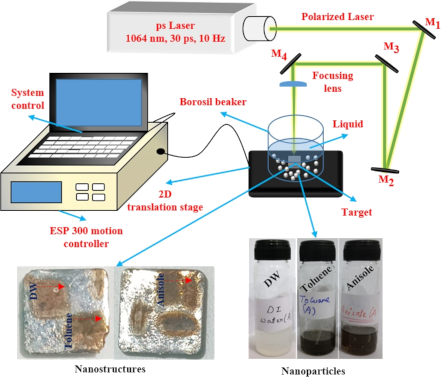
- techniques The synthesised NPs were drop-cast on carbon-coated copper grids to record transmission electron microscopy (TEM) images and selected area electron diffraction (SAED) patterns using a FEI Tecnai G2 S-Twin operating at 200 kV. Further, these NPs were drop-cast on cleaned Si substrates, and their
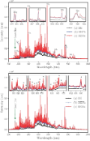
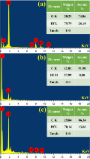
- . The high fraction of C indicates the formation of the graphitic shell around HfC NPs in both toluene and anisole. Figure 8 shows the reflectance data of a pristine Si substrate compared to a Si substrate coated with HfNPs-D, HfNPs-T, and HfNPs-A under three different angles of incidence (30°, 45°, and
- 60°) taken in the wavelength range from 250 to 1200 nm. The black curve corresponds to the reflectance spectrum of the reference pristine Si sample; the red curve is HfNPs-T, the blue curve is HfNPs-A, and the green curve is HfNPs-D. The values of the reflectance and reduction in the UV (λ = 250 nm




Heterogeneous reactions in a HFCVD reactor: simulation using a 2D model
Beilstein J. Nanotechnol. 2024, 15, 1627–1638, doi:10.3762/bjnano.15.128
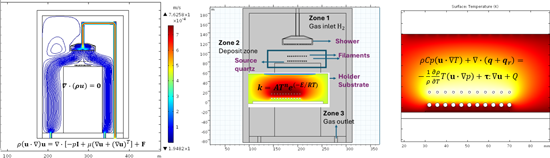
- ratio x = [O]/[Si], which is determined by controlling key parameters in the deposition process [2]. This ratio determines optical and electrical properties such as bandgap energy, absorption coefficient, photoluminescence, refractive index, and electrical conductivity [3]. SiOx cannot only be obtained
- , OH, H2O, and O2; those with lower concentrations were SiH4, SiH, Si, O, Si2, and Si3 [24]. This study was the basis for establishing the four main chemical reactions in zone 2 in the HFCVD reactor, which are listed below in Table 3. Here, an additional thermochemical study of the reaction SiO2 (s
- increases with the flux of H2. This effect was already studied experimentally, and the most significant results were the analysis of how the hydrogen flow influences the composition SiOx films by X-ray photoelectron spectroscopy; as the hydrogen flow increases, the concentration of Si also increases in


Ion-induced surface reactions and deposition from Pt(CO)2Cl2 and Pt(CO)2Br2
Beilstein J. Nanotechnol. 2024, 15, 1427–1439, doi:10.3762/bjnano.15.115

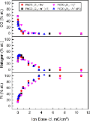
- occurs at ≈1 mC/cm2 in Figure 5. Figure 6 and Figure S5 (Supporting Information File 1) show the results of experiments where a Si substrate was exposed to a constant partial pressure of Pt(CO)2Cl2 and a steady Ar+ flux of 5 nA at an incident energy of 800 eV. These conditions represent a situation that
- a separate UHV chamber equipped with a Stanford Research Instruments RGA200 quadrupole mass spectrometer and a PHI 04-303 ion gun. The base pressure of this chamber was 2.9 × 10⁻⁹ Torr. Si substrates (20 × 20 mm, Ted Pella, Inc.) were cleaned by sonication in acetone, then isopropanol, and finally



Various CVD-grown ZnO nanostructures for nanodevices and interdisciplinary applications
Beilstein J. Nanotechnol. 2024, 15, 1390–1399, doi:10.3762/bjnano.15.112
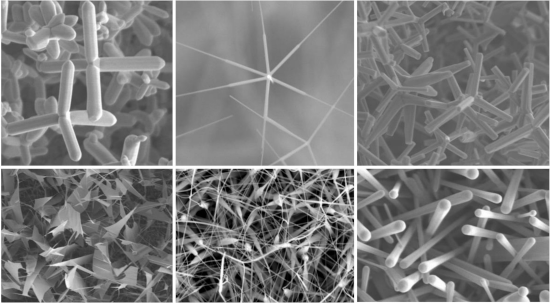
- prepare ZnO nanostructures. A commercial Zn powder was used as the starting material (a vapour source) which was loaded in a ceramic bath. Clean Au-coated Si(001) substrates were arranged upstream on an alumina plate that was placed on the bath, nearby the vapour source. This system was placed in the
- down to collect white products formed on Si substrates. They were characterized by scanning electron microscopy (SEM, JEOL-6330F) and energy-dispersive X-ray (EDX) spectroscopy. Renishaw’s RS and PL spectrometers operating with laser wavelengths of 488 and 325 nm were also employed to study phonon
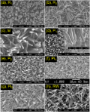
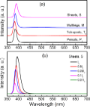
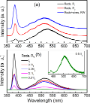
- vibrational and emission spectra, respectively, of typical nanostructures. Results and Discussion We performed multiple experiments of growth of nanostructured ZnO materials by CVD under temperature and gas conditions as aforementioned described. After each growth, we obtained white products deposited on Si



A biomimetic approach towards a universal slippery liquid infused surface coating
Beilstein J. Nanotechnol. 2024, 15, 1376–1389, doi:10.3762/bjnano.15.111
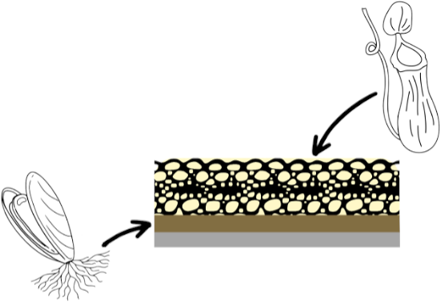
- a 1:1 mixture of ethanol and acetone for 30 min. Si substrates were fabricated via a diamond-tipped blade in a Disco wafer saw (Disco, Tokyo, Japan) from a silicon wafer cut into 1 × 1 cm2 substrates. These Si substrates were left overnight to soak in DI water and then sonicated in 20 min intervals
- were (89.3 ± 3.7)° for bare COC, (62.2 ± 1.9)° for Si, and (66.8 ± 2.5)° for SS (Figure 2), all of which were consistent with what was expected [38][39][40][41]. The experimental contact angles for substrates following the next functionalization step, the addition of PDA, were (43.3 ± 2.5)° for COC
- , (39.6 ± 2.1)° for Si, and (43.4 ± 4.7)° for SS, which was also in agreement with other values reported for PDA-coated substrates [19]. The final layer of the coating involved covalently attaching the fluorinated thiol, FDT, to the newly formed PDA film. The reported values for the final layer are (127.6




Green synthesis of carbon dot structures from Rheum Ribes and Schottky diode fabrication
Beilstein J. Nanotechnol. 2024, 15, 1369–1375, doi:10.3762/bjnano.15.110
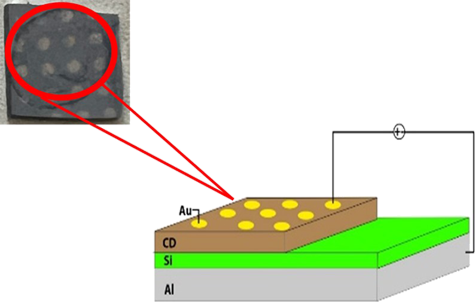
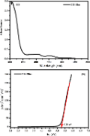
- bandgap value of the CDs layer was 5.25 eV (Figure 6b). The current–voltage (I–V) characteristics of the Si/CDs/Au-based Schottky diode were investigated. I–V measurements of the CDs-based thin film device were carried out using a semiconductor parameter analyzer between −2.5 V and +2.5 V at room
- temperature (Figure 7). The interface between Au and CDs exhibited a nonlinear rectification behavior, indicating the formation of a Schottky diode [24]. The electrical properties of the Si/CDs/Au diode were determined using standard thermionic emission theory [25]. According to this theory, where n, IRs, V
- written as: where Φb is the effective barrier height, A is the device area, and A* is the Richardson constant (112 A·cm−2·K−2 for n-type Si [26]). Φb can be obtained from Equation 3. The value of n is calculated from the slope of semi-logarithmic I–V plots and is given as The ideality factor and the value




Out-of-plane polarization induces a picosecond photoresponse in rhombohedral stacked bilayer WSe2
Beilstein J. Nanotechnol. 2024, 15, 1362–1368, doi:10.3762/bjnano.15.109
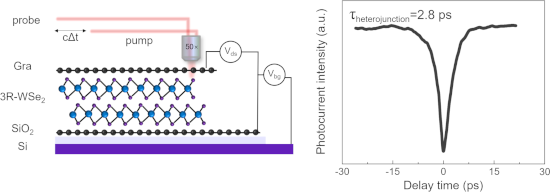
- monolayers of WSe2 were aligned at a 0° angle to form the 3R phase. The graphene/3R WSe2/graphene heterojunctions were aligned and assembled onto a SiO2/Si substrate by the all-dry transfer method. Au/Cr (50/10 nm) electrodes were patterned using standard electron-beam lithography (EBL, Raith 150 Two) and


Investigation of Hf/Ti bilayers for the development of transition-edge sensor microcalorimeters
Beilstein J. Nanotechnol. 2024, 15, 1353–1361, doi:10.3762/bjnano.15.108

- [20]: where NEP is the noise equivalent power. The NEP is equal to the ratio of the total noise power spectral density IN to the ampere–watt sensitivity SI(ω). The total noise is composed of four components, namely, phonon noise , Nyquist TES noise , Nyquist external circuit noise , and the readout


The role of a tantalum interlayer in enhancing the properties of Fe3O4 thin films
Beilstein J. Nanotechnol. 2024, 15, 1253–1259, doi:10.3762/bjnano.15.101

- promising applications. High-quality Fe3O4 thin films are a must to achieve the goals. In this report, Fe3O4 films on different substrates (SiO2/Si(100), MgO(100), and MgO/Ta/SiO2/Si(100)) were fabricated at room temperature with radio-frequency (RF) sputtering and annealed at 450 °C for 2 h. The
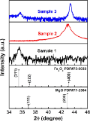
- morphological, structural, and magnetic properties of the deposited samples were characterized with atomic force microscopy, X-ray diffractometry, and vibrating sample magnetometry. The polycrystalline Fe3O4 film grown on MgO/Ta/SiO2/Si(100) presented very interesting morphology and structure characteristics
- in significant changes in the film’s characteristics [19][20]. Roy et al. conducted a study on polycrystalline Fe3O4 films on Si and SiO2/Si substrates. Their findings revealed that the value of the Gilbert damping parameter is significantly higher in Fe3O4/Si films compared to Fe3O4/SiO2/Si films


Dual-functionalized architecture enables stable and tumor cell-specific SiO2NPs in complex biological fluids
Beilstein J. Nanotechnol. 2024, 15, 1238–1252, doi:10.3762/bjnano.15.100
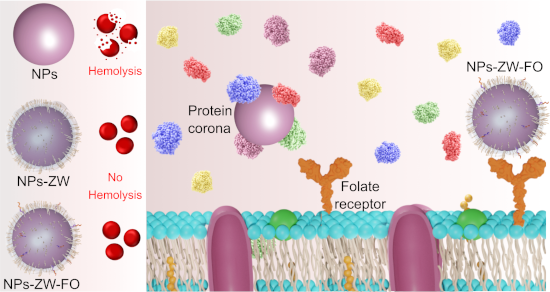
- -rays with charge compensation. Spectra were recorded in three distinct areas per sample with 400 μm spatial resolution, using 200 eV pass energy. High-resolution spectra for C 1s, N 1s, Si 2p, and S 2p were recorded with a resolution of 0.1 eV, using a pass energy of 40 eV. All spectra were analyzed


Photocatalytic methane oxidation over a TiO2/SiNWs p–n junction catalyst at room temperature
Beilstein J. Nanotechnol. 2024, 15, 1132–1141, doi:10.3762/bjnano.15.92
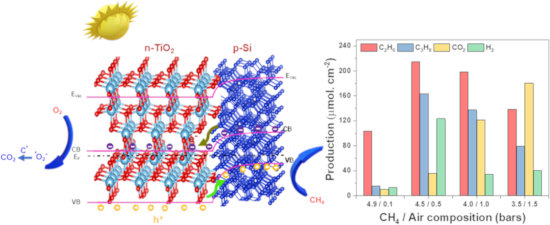
- , Vietnam Academy of Science and Technology, 18 Hoang Quoc Viet Street, Cau Giay District, Hanoi 100000, Vietnam Department of Chemical and Biological Engineering, Gachon University, 1342 Seongnamdaero, Sujeong-gu, Seongnam-si, Gyeonggi-do 13120, Republic of Korea 10.3762/bjnano.15.92 Abstract Rapid
- tools is extremely essential and important [37][38][39]. Herein, we constructed a robust p–n junction catalyst by atomic layer deposition (ALD) of TiO2 thin films on a p-type SiNW substrate for enhancing the photocatalytic efficiency in CH4 oxidation. Pristine p-Si wafers have limited surface area and
- are highly susceptible to mechanical failure because of their brittle nature; in contrast, the etched SiNW arrays exhibit superior optical absorption and enhanced surface catalytic reaction properties. The intimate contact between 1D Si NWs and thin TiO2 layers reduces the recombination rate of





