


Search results
Search for "absorption spectroscopy" in Full Text gives 143 result(s) in Beilstein Journal of Nanotechnology.
Biocatalytic oligomerization-induced self-assembly of crystalline cellulose oligomers into nanoribbon networks assisted by organic solvents
Beilstein J. Nanotechnol. 2019, 10, 1778–1788, doi:10.3762/bjnano.10.173

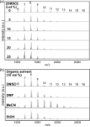
- discussed further below. The crystal structure of the representative products was analyzed by X-ray diffraction (XRD) measurements and attenuated total reflection Fourier-transform infrared (ATR-FTIR) absorption spectroscopy. The XRD profiles showed three peaks at 2θ (θ is the Bragg angle) of 12.2, 19.9
- dispersions was dried at 105 °C for 24 h, followed by weighing. For 1H NMR spectroscopy, ATR-FTIR absorption spectroscopy, and XRD measurements, as much as possible of the supernatant after the final centrifugation was removed by pipette, followed by adding water to the products. The resultant product aqueous
- from 15–20° for each profile. The χc was estimated according to the following equation: where Ic(2θ) is the diffraction intensity from the crystalline phase, and I(2θ) is the intensity from both the crystalline and amorphous phases. For ATR-FTIR absorption spectroscopy, the lyophilized products in a





Nanoporous smartPearls for dermal application – Identification of optimal silica types and a scalable production process as prerequisites for marketed products
Beilstein J. Nanotechnol. 2019, 10, 1666–1678, doi:10.3762/bjnano.10.162
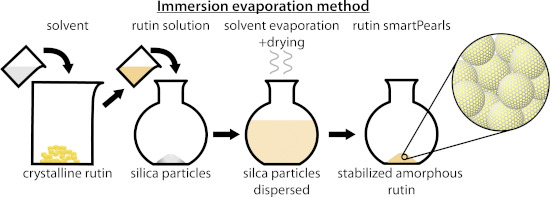
- ultrasonication the suspension was centrifuged at 10,000 rpm for 10 min and an aliquot of the supernatant was diluted in ethanol by a factor of 100. Absorption spectroscopy was performed at 360 nm on a PharmaSpec UV-1700 instrument (Shimadzu, China). The peaks were evaluated using the PharmSpec software “UVprobe




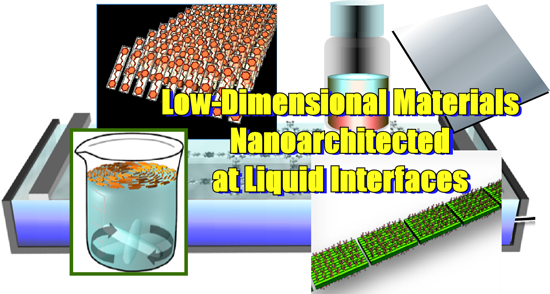
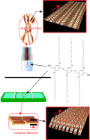
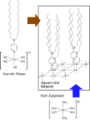
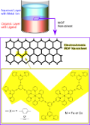
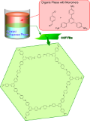
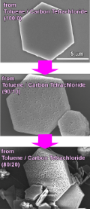
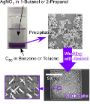
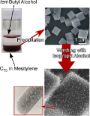
Materials nanoarchitectonics at two-dimensional liquid interfaces
Beilstein J. Nanotechnol. 2019, 10, 1559–1587, doi:10.3762/bjnano.10.153













In situ AFM visualization of Li–O2 battery discharge products during redox cycling in an atmospherically controlled sample cell
Beilstein J. Nanotechnol. 2019, 10, 930–940, doi:10.3762/bjnano.10.94
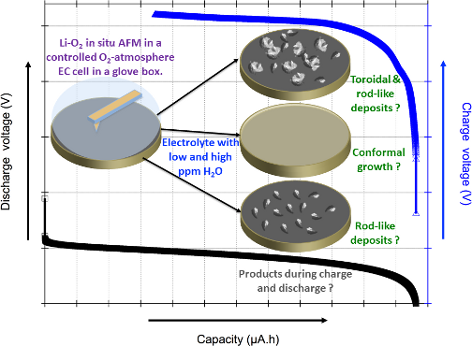
- opposed to a single point. Yu et al. [21] performed in situ UV–vis absorption spectroscopy, surface enhanced Raman vibrational spectroscopy and ex situ infrared spectroscopy of O2 reduction and evolution reactions respectively. Lim et al. [22] used X-ray diffraction to study surface changes resulting from


The systemic effect of PEG-nGO-induced oxidative stress in vivo in a rodent model
Beilstein J. Nanotechnol. 2019, 10, 901–911, doi:10.3762/bjnano.10.91
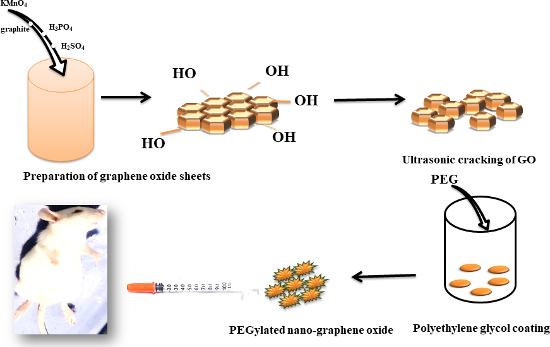
- synthesis from graphite powder. The presence of functional groups was analysed by using Fourier-transform infrared spectrometry (PerkinElmer Inc. Spectrum BX). Ultraviolet–visible absorption spectroscopy (Biochrom Libra S60PC) was used to identify the PEGylation of nGO. Transmission electron microscopy


Comparative biological effects of spherical noble metal nanoparticles (Rh, Pd, Ag, Pt, Au) with 4–8 nm diameter
Beilstein J. Nanotechnol. 2018, 9, 2763–2774, doi:10.3762/bjnano.9.258
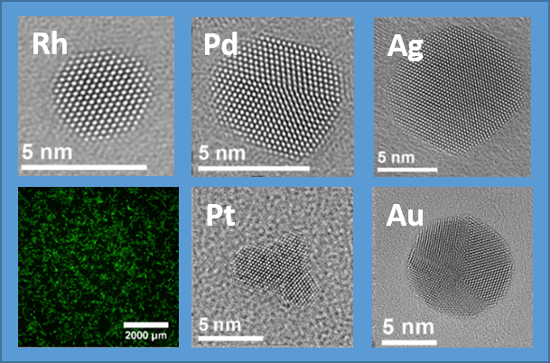
- as determined by atomic absorption spectroscopy (AAS). PVP-stabilized Ag nanoparticles: In a 50 mL two-neck round-bottom flask, 1.80 mg AgNO3 and 1.80 mg trisodium citrate were dissolved in 35 mL water. The mixture was rapidly cooled in an ice bath with stirring (700 rpm). Then 1 mL of a 10 mM NaBH4
- °C to avoid oxidation. The yield was about 70 to 80% with respect to gold as determined by AAS. All synthesis parameters are compiled in Table 1. Characterization All metal concentrations were determined by atomic absorption spectroscopy (AAS) with a Thermo Electron M-Series spectrometer (graphite


Enhanced antineoplastic/therapeutic efficacy using 5-fluorouracil-loaded calcium phosphate nanoparticles
Beilstein J. Nanotechnol. 2018, 9, 2499–2515, doi:10.3762/bjnano.9.233
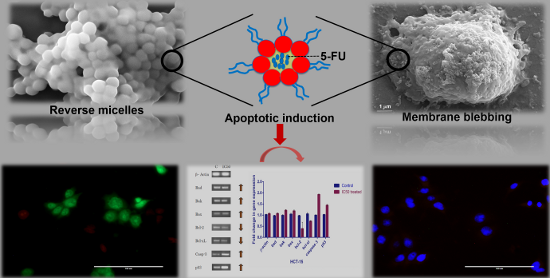
- . The entrapment efficiency (EE, wt %) of 5-FU in the CaP@5-FU NPs was calculated in the supernatant by the following equation: UV–visible spectral characterization The characterization of CaP@5-FU and CaP NP formation by UV–vis absorption spectroscopy was performed on a Lasany double-beam L1 2800 UV


SERS active Ag–SiO2 nanoparticles obtained by laser ablation of silver in colloidal silica
Beilstein J. Nanotechnol. 2018, 9, 2396–2404, doi:10.3762/bjnano.9.224
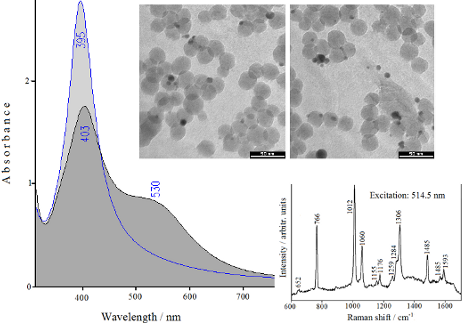
- examined by UV–vis absorption spectroscopy, transmission electron microscopy and Raman spectroscopy. The surface enhanced Raman scattering (SERS) activity of these nanocomposites was tested using 2,2’-bipyridine as a molecular reporter and excitation in the visible and near-IR spectral regions. The
- occurs when silver ions are chemically reduced), as proposed in several papers [17][18][19][20][21][22][23]. Here, we have ablated a silver target in a colloidal silica solution by nanosecond pulsed laser ablation and have verified the presence of Ag nanoparticles by UV–visible absorption spectroscopy


Metal-free catalysis based on nitrogen-doped carbon nanomaterials: a photoelectron spectroscopy point of view
Beilstein J. Nanotechnol. 2018, 9, 2015–2031, doi:10.3762/bjnano.9.191
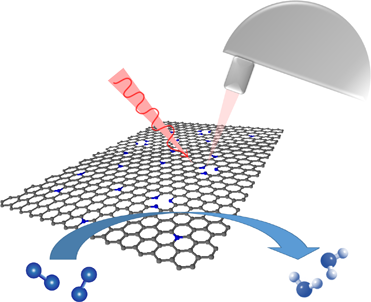
- ]: Niwa et al. [105] described carbon nanostructure alloys (a precursor of graphene), Nagaiah and co-workers studied nitrogen-doped CNTs [106], and Parvez et al. used N-graphene [107]. In the first report, correlating X-ray absorption spectroscopy (XAS) and ORR activity, the study was focused on the
- graphitic N was higher. Using X-ray absorption spectroscopy, the authors were able to identify different nitrogen configurations: three characteristic peaks were found at 399.1, 400.1 and 401.5 eV and were assigned to pyridinic N, cyanide (triple C–N bond) and graphitic N, respectively. This was in
- nitrogen plasma and studied its interaction with molecular oxygen. They showed that the interaction results in oxygen dissociation and the formation of carbon–oxygen single bonds on graphene, as observed by X-ray absorption spectroscopy of the carbon K edge and the O 1s core level. After the exposure to




Colorimetric detection of Cu2+ based on the formation of peptide–copper complexes on silver nanoparticle surfaces
Beilstein J. Nanotechnol. 2018, 9, 1414–1422, doi:10.3762/bjnano.9.134
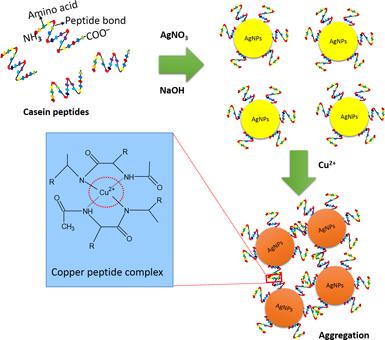
- methods are based on the change in color, and the spectral response received immediately after exposure to the target metal ions. The current report also studied the real-time UV–vis absorption spectroscopy, with the intent of investigating the stability of the established sensing platform. Stable
- water (3.2 μM) were measured using the designed method and compared with literature values obtained by alternative techniques [31]. The tested Cu2+ contents were in a reasonable range relative to the literature data discussed in Table 1 for gold NPs [32], and also with atomic absorption spectroscopy [33


P3HT:PCBM blend films phase diagram on the base of variable-temperature spectroscopic ellipsometry
Beilstein J. Nanotechnol. 2018, 9, 1108–1115, doi:10.3762/bjnano.9.102
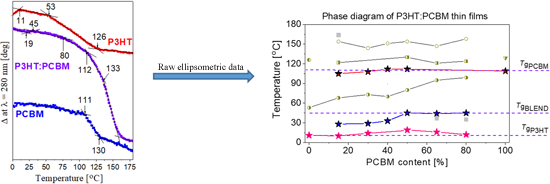
- their phase transitions using variable-temperature spectroscopic ellipsometry. We have investigated thin films of P3HT:PCBM blends deposited by spin-coating. Our studies included optical absorption spectroscopy, variable-temperature spectroscopic ellipsometry and differential scanning calorimetry. Based


Heavy-metal detectors based on modified ferrite nanoparticles
Beilstein J. Nanotechnol. 2018, 9, 762–770, doi:10.3762/bjnano.9.69
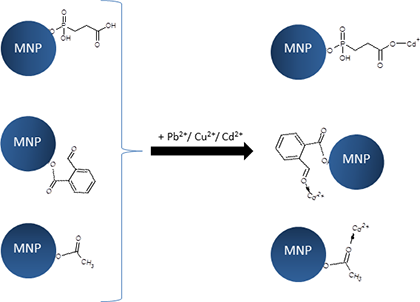
- metals Cd, Cu and Pb. The obtained nanoparticles were structurally characterized by transmission electron microscopy (TEM), X-ray diffraction (XRD), Fourier transform infrared spectroscopy (FTIR) and Mössbauer spectroscopy. The amounts of Cd, Cu and Pb were measured out by atomic absorption spectroscopy


A review of carbon-based and non-carbon-based catalyst supports for the selective catalytic reduction of nitric oxide
Beilstein J. Nanotechnol. 2018, 9, 740–761, doi:10.3762/bjnano.9.68

- following [49]. In particular, the catalyst active phases before and after SCR-NH3 reaction are typically characterised by: atomic absorption spectroscopy (AAS) X-ray fluorescence spectroscopy (XRF) electron paramagnetic resonance (EPR) X-ray photoelectron spectroscopy (XPS) temperature-programmed reduction
Mechanistic insights into plasmonic photocatalysts in utilizing visible light
Beilstein J. Nanotechnol. 2018, 9, 628–648, doi:10.3762/bjnano.9.59
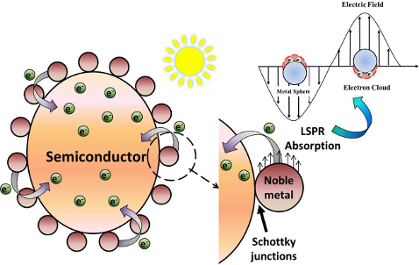
- excitation and electron injection into the semiconductor are still unclear. The verification that plasmon-excited electrons in Au NPs possess sufficient energy to overcome the Schottky junction to be injected into TiO2 was confirmed using high-resolution X-ray absorption spectroscopy (HR-XAS) [105]. The
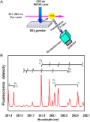
- adopted experimental setup is depicted in Figure 10. The significant spectral variations observed by X-ray absorption spectroscopy (XAS) and resonant inelastic X-ray scattering (RIXS) suggest that electrons injected from Au NPs upon LSPR excitation could survive longer and become trapped at a Ti site near
- [6], copyright 2013 IOP Publishing. High-resolution X-ray absorption spectroscopy (HR-XAS) experiment used to determine the changes in the Au LIII-edge induced by 100 mW continuous wave laser excitation of the localized surface plasmon at 532 nm. Reprinted with permission from [105], copyright 2013





Synthesis and characterization of electrospun molybdenum dioxide–carbon nanofibers as sulfur matrix additives for rechargeable lithium–sulfur battery applications
Beilstein J. Nanotechnol. 2018, 9, 262–270, doi:10.3762/bjnano.9.28
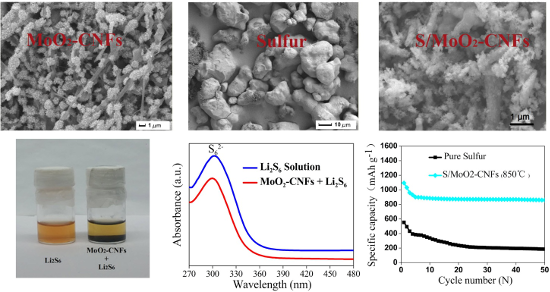
- further evaluate the interaction between MoO2–CNFs and polysulfides, the as-prepared MoO2–CNFs were added into Li2S6 solution. In the optical photo of Figure 3c, the original yellow-brown solution turned lighter, indicating a strong adsorption. Meanwhile, UV-visible absorption spectroscopy was used to


Response under low-energy electron irradiation of a thin film of a potential copper precursor for focused electron beam induced deposition (FEBID)
Beilstein J. Nanotechnol. 2018, 9, 57–65, doi:10.3762/bjnano.9.8
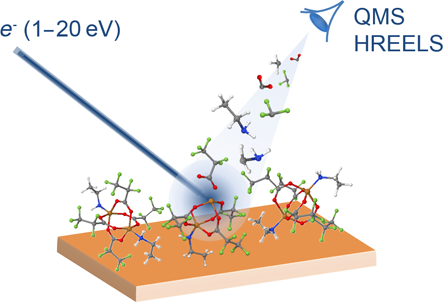
- finally estimated. Results and Discussion Stability of the EtNH2 ligands Figure 2 shows the vibrational spectra of the two products recorded by different instruments: at ambient pressure by attenuated total reflection (ATR) infrared absorption spectroscopy (both in Poland and in France) and under vacuum



Inelastic electron tunneling spectroscopy of difurylethene-based photochromic single-molecule junctions
Beilstein J. Nanotechnol. 2017, 8, 2606–2614, doi:10.3762/bjnano.8.261
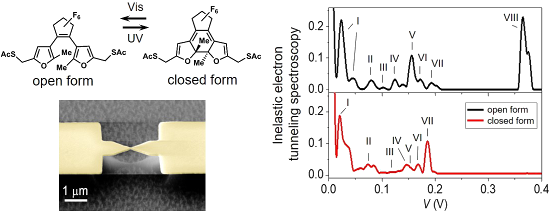
- consistently larger gap for the open form as compared to the closed one is in agreement with the conclusions from the absorption spectroscopy in Figure 1b. Considering the shape of the transmission functions in both molecular forms in Figure 2b, it is clear that τ(EF) cannot simply be described by


Optical contrast and refractive index of natural van der Waals heterostructure nanosheets of franckeite
Beilstein J. Nanotechnol. 2017, 8, 2357–2362, doi:10.3762/bjnano.8.235
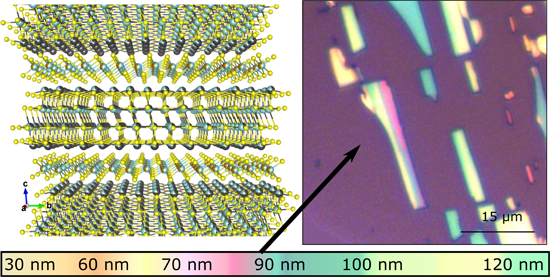
- /spectroscopy, transmission electron microscopy, X-ray diffraction, X-ray photoemission, UV–vis–IR absorption spectroscopy and Raman spectroscopy. More details about this characterization can be found in [15]. The flakes are firstly exfoliated onto a polydimethylsiloxane (Gelfilm, with 150 µm of thickness, by


Hydrothermal synthesis of ZnO quantum dot/KNb3O8 nanosheet photocatalysts for reducing carbon dioxide to methanol
Beilstein J. Nanotechnol. 2017, 8, 2264–2270, doi:10.3762/bjnano.8.226
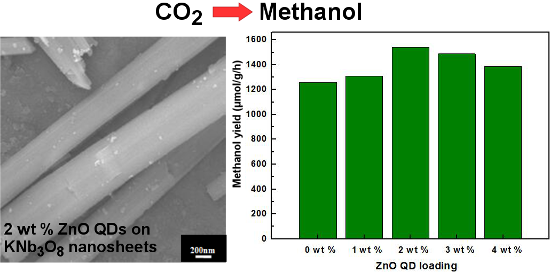
- . The as-prepared photocatalysts were characterized by X-ray diffraction (XRD), energy dispersive X-ray spectroscopy (EDS), scanning electron microscopy (SEM), high-resolution transmission electron microscopy (HRTEM) and UV–vis absorption spectroscopy (UV–vis). The photocatalytic activity of the




Bi-layer sandwich film for antibacterial catheters
Beilstein J. Nanotechnol. 2017, 8, 1982–2001, doi:10.3762/bjnano.8.199
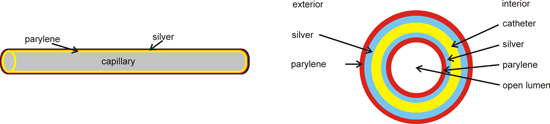
- traces are inductively coupled plasma optical emission spectroscopy (ICP-OES), cyclic voltammetry, and atomic absorption spectroscopy (AAS). The former two methods have been extensively used and are described in [19][40][41]. The biological methods are the determination of the zone of inhibition around a
- spot of the subjected material, and the measurement of the optical density as a function of the time, i.e., absorption spectroscopy at a fixed wavelength (mostly used OD600). After having exposed a colony of bacteria with a certain starting density against solutions of Ag+ of known concentration or


Charge transfer from and to manganese phthalocyanine: bulk materials and interfaces
Beilstein J. Nanotechnol. 2017, 8, 1601–1615, doi:10.3762/bjnano.8.160
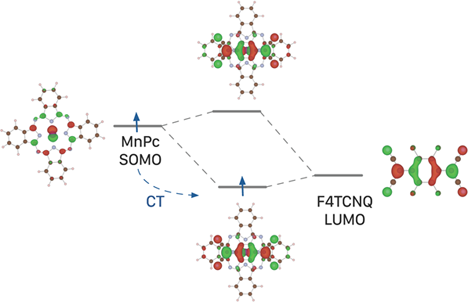
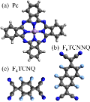
- photoemission spectroscopy (IPES), electron energy-loss spectroscopy (EELS), spectroscopic ellipsometry and X-ray absorption spectroscopy (XAS). Here, we only briefly mention the kind of information that is provided by these methods, and we refer the reader to comprehensive literature for detailed information
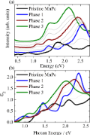
- revealed by polarization dependent X-ray absorption spectroscopy (XAS) studies [127]. In Figure 12 we present corresponding N 1s absorption spectra for pure MnPc and two different film thicknesses of an F16CoPc overlayer, deposited on a gold single crystal. Different light polarizations with respect to the
- represents the changes of the work function. Panel (b) focusses on the energy region close to the Fermi level. N 1s excitation spectra as obtained using X-ray absorption spectroscopy (adapted from [127]). Corresponding data for (c) a 2.0 nm thick MnPc film on Au(100), (b) an additional 0.6 nm thick F16CoPc


ZnO nanoparticles sensitized by CuInZnxS2+x quantum dots as highly efficient solar light driven photocatalysts
Beilstein J. Nanotechnol. 2017, 8, 1080–1093, doi:10.3762/bjnano.8.110
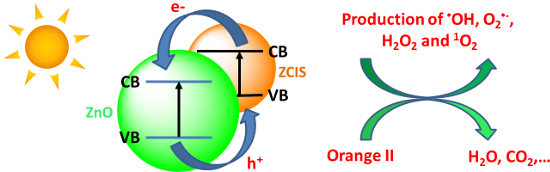
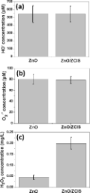
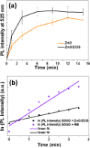
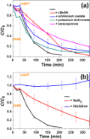
- nanoparticles by a thermal treatment at 400 °C for 15 min. The ZnO/ZCIS composite was characterized by TEM, SEM, XRD, XPS and UV–vis absorption spectroscopy. ZCIS QDs, with an average diameter of ≈4.5 nm, were found to be homogeneously distributed at the surface of ZnO nanoparticles. ZCIS-sensitized ZnO




Triptycene-terminated thiolate and selenolate monolayers on Au(111)
Beilstein J. Nanotechnol. 2017, 8, 892–905, doi:10.3762/bjnano.8.91
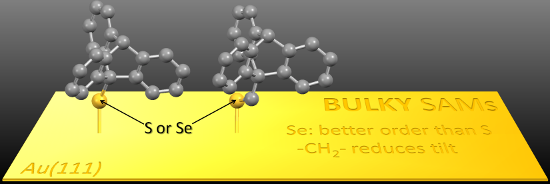
- comprehensively studied using ultra-high vacuum infrared reflection absorption spectroscopy, X-ray photoelectron spectroscopy, near-edge X-ray absorption fine structure spectroscopy and thermal desorption spectroscopy. Due to packing effects, the molecules in all monolayers are substantially tilted. In the
- out of ethanolic solution onto Au(111) surfaces. The resulting films were investigated using a complementary set of spectroscopic methods, namely ultra-high vacuum (UHV) infrared reflection–absorption spectroscopy (IRRAS), X-ray photoelectron spectroscopy (XPS), near-edge X-ray absorption fine


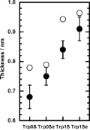


Relationships between chemical structure, mechanical properties and materials processing in nanopatterned organosilicate fins
Beilstein J. Nanotechnol. 2017, 8, 863–871, doi:10.3762/bjnano.8.88

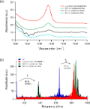
- ][23]. However, the Abbe diffraction constraints prohibit direct spatial resolution of light-based spectroscopy techniques, such as infrared (IR) absorption spectroscopy, in the nanometer range [24]. Fortunately, these limitations have been recently overcome via combining optical spectroscopy with



Uptake of the proteins HTRA1 and HTRA2 by cells mediated by calcium phosphate nanoparticles
Beilstein J. Nanotechnol. 2017, 8, 381–393, doi:10.3762/bjnano.8.40
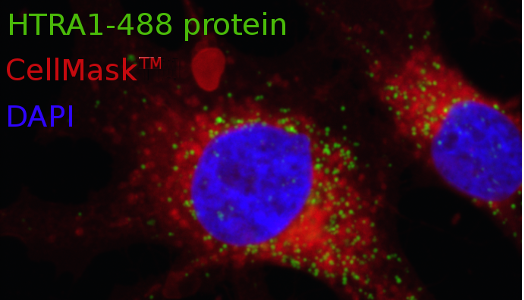
- determined by atomic absorption spectroscopy (AAS) with an M-Series AA spectrometer (Thermo Electron Corporation, Schwerte). The amount of fluorescently labelled protein on the nanoparticles was determined by quantitative UV spectroscopy, using previously measured calibration curves at λ = 496 nm for BSA





