


Search results
Search for "aqueous solution" in Full Text gives 455 result(s) in Beilstein Journal of Nanotechnology. Showing first 200.
Nanostructured lipid carriers containing benznidazole: physicochemical, biopharmaceutical and cellular in vitro studies
Beilstein J. Nanotechnol. 2023, 14, 804–818, doi:10.3762/bjnano.14.66
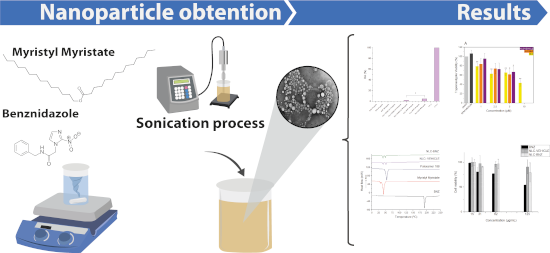
- (ethylene glycol)) in 20 mL of ultrapure water (Milli-Q®, Millipore, Ma., USA) and was preheated at the same temperature as the melted lipid in the water bath. After 30 min of thermostatization, the aqueous solution was poured over the lipid phase, and ultrasonication was carried out for 20 min at an 80


Silver nanoparticles loaded on lactose/alginate: in situ synthesis, catalytic degradation, and pH-dependent antibacterial activity
Beilstein J. Nanotechnol. 2023, 14, 781–792, doi:10.3762/bjnano.14.64
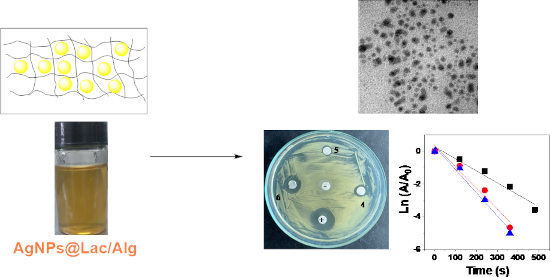
- , an aqueous solution of calcium acetate (14.36 mL; 6.5 mg·mL−1) was slowly added dropwise into an aqueous solution of sodium alginate (40 mL; 7 mg·mL−1) under stirring for 1 h at 1200 rpm. The mixture was allowed to equilibrate overnight. Subsequently, the Alg/Ca2+ spheres were separated by
- centrifugation at 3000 rpm for 10 min and washed three times with distilled water (20 mL each) to remove impurities. Next, an aqueous solution of lactose (16.06 mL, 1.5 mg·mL−1) was added to the Alg/Ca2+ spheres and stirred for 1 h at 1200 rpm. To ensure the formation of a stable gel, the Lac/Alg gel solution
- was ultrasonically treated for 30 min and left to reach equilibrium overnight. After purification, the resulting gel was freeze-dried at −80 °C for 24 h using an EYELA FDU-2110 (Japan) instrument. Next, an aqueous solution of AgNO3 (15 mL) with different concentrations in the range of 7.9–55.6 μg·mL−1


Carboxylic acids and light interact to affect nanoceria stability and dissolution in acidic aqueous environments
Beilstein J. Nanotechnol. 2023, 14, 762–780, doi:10.3762/bjnano.14.63
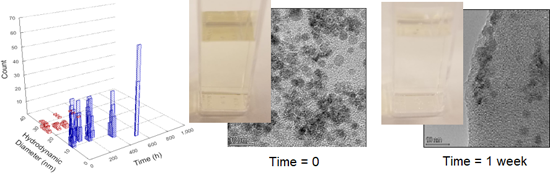
- interactions play a critical role in biological processes [30]. Nanoceria dissolution Nanoceria dissolution or agglomeration is pH-dependent and influenced by carboxylic acids. Nanoceria dissolution in aqueous solution was shown to be pH-dependent with dissolution occurring at pH values less than 7 [31
- dissolution, since nanoceria particles are known to be photoreduced upon UV radiation exposure, demonstrated by UV exposure of 2 and 9 nm citrate-coated ceria nanoparticles in aqueous solution at pH 6.5 to 7.0 [50] and 3 nm ceria nanoparticles in aqueous solution at pH 2 [51]. Furthermore, this result
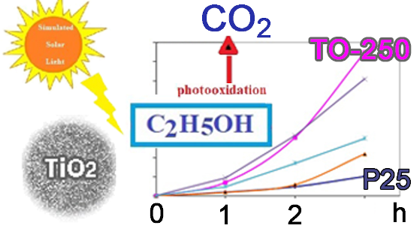
Titania nanoparticles for photocatalytic degradation of ethanol under simulated solar light
Beilstein J. Nanotechnol. 2023, 14, 616–630, doi:10.3762/bjnano.14.51
- from the interaction with photogenerated hydroxyl radicals. Despite the fact that radical trapping was performed in aqueous solution, it can be indicative for the ability of the catalyst surface to generate hydroxyl radicals in the present investigated system. The main reactions leading to (•OH




SERS performance of GaN/Ag substrates fabricated by Ag coating of GaN platforms
Beilstein J. Nanotechnol. 2023, 14, 552–564, doi:10.3762/bjnano.14.46
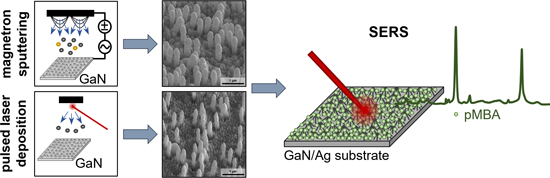
- sapphire wafers. The cut samples were cleaned in organic solvents and rinsed in de-ionized water. Samples were then photoetched in stirred KSO-D solution (0.02 M K2S2O8 + 0.02 M KOH aqueous solution) under illumination of a 300 W UV-enhanced Xe lamp (Oriel, Newport, UK). This photoetching procedure results


Conjugated photothermal materials and structure design for solar steam generation
Beilstein J. Nanotechnol. 2023, 14, 454–466, doi:10.3762/bjnano.14.36
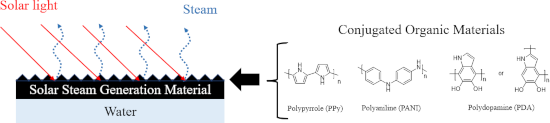
- constructing electron donor–acceptor pairs. Density functional theory (DFT) simulations indicated donor–acceptor interactions between arginine and PDA subunits, including the formation of 5,6-dihydroxyindole (DHI) and indole-5,6-quinone (IQ). Dopamine and arginine were copolymerized in an aqueous solution at


Evaluation of electrosynthesized reduced graphene oxide–Ni/Fe/Co-based (oxy)hydroxide catalysts towards the oxygen evolution reaction
Beilstein J. Nanotechnol. 2023, 14, 420–433, doi:10.3762/bjnano.14.34
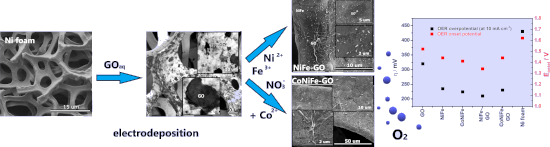
- reduction of the GO. A reduced form of GO combined with NiFe was also obtained by others after one-step electrodeposition by cyclic voltammetry [12]. Electrochemical studies of the catalysts towards the OER The electrochemical performance of the catalysts towards the OER was studied in an aqueous solution
- , respectively, on their electrocatalytic performance towards the OER and on the value of Cdl/ECSA. The LSV profiles of NiFe (Qdep: 50–200 mC)-GO recorded in an aqueous solution of 1 M KOH and the corresponding evolution of the OER overpotentials are presented in Figure 6a and Figure 6c, respectively. The graphs
- was the structure of NiFe and the electroactive surface area of GO. Experimental Fabrication of the catalysts NiFe and CoNiFe oxides/(oxy)hydroxides were synthesized in a one-step process by electrodeposition at −1.1 V vs Ag/AgCl in an aqueous solution of 4 mM nickel(II) nitrate hexahydrate (Ni(NO3)2


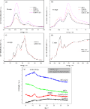


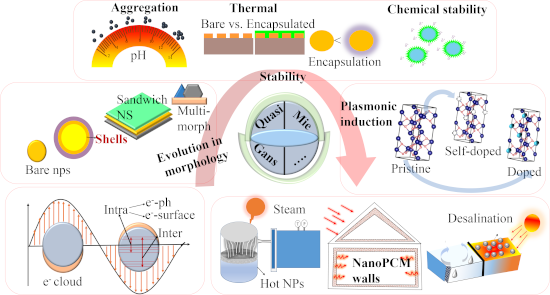
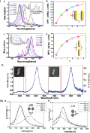
Plasmonic nanotechnology for photothermal applications – an evaluation
Beilstein J. Nanotechnol. 2023, 14, 380–419, doi:10.3762/bjnano.14.33




Quercetin- and caffeic acid-functionalized chitosan-capped colloidal silver nanoparticles: one-pot synthesis, characterization, and anticancer and antibacterial activities
Beilstein J. Nanotechnol. 2023, 14, 362–376, doi:10.3762/bjnano.14.31
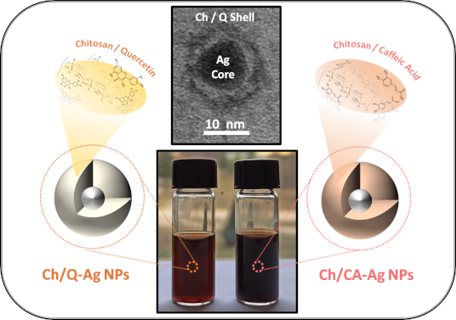
- as described in [59][60] with slight modifications. A solution of 0.1% chitosan (w/v) was prepared in 1% acetic acid solution under stirring at room temperature for about 24 h. Then, the chitosan solution was placed in an ice bath. To this solution, 1 mL of 50 mM AgNO3 aqueous solution was added to
- certain concentrations (50–200 μg/mL) were prepared in DMSO. Each standard solution (100 µL) was then diluted with distilled water (1.8 mL) and mixed with a 2% aqueous solution of anhydrous AlCl3 (100 µL). The obtained mixtures were vortexed. After incubation for 10 min at ambient temperature, absorbances


Polymer nanoparticles from low-energy nanoemulsions for biomedical applications
Beilstein J. Nanotechnol. 2023, 14, 339–350, doi:10.3762/bjnano.14.29
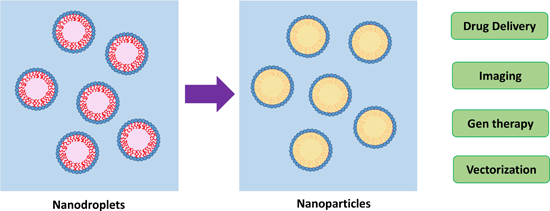
- content is not subject to CC BY 4.0. TEM images and corresponding size distributions of (a) PEGylated polyurethane and (b) lysine-coated polyurea nanocapsules obtained from O/W nanoemulsions in an aqueous solution/polysorbate 80/medium chain triglyceride/diisocyanate system at O/S = 10/90 and 90 wt % of




Cyclodextrins as eminent constituents in nanoarchitectonics for drug delivery systems
Beilstein J. Nanotechnol. 2023, 14, 218–232, doi:10.3762/bjnano.14.21
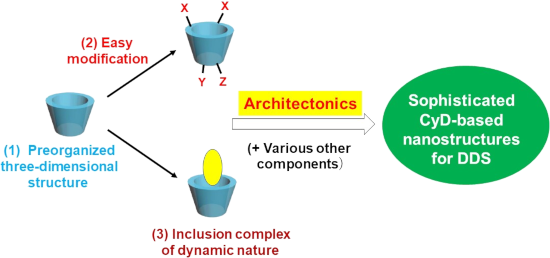
- photocatalytic process destroy subcellular structures (e.g., cell membranes or organelle membranes). Various types of cancers are effectively treatable without significant side effects. However, most photosensitizers available at present are hydrophobic and easily aggregate in aqueous solution. Thus, the




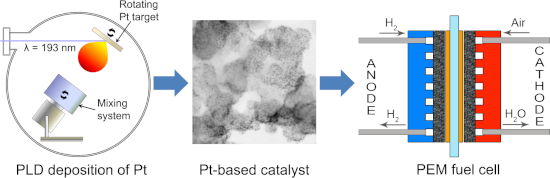
A novel approach to pulsed laser deposition of platinum catalyst on carbon particles for use in polymer electrolyte membrane fuel cells
Beilstein J. Nanotechnol. 2023, 14, 190–204, doi:10.3762/bjnano.14.19
- dark-grey powder was collected from the crucible and purified by stirring in an aqueous solution of hydrochloric acid (20 wt %) at boiling point (to remove MgO, CaO, and other byproducts of the combustion soluble in acids). After acid treatment, the black powder was filtered, washed with distilled

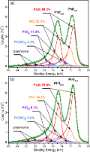


Structural, optical, and bioimaging characterization of carbon quantum dots solvothermally synthesized from o-phenylenediamine
Beilstein J. Nanotechnol. 2023, 14, 165–174, doi:10.3762/bjnano.14.17
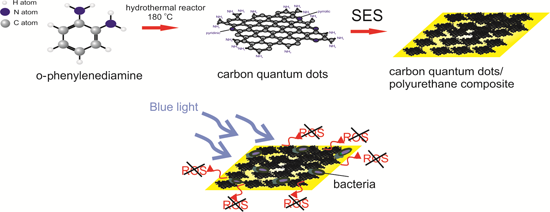
- 5% CO2. 5 × 10⁴ Hela cells were seeded on cover slips in 12-well plates and incubated overnight to allow cells to attach. The next day, cells were treated with medium containing aqueous solution of CQDs at a final concentration of 200 µg/mL (deionized water was used as a negative vehicle control


Liquid phase exfoliation of talc: effect of the medium on flake size and shape
Beilstein J. Nanotechnol. 2023, 14, 68–78, doi:10.3762/bjnano.14.8
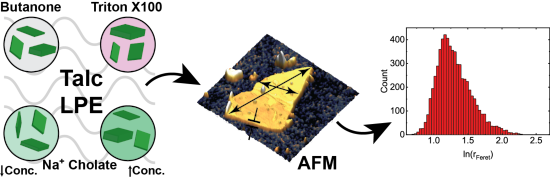
- Waals heterostructures. Being able to scale the production is a crucial step to realizing applications at an industrial level. We present the results of liquid-phase exfoliation of talc using different liquid media, namely sodium cholate aqueous solution (6 mg/mL and 1 mg/mL), Triton X-100 aqueous
- most symmetrical are those of butanone and Triton X-100. All comparisons can be found in Table 3. Finally, let us analyze advantages and drawbacks of each sample. An aqueous solution of 6 mg/mL sodium cholate is a widely recommended medium for liquid exfoliation [6][11]. For talc, it does yield the
- acceleration and duration, and sample deposition) were kept constant. Four different media were employed to exfoliate talc. Aqueous solutions of sodium cholate at 1 and 6 mg/mL (with the talc powder concentration adapted to keep the cholate/talc ratio constant), an aqueous solution of Triton-X100, and pure



Solvent-induced assembly of mono- and divalent silica nanoparticles
Beilstein J. Nanotechnol. 2023, 14, 52–60, doi:10.3762/bjnano.14.6
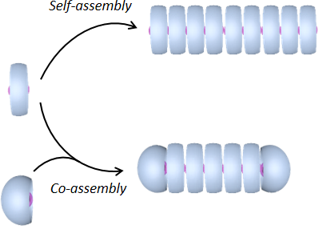
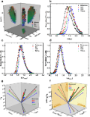
- a NaCl aqueous solution) was added dropwise under stirring into the THF dispersion of 1-PSN to reach the targeted volume fraction and a total volume of 1 mL. It took about 20 s to add 100 μL. Assembled structures were monitored by collecting 50 µL samples at various incubation times and direct


Single-step extraction of small-diameter single-walled carbon nanotubes in the presence of riboflavin
Beilstein J. Nanotechnol. 2022, 13, 1564–1571, doi:10.3762/bjnano.13.130
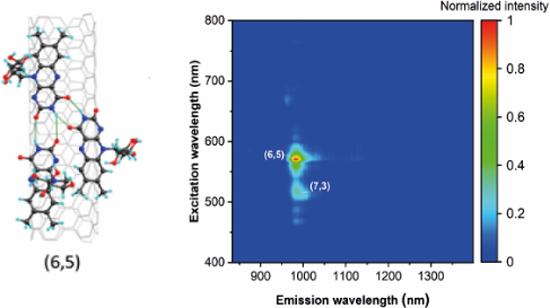
- novel approach to disperse and extract small-diameter single-walled carbon nanotubes (SWCNTs) using an aqueous solution of riboflavin and Sephacryl gel. The extraction of small-diameter semiconducting SWCNTs was observed, regardless of the initial diameter distribution of the SWCNTs. Dispersion of
- be attributed to solvatochromism induced by noncovalent interactions between nanotubes and the aromatic isoalloxazine moiety of riboflavin in aqueous solution. The PL map of the first eluted fraction of Tuball in riboflavin-separated dispersion (Figure 3b and Figure S2, Supporting Information File 1
- to its low solubility in water, which leads to poor solubilization of SWCNT bundles. Lower riboflavin concentrations did not affect the dispersion process of nanotubes in any way. To analyze the dispersing ability of riboflavin, the same amount of SWCNTs was dispersed in 1% w/w SDS aqueous solution


Non-stoichiometric magnetite as catalyst for the photocatalytic degradation of phenol and 2,6-dibromo-4-methylphenol – a new approach in water treatment
Beilstein J. Nanotechnol. 2022, 13, 1531–1540, doi:10.3762/bjnano.13.126
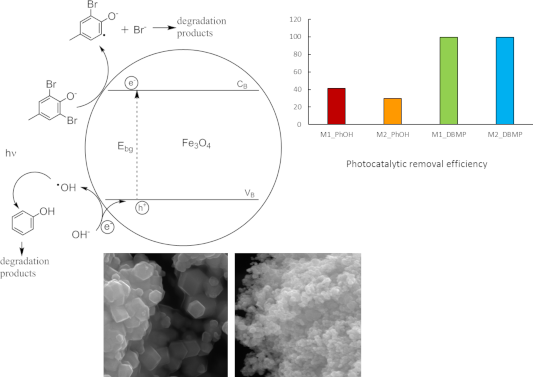
- the adsorption of organic compounds onto the surface of the catalyst. The sorption power depends largely on the properties of the organic molecule in question, as well as on the properties of the catalyst’s surface. The test reactions were carried out in aqueous solution at pH 8 (due to the hydrolytic


Hydroxyapatite–bioglass nanocomposites: Structural, mechanical, and biological aspects
Beilstein J. Nanotechnol. 2022, 13, 1490–1504, doi:10.3762/bjnano.13.123
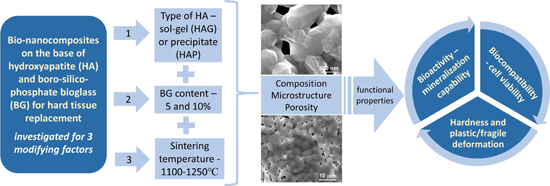
- obtained bioglass in an agate mortar. (vii) Sieving of the BG powder to obtain powder of particle sizes below 64 μm. The HA-BG composites were obtained by mixing 90 or 95 wt % of HA (HAP or HAG) powder with, respectively, 10 or 5 wt % of BG powder. An aqueous solution of 7% polyvinyl alcohol (PVA) was
Rapid and sensitive detection of box turtles using an electrochemical DNA biosensor based on a gold/graphene nanocomposite
Beilstein J. Nanotechnol. 2022, 13, 1458–1472, doi:10.3762/bjnano.13.120
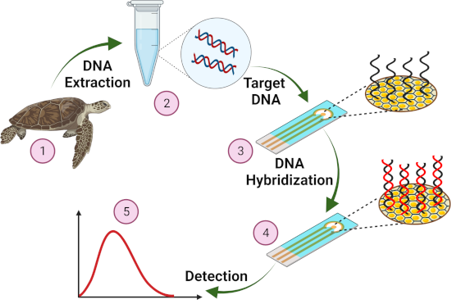
- ). Electrochemical characterisation of screen-printed carbon electrodes Figure 3b shows the CV behaviour of SPCE and different modified SPCEs with 2 mM of a [Fe(CN)6]3−/4− aqueous solution in 0.2 M KCl at a scan rate of 100 mV/S. Compared with bare SPCE, the peak currents of Gr/SPCE and AuNPs/SPCE considerably



Supramolecular assembly of pentamidine and polymeric cyclodextrin bimetallic core–shell nanoarchitectures
Beilstein J. Nanotechnol. 2022, 13, 1361–1369, doi:10.3762/bjnano.13.112
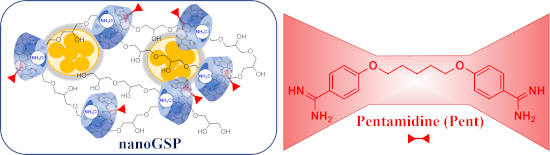
- nanoGS were prepared according to previously reported procedure [14]. Briefly, an aqueous solution of nanoG was prepared by mixing 1.5 mL of 10−3 M HAuCl4 and 9 mL of PolyCD aqueous solution (2 mg/mL water for HPLC) previously sonicated for 2 min and leaving the solution under stirring for 3 h, keeping
- temperature for 15 h. In vitro antileishmanial activity and cytotoxicity For the antileishmanial activity, nanoG, nanoGS, and nanoGSP (all of them in aqueous solution) were evaluated in vitro against L. infantum MHOM/MA (BE)/67 intracellular amastigotes. The aqueous sample solutions (nanoG = 28.17 μg/mL of Au
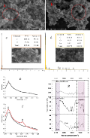
- ) in ultrapure aqueous solution, Pent solution in ethanol (green line, 52.5 µg/mL) d = 0.2 cm. (C) Size distribution (or DH) of nanoGS (red line) and nanoGSP (purple line) in a molar ratio of CD/Pent 1:1 in ultrapure water at 25 °C. Informative changes evidenced in the range of 3.2–4.2 ppm and 60.04


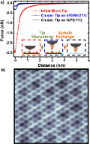
Studies of probe tip materials by atomic force microscopy: a review
Beilstein J. Nanotechnol. 2022, 13, 1256–1267, doi:10.3762/bjnano.13.104
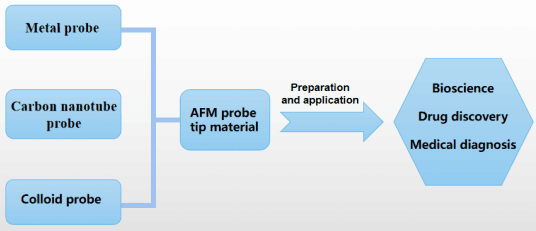
- surface of nano-, micron, and micro- and nanocomposite structures. In this study, ten μm diameter silica spheres were selected as the particles for the colloidal probe and dispersed into an aqueous solution and sonicated for five minutes. A small amount of the dispersed liquid was removed and added
Green synthesis of zinc oxide nanoparticles toward highly efficient photocatalysis and antibacterial application
Beilstein J. Nanotechnol. 2022, 13, 1108–1119, doi:10.3762/bjnano.13.94
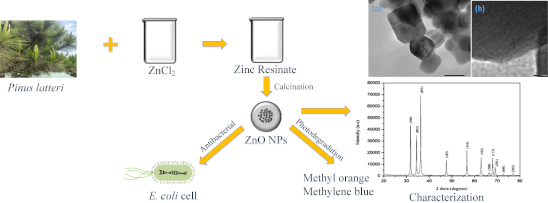
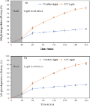
- ), indicating that ZnO NPs are negatively charged and stable in aqueous solution. Photocatalytic degradation of dyes The photocatalytic degradation of ZnO NPs was evaluated through the degradation of methylene blue and methyl orange under visible and UV light and the degradation efficiency was calculated via




Recent advances in green carbon dots (2015–2022): synthesis, metal ion sensing, and biological applications
Beilstein J. Nanotechnol. 2022, 13, 1068–1107, doi:10.3762/bjnano.13.93
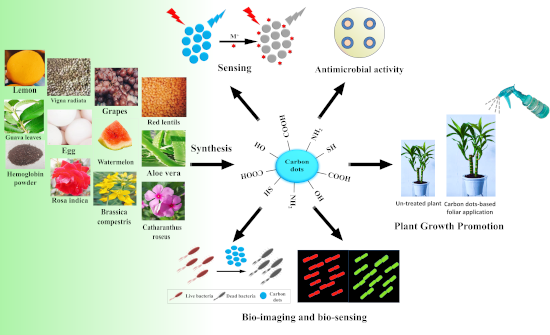
- , patterning, and sensing, as a result of their advantageous characteristics [125]. Han and co-workers extracted cow milk-derived CDs (CM-CDs) from aqueous solution using ethyl acetate to create amphiphilic CM-CDs (ACMCDs). A unique ACMCD-Ag/polymethylmethacrylate antibacterial film was produced utilizing the
- , and they were effectively used for Cu2+ detection, which was attributed to the fluorescence quenching effect of the ions [128]. A unique and quick microwave-assisted method that requires two steps was reported by Pires for the synthesis of CDs with an average size of 9 nm from an aqueous solution of a


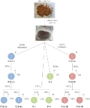


Solar-light-driven LaFexNi1−xO3 perovskite oxides for photocatalytic Fenton-like reaction to degrade organic pollutants
Beilstein J. Nanotechnol. 2022, 13, 882–895, doi:10.3762/bjnano.13.79
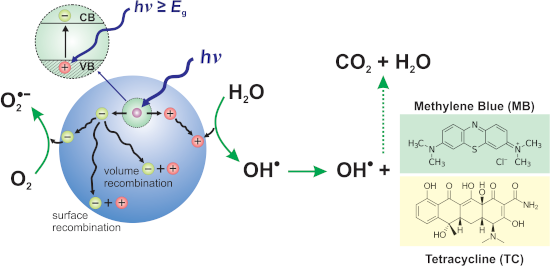
- remaining in the aqueous solution during the textile process. The amount of dye wastewater is enormous and has gradually become the main wastewater discharged in the industry [6]. At present, dyes are mainly divided into azo dyes, thiazine dyes, acridine dyes, and aryl methane dyes. Due to their complex
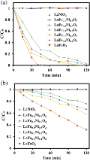
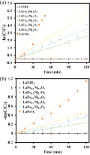
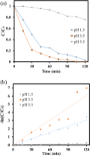
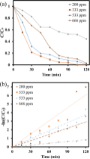
- various photocatalysts prepared at pH 0 or pH 7 The standard concentration of MB aqueous solution was prepared at 20 ppm. Various LaFexNi1−xO3 perovskite oxides prepared at pH 0 were examined for dark adsorption and photocatalytic degradation. First, dark adsorption was not significant for all perovskite
- area and crystal diameters. A larger surface area would enhance the surface reaction with the aqueous solution, and larger crystal diameters could decrease the possibility of recombining electron-and-hole pairs. However, while the Fe doped content was set at 90%, replacing Ni, the photocatalytic



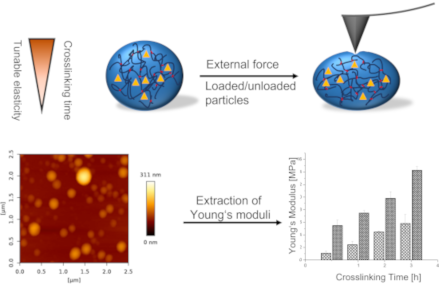
Gelatin nanoparticles with tunable mechanical properties: effect of crosslinking time and loading
Beilstein J. Nanotechnol. 2022, 13, 778–787, doi:10.3762/bjnano.13.68
- , Singen, Germany) at a frequency of 37 kHz in pure ethanol for 5 min. Subsequently, wafers were dried under a flow of nitrogen and covered with an 1% aqueous solution of branched polyethyleneimine (PEI), 25 kDa, for 15 min. To remove unbound PEI, the wafers were rinsed with deionized water. Coated wafers





