Search results
Search for "biodegradable" in Full Text gives 112 result(s) in Beilstein Journal of Nanotechnology.
Orally administered docetaxel-loaded chitosan-decorated cationic PLGA nanoparticles for intestinal tumors: formulation, comprehensive in vitro characterization, and release kinetics
Beilstein J. Nanotechnol. 2022, 13, 1393–1407, doi:10.3762/bjnano.13.115
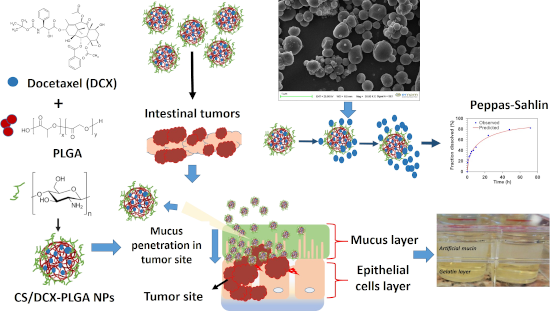
- charged mucin, decreased pH value, and increased temperature, may provide design clues for mucoadhesive polymeric nanoparticles that have a potential to exhibit higher drug release or help to alleviate colorectal tumor in colon region [11][19][20]. PLGA is a physiologically biocompatible and biodegradable


Roll-to-roll fabrication of superhydrophobic pads covered with nanofur for the efficient clean-up of oil spills
Beilstein J. Nanotechnol. 2022, 13, 1228–1239, doi:10.3762/bjnano.13.102
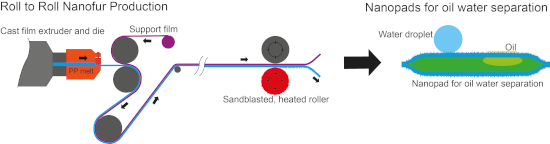
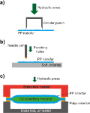
- mechanical stability of nanofur during hot pulling is sufficient, and the sacrificial layer is not needed. Future research might show how other polymers, especially biodegradable ones, can be hot-pulled in a R2R process. Furthermore, it might be possible to produce thin nanofur without sacrificial layer




Microneedle-based ocular drug delivery systems – recent advances and challenges
Beilstein J. Nanotechnol. 2022, 13, 1167–1184, doi:10.3762/bjnano.13.98
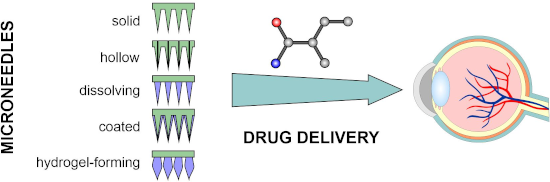
- frequently because their application is difficult, they may cause visual disturbances, and the feeling of the presence of a foreign body in the eye causing discomfort of the patients [75][76]. Inserts can be divided into soluble (biodegradable or bioerodible) and insoluble (therapeutic systems) [77][78]. The
- advantage of soluble inserts is that they do not have to be removed from the eye. The rate of drug release is influenced by dissolution or erosion of the polymer matrix. Ophthalmic therapeutic systems belong to the group of non-biodegradable inserts from which the drug substance is released by diffusion at
- and the ability to form different microneedle geometries, which can be considered as an advantage. However, the manufacturing process can be complicated and the material is relatively expensive. Also, silicon is a brittle, non-compatible, and non-biodegradable material, which may cause skin irritation


Biomimetic chitosan with biocomposite nanomaterials for bone tissue repair and regeneration
Beilstein J. Nanotechnol. 2022, 13, 1051–1067, doi:10.3762/bjnano.13.92
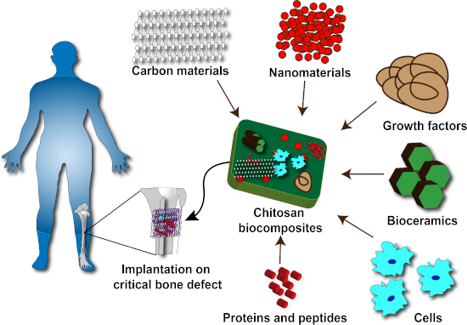
- combination of materials, growth factors, and cells [4]. Both natural and synthetic materials have been extensively studied for bone graft substitutes [5][6]. Natural biomaterials often are biocompatible, biodegradable, and less toxic to cells, whereas synthetic biomaterials have excellent mechanical strength
- of type I collagen, osteopontin, osteonectin, and osteocalcin. Chitosan mixed with different functionalized materials such as silver, magnesium oxide, and bioactive glass has aided the treatment of infected bone defects with a biodegradable behaviour at the bone defect site [44][45]. The N-(2-hydroxy
Gelatin nanoparticles with tunable mechanical properties: effect of crosslinking time and loading
Beilstein J. Nanotechnol. 2022, 13, 778–787, doi:10.3762/bjnano.13.68
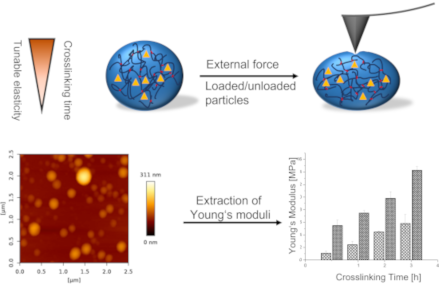
- evaluated during the formulation development and tuned according to the requirements of the target. Gelatin nanoparticles (GNPs) were introduced as potential biocompatible and biodegradable drug carrier system [10][11]. This hydrogel nanoparticulate carrier system shows great potential for the delivery of


Antibacterial activity of a berberine nanoformulation
Beilstein J. Nanotechnol. 2022, 13, 641–652, doi:10.3762/bjnano.13.56
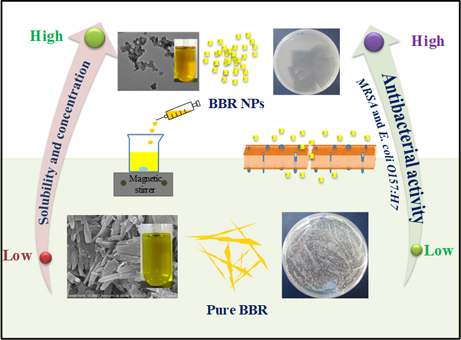
- first to report that glycerol can serve as an effective green solvent for BBR NP formation. Being non-toxic, renewable, and biodegradable, and having a suitable dielectric constant to dissolve various compounds such as BBR, glycerol is a promising candidate to replace toxic organic solvents. The effect



Stimuli-responsive polypeptide nanogels for trypsin inhibition
Beilstein J. Nanotechnol. 2022, 13, 538–548, doi:10.3762/bjnano.13.45
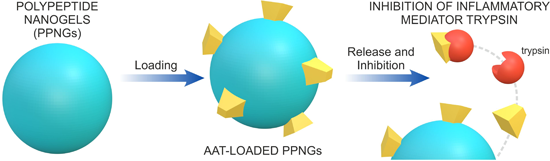
- Science, Charles University, Hlavova 8, 128 40 Prague 2, Czech Republic 10.3762/bjnano.13.45 Abstract A new type of hydrophilic, biocompatible, and biodegradable polypeptide nanogel depots loaded with the natural serine protease inhibitor α1-antitrypsin (AAT) was applied for the inhibition of the
- inflammatory mediator trypsin. Two types of nanogels were prepared from linear synthetic polypeptides based on biocompatible and biodegradable poly[N5-(2-hydroxyethyl)-ʟ-glutamine-ran-N5-propargyl-ʟ-glutamine-ran-N5-(6-aminohexyl)-ʟ-glutamine]-ran-N5-[2-(4-hydroxyphenyl)ethyl)-ʟ-glutamine] (PHEG-Tyr) or
- biodegradable PHEG-Tyr and biocompatible and non-biodegradable Nα-Lys-NG polypeptide precursors by HRP/H2O2-mediated crosslinking in inverse miniemulsion for the delivery of AAT. Both prepared polypeptide nanogels demonstrate stimuli-responsive behavior under different pH values and temperatures. After


Design and characterization of polymeric microneedles containing extracts of Brazilian green propolis
Beilstein J. Nanotechnol. 2022, 13, 503–516, doi:10.3762/bjnano.13.42
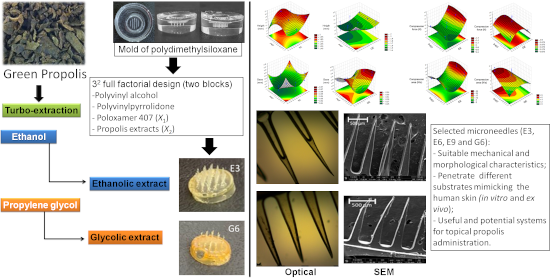
- epidermis and, after a period, the MN system is removed [6]. Dissolvable MNs are composed of a biodegradable matrix containing the bioactive agent. When they come in contact with aqueous fluids in the skin, these needles dissolve, releasing the drug and degrading. As they are dissolvable, they do not need


Zinc oxide nanostructures for fluorescence and Raman signal enhancement: a review
Beilstein J. Nanotechnol. 2022, 13, 472–490, doi:10.3762/bjnano.13.40
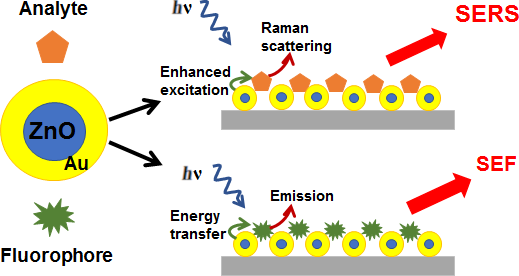
- been detected [113]. ZnO platforms are inexpensive to produce, non-toxic and biodegradable, showing potential for improving the detection of various molecules as fluorophores, dyes, or cancer biomarkers. Thus, the use of ZnO NPs as substrates for fluorescence enhancement is an alternative to overcome




Micro- and nanotechnology in biomedical engineering for cartilage tissue regeneration in osteoarthritis
Beilstein J. Nanotechnol. 2022, 13, 363–389, doi:10.3762/bjnano.13.31
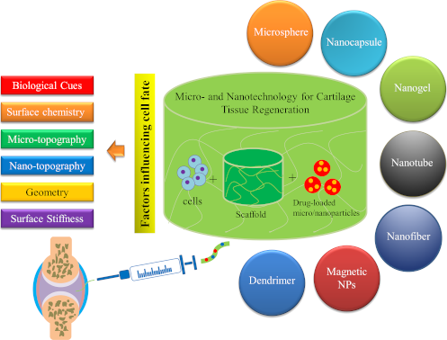
- because they are not biodegradable and provide a more stable matrix in which osteoblasts can proliferate and deposit new ECM. The integration of CNTs into a polymer matrix would increase surface roughness and activate the mitogen-activated protein kinase (MAPK) pathway [128], which is responsible for


Effects of drug concentration and PLGA addition on the properties of electrospun ampicillin trihydrate-loaded PLA nanofibers
Beilstein J. Nanotechnol. 2022, 13, 245–254, doi:10.3762/bjnano.13.19
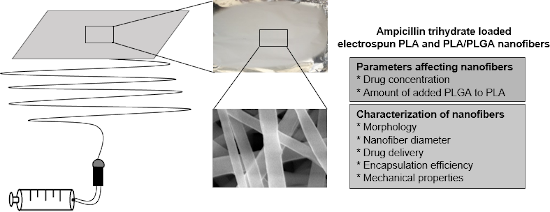
- biodegradable, biocompatible, non-toxic, and provide high mechanical strength [1][8]. In this study, ampicillin trihydrate, FDA-approved β-lactam antibiotics, a broad-spectrum semi-synthetic derivative of aminopenicillin, was used. Ampicillin trihydrate acts by inhibiting the synthesis of peptidoglycan, a


Engineered titania nanomaterials in advanced clinical applications
Beilstein J. Nanotechnol. 2022, 13, 201–218, doi:10.3762/bjnano.13.15
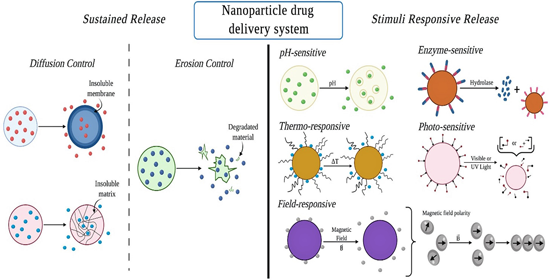
- augmenting better attachment of drug molecules, and the drug release profile was extended to more than 15 days by minimizing the burst release effect [59]. Polycaprolactone is a semi-crystalline biodegradable polymer used as a drug carrier, packaging material, and 3D scaffold for bone tissue engineering


A comprehensive review on electrospun nanohybrid membranes for wastewater treatment
Beilstein J. Nanotechnol. 2022, 13, 137–159, doi:10.3762/bjnano.13.10




Use of nanosystems to improve the anticancer effects of curcumin
Beilstein J. Nanotechnol. 2021, 12, 1047–1062, doi:10.3762/bjnano.12.78
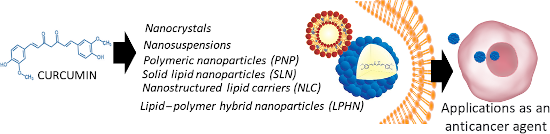
- results have been obtained in glutathione-sensitive PEGylated CUR prodrug nanomicelles [76]. Polymeric nanoparticles (PNP). Polymeric nanoparticles are solid colloids with a size of up to 1000 nm; the drug is loaded into the polymeric matrix, preferably using biodegradable polymers [77][78]. If the drug


An overview of microneedle applications, materials, and fabrication methods
Beilstein J. Nanotechnol. 2021, 12, 1034–1046, doi:10.3762/bjnano.12.77
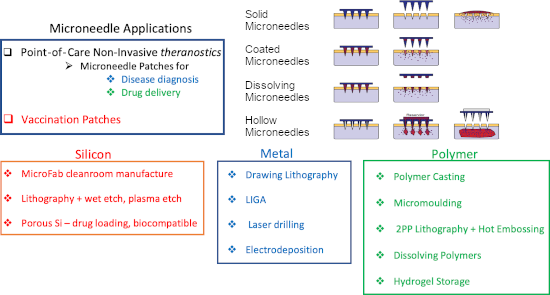
- some of the techniques used for coating microneedle arrays with drugs and vaccines (mainly water soluble). Another approach for drug delivery using solid microneedles is to fabricate them entirely from biodegradable or water-soluble dissolving polymers. Drugs are encapsulated into the microneedle body
- and sizes for a wide range of applications. Metals such as titanium [61][62], stainless steel [58][63][64], silicon [65][66][67], ceramics [68][69], biodegradable polymers such as polylactic acid (PLA) [70], PLGA [71], and polyglycolic acid (PGA) [72], and non-degradable polymers such as
- biodegradable and biocompatible nature. It was first shown in 1995 that, by introducing porosity into silicon, the material behaviour can change to provide a bioactive and even resorbable material [92]. Unlike bulk silicon, in alkalescent media (pH ≈ 7.5), porous silicon is broken down by hydrolysis in living


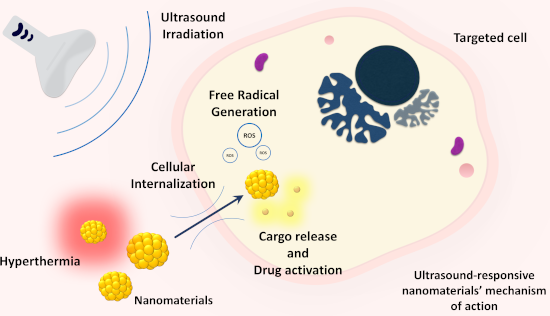
Comprehensive review on ultrasound-responsive theranostic nanomaterials: mechanisms, structures and medical applications
Beilstein J. Nanotechnol. 2021, 12, 808–862, doi:10.3762/bjnano.12.64


Recent progress in actuation technologies of micro/nanorobots
Beilstein J. Nanotechnol. 2021, 12, 756–765, doi:10.3762/bjnano.12.59
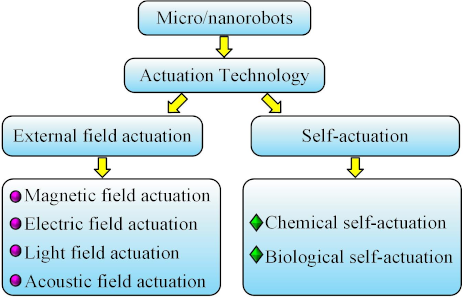
- body, as shown in Figure 1. After reaching the target area, different tasks such as attaching, delivering, and sampling are completed through autonomous deformation and adjustment of the posture. This achievement is the first to use a biodegradable biomaterial to realize self-deformation of microrobots


Recent progress in magnetic applications for micro- and nanorobots
Beilstein J. Nanotechnol. 2021, 12, 744–755, doi:10.3762/bjnano.12.58
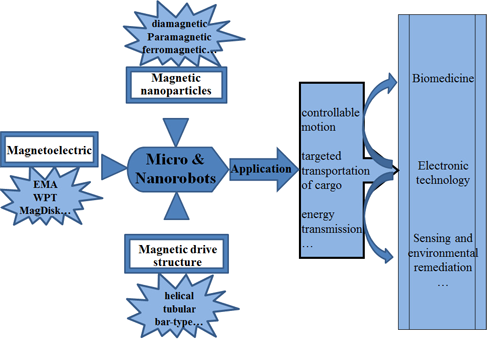
- field of biomedicine. Ceylan et al. [42] also used superparamagnetic nanoparticles to explore 3D-printed biodegradable [17][24] microrobots. These robots could be used for theranostic cargo delivery and release. Embedding superparamagnetic iron oxide nanoparticles [43] in the form of nanocomposites into


Paper-based triboelectric nanogenerators and their applications: a review
Beilstein J. Nanotechnol. 2021, 12, 151–171, doi:10.3762/bjnano.12.12
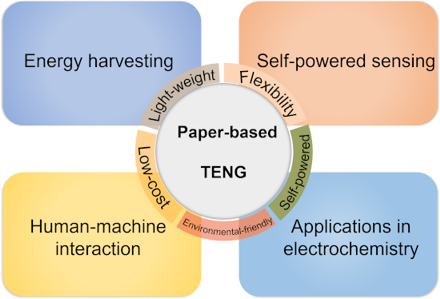
- of triboelectric nanogenerators (TENGs) has attracted wide attention due to their advantages, such as self-powering, lightweight, and facile fabrication. Similarly to paper and other fiber-based materials, which are biocompatible, biodegradable, environmentally friendly, and are everywhere in daily
- . Paper and other fiber-based materials are integral components of many objects that are used on a regular basis by the population, which are also available in different compositions, thickness and surface roughness. Most importantly, paper is biocompatible, biodegradable, and environmentally friendly
- ) and short-circuit current (Isc) values of 196.8 V and 31.5 μA, respectively. The NCM-based P-TENG also exhibits good stability and durability and can serve as a sustainable power source. More importantly, the utilization of nanocellulose paper offers an inexpensive, renewable, and biodegradable method






Electrokinetic characterization of synthetic protein nanoparticles
Beilstein J. Nanotechnol. 2020, 11, 1556–1567, doi:10.3762/bjnano.11.138
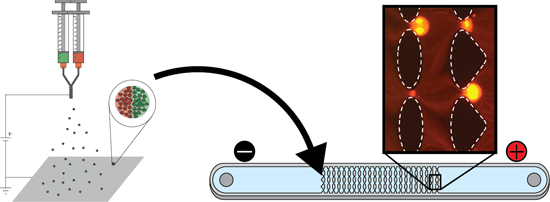
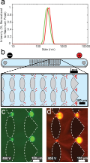
- immobilization to industrial processes [1][2]. The development of nanoparticles composed primarily of proteins has been an emerging sector in nanotechnology [3]. Proteins have multiple desirable characteristics that enable them to be used as the main component of nanoparticles. Proteins are biodegradable



Plant growth regulation by seed coating with films of alginate and auxin-intercalated layered double hydroxides
Beilstein J. Nanotechnol. 2020, 11, 1082–1091, doi:10.3762/bjnano.11.93
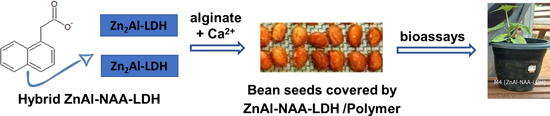
- diversity of crops and cultivation environments, it is necessary to seek more efficient modes of application, which lead to a homogeneous distribution and promote a sustained release according to the plants demand. Seed coating, using films containing a biodegradable polymer and auxins intercalated into



Key for crossing the BBB with nanoparticles: the rational design
Beilstein J. Nanotechnol. 2020, 11, 866–883, doi:10.3762/bjnano.11.72
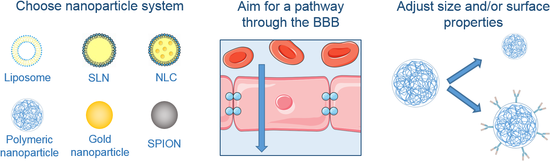
- the brain by local delivery. Local delivery consists of directly delivering the drug to the brain by injection via a catheter or with the help of a convection-enhanced delivery system. Biodegradable polymer implants can also be used for sustained release of the drug [9][10]. These procedures require
- . They can be produced from synthetic or natural polymers. Polymeric particles can cross the BBB when coated with surfactants, as described above, or after surface functionalization, as can be seen in Table 1. To be used for brain delivery, the polymeric nanoparticles need to be biodegradable and
- -mediated transport. Investigation on g7-NPs and CRM197-NP tropisms revealed that both formulations reached all brain areas without impacting the BBB integrity and accumulated in interneurons. Both PBCA and PLA/PLGA polymers are biodegradable and biocompatible polymers. However, PLA and PLGA exhibit some


Multilayer capsules made of weak polyelectrolytes: a review on the preparation, functionalization and applications in drug delivery
Beilstein J. Nanotechnol. 2020, 11, 508–532, doi:10.3762/bjnano.11.41
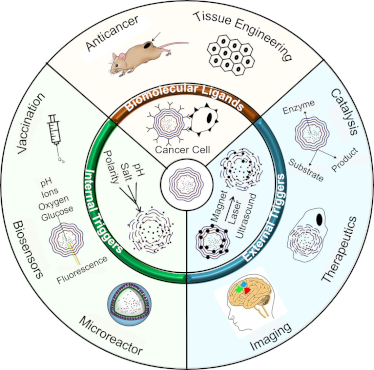
- also been seen in natural biopolymers such as polypeptides, polynucleotides, lipids and polysaccharides as they are biodegradable under common physiological conditions via enzymatic and pH induced degradation [8]. The advantage of LbL-assembled capsules lies in the versatility of interactions (e.g
- at pH 4.5 resulted in a thin and smooth capsule [27]. Similarly, biodegradable cores of polylactic acid polymer have also been investigated with several PEs, but limited by poor colloidal stability [28]. In contrast to the above-mentioned studies, inorganic templates such as carbonates are larger in
- , the poly(ethylene glycol) (PEG)-based post-functionalization of pH-responsive click capsules of biodegradable PLL and poly(ʟ-glutamic acid) (PGA) rendered their low fouling capability against specific protein binding [94]. Hydrogen bonded films and hollow capsules of alkyne-modified PVP and PMA were



Interactions at the cell membrane and pathways of internalization of nano-sized materials for nanomedicine
Beilstein J. Nanotechnol. 2020, 11, 338–353, doi:10.3762/bjnano.11.25
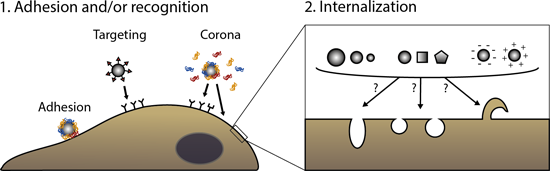
- via the endosomes until reaching their final localization in the cell, which in most cases has been shown to be the lysosomal compartment [168][169]. In the lysosomes, nano-sized objects, including nanomedicines, may be degraded and release their content, if biodegradable, or may accumulate and


Rational design of block copolymer self-assemblies in photodynamic therapy
Beilstein J. Nanotechnol. 2020, 11, 180–212, doi:10.3762/bjnano.11.15
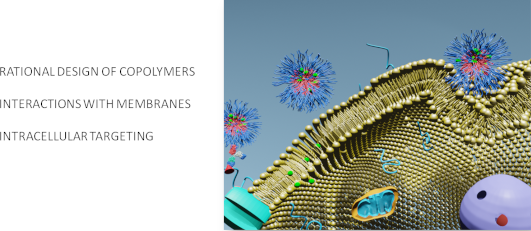
- used for the physical solubilization of photosensitizers are described in this section and summarized below in Table 1. Most commonly applied are biocompatible, nontoxic and FDA-approved copolymers, such as pluronics [30][31][32][33][34][35] or biodegradable aliphatic polyesters, based for instance on
- lateral chains can be functionalized in order to introduce functional groups for increasing the affinity to the photosensitizers and the loading efficiency, leading to a 100-fold phototoxicity improvement (in the case of the nicotinate group) [43]. Although not biodegradable, the poly(meth)acrylate