


Search results
Search for "biomimetic" in Full Text gives 141 result(s) in Beilstein Journal of Nanotechnology.
Hierachical epicuticular wax coverage on leaves of Deschampsia antarctica as a possible adaptation to severe environmental conditions
Beilstein J. Nanotechnol. 2022, 13, 807–816, doi:10.3762/bjnano.13.71
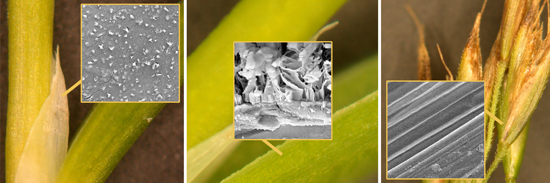
- ., Asclepiadaceae and Cactaceae) [15], plays a crucial role in the protection from water loss. Biomimetic potential Since the discovery of the lotus effect [43], different properties of superhydrophobic surfaces in plants, which are highly relevant for modern technologies, such as self-cleaning, fluid drag
- reduction, or holding air layers at a surface, have been described and their biomimetic applications have been discussed. Phylogenetic trees indicate that superhydrophobicity evolved as a consequence of the conquest of land about 450 million years ago and may be a key innovation in the evolution of




Hierarchical Bi2WO6/TiO2-nanotube composites derived from natural cellulose for visible-light photocatalytic treatment of pollutants
Beilstein J. Nanotechnol. 2022, 13, 745–762, doi:10.3762/bjnano.13.66
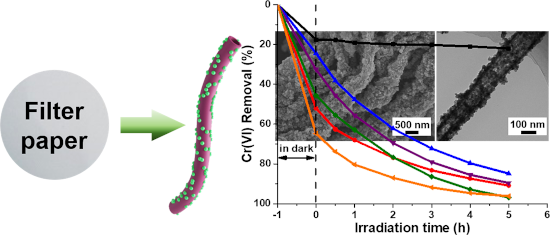
- photocatalytic reduction of Cr(VI), while hydroxyl radicals and reactive holes contributed to the photocatalytic degradation of rhodamine B. Keywords: biomimetic synthesis; cellulose; nanoarchitectonics; nanocomposite; nanotubes; photocatalysis; pollutants; Introduction The direct emission of untreated
- control is expected to offer a solution [28]. Based on biomimetic synthesis, the morphological control of functional materials is accomplished by combining chemical building blocks and natural substances with unique structures. Natural cellulose products (e.g., filter paper for quantitative analysis


Micro- and nanotechnology in biomedical engineering for cartilage tissue regeneration in osteoarthritis
Beilstein J. Nanotechnol. 2022, 13, 363–389, doi:10.3762/bjnano.13.31
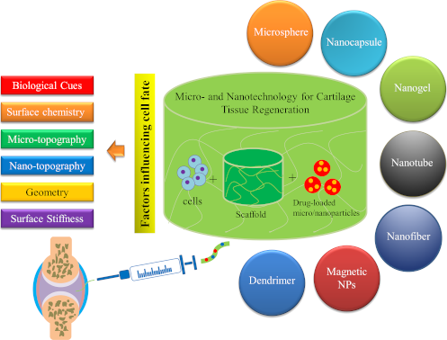
- purposes is the subject of many studies [19] in which natural polymers, synthetic polymers, or their combination were used to provide a biomimetic microenvironment, which not only includes biological cues, but also provides the desired mechanical properties. The progress in materials science has revealed
- biomimetic nanocomposites to imitate pseudostratified features of the ECM to develop bioinspired scaffolds [47][48][49]. 3.1.2.1 Nanoparticles (NPs). In recent years, NPs have been increasingly used in regenerative medicine (Table 1) and other medical areas. NPs have been successfully developed for drug
- the controlled and sustained release of KGN [71]. 3.1.2.2 Nanofibers. Nanofibers are a versatile class of nanomaterials characterized by two nanoscale dimensions and a third larger dimension (below 1000 nm) [33][101]. Their biomimetic properties and simplicity of fabrication make nanofibers potential


Self-assembly of amino acids toward functional biomaterials
Beilstein J. Nanotechnol. 2021, 12, 1140–1150, doi:10.3762/bjnano.12.85
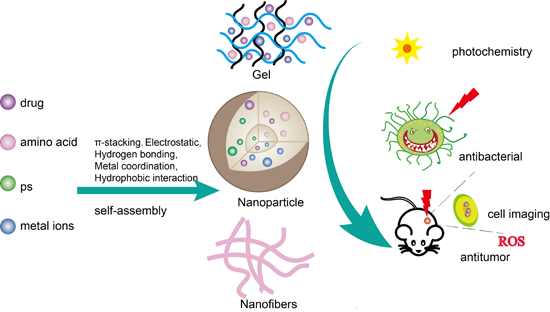
- these nanostructures. Therefore, as a new strategy, amino acid self-assembly needs further research to explore the biomimetic and biomedical applications of micro- and nanomaterials. Schematic diagram of amino acid regulatory self-assembly (amino acid–drugs, amino acid–photosensitizers, amino acid–metal

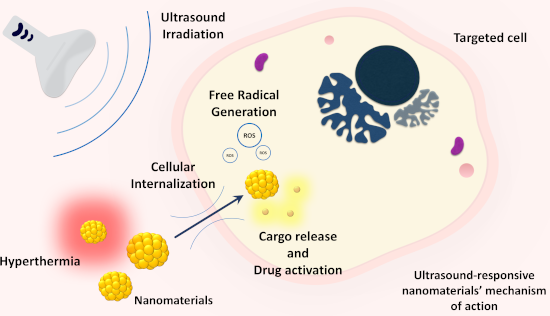
Comprehensive review on ultrasound-responsive theranostic nanomaterials: mechanisms, structures and medical applications
Beilstein J. Nanotechnol. 2021, 12, 808–862, doi:10.3762/bjnano.12.64


Recent progress in magnetic applications for micro- and nanorobots
Beilstein J. Nanotechnol. 2021, 12, 744–755, doi:10.3762/bjnano.12.58
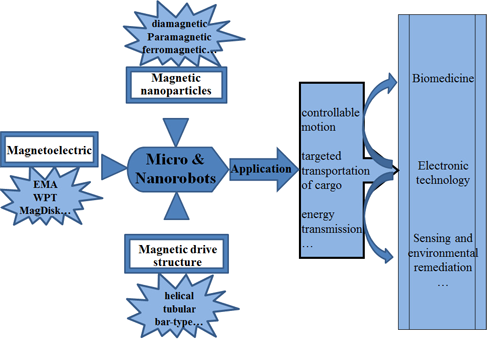
- used in medical MNRs [26]. For example, based on the combination of copolymer brushes and superparamagnetic nanoparticles, a biomimetic nanoreactor was proposed. It contained a magnetic field-responsive catalytic system, namely magnetic field-responsive binary deoxyribozyme (MaBiDZ) [27]. Also, it
- , with which cancer cells and non-cancerous cells can be distinguished. Furthermore, a cell sensor that uses MaBiDz for rapid detection and imaging of target mRNA biomarkers of metastatic breast cancer has been realized. Its function shows that it is likely to be used as a biomimetic organelle MNR in the


Physical constraints lead to parallel evolution of micro- and nanostructures of animal adhesive pads: a review
Beilstein J. Nanotechnol. 2021, 12, 725–743, doi:10.3762/bjnano.12.57
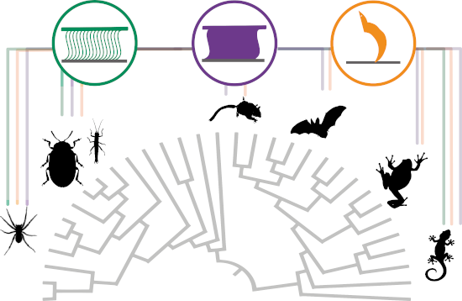
- might be potentially interesting for engineers as a kind of optimal solution by nature, the biomimetic implications of the discussed results are briefly presented. Keywords: adhesion; attachment devices; biomechanics; convergence; friction; substrate compliance; Review Animal attachment systems
- relatively high separation, the contribution of viscous forces to the adhesion and friction are enhanced due to the presence of a thin fluid layer in the contact area [247]. Significance for biomimetic applications Several different approaches to mimic natural adhesive systems have already been published
- great approach for the advancement of biomimetic innovations. For example, further research on the material–function relationship of the attachment pads can be useful for technical applications of artificial attachment systems with either surface-specific use or to provide universal solutions for


The impact of molecular tumor profiling on the design strategies for targeting myeloid leukemia and EGFR/CD44-positive solid tumors
Beilstein J. Nanotechnol. 2021, 12, 375–401, doi:10.3762/bjnano.12.31
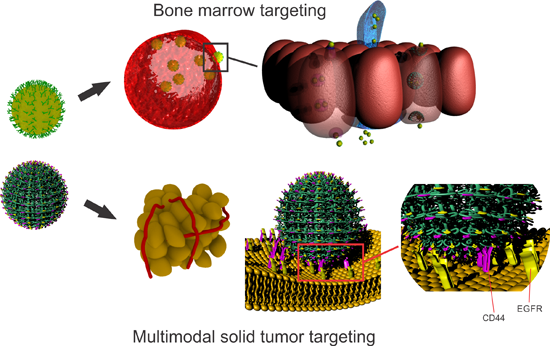
- itself proved to be non-toxic to healthy BALB/c mice. The co-delivery strategy has the potential to overcome therapy-induced niche-mediated leukemia resistance in AML. Dong et al. developed a biomimetic NDDS composed of a mesoporous silica nanoparticulate core loaded with daunorubicin and coated with


Key for crossing the BBB with nanoparticles: the rational design
Beilstein J. Nanotechnol. 2020, 11, 866–883, doi:10.3762/bjnano.11.72
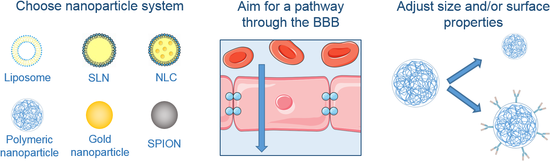
- protein corona forming around them, by investigating the particle–cell interactions or by looking for biomimetic solutions. Blood–brain barrier anatomy. Inspired by [5]. Brain delivery routes. A) Local delivery. Drugs can reach the brain by direct injection through the meninges. B) Intranasal delivery


Multilayer capsules made of weak polyelectrolytes: a review on the preparation, functionalization and applications in drug delivery
Beilstein J. Nanotechnol. 2020, 11, 508–532, doi:10.3762/bjnano.11.41
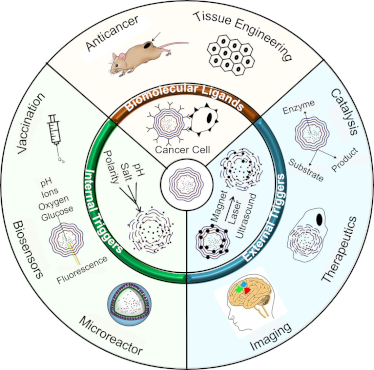
- [34]. Certain limitations such as low stability and low EE have been reported in organic and inorganic templates, respectively. Interestingly, the deposition of an additional silica layer through a biomimetic mineralization process onto a protamine/PSS microcapsule formed on a CaCO3 template improved



Nanoarchitectonics: bottom-up creation of functional materials and systems
Beilstein J. Nanotechnol. 2020, 11, 450–452, doi:10.3762/bjnano.11.36

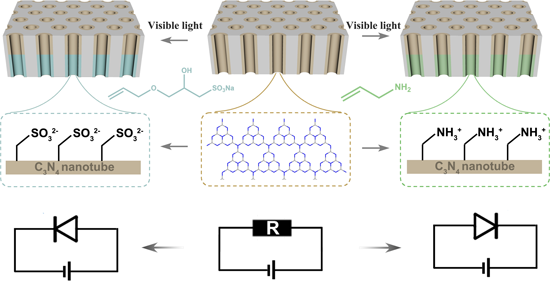
- spectroscopy [37], bio-nanocomposites with clay nanoarchitectures for electrochemical devices [38], a biomimetic nanofluidic diode with polymeric carbon nitride nanotubes [39], and a unique Janus-micromotor applied as a luminescence sensor for sensitive TNT detection [40]. The variety of nanoarchitectonics

Understanding nanoparticle flow with a new in vitro experimental and computational approach using hydrogel channels
Beilstein J. Nanotechnol. 2020, 11, 296–309, doi:10.3762/bjnano.11.22
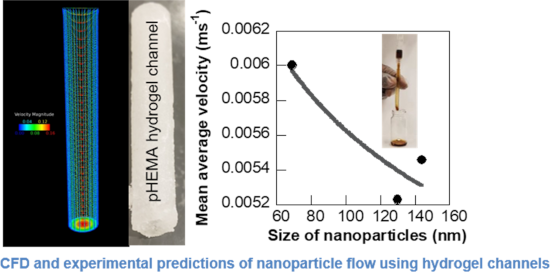
- scaffold materials for the 3D bioprinting of biomimetic structures [38][39]. Therefore, we chose pHEMA hydrogels to build straight cylindrical channels mimicking sections of human vasculature for our experimental investigation of NP flow. In addition, we aimed to synthesize the hydrogel flow channels via a
- new, facile, and cost-effective approach. Here, we report a combined experimental and computational technique to serve as an in vitro assessment of the flow of NPs using novel pHEMA hydrogel channels as the biomimetic flow path. The flow of NPs was experimentally investigated with different iron oxide
- diffusion and hydrodynamic forces for the flow of these aqueous NP dispersions and additional frictional forces in the NP flow path due to the soft and uneven surface of the hydrogel channels. This size-dependent flow behavior of aqueous NP solutions within soft biomimetic channels is a key finding in terms


Rational design of block copolymer self-assemblies in photodynamic therapy
Beilstein J. Nanotechnol. 2020, 11, 180–212, doi:10.3762/bjnano.11.15
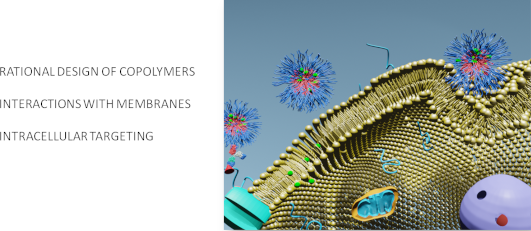
- ones such as polyesters or polyacrylates. A second part focuses on important parameters for their design and the improvement of their efficiency. Finally, particular attention has been paid to the question of nanocarrier internalization and interaction with membranes (both biomimetic and cellular), and
- second part. A third part will focus on the interactions between the vectors with the cell membrane, either in its native form or in biomimetic models. Finally, cellular entrance processes and intracellular targeting will also be described, showing possible intracellular targeting methods as well as the






Molecular architectonics of DNA for functional nanoarchitectures
Beilstein J. Nanotechnol. 2020, 11, 124–140, doi:10.3762/bjnano.11.11
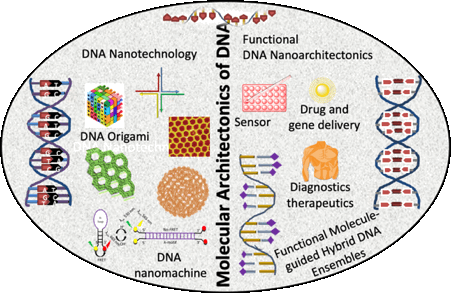
- nose for the selective detection of volatile organic components [65]. DNA tetrahedron nanostructures The structural analogy to virus particles makes DNA polyhedrons highly appealing architectures with biomimetic functional relevance. Among all polyhedrons, tetrahedrons are the simplest architectural


Nanostructured and oriented metal–organic framework films enabling extreme surface wetting properties
Beilstein J. Nanotechnol. 2019, 10, 1994–2003, doi:10.3762/bjnano.10.196
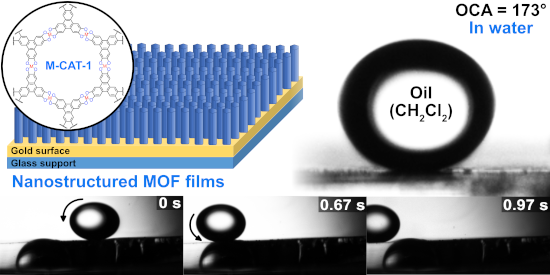
- . Keywords: antifog; antifouling; biomimetic coatings; metal–organic frameworks (MOFs); superhydrophilic; superoleophobic; thin films; vapor-assisted conversion; Introduction Over millions of years, plants and animals have evolved a spectrum of surface designs enabling specific wetting properties tailored


Nanoarchitectonics meets cell surface engineering: shape recognition of human cells by halloysite-doped silica cell imprints
Beilstein J. Nanotechnol. 2019, 10, 1818–1825, doi:10.3762/bjnano.10.176
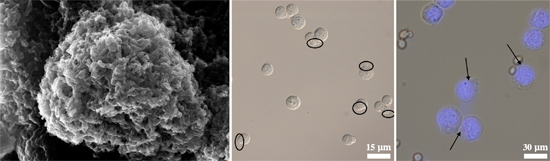
- -assembly of miniature building blocks to form biomimetic soft or rigid shells to encapsulate live cells rendering them with additional functionalities [7]. In general, there are three principal routes to engineer the cell walls or membranes of live cells: 1) deposition of charged or neutral polymers (that


Chiral nanostructures self-assembled from nitrocinnamic amide amphiphiles: substituent and solvent effects
Beilstein J. Nanotechnol. 2019, 10, 1608–1617, doi:10.3762/bjnano.10.156
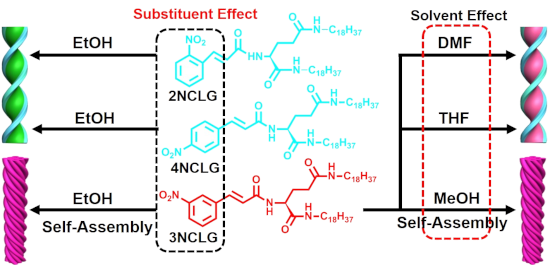
- chiral self-assembly gained from various noncovalent interactions is a very good biomimetic system due to the intrinsic dynamic nature of such materials and smart response to external stimuli. There are some works on the dynamic helical inversion in self-assembled structures triggered by the change of pH


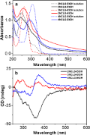


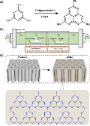
A biomimetic nanofluidic diode based on surface-modified polymeric carbon nitride nanotubes
Beilstein J. Nanotechnol. 2019, 10, 1316–1323, doi:10.3762/bjnano.10.130


Biomimetic synthesis of Ag-coated glasswing butterfly arrays as ultra-sensitive SERS substrates for efficient trace detection of pesticides
Beilstein J. Nanotechnol. 2019, 10, 578–588, doi:10.3762/bjnano.10.59
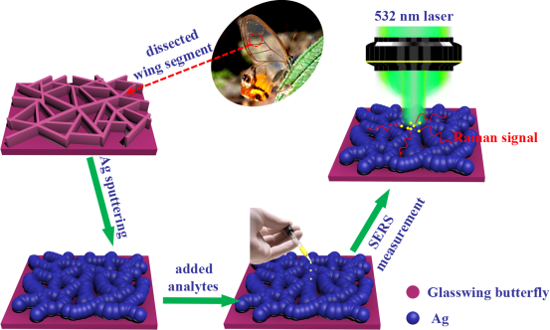
- . China Faculty of science, Beijing University of Chemical Technology, Beijing 100029, P.R. China Department of Mathematics, NC State University, Raleigh, NC 276968205, USA 10.3762/bjnano.10.59 Abstract In this work, we report a biomimetic synthesis route of 3D Ag nanofilm/glasswing butterfly wing
- . However, these chemical methods cannot avoid aggregation phenomena, which is a major drawback. Recent years have witnessed a very high level of research interest in well-defined biomimetic compounds. Because the micro/nanomaterials in nature usually possess intrinsic hydrophobicity and high adhesion
- 3D biomimetic SERS substrate with a high density of “hot spots” was formed on a template of cicada wings via a simple one-step and reagent-free direct-current ion sputtering techniques by Prof. Han’s group [26]. These 3D plasmonic nanostructures are adopted because these 3D substrates offer a great


Biological and biomimetic surfaces: adhesion, friction and wetting phenomena
Beilstein J. Nanotechnol. 2019, 10, 481–482, doi:10.3762/bjnano.10.48
Ultraviolet patterns of flowers revealed in polymer replica – caused by surface architecture
Beilstein J. Nanotechnol. 2019, 10, 459–466, doi:10.3762/bjnano.10.45
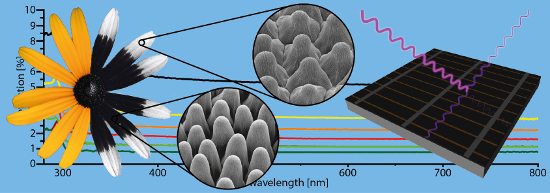
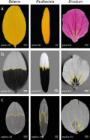
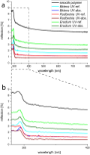
- structure and its reflective properties is also relevant for biomimetic applications, for example, in the field of photovoltaics. Based on previous work, we selected three model species with distinct UV-patterns to explore the possible contribution of the surface architecture to the UV-signaling. Using a
- differences even within just the three model plants. From a technical point of view, these results are promising and important for different types of applications given that the optical properties of surfaces are becoming more relevant, for example, for hierarchically structured solar panels, biomimetic


Pull-off and friction forces of micropatterned elastomers on soft substrates: the effects of pattern length scale and stiffness
Beilstein J. Nanotechnol. 2019, 10, 79–94, doi:10.3762/bjnano.10.8
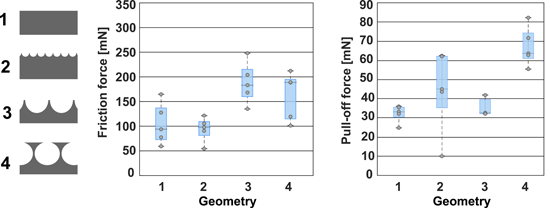
- performance of these biomimetic micropatterned adhesives is usually tested on hard substrates. Much less is known about the effect of geometry, feature size, and material properties on the performance of micropatterned adhesives when the substrate is deformable. Here, micropatterned adhesives of two stiffness
- substrate between the dimples. Keywords: adhesion; biomimetic micropatterned adhesive; colloidal lithography; friction; pull-off; soft substrate; Introduction Pull-off and friction forces of micropatterned adhesives as a function of geometry, feature size, and stiffness Over the last few decades
- , researchers have been developing micropatterned adhesives mimicking the geometry and material properties of biological dry adhesives [1][2][3][4][5]. Pull-off and friction forces of these biomimetic adhesives rely on the formation of intimate contact with the substrates [6], enabling physical interactions





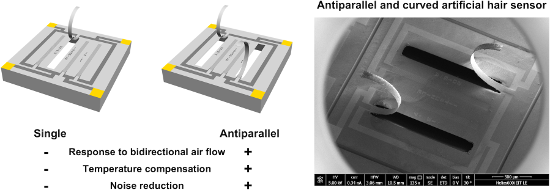
Bidirectional biomimetic flow sensing with antiparallel and curved artificial hair sensors
Beilstein J. Nanotechnol. 2019, 10, 32–46, doi:10.3762/bjnano.10.4


Contact splitting in dry adhesion and friction: reducing the influence of roughness
Beilstein J. Nanotechnol. 2019, 10, 1–8, doi:10.3762/bjnano.10.1
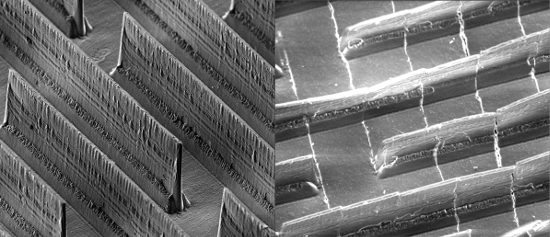
- more easily to the surface waviness and by reducing the effective average peeling angle. These findings can be used to guide the development of biomimetic shear-actuated adhesives suitable for operation not only on smooth but also on rough surfaces. Keywords: biomimetics; contact splitting; gecko
- their attachment abilities are reduced if the fibril dimensions are similar to the root-mean-square roughness, the mean spacing between local peaks, and the surface waviness characteristics of the substrate [20][21][22][23]. Analogous negative effects of roughness on adhesion and friction of biomimetic
- waviness as well as by allowing it to reduce the effective average peeling angle. These findings can guide the development of biomimetic shear-actuated adhesives that are suitable for operation not only on smooth but also on rough surfaces. Experimental Microstructured surfaces with 140 µm high flaps


A new bioinspired method for pressure and flow sensing based on the underwater air-retaining surface of the backswimmer Notonecta
Beilstein J. Nanotechnol. 2018, 9, 3039–3047, doi:10.3762/bjnano.9.282
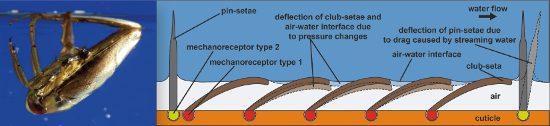
- /bjnano.9.282 Abstract In technical systems, static pressure and pressure changes are usually measured with piezoelectric materials or solid membranes. In this paper, we suggest a new biomimetic principle based on thin air layers that can be used to measure underwater pressure changes. Submerged
- , we provide a biomimetic proof of principle to validate our hypothesis. The suggested sensory principle has never been documented before and is not only of interest for sensory biologists but can also be used for the development of highly sensitive underwater acoustic or seismographic sensory systems
- the course of about 3.7 billion years of biological evolution [1][2][3], a stunning diversity of surface architectures has evolved. Today, millions of living prototypes (species) exist, waiting to be used for the development of biomimetic technical innovations [4][5]. Well know examples are insect





