


Search results
Search for "calculations" in Full Text gives 787 result(s) in Beilstein Journal of Nanotechnology. Showing first 200.
Vortex lattices of layered HTSCs at different vortex–vortex interaction potentials
Beilstein J. Nanotechnol. 2025, 16, 362–370, doi:10.3762/bjnano.16.27
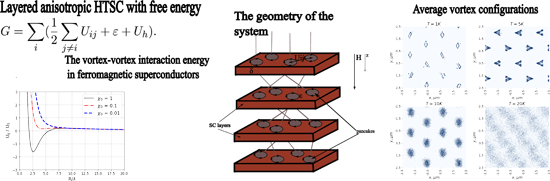
- interaction potential of which is identical in shape to the interaction potential in ferromagnetic superconductors. The modeling results can also be useful for analyzing vortex configurations in a layered anisotropic HTSC in an inclined magnetic field. Methods Calculations were performed using the Monte Carlo
- . As further calculations show, this leads to the formation of clusters, the number of vortices in which can reach 100. The shape of the potential from Equation 3 depends significantly on the value of the magnetic susceptibility of the superconductor, χ0. With an increase in χ0, the depth of the
- are selected in such a way that the numerical values of the potential at large distances approximately correspond to the potential from Equation 1. In the calculations it was assumed that λ(0) = 180 nm and ξ(0) = 2 nm. The critical temperature was taken to be 84 K. The first critical field with this


Enhancing mechanical properties of chitosan/PVA electrospun nanofibers: a comprehensive review
Beilstein J. Nanotechnol. 2025, 16, 286–307, doi:10.3762/bjnano.16.22

- membrane can be tricky in terms of handling and thickness measurements used for stress calculations [132]. Preparation of specimens requires attention to prevent damage, pretension, or slipping from grips during testing. Maccaferri et al. [133] demonstrated the use of a paper frame to hold the specimen in


A review of metal-organic frameworks and polymers in mixed matrix membranes for CO2 capture
Beilstein J. Nanotechnol. 2025, 16, 155–186, doi:10.3762/bjnano.16.14
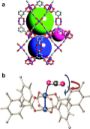
- functional theory (DFT) calculations and supported by neutron powder diffraction experiments and infrared spectroscopy [52][63][64][65]. It is agreed in literature that CO2 molecules bind to Mg2+ sites with end-on coordination, forming an angular Mg2+·OCO complex, with the rotation angle θ depending on the
- degree of CO2 loading [52][64]. The intramolecular angle of CO2 is a matter of debate due to conflicting findings. Neutron diffraction profiles unexpectedly seem to predict large apparent O–C–O bond bending, that is, bond angles of 160–167° [63][66], while theoretical calculations based on DFT only




Advanced atomic force microscopy techniques V
Beilstein J. Nanotechnol. 2025, 16, 54–56, doi:10.3762/bjnano.16.6

- carry out a more detailed characterization of the optoelectronic properties. Rothhardt et al. map the local work function on graphene nanoribbons [7]. They experimentally investigate the charge transfer between a gold substrate and graphene nanoribbons and compare that to DFT calculations. Indeed, the
- calculations. Eftekari et al. measure the local surface photovoltage generated in a silicon photodiode integrated with a piezoelectric membrane [8]. The design of such a device allows for the laterally resolved simultaneous quantification of the photovoltage generated by the photodiode as well as the
Theoretical study of the electronic and optical properties of a composite formed by the zeolite NaA and a magnetite cluster
Beilstein J. Nanotechnol. 2025, 16, 44–53, doi:10.3762/bjnano.16.5
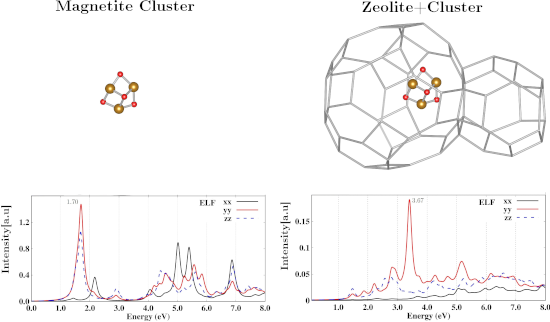
- using DFT calculations. The results obtained indicate that the electronic and optical properties of the composite are enhanced because of the cluster. However, the properties exhibited by the cluster outside the zeolite differ from those it presents when it is part of the composite. It is noteworthy
- cluster using DFT calculations and compares them to those in the case where the cluster is embedded within the NaA zeolite. Our work aims to provide insights into the structural and electronic properties of these systems, paving the way for future experimental investigations and the development of novel
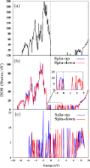
- exhibit excellent agreement with experimental data [59]. In detail, TB-mBJ combines the modified Becke–Johnson exchange potential with the local density approximation (LDA) for the correlation potential. The parameters used for the calculations were the following: The muffin-tin radii rmt are 1.70, 1.38




Precursor sticking coefficient determination from indented deposits fabricated by electron beam induced deposition
Beilstein J. Nanotechnol. 2025, 16, 35–43, doi:10.3762/bjnano.16.4

- estimate or initial guess in calculations or even simulations dedicated to FEBID for precursors such as WF6 [9], Me3CpPtMe [10][11][12][13][14][15], HCo3Fe(CO)12, and Nb(NMe2)3(N-t-Bu) [12], as well as tetraethyl orthosilicate (TEOS) [16]. The sticking coefficient has been determined only in the work of


Mechanistic insights into endosomal escape by sodium oleate-modified liposomes
Beilstein J. Nanotechnol. 2024, 15, 1667–1685, doi:10.3762/bjnano.15.131




Facile synthesis of size-tunable L-carnosine-capped silver nanoparticles and their role in metal ion sensing and catalytic degradation of p-nitrophenol
Beilstein J. Nanotechnol. 2024, 15, 1576–1592, doi:10.3762/bjnano.15.124
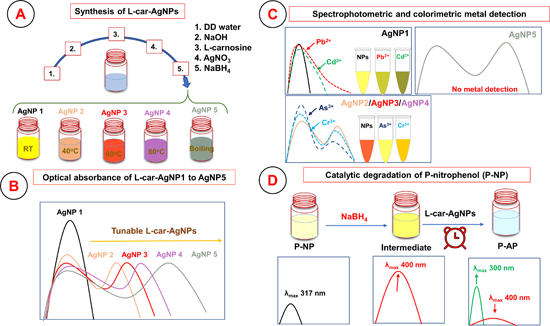
- -carnosine and ʟ-car-AgNPs and 100 s for ʟ-carnosine in aqueous solution. DFT calculations Theoretical insights into the FTIR and Raman measurements were obtained through molecular structure optimization of ʟ-carnosine, its anionic form, and probable ʟ-carnosine–(Ag)4 complexes. The structure optimization
- atoms. Calculations were executed using Gaussian 09, Revision A.02 software [23]. The optimization process was conducted without symmetry restrictions. The convergence criteria were an energy change of less than 1.0 × 10⁻⁶ Hartree and a gradient of less than 3.0 × 10⁻⁴ atomic units. The vibrational




The round-robin approach applied to nanoinformatics: consensus prediction of nanomaterials zeta potential
Beilstein J. Nanotechnol. 2024, 15, 1536–1553, doi:10.3762/bjnano.15.121
- attractive forces, while a negative value suggests repulsive interactions between the NPs, preventing aggregation or agglomeration. These calculations were performed considering spherical and uncoated NMs. The balance between the Hamaker constants (expressing van der Waals attraction between particles) and
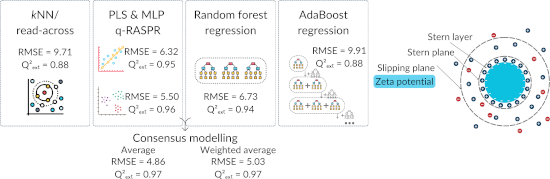
- weighted calculations (Equation 14), was assessed through comparing prediction results for the test set, where the same training and test sets were used for the five individual models, but using different sets of descriptors (Table 15). The consensus predictions using the averaging scheme were derived


Integrating high-performance computing, machine learning, data management workflows, and infrastructures for multiscale simulations and nanomaterials technologies
Beilstein J. Nanotechnol. 2024, 15, 1498–1521, doi:10.3762/bjnano.15.119

- dynamics and quantum chemistry calculations [23][24]. Even more significant has been the impact of GPU computing on AI. GPUs are inherently designed for parallel processing, making them exceptionally well-suited for the demanding calculations and massive data throughput required in AI tasks. Accordingly


Effect of radiation-induced vacancy saturation on the first-order phase transformation in nanoparticles: insights from a model
Beilstein J. Nanotechnol. 2024, 15, 1453–1472, doi:10.3762/bjnano.15.117

- confirmed by calculations for iron particles under irradiation. Substances characterized by high vacancy migration energy, small diffusion coefficients of defects, and low temperatures of first-order phase transitions can serve as suitable candidates for radiation-induced phase transitions in nanosystems
- deficiency in theoretical descriptions, particularly regarding thermodynamic calculations, which could elucidate the phase stability and radiation stability of nanodispersed particles under irradiation. In essence, there is a lack of robust theory to inform studies of HDCMs under irradiation. The authors
- factors in a comprehensive thermodynamic approximation. As our model system, we selected a spherical nanoscale particle in an inert medium, for which we utilized the parameters necessary for calculations. Our aim is to investigate the effects of powder dispersion, surface energies of phases, and vacancy


Strain-induced bandgap engineering in 2D ψ-graphene materials: a first-principles study
Beilstein J. Nanotechnol. 2024, 15, 1440–1452, doi:10.3762/bjnano.15.116
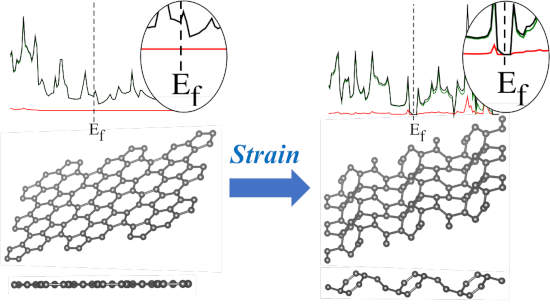
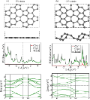
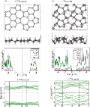
- functional theory (DFT) calculations to investigate the modification of the electronic properties of graphene through strain engineering [33]. They found that isotropic and biaxial strains cannot open graphene’s bandgap [33]. In contrast, the presence of biaxial strain and compression along zig-zag (11%) and
- , using first-principles calculations, named ψ-graphene [16]. It is a flat sheet of 5,6,7-membered carbon rings that is dynamically and thermally stable [16][38]. It can be constructed from the short-chain hydrocarbon s-indacene and has the chemical formula C12H8 [16]. Because of the absence of a bandgap
- detailed density functional theory calculations with dispersion correction and on-site Coulomb interaction (DFT(D) + U) to investigate CO2 activation on ψ-graphene and its hydrogenated forms for their application in the electrochemical conversion of CO2 [43]. Faghihnasiri et al. have performed DFT


Investigation of Hf/Ti bilayers for the development of transition-edge sensor microcalorimeters
Beilstein J. Nanotechnol. 2024, 15, 1353–1361, doi:10.3762/bjnano.15.108

- is determined mainly by the noise of the SQUID. The energy resolution δE of the TES is expected to be 0.01 eV according to the calculations based on Equation 2 and Equation 3. The ultimate energy resolution of the TES, provided that a low-noise SQUID is used (current noise of the order 1 pA/Hz1/2


Interaction of graphene oxide with tannic acid: computational modeling and toxicity mitigation in C. elegans
Beilstein J. Nanotechnol. 2024, 15, 1297–1311, doi:10.3762/bjnano.15.105

- modeling, including reactive classical molecular dynamics and ab initio calculations, we reveal that TA preferentially binds to the most reactive sites on GO surfaces via the oxygen-containing groups or the carbon matrix; van der Waals interaction forces dominate the binding energy. TA exhibits a dose
- are useful to predict and interpret experimental results. We performed, therefore, a multilevel study with different theory levels; reactive classical molecular dynamics enabled the exploration of the chemical and conformational changes of TA and GO, whereas ab initio calculations provided information
- surface of a GO flake in an aqueous environment. This allowed us to explore the chemical and conformational changes occurring in TA and GO. Additionally, ab initio calculations were conducted to investigate the electronic properties of the system, including the identification of the most reactive sites on


Dual-functionalized architecture enables stable and tumor cell-specific SiO2NPs in complex biological fluids
Beilstein J. Nanotechnol. 2024, 15, 1238–1252, doi:10.3762/bjnano.15.100
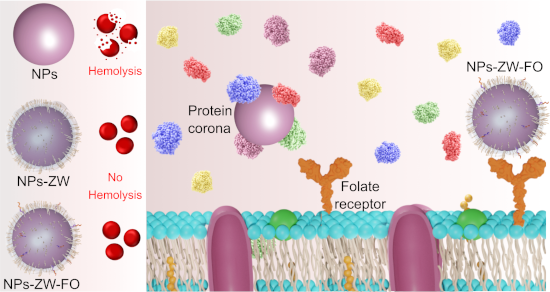
- at 100 °C and the percentages of carbon, nitrogen, and hydrogen were obtained. It is noteworthy that only the nitrogen percentages were considered for the calculations. The elemental composition of the NP surface was obtained using a K-Alpha XPS (Thermo Fisher Scientific) which operates with Al Kα X
- 1.0 mg·mL–1) and later used for the quantification of captured SiO2NPs-ZW-FO. The calculations were performed using the value obtained at the maximum of the emission band. Stability of SiO2NPs in cell culture medium and human plasma Dynamic light scattering (DLS) measurements were performed to
- . One-way and two-way analysis of variance (ANOVA) and Tukey’s test were used to compare three or more parametric data. Differences were considered significant when p < 0.05. All statistical calculations were carried out using the R program version 3.6.2 (R Development Core Team, 2019). Results and


Enhanced catalytic reduction through in situ synthesized gold nanoparticles embedded in glucosamine/alginate nanocomposites
Beilstein J. Nanotechnol. 2024, 15, 1227–1237, doi:10.3762/bjnano.15.99
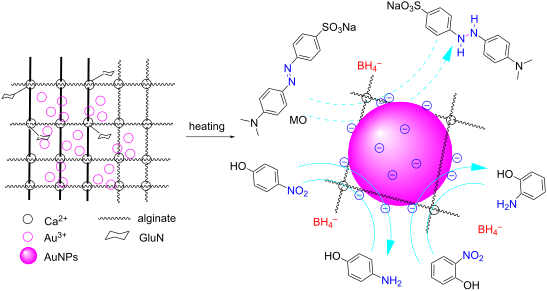
- and 3.60 keV confirmed the presence of gold and calcium in the sample [36][37]. The identification of calcium reaffirms the formation of cross-links within the nanocomposite. Calculations revealed an average gold fraction of 17.4% (w/w) in the nanocomposite. This high concentration of gold



AI-assisted models to predict chemotherapy drugs modified with C60 fullerene derivatives
Beilstein J. Nanotechnol. 2024, 15, 1170–1188, doi:10.3762/bjnano.15.95
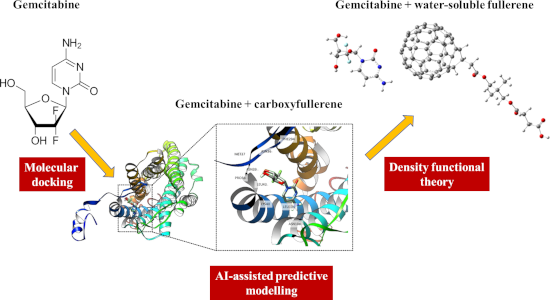
- ) is obtained as the reference density ρ0 perturbed by density fluctuations δρ, that is, For all calculations within DFTB3, the 3OB parameter set was used [41]. To carry out the global optimization procedure, Balloon 1.8.2 [42] and DFTB+ 17.1 [40] were used for the initial conformational study by
- computed as −5.978 eV and that of the LUMO as −4.221 eV at the DFTB3 level. In comparison, the B3PW91 method yielded −6.116 and −3.242 eV, respectively. Thus, to consider the models obtained here, it is recommended to use DFTB3 to compute the electronic and energetic properties instead of DFT calculations
- commonly used for breast cancer chemotherapy modified with fullerene derivatives as drug nanocarriers was carried out. The CXCR7 protein was selected as a target for molecular docking calculations; the drugs were studied in the isolated form and modified with C60 fullerene and with the water-soluble C60


Quantum-to-classical modeling of monolayer Ge2Se2 and its application in photovoltaic devices
Beilstein J. Nanotechnol. 2024, 15, 1153–1169, doi:10.3762/bjnano.15.94
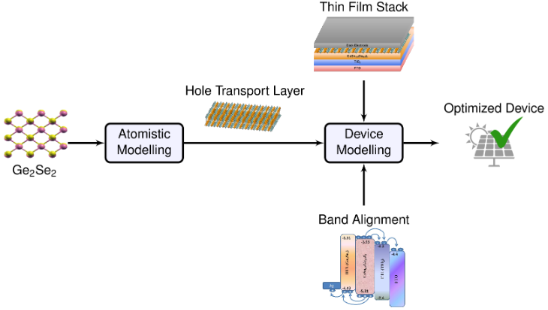
- –k dispersion reveals the investigated material’s key electronic properties. The calculations reveal a direct bandgap of 1.12 eV for monolayer Ge2Se2. We further extract critical optical parameters using the Kubo–Greenwood formalism and Kramers–Kronig relations. A significantly large absorption
- ][50][51], while all the simulation parameters for Ge2Se2 have been derived from the DFT calculations as discussed in the previous section. All simulation parameters are summarized in Table 1 Performance estimation Using the proposed model, we have estimated the performance of the solar cell in terms
- parameter of 0.1 and mixing parameters of 25%. An ultrasoft, scalar relativistic pseudopotential of Troullier–Martins type [71] has been used to model the core corrections in the calculations. The valence electronic configuration for Ge and Se is taken as 4s24p23d10 and 4s24p43d10, respectively, and all




Introducing third-generation periodic table descriptors for nano-qRASTR modeling of zebrafish toxicity of metal oxide nanoparticles
Beilstein J. Nanotechnol. 2024, 15, 1142–1152, doi:10.3762/bjnano.15.93
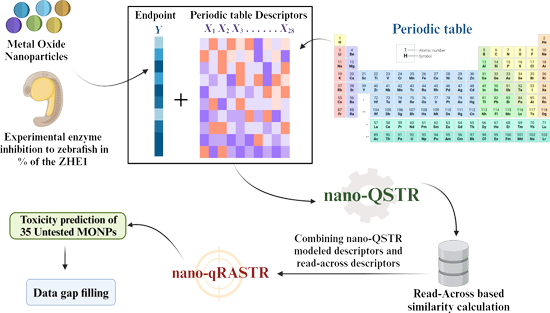
- need for extensive calculations or software utilization, unlike quantum chemical descriptors. In our earlier work, we have proposed seven and sixteen descriptors, which were classified as first- and second-generation periodic table descriptors, respectively [31][34]. In this study, we have proposed
- performing the model’s calculations 100 times by rearranging the dependent variables while maintaining the original independent variables constant [39]. A Y-randomization study has been performed employing “MLR Y-Randomization Test 1.2”, available at https://teqip.jdvu.ac.in/QSAR_Tools/. Following the Y
- -generation periodic table descriptors has demonstrated that even in the absence of complex quantum chemical calculations, we can achieve high predictive accuracy. This simplification of the descriptor calculation process not only makes the approach more accessible. It also significantly reduces the


Local work function on graphene nanoribbons
Beilstein J. Nanotechnol. 2024, 15, 1125–1131, doi:10.3762/bjnano.15.91
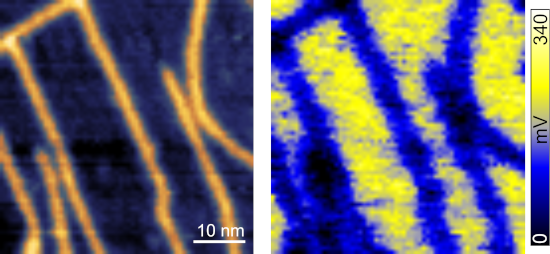
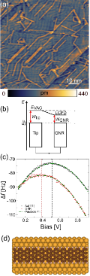
- density functional theory calculations, which verify that the maps reflect the doping of the nanoribbons. Our results help to understand the relation between atomic structure and electronic properties both in high-resolution images and in the distance dependence of the LCPD. Keywords: graphene
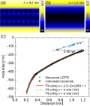
- . Variations in the measurement reveal local work function differences, which are ascribed to the Fermi level shift resulting from the charge transfer between the GNR and the Au substrate. Our results indicate that GNRs are positively charged compared to Au. This is confirmed by calculations and by distance
- were covered by Au from the sample surface because of tip–sample interactions as we have observed a tip–sample contact prior to taking the data used here. All calculations were done using the Vienna Ab initio Simulation Package [28][29] (vasp-5.4.4) with the PBE functional [30] and a projector

![[Graphic 1]](/bjnano/content/inline/2190-4286-15-91-i4.svg?max-width=637&scale=1.18182)
Effect of wavelength and liquid on formation of Ag, Au, Ag/Au nanoparticles via picosecond laser ablation and SERS-based detection of DMMP
Beilstein J. Nanotechnol. 2024, 15, 1054–1069, doi:10.3762/bjnano.15.86

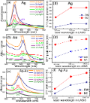
- recorded SERS spectra, after which SERS calculations were undertaken. Results and Discussion Characterization Optical absorption studies of as-synthesized nanoparticles The absorbance measurements were carried out on metallic Ag, Au, and Ag/Au NPs prepared using ps LASiS in both DW and aqueous NaCl


Bolometric IR photoresponse based on a 3D micro-nano integrated CNT architecture
Beilstein J. Nanotechnol. 2024, 15, 1030–1040, doi:10.3762/bjnano.15.84
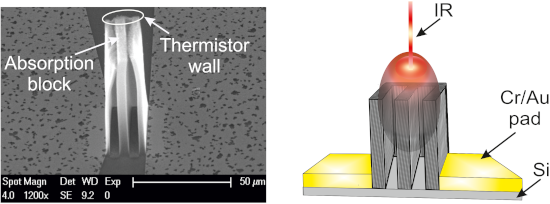
- for the signal amplitude to rise from 10% to 90% of the maximum value) was found to be a ≈0.15 ms for both samples. Noise measurement In addition to the calculations of TCR, Gth, and responsivity, noise voltage Vn measurements were performed to evaluate the noise characteristics of the new CNT
- , the NEP value will be improved with increased ℜV, allowing for the detection of weaker IR signals. These calculations indicate that the new CNT microbolometer could achieve superior performance in optimized micro-nano architectures with more efficient absorber region and under vacuum measurement


Can neutral clusters: a two-step G0W0 and DFT benchmark
Beilstein J. Nanotechnol. 2024, 15, 1010–1016, doi:10.3762/bjnano.15.82
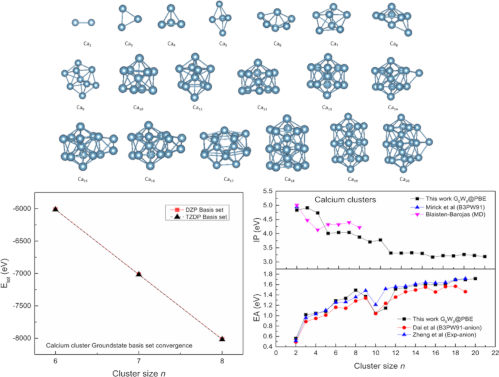
- clusters occurs above the trimer cluster. Small calcium clusters (2–5) have been investigated using first-principles calculations incorporating the electron correlation effects [4][5][6][7]. In 3D cluster structures, it can be used in the manufacturing of coating materials, which is useful for high
- ONCV-type multi-projector pseudopotentials for the description of the core ions, which is used in our calculation as provided by the SG15 library [23]. We have therefore set the energy cutoff as 100 Ry for better accuracy. The double-ζ plus polarization (DZP) basis set was used in ABACUS calculations
- data for DZP and TZDP basis sets, which were tested for various isomers of Be and Mg clusters. These results have shown that the basis sets are well converged and even DZP is sufficient to obtain reliable results [15]. To study the energetics of Can clusters, we used the G0W0 calculations in the FHI


A review on the structural characterization of nanomaterials for nano-QSAR models
Beilstein J. Nanotechnol. 2024, 15, 854–866, doi:10.3762/bjnano.15.71

- complexity of inorganic materials and, in place of structural features, focus on electronic features. In this regard, several descriptors were obtained from quantum mechanics (QM) calculations of small clusters or periodic models [26][27][28][29][30]. Although cluster-calculated QM descriptors are inherently
- reference parameters by empirical formulas [31]. Additionally, QM calculations can be performed in very simplified models that only describe a part of the material, such as single metal atom, to calculate the enthalpy of formation of the cation [26]. However, there is an alternative, simplified way of
- ), properties such as the ionization potential, the electron affinity, the absolute electronegativity and the absolute hardness, as well as the adsorption energy of the metal have been used (using literature values or QM calculations) [47][48][49][50]. In those cases, the descriptors were obtained for a single


Investigation on drag reduction on rotating blade surfaces with microtextures
Beilstein J. Nanotechnol. 2024, 15, 833–853, doi:10.3762/bjnano.15.70
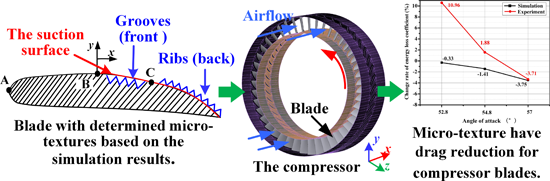
- explore the drag reduction performance and mechanism of microtexture. The conclusions are as follows: (1) A simplified simulation method is proposed from the whole impeller to a single impeller blade, establishing the relationship between plane and surface. Theoretical calculations and numerical





