Search results
Search for "catalyst" in Full Text gives 384 result(s) in Beilstein Journal of Nanotechnology. Showing first 200.
Intermixing of MoS2 and WS2 photocatalysts toward methylene blue photodegradation
Beilstein J. Nanotechnol. 2024, 15, 817–829, doi:10.3762/bjnano.15.68
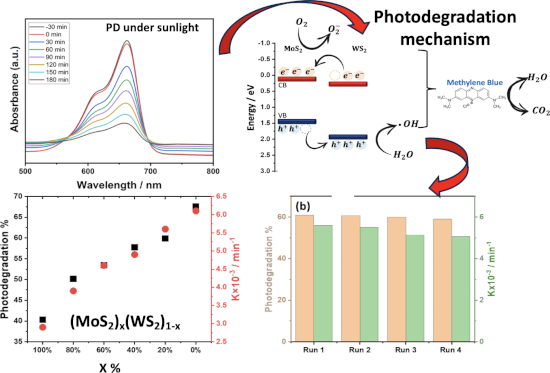
- , with over 99% degradation of MB achieved within 60 min under visible light exposure by using 10 mg of the catalyst to degrade 10 mg/L of MB [22]. Other works have shown that the MoS2–ZnO composite achieved 97% of MB photodegradation in ≈30 min under visible irradiation by using 250 mg/L of the catalyst
- to degrade 10 mg/L of MB [23]. Moreover, when MoS2 is mixed with SnO2, the MB photodegradation reaches up to ≈99.5% within 5 min. This rapid degradation occurred when 400 mg/L of the catalyst was used to degrade 3.2 mg/L of MB [24]. These results concerned materials fabricated using the hydrothermal
- technique, involving multiple processing stages. This ends up increasing the overall costs of production and creates a real challenge [25]. One can note the very high amount of catalyst used to degrade a small MB concentration. Besides, other studies have shown that WS2/polypyrrole composites synthesized by


Synthesis of silver–palladium Janus nanoparticles using co-sputtering of independent sources: experimental and theorical study
Beilstein J. Nanotechnol. 2024, 15, 808–816, doi:10.3762/bjnano.15.67
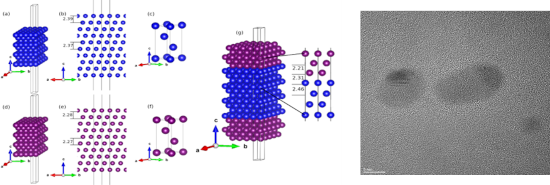
- poisoning, resulting in an increase in the useful life of the catalyst. Chunling An et al. synthesized AgPd BNPs in aqueous solution with sizes from 4 to 5 nm and demonstrated that they exhibit greater electrocatalytic activity and better long-term performance than silver nanoparticles [9]. Janus




Electrospun polysuccinimide scaffolds containing different salts as potential wound dressing material
Beilstein J. Nanotechnol. 2024, 15, 781–796, doi:10.3762/bjnano.15.65
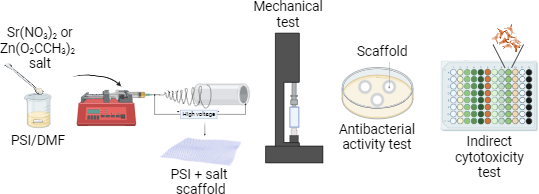
- polycondensation in the presence of a phosphoric acid catalyst [2]. Phosphoric acid (20 g) and ʟ-aspartic acid (20 g) were mixed in a round-bottom flask and placed into a rotatory vacuum evaporator (RV10, digital rotary evaporator, IKA, Germany) with a rotation speed of 130 rpm. The temperature was gradually
- pellet was filtered and washed using a vacuum filter to remove the phosphoric acid catalyst and the unreacted ʟ-aspartic acid monomeric molecules. Then, the pellet was mixed in distilled water for 10 min. This step was repeated until the pH of the filtrate changed from acidic to neutral. Finally, the PSI



Elastic modulus of β-Ga2O3 nanowires measured by resonance and three-point bending techniques
Beilstein J. Nanotechnol. 2024, 15, 704–712, doi:10.3762/bjnano.15.58
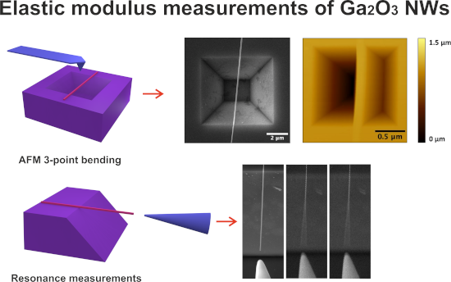
- , trapezoid, and rectangular shapes (see Figure S1 in Supporting Information File 1). Only part of the NWs had Au catalyst particles at the end of the NW, which is an indication of VLS growth; therefore, suggesting that a large portion of NWs grew via the self-catalytic vapour–solid (VS) mechanism [24


Laser synthesis of nanoparticles in organic solvents – products, reactions, and perspectives
Beilstein J. Nanotechnol. 2024, 15, 638–663, doi:10.3762/bjnano.15.54
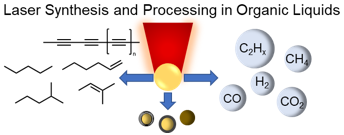
- produce graphite structures. The carbon shell is a surface modification and, as such, affects the nanoparticles’ catalyst properties either positively [37][155] or negatively [149]. A low number of graphene layers on the surface of the nanoparticles was found to enhance the catalytic activity during





Exfoliation of titanium nitride using a non-thermal plasma process
Beilstein J. Nanotechnol. 2024, 15, 631–637, doi:10.3762/bjnano.15.53
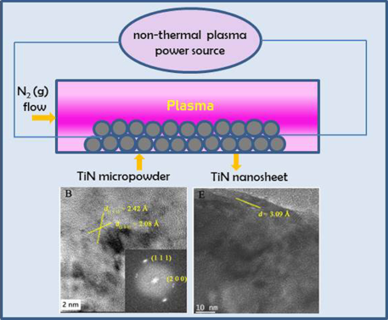
- conductivity [10][11][12]. On the nanoscale, TiN finds applications as additive in titanium alloys, as catalyst support material, as supercapacitor component, and as nanocoating for medical implants [13][14][15][16]. Furthermore, ultra-small TiN nanodots have been successfully obtained through liquid



Photocatalytic degradation of methylene blue under visible light by cobalt ferrite nanoparticles/graphene quantum dots
Beilstein J. Nanotechnol. 2024, 15, 475–489, doi:10.3762/bjnano.15.43
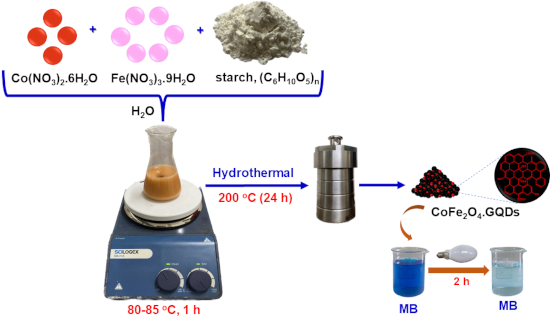
- degradation of methylene blue (MB) under visible light. The catalyst can be recycled with an external magnetic field and displays suitable stability. Also, it was reused in three successive experiments with a loss of efficiency of about 5%. The CF/GQDs are considered as an efficient photocatalyst for MB
- . Then, the material was separated from the solution, and the MB concentration was determined to evaluate the MB decomposition efficiency. Reusability Reusability and stability of the CoFe2O4/GQDs were assessed in three cycles of 120 min. After each cycle, the catalyst was separated from the MB solution
- CF/GQDs samples as catalysts. The decolourisation occurs in two steps. First, the catalyst was mixed with the MB solution in the dark for 60 min to ensure the adsorption/desorption equilibrium; second, the lamp was turned on to irradiate the MB solution under mechanical stirring. It is found that the




Influence of conductive carbon and MnCo2O4 on morphological and electrical properties of hydrogels for electrochemical energy conversion
Beilstein J. Nanotechnol. 2024, 15, 57–70, doi:10.3762/bjnano.15.6
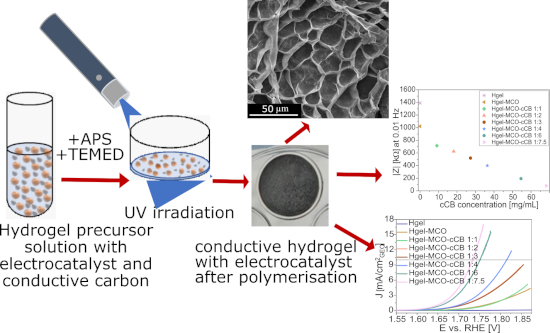
- catalytic activity of the electrode in the oxygen evolution reaction. The use of a hydrogel as a matrix to suspend the catalyst particles, and thus increase their availability through the electrolyte, seems to be an interesting and promising application approach. Keywords: electrical properties; energy
- the morphology also facilitates the penetration by the electrolyte, the diffusion of ions to electroactive sites, and the rapid release of the reaction, thus promoting the kinetics of the reaction and achieving higher efficiency of the catalyst built into the 3D structure [19]. The hydrogel matrix
- porous structure is capable of swelling and thus accommodating large amounts of ionic liquids. Moreover, the swollen hydrogel structure provides constant access of electrolyte molecules/ions to the catalyst particles, increasing the speed and efficiency of the electrochemical reaction [20]. The swelling


Density functional theory study of Au-fcc/Ge and Au-hcp/Ge interfaces
Beilstein J. Nanotechnol. 2023, 14, 1093–1105, doi:10.3762/bjnano.14.90
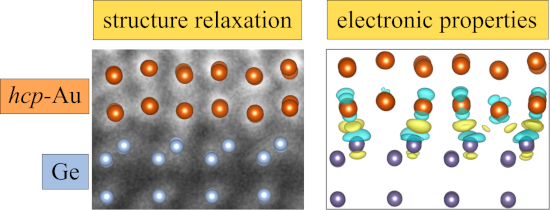
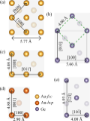
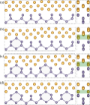
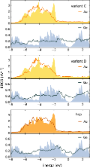
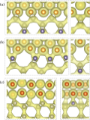
- several other metals. It is worth mentioning that also stable hexagonal silver dhcp nanostructures have been synthesized [20][21]. Nanostructures of hcp gold were found after growing Ge nanowires with Au as catalyst [22]. A possible mechanism responsible for the formation of hcp gold has been suggested





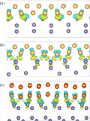
Experimental investigation of usage of POE lubricants with Al2O3, graphene or CNT nanoparticles in a refrigeration compressor
Beilstein J. Nanotechnol. 2023, 14, 1041–1058, doi:10.3762/bjnano.14.86
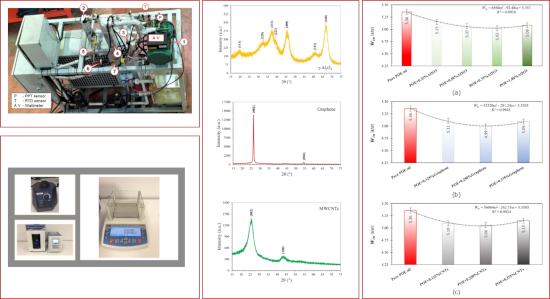
- , respectively. It is considered that the reason for the presence of 0.2% Mg in the EDS analysis may be due to the use of MgO as catalyst support [28]. The crystalline properties of CNTs nanoparticle were determined by XRD analysis. All peaks were measured by XRD and compared with previous studies [29][30] in





Ni, Co, Zn, and Cu metal-organic framework-based nanomaterials for electrochemical reduction of CO2: A review
Beilstein J. Nanotechnol. 2023, 14, 904–911, doi:10.3762/bjnano.14.74
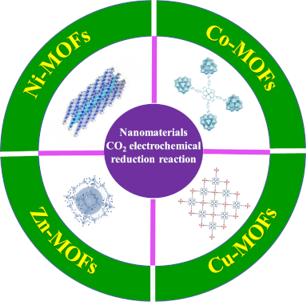
- products, as shown in Figure 1. In addition to the properties of the catalyst material, other parameters, such as potential, pH, solvent, and temperature, also determine the formation of desired products. MOFs nanomaterials for electrocatalytic reduction of CO2 Ni-based MOFs nanomaterials Two-dimensional
- -PMOF, and Zn-PMOF (P: polyoxometalate) for CO2 conversion. Co-PMOF displayed the highest catalytic activity for CO2RR among the investigated MOFs, as illustrated in Figure 3a,b. Moreover, this catalyst also showed remarkable durability, with the current density remaining stable after 35 h of testing
- catalyst for CO2RR. The author postulated that Co(II) is converted into Co(I), which acts as a redox center for the reduction of CO2 into CO (Figure 3c,d). Because of their poor conductivity, Co-MOFs are typically grown on conductive templates, such as fluorine-doped tin oxide (FTO), carbon cloth, and


Silver nanoparticles loaded on lactose/alginate: in situ synthesis, catalytic degradation, and pH-dependent antibacterial activity
Beilstein J. Nanotechnol. 2023, 14, 781–792, doi:10.3762/bjnano.14.64
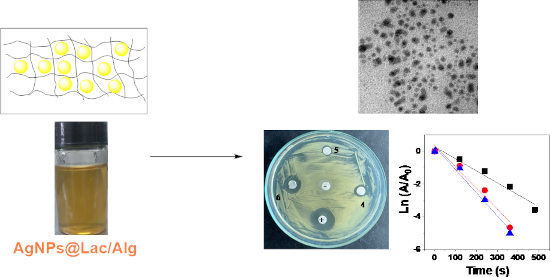
- agents [33]. The efficiency of the catalyst can be improved by studying different carrier materials [34][35]. Interface factors, including morphology and capping agents, play a significant role in the catalytic activity of AgNPs. The ionotropic gelation mechanism has been recently employed to create
- toxic dyes, methyl orange (MO) and rhodamine B (RhB), using various doses of the nanocomposite. The degradation of toxic dyes using a nanocomposite catalyst was monitored in situ by measuring UV–vis absorption at ambient temperature, with the concentration changing in a time-dependent manner. The
- effectiveness of the reactions is confirmed by discoloration of the pollutant solution and a reduction in absorbance values in the UV–vis spectra. In a separate study [45], it was shown that the dyes degraded weakly in the absence of a catalyst. As seen in Figure 7 and Figure 8, the reduction of MO and RhB is


Control of morphology and crystallinity of CNTs in flame synthesis with one-dimensional reaction zone
Beilstein J. Nanotechnol. 2023, 14, 741–750, doi:10.3762/bjnano.14.61
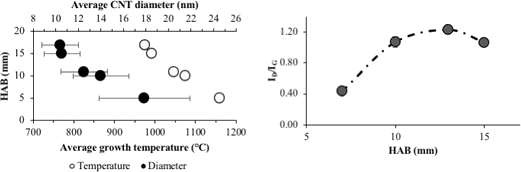
- on the growth control in CVD conclude that independent parameters, such as fuel selection, synthesis temperature, vapor pressure, and catalyst, govern CNT growth [6]; all can be manipulated for synthesis control. CVD is preferred because of the high degree of control and the possibility to synthesize
- explored. In flame synthesis, the correct selection of the catalyst is the governing parameter to produce CNTs similar to those made in CVD in an economical production process [7]. Hamzah et al. [8] discussed the control of CNT morphology and growth in flame synthesis taking into account many parameters
- , such as fuel, catalyst, temperature, and diluent. However, the heterogeneous gas properties during combustion lead to a high temperature gradient and a wide distribution of chemical species within the flame. The interrelated processes of heat generation and carbon supply requires an optimum parametric


Titania nanoparticles for photocatalytic degradation of ethanol under simulated solar light
Beilstein J. Nanotechnol. 2023, 14, 616–630, doi:10.3762/bjnano.14.51
- from the interaction with photogenerated hydroxyl radicals. Despite the fact that radical trapping was performed in aqueous solution, it can be indicative for the ability of the catalyst surface to generate hydroxyl radicals in the present investigated system. The main reactions leading to (•OH
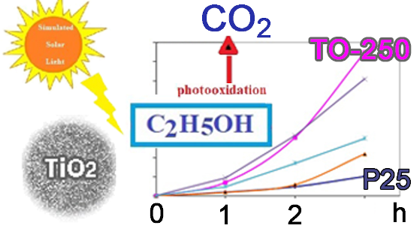
- . Probably, a longer irradiation time would be beneficial for ethanol photomineralization over this sample. Also, TO-650-b shows a linear increase of activity after 2 h of irradiation. Figure 11 is illustrative for the different kinds of behavior of the two catalyst series regarding ethanol photodegradation
- and catalytically active defects in the structure of the catalysts. Figure 11 shows also a lower CO2 formation rate for the second catalyst series with a simultaneously increasing H2 formation rate, especially for TO-850-b. From this perspective, it might be interesting to consider these catalysts for




Evaluation of electrosynthesized reduced graphene oxide–Ni/Fe/Co-based (oxy)hydroxide catalysts towards the oxygen evolution reaction
Beilstein J. Nanotechnol. 2023, 14, 420–433, doi:10.3762/bjnano.14.34
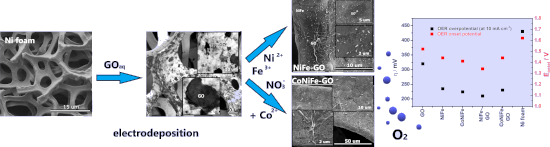
- process is primarily the oxygen evolution reaction (OER) due to its sluggish kinetics resulting in a high overpotential and low efficiency [4]. To overcome this problem, robust anode electrode catalyst materials are required. Since the Ru- and Pt-based catalysts used so far for OER are made using limited
- and expensive metals [5], studies on other catalyst materials are being conducted. Recently, transition-metal-based materials including nickel, iron, and/or cobalt have become promising catalysts for OER [6][7][8][9][10]. The materials are characterized by relatively low cost and environmentally
- graphene material with Ni-, Fe- and/or Co-based oxides/hydroxides with high chemical reactivity provides both an effective electron pathway through the catalyst [20] and high specific surface area [21], which is desirable for the OER process [13]. The overall electrocatalytic performance of the hybrid





Bismuth-based nanostructured photocatalysts for the remediation of antibiotics and organic dyes
Beilstein J. Nanotechnol. 2023, 14, 291–321, doi:10.3762/bjnano.14.26
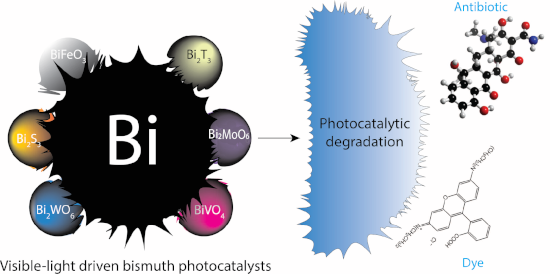
- charges and, hence, increase photocatalytic activity, metallic bismuth can function as a direct plasmonic photocatalyst (similar to Au and Ag) or a co-catalyst [77]. Also, the unique layered crystal structure of Aurivillius-type bismuth oxide-based semiconductors allows for the induction of an internal
- dispersion into the solution. An increase in the concentration of pollutant molecules adsorbed on the catalyst surface while the catalyst dosage is unchanged and the generation of reactive species is constant could be another factor causing the decrease in photocatalytic degradation rate with increasing


Biocatalytic synthesis and ordered self-assembly of silica nanoparticles via a silica-binding peptide
Beilstein J. Nanotechnol. 2023, 14, 280–290, doi:10.3762/bjnano.14.25
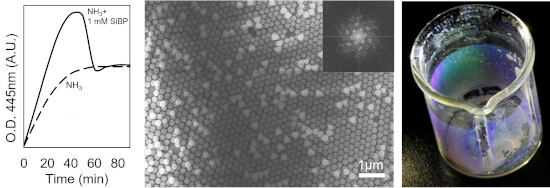
- demonstrate that the SiBP acts as a multirole agent when used alone or in combination with a strong base catalyst (NH3). When used alone, SiBP catalyzes the hydrolysis of precursor molecules in a dose-dependent manner and produces 17–20 nm SiO2 particles organized in colloidal gels. When used in combination
- the particles through a capping agent-like effect. (3) The SiBP can increase the efficiency of the self-assembly by modifying the net surface charge of the particle. To test these hypotheses, we have synthesized SiO2 particles with the Stöber method using the SiBP as the only catalyst or in
- scattering (DLS). The efficiency of the self-assembly was evaluated with scanning electron microscopy (SEM), UV–vis spectroscopy, and qualitative visual demonstration. Results and Discussion SiBP alone as catalyst Reaction kinetics were studied via OD measurements of the particles and GC analysis of




A novel approach to pulsed laser deposition of platinum catalyst on carbon particles for use in polymer electrolyte membrane fuel cells
Beilstein J. Nanotechnol. 2023, 14, 190–204, doi:10.3762/bjnano.14.19
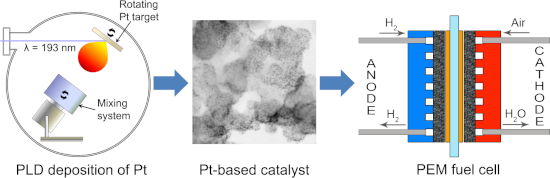
- an efficient Pt-based catalyst for polymer electrolyte membrane fuel cells (PEMFCs) by using a cost-effective and efficient physical method to deposit platinum nanoparticles (PtNPs) on carbon supports directly from the platinum target. The method developed avoids the chemical functionalization of the
- carbon substrate and the chemical synthesis of PtNPs during catalyst fabrication. Platinum was deposited on carbon particles at room temperature using a pulsed laser deposition (PLD) system equipped with an ArF excimer laser (λ = 193 nm). The uniform deposition of PtNPs on carbon supports was achieved
- W/cm2 obtained for commercial 20% Pt Vulcan XC-72R. This result was achieved with three times less Pt catalyst on the carbon support compared to the commercial catalyst, which means that a higher catalyst utilization factor was achieved. Keywords: carbon particles; cyclic voltammetry; fuel cells



Non-stoichiometric magnetite as catalyst for the photocatalytic degradation of phenol and 2,6-dibromo-4-methylphenol – a new approach in water treatment
Beilstein J. Nanotechnol. 2022, 13, 1531–1540, doi:10.3762/bjnano.13.126
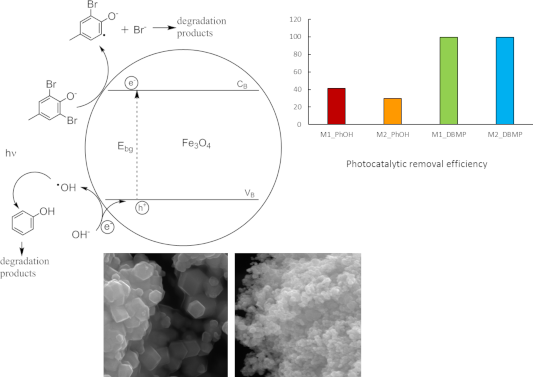
- solar radiation as an energy source [11]. The photocatalysts are activated by radiation and produce highly reactive photo-induced charge carriers, which can react with the contaminants adsorbed on the surface of the catalyst. Understanding the properties of the photocatalyst material is critical to
- designing an effective photocatalytic process. The factors that influence photocatalytic efficiency include the photocatalyst bandwidth, the recombination rate of photogenerated electron–hole pairs, the use of solar energy, and problems with catalyst degradation. Magnetite is a common auxiliary mineral in
- the facets (220), (311), (400), (422), (511), and (440) of Fe3O4, respectively [21]. The absence of the (210) and (211) peaks confirms that the catalysts were indeed magnetite. The mean size of the catalyst crystallites (D) was calculated from the high-reflection X-ray diffraction profiles by


A TiO2@MWCNTs nanocomposite photoanode for solar-driven water splitting
Beilstein J. Nanotechnol. 2022, 13, 1520–1530, doi:10.3762/bjnano.13.125
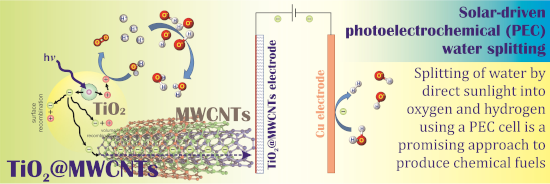
- under solar irradiation. Keywords: multi-wall carbon nanotubes (MWCNTs); nanomaterials; photoelectrochemical; TiO2; water splitting; Introduction TiO2 is an excellent photochemical catalyst for environmental and chemical applications due to its good activity regarding numerous reduction and oxidation
- × 3 mm3 of width × height × thickness) as the support for the electrode is immersed in the as-prepared mixture. The catalyst mixture is assembled on the plastic bar under ultrasound for 1 min. Finally, the photoelectrochemical electrode is obtained after drying at 60 °C for 15 min. TiO2@MWCNTs
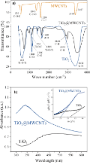
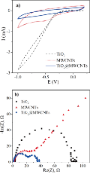
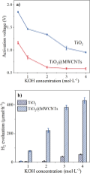
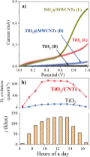
- surface with a size of 1.5 × 2.0 cm2 is irradiated. A schematic of the experimental apparatus is described in Figure 1. Results and Discussion Characterization of the TiO2@MWCNTs nanocomposite catalyst FE-SEM images of the morphology of the MWCNTs, TiO2 powder, and the TiO2@MWCNTs nanocomposite are shown



Recent trends in Bi-based nanomaterials: challenges, fabrication, enhancement techniques, and environmental applications
Beilstein J. Nanotechnol. 2022, 13, 1316–1336, doi:10.3762/bjnano.13.109
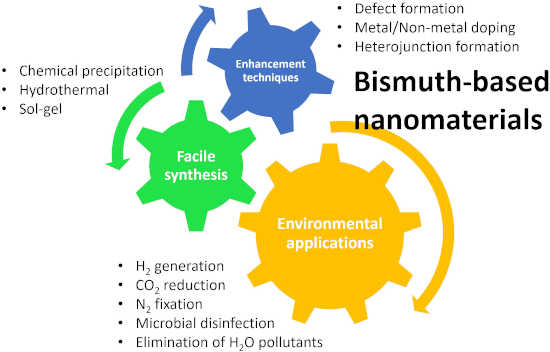
- conduction band (CB) through visible light [39]. The holes in the valence band of the catalyst split water to hydroxyl radicals (•OH). Electrons in the CB of a semiconductor photocatalyst can generate the superoxide anion (•O2−) when they interact with oxygen molecules. During the photocatalytic oxidative
- , the catalyst should have a high CB position and a low VB position, resulting in a large bandgap. These two prerequisites are not compatible. As a direct consequence of this, heterojunctions are produced. To create heterojunction photocatalysts, two semiconductor photocatalysts are combined [44][45
- potential role of Au nanoparticles in the S-scheme heterostructure is noteworthy. They serve as a co-catalyst for improving electron separation and transmission due to the photogenerated potential. By forming heterojunctions, the visible-light absorption as well as the carrier separation efficiency of Bi




Studies of probe tip materials by atomic force microscopy: a review
Beilstein J. Nanotechnol. 2022, 13, 1256–1267, doi:10.3762/bjnano.13.104
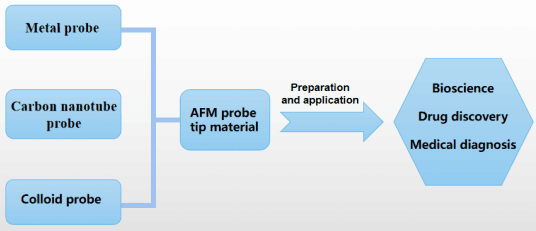
- does it generate catalyst patterns in advance. In order to proceed safely and cost-effectively, the method uses mainly ethanol as the carbon source with a 4% flow gravity of hydrogen gas. Notably, using this tip array allows the growth method to be further optimized to produce the highest percentage of
- prominent carbon nanotube tips. This type of process strategy is used to produce CNT tips in wafer-scale AFM. By identifying and manipulating the key growth conditions that control the density and length of carbon nanotube growth; i.e., the amount of Co catalyst and CNT growth time, it is possible to switch
- between ring protruding carbon nanotubes and carbon nanotubes protruding directly from the tip with a high degree of selectivity. However, this growth method does not allow accurate catalyst placement and often produces ring-like tips. Based on the above method, Cheng et al. [11] proposed a simple method
Rapid fabrication of MgO@g-C3N4 heterojunctions for photocatalytic nitric oxide removal
Beilstein J. Nanotechnol. 2022, 13, 1141–1154, doi:10.3762/bjnano.13.96
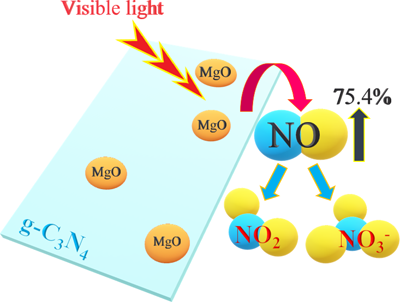
- are different approaches to mitigate NO pollution, including catalyst/non-catalyst [4], oxidation [5], bioprocesses [6], adsorption [7], absorption [8], and non-thermal plasma technologies [9]. Photocatalytic oxidation is considered a promising approach due to its ability to degrade various air
- absorbs visible light due to its small bandgap below 2.7 eV. Because of this, it has been consistently regarded as a catalyst with excellent optical properties [14][15]. Unfortunately, its narrow bandgap leads to rapid recombination of electron–hole (e−–h+) pairs, and the valence band potential of g-C3N4








Spindle-like MIL101(Fe) decorated with Bi2O3 nanoparticles for enhanced degradation of chlortetracycline under visible-light irradiation
Beilstein J. Nanotechnol. 2022, 13, 1038–1050, doi:10.3762/bjnano.13.91
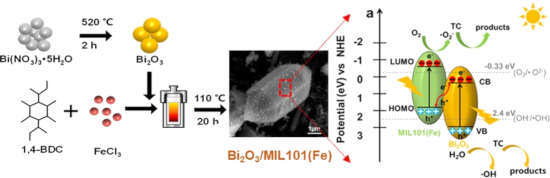
- separation of electron–hole pairs, thus improving the photocatalytic activity of MIL101(Fe) to a certain extent. Nevertheless, the redox ability of the catalyst is weakened due to the fact that the reduction and oxidation processes on the catalyst surface occur at lower oxidation and reduction potentials
- about the construction of Z-scheme heterojunctions by coupling MIL101(Fe) and Bi2O3. Herein, in order to enhance the photocatalytic efficiency of MIL101(Fe) for degradation of CTC, a novel 0D/3D heterojunction catalyst Bi2O3/MIL101(Fe) was prepared by anchoring Bi2O3 nanoparticles to the surface of
- MIL101(Fe). The experimental results show that the recombination of photogenerated carriers in Bi2O3/MIL101(Fe) is effectively inhibited, and the photocatalytic activity of the composite is significantly improved compared with that of a monomer catalyst. At the same time, the results of the capture


Electrocatalytic oxygen reduction activity of AgCoCu oxides on reduced graphene oxide in alkaline media
Beilstein J. Nanotechnol. 2022, 13, 1020–1029, doi:10.3762/bjnano.13.89
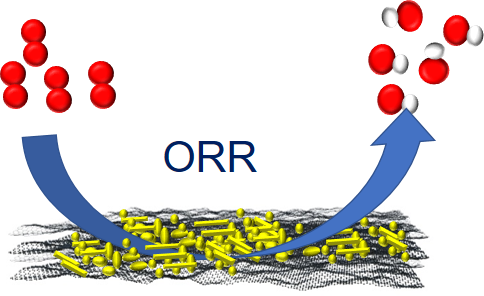
- slow reaction rates of the electrode processes impede the efficiency and, thus, require innovative catalyst designs. The ORR is an irreversible, complex (involving multiple steps and intermediates O, OH−, O2−, HO2− and H2O2) and kinetically slow process (via two- or four-electron transfer) dominating
- limiting current density (JL) of 3.6 mA·cm−2 at 1600 rpm under alkaline conditions. Particle size, composition, and exposure to active sites of the catalyst are important features of ORR electrocatalysis that need to be optimized to obtain the highest mass activity and electron transfer value (n ≈ 4
- ). Oxygen reduction on smaller catalyst particles favours the two-electron pathway, dominated via active edge and corner sites, while the four-electron pathway is catalysed by larger particles [18][30]. The kinetics of oxygen reduction on the surface of the ACC-2 sample was studied via the Koutecky–Levich