


Search results
Search for "catalytic properties" in Full Text gives 95 result(s) in Beilstein Journal of Nanotechnology.
Single-crystalline FeCo nanoparticle-filled carbon nanotubes: synthesis, structural characterization and magnetic properties
Beilstein J. Nanotechnol. 2018, 9, 1024–1034, doi:10.3762/bjnano.9.95
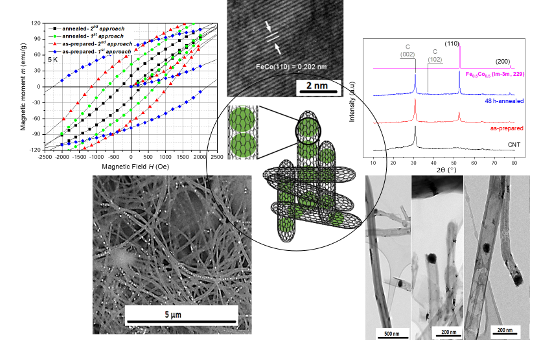
- , shape, arrangement of the magnetic nanoparticles to their magnetic, chemical, mechanical and catalytic properties [18][26][30], it is important to choose synthesis methods which guarantee the control of size and morphology as well as the long-term stability in order to allow these magnetic nanoparticles


A review of carbon-based and non-carbon-based catalyst supports for the selective catalytic reduction of nitric oxide
Beilstein J. Nanotechnol. 2018, 9, 740–761, doi:10.3762/bjnano.9.68
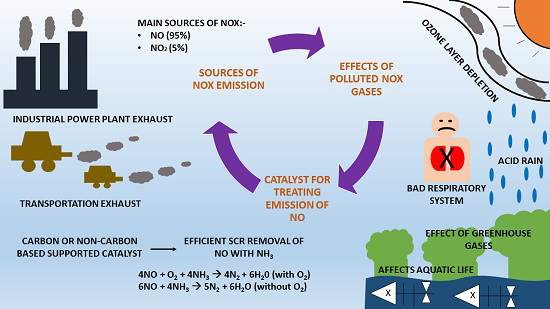
- catalysts in the SCR reaction. Su et al. [50] modified the catalytic properties of (Mn) species by introducing MnOx either on the outer CNT surface or on the inner and outer CNT surface for the SCR of NO with NH3. The recorded NOx conversion was very low over blank CNTs at a reaction temperature ranging
- have higher catalytic activity compared to V2O5 particles supported on AC (V2O5/AC) at 200 °C reaction temperature. The BET analysis confirms that the CNTs have a lower (220 m2/g) surface area than AC (615 m3/g), indicating that the catalytic properties in CNTs are better than AC because of the
Sensing behavior of flower-shaped MoS2 nanoflakes: case study with methanol and xylene
Beilstein J. Nanotechnol. 2018, 9, 608–615, doi:10.3762/bjnano.9.57

- increased. This response enhancement can be interpreted as methanol decomposition to syngas (CO/H2) at around 433 K [39], and ethanol formation from the syngas due to the catalytic properties of MoS2 at around 185 °C [40]. It is known that ethanol has a higher electron-donor rate than methanol [41]. Hence


BN/Ag hybrid nanomaterials with petal-like surfaces as catalysts and antibacterial agents
Beilstein J. Nanotechnol. 2018, 9, 250–261, doi:10.3762/bjnano.9.27
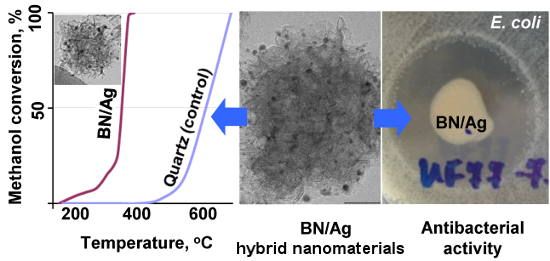
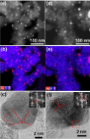
- stability of their catalytic properties. Interestingly, the catalytic activity of pure BN NPs was higher compared with inert quartz spheres. This result supports the conclusion of Lyalin et al. [15], who suggested that the impurities and other defects in a h-BN structure enhance the catalytic activity of h





Comparative study of post-growth annealing of Cu(hfac)2, Co2(CO)8 and Me2Au(acac) metal precursors deposited by FEBID
Beilstein J. Nanotechnol. 2018, 9, 91–101, doi:10.3762/bjnano.9.11
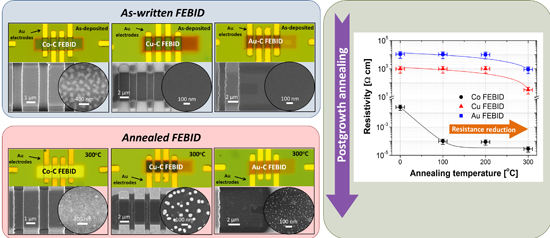
- as laser-assisted thermal dissociation [41][42][43]. In the case of Pt–C, the catalytic properties of the Pt nanoparticles facilitate the dissociation process of molecular oxygen, thus increasing the efficiency in removing the carbonaceous matrix [35]. With respect to Au deposits, a content of 91


Facile synthesis of silver/silver thiocyanate (Ag@AgSCN) plasmonic nanostructures with enhanced photocatalytic performance
Beilstein J. Nanotechnol. 2017, 8, 2781–2789, doi:10.3762/bjnano.8.277
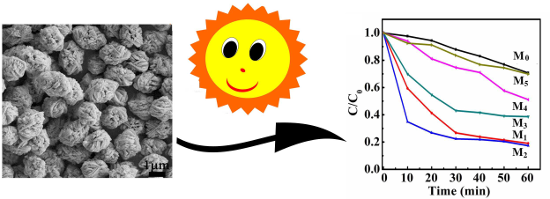
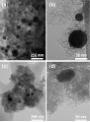
- -based semiconductors are well known due to their excellent visible-light catalytic properties, but their easy inactivation limits their utilization in practice. Aimed at this problem, a series of methods, such as doping, surface sensitization, heterojunctions and noble-metal plasma, have been adopted to


Adsorption of iron tetraphenylporphyrin on (111) surfaces of coinage metals: a density functional theory study
Beilstein J. Nanotechnol. 2017, 8, 2484–2491, doi:10.3762/bjnano.8.248
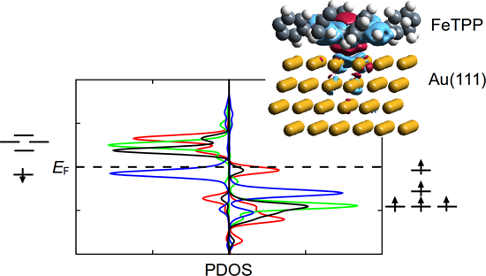
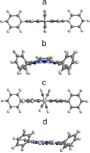
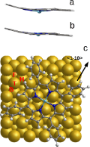
- nature of the central metal atom greatly determines the electronic, magnetic, catalytic properties of these molecules. Once adsorbed on metallic surfaces, these properties could be significantly modified due to the interaction between the central macrocycle of these molecules and the substrate. Among




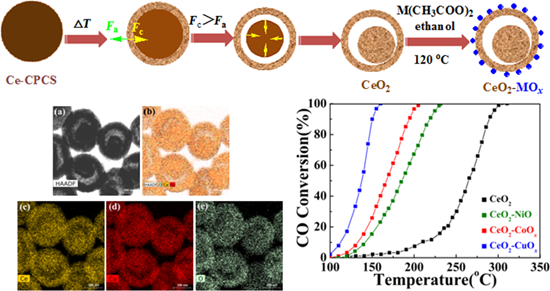
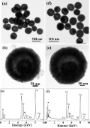
Fabrication of CeO2–MOx (M = Cu, Co, Ni) composite yolk–shell nanospheres with enhanced catalytic properties for CO oxidation
Beilstein J. Nanotechnol. 2017, 8, 2425–2437, doi:10.3762/bjnano.8.241



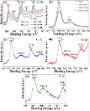


Characterization of ferrite nanoparticles for preparation of biocomposites
Beilstein J. Nanotechnol. 2017, 8, 1257–1265, doi:10.3762/bjnano.8.127
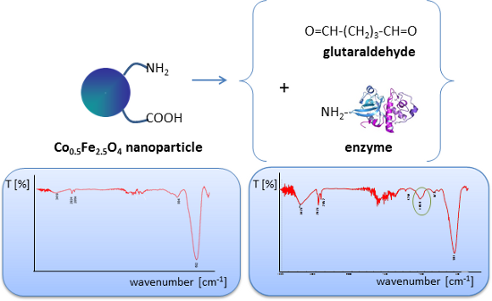
- .). Functionalization can ensure connection of the nanoparticle surface self-assembled layers with free active bonds [8]. The integration of nanostructures with biomolecules leads to the fabrication of a novel hybrid system that couples recognition or catalytic properties of biomaterials with attractive electronic

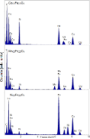
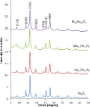
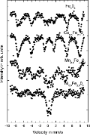


Metal oxide nanostructures: preparation, characterization and functional applications as chemical sensors
Beilstein J. Nanotechnol. 2017, 8, 1205–1217, doi:10.3762/bjnano.8.122
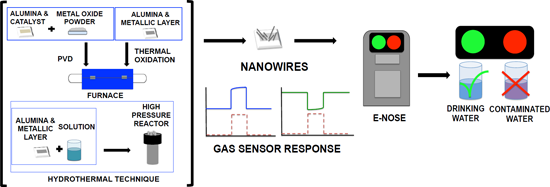
- nature of the charge carriers of p-type materials (holes) compared to those of n-type materials (electrons) [19][20]. However, this does not take into account the specific catalytic properties of each material. For some applications p-type materials could perform better than n-type materials. Moreover


Structural properties and thermal stability of cobalt- and chromium-doped α-MnO2 nanorods
Beilstein J. Nanotechnol. 2017, 8, 1032–1042, doi:10.3762/bjnano.8.104
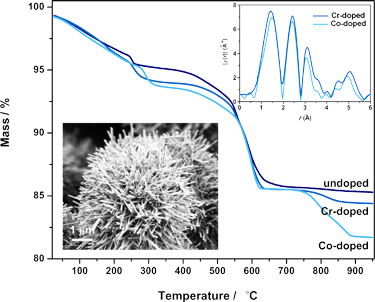
- can be used as a cathode-active material for rechargeable lithium batteries [8], an electrode material for supercapacitors [9][10], and shows excellent catalytic activity for the selective oxidation of benzyl alcohols [11][12]. The catalytic properties are related to the redox cycling of various
- produces materials with novel morphologies and enhanced catalytic properties [14][15]. The 2 × 2 tunnel structures, prepared by different methods, showed different thermal properties that depend on the average oxidation state of manganese, the type and content of cations situated in the tunnels, and also


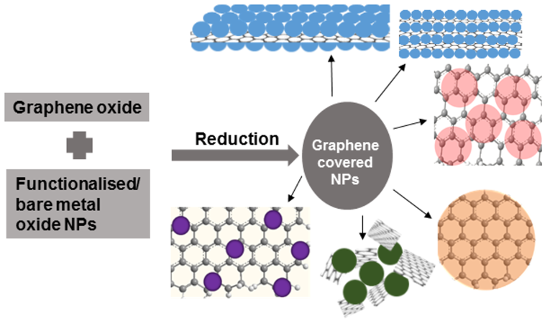
Synthesis of graphene–transition metal oxide hybrid nanoparticles and their application in various fields
Beilstein J. Nanotechnol. 2017, 8, 688–714, doi:10.3762/bjnano.8.74






Gas sensing properties of MWCNT layers electrochemically decorated with Au and Pd nanoparticles
Beilstein J. Nanotechnol. 2017, 8, 592–603, doi:10.3762/bjnano.8.64
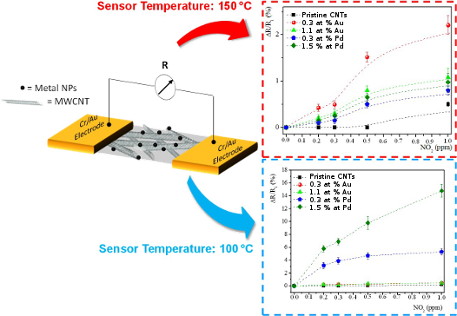
- [25][26][27], thermal evaporation [27][28], and sputtering [29][30][31]. Frequently, these deposition techniques result in an uncontrolled clustering at high metal loading, thus negatively affecting the catalytic properties and integrity of the carbon structure. As a possible solution to overcome
- investigated gases. Typicall, a high operating temperature (>400 °C) will reduce the catalytic properties of metal nanoparticles, as they tend to agglomerate in clusters of larger size, thus reducing their surface area, with a consequent decrease of the gas sensitivity. Moreover, MWCNTs could decompose at


Graphene functionalised by laser-ablated V2O5 for a highly sensitive NH3 sensor
Beilstein J. Nanotechnol. 2017, 8, 571–578, doi:10.3762/bjnano.8.61
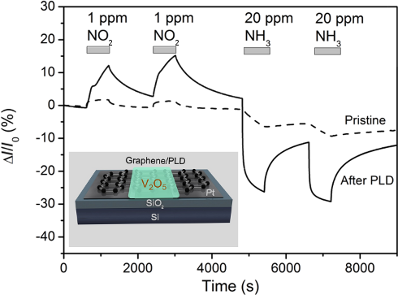
- distribution of the system [37]. V2O5 is known for its catalytic properties and as a good NH3 adsorber [7][8]. The good NH3 gas sensing properties of V2O5 thin films and nanofibers have been demonstrated by Huotari et al. [12] and Modafferi et al. [38]. Two strongly bound adsorption species are typically


Laser irradiation in water for the novel, scalable synthesis of black TiOx photocatalyst for environmental remediation
Beilstein J. Nanotechnol. 2017, 8, 196–202, doi:10.3762/bjnano.8.21
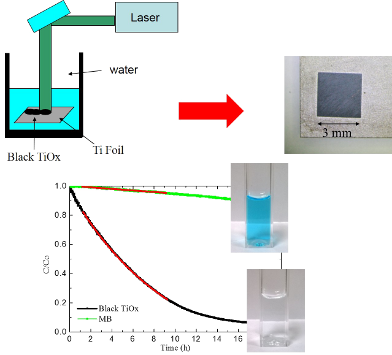
- obtained film. However, variations were not observed in the composition (stoichiometry) or the optical and catalytic properties of the material. In the present work, we are working near the threshold for the formation of the black layer of TiOx. This means that the laser supplies enough energy to induce


Fundamental properties of high-quality carbon nanofoam: from low to high density
Beilstein J. Nanotechnol. 2016, 7, 2065–2073, doi:10.3762/bjnano.7.197
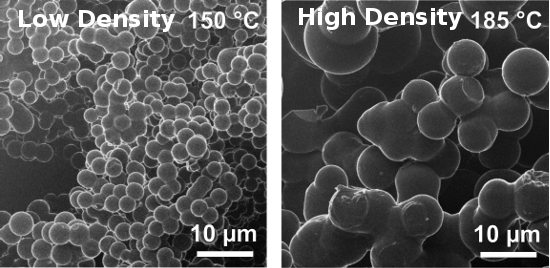
- electrodes [2]. Copper nanofoams containing both micropores and nanopores have been produced for potential use in energy applications [3], and furthermore, copper nanofoam substrates were used for the production of electrocatalysts [4]. Gold nanofoams have been found to show excellent catalytic properties [5


Organoclay hybrid materials as precursors of porous ZnO/silica-clay heterostructures for photocatalytic applications
Beilstein J. Nanotechnol. 2016, 7, 1971–1982, doi:10.3762/bjnano.7.188
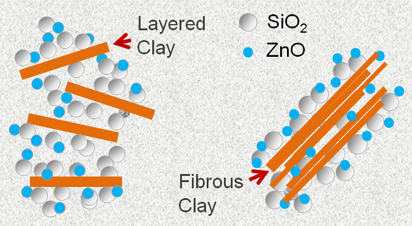
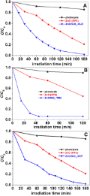
- the thermal treatment at 500 °C (folding of the sepiolite structure) [27] can be ruled out, because XRD revealed not significant structural changes in sepiolite (Figure 6e). Catalytic properties of ZnO/SiO2-clay heterostructures The ZnO/SiO2-clay heterostructures presented here can be of interest for





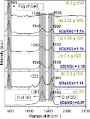
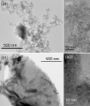
In situ formation of reduced graphene oxide structures in ceria by combined sol–gel and solvothermal processing
Beilstein J. Nanotechnol. 2016, 7, 1815–1821, doi:10.3762/bjnano.7.174
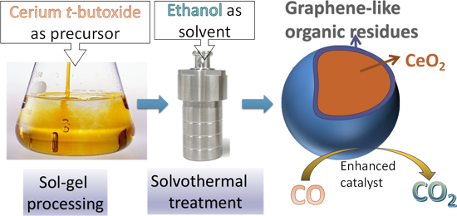
- capacity. It is mostly used together with other components, such as noble metals or transition metal oxides, such as NiO or Co3O4, because synergistic effects improve the catalytic properties. Graphene-modified CeO2 greatly enhances the performance in electrochemical devices (supercapacitors, fuel cells or




Role of RGO support and irradiation source on the photocatalytic activity of CdS–ZnO semiconductor nanostructures
Beilstein J. Nanotechnol. 2016, 7, 1684–1697, doi:10.3762/bjnano.7.161
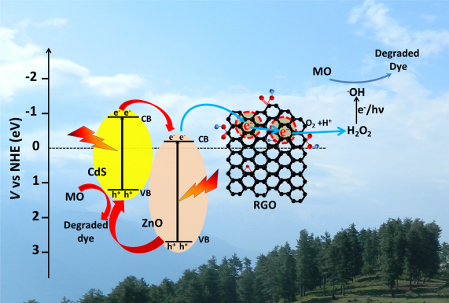
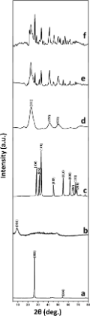
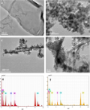
- nanostructures. Keywords: catalytic properties; chemical synthesis; nanostructures; semiconductors; transmission electron microscopy (TEM); Introduction In the past decade, there has been an increased interest in the photocatalytic degradation of various kinds of organic pollutants in water and soil [1]. Many




Hierarchical coassembly of DNA–triptycene hybrid molecular building blocks and zinc protoporphyrin IX
Beilstein J. Nanotechnol. 2016, 7, 697–707, doi:10.3762/bjnano.7.62
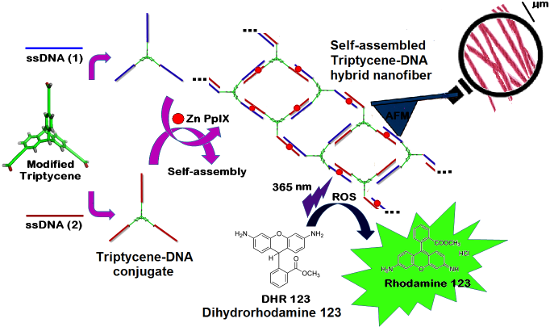
- the orientation of the DNA strands relative to one another in a programmed manner [21][36][37][38][39]. The diverse structural features and functionalities of the organic core such as luminescence, redox, magnetic, and catalytic properties play a vital role in enhancing the versatility of the discrete


Gold nanoparticles covalently assembled onto vesicle structures as possible biosensing platform
Beilstein J. Nanotechnol. 2016, 7, 655–663, doi:10.3762/bjnano.7.58
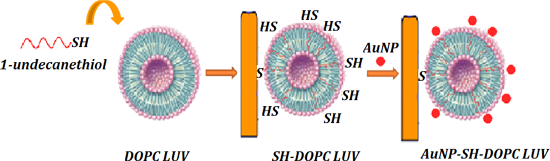
- fields, which improve the optical effects [16]. Also, nanoparticles with different faces having different densities of adsorption sites and may exhibit different catalytic properties [18]. Some reports [19][20] have demonstrated that metallic nanoparticles (gold and silver) can slowly precipitate in


Orientation of FePt nanoparticles on top of a-SiO2/Si(001), MgO(001) and sapphire(0001): effect of thermal treatments and influence of substrate and particle size
Beilstein J. Nanotechnol. 2016, 7, 591–604, doi:10.3762/bjnano.7.52
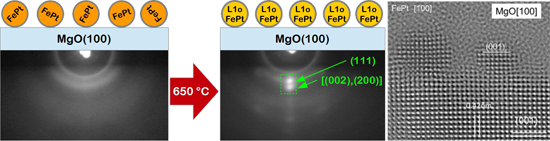
- transmission electron microscopy (HRTEM); nanoparticles; reflection high-energy electron diffraction (RHEED); solid-phase epitaxy; texture; Introduction Due to their attractive catalytic properties for oxygen reduction reactions (ORR) [1][2] as well as their high magnetocrystalline anisotropy energy density


Two step formation of metal aggregates by surface X-ray radiolysis under Langmuir monolayers: 2D followed by 3D growth
Beilstein J. Nanotechnol. 2015, 6, 2406–2411, doi:10.3762/bjnano.6.247
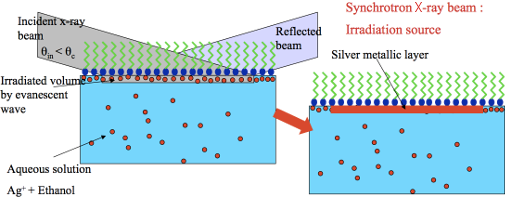
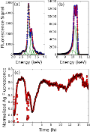
- ultrathin metal–organic systems is an active research field. Indeed, due to their adjustable optical, magnetic, electronic, and catalytic properties these systems demonstrate many applications [1][2]. The usual approach for the synthesis of this type of material is the chemical reduction of metal-ion


Electrochemical behavior of polypyrrol/AuNP composites deposited by different electrochemical methods: sensing properties towards catechol
Beilstein J. Nanotechnol. 2015, 6, 2052–2061, doi:10.3762/bjnano.6.209
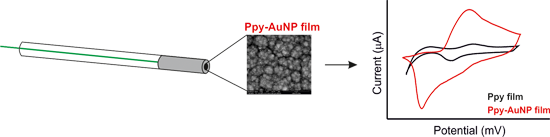
- of their unique optical, electronic and catalytic properties [5][6][7][8]. Conducting polymer–gold nanoparticle composites exhibit improved physical and chemical properties over their single-component counterparts and are the focus of intensive research [9][10][11][12]. In the case of sensors, it has


Distribution of Pd clusters on ultrathin, epitaxial TiOx films on Pt3Ti(111)
Beilstein J. Nanotechnol. 2015, 6, 2007–2014, doi:10.3762/bjnano.6.204
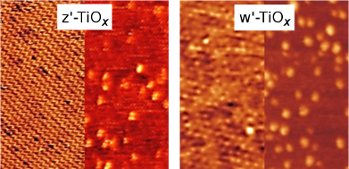
- describes the influence of a transition metal oxide support on noble metal clusters yielding novel catalytic properties [1][2][3][4][5][6][7]. In order to understand this effect, well-defined model systems are needed. “Well-defined” refers to both the clusters and the supporting substrate, as exemplified in





