


Search results
Search for "chirality" in Full Text gives 66 result(s) in Beilstein Journal of Nanotechnology.
Raman spectroscopy as a tool to investigate the structure and electronic properties of carbon-atom wires
Beilstein J. Nanotechnol. 2015, 6, 480–491, doi:10.3762/bjnano.6.49
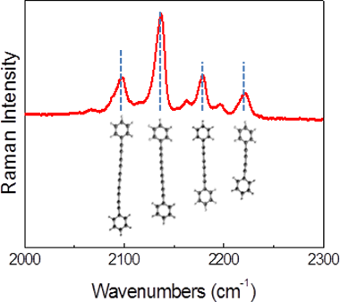
- technological applications [1]. For instance, single wall carbon nanotubes represent quasi-1D systems whose electronic properties are strongly related to the nanotube structure (i.e., chirality), while graphene is a 2D system with appealing electronic and optical properties [2][3][4]. In addition to structures
- information on their structure, hybridization state, defects, presence of functionalization and/or doping, and can even quantify the nanotube chirality, the number of layers and the edge structure in graphene [22][23]. In this review we discuss how Raman spectroscopy can be utilized to obtain a wealth of


X-ray photoelectron spectroscopy of graphitic carbon nanomaterials doped with heteroatoms
Beilstein J. Nanotechnol. 2015, 6, 177–192, doi:10.3762/bjnano.6.17
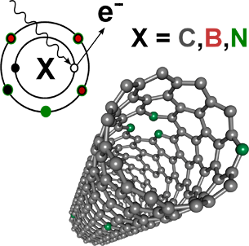
- thus their photoemission response is a convolution of these two different signals. In the past few years, this challenge has been overcome by the development of methods for separating nanotube samples according to their metallicity or even chirality [91][92][93]. Photoemission measurements from both


Synthesis of boron nitride nanotubes and their applications
Beilstein J. Nanotechnol. 2015, 6, 84–102, doi:10.3762/bjnano.6.9
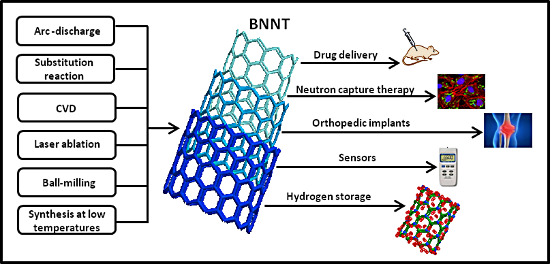
- chemical and physical properties. In contrast to CNTs, their electrical properties are not dependent on their chirality and diameter since they have a large band gap of about 5.5 eV. BNNTs also have excellent radiation shielding properties when compared to CNTs [4]. Since the BNNTs are composed of B and N
- possible to produce large quantities with high purity and uniformity. Since their physicochemical properties are independent of chirality, a simple synthesis method can be suitable, in contrast to CNTs. However, the choice of boron and nitrogen precursor catalysts can be important factors for their




Liquid-phase exfoliated graphene: functionalization, characterization, and applications
Beilstein J. Nanotechnol. 2014, 5, 2328–2338, doi:10.3762/bjnano.5.242
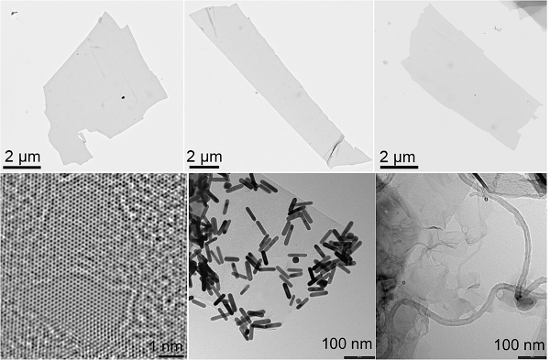
- , chirality, shape and size. Organic chemistry of graphene From an organic chemistry perspective, graphene is a very exciting material as it can be functionalized on the two faces, at the edges and at the defects. Initially, graphene was expected to behave as a chemically inert surface, similar to graphite




Advances in NO2 sensing with individual single-walled carbon nanotube transistors
Beilstein J. Nanotechnol. 2014, 5, 2179–2191, doi:10.3762/bjnano.5.227
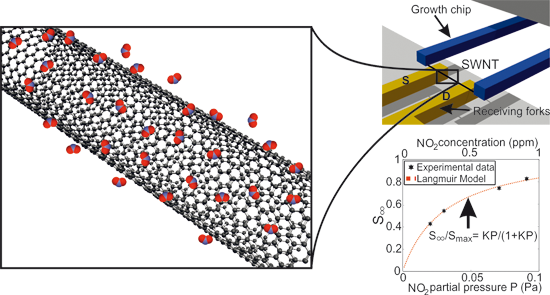
- devices. Although integration of individual-nanotube devices on a wafer-scale has been achieved with moderate yield, the placement, length and chirality control remain challenging. Additional challenges remain in characterizing these devices in humid environments. Humid environments may be challenging for


Spin annihilations of and spin sifters for transverse electric and transverse magnetic waves in co- and counter-rotations
Beilstein J. Nanotechnol. 2014, 5, 1887–1898, doi:10.3762/bjnano.5.199
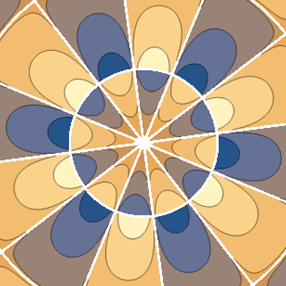
- rings lack a magnetic resonance mode in comparison to split rings. In addition, the enantiomer sorting takes advantage of the optical chirality and helical flows which accompany the photon spins [5][12]. Another important area in which AM-carrying beams prove useful is the manipulation of nanoparticles
- Section S2 of Supporting Information File 1, in which it turns out that is hard to read due to its widely varying magnitude over ρ especially for m = 2,4. In addition, consider the "helicity" σ and "chirality" χ [4]: Hence, σ = χ if exp(−2imθ) = 1. The optical chirality is , and it is evaluated to be
- [12]. Here, the chirality coefficient is defined by See Section S3 of Supporting Information File 1 for details. As a result, a TE–TM hybrid mode is essential for a non-zero chirality. As a reference, for the co-rotational case we found that with , which is thus proportional to the energy density w


![[Graphic 44]](/bjnano/content/inline/2190-4286-5-199-i70.png?max-width=637&scale=1.18182) . (b) The scaled coefficient
. (b) The scaled coefficient ![[Graphic 45]](/bjnano/content/inline/2190-4286-5-199-i71.png?max-width=637&scale=1.18182) of the optical chirality C for the counter-rotatio...
of the optical chirality C for the counter-rotatio...


![[Graphic 104]](/bjnano/content/inline/2190-4286-5-199-i130.png?max-width=637&scale=1.18182) in the (kx,ky)-plane. (a) The co-rotational case. (b) The counter-rotational case ...
in the (kx,ky)-plane. (a) The co-rotational case. (b) The counter-rotational case ...


![[Graphic 125]](/bjnano/content/inline/2190-4286-5-199-i151.png?max-width=637&scale=1.18182) for the counter-rotational case plotted over 0 ≤ ρ ≡ kr ≤ 4 for m = 3, Rρ ≡ kR = 1...
for the counter-rotational case plotted over 0 ≤ ρ ≡ kr ≤ 4 for m = 3, Rρ ≡ kR = 1...

Non-covalent and reversible functionalization of carbon nanotubes
Beilstein J. Nanotechnol. 2014, 5, 1675–1690, doi:10.3762/bjnano.5.178
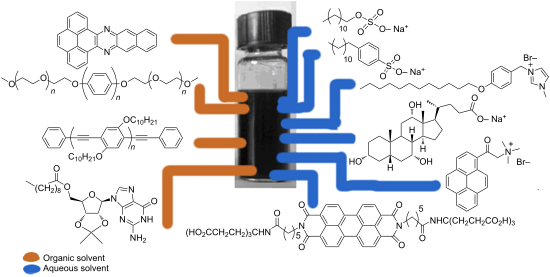
- micrometers. They are ideally obtained by a rolled up graphene sheet and their diameter, curvature and electronic properties are uniquely defined by the combination of the rolling angle and radius, which is referred to as nanotube chirality (Figure 1) [1]. CNTs made up of a rolled up single graphene sheet and
- interact easier than narrow nanotubes with benzene due to the better geometric match between a planar molecule such as benzene and the not very pronounced π-orbital misalignment of bigger CNTs. The chirality of CNTs, that depends on the way carbon hexagons are arranged in the nanotube (see Figure 1), and
- their diameter affects the conductance, density and honeycomb lattice structure of the tube and allow to divide them in two main types, semiconducting and metallic. The CNTs chirality appears to be severely involved in the dispersion of CNTs. As an example, the chirality of the tubes drives the



Nano-rings with a handle – Synthesis of substituted cycloparaphenylenes
Beilstein J. Nanotechnol. 2014, 5, 1320–1333, doi:10.3762/bjnano.5.145
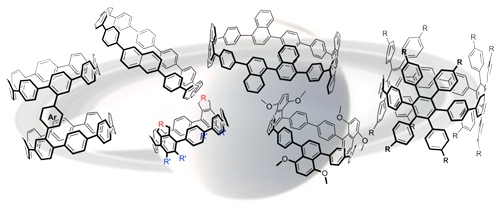
- calculated with the same method (62 kcal/mol). Nanorings with inserted acene units One of the benefits of applying CPPs as templates for the preparation of CNTs is the possibility to control the chirality of the CNT by incorporating the desired chirality into the precursor. The Itami group applied their
- 20 in 35% yield. The CPP precursor was subsequently aromatized by a treatment with sodium bisulfate to furnish the desired [13]CPPN in 25% yield. [13]CPPN 21 presents a helical chirality, although racemization occurs by rotation of the acene unit around the connecting bonds to the rest of the ring


En route to controlled catalytic CVD synthesis of densely packed and vertically aligned nitrogen-doped carbon nanotube arrays
Beilstein J. Nanotechnol. 2014, 5, 219–233, doi:10.3762/bjnano.5.24
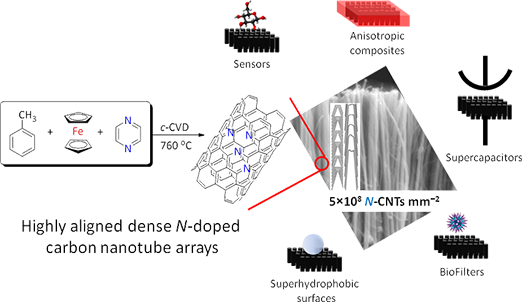
- the driving force in the formation of defect sites in the carbon sp2-network [26]. We have previously reported that control over chirality of individual nanotube walls can be achieved by the selection of the nitrogen source, which is related to the stability of Fe3C nanoparticles as nucleation sites


Many-body effects in semiconducting single-wall silicon nanotubes
Beilstein J. Nanotechnol. 2014, 5, 19–25, doi:10.3762/bjnano.5.2
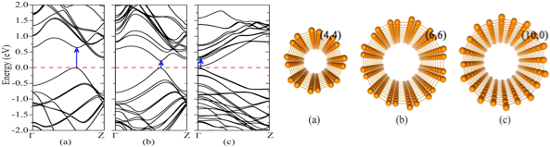
- band structures show direct band gaps of 0.28 and 0.05 eV (50 meV), respectively. In (10,0) SiNT, the vanishingly narrow gap appears at the Γ point. However, there are still controversies with respect to the dependence of the conductance (semiconducting or metallic) on the chirality and/or diameter of


Synthesis of boron nitride nanotubes from unprocessed colemanite
Beilstein J. Nanotechnol. 2013, 4, 843–851, doi:10.3762/bjnano.4.95
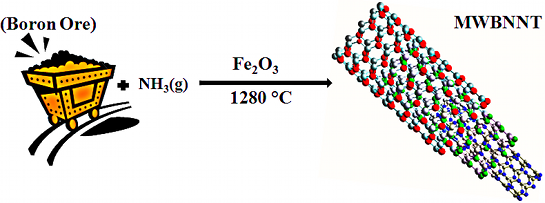
- ionic nature of the B–N bond [5]. In contrast to CNTs, the BNNTs have a constant and wide band-gap of 5.5 eV. Therefore, they are electrical isolators independent from their size or chirality. In recent studies, it has been indicated that the hydrogen storage capacity of BNNTs is two times greater than


Size-dependent characteristics of electrostatically actuated fluid-conveying carbon nanotubes based on modified couple stress theory
Beilstein J. Nanotechnol. 2013, 4, 771–780, doi:10.3762/bjnano.4.88
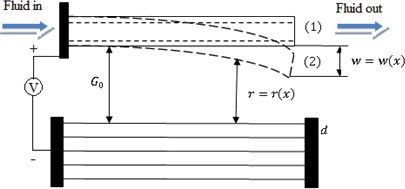
- changes in the stiffness and damping ratios, as will be studied in the paper. Mathematical formulae All mathematical formulae and expressions that are used in this study can be found in Supporting Information File 1. Results and Discussion The length and chirality of the CNT considered in this paper are
- 50 nm and (10,10), respectively. Based on the chirality, the diameter of the CNT is considered to be about 1.4 nm. The effects of different dimensions on the pull-in behavior of CNTs were studied in our previous papers. In this research, we investigate the effects of fluid flow on the static and


Functionalization of vertically aligned carbon nanotubes
Beilstein J. Nanotechnol. 2013, 4, 129–152, doi:10.3762/bjnano.4.14
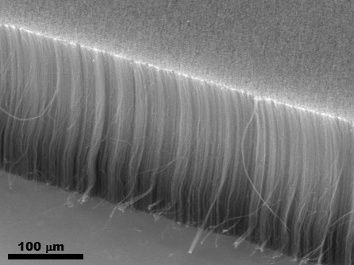
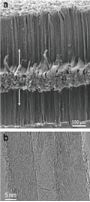
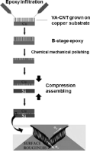
- of the nanotubes determines the majority of their properties. Their symmetry is related to the orientation of the hexagonal lattice with respect to the axis of the tube (chirality). Depending on the chirality, a carbon nanotube shows either metallic or semiconductor behavior [4]. Thus, this allotrope








Influence of the diameter of single-walled carbon nanotube bundles on the optoelectronic performance of dry-deposited thin films
Beilstein J. Nanotechnol. 2012, 3, 692–702, doi:10.3762/bjnano.3.79
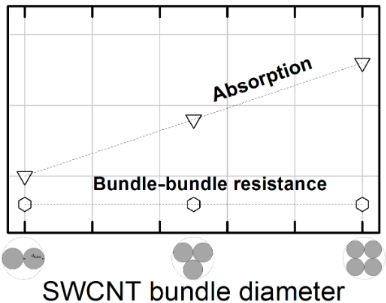
- of samples from Tset = 650–880 °C revealed an increase of IG/ID from 5.2 (550 °C) to 48.4 (880 °C). This indicates a substantial enhancement of sample quality with increasing Tset (cf. Figure 2 and Figure 4 inset). In addition to SWCNT bundle characteristics and defect density, the SWCNT chirality


STM visualisation of counterions and the effect of charges on self-assembled monolayers of macrocycles
Beilstein J. Nanotechnol. 2011, 2, 674–680, doi:10.3762/bjnano.2.72
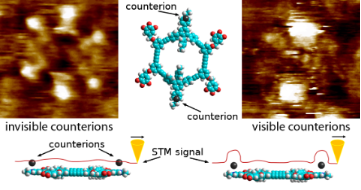
- the structure of 2D crystals at the liquid–solid interface, but also to control properties of the physisorbed molecules and to carry specific functionalities. For example, counterions have been shown to determine the chirality of self-assembled architectures [9]. Counterions also play a decisive role


Septipyridines as conformationally controlled substitutes for inaccessible bis(terpyridine)-derived oligopyridines in two-dimensional self-assembly
Beilstein J. Nanotechnol. 2011, 2, 405–415, doi:10.3762/bjnano.2.46
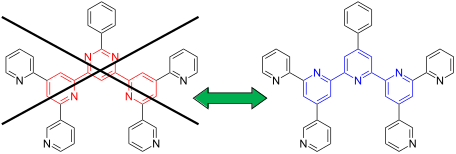
- ], bithiophene–fluorenone conjugated oligomers [20], a 2,6-di(acetylamino)pyridine substituted conjugated module [21], and a molecular hexapod having a benzene core and six oligo(p-phenylene vinylene) legs [22]. The conformers can have an impact on the expression or suppression of chirality of the supramolecular





