Search results
Search for "chitosan" in Full Text gives 110 result(s) in Beilstein Journal of Nanotechnology.
Bioselectivity of silk protein-based materials and their bio-inspired applications
Beilstein J. Nanotechnol. 2022, 13, 902–921, doi:10.3762/bjnano.13.81
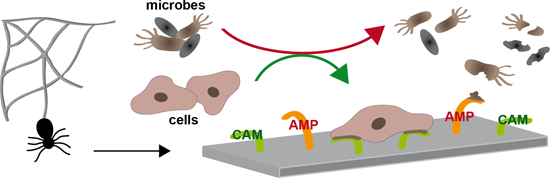
- bonding and/or ionic solvation has been reported for various materials such as poly(N-isopropylacrylamide) (PNIPAAm) [68][69], dextrans [69], poly(ethyleneimine) (PEI) [70][71], and chitosan [72]. Concerning proteins, several studies have reported different molecules to generate effective antiadhesive
- RGD and collagen to an antimicrobial polymeric multilayer composed of dextran sulfate and chitosan [103]. One way to achieve bioselective, biocompatible, and multifunctional materials for biomedical applications is the utilization of natural protein materials shown to accomplish the desired properties


Stimuli-responsive polypeptide nanogels for trypsin inhibition
Beilstein J. Nanotechnol. 2022, 13, 538–548, doi:10.3762/bjnano.13.45
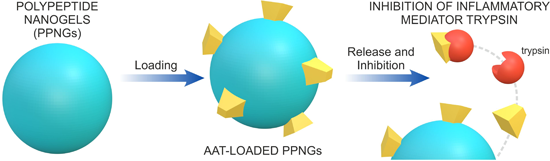
- increased with the decrease of initial concentration of the 125I-radiolabeled BSA. The inverse effect was found when loading BSA onto poly(acrylic acid) and hybrid hydroxyapatite nanoparticles with chitosan/polyacrylic acid nanogels, where the loading was predominantly influenced by electrostatic


Ciprofloxacin-loaded dissolving polymeric microneedles as a potential therapeutic for the treatment of S. aureus skin infections
Beilstein J. Nanotechnol. 2022, 13, 517–527, doi:10.3762/bjnano.13.43
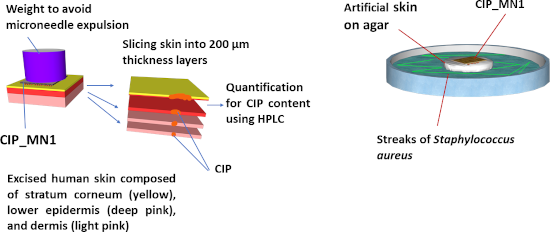
- microneedles are based on polymers such as PVA, PVP, chitosan, and poly(lactide-co-glycolide) [19]. In our study, polymer-based microneedles were optimized to achieve a formulation that can efficiently penetrate the skin. In this context, microneedles were studied regarding drug content and penetration of
- attributed to the shrinkage of the polymer gel upon drying as suggested by previous studies [32][33]. A similarly faceted shape of microneedles was observed with polymeric microneedles made of chitosan and alginate [34]. Also, a similar microneedle shape was obtained using hydroxypropyl methyl cellulose and


Micro- and nanotechnology in biomedical engineering for cartilage tissue regeneration in osteoarthritis
Beilstein J. Nanotechnol. 2022, 13, 363–389, doi:10.3762/bjnano.13.31
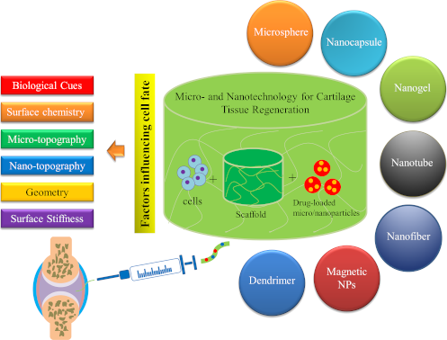
- mechanical properties and the simultaneous or sequential delivery of bioactive molecules. In this regard, an injectable gellan xanthan hydrogel containing chitosan NPs has been prepared as a scaffold for the delivery of multiple growth factors to regenerate bone [53]. The results of this study showed that
- the entrapment of the bone morphogenetic protein 7 (BMP7) and basic fibroblast growth factor (BFGF) within chitosan NPs inhibited the initial burst release and allowed for the controlled release of growth factors and therefore, improved the osteogenic differentiation of stem cells [53]. In another
- maleilated chitosan hydrogel containing micro-/nanoparticles of methacrylated silk fibroin, a natural fibrous protein mimicking the collagen structure, improved the mechanical properties of nanocomposites fabricated for cartilage TE [60]. The development of a magnetic nanocomposite hydrogel from poly(vinyl


Engineered titania nanomaterials in advanced clinical applications
Beilstein J. Nanotechnol. 2022, 13, 201–218, doi:10.3762/bjnano.13.15
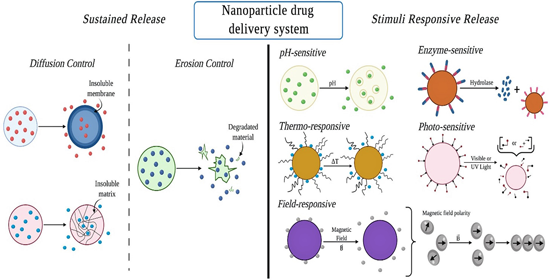
- alginate, gelatin, and chitosan to enhance strength and durability [70]. In another strategy to improve the bioactivity of titania scaffolds, alkaline phosphatase (ALP) was functionalized onto 3D TiO2 scaffolds based on a simple dip-coating method. ALP catalyzes the hydrolysis of organic phosphate that
- by DOX exposure directly to healthy cells and tissues [108]. In another study, gentamicin was loaded onto nanostructures (nanotubes and nanopores) of a titanium/zirconium alloy nanocomposite (TiZr) coated with chitosan. This composite system followed the Lindner–Lippold mechanism of drug release. The


A comprehensive review on electrospun nanohybrid membranes for wastewater treatment
Beilstein J. Nanotechnol. 2022, 13, 137–159, doi:10.3762/bjnano.13.10
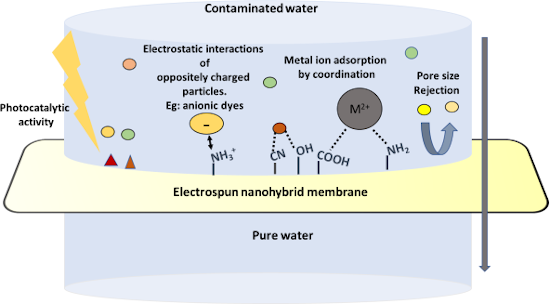
- , modified chitin, cellulose acetate (CA) and chitosan (CS) have been electrospun as nanohybrids and have been used in a variety of applications [7][8]. Regarding the health sector, the enhanced biocompatibility, antibacterial properties, and cell compatibility has made ENHs great candidates to deliver




Use of nanosystems to improve the anticancer effects of curcumin
Beilstein J. Nanotechnol. 2021, 12, 1047–1062, doi:10.3762/bjnano.12.78
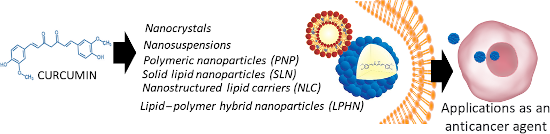
- . Results showed that cells readily internalized MNP by endocytosis, which simultaneously allowed for imaging the affected cells [132]. Other report showed that, using the same breast cancer cells, alginate/chitosan MNP had a 3–6-fold increase in cellular uptake, as compared to F-CUR [133]. This has been
- superparamagnetic iron oxide nanoparticles functionalized with sodium dodecyl sulfate (SDS) and coated with chitosan (40–45 nm), were able to induce apoptosis (IC50 30 µg/mL) in HeLa (cervical cancer) cells by damaging the DNA and increasing caspase-3 [136]. Curcumin-loaded, pH-sensitive Janus magnetic mesoporous


The role of deep eutectic solvents and carrageenan in synthesizing biocompatible anisotropic metal nanoparticles
Beilstein J. Nanotechnol. 2021, 12, 924–938, doi:10.3762/bjnano.12.69
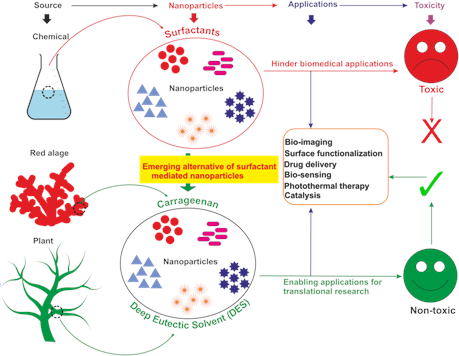
- monodispersed nanoparticles, an essential criterion for their intended application and a limitation of the green synthesis of nanoparticles using plant extracts. Several biocompatible counterparts such as polymers, lipids, and chitosan-based nanoparticles have been successfully used in the synthesis of safe
- , these nanomaterials are far away from a substantial use in biological applications due to toxic capping agents employed during synthesis. Several counterparts such as polymers, lipids, and chitosan-based nanoparticles are extensively explored in drug delivery and therapeutic applications due to their
- of nanotechnology. The use carrageenan in nanomaterial synthesis and application has been tabulated in Table 3 [32][110][111][112][113][114][115]. Carrageenan has been complexed with chitosan in a recent study, forming a composite for wound healing dressing. Silver nanoparticles, widely known for


Comprehensive review on ultrasound-responsive theranostic nanomaterials: mechanisms, structures and medical applications
Beilstein J. Nanotechnol. 2021, 12, 808–862, doi:10.3762/bjnano.12.64
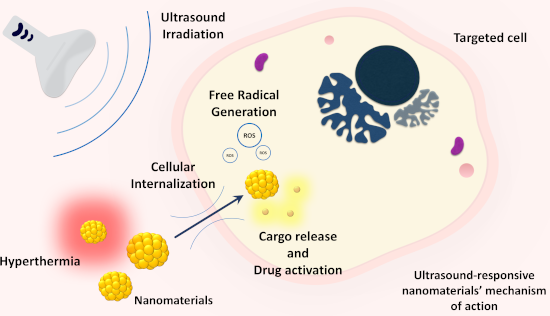
- (conventional and echogenic), niosomes, nanoemulsions, polymeric nanoparticles, chitosan nanocapsules, dendrimers, hydrogels, nanogels, gold nanoparticles, titania nanostructures, carbon nanostructures, mesoporous silica nanoparticles, fuel-free nano/micromotors. Keywords: smart nanomaterials; sonodynamic


The impact of molecular tumor profiling on the design strategies for targeting myeloid leukemia and EGFR/CD44-positive solid tumors
Beilstein J. Nanotechnol. 2021, 12, 375–401, doi:10.3762/bjnano.12.31
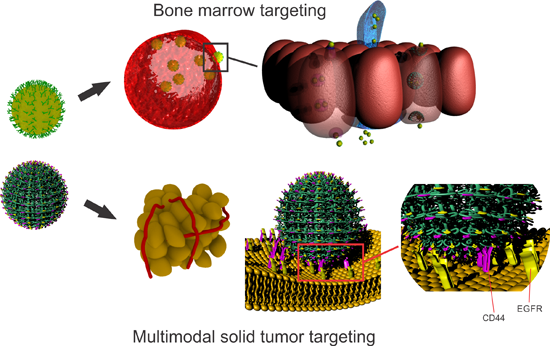
- chitosan-complexed nilotinib, while the shell was loaded with a protease-sensitive dextrane–IM complex. In addition, the core was loaded with sodium bicarbonate and potassium tartrate, a mixture that quickly generates CO2 in an acidic environment and, thus, produces large pores in the nanoparticles
- , resulting in a burst release of the core contents. In this way, the authors managed to achieve a stimuli-responsive sequential drug release pattern. IM will be released in the cytoplasm from the dextrane complexes due to the activity of intracellular protease while the nilotinib–chitosan complexes will be
- . Also, in contrast to C225-NPs, free C225 antibody did not induce autophagy in cells [75]. Maya et al. reported the design and evaluation of EGFR-targeted cetuximab–chitosan cross-linked γ-poly(glutamic acid) nanoparticles loaded with docetaxel. The NPs were prepared by cross-linking the NH2 groups of


Photothermally active nanoparticles as a promising tool for eliminating bacteria and biofilms
Beilstein J. Nanotechnol. 2020, 11, 1134–1146, doi:10.3762/bjnano.11.98
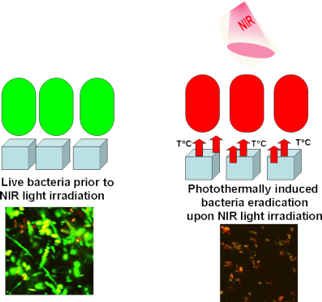
- . The local photothermal effect triggered by the NIR irradiation of PVA-GNS films was highly efficient in eliminating E. coli bacteria, as shown in Figure 4. In a very recent study, the antimicrobial activity of a chitosan-based hydrogel with embedded gold nanorods under low-power (200 mW) diode laser
- with strong NIR absorption and peroxidase-like activity displayed in vitro fast antibacterial action on Gram-negative ampicilin-resistant E. coli and Gram-positive endospore-forming B. subtilis [96]. In another publication multifunctional chitosan-functionalized magnetic MoS2 nanoparticles were


Applications of superparamagnetic iron oxide nanoparticles in drug and therapeutic delivery, and biotechnological advancements
Beilstein J. Nanotechnol. 2020, 11, 1092–1109, doi:10.3762/bjnano.11.94
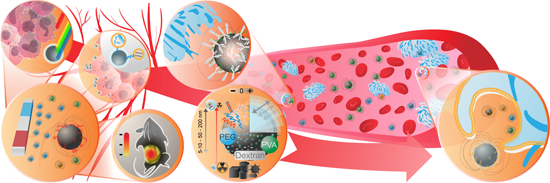
- therefore give incorrect results. Stable and well dispersed nanoparticles are internalized to a higher extent [54]. A lot of effort has been spent in this area and today there are methods to obtain very stable SPIONs functionalized with PVA, PEG, dextran, chitosan, and poloxamers, which can be used in


Wet-spinning of magneto-responsive helical chitosan microfibers
Beilstein J. Nanotechnol. 2020, 11, 991–999, doi:10.3762/bjnano.11.83
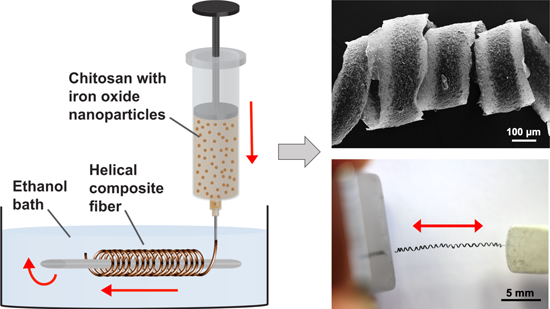
- biotechnological and tissue engineering applications. However, there are only a few methods available for the production of biocompatible helical microfibers. Given that, we present here a simple technique for the fabrication of helical chitosan microfibers with embedded magnetic nanoparticles. Composite fibers
- were prepared by wet-spinning and coagulation in an ethanol bath. Thereby, no toxic components were introduced into the wet-spun chitosan fibers. After drying, the helical fibers had a diameter of approximately 130 µm. Scanning electron microscopy analysis of wet-spun helices revealed that the magnetic
- helical chitosan microfibers exhibited an average Young’s modulus of 14 MPa. By taking advantage of the magnetic properties of the feedstock solution, the production of the helical fibers could be automated. The fabrication of the helical fibers was achieved by utilizing the magnetic properties of the


Key for crossing the BBB with nanoparticles: the rational design
Beilstein J. Nanotechnol. 2020, 11, 866–883, doi:10.3762/bjnano.11.72
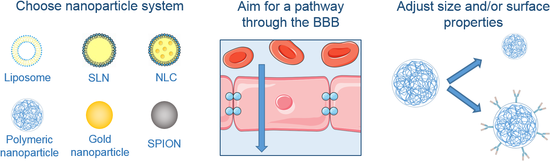
- both formulations were able to cross the BBB and deliver their cargo. On the other hand, in another study, coumarin-6-loaded PLGA nanoparticles coated with either chitosan or PS80 showed a better crossing ability than P188-coated nanoparticles [57]. This result seems to be in accordance with the
- transcytosis through the AMT pathway. Multiple CPPs have been used to deliver nanoparticles to the brain such as the HIV-1 trans-activating transcriptor (TAT) [77][106][107], penetratin [108] or SynB [109]. Finally, conjugating nanoparticles with positively charged polymers or proteins such as chitosan or
- brain delivery such as polycaprolactone (PCL) [68] or chitosan [80][82] but to a lesser extent than PBCA and PLA/PLGA nanoparticles. For instance, enhanced accumulation in an in vivo intracranial glioma mice model of PEG-PCL nanoparticles functionalized with angiopep-2 could be observed by real-time


Soybean-derived blue photoluminescent carbon dots
Beilstein J. Nanotechnol. 2020, 11, 606–619, doi:10.3762/bjnano.11.48
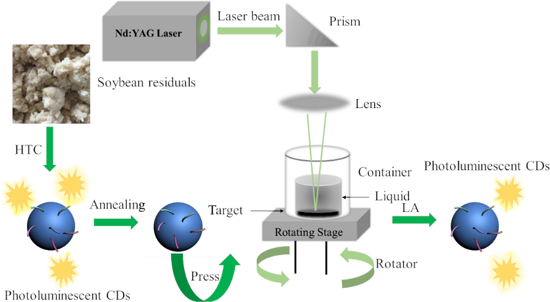
- luminescence properties. Hydrothermal carbonization (HTC), which can be considered as a “green technology”, has been used to produce photoluminescent CDs from biomass, including glucose, sucrose, citric acid [19], chitosan [20], orange juice [21], grass [22] and soy milk [10]. For example, Sahu et al. [21


Adsorptive removal of bulky dye molecules from water with mesoporous polyaniline-derived carbon
Beilstein J. Nanotechnol. 2020, 11, 597–605, doi:10.3762/bjnano.11.47
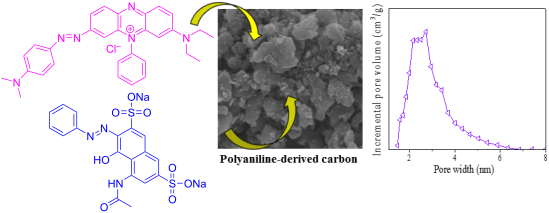
- , activated carbon. Moreover, KOH-900 had the highest Q0, compared with any reported adsorbent, so far. Additionally, KOH-900 showed a Q0 of more than 2 times that of a chitosan–alunite composite (previously the highest Q0) [71] even though the pH of adsorption solution was not the same. If the pH effect
- (vide supra, including Figure 7) is considered, the difference in Q0 between KOH-900 and chitosan–alunite composite will increase. Based on Table 2, KOH-900 was also very competitive in JGB adsorption against the reported adsorbents. To begin with, KOH-900 had a q6h for JGB 11.5 times that of AC. The
- value of more than 2 times that of a chitosan–alunite composite which previously showed the highest Q0 to date. The remarkable adsorption of AR1 and JGB over KOH-900 could be explained with combined mechanisms such as hydrophobic, π–π, electrostatic and van der Waals interactions. Finally, the PDC


Multilayer capsules made of weak polyelectrolytes: a review on the preparation, functionalization and applications in drug delivery
Beilstein J. Nanotechnol. 2020, 11, 508–532, doi:10.3762/bjnano.11.41
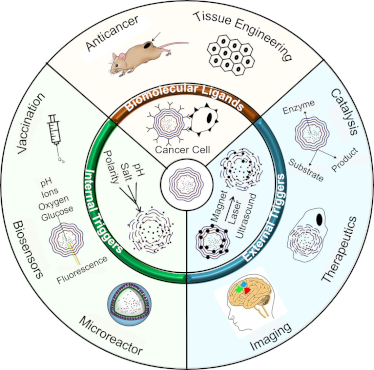
- (e.g., dextran sulfate (DS), heparin and chitosan) and various synthetic polymers (e.g., PAH, PMA and poly(ethyleneimine) (PEI)). When a negatively charged template is dipped in a solution of positively charged PE, or vice versa, a monolayer of excessively adsorbed PEs is formed that leads to the
- between β-cyclodextrin monolayers as host and polymers modified with adamantyl groups as guests, which also resulted in stable multilayers [61]. The first stimuli-responsive supramolecular hydrogels films based on these reactions were built in 2006 using β-cyclodextrin and adamantyl modified chitosan
- material itself as a core or co-precipitation of encapsulation material within the core. Very few such studies are reported using a weak PE capsule. An anti-inflammatory drug, ibuprofen crystals of 5–40 µm in size, were encapsulated by chitosan/DS and chitosan/carboxymethyl cellulose multilayers [65]. The



Preparation and in vivo evaluation of glyco-gold nanoparticles carrying synthetic mycobacterial hexaarabinofuranoside
Beilstein J. Nanotechnol. 2020, 11, 480–493, doi:10.3762/bjnano.11.39
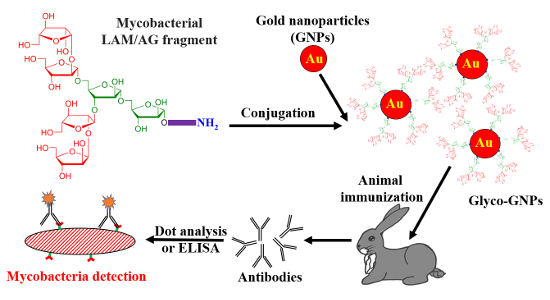
- -dextran [79] and chitosan [80] have been reported to bind to GNPs in a pH-dependent manner as the energy of the Au–N interaction is intermediate between those of Au–S and Au–O [81]. The affinity of different functional groups to the surface of GNPs decreases in the series Au–S > Au–NH2 > Au–COOH [82


Brome mosaic virus-like particles as siRNA nanocarriers for biomedical purposes
Beilstein J. Nanotechnol. 2020, 11, 372–382, doi:10.3762/bjnano.11.28
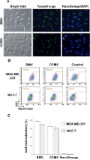
- viruses were incubated for 24 h with MDA-MB-231 cells, using 2.6 × 10⁷ viruses per cell. A similar concentration has been used in cell viability tests with CCMV [25][39] and glycol chitosan nanoparticles [40]. The flow cytometry results showed around 90% cell survival after treatment with both viruses


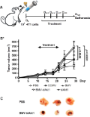
Poly(1-vinylimidazole) polyplexes as novel therapeutic gene carriers for lung cancer therapy
Beilstein J. Nanotechnol. 2020, 11, 354–369, doi:10.3762/bjnano.11.26
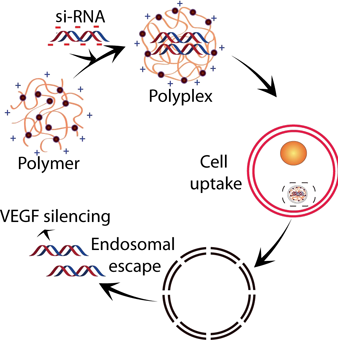
- –imidazole polyamide system was found to inhibit prostate cancer progression through interfering with the expression and function of the androgen receptor [13]. Chitosan–imidazole derivatives have been also explored for gene transfection in HEK293 cells [14]. In recent years, poly(vinylimidazole)-based


Rational design of block copolymer self-assemblies in photodynamic therapy
Beilstein J. Nanotechnol. 2020, 11, 180–212, doi:10.3762/bjnano.11.15
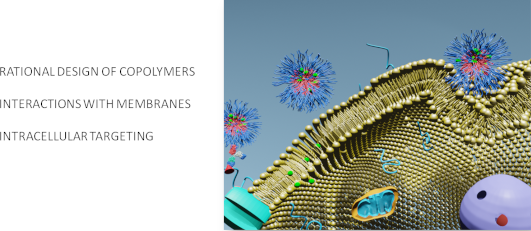
- catalase and chitosan showed a stability change in response to the pH value. Between 7.4 in phosphate buffer (comparable to the cytoplasm environment) and pH 5.5 in acetate buffer (comparable to the lysosome environment) the diameter of nanoparticles decreased dramatically in the first 60 min [68]. The
- reactive amine bonds. Not all of the lysine units should be modified to guarantee water solubility and enzymatic activation [83]. PEGylation could also improve solubility, but it was also proved to be detrimental regarding quenching [84]. More recently, polysaccharides based on chitosan or heparin have
- negatively charged catalase or bovine serum albumin and positively charged chitosan or poly(allylamine)-coated MnO2 have been exploited to obtain pH-sensitive nanovectors [68][69]. The low concentration of endogenous H2O2 together with the instability of catalase in physiological environments containing






The different ways to chitosan/hyaluronic acid nanoparticles: templated vs direct complexation. Influence of particle preparation on morphology, cell uptake and silencing efficiency
Beilstein J. Nanotechnol. 2019, 10, 2594–2608, doi:10.3762/bjnano.10.250
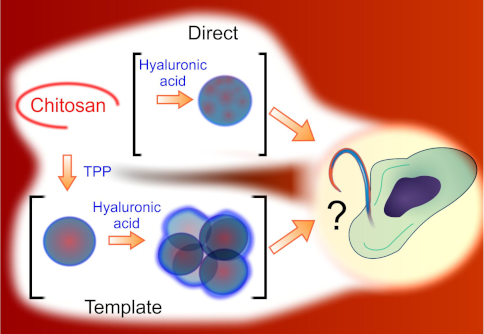
- 6EU London, United Kingdom 10.3762/bjnano.10.250 Abstract This study is about linking preparative processes of nanoparticles with the morphology of the nanoparticles and with their efficiency in delivering payloads intracellularly. The nanoparticles are composed of hyaluronic acid (HA) and chitosan
- two-step process based on intermediate (template) particles produced via ionotropic gelation of chitosan with triphosphate (TPP), which are then incubated with HA, or B) through direct polyelectrolyte complexation of chitosan and HA. Here we demonstrate that HA is capable to quantitatively replace TPP
- in the template process and significant aggregation takes place during the TPP–HA exchange. The templated chitosan/HA nanoparticles therefore have a mildly larger size (measured by dynamic light scattering alone or by field flow fractionation coupled to static or dynamic light scattering), and above



Advanced hybrid nanomaterials
Beilstein J. Nanotechnol. 2019, 10, 2563–2567, doi:10.3762/bjnano.10.247

- (ethylene oxide)-b-poly(acrylic acid) (PEO-b-PAA) and an oligo-chitosan-type polyamine was used as a structure-directing agent to prepare ordered mesoporous silica materials in the work “pH-mediated control over the mesostructure of ordered mesoporous materials templated by polyion complex micelles” [22
Multicomponent bionanocomposites based on clay nanoarchitectures for electrochemical devices
Beilstein J. Nanotechnol. 2019, 10, 1303–1315, doi:10.3762/bjnano.10.129
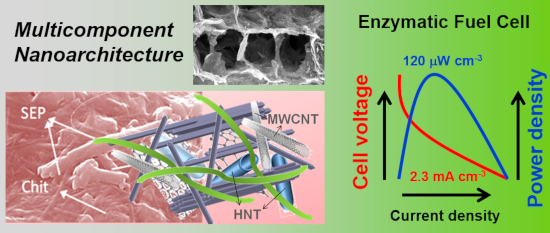
- , multicomponent conductive nanoarchitectured materials integrating halloysite nanotubes (HNTs), graphene nanoplatelets (GNPs) and chitosan (CHI) have been developed. The resulting nanohybrid suspensions could be easily formed into films or foams, where each individual component plays a critical role in the
- ]. Interestingly, HNTs are known to maintain their ability to act as nanocontainers even when dispersed in a multicomponent system included in polymer matrices [22]. It has been observed that positively charged polymers such as chitosan (CHI) can electrostatically incorporate the previously loaded halloysite
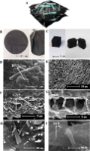
- Figure 3A, while SEM images (Figure 3D,F) reveal that the components are uniformly distributed throughout the film and are organized as a compact particle assembly within the chitosan matrix. Furthermore, the film cross section (Figure 3F) displays the typical layered structure of films solvent-cast from



Scavenging of reactive oxygen species by phenolic compound-modified maghemite nanoparticles
Beilstein J. Nanotechnol. 2019, 10, 1073–1088, doi:10.3762/bjnano.10.108
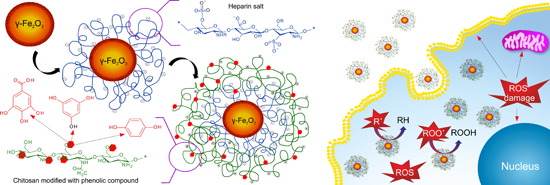
- Abstract Maghemite (γ-Fe2O3) nanoparticles obtained through co-precipitation and oxidation were coated with heparin (Hep) to yield γ-Fe2O3@Hep, and subsequently with chitosan that was modified with different phenolic compounds, including gallic acid (CS-G), hydroquinone (CS-H), and phloroglucinol (CS-P
- . In conclusion, the high cellular uptake and the antioxidant properties associated with the phenolic moieties in the modified particles allow for a potential application in biomedical areas. Keywords: antioxidants; chitosan; maghemite nanoparticles; oxidative stress; phenolic compound; Introduction
- ][10][11]. To enhance the antioxidant properties of inorganic particles, they should be surface-modified with antioxidants or antioxidant-modified polymers. These types of polymers include chitosan, which is a product of chitin deacetylation and is composed of D-glucosamine and N-acetyl-D-glucosamine