


Search results
Search for "cobalt" in Full Text gives 198 result(s) in Beilstein Journal of Nanotechnology.
A Au/CuNiCoS4/p-Si photodiode: electrical and morphological characterization
Beilstein J. Nanotechnol. 2021, 12, 984–994, doi:10.3762/bjnano.12.74
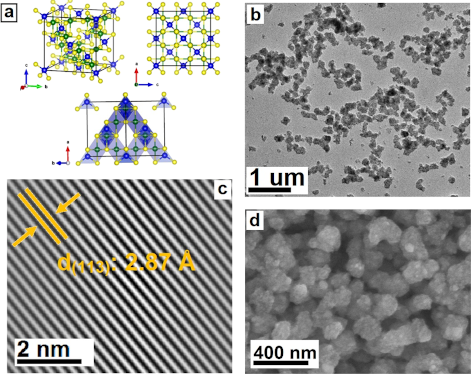
- nanocrystals. Also, I–V and C–V measurements were performed to determine the photodiode and capacitance characteristics of the Au/CuNiCoS4/p-Si devices. Experimental Materials Copper(II) acetate (CuAc2), nickel(II) acetate (NiAc2), cobalt acetate (CoAc2), trioctylphosphine oxide (TOPO), 1-dodecanethiol (DDT



Molecular assemblies on surfaces: towards physical and electronic decoupling of organic molecules
Beilstein J. Nanotechnol. 2021, 12, 950–956, doi:10.3762/bjnano.12.71

- these aspects for the self-assembly of porphyrin derivatives on cobalt oxide films on top of Ir(100). While the unfunctionalized diphenylporphyrin self-assembled on the bilayer film but not on the two-bilayer film, the opposite observation was made for cyanotetraphenylporphyrin. Physical decoupling of
The role of deep eutectic solvents and carrageenan in synthesizing biocompatible anisotropic metal nanoparticles
Beilstein J. Nanotechnol. 2021, 12, 924–938, doi:10.3762/bjnano.12.69
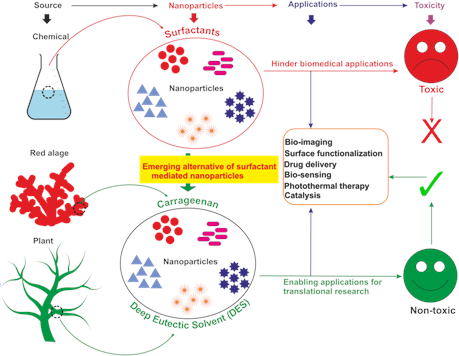
- successful use in biological milieus. Recent studies indicated that the green synthesis of nanoparticles, such as zinc oxide nanoparticles and bimetallic copper–silver and nickel–cobalt nanoparticles, is preferred for catalytic, antibacterial, and therapeutic applications [12][13][14]. Several other


Recent progress in magnetic applications for micro- and nanorobots
Beilstein J. Nanotechnol. 2021, 12, 744–755, doi:10.3762/bjnano.12.58
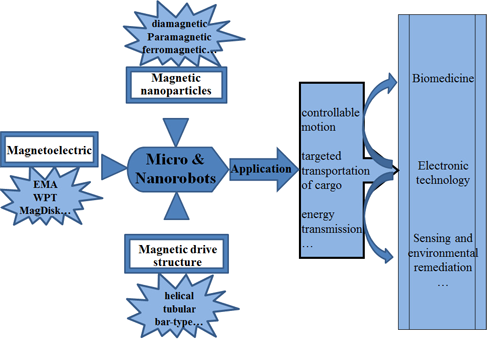
- the microrobot will impart magnetizability. Magnetic field-based transport enables the accelerated delivery of a biomaterial to a target site by overcoming Brownian diffusion [44]. Since cobalt and nickel are quite toxic and iron oxide nanoparticles are considered to be biofriendly [45], embedding
- iron oxide nanoparticles [46] has advantages over magnetic surface coatings, such as cobalt or nickel. Diamagnetic nanoparticles Applying an external magnetic force to manipulate the MNRs has become a frontier field of research. Uvet et al. [47] proposed a new microrobot manipulation technology based


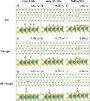
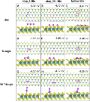
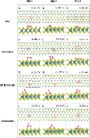
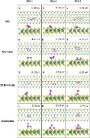
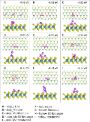
Prediction of Co and Ru nanocluster morphology on 2D MoS2 from interaction energies
Beilstein J. Nanotechnol. 2021, 12, 704–724, doi:10.3762/bjnano.12.56
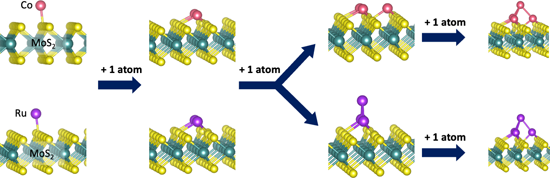
- . Based on this understanding, we propose Co on MoS2 as a suitable candidate for advanced interconnects, while Ru on MoS2 is more suited to catalysis applications. Keywords: cobalt (Co); 2D materials; molybdenum disulfide (MoS2); ruthenium (Ru); thin film nucleation; Introduction Layered materials that



A review of defect engineering, ion implantation, and nanofabrication using the helium ion microscope
Beilstein J. Nanotechnol. 2021, 12, 633–664, doi:10.3762/bjnano.12.52
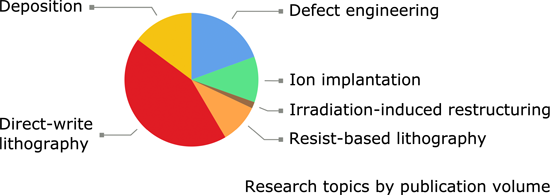
- introduction of lattice vacancy defects, and with an increase in the average interatomic distances due to swelling, that is, a magnetovolume effect. And in a recent report implementing in situ current–voltage characterization, site-selective helium ion irradiation of cobalt-based magnetic multilayer structures


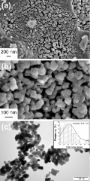
Solution combustion synthesis of a nanometer-scale Co3O4 anode material for Li-ion batteries
Beilstein J. Nanotechnol. 2021, 12, 424–431, doi:10.3762/bjnano.12.34
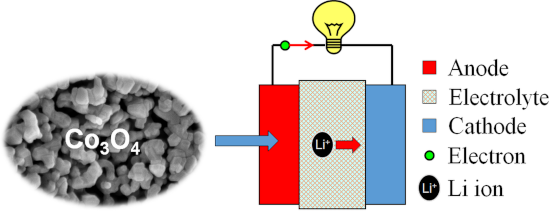
- obtained material was composed of loosely arranged nanoparticles whose average diameter was about 36 nm. The as-prepared cobalt oxide powder was also tested as the anode material for Li-ion batteries and revealed specific capacities of 1060 and 533 mAh·g−1 after 100 cycles at charge–discharge current
- current densities between 50 and 5000 mA·g−1. Keywords: anode material; cobalt oxide; lithium-ion battery; solution combustion synthesis; transition metal oxide; Introduction Recently, a considerable research effort regarding new anode materials has been made because the traditional carbonaceous anodes
- natural abundance [1][2][3]. Considering the thermodynamic and chemical stability, as well as electrochemical properties, one of the important members of TMOs is cobalt(II,III) oxide (Co3O4) [4]. This oxide belongs to the group of spinels whose general formula is MNO4, where M and N are cations with


Exploring the fabrication and transfer mechanism of metallic nanostructures on carbon nanomembranes via focused electron beam induced processing
Beilstein J. Nanotechnol. 2021, 12, 319–329, doi:10.3762/bjnano.12.26
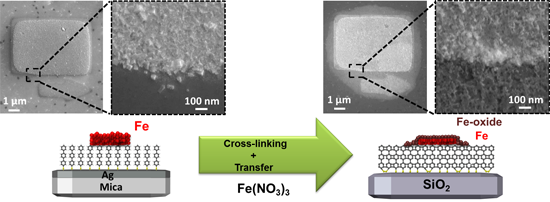
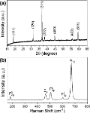
- beam-induced surface activation (EBISA) are studied with the precursors Fe(CO)5 and Co(CO)3NO on SAMs of 1,1′,4′,1′′-terphenyl-4-thiol (TPT). For Co(CO)3NO only EBID leads to deposits consisting of cobalt oxide. In the case of Fe(CO)5 EBID and EBISA yield deposits consisting of iron nanocrystals with
- without any changes, aside from oxidation. Here we demonstrate that iron as well as cobalt oxide structures on top of a cross-linked SAM on Ag/mica do change more significantly. The Fe(NO3)3 solution used for etching of the Ag layer also dissolves the cobalt oxide structures and causes dissolution and
- AE spectra of the square fabricated via EBID with Fe(CO)5 reveals that the structure consists of basically pure iron (92 atom %), with only minor amounts of carbon and oxygen impurities. The square fabricated from Co(CO)3NO consists of cobalt (ca. 45 atom %), oxygen (ca. 45 atom %), and a small


Molecular dynamics modeling of the influence forming process parameters on the structure and morphology of a superconducting spin valve
Beilstein J. Nanotechnol. 2020, 11, 1776–1788, doi:10.3762/bjnano.11.160
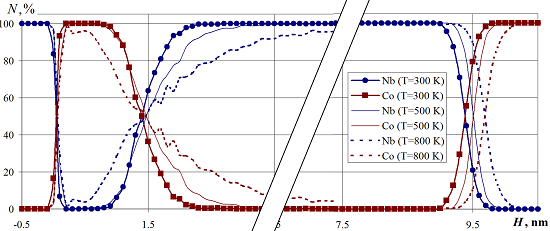
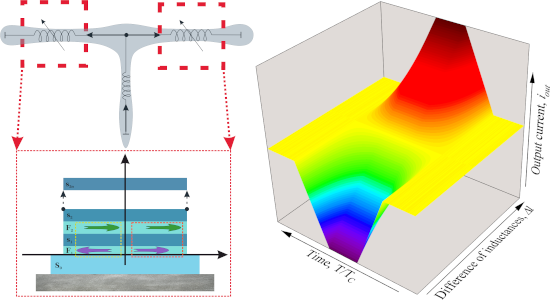
- This work is a study of the formation processes and the effect of related process parameters of multilayer nanosystems and devices for spintronics. The model system is a superconducting spin valve, which is a multilayer structure consisting of ferromagnetic cobalt nanolayers separated by niobium
- is a high risk of mutual diffusion and the formation of a thick “dead” layer, which also suppresses the transparency of the S/F interface [20]. In the case of materials wetting and limited mutual solubility (as in niobium–nickel and niobium–cobalt, with solubility of about 5% at room temperature
- cobalt with an increase in the substrate temperature will decrease the transparency parameter TF and worsen the functional parameters of the layered S/F heterostructure. The implementation of optimal technological processes is required to minimize these defects and imperfections of layered nanosystems


Adsorption and self-assembly of porphyrins on ultrathin CoO films on Ir(100)
Beilstein J. Nanotechnol. 2020, 11, 1516–1524, doi:10.3762/bjnano.11.134
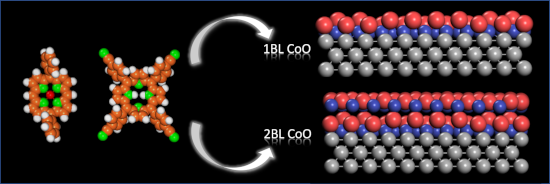
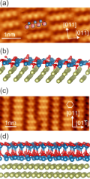
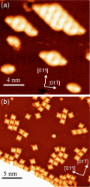
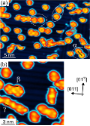
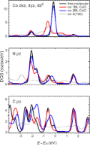
- surfaces is of fundamental interest due to a variety of potential applications. We investigate here the molecule–molecule and molecule–substrate interaction of Co-5,15-diphenylporphyrin (Co-DPP) and 2H-tetrakis(p-cyanophenyl)porphyrin (2H-TCNP) on one bilayer (1BL) and two bilayer (2BL) thick cobalt oxide
- islands on the 2BL film. The findings demonstrate the guiding effect of the cobalt oxide films of different thickness and the effect of functional surface anchoring. Keywords: adsorption energy; molecular rotors; porphyrins; self-assembly; transition metal oxides; Introduction Due to their variability
- investigation of the structure and binding of porphyrins on semiconducting and, notably, metal oxide surfaces remains scarce [3][4][5][6][7][8][9][10][11][12][13]. We chose here to investigate two different porphyrins on thin films of cobalt(II) oxide (CoO). Cobalt(II) oxide not only is a semi-conducting oxide




Controlling the proximity effect in a Co/Nb multilayer: the properties of electronic transport
Beilstein J. Nanotechnol. 2020, 11, 1336–1345, doi:10.3762/bjnano.11.118
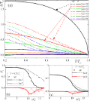
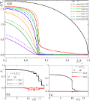
- between two neighboring films of ferromagnetic layers grown using cobalt (99.95% purity). Pure silicon (99.999%) was the third target used to create a passivating layer to prevent structure oxidation. The details regarding the deposition technology were previously described [27]. The structure for the



Role of redox-active axial ligands of metal porphyrins adsorbed at solid–liquid interfaces in a liquid-STM setup
Beilstein J. Nanotechnol. 2020, 11, 1264–1271, doi:10.3762/bjnano.11.110
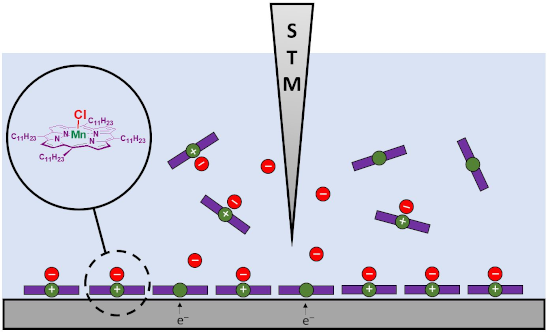
- additional currents were never observed in experiments with analogous porphyrins with a copper(II) or cobalt(II) center [10][11]. In the following, we will investigate the redox behavior of MnTUPCl at the solid–liquid interface in more detail. It is well-established that during and after the addition of
- ) to (II) [15][16], results from previous work that the substrates in an STM setup act as electrodes at which manganese porphyrins can be reduced [6][7][8], and the fact that also cobalt porphyrins can accept electrons from a HOPG surface in a liquid-STM setup [17][18]. While we have demonstrated that


Scanning tunneling microscopy and spectroscopy of rubrene on clean and graphene-covered metal surfaces
Beilstein J. Nanotechnol. 2020, 11, 1157–1167, doi:10.3762/bjnano.11.100
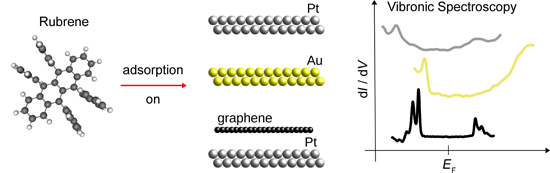
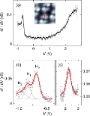
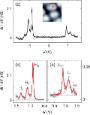
- ] and hexagonal boron nitride (h-BN) [3] have been studied in detail. In contrast, vibrational spectroscopy at the single-molecule level is scarce. Scanning tunneling spectroscopy (STS) of vibronic levels of 1,3,5-tris(2,2-dicyanovinyl)benzene on graphene-covered h-BN on SiO2 [4], of cobalt



Photothermally active nanoparticles as a promising tool for eliminating bacteria and biofilms
Beilstein J. Nanotechnol. 2020, 11, 1134–1146, doi:10.3762/bjnano.11.98
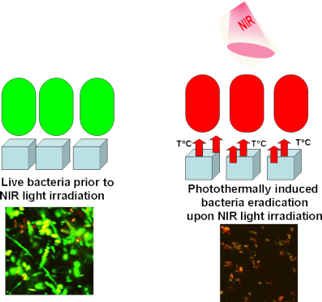
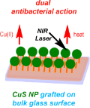
- used instead of NIR lasers to trigger the photothermal effect. For example, thiolated cobalt-doped ZnO nanoparticles were synthesized to photo-inhibit the efflux pump in multidrug-resistant bacteria [105]. The antibacterial activity of this nanosystem against methicillin-resistant S. aureus was found


Gas-sensing features of nanostructured tellurium thin films
Beilstein J. Nanotechnol. 2020, 11, 1010–1018, doi:10.3762/bjnano.11.85
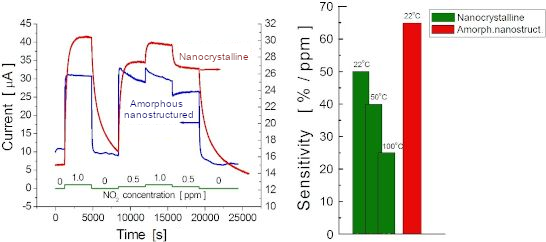
- galvanic displacement of sacrificial cobalt nanowires were employed [15]. Lastly, to grow one-dimensional nanostructures, either template-free electrodeposition of Te, from an ionic liquid binary mixture [16], or thermal evaporation in a furnace under argon gas flow [17] were strategies utilized. The


Comparison of fresh and aged lithium iron phosphate cathodes using a tailored electrochemical strain microscopy technique
Beilstein J. Nanotechnol. 2020, 11, 583–596, doi:10.3762/bjnano.11.46
- life-cycle analysis (LCA) studies have emphasized the issues associated with battery production and recycling [1][2][3]. As a consequence there is a trend to reduce or eliminate cobalt as a critical raw material [4][5]. Lithium iron phosphate (LiFePO4 or LFP) is highly promising to achieve this goal
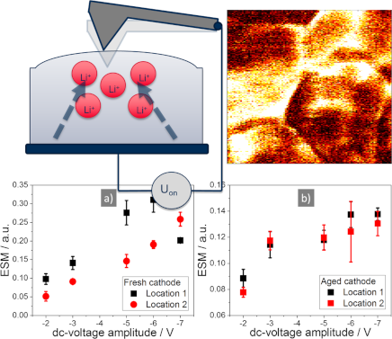
- [29][30] and nickel manganese cobalt oxide (NMC) [42][43] but, to the best of our knowledge, not for LFP. In this paper, we analyse the electrochemical activity and Li-ion concentration using the ESM technique and show a decrease of the electrochemical activity and a reduced active Li content in the



Multilayer capsules made of weak polyelectrolytes: a review on the preparation, functionalization and applications in drug delivery
Beilstein J. Nanotechnol. 2020, 11, 508–532, doi:10.3762/bjnano.11.41
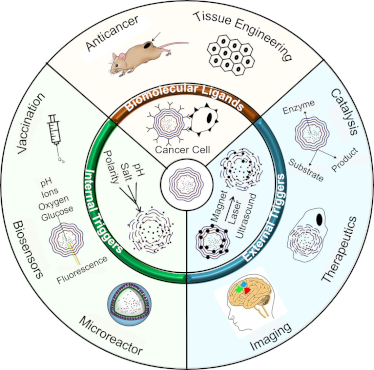
- of magnetic NPs (e.g., iron oxide and cobalt oxide NPs) into capsules allows them to respond to magnetic stimuli and produce heat due to magnetic energy dissipation, mechanical vibrations and motion induced in the film, thus releasing the cargo [80]. The Fe2O4-PAH capsules studied with A549 cancer



High-performance asymmetric supercapacitor made of NiMoO4 nanorods@Co3O4 on a cellulose-based carbon aerogel
Beilstein J. Nanotechnol. 2020, 11, 240–251, doi:10.3762/bjnano.11.18
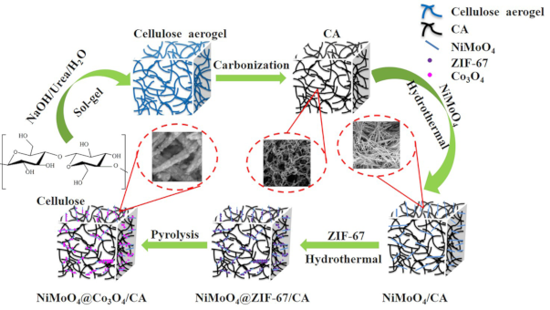
- @Co3O4/CA ternary composite is a quite promising pseudocapacitor material for supercapacitors. Experimental Materials Cobalt nitrate hexahydrate (Co(NO3)2·6H2O), nickel nitrate hexahydrate (Ni(NO3)2·6H2O), sodium molybdate dihydrate (Na2MoO4·2H2O), 2-methylimidazole (2-MeIM) and microcrystalline




Advanced hybrid nanomaterials
Beilstein J. Nanotechnol. 2019, 10, 2563–2567, doi:10.3762/bjnano.10.247
- critical importance of interfaces. In the current issue, from “simple” to more elaborated, we here observe the importance of the polyol method, the non-hydrolytic or colloidal approach, and ordered mesopore templating techniques. In “Tailoring the magnetic properties of cobalt ferrite nanoparticles using
Ultrathin Ni1−xCoxS2 nanoflakes as high energy density electrode materials for asymmetric supercapacitors
Beilstein J. Nanotechnol. 2019, 10, 2207–2216, doi:10.3762/bjnano.10.213
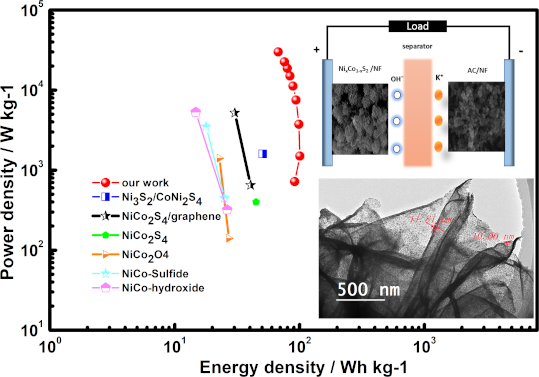
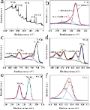
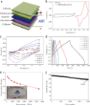
- Engineering, Zhejiang University of Technology, Hangzhou, China 10.3762/bjnano.10.213 Abstract Transition metal compounds such as nickel cobalt sulfides (Ni–Co–S) are promising electrode materials for energy storage devices such as supercapacitors owing to their high electrochemical performance and good
- metal ions and of the low material cost [4]. Nickel–cobalt sulfides have attracted attention as electrode materials for supercapacitors because of their excellent conductivity relative to the oxide counterparts, which contributes to a higher specific capacitance [5]. The multiple valency contributions
- from both nickel and cobalt ions in the bimetallic sulfides can provide relatively affluent redox reactions, resulting in higher specific capacitance and electrical conductivity [6][7]. Moreover, layered ultrathin nanoflakes in the synthesised nanomaterials, derived from metal oxides/dichalcogenides



Materials nanoarchitectonics at two-dimensional liquid interfaces
Beilstein J. Nanotechnol. 2019, 10, 1559–1587, doi:10.3762/bjnano.10.153
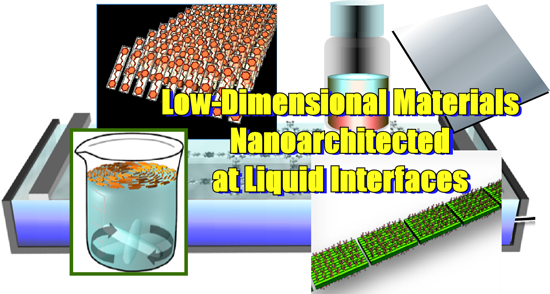
- reported. Jayavel, Shrestha, and co-workers demonstrated the enhanced performance of electrochemical supercapacitors using composites of cobalt oxide nanoparticles and reduced graphene oxide, which are zero-dimensional and two-dimensional nanomaterials, respectively [86]. Leong and co-workers reported a
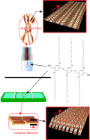
- (Figure 11) [227]. The demonstrated network structures are connected by the coordination of terpyridine moieties to either cobalt or iron ions, and the synthesized films change their colour depending on the oxidation levels of the cobalt and iron ions. The colours of those MOF films can be modulated
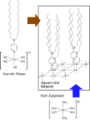
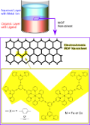
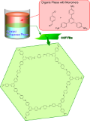
- films. The films grown from the amine monomer containing cobalt porphyrin exhibited catalytic activity for the electrochemical hydrogen generation from water. Dey et al. have dissolved one COF monomer into the aqueous phase by forming amine salts (Figure 12) [229]. Various multi-amino-substituted













Synthesis of P- and N-doped carbon catalysts for the oxygen reduction reaction via controlled phosphoric acid treatment of folic acid
Beilstein J. Nanotechnol. 2019, 10, 1497–1510, doi:10.3762/bjnano.10.148
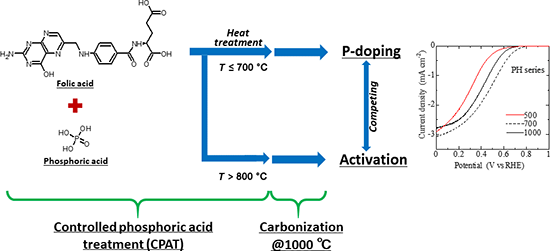
- implementation of non-Pt or non-precious-metal cathode catalysts is the ultimate goal of PEFC development. Since the discovery of the ORR activity of cobalt phthalocyanine in 1964 [4], numerous studies have focused on the synthesis of non-precious metal ORR catalysts such as those based on carbon [5]. The





Energy distribution in an ensemble of nanoparticles and its consequences
Beilstein J. Nanotechnol. 2019, 10, 1452–1457, doi:10.3762/bjnano.10.143
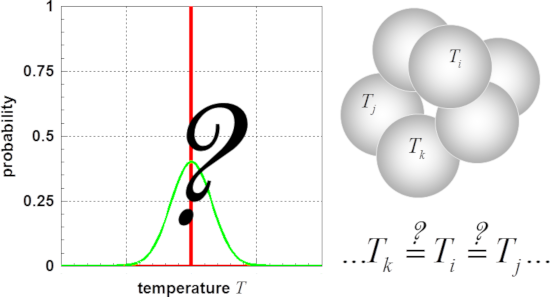
- fit analysis. As the first example for determination of a particle size distribution based on the temperature profile of a physical process, the magnetic noise power of cobalt particles at a frequency of 100 Hz (according to Woods et al. [5]) was selected. In this example, 5 nm cobalt particles were
- displayed in Figure 4. For the calculations leading to the results displayed in Figure 3, the data published by Clusius et al. [6] for the heat capacity of cobalt were applied. Due to the lack of data for nanoparticles, these data were determined based on bulk material. Especially in the temperature region
- , it was also applied to calculate particle size distributions from experimental data of phase transformations. As examples, the superparamagnetic transition of cobalt particles and the transition of lead particles from normal conductance to superconductivity were applied. Within the precision of the


Warped graphitic layers generated by oxidation of fullerene extraction residue and its oxygen reduction catalytic activity
Beilstein J. Nanotechnol. 2019, 10, 1391–1400, doi:10.3762/bjnano.10.137
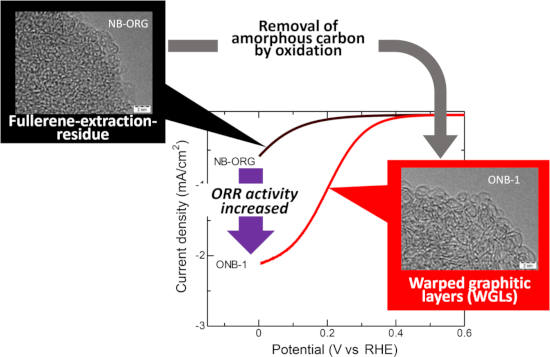
- the ORR catalytic activity in some carbon catalysts (i.e., carbon alloy catalysts (CACs)). To prove our assumption, we needed to use WGLs consisting of carbon materials, but without any extrinsic catalytic elements, such as nitrogen, iron, or cobalt, which effectively enhance ORR activity. The present
- . Controlling carbonization by metal catalysts such as iron or cobalt produces nanoshell-containing carbon (NSCC) with ORR activity [30][31][32][33][34][35]. This activity is thought to originate from surface defects formed on the nanoshell carbons, including edges and warped graphitic layers (WGLs) [31][36
- diamond phase, nitrogen, boron, phosphorus, sulfur, and transition metals like iron and cobalt. Such WGLs can be obtained from fullerene-related materials. We selected a commercial carbon, Nanom Black, which is a fullerene extraction residue from a fullerene soot prepared by a combustion method [40]. The



The effect of magneto-crystalline anisotropy on the properties of hard and soft magnetic ferrite nanoparticles
Beilstein J. Nanotechnol. 2019, 10, 1348–1359, doi:10.3762/bjnano.10.133
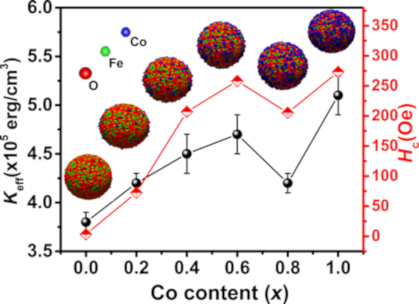
- observed that the heat efficiency of soft Fe3O4 is about 4 times larger than that of hard CoFe2O4 ferrite, which was attributed to the high coercive field of samples compared with the external field amplitude. Keywords: anisotropy; cobalt; ferrite; Henkel plots; hyperthermia therapy; nanoparticles
- applications, such as aggregation of nanoparticles in different parts of the body [9]. Hence, the study of this kind of interactions is of particular importance, both from a practical and a fundamental point of view. Recently, Muscas et al. [1] studied the magnetic behavior of mixed cobalt–nickel and pure
- cobalt ferrite NPs by using a random anisotropy model. Their results showed that the overall magnetic properties are the equilibrium of the interplay between the interparticle interactions and the anisotropy of the single particles. The authors of this paper believe that this study is of fundamental





