Search results
Search for "commercialization" in Full Text gives 61 result(s) in Beilstein Journal of Nanotechnology.
Single pyrimidine discrimination during voltage-driven translocation of osmylated oligodeoxynucleotides via the α-hemolysin nanopore
Beilstein J. Nanotechnol. 2016, 7, 91–101, doi:10.3762/bjnano.7.11
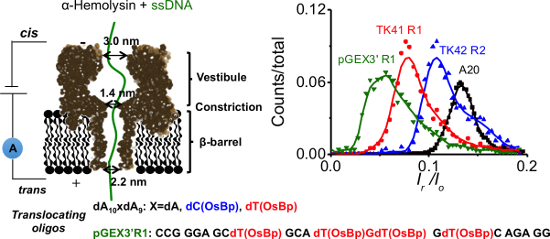
- information by EM imaging [43][44][45]. The more recent advancement of nanopores as single molecule detection devices and the corresponding progress in manufacturing, parallelization, and commercialization of such platforms [24], supported the idea of testing osmylated DNA as a surrogate for nanopore-based



The Nanomaterial Data Curation Initiative: A collaborative approach to assessing, evaluating, and advancing the state of the field
Beilstein J. Nanotechnol. 2015, 6, 1752–1762, doi:10.3762/bjnano.6.179
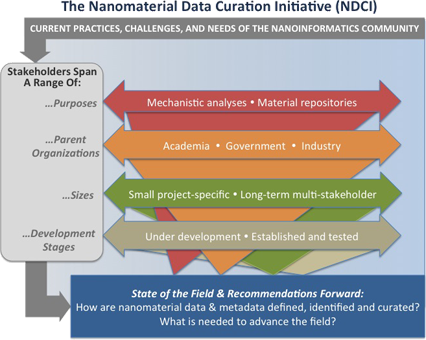
- , accelerating scientific discovery, and enabling faster risk assessment and commercialization of new technologies. These parameters are especially critical for emerging technologies, such as nanotechnology. The issues addressed in this initiative are certainly not unique to nanomaterials; in fact, they are
From lithium to sodium: cell chemistry of room temperature sodium–air and sodium–sulfur batteries
Beilstein J. Nanotechnol. 2015, 6, 1016–1055, doi:10.3762/bjnano.6.105
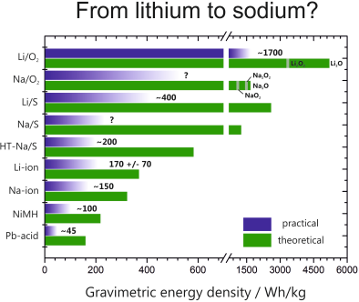
- battery; lithium–sulfur battery; sodium–oxygen battery; sodium–sulfur battery; Review 1 Introduction Rechargeable lithium-ion batteries (LIBs) have rapidly become the most important form of energy storage for all mobile applications since their commercialization in the early 1990s. This is mainly due to


Materials and characterization techniques for high-temperature polymer electrolyte membrane fuel cells
Beilstein J. Nanotechnol. 2015, 6, 68–83, doi:10.3762/bjnano.6.8
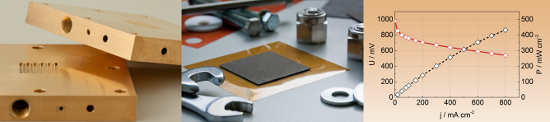
- , including novel imaging and spectroscopic techniques, which had been used to characterize HT-PEMFC materials either in situ or ex situ. We focus mainly on fuel cells based on phosphoric-acid-doped PBI membranes as these are the closest to commercialization. But many characterization techniques discussed




Effect of silver nanoparticles on human mesenchymal stem cell differentiation
Beilstein J. Nanotechnol. 2014, 5, 2058–2069, doi:10.3762/bjnano.5.214
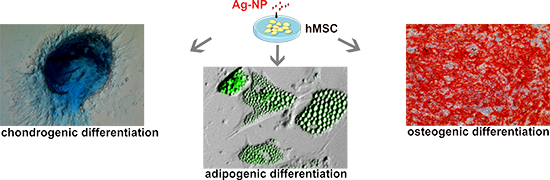
- commercialization among current nanomaterials mainly due to their well-known antiseptic activities [1]. Presently, there are over 600 commercialized products on the market made from engineered nanomaterials, and Ag-NP are contained in approximately 250 of these products [2][3]. In the medical sector, various Ag


Magnesium batteries: Current state of the art, issues and future perspectives
Beilstein J. Nanotechnol. 2014, 5, 1291–1311, doi:10.3762/bjnano.5.143
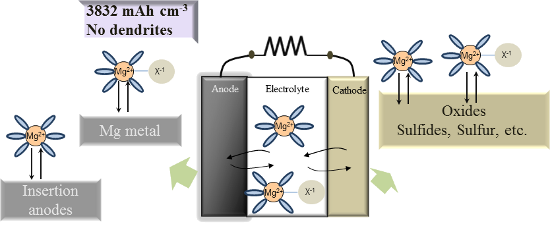
- hazards [5][6]. While effective countermeasures are still being discussed [6], the birth of the first commercial Li-ion battery in the early 1990s was catalyzed by the need to overcome these challenges. This resulted in a decline in further technical progresses and commercialization of what was referred
- negative electrode in batteries [9]. However, several technical challenges that hamper the commercialization of rechargeable magnesium batteries are currently present. In fact, the absence of practical electrolytes and cathodes has confined demonstrations of rechargeable magnesium batteries to research


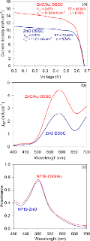
An insight into the mechanism of charge-transfer of hybrid polymer:ternary/quaternary chalcopyrite colloidal nanocrystals
Beilstein J. Nanotechnol. 2014, 5, 1235–1244, doi:10.3762/bjnano.5.137
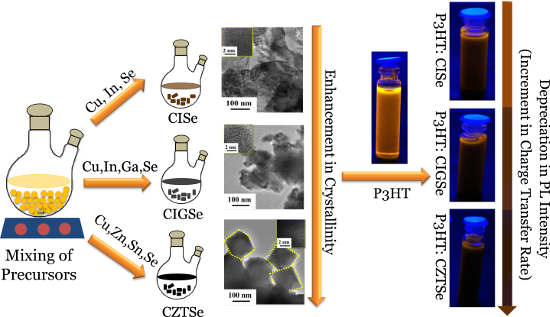
- , the toxicity and hazardous issues of inorganic materials, in particular of Cd and Pb, poses a serious threat to the environment. This has limited the realization of hybrid solar cell systems for commercialization [7]. On the other hand, copper indium diselenide (CISe) and related materials in


Antimicrobial properties of CuO nanorods and multi-armed nanoparticles against B. anthracis vegetative cells and endospores
Beilstein J. Nanotechnol. 2014, 5, 789–800, doi:10.3762/bjnano.5.91
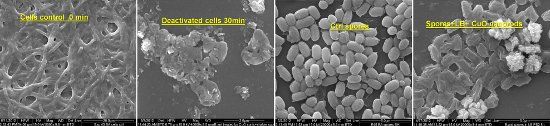
- nanoparticle based deactivation of microbes for medical and healthcare applications with nano-silver taking lead in academic research as well as in commercialization [9][10][11][12]. Comparatively few reports are available on the evaluation of nanoparticles against biological warfare (BW) agents including


Novel composite Zr/PBI-O-PhT membranes for HT-PEFC applications
Beilstein J. Nanotechnol. 2013, 4, 481–492, doi:10.3762/bjnano.4.57
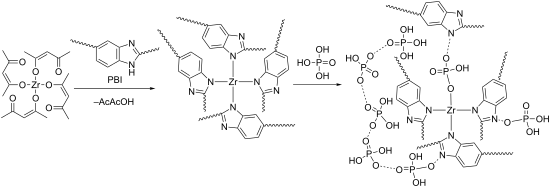
- hydrogen produced by natural gas reforming, at the place of consumption. On the way to commercialization, however, this promising type of PEFC still faces several problems concerning its long term stability and the overall efficiency of electrode and membrane materials. These properties should be further


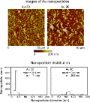
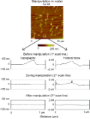
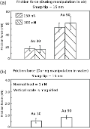
Effect of spherical Au nanoparticles on nanofriction and wear reduction in dry and liquid environments
Beilstein J. Nanotechnol. 2012, 3, 759–772, doi:10.3762/bjnano.3.85
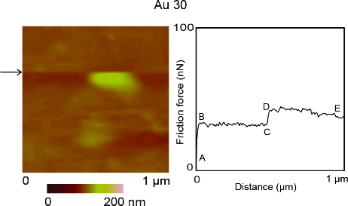
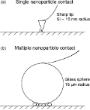
- to the commercialization of MEMS/NEMS [1]. As one moves from the macroscale to the micro/nanoscale, surface to volume ratio increases. Therefore, adhesive and friction forces, which are dependent on surface area, become more significant. With MEMS/NEMS devices, the initial start-up forces and torques
- lubricants are expected to contribute to the increased lifetime and efficiency of MEMS/NEMS devices, which will lead to their successful commercialization. In addition, the study of manipulation of new types of nanoparticles in different liquids will lead to an understanding of their suitability for various

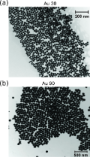


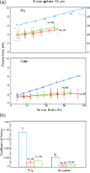
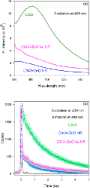
Highly efficient ZnO/Au Schottky barrier dye-sensitized solar cells: Role of gold nanoparticles on the charge-transfer process
Beilstein J. Nanotechnol. 2011, 2, 681–690, doi:10.3762/bjnano.2.73
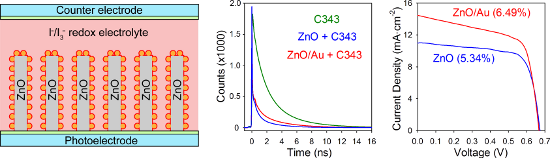
- hindering the rapid commercialization of DSSCs is their lower conversion efficiency compared to conventional solar cells. The maximum conversion efficiency of any DSSC reported to date is about 11% [4]. Due to the presence of various material interfaces in a DSSC, the probability of recombination of the