


Search results
Search for "composites" in Full Text gives 356 result(s) in Beilstein Journal of Nanotechnology. Showing first 200.
Laser synthesis of nanoparticles in organic solvents – products, reactions, and perspectives
Beilstein J. Nanotechnol. 2024, 15, 638–663, doi:10.3762/bjnano.15.54
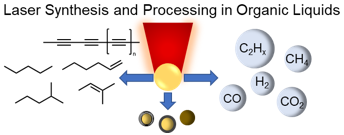
- conditions during LSPC in organic liquids are quite different. The solvent molecules themselves as well as the created hydrocarbons can adsorb on the nanoparticle surface and act as ligands. If a carbon shell is formed, it can be amorphous or onion-like graphitic. In addition, composites such as carbides





Modification of graphene oxide and its effect on properties of natural rubber/graphene oxide nanocomposites
Beilstein J. Nanotechnol. 2024, 15, 168–179, doi:10.3762/bjnano.15.16
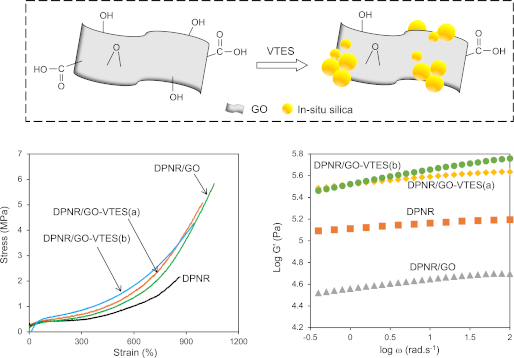
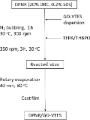
- also attracted significant interest. This material with exceptionally high specific surface area, high mechanical properties, and high thermal conductivity is expected to prepare high-performance rubber composites [21][22][23]. In our recent work [24], we successfully designed a DPNR/GO composite by
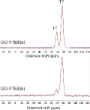
- condensation reaction of VTES to form nanosilica on GO membranes, using both acidic and basic conditions to catalyze these reactions. The hybrid GO/silica fillers could enhance the interaction, dispersion, and properties of various composites. For example, GO/3-aminopropyltriethoxysilane and GO/3
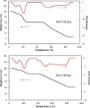
- of NR composite. The usage of GO-VTES may be suitable for the preparation of NR composites for tire applications as the composite may reduce water permeability and enhance the abrasion resistance of commercial products [30]. Experimental Materials The natural rubber used in this work is high-ammonia






CdSe/ZnS quantum dots as a booster in the active layer of distributed ternary organic photovoltaics
Beilstein J. Nanotechnol. 2024, 15, 144–156, doi:10.3762/bjnano.15.14
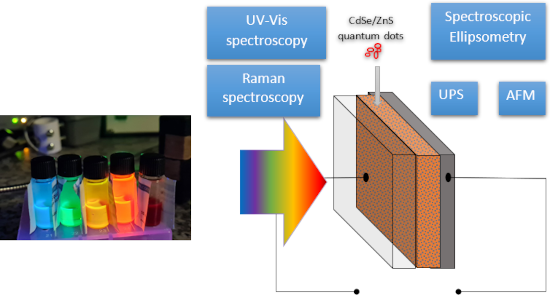
- establish absorption spectra and confirm excited states proven by luminescence. The dispersive spectra of the refractive index and extinction coefficient of nanoshell nanolayers and nanoshell:donor:acceptor composites were also determined. The dopant QDs shifted the extinction maximum toward longer




Influence of conductive carbon and MnCo2O4 on morphological and electrical properties of hydrogels for electrochemical energy conversion
Beilstein J. Nanotechnol. 2024, 15, 57–70, doi:10.3762/bjnano.15.6
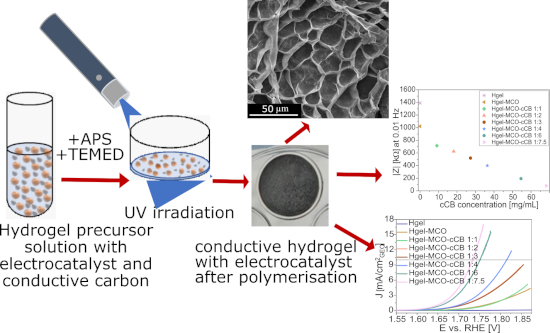
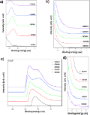
- -stage synthesis of polymer composites based on PNIPAAm hydrogel was presented. Both conductive particles in the form of conductive carbon black (cCB) and MnCo2O4 (MCO) spinel particles were suspended in the three-dimensional structure of the hydrogel. The MCO particles in the resulting hydrogel
- ; hydrogel; hydrogen; oxygen evolution reaction; polymer composites; Introduction Hydrogels are defined as a group of polymeric materials with an insoluble hydrophilic structure which gives them the ability to absorb and hold large amounts of water (up to over 99 wt %) in their three-dimensional network
- structures were examined in terms of their morphology, electrical properties, and catalytic layers in the OER process. Results and Discussion Characterisation of hydrogel-based polymer composites with dispersed catalytic and conductive particles Scanning electron microscopy (SEM) analysis of hydrogel samples


Experimental investigation of usage of POE lubricants with Al2O3, graphene or CNT nanoparticles in a refrigeration compressor
Beilstein J. Nanotechnol. 2023, 14, 1041–1058, doi:10.3762/bjnano.14.86
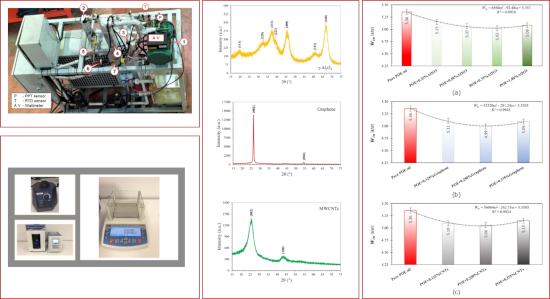
- becoming more and more common due to their unique thermal properties [14]. Akkaya et al. [15] experimentally explored the lubrication properties of sepiolite (SP) and its carbon composites carbon black (CB), MWCNT, and reduced graphene oxide (rGO) in a refrigeration compressor. Consequently, the addition





Metal-organic framework-based nanomaterials for CO2 storage: A review
Beilstein J. Nanotechnol. 2023, 14, 964–970, doi:10.3762/bjnano.14.79

- featuring chemical sites, such as open metal sites (OMSs) and Lewis acid sites, for CO2 adsorption applications. Furthermore, we explore several approaches that have been employed to enhance CO2 storage capabilities, including pore size control, post-synthetic modification, and the development of composites
- bonds lead to a reduced pore size in UiO-66(Zr/Ti), thereby facilitating improved interactions between the MOF and CO2 molecules. MOF composites Post-synthetic functionalization was recognized as an effective strategy for enhancing the adsorption ability of nanosized MOF structures. However, it demands
- chemical sites or an appropriate pore size for agent insertion. Many MOFs lack these properties, rendering them unsuitable for post-synthetic strategies. Fortunately, the development of MOF composites is a promising solution to augment the quantity of CO2 that can be absorbed. As a case in point, Eshraghi




Biomimetics on the micro- and nanoscale – The 25th anniversary of the lotus effect
Beilstein J. Nanotechnol. 2023, 14, 850–856, doi:10.3762/bjnano.14.69

- treatment on the elastic modulus of locust cuticle obtained by nanoindentation”, investigate the mechanical properties of the cuticle that builds the surface of insects and related groups of animals. The cuticle is one of the most abundant, but least studied biological composites. In their study, the


Silver nanoparticles loaded on lactose/alginate: in situ synthesis, catalytic degradation, and pH-dependent antibacterial activity
Beilstein J. Nanotechnol. 2023, 14, 781–792, doi:10.3762/bjnano.14.64
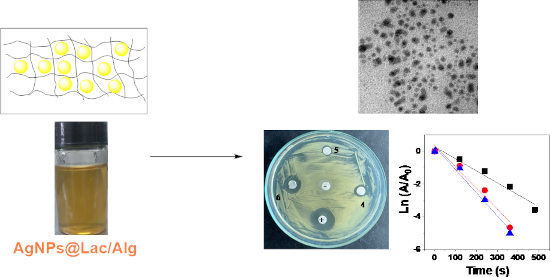
- is an important topic in the field of nanotechnology. However, AgNPs synthesized in that way have a number of drawbacks such as high cost and low stability. Typically, AgNPs are loaded onto polymers/composites in order to enhance their performance in usage [4][10][12]. Among polymers, polysaccharides


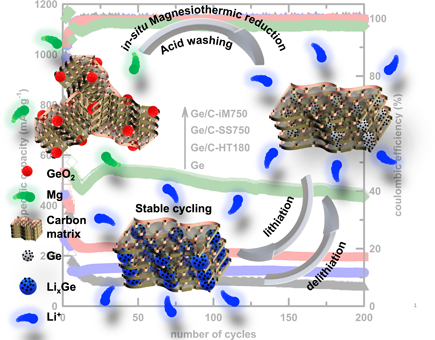
In situ magnesiothermic reduction synthesis of a Ge@C composite for high-performance lithium-ion batterie anodes
Beilstein J. Nanotechnol. 2023, 14, 751–761, doi:10.3762/bjnano.14.62
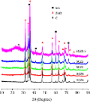
- patterns of pure Ge, biomass-derived activated carbon, and as-synthesized Ge@C composites are shown in Figure 1a. The pattern of Ge pattern exhibits reflections at 2θ = 27.3°, 45.3°, 53.7°, 66.0°, and 72.8°, corresponding to the (111), (220), (311), (400), and (331) crystal planes of cubic Ge (space group
- related to the Ge phase are observable, while those of the carbon phase do not appear. There are no significant differences between the XRD patterns of pure Ge and the composites, which implies that the presence of carbon does not alter the structure of Ge. Chemical bonds and the carbon phases in the
- composites were determined using FTIR spectroscopy, as shown in Figure 1b. The FTIR spectra of pure Ge consist of two broad bands in the wavenumber ranges of 500–600 and 800–1000 cm−1. The former band corresponds to the bending modes, and the latter band is attributed to the stretching modes of Ge–O–Ge bonds


Metal-organic framework-based nanomaterials as opto-electrochemical sensors for the detection of antibiotics and hormones: A review
Beilstein J. Nanotechnol. 2023, 14, 631–673, doi:10.3762/bjnano.14.52
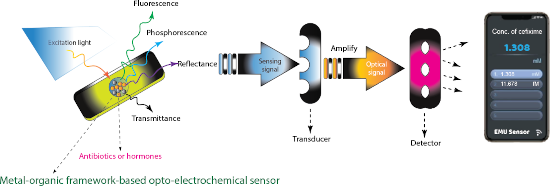
- framework (MOF) opto-electrochemical nanosensors for the detection of hormones and antibiotics is still missing, though. This review focuses on a variety of sensing applications that use MOFs as well as the synergistic mechanisms of MOF hybrids or composites that improve sensing performance. It provides a
- devices. The most often employed nanomaterials for electrochemical sensors are divided into four categories based on their chemical makeup: (i) metal oxides and metal-based materials (including MOF), (ii) dendrimers and polymer-based, (iii) carbonaceous materials, and (iv) hybrids or composites. Because
- oxides) [63][64][65][66][67][68][69]. This is motivated by their large surface area, which can facilitate the loading of nanoparticles. Additionally, MOFs have been converted into their electrochemically active derivatives, such as mesoporous carbon composites and porous metal oxides, to achieve an


ZnO-decorated SiC@C hybrids with strong electromagnetic absorption
Beilstein J. Nanotechnol. 2023, 14, 565–573, doi:10.3762/bjnano.14.47
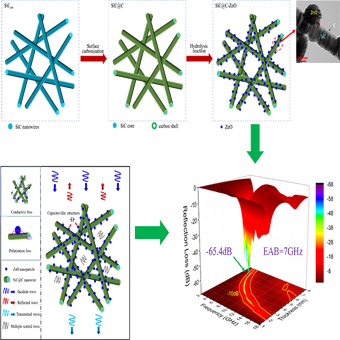
- of SiC nanomaterials through surface carbonization of SiC nanowires and hydrolysis. SiC@C-ZnO composites were synthesized with different dosages of ZnNO3·6H2O. Composition, microstructure, and electromagnetic properties of the composites were characterized and analyzed. Results from TEM and XRD show
- SiC surface. As described in our previous work [24], the carbon shell may form a conductive network in the SCZ/wax composites (Supporting Information File 1, Figure S6b). Besides, abundant defects (such as nanopores in carbon) can also result in dipole polarization and Debye relaxations [24][38


Carbon nanotube-cellulose ink for rapid solvent identification
Beilstein J. Nanotechnol. 2023, 14, 535–543, doi:10.3762/bjnano.14.44
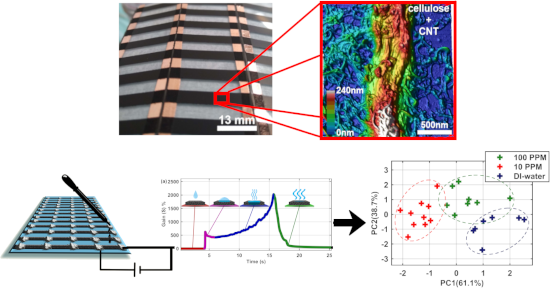
- production of liquid sensors, besides the constant need for sensor recalibration, has hindered broader commercialization of such devices [13][20]. A wide variety of materials have been explored for liquid sensing. For instance, electrically conductive polymer composites (CPCs), which are generally composed
- properties of carbon nanostructured materials with the polymer’s distinguished mechanical properties. These composites are usually non-selective and can react to various ambient stimuli [20][22][23][24][25][26][27][28][29]. Among polymers, cellulose is the most abundant natural organic polymer on earth. It
- has resurfaced recently as a smart material because of its excellent thermal-mechanical properties, biocompatibility, biodegradability, and flexibility [22][23][30][31]. Composites based on carbon nanotubes or graphene and cellulose have been reported for, among other things, humidity and vapor


Conjugated photothermal materials and structure design for solar steam generation
Beilstein J. Nanotechnol. 2023, 14, 454–466, doi:10.3762/bjnano.14.36
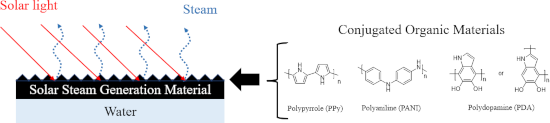
- composite in the 250–2500 nm range. The solar spectrum is also shown for comparison. Figure 8 was reprinted from [47], Polymer, vol. 217, by Y. Zou; P. Yang; L. Yang; N. Li; G. Duan; X. Liu; Y. Li, “Boosting solar steam generation by photothermal enhanced polydopamine/wood composites“, article no. 123464


Molecular nanoarchitectonics: unification of nanotechnology and molecular/materials science
Beilstein J. Nanotechnol. 2023, 14, 434–453, doi:10.3762/bjnano.14.35
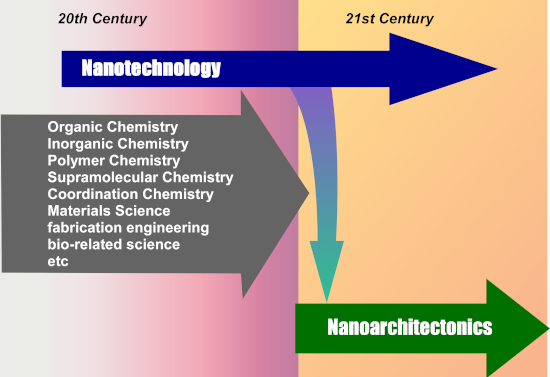
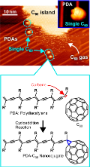
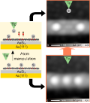
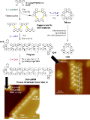
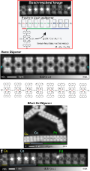
- new types of physics and chemistry at the nanoscale could be developed. Furthermore, such conductive polymer wires can be covalently linked to other functional components. Covalent bonding of functional molecules and conductive polymers to synthesize molecular composites at designated positions on a





Plasmonic nanotechnology for photothermal applications – an evaluation
Beilstein J. Nanotechnol. 2023, 14, 380–419, doi:10.3762/bjnano.14.33




Bismuth-based nanostructured photocatalysts for the remediation of antibiotics and organic dyes
Beilstein J. Nanotechnol. 2023, 14, 291–321, doi:10.3762/bjnano.14.26
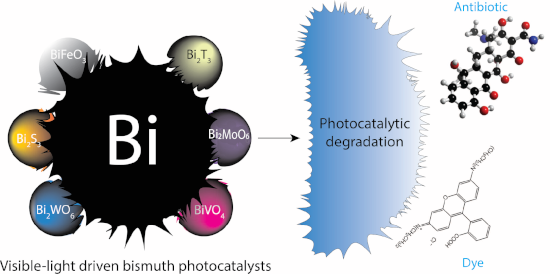
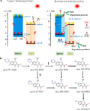
- , element substitutions, intercalation compounds, plasmon sensitization, heterojunctions, and composites [72][110][118][119]. Several synthesis techniques have been used as summarised in Figure 4. Several synthesis procedures for bismuth-based photocatalysts have already been published [25][88][119][120
- light absorption, weaker charge separation, and poor charge carrier mobility. Researchers are concentrating on several strategies, such as doping, heterojunction formation, induction of the surface plasmon resonance effect, and the formation of Z-schemes, Schottky junctions, and engineered composites
- of heterojunction systems have been overcome by Z-scheme photocatalysis systems, surface plasmon resonance effect, and Schottky junctions. An innovative method for further enhancing sunlight-driven photocatalytic performance in comparison to conventional heterojunction composites is to develop a Z


Cyclodextrins as eminent constituents in nanoarchitectonics for drug delivery systems
Beilstein J. Nanotechnol. 2023, 14, 218–232, doi:10.3762/bjnano.14.21
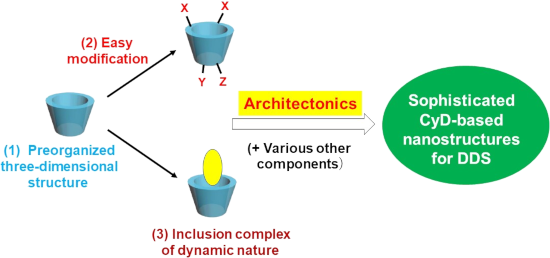
- with appropriate carriers to fulfill several requirements. First, the composite needs be sufficiently stable in the body and successfully reach the target site without being trapped. Second, the composites must be efficiently internalized to the target tissues and cells. Finally, the drugs must be




A novel approach to pulsed laser deposition of platinum catalyst on carbon particles for use in polymer electrolyte membrane fuel cells
Beilstein J. Nanotechnol. 2023, 14, 190–204, doi:10.3762/bjnano.14.19
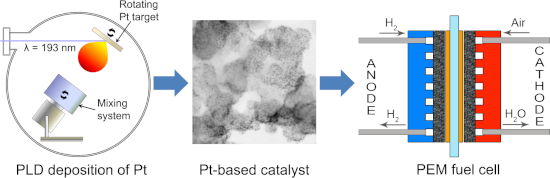
- [12][13][14]. Recently, nanoarchitectonics approaches have been used to fabricate various materials for energy-related applications, including carbon-based composites [15][16], Pt-based nanostructures and composites with carbon materials [17][18][19], and metal alloys deposited on TiO2 [20]. The most



Structural, optical, and bioimaging characterization of carbon quantum dots solvothermally synthesized from o-phenylenediamine
Beilstein J. Nanotechnol. 2023, 14, 165–174, doi:10.3762/bjnano.14.17
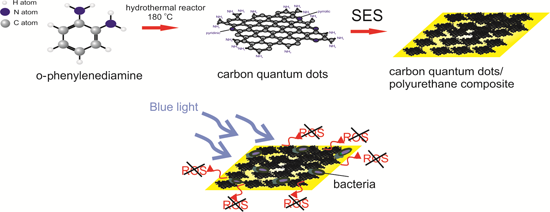
- (nitrogen, chlorine, and fluorine) affected structural properties and ROS production with or without visible light irradiation. In addition, we examined antibacterial and cytotoxic properties. An important issue is the preparation of CQDs and polymer-based composites and their possible antibacterial
- cytotoxic properties of CQDs and CQD/polyurethane composites. Results and Discussion Surface morphology Figure S1 (Supporting Information File 1) presents the surface morphology of the CQD samples. Figure S1a shows a TEM micrograph of CQDs. The average diameter of these dots is 4 ± 1 nm. A top-view AFM
- any antibacterial activity against E. coli and B. suptilis. In this study, antibacterial testing of all samples was conducted against two bacterial strains, namely S. aureus and E. coli. The results presented in Table S1 (Supporting Information File 1) showed that CQDs/PU composites prepared from o


Antimicrobial and mechanical properties of functionalized textile by nanoarchitectured photoinduced Ag@polymer coating
Beilstein J. Nanotechnol. 2023, 14, 95–109, doi:10.3762/bjnano.14.11
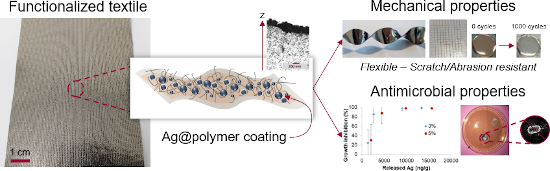
- forces, which ultimately extends the lifetime of the functionalized textile. The antimicrobial properties of MNP-polymer composites have been extensively investigated [42][43][44] and research has gone into functionalizing textile fibers with the nanocomposites in situ [45][46]. Few studies seem to have
- antimicrobial activity due to the increased amount of available silver. Conclusion The innovative photoinduced approach led to the successful functionalization of nano-architectured Ag@polymer composites onto textile substrates. Two different biocompatible polymer matrixes were compared in terms of AgNP growth



Liquid phase exfoliation of talc: effect of the medium on flake size and shape
Beilstein J. Nanotechnol. 2023, 14, 68–78, doi:10.3762/bjnano.14.8
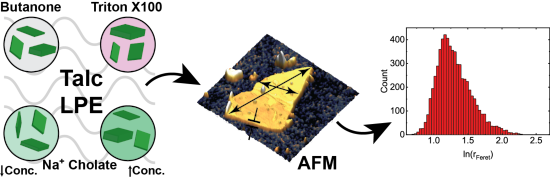
- flexural rigidity is about three times that of graphene but it can be bent to small curvatures without fracturing. These properties make nanoscale talc a promising candidate for the application [14][15][18] as reinforcement for polymers and other composites, including biocompatible materials, and van der



The influence of structure and local structural defects on the magnetic properties of cobalt nanofilms
Beilstein J. Nanotechnol. 2023, 14, 23–33, doi:10.3762/bjnano.14.3
- theories actively consider composites with shape memory [11][12]. Such composites are also called intelligent materials of the future [13] due to their unique functional properties and the possibility of restoring the original parameters under certain external conditions. Both thermodynamic conditions [14
- . Studying the role of magnetism on the structural features of composites opens up promising possibilities, since it allows predicting and creating new materials with controllable properties. The idea of mutual correlation between material structure and its magnetic properties is being developed in the field
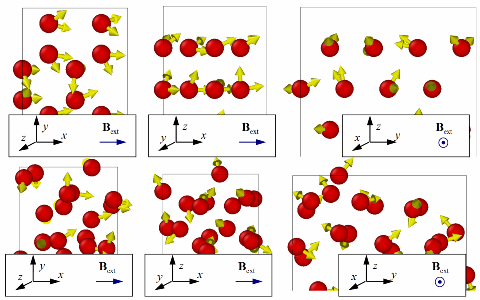
- with nanofilm deposition will be referred to as the real one. The small size of the system in question was chosen for several reasons. First, the actual produced nanofilms in composites of cobalt and niobium have a small thickness, reaching 1–2 nm in some layers. Of practical interest are structural


Two-step single-reactor synthesis of oleic acid- or undecylenic acid-stabilized magnetic nanoparticles by thermal decomposition
Beilstein J. Nanotechnol. 2023, 14, 11–22, doi:10.3762/bjnano.14.2
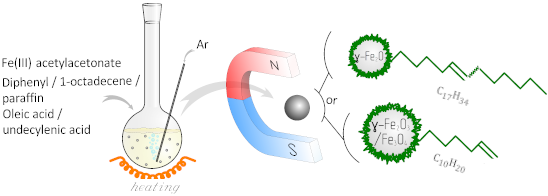
- used in biomedicine and in the production of composites with specified properties. Experimental Materials and methods Fe(III) acetylacetonate (Fe(III) 2,4-pentadienoate, 97%), undecylenic acid (UA, 96%), paraffin (used after recrystallization), diphenyl (99%), 1-octadecene (91%), and propanone were


Photoelectrochemical water oxidation over TiO2 nanotubes modified with MoS2 and g-C3N4
Beilstein J. Nanotechnol. 2022, 13, 1541–1550, doi:10.3762/bjnano.13.127
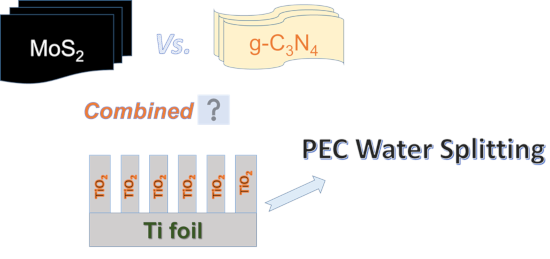
- bonds, there are vibrations of composites of TNAs with MoS2 (between 420 and 1620 cm−1) and g-C3N4 (between 1200 and 1640 cm−1 for C–N bonds and 807 cm−1 for tri-s-triazine subunit). The peaks in the wavenumber range between 3400 and 1625 cm−1 of all samples are typical for stretching vibrations of the


Hydroxyapatite–bioglass nanocomposites: Structural, mechanical, and biological aspects
Beilstein J. Nanotechnol. 2022, 13, 1490–1504, doi:10.3762/bjnano.13.123
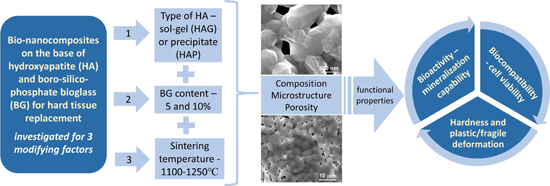
- investigated. It was found that all of these factors affect the final composition and microstructure, especially, porosity, which shows significantly lower values for HAP-based composites than for HAG-based ones and higher values for higher glass content. This, in turn, has an impact on the microhardness
- composition of bone, has a low resorption in physiologic environment and, therefore, does not form a tough bond with the bone [2]. The development of hydroxyapatite–bioglass (HA-BG) composites aimed to overcome this problem [3][4][5]. In these composites, the biocompatibility of HA is combined with the
- glass in the HA-BG composites may stimulate the transformation of HA into tricalcium phosphate (TCP) during the sintering at high temperatures, inducing more reactivity of the material in the physiologic environment [4][20]. The HA-TCP transformation can be controlled through the glass fraction and the



