Search results
Search for "defect-free" in Full Text gives 67 result(s) in Beilstein Journal of Nanotechnology.
Possibilities and limitations of advanced transmission electron microscopy for carbon-based nanomaterials
Beilstein J. Nanotechnol. 2015, 6, 1541–1557, doi:10.3762/bjnano.6.158
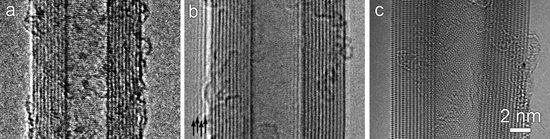
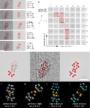
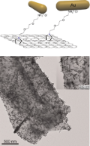
- eV for incident electrons of 120 kV, 100 kV, 80 kV and 60 kV respectively. The threshold energy, Td, needed to displace a carbon atom has been calculated for defect-free graphene as an ideal case. Earlier results have reported a Td of 15 eV and 22 eV calculated statically and dynamically, as shown in
- , HRTEM on defect-free graphene at 100 kV causes damage to the sample, including pentagons, heptagons and octagons [35]. The experimental results clearly show that a Td of 23 eV and 22 eV (corresponding to an incident beam of approx. 110 kV) is overestimated. Such a difference may indicate that the
- diameters are more sensitive to knock-on damage. The message concluded from the literature study is that the knock-on threshold for defect-free graphene can be regarded to be 80 keV, although the dynamics of the carbon atoms cannot be entirely excluded. A lower voltage of 60 keV is generally safe for


Fabrication of high-resolution nanostructures of complex geometry by the single-spot nanolithography method
Beilstein J. Nanotechnol. 2015, 6, 976–986, doi:10.3762/bjnano.6.101
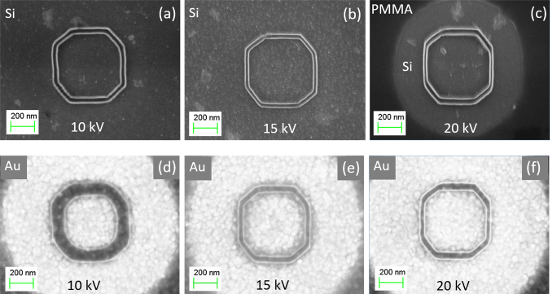
- higher the resolution of the single-spot lithography. Another advantage is that the lines of patterned nanostructures are substantially defect-free, as shown in Figure 13. Our method enables the production of high-quality carbonized patterns of sub-20 nm resolution using the positive resist only. The
- resolution on semiconductor and metallized substrates using the single-spot nanofabrication was demonstrated at low-energy acceleration voltages. The resulting nanostructures have sharp edges and defect-free lines. Arrays of nanoelements or complex nanostructures can be easily scaled to large areas, with the


Magnetic properties of self-organized Co dimer nanolines on Si/Ag(110)
Beilstein J. Nanotechnol. 2015, 6, 777–784, doi:10.3762/bjnano.6.80
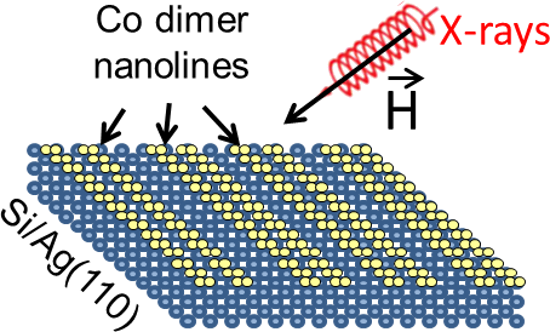
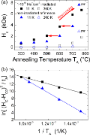
- nanolines on top of the Si NRs, reproducing the 1D pattern of the Si template. This, however, is limited by defects induced by Co incorporation into the Si NRs [21]. In the experiments reported herein, Co was deposited at 220 K to kinetically block this Co incorporation process and obtain long, defect-free
- that of Co in-diffusion, Co deposition at a lower temperature was performed in the experiments presented here to form longer, defect-free, Co nanolines. The STM images in Figure 2a,b show the formation of identical and highly ordered Co dimer nanolines on the Ag(110) surface completely covered with the


Liquid-phase exfoliated graphene: functionalization, characterization, and applications
Beilstein J. Nanotechnol. 2014, 5, 2328–2338, doi:10.3762/bjnano.5.242
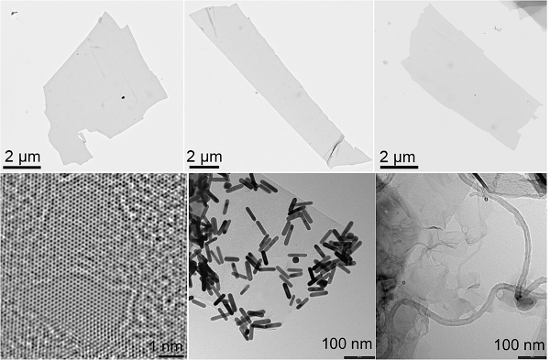
- such as fullerenes and carbon nanotubes (CNTs) [23][24][25]. Using these solvents, it is possible to exfoliate graphite, resulting in defect-free graphene layers of high concentration. One limitation of this methodology is its inability to completely eliminate the absorbed solvent from the graphene




An insight into the mechanism of charge-transfer of hybrid polymer:ternary/quaternary chalcopyrite colloidal nanocrystals
Beilstein J. Nanotechnol. 2014, 5, 1235–1244, doi:10.3762/bjnano.5.137
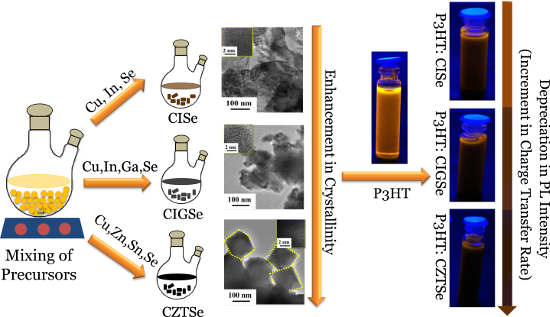
- morphology crucially depends on a combination of highly crystalline and defect-free inorganic CISe and related materials as an acceptor layer and an ordered morphology and well-crystalline nature of P3HT polymer as a donor layer. In the present work, we have dispersed TOPO-capped CISe/CIGSe/CZTSe


Core level binding energies of functionalized and defective graphene
Beilstein J. Nanotechnol. 2014, 5, 121–132, doi:10.3762/bjnano.5.12
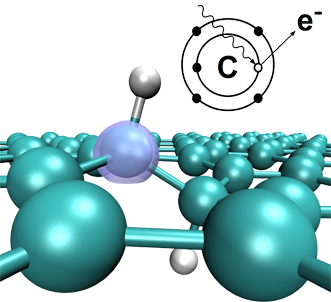
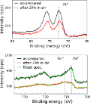
- should give consistent results for all atoms of the same kind. Since the C 1s level of graphite is well known experimentally, a rigid shift of the calculated energy scale to match it for the pristine defect-free system is applied to all C 1s energies calculated, which allows for a comparison of the


Cyclic photochemical re-growth of gold nanoparticles: Overcoming the mask-erosion limit during reactive ion etching on the nanoscale
Beilstein J. Nanotechnol. 2013, 4, 886–894, doi:10.3762/bjnano.4.100
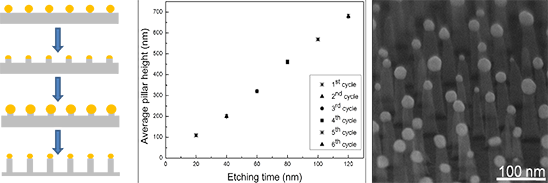
- distance within a given periodic arrangement. 5) The maximizing of defect-free domain sizes of such NP lattices. A relative simple and affordable approach that nevertheless addresses all the above requirements is based on the self-organization of organic carrier systems such as colloids or reverse micelles


Deformation-induced grain growth and twinning in nanocrystalline palladium thin films
Beilstein J. Nanotechnol. 2013, 4, 554–566, doi:10.3762/bjnano.4.64
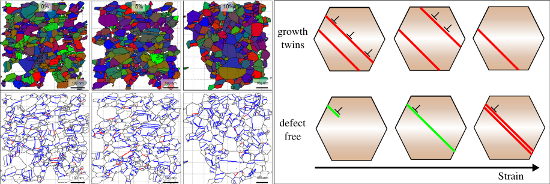
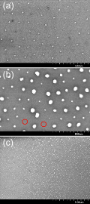
- shown). In contrast, samples with an initially defect free grain interior showed an increase of the twin boundary density during straining (Figure 7c,d). Twins nucleate at the grain boundaries under an applied stress by emission of partial dislocations, which lead to stacking faults and eventually twin
- initial growth twin density, partial dislocations nucleate preferentially at the twin boundaries and lead to movement and thus a reduction of twin boundaries [35]. If no twin boundaries are present, partial dislocations need to nucleate from the grain boundaries into defect free grains and may form
- migration out of the grain. If the grains are initially defect free, partial dislocations nucleate into a defect free grain and can form stacking faults and twinning faults by successive nucleation of partial dislocations. Overview of the structural properties of the three ncPd sample sets analyzed using


High-resolution electrical and chemical characterization of nm-scale organic and inorganic devices
Beilstein J. Nanotechnol. 2013, 4, 318–319, doi:10.3762/bjnano.4.35

- , threading dislocations, and microtwins that affect the diffusion of dopants and the material mobility (due to scattering). When growth is performed in narrow trenches, dislocations are trapped within the confined volume (aspect-ratio trapping) and, theoretically, defect-free layers can be obtained. However
- , even if an apparently defect-free layer is obtained, the polar nature of the complex compound materials implies that antiphase boundaries can still be formed, which potentially represent important charge and recombination centers. Beyond the standard logic/memory applications there is a very strong
Grain boundaries and coincidence site lattices in the corneal nanonipple structure of the Mourning Cloak butterfly
Beilstein J. Nanotechnol. 2013, 4, 292–299, doi:10.3762/bjnano.4.32
- coordination number of six for the defect-free regions of the nipple arrangements is locally changed to five or seven nearest neighbors. It was observed that the nipples with seven nearest neighbors were usually slightly larger than the average nipple diameter (150 nm) while the nipples with five nearest
- these defect rows are clearly grain-boundary-type defects across which the orientations of otherwise defect-free crystals change. What is quite remarkable in both cases shown in Figure 4 is that some sort of superlattice can be identified as indicated by the nipples marked in white. This superlattice
- /macro-defect-free regions. Scanning electron micrograph showing the facet structure of the Mourning Cloak butterfly. Note the bases of fractured hair at some of the triple junctions (magnification: 800×). Triple junction in the facet structure and nanonipples in three adjacent facets (magnification


Probing three-dimensional surface force fields with atomic resolution: Measurement strategies, limitations, and artifact reduction
Beilstein J. Nanotechnol. 2012, 3, 637–650, doi:10.3762/bjnano.3.73
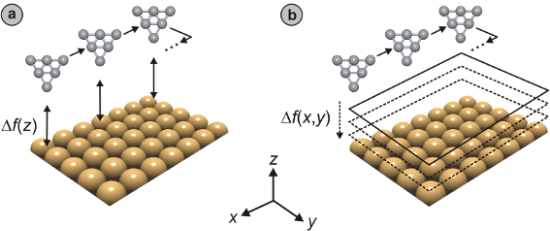
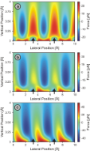
- , force-field characteristics associated with individual surface atoms on defect-free surfaces exhibit a straight and symmetric nature when probed with symmetric tips consisting of immobile, hard, sphere-like atoms. Thus, any experimentally observed deviations from this straight, symmetric character are




An NC-AFM and KPFM study of the adsorption of a triphenylene derivative on KBr(001)
Beilstein J. Nanotechnol. 2012, 3, 221–229, doi:10.3762/bjnano.3.25
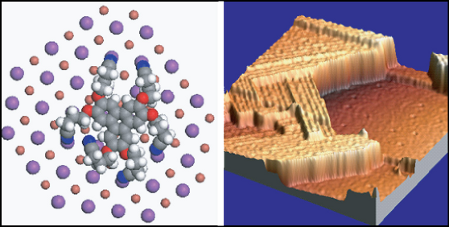
- a molecule would travel on a defect-free surface without interacting with another molecule during the deposition can be obtained in the following way: For a deposition molecular flux F, the mean time τF separating the arrival of two successive molecules in an area L2 is τF = 1/(F·L2). During this




Lifetime analysis of individual-atom contacts and crossover to geometric-shell structures in unstrained silver nanowires
Beilstein J. Nanotechnol. 2011, 2, 740–745, doi:10.3762/bjnano.2.81
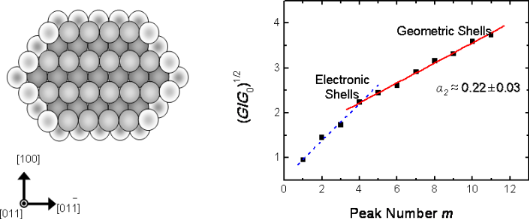
- contacts without the need to apply mechanical deformation. In this way, plastic deformations are avoided and highly stable and defect-free nanocontacts are produced [24][25][26][27][28]. This is especially true for silver; due to its high electrochemical exchange-current density, electrochemically
- deposited silver exhibits high mobility on its surface, allowing the fabrication of defect-free metallic point contacts [13]. A sufficiently high mobility of the atoms is needed to find stable configurations, corresponding to distinct shells, which, in turn, lead to clearly observable shell effects on the


Intermolecular vs molecule–substrate interactions: A combined STM and theoretical study of supramolecular phases on graphene/Ru(0001)
Beilstein J. Nanotechnol. 2011, 2, 365–373, doi:10.3762/bjnano.2.42
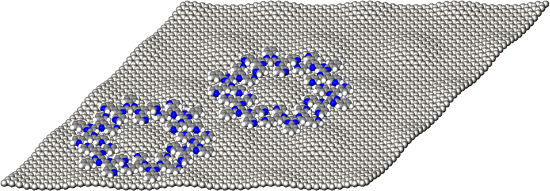
- for the inclusion of van der Waals interactions in standard DFT calculations. These two contributions (adsorbate–graphene and adsorbate–metal) were then added in order to obtain total adsorption energies of the molecules on the graphene/Ru(0001) substrate. (a) Defect free graphene/Ru(0001) surface


Formation of precise 2D Au particle arrays via thermally induced dewetting on pre-patterned substrates
Beilstein J. Nanotechnol. 2011, 2, 318–326, doi:10.3762/bjnano.2.37
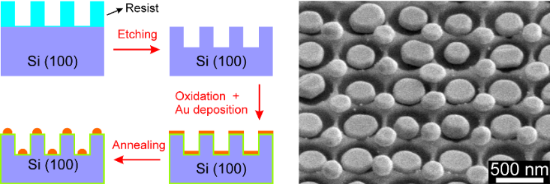
- formation, and (3) spinodal dewetting, which occurs by the amplification of periodic film thickness fluctuations (i.e., capillary wave); such films induce self-correlated dewetting patterns [25]. Recently, dewetting of solid films has also been studied. Theoretically, for the defect-free and homogenous





Defects in oxide surfaces studied by atomic force and scanning tunneling microscopy
Beilstein J. Nanotechnol. 2011, 2, 1–14, doi:10.3762/bjnano.2.1
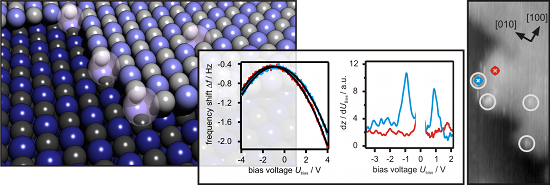
- are supposed to be involved in electron transfer processes on the surface. The trapped electrons in the color centers can be transferred to adsorbates such as Au atoms. The defect-free MgO surface is quite inert while a defect rich surface shows a high and complex chemical reactivity [22]. In order to
- penetrate the surface. In thin oxide films line defects are often generated by domain boundaries. The structure at these line defects usually differs significantly from the defect-free domains. This is often associated with a change of electronic properties, which may significantly influence the surface
- defect-free MgO. The NC-AFM investigation on aluminum oxide on NiAl(110) unveils the surface structure of the domain and at the APDBs with atomic resolution. Apart from the determined topography, F2+-like centers, which have been predicted by DFT calculations, were experimentally verified for the APDBs


Preparation and characterization of supported magnetic nanoparticles prepared by reverse micelles
Beilstein J. Nanotechnol. 2010, 1, 24–47, doi:10.3762/bjnano.1.5
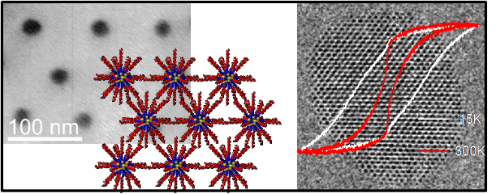
- that 38 FePt NPs exhibit defects along the [101] direction. From this result and the fact that additional defects may exist which cannot be seen in the [101] projection, it can be concluded that for the majority of particles crystal defects are a common feature. For 8 nm FePt NPs defect-free NPs are