


Search results
Search for "doxorubicin" in Full Text gives 66 result(s) in Beilstein Journal of Nanotechnology.
Targeting strategies for improving the efficacy of nanomedicine in oncology
Beilstein J. Nanotechnol. 2019, 10, 168–181, doi:10.3762/bjnano.10.16
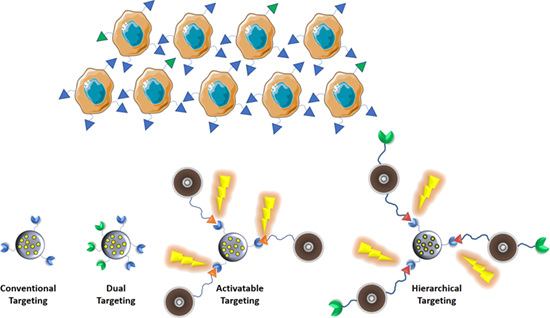
- anchored to different nanoparticles for enhancing their uptake into tumoral cells or for binding to tumour vessels. As an example, cyclic NGR, which binds to the aminopeptidase receptor (CD13), was grafted on the surface of temperature-sensitive liposomes loaded with doxorubicin (Dox) for the selective
- subcellular localizations [42][82]. There are many cytotoxic drugs, such as doxorubicin, that induce cell apoptosis through intercalation with nuclear DNA. Further, gene silencing therapies based on an effective delivery of short hairpin RNA (shRNA) bearing genes for small interfering RNA (siRNA) need nuclear


Cytotoxicity of doxorubicin-conjugated poly[N-(2-hydroxypropyl)methacrylamide]-modified γ-Fe2O3 nanoparticles towards human tumor cells
Beilstein J. Nanotechnol. 2018, 9, 2533–2545, doi:10.3762/bjnano.9.236
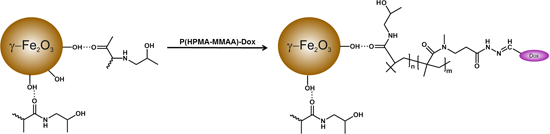
- Experimental Medicine CAS, Vídeňská 1083, 142 20 Prague 4, Czech Republic 10.3762/bjnano.9.236 Abstract Doxorubicin-conjugated magnetic nanoparticles containing hydrolyzable hydrazone bonds were developed using a non-toxic poly[N-(2-hydroxypropyl)methacrylamide] (PHPMA) coating, which ensured good colloidal
- stability in aqueous media and limited internalization by the cells, however, enabled adhesion to the cell surface. While the neat PHPMA-coated particles proved to be non-toxic, doxorubicin-conjugated particles exhibited enhanced cytotoxicity in both drug-sensitive and drug-resistant tumor cells compared to
- free doxorubicin. The newly developed doxorubicin-conjugated PHPMA-coated magnetic particles seem to be a promising magnetically targeted vehicle for anticancer drug delivery. Keywords: cytotoxicity; doxorubicin; magnetic; nanoparticles; poly[N-(2-hydroxypropyl)methacrylamide]; Introduction Severe


Enhanced antineoplastic/therapeutic efficacy using 5-fluorouracil-loaded calcium phosphate nanoparticles
Beilstein J. Nanotechnol. 2018, 9, 2499–2515, doi:10.3762/bjnano.9.233
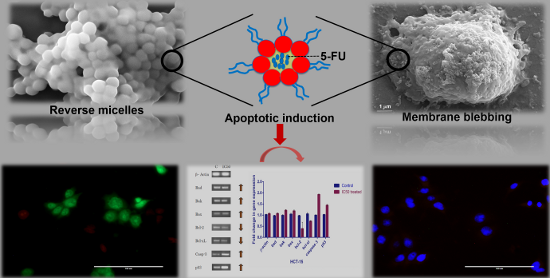
- both in vitro and in vivo studies [5]. Gold nanoparticles conjugated with a trans-activating transcriptional activator (TAT) peptide modification encapsulated with the drug doxorubicin showed enhanced toxicity in brain cancer models [6]. Further, mesoporous silica nanoparticles were successfully used


Nanoconjugates of a calixresorcinarene derivative with methoxy poly(ethylene glycol) fragments for drug encapsulation
Beilstein J. Nanotechnol. 2018, 9, 2057–2070, doi:10.3762/bjnano.9.195
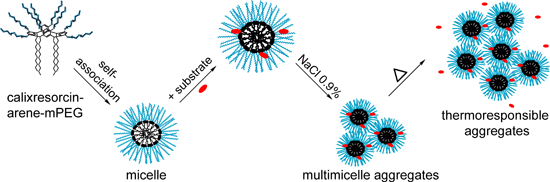
- nanoassociates that are able to encapsulate organic substrates of different hydrophobicity, including drugs (doxorubicin, naproxen, ibuprofen, quercetin). The micelles of the macrocycle slowed down the release of the hydrophilic substrates in vitro. In physiological sodium chloride solution and phosphate
- -buffered saline, the micelles of the macrocycle acquire thermoresponsive properties and exhibit a temperature-controlled release of doxorubicin in vitro. The combination of the low toxicity and the encapsulation properties of the obtained calixresorcinarene–mPEG conjugate shows promising potential for the
- encapsulation of hydrophobic substrates The encapsulation of model compounds of different hydrophobicity by macrocycle 3 was studied (Table 2). These compounds were doxorubicin (Dox), an anthracycline antitumor antibiotic, quercetin (QC), a flavonol that exhibits decongestant, antispasmodic, antihistaminic


Nanoparticle delivery to metastatic breast cancer cells by nanoengineered mesenchymal stem cells
Beilstein J. Nanotechnol. 2018, 9, 321–332, doi:10.3762/bjnano.9.32
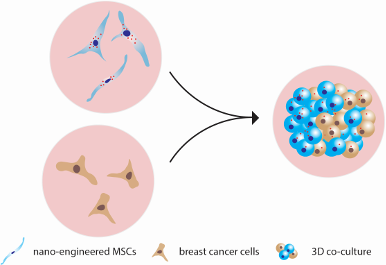
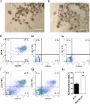
- origin, such as adipogenic, osteogenic and chondrogenic cells [6]. MSC-based therapies are being increasingly investigated for their promising potential in cancer diagnostics and treatment [5][7][8]. In vivo studies have demonstrated that MSCs can effectively deliver nanorattle-encapsulated doxorubicin



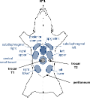
Hyperthermic intracavitary nanoaerosol therapy (HINAT) as an improved approach for pressurised intraperitoneal aerosol chemotherapy (PIPAC): Technical description, experimental validation and first proof of concept
Beilstein J. Nanotechnol. 2017, 8, 2729–2740, doi:10.3762/bjnano.8.272
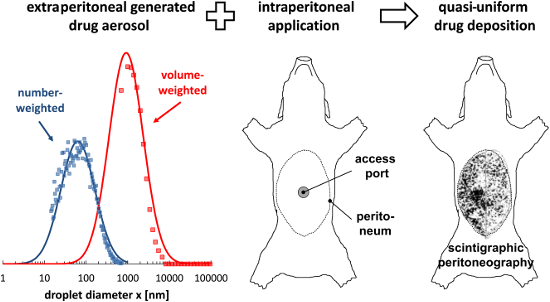
- , Erlangen, Germany) and analysed by means of suitable add-ons for planar scintigraphy (MM Oncology application) and SPECT-CT (mMR General application). Multilocal in-tissue penetration (ITP) depth analyses Multilocal in-tissue doxorubicin penetration depth analyses were performed after doxorubicin exposure
- (doxorubicin hydrochloride, Teva®, 2 mg/mL, Pharmachemie B.V., Haarlem, Netherlands) of two postmortem pig peritonea by HINAT-LAU and PIPAC-MIP. HINAT-LAU was performed with undiluted doxorubicin (drug chamber was filled with 5 mL) at a system pressure of 3 bar for 25 min that cumulated into an effective
- doxorubicin dose of 0.88 mL (i.e., 1.76 mg doxorubicin hydrochloride). PIPAC-MIP was performed with diluted doxorubicin (1 mL doxorubicin in 50 mL aqueous 0.9 wt % sodium chloride solution) at a volumetric flow rate of 30 mL/min for 100 s that led to an effective doxorubicin dose of 2.9 mL (i.e., 5.8 mg




Methionine-mediated synthesis of magnetic nanoparticles and functionalization with gold quantum dots for theranostic applications
Beilstein J. Nanotechnol. 2017, 8, 1734–1741, doi:10.3762/bjnano.8.174
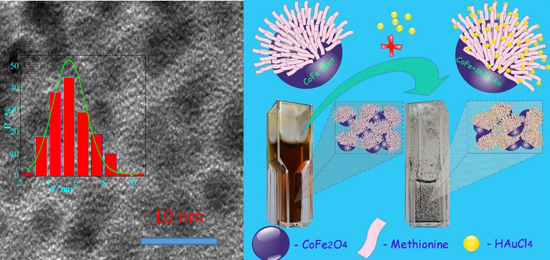
- conjugated with targeting and chemotherapy agents, such as cancer stem cell-related antibodies and the anticancer drug doxorubicin, for early detection and improved treatment. In order to verify our findings, high-resolution transmission electron microscopy (HRTEM), atomic force microscopy (AFM), FTIR


A nanocomplex of C60 fullerene with cisplatin: design, characterization and toxicity
Beilstein J. Nanotechnol. 2017, 8, 1494–1501, doi:10.3762/bjnano.8.149
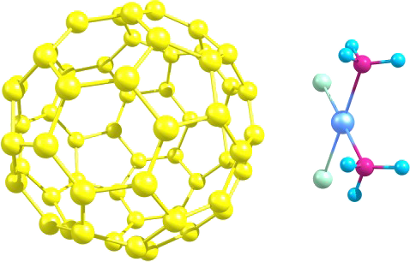
- molecules with drugs is currently considered a perspective biomedical strategy. The formation of a stable non-covalent nanocomplex of С60 fullerene with doxorubicin (C60+Dox) in aqueous solution was confirmed theoretically and experimentally [23][34][36]. The antitumor action of the C60+Dox nanocomplex was



Cationic PEGylated polycaprolactone nanoparticles carrying post-operation docetaxel for glioma treatment
Beilstein J. Nanotechnol. 2017, 8, 1446–1456, doi:10.3762/bjnano.8.144
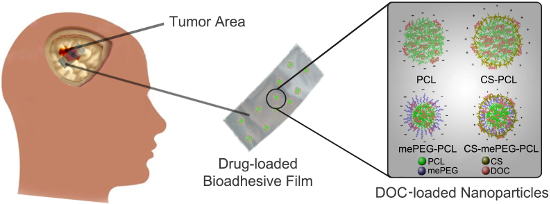
- studied for targeting and delivery of chemotherapeutic drugs for glioma treatment. Fang et al. prepared core–shell nanocapsules for co-delivery of the hydrophilic drug doxorubicin, and the hydrophobic drug curcumin. Their results showed that the synergistic cytotoxic effect on RG2 glioma cells was




Dispersion of single-wall carbon nanotubes with supramolecular Congo red – properties of the complexes and mechanism of the interaction
Beilstein J. Nanotechnol. 2017, 8, 636–648, doi:10.3762/bjnano.8.68
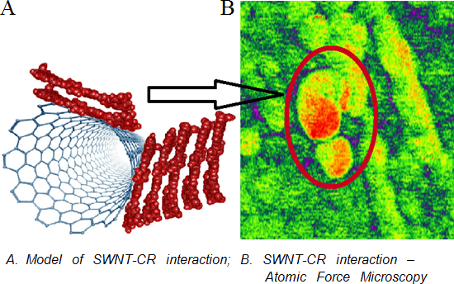
- , antigen-bound antibodies, cell-surface receptors) [29][34][35]. Congo red supramolecular assemblies can incorporate (through intercalation) other molecules – especially those containing planar, aromatic rings – e.g., doxorubicin, rhodamine B, other bis-azo dyes [36][37][38]. Thus CR could play a role of a


Comparison of the interactions of daunorubicin in a free form and attached to single-walled carbon nanotubes with model lipid membranes
Beilstein J. Nanotechnol. 2016, 7, 524–532, doi:10.3762/bjnano.7.46
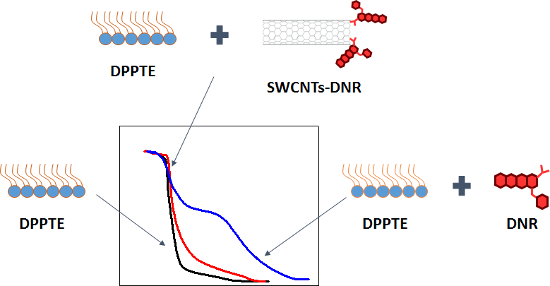
- mechanisms proposed to explain the cellular uptake of CNTs including the passive diffusion in a non-invasive manner (tiny nanoneedle mechanism) [18]. Carbon nanotubes have been successfully used to transport different types of anticancer agents including camptothecin, doxorubicin and daunorubicin [19]. The
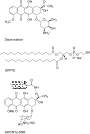


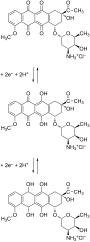


Using natural language processing techniques to inform research on nanotechnology
Beilstein J. Nanotechnol. 2015, 6, 1439–1449, doi:10.3762/bjnano.6.149
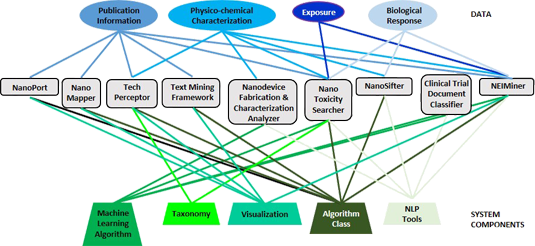
- trials investigating nano versus non-nano drugs. These include facilitating comparisons between clinical trials testing nano and non-nano drug formulations involving the same active ingredient (e.g., Doxil = pegylated liposome [nano] encapsulated doxorubicin compared to Adriamycin = doxorubicin). In
Silica micro/nanospheres for theranostics: from bimodal MRI and fluorescent imaging probes to cancer therapy
Beilstein J. Nanotechnol. 2015, 6, 546–558, doi:10.3762/bjnano.6.57
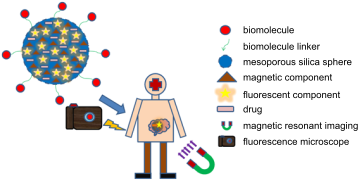
- doxorubicin-loaded silica-encapsulated manganese oxide NPs. The TEM images showed that elemental Mn was equally distributed in the whole silica matrix. The in vitro and in vivo studies suggested that these nanocomposites can be used as a vehicle for pH-responsive intracellular release of doxorubicin. 2.5 Iron


Synthesis of boron nitride nanotubes and their applications
Beilstein J. Nanotechnol. 2015, 6, 84–102, doi:10.3762/bjnano.6.9
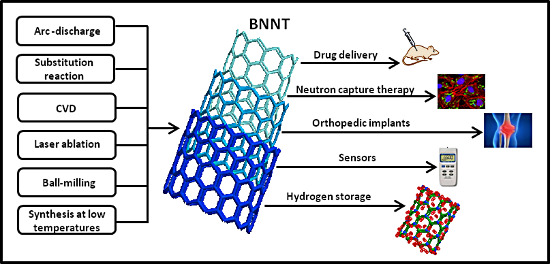
- in the presence and absence of a magnetic field and higher cell-associated uptake was found in the presence of a magnetic field. Then, the composites were loaded with doxorubicin (dox) to investigate the viability of LNCaP prostate cancer cells in the magnetic field. It was found that dox-loaded BNNT
- –NaGdF4:Eu composites had higher toxicity in the presence of a magnetic field due to increased cellular uptake of the composites and thus increased doxorubicin delivery. It can be said that the BNNT–NaGdF4:Eu composites increase the chemotherapy efficiency by the use of an external magnetic field [84




Nanodiamond-DGEA peptide conjugates for enhanced delivery of doxorubicin to prostate cancer
Beilstein J. Nanotechnol. 2014, 5, 937–945, doi:10.3762/bjnano.5.107
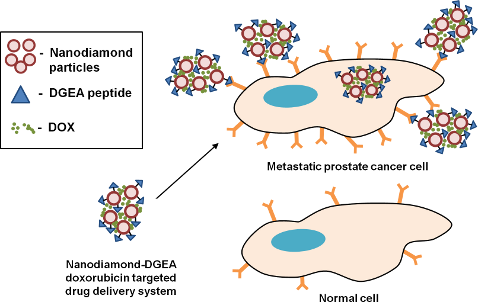
- efficacy of cancer treatments as stand-alone therapies and in combination with standard chemotherapeutic treatment regimens. The current standard of care for metastatic cancer, doxorubicin (DOX), is presented with challenges, namely toxicity due to a lack of specificity and targeted delivery. Nano-enabled
- ; doxorubicin; nanodiamond; prostate cancer; targeted drug delivery; Introduction Prostate cancer is the most frequently diagnosed malignancy in men [1]. Typically the disease is slow growing, but in some cases it progresses to an aggressively metastatic state. When prostate cancer becomes metastatic, the
- current standard of care is chemotherapy, which involves the use of toxic anticancer drugs, like doxorubicin (DOX), to treat cancers by inducing apoptosis. DOX has had high success rates with treating prostate cancer [2]. However, it can cause major side effects such as hair loss, nausea [2][3], and


In vitro toxicity and bioimaging studies of gold nanorods formulations coated with biofunctional thiol-PEG molecules and Pluronic block copolymers
Beilstein J. Nanotechnol. 2014, 5, 546–553, doi:10.3762/bjnano.5.64
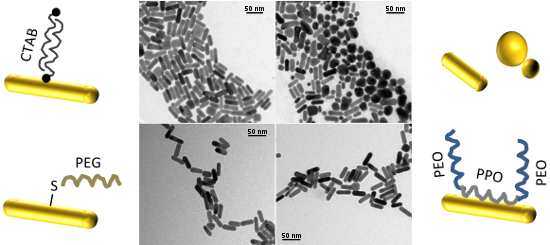
- or antigens to be linked to their surface for targeted delivery and imaging [16][17]. More importantly, one is not able to use CTAB-coated AuNRs as a carrier for drug delivery of water insoluble anti-cancer agents (e.g., doxorubicin, paclitaxel) to the cancerous area since their surface is





