Search results
Search for "electrochemistry" in Full Text gives 90 result(s) in Beilstein Journal of Nanotechnology.
Optimized design of a nanostructured SPCE-based multipurpose biosensing platform formed by ferrocene-tethered electrochemically-deposited cauliflower-shaped gold nanoparticles
Beilstein J. Nanotechnol. 2015, 6, 1840–1852, doi:10.3762/bjnano.6.187
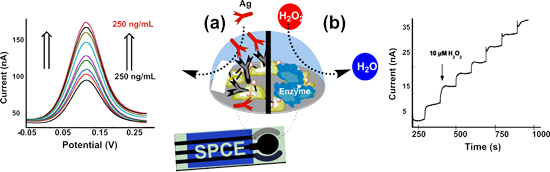
- Wicem Argoubi Maroua Saadaoui Sami Ben Aoun Noureddine Raouafi University of Tunis El-Manar, Chemistry Department, Laboratory of Analytical Chemistry and Electrochemistry (LR99ES15), campus universitaire de Tunis El-Manar 2092, Tunis, Tunisia Department of Chemistry, Faculty of Science, Taibah


In situ SU-8 silver nanocomposites
Beilstein J. Nanotechnol. 2015, 6, 1661–1665, doi:10.3762/bjnano.6.168
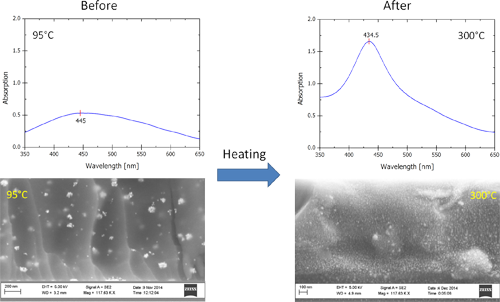
- optical imaging, optoelectronics and electrochemistry to catalysts [2]. However, it is difficult to use such NPs in conjunction with standard top down micro- and nanofabrication processes as positioning and control of the nanoparticles are impossible to maintain [3]. Homogeneous polymeric thin film metal


Nanomechanical humidity detection through porous alumina cantilevers
Beilstein J. Nanotechnol. 2015, 6, 1332–1337, doi:10.3762/bjnano.6.137
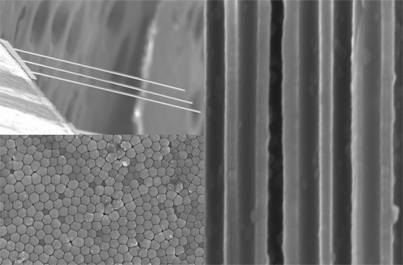
- over channel diameter and interpore distance of the porous film over a wide range (pore diameter from 15 to 200 nm; interpore distance from 50 to 500 nm, film thicknesses up to 200 micrometers) [3]. Moreover the thickness of AAO films can be regulated precisely by using conventional electrochemistry



Heterometal nanoparticles from Ru-based molecular clusters covalently anchored onto functionalized carbon nanotubes and nanofibers
Beilstein J. Nanotechnol. 2015, 6, 1287–1297, doi:10.3762/bjnano.6.133
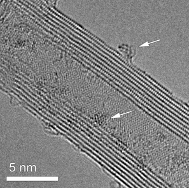
- commercial Pt–Ru/C catalysts. The preparation methods for Pt–Ru/nanocarbon are varied and take inspiration from (i) electrochemistry (electrodeposition) [11][12], (ii) nanoparticle synthesis (polyol procedure) [13][14] or (iii) heterogeneous catalysis (impregnation/reduction). A fixed pH value during the




From lithium to sodium: cell chemistry of room temperature sodium–air and sodium–sulfur batteries
Beilstein J. Nanotechnol. 2015, 6, 1016–1055, doi:10.3762/bjnano.6.105
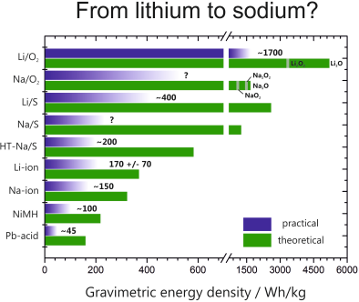
- Physical Chemistry, Justus-Liebig-University Giessen, Heinrich-Buff-Ring 58, 35392 Giessen, Germany BASF SE, 67056 Ludwigshafen, Germany Battery and Electrochemistry Laboratory, Institute of Nanotechnology, Karlsruhe Institute of Technology, Hermann-von-Helmholtz-Platz 1, 76344 Eggenstein-Leopoldshafen


Electrocatalysis on the nm scale
Beilstein J. Nanotechnol. 2015, 6, 1008–1009, doi:10.3762/bjnano.6.103

- R. Jurgen Behm Institute of Surface Chemistry and Catalysis, Ulm University, Albert-Einstein-Allee 47, D-89081 Ulm, Germany 10.3762/bjnano.6.103 Keywords: electrocatalysis; The past two decades have seen a renewed and rapidly growing interest in the fields of electrochemistry and
- Group, the topics equally cover experiment and theory. They range from fundamental aspects of electrochemistry, such as anion adsorption [1] or potential induced restructuring of the electrode surface [2], to the presentation of new theoretical concepts, the mechanistic understanding [3], and the
A simple approach to the synthesis of Cu1.8S dendrites with thiamine hydrochloride as a sulfur source and structure-directing agent
Beilstein J. Nanotechnol. 2015, 6, 881–885, doi:10.3762/bjnano.6.90
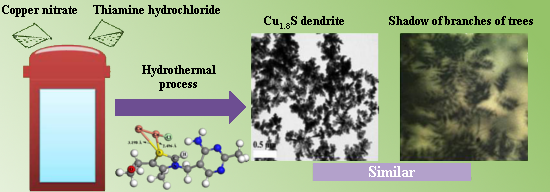
- attention due to its versatile applications in solar cell, electrochemistry, catalysis, and as a gas sensor [1][2][3][4][5]. Many strategies have been developed to prepare Cu1.8S. A solvent-mediated methodology was employed to synthesize highly crystalline Cu1.8S by element copper and sulfur at room


Kelvin probe force microscopy in liquid using electrochemical force microscopy
Beilstein J. Nanotechnol. 2015, 6, 201–214, doi:10.3762/bjnano.6.19
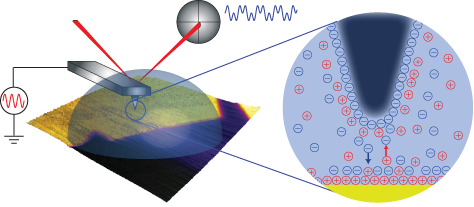
- properties at the solid–liquid interface. Keywords: diffuse charge dynamics; double layer charging; electrochemical force microscopy; electrochemistry; Kelvin probe force microscopy; Introduction Many important physical, chemical and biological processes including wetting, adsorption, electronic transfer
- models in electrochemistry, and the success shown in describing imaging mechanisms in low molarities (≈10 mM) using high frequency (>>MHz) EFM [50], their suitability across all biases (particularly large biases where Vdc >> 25 mV) and timescales as well as at higher ion concentration is unclear
- of fitting procedures, based on analytical models, is a key requirement for the broad applicability of EcFM across all areas of electrochemistry. However, in the short term, the significant increase in both size and complexity of the data necessitates simple analysis methods capable of dealing with


![[Graphic 6]](/bjnano/content/inline/2190-4286-6-19-i11.png?max-width=637&scale=1.18182) response collected 200 nm above a grounded Au electrode in (a, b, c) air, (d, e, f) decane an...
response collected 200 nm above a grounded Au electrode in (a, b, c) air, (d, e, f) decane an...


![[Graphic 22]](/bjnano/content/inline/2190-4286-6-19-i27.png?max-width=637&scale=1.18182) spectra [bias-on] collected 500 nm above HOPG in aqueous solutions of increasing salt concent...
spectra [bias-on] collected 500 nm above HOPG in aqueous solutions of increasing salt concent...

![[Graphic 25]](/bjnano/content/inline/2190-4286-6-19-i30.png?max-width=637&scale=1.18182) spectra [bias-on] collected 500 nm above (a) HOPG and (b) Au in milli-Q water (vertical color...
spectra [bias-on] collected 500 nm above (a) HOPG and (b) Au in milli-Q water (vertical color...

![[Graphic 27]](/bjnano/content/inline/2190-4286-6-19-i32.png?max-width=637&scale=1.18182) spectra [bias-on] recorded 500 nm above a HOPG/Au boundary in milli-Q water. T...
spectra [bias-on] recorded 500 nm above a HOPG/Au boundary in milli-Q water. T...

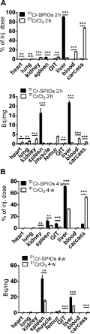
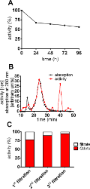
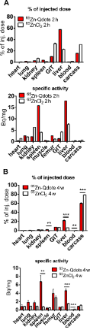
The distribution and degradation of radiolabeled superparamagnetic iron oxide nanoparticles and quantum dots in mice
Beilstein J. Nanotechnol. 2015, 6, 111–123, doi:10.3762/bjnano.6.11
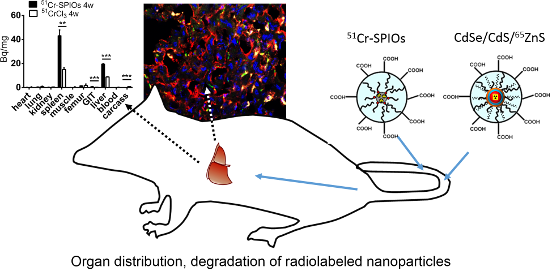
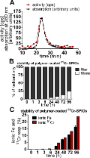
- , Germany Institute of Physical Chemistry and Electrochemistry, Technical University of Dresden, Bergstr. 66b, 01069 Dresden, Germany 10.3762/bjnano.6.11 Abstract 51Cr-labeled, superparamagnetic, iron oxide nanoparticles (51Cr-SPIOs) and 65Zn-labeled CdSe/CdS/ZnS-quantum dots (65Zn-Qdots) were prepared





Carbon nano-onions (multi-layer fullerenes): chemistry and applications
Beilstein J. Nanotechnol. 2014, 5, 1980–1998, doi:10.3762/bjnano.5.207
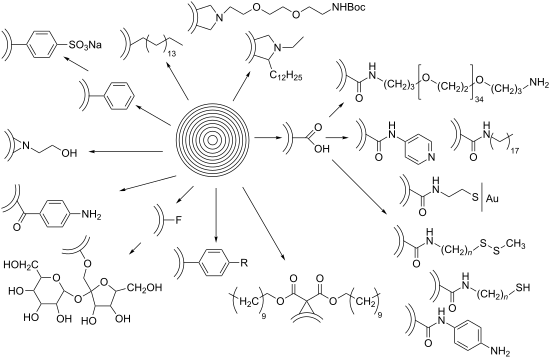
- , the authors estimated that approximately one pyridine functionality per 120 CNO surface carbon atoms was present. The pyridine groups were then decorated with Zn-tetraphenylporphyrin (ZnTPP) what was confirmed by NMR spectroscopy and electrochemistry. No further spectroscopic studies were carried out


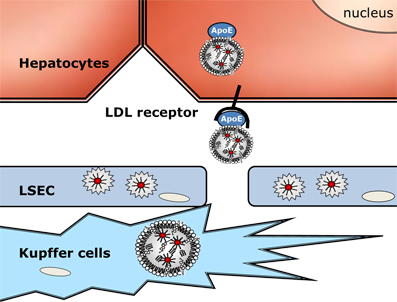
The cell-type specific uptake of polymer-coated or micelle-embedded QDs and SPIOs does not provoke an acute pro-inflammatory response in the liver
Beilstein J. Nanotechnol. 2014, 5, 1432–1440, doi:10.3762/bjnano.5.155
- Electrochemistry, Technical University of Dresden, 01062 Dresden, Germany Department of Electron Microscopy and Micro Technology, Heinrich-Pette Institute, Martinistrasse 52, 20246 Hamburg, Germany Institute of Physical Chemistry, University of Hamburg, Grindelallee 117, 20146 Hamburg, Germany 10.3762/bjnano



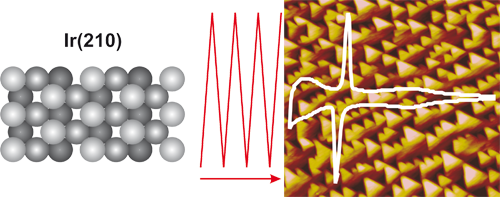
Restructuring of an Ir(210) electrode surface by potential cycling
Beilstein J. Nanotechnol. 2014, 5, 1349–1356, doi:10.3762/bjnano.5.148
- Khaled A. Soliman Dieter M. Kolb Ludwig A. Kibler Timo Jacob Institut für Elektrochemie, Universität Ulm, 89069 Ulm, Germany Permanent address: Electrochemistry and Corrosion Laboratory, Physical Chemistry Department, National Research Centre, Cairo, 12622, Egypt 10.3762/bjnano.5.148 Abstract


Self-organization of mesoscopic silver wires by electrochemical deposition
Beilstein J. Nanotechnol. 2014, 5, 1285–1290, doi:10.3762/bjnano.5.142
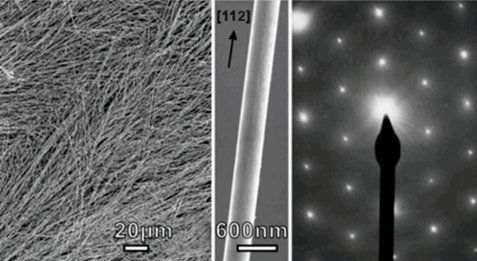
- electrochemical environments as well as for the fabrication of highly-ordered, single-crystalline metal nanowires. Keywords: crystal growth; electrochemistry; electrodeposition; mesowires; nanoelectrochemistry; nanowires; self-organization; silver nanowires; silver nitrate; stability; Introduction Nanoscale and




Double layer effects in a model of proton discharge on charged electrodes
Beilstein J. Nanotechnol. 2014, 5, 973–982, doi:10.3762/bjnano.5.111
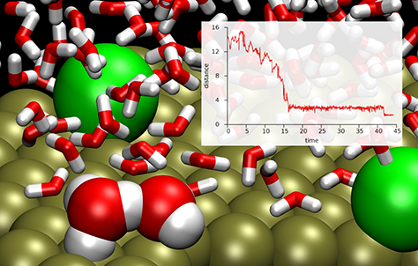
- behavior cannot be based solely on the electrochemical potential (or surface charge) but needs to resort to the molecular details of the double layer structure. Keywords: electrocatalysis; interfacial electrochemistry; proton discharge; reactive force field; trajectory calculations; Introduction One of


Volcano plots in hydrogen electrocatalysis – uses and abuses
Beilstein J. Nanotechnol. 2014, 5, 846–854, doi:10.3762/bjnano.5.96
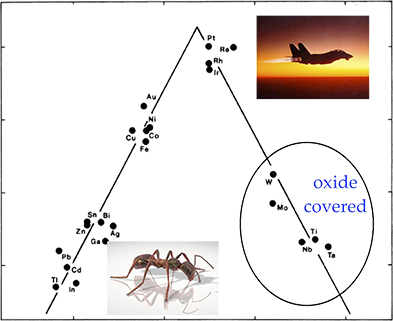
- catalysis is scarce. In electrochemistry, Gerischer [2] and Parsons [3][4] were the first to point out that certain models for the hydrogen reaction predicted a volcano-like curve. However, it was Trasatti [5] who collected experimental data and constructed the first volcano curve for hydrogen evolution


Adsorption and oxidation of formaldehyde on a polycrystalline Pt film electrode: An in situ IR spectroscopy search for adsorbed reaction intermediates
Beilstein J. Nanotechnol. 2014, 5, 747–759, doi:10.3762/bjnano.5.87
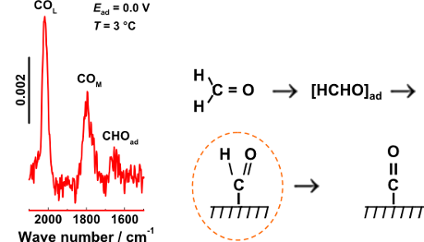
- dissociative adsorption and oxidation of formaldehyde are discussed. Keywords: electrocatalysis; formaldehyde adsorption; formyl intermediate; in situ spectro-electrochemistry; Pt; Introduction The electrooxidation of organic C1 molecules, in particular of methanol, has been one of the most important topics


Shape-selected nanocrystals for in situ spectro-electrochemistry studies on structurally well defined surfaces under controlled electrolyte transport: A combined in situ ATR-FTIR/online DEMS investigation of CO electrooxidation on Pt
Beilstein J. Nanotechnol. 2014, 5, 735–746, doi:10.3762/bjnano.5.86
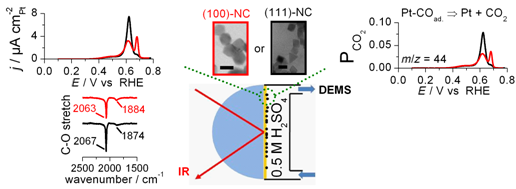
- spectro-electrochemistry; Pt; shape selected nanocrystals; Introduction Since the pioneering work of Bewick and coworkers [1][2], in situ infrared (IR) spectro-electrochemistry has been widely used to probe adsorbed species at the electrified solid/liquid interface under potential control. Among others
- , IR spectro-electrochemistry [3] was successfully employed to investigate the relations between electrode surface structure and the binding modes of adsorbed species [4][5][6][7][8][9][10], to identify poisoning species and adsorbed intermediates formed during electrocatalytic reactions [2][11][12][13
- base CV (hydrogen region) is equal to the charge displaced during CO adsorption at 0.10 VRHE (qdis). This provides a direct determination of the Epztc [27][28][29]. Electrochemical setup All electrochemical measurements, both in the beaker cell and in the in situ IR spectro-electrochemistry were




Constant chemical potential approach for quantum chemical calculations in electrocatalysis
Beilstein J. Nanotechnol. 2014, 5, 668–676, doi:10.3762/bjnano.5.79
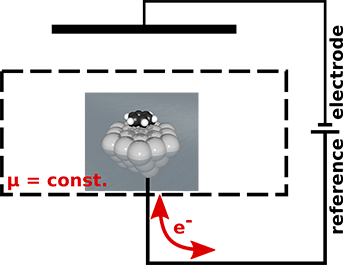
- with the common implicit solvent models this scheme can become a powerful tool, especially for the investigation of omnipresent non-faradaic effects in electrochemistry. Keywords: density functional theory; electrocatalysis; electrochemistry; electronic strutcture theory; nanoparticles; quantum
- chemistry; Introduction In October 2012 the workshop “Elementary reaction steps in electrocatalysis: Theory meets experiment” was held in Reisensburg, Germany. Alongside exquisite experimental work on electrochemistry, numerous prominent contributions displayed the range of modern developments and
- applications of theory in electrochemistry. This included the application of solid state approaches [1][2][3][4], investigations on the role of the solvent [5][6][7][8][9] or simulations including explicit dynamics of reactants [10]. Furthermore, several contributors presented work in which cluster models were


Single-asperity contact mechanics with positive and negative work of adhesion: Influence of finite-range interactions and a continuum description for the squeeze-out of wetting fluids
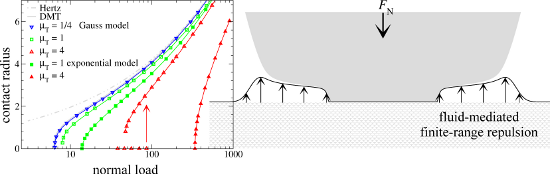
Beilstein J. Nanotechnol. 2014, 5, 419–437, doi:10.3762/bjnano.5.50


Preparation of poly(N-vinylpyrrolidone)-stabilized ZnO colloid nanoparticles
Beilstein J. Nanotechnol. 2014, 5, 402–406, doi:10.3762/bjnano.5.47
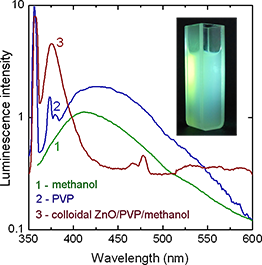
- ., Chisinau MD-2009, Moldova National Institute of Electrochemistry and Condensed Matter, 144 Dr. A. Paunescu Podeanu str., Timisoara 300569, Romania 10.3762/bjnano.5.47 Abstract We propose a method for the synthesis of a colloidal ZnO solution with poly(N-vinylpyrrolidone) (PVP) as stabilizer. Stable


A catechol biosensor based on electrospun carbon nanofibers
Beilstein J. Nanotechnol. 2014, 5, 346–354, doi:10.3762/bjnano.5.39
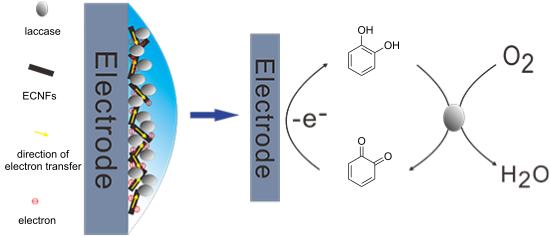
- and ECNFs and showed that the immobilization process had little influence on the activity of laccase. Direct electrochemistry and electrocatalysis of the laccase–Nafion–ECNFs/GCE Figure 4 presents the cyclic voltammograms of the laccase–Nafion–ECNFs/GCE in acetate buffer (pH 4.0) with scan rates from


Atomic layer deposition, a unique method for the preparation of energy conversion devices
Beilstein J. Nanotechnol. 2014, 5, 245–248, doi:10.3762/bjnano.5.26
- Julien Bachmann Institute of Inorganic Chemistry, Friedrich-Alexander University of Erlangen-Nürnberg, Egerlandstrasse 1, 91058 Erlangen, Germany 10.3762/bjnano.5.26 Keywords: atomic layer deposition; batteries; energy conversion; electrochemistry; electrolysis; fuel cells; photovoltaics; solar


Change of the work function of platinum electrodes induced by halide adsorption
Beilstein J. Nanotechnol. 2014, 5, 152–161, doi:10.3762/bjnano.5.15
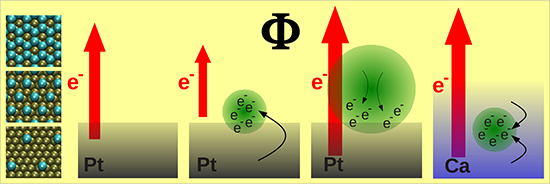
- ; ionicity; polarizability; surface dipole; work function; Introduction In electrochemistry, processes at the interface between an electron conductor, the electrode, and an ion conductor, the electrolyte, are studied [1]. In order to be charge neutral, the electrolyte contains equal amounts of anions and
- they also change the work function of the electrode, which is directly related to the electrode potential [5]. Furthermore, they also affect the chemical properties of the electrodes [6]. In spite of the importance of the specific adsorption of anions in electrochemistry, atomistic details of the role
- of anions in surface electrochemistry are still poorly understood [7]. Here, surface science studies focusing on the change of the properties of metal surfaces upon halide adsorption can help to elucidate the role of anionic specific adsorption at electrode/electrolyte interfaces, in particular with


Constant-distance mode SECM as a tool to visualize local electrocatalytic activity of oxygen reduction catalysts
Beilstein J. Nanotechnol. 2014, 5, 141–151, doi:10.3762/bjnano.5.14
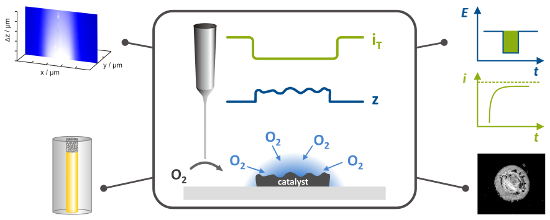
- tip-to-sample separation by means of an additional electrochemistry-independent but distance-dependent analytical signal. Among other strategies for cd-mode imaging like the tip-position modulation mode (TPM) [3], AFM-SECM [4][5] and SECM-SICM [6][7], AC-SECM [8], the soft stylus probe [9][10] and the