


Search results
Search for "film" in Full Text gives 1174 result(s) in Beilstein Journal of Nanotechnology. Showing first 200.
Modeling magnetic properties of cobalt nanofilms used as a component of spin hybrid superconductor–ferromagnetic structures
Beilstein J. Nanotechnol. 2025, 16, 1557–1566, doi:10.3762/bjnano.16.110
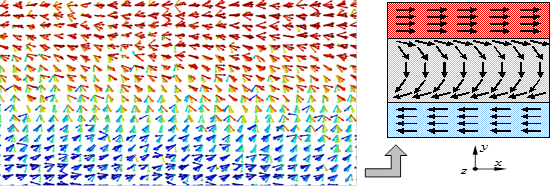
- previously obtained data confirmed the adequacy of the applied mathematical model. The second stage of numerical studies was devoted to the analysis of the magnetic behavior of cobalt nanofilms of different thicknesses. It was shown that the film thickness has a significant influence on the magnetic
- thin films and the formation of Neel domain walls. Keywords: ferromagnetic properties; LAMMPS; mathematical modeling; MEAM; molecular dynamics; spin dynamics; Introduction Thin film structures [1][2] are increasingly employed each year in a wide range of applications, serving as functional [3][4
- . Due to active experimental and theoretical research on thin films, significant progress has been made in recent years. Since the information in the field of thin film technologies is updated quite rapidly, there is a need for a thorough study and optimization of the main technological processes that


Transient electronics for sustainability: Emerging technologies and future directions
Beilstein J. Nanotechnol. 2025, 16, 1545–1556, doi:10.3762/bjnano.16.109

- subsequently degrading harmlessly within the body. Collectively, these trends reflect a transition in materials science from an emphasis on durability to a growing emphasis on controllable disappearance tailored to specific clinical needs. Concurrently, the rapid advancement of soft and stretchable thin-film
- , opportunities exist to broaden the spectrum of bioresorbable metal materials. Research on Mg- and Zn-based bulk alloys, traditionally used as structural materials, has been extended to thin-film formats suitable for electronic applications. This transition enables fine-tuning of not only degradation profiles
- electronic devices on a large-area substrate, such as a silicon wafer, followed by backside etching to remove the handle or box layers, thereby isolating the functional thin film for transfer onto a biodegradable substrate. This wafer-level technique offers a promising route to large-area, high-resolution


Influence of laser beam profile on morphology and optical properties of silicon nanoparticles formed by laser ablation in liquid
Beilstein J. Nanotechnol. 2025, 16, 1533–1544, doi:10.3762/bjnano.16.108
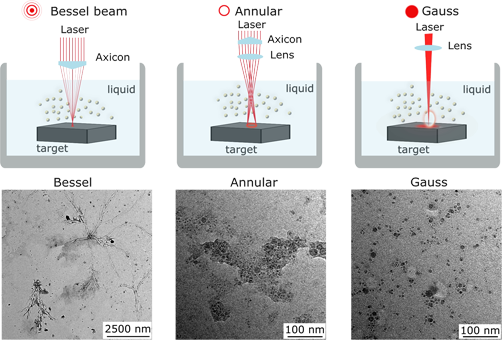
- were investigated by transmission electron microscopy (TEM) using a JEOL JEM-2100F (JEOL, USA) operating with an accelerating voltage of 200 kV. For TEM and SAED measurements, the NPs were drop-casted onto copper grids covered by carbon film and dried under ambient conditions. Crystalline structure


Cross-reactivities in conjugation reactions involving iron oxide nanoparticles
Beilstein J. Nanotechnol. 2025, 16, 1504–1521, doi:10.3762/bjnano.16.106



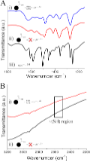


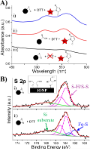


Laser processing in liquids: insights into nanocolloid generation and thin film integration for energy, photonic, and sensing applications
Beilstein J. Nanotechnol. 2025, 16, 1428–1498, doi:10.3762/bjnano.16.104
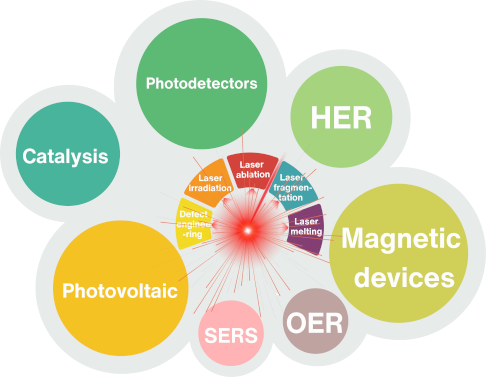
- Raman spectroscopy (SERS) substrates, and solar cells. In this review article, we describe different methods of nanocolloidal synthesis using laser-assisted processes and corresponding thin film fabrication methods, particularly those utilized for device fabrication and characterization. The four
- sections start with an introduction to the common laser-assisted synthesis for nanocolloids and different methods of thin film fabrication using these nanocolloids followed by devices fabricated and characterized for applications including photovoltaics, photodetectors, catalysis, photocatalysis
- foundational understanding, without investigating the extensive details that other reviews have already explored. The fundamental chemical and physical aspects of pulsed laser ablation (PLA) processes, with a focus on the evolution of material from the target to the deposited film, were explained by Ashfold et


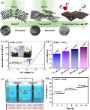


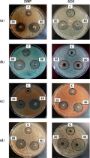


Synthesis and antibacterial properties of nanosilver-modified cellulose triacetate membranes for seawater desalination
Beilstein J. Nanotechnol. 2025, 16, 1380–1391, doi:10.3762/bjnano.16.100
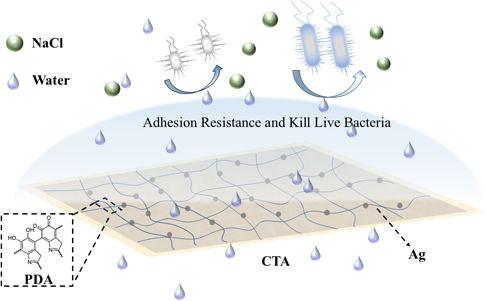
- PAN nanofibers, enhancing the hydrophilicity and antibacterial properties of the membrane [20]. Elimelech’s group introduced copper nanoparticles (Cu NPs) onto the surface of thin-film composite (TFC) polyamide RO membranes through a method involving electrostatic functionalization. The functionalized
- membranes exhibited outstanding antibacterial performance against Escherichia coli and Staphylococcus aureus [22]. Mayyahi introduced TiO2 nanoparticles into the polyamide layer of traditional TFC membranes by interfacial polymerization with m-phenylenediamine to create a thin film nanocomposite (TFN
- fibers boast exceptional hydrophilicity, facile film-forming ability, high salt retention rate, cost effectiveness, environmental friendliness, and resistance to chlorine; making it a promising material for water desalination [25][26][27]. However, CTA is susceptible to erosion and degradation by


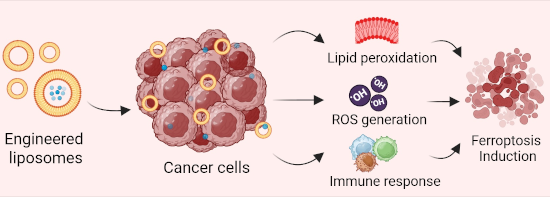
Ferroptosis induction by engineered liposomes for enhanced tumor therapy
Beilstein J. Nanotechnol. 2025, 16, 1325–1349, doi:10.3762/bjnano.16.97
- efficiency (EE). These techniques can be categorized into conventional approaches such as thin film hydration, reverse phase evaporation, solvent injection, detergent removal, and newer innovations. Also, modern techniques are further developments or adaptations of conventional approaches. These methods
- method for clinical liposome formulations is the thin film hydration/Bangham technique [113]. DepoFoam liposome technology utilizes a proprietary liposome formulation that can be administered by injection and provides sustained release of the encapsulated drug over an extended period. DepoFoam liposomes
- traditional methods, such as thin film hydration, to produce liposomes and lipid nanoparticles [113][120]. Microfluidics offers exceptional control over particle size, lower variability, higher EE, and better scalability, making it the most advanced and practical approach for nanoparticle production [115][119


Enhancing the photoelectrochemical performance of BiOI-derived BiVO4 films by controlled-intensity current electrodeposition
Beilstein J. Nanotechnol. 2025, 16, 1289–1301, doi:10.3762/bjnano.16.94
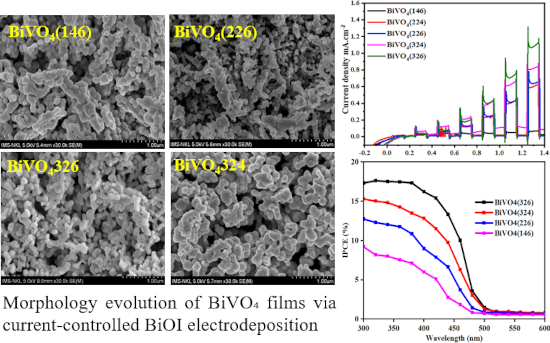
- with large surface areas; for instance, Yun He et al. [15] reported flower-like BiVO4 photoanodes achieving a photocurrent density of 0.81 mA·cm−2 at 1.23 V vs RHE. However, the hydrothermal method often requires high temperatures and prolonged reaction times, and offers limited control over film
- produce BiVO4 thin films at high deposition rates; however, this method resulted in irregular grain structures and significant material defects, limiting the PEC performance improvements. Electrodeposition has emerged as a promising low-cost and scalable technique for BiVO4 film fabrication, offering
- better control over film morphology and crystallinity under mild conditions. Kim et al. [18] reported that BiVO4 films fabricated via electrodeposition achieved a maximum photocurrent density of 1.4 mA·cm−2 at 1.23 V vs RHE. These films exhibited a three-dimensional nanoporous structure that facilitated



Functional bio-packaging enhanced with nanocellulose from rice straw and cinnamon essential oil Pickering emulsion for fruit preservation
Beilstein J. Nanotechnol. 2025, 16, 1234–1245, doi:10.3762/bjnano.16.91
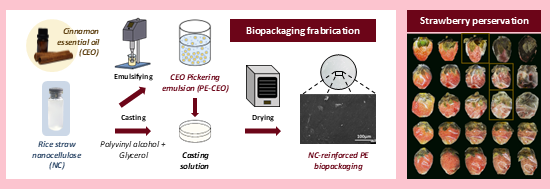
- fruit that is highly susceptible to microbial contamination and mold growth [39] to highlight its potential to extend shelf life and improve postharvest quality. The findings indicate that this bioactive film could serve as an effective alternative to conventional packaging, offering both sustainability
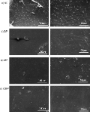
- structural integrity due to the strong hydrogen bonding between NC and PVA (Figure 3c) [22]. The addition of CEO further modified the film structure, forming a more compact and homogenous surface, which likely contributed to improved mechanical properties and moisture resistance (Figure 3d) [31]. Bioactive
- of the film, while the slower phase was controlled by how CEO moved through the polymer. Mass loss and appearance of the strawberry samples when covered by the biopackaging material are presented in Figure 5b,c. Strawberry is in the focus of this research since its moist and soft structure can




Mechanical stability of individual bacterial cells under different osmotic pressure conditions: a nanoindentation study of Pseudomonas aeruginosa
Beilstein J. Nanotechnol. 2025, 16, 1171–1183, doi:10.3762/bjnano.16.86
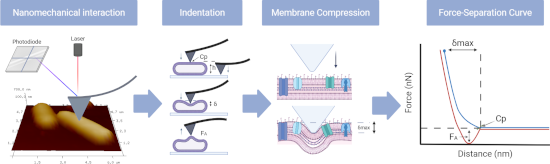
- regular adhesive tape, and coated with 5 μL of the cationic polymer poly-ʟ-lysine (PLL, MW 40 kDa, Sigma-Aldrich). The drop of PLL was not allowed to dry but incubated for 10 min, and then the surfaces were repeatedly rinsed with Milli-Q water to allow the formation of a thin film. This coating promotes


Transfer function of an asymmetric superconducting Gauss neuron
Beilstein J. Nanotechnol. 2025, 16, 1160–1170, doi:10.3762/bjnano.16.85
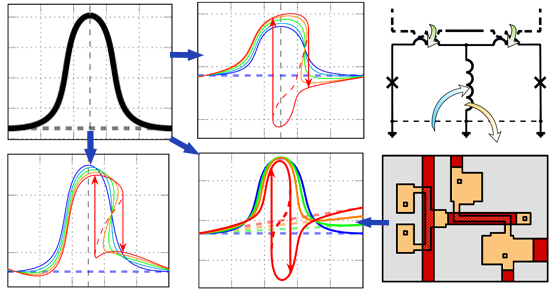
- due to, for example, defects in the thin-film structure. The third type of asymmetry may be associated with unequal signal supply into the input arms of the neuron. Below, we analyze the transformation of the TF in each of these cases and compare it with experimental results [18]. Symmetric Gauss
- ]. Indeed, the inductance of a superconducting film carrying an electric current consists of two components, namely, the magnetic inductance (originating from the magnetic field energy) and the kinetic inductance (originating from the kinetic energy of the superconducting electrons). Should one want to



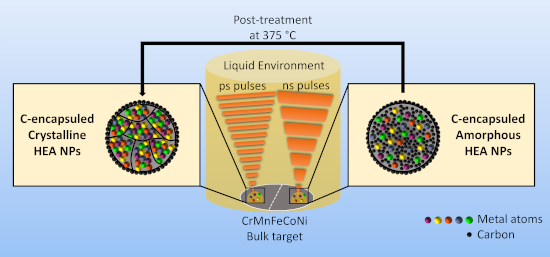
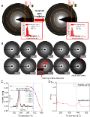
Crystalline and amorphous structure selectivity of ignoble high-entropy alloy nanoparticles during laser ablation in organic liquids is set by pulse duration
Beilstein J. Nanotechnol. 2025, 16, 1141–1159, doi:10.3762/bjnano.16.84




Deep learning for enhancement of low-resolution and noisy scanning probe microscopy images
Beilstein J. Nanotechnol. 2025, 16, 1129–1140, doi:10.3762/bjnano.16.83
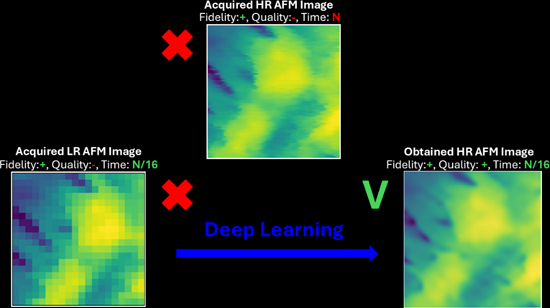
- . Results and Discussion In this study, 4× upscaled images were obtained from real measured low-resolution AFM images of Celgard® 2400 membrane and high-roughness titanium film used for tip characterization (Figure 1 and Figure 2, respectively). 4× upscaling means upscaling both the x and y directions and
- beneficial to authenticate results using other microscopies such as electron microscopy, or spectroscopic techniques, where relevant. Importantly, computationally, PSNR average values are very close to 30 for the Celgard® 2400 membrane surface and above 32 for the titanium film, putting them within the
- methods, PSNR and SSIM, show no statistically significant differences between the traditional methods and the deep learning models for image fidelity, the no-reference methods for image quality, Fourier Sharpness, PI, Ma, and NIQE exhibit such differences. Importantly, while for the titanium film data set


Influence of ion beam current on the structural, optical, and mechanical properties of TiO2 coatings: ion beam-assisted vs conventional electron beam evaporation
Beilstein J. Nanotechnol. 2025, 16, 1097–1112, doi:10.3762/bjnano.16.81
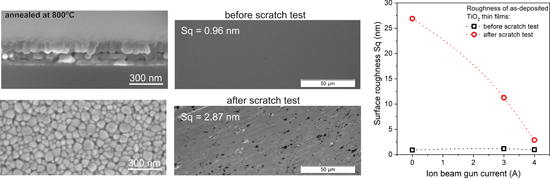
- ; Introduction One of the commonly used methods for the deposition of various materials for thin film optical coatings, is electron beam evaporation (EBE) [1][2][3][4][5]. Today, in many applications, including medicine, telecommunications, optoelectronics, photovoltaics, the requirements for optical coatings
- -assisted deposition (IBAD), which is the bombardment of a thin film with a beam of energetic particles during deposition, is an excellent technique for modifying the microstructure and optical, mechanical, and tribological properties of thin film coatings [8][9][10][11]. This energetic process offers many
- become one of the methods for producing high-quality optical thin film coatings. According to [13][14], IBAD support of the electron beam evaporation process affects the properties thin films like formation of new phases, modification of residual stress, elimination of the columnar-like character of the




Single-layer graphene oxide film grown on α-Al2O3(0001) for use as an adsorbent
Beilstein J. Nanotechnol. 2025, 16, 1082–1087, doi:10.3762/bjnano.16.79
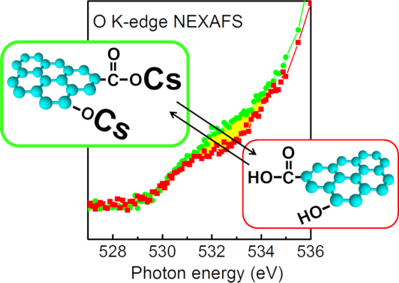
- ions, including radioactive nuclides in aqueous solutions. Large-area and single-layer graphene oxide (SLGO) grown on α-Al2O3(0001) was used as a model structure of GO since the aggregation and re-stacking of the GO sheets prevent the adequate analysis of the adsorption state. The SLGO film was
- typically been fabricated through casting small pieces of GO flakes onto a substrate. In this study, the SLGO film was synthesized by oxidizing single-layer graphene (SLG) grown by metal-free chemical vapor deposition (CVD) on a α-Al2O3(0001) substrate. The strong interface interaction between SLG and α
- -Al2O3(0001) can minimize peeling off of SLG from the α-Al2O3(0001) substrate following the oxidation process [18]. This allows us to obtain a large-area SLGO film, which can then be subjected to evaluation of the adsorption properties. Subsequent to the synthesis of SLGO/α-Al2O3(0001), further studies


Soft materials nanoarchitectonics: liquid crystals, polymers, gels, biomaterials, and others
Beilstein J. Nanotechnol. 2025, 16, 1025–1067, doi:10.3762/bjnano.16.77
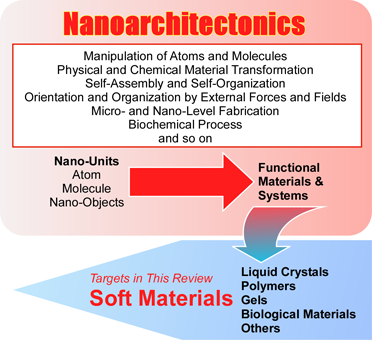
- also illustrate the potential applications, including organic semiconductor devices, electrochemical catalysts, thin-film sensors, solar energy generation, plastic crystal electrolytes, microactuators, smart light-responsive materials, self-repairing materials, enzyme cascade sensors, healing materials
- the synthesis of covalent organic frameworks via polymer chemistry [70][71][72][73][74]. In particular, some thin-film techniques based on interface science are useful for the deliberate and rational assembly of ordered aggregated membrane structures. This is exemplified by the development of methods
- self-organization at the molecular film level offers significant potential for a range of applications. The precise separation and alignment of π-conjugated discotic liquid crystal molecular nanowires represents an attractive area of research. Kumar, Nayak, and colleagues investigated an approach to






Multifunctional properties of bio-poly(butylene succinate) reinforced with multiwalled carbon nanotubes
Beilstein J. Nanotechnol. 2025, 16, 1014–1024, doi:10.3762/bjnano.16.76
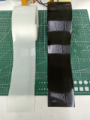
- melt flow rate of the samples. The standardized samples for mechanical, tribological, and physical property testing of the PBS/CNT nanocomposite were obtained from a film (Figure 7) produced using the cast film extrusion method, following a procedure similar to that described in [28]. Barrel zone
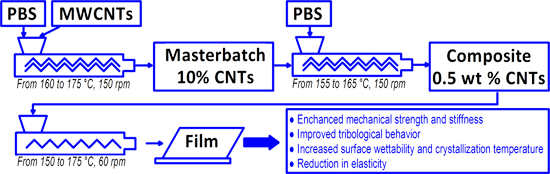
- film sample made of original PBS (denoted PBS) was also prepared. A schematic diagram of the two-stage process for obtaining the nanocomposite and the film based on it is shown in Figure 8. Characterizations A scanning electron microscope (SEM), Hitachi SU8010 (Hitachi, Tokyo, Japan), was used to
- water absorption (n) was measured following ISO 62:2008 “Plastics – Determination of Water Absorption”, using film samples of a square shape (50 × 50 mm2) with a thickness of 350 µm. The surface tension or wettability (σ) of the films was measured according to ISO 8296:2003 “Plastics – Film and Sheeting



A calix[4]arene-based supramolecular nanoassembly targeting cancer cells and triggering the release of nitric oxide with green light
Beilstein J. Nanotechnol. 2025, 16, 1003–1013, doi:10.3762/bjnano.16.75
- , and the solvent was evaporated under reduced pressure at 35 °C. The resulting film was rehydrated with an aqueous solution of 1 (50 μM) by stirring overnight at room temperature. The final solution was left to equilibrate and filtered. Encapsulation efficiency (EE %) was calculated using the formula


Time-resolved probing of laser-induced nanostructuring processes in liquids
Beilstein J. Nanotechnol. 2025, 16, 968–1002, doi:10.3762/bjnano.16.74
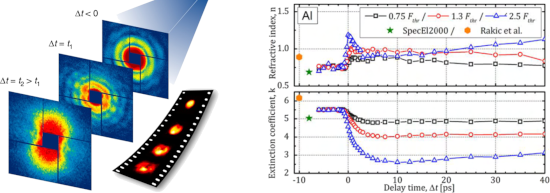
- nanobubbles [127] shown in Figure 8B. The SPR of liquid metal particles, such as gold, should drastically change because of the change of the dielectric function. Nevertheless, the melting transition has never been detected spectroscopically on an ultrafast timescale. In thin-film geometry, the optical
- reflectivity has been reliably assigned to film melting [129][130]. Optical reflectivity is discussed in more detail in the following chapter. Additionally, if the NP temperature is high enough, the heat released to the liquid within a few tens of picoseconds can be sufficient to form vapor bubbles around the


Tendency in tip polarity changes in non-contact atomic force microscopy imaging on a fluorite surface
Beilstein J. Nanotechnol. 2025, 16, 944–950, doi:10.3762/bjnano.16.72
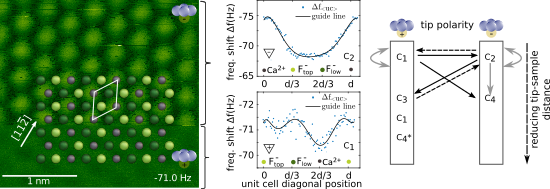
- distance-dependent data, the contrast mode assignment is questionable. Experimental RT experiments were performed on a bulk CaF2 crystal after preparing a clean CaF2(111) surface by cleaving the crystal in ultra-high vacuum (UHV) [23]. For the LT experiments, a CaF2/CaF/Si(111) thin film sample was used
- fast (horizontal) and slow (vertical) scan directions. The surface directions for the bulk crystal exposing the (111) surface can be determined by cleaving the crystal along another surface from the {111} family [31]. For CaF2 thin films grown on Si(111) surfaces, it has been established that the film
- grows in type-B epitaxy [24][25][32]. This implies that the direction of the silicon crystal surface points in opposite direction of the direction of the CaF2 thin film. The direction of the pristine Si(111) (7 × 7) surface was determined by identifying the faulted and unfaulted halves of the (7 × 7


Characterization of ion track-etched conical nanopores in thermal and PECVD SiO2 using small angle X-ray scattering
Beilstein J. Nanotechnol. 2025, 16, 899–909, doi:10.3762/bjnano.16.68
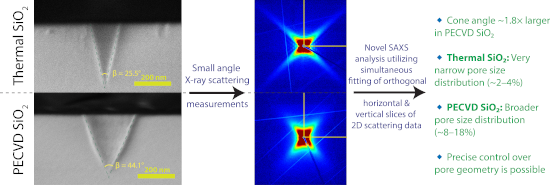
- can only be grown on a Si substrate. PECVD, in contrast, allows for the deposition at much lower temperatures on many different substrates with control over the film properties, such as stoichiometry, density, refractive index, and residual stress. As these fabrication methods involve fundamentally
- , and 12.1 keV/nm respectively, remaining almost constant throughout the film (ΔSe ≤ 0.5%). Similarly, the average Se values for PECVD SiO2 for 1.6 GeV, 185 MeV, and 89 MeV Au irradiation are 20.6, 16.3, and 11.8 keV/nm respectively, also with minimal variation across the film (ΔSe ≤ 0.5%). The
- measured the thickness etched from each film after etching in 3% HF for different defined time intervals. The thickness difference before and after etching was measured using ellipsometry, which revealed that thermal SiO2 is etched at 15.6 ± 0.6 nm/min, while PECVD SiO2 is etched at 34.3 ± 1.2 nm/min


Heat-induced transformation of nickel-coated polycrystalline diamond film studied in situ by XPS and NEXAFS
Beilstein J. Nanotechnol. 2025, 16, 887–898, doi:10.3762/bjnano.16.67
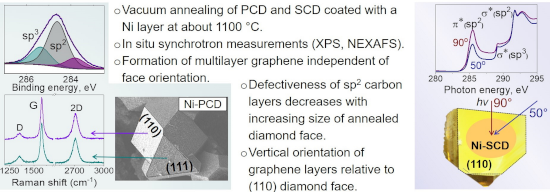
- coating on the electronic structure and chemical state of graphite layers formed on the surface of a polycrystalline diamond (PCD) film with mixed grain orientation was studied. A synthetic single-crystal diamond (SCD) with a polished (110) face was examined for comparison. The samples were coated with a
- thin nickel film deposited by thermal evaporation. The graphitization of diamond with and without a nickel coating as a result of high-vacuum annealing at a temperature of about 1100 °C was studied in situ using synchrotron-based X-ray photoelectron spectroscopy (XPS) and near-edge X-ray absorption
- fine structure (NEXAFS) methods. XPS data revealed the formation of a thin graphite-like film with low-ordered atomic structure on the surface of the nickel-coated PCD film. The chemical state of sp2-hybridized carbon atoms was found to be insensitive to the face orientation of the diamond micro-sized


Ar+ implantation-induced tailoring of RF-sputtered ZnO films: structural, morphological, and optical properties
Beilstein J. Nanotechnol. 2025, 16, 872–886, doi:10.3762/bjnano.16.66
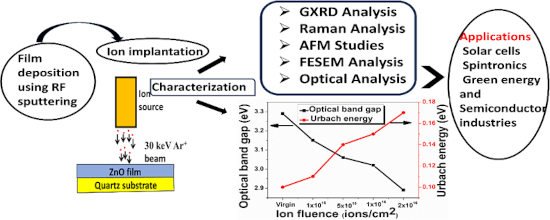
- promising material for device fabrication in different fields, namely, spintronics, nanoelectronics, and photonics [1][2]. It possesses a wide bandgap of 3.37 eV [3] and has a large exciton binding energy of about 60 meV [4], which assures the stability of ZnO film-based devices such as liquid crystal
- foreign ions in the ZnO film lattice can create an impact on its surface roughness and particle size. Previous reports available discuss the implantation-induced optical longitudinal phonon symmetry in ZnO films using heavy ions with high energy and low implantation fluences [12][13][14][15]. Singh et al
- . [12] observed the evolution of symmetry-forbidden and A1 (LO) modes in 120 MeV Au9+ ion-irradiated ZnO films. Ying et al. [13] described an A1 (LO) mode in the Raman spectra of energy-dependent and dose-dependent krypton ion-implanted ZnO film after varying the fluence in the range from 5 × 10¹³ to






Insights into the electronic and atomic structures of cerium oxide-based ultrathin films and nanostructures using high-brilliance light sources
Beilstein J. Nanotechnol. 2025, 16, 860–871, doi:10.3762/bjnano.16.65

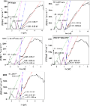
- configurations at 110 and 125 eV, respectively [23][25][26][27][28]. Figure 1 reports valence band spectra from an ultrathin cerium oxide film before and after ultrahigh vacuum (UHV) annealing at 600 °C, acquired at the two resonant energies. Using a photon energy at the Ce4+-related resonance (110 eV), the
- that form the film, while the Pt ions in the 2+ oxidation state are confined at the outermost layers [29]. The interplay of ceria surfaces with adsorbed molecules, a crucial factor in understanding reactivity, has become a significant research focus, also thanks to synchrotron-radiation-based XPS
- 3a shows a sequence of μ-XPS valence band spectra acquired using a photon at the Ce3+-related Ce 4d→Ce 4f1 resonance (hν = 120.8 eV) on a Ce0.4Zr0.6O2−x film upon removal and reintroduction of oxygen (PO2 = 1 × 10⁻⁷ mbar) in the experimental chamber. When oxygen is removed (red spectrum in Figure 3b


Synchrotron X-ray photoelectron spectroscopy study of sodium adsorption on vertically arranged MoS2 layers coated with pyrolytic carbon
Beilstein J. Nanotechnol. 2025, 16, 847–859, doi:10.3762/bjnano.16.64
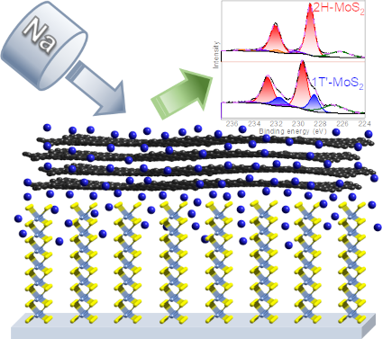
- source was simultaneously deposited in vacuum on the surfaces of MoS2, pyrolytic carbon, and a hybrid sample obtained by transferring a pyrolytic carbon film onto the MoS2 film. According to XPS data, sodium easily penetrates into the space between the vertical layers of the uncoated film, and its
- interaction with MoS2 leads to the transformation of the original hexagonal structure into a distorted tetragonal one. Under the experimental conditions, sodium is unable to diffuse through the carbon film consisting of horizontally oriented graphene domains and is almost completely removed by annealing the
- sample at 773 K in ultrahigh vacuum. The presence of the underlying MoS2 film facilitates the diffusion of sodium through the graphitic coating, but not all of the deposited sodium reaches MoS2. As a result, the sodium-induced rearrangement of the carbon-coated MoS2 is less than that of the free MoS2





