


Search results
Search for "flexible" in Full Text gives 362 result(s) in Beilstein Journal of Nanotechnology. Showing first 200.
Electrospun nanofibers: building blocks for the repair of bone tissue
Beilstein J. Nanotechnol. 2024, 15, 941–953, doi:10.3762/bjnano.15.77
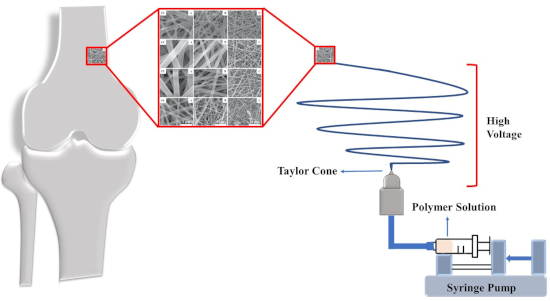
- to the healing process through their porous and flexible three-dimensional structure. They can increase the permeability of gases and liquids and reduce infection by bacteria because of their high filtration efficiency. Also, there is the great possibility of adding other functional moieties into the


The effect of age on the attachment ability of stick insects (Phasmatodea)
Beilstein J. Nanotechnol. 2024, 15, 867–883, doi:10.3762/bjnano.15.72

- different attachment mechanisms evolved in insects, namely, hairy pads consisting of flexible setae, which adapt to the surface topography, and smooth pads possessing a soft and deformable cuticle to comply with the substrate profile [9]. Both pad types, hairy and smooth, aim to maximize contact area with
- resulting actual contact area leads to lower attachment performance [72][73][74]. Most flexible cuticle consists at least partially of resilin [50][75][76], which needs water as a plasticizer to retain its extraordinary mechanical properties [70]. As the water evaporates, resilin becomes brittle and less
- out the pad cuticle, making it less flexible and providing reduced attachment [40]. Jiao et al. [73] also reported desiccation and depletion of pad fluid to reduce adhesion in excised tarsi. Pad deflation could also have negative influence on sensory feedback. The mechanoreceptors on the pads of stick


Electrospun polysuccinimide scaffolds containing different salts as potential wound dressing material
Beilstein J. Nanotechnol. 2024, 15, 781–796, doi:10.3762/bjnano.15.65
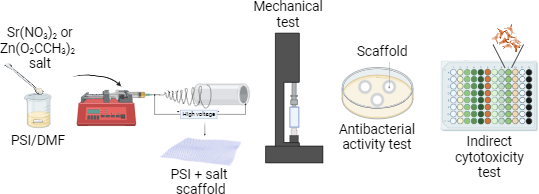
- they are flexible, variable in weight, have excellent biocompatibility, are resistant to biochemical degradation, and have suitable physical and mechanical characteristics. Moreover, they can be formed to the desired shape [6]. It is also worth mentioning that different drugs or other additives can be



Elastic modulus of β-Ga2O3 nanowires measured by resonance and three-point bending techniques
Beilstein J. Nanotechnol. 2024, 15, 704–712, doi:10.3762/bjnano.15.58
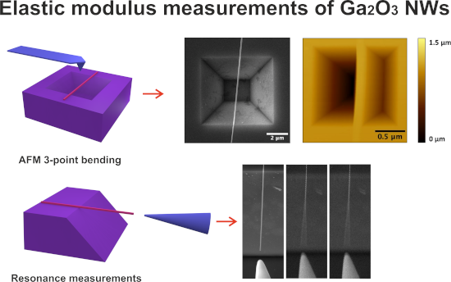
- chemical stability [4][5]. Ga2O3 is a promising candidate for visible-blind UV-light sensors [3], power devices and optoelectronics [6][7][8][9], gas sensors [10], and memory devices [8]. These applications can be scaled down to the nanoscale, including flexible nanodevices. Ga2O3 nanowires (NWs) could be
- suitable for use on bendable and stretchable substrates in line with the current trends in electronic technologies focusing on flexible electronic device development [11][12]. Consequently, understanding the mechanical properties of β-Ga2O3 NWs becomes an important step. For instance, precise determination
- of the elastic modulus is essential for designing Ga2O3-based nanomechanical resonators or flexible field-effect transistors [13]. However, a minimal amount of research has been dedicated to exploring and understanding the mechanical properties of Ga2O3 NWs [14]. There are several methods available


Functional fibrillar interfaces: Biological hair as inspiration across scales
Beilstein J. Nanotechnol. 2024, 15, 664–677, doi:10.3762/bjnano.15.55
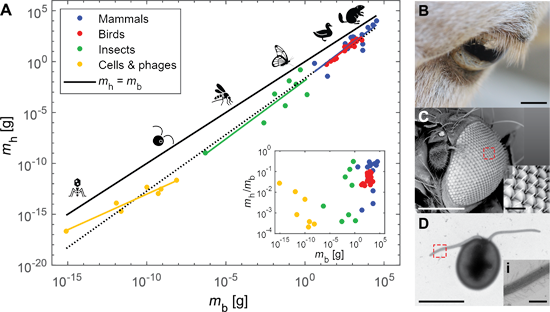
- generation. The flagella of archaea and bacteria are themselves passive hairs and are driven by protein motors at the base. Hair-like ultrastructures, or mastigonemes, on eukaryotic flagella/cilia comprise helical glycoproteins (≈10–20 nm thick) and lack a membrane [106]. They can be either stiff or flexible
- waves’ travelling direction, while sperm cells swim towards the opposite direction. This modulation effect has already inspired designs of swimming microrobots [110]. The role of thin and flexible hairs (fibrous mastigonemes) is still, to some extent, enigmatic. These soft hairs may appear in a range of


Comparative analysis of the ultrastructure and adhesive secretion pathways of different smooth attachment pads of the stick insect Medauroidea extradentata (Phasmatodea)
Beilstein J. Nanotechnol. 2024, 15, 612–630, doi:10.3762/bjnano.15.52
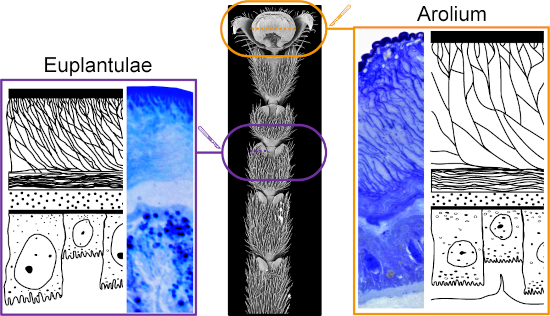
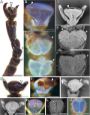
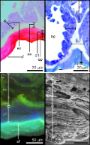
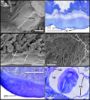
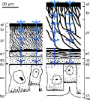
- , indicating the presence of a meshed network of flexible cuticle fibres within the attachment pad (Figure 2B). This coarse meshed-fibre structure was also observed in SEM (Figure 2C). In addition, using CLSM, the attachment pad structure exhibited a low degree of sclerotization indicating a presumably soft
- with toluidine blue and exhibits a low degree of sclerotization in CLSM. Moreover, it presents a unique morphology, appearing fanned out, suggesting a more flexible structure (Figure 4B, Figure 4D). Based on these characteristics, this cuticle region is named flexible cuticle (fc). The µCT imaging of




AFM-IR investigation of thin PECVD SiOx films on a polypropylene substrate in the surface-sensitive mode
Beilstein J. Nanotechnol. 2024, 15, 603–611, doi:10.3762/bjnano.15.51
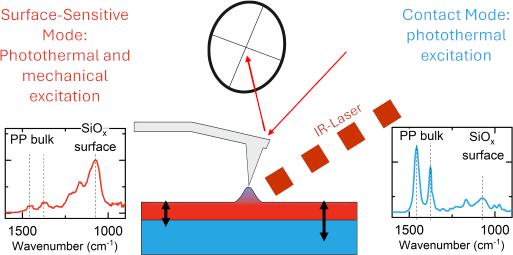
- sample excitation). However, it is much more flexible in the choice of the drive and detection frequencies, as only the mixing frequency needs to match a system resonance and not the individual frequencies themselves. Here, we use AFM-IR in the surface-sensitive mode to investigate thin silicon oxide


Heat-induced morphological changes in silver nanowires deposited on a patterned silicon substrate
Beilstein J. Nanotechnol. 2024, 15, 435–446, doi:10.3762/bjnano.15.39
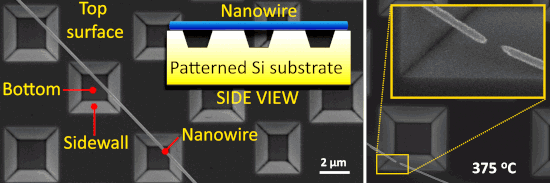
- ; silver nanowires; Introduction Metal nanowires (NWs) are promising key elements in a wide range of applications, including solar cells [1], smart windows [2], flexible sensors [3], touch screens [4], biocompatible polymer binders [5], temperature sensing [6], medical materials [7], and key elements of
- indium tin oxide (ITO), which currently serves as the industry standard for transparent conductive films, the Ag NW network is significantly more mechanically flexible and offers a broader optical transmittance range that extends well beyond the visible region [13][14]. Another related application of Ag
- NW networks is in highly flexible transparent film heaters [15]. In recent years, Ag NWs have garnered attention as a key element in neuromorphic computing devices [16]. In the context of the applications mentioned, Ag NWs are subjected to elevated temperatures caused by Joule heating [17]. Moreover


On the mechanism of piezoresistance in nanocrystalline graphite
Beilstein J. Nanotechnol. 2024, 15, 376–384, doi:10.3762/bjnano.15.34
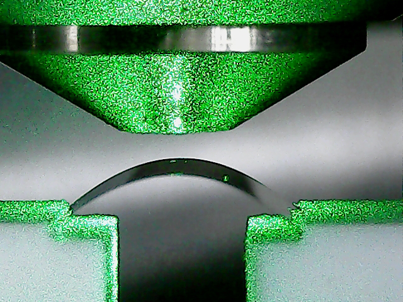
- , Technische Universität Darmstadt, 64287 Darmstadt, Germany 10.3762/bjnano.15.34 Abstract Strain sensors are sensitive to mechanical deformations and enable the detection of strain also within integrated electronics. For flexible displays, the use of a seamlessly integrated strain sensor would be beneficial
- , and graphene is already in use as a transparent and flexible conductor. However, graphene intrinsically lacks a strong response, and only by engineering defects, such as grain boundaries, one can induce piezoresistivity. Nanocrystalline graphene (NCG), a derivative form of graphene, exhibits a high
- applied strain on NCG placed on polyethylene terephthalate (PET) substrates provide intriguing insights into the underlying mechanism. Raman measurements, in conjunction with strain applied to NCG grown on flexible glass, indicate that the strain is concentrated at the grain boundaries for smaller strain


Ultrasensitive and ultrastretchable metal crack strain sensor based on helical polydimethylsiloxane
Beilstein J. Nanotechnol. 2024, 15, 270–278, doi:10.3762/bjnano.15.25
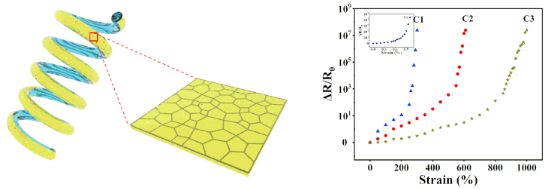
- ], monitoring human health [6][7][8], medical treatment [9][10], soft robotics [11][12], and human–computer interaction [13][14][15]. Numerous flexible strain sensors employing various mechanisms such as piezoresistivity [16][17], capacitance [18][19], and piezoelectricity have been developed to fulfill the
- structure consisting of a sensing layer composed of CNTs and MXene on a flexible thermoplastic polyurethane substrate [34]. The strain sensor exhibits exceptional sensing range (390%) and sensitivity (GF = 2159.5). These findings highlight the importance of rational design of geometric structures and
- threshold strain required to trigger this alarm could be adjusted by manipulating the helix indices of the helical sensor. Conclusion In summary, this study presents a straightforward method for producing a remarkably flexible resistive strain sensor by utilizing a Au thin film on a helical structure. The


Multiscale modelling of biomolecular corona formation on metallic surfaces
Beilstein J. Nanotechnol. 2024, 15, 215–229, doi:10.3762/bjnano.15.21
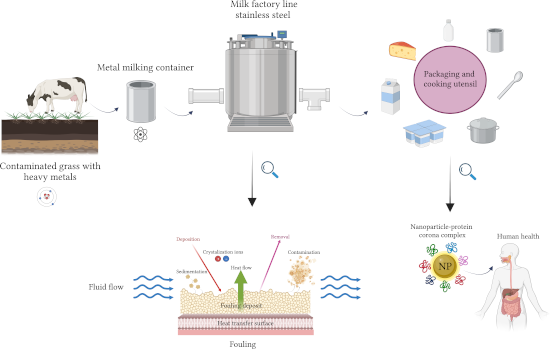
- immobilisation. This can potentially affect their binding behavior. This can be especially significant for caseins, as they belong to the group of flexible milk proteins with no tertiary structure. Globular milk proteins (lactoglobulin and lactalbumin) are expected to be less prone to this shortcoming of the UA




Spatial mapping of photovoltage and light-induced displacement of on-chip coupled piezo/photodiodes by Kelvin probe force microscopy under modulated illumination
Beilstein J. Nanotechnol. 2023, 14, 1059–1067, doi:10.3762/bjnano.14.87
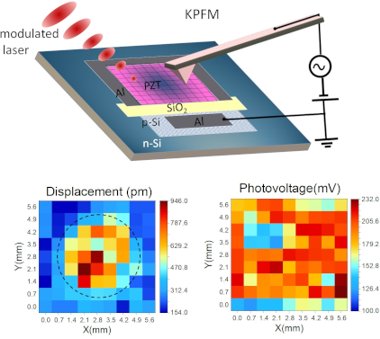
- to the flexible center of the membrane and clamped edges, and it is not attributed to the variation of induced photovoltage. The simulation results of the same device (Figure 3d) confirm the shape and range of displacement mapping over the active area. It is instructive to note that ideally the


Two-dimensional molecular networks at the solid/liquid interface and the role of alkyl chains in their building blocks
Beilstein J. Nanotechnol. 2023, 14, 872–892, doi:10.3762/bjnano.14.72
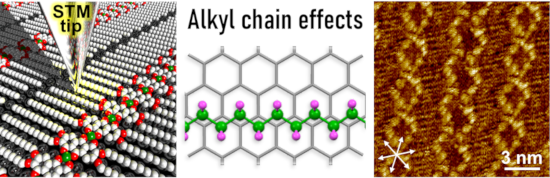
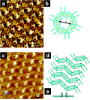
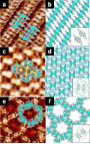
- related to energy and environment, among others. However, the fabrication of ordered nanoarchitectures remains a challenge, even in two dimensions. Therefore, a deeper understanding of the self-assembly processes and substantial factors for building ordered structures is critical for tailoring flexible





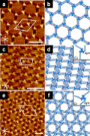

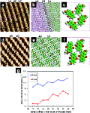

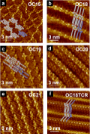


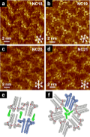
A wearable nanoscale heart sound sensor based on P(VDF-TrFE)/ZnO/GR and its application in cardiac disease detection
Beilstein J. Nanotechnol. 2023, 14, 819–833, doi:10.3762/bjnano.14.67
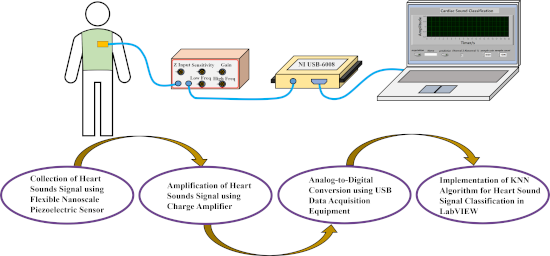
- University, Hangzhou 310018, China School of Cyberspace Security, Hangzhou DIANZI University, Hangzhou 310018, China 10.3762/bjnano.14.67 Abstract This paper describes a method for preparing flexible composite piezoelectric nanofilms of P(VDF-TrFE)/ZnO/graphene using a high-voltage electrospinning method
- advancement in wearable electronic devices within the healthcare field, leading to several noteworthy breakthroughs. For instance, D. Wan et al. [11] presented a groundbreaking development in the form of a flexible wearable friction patch. This innovative patch consists of a dual-layer PDMS membrane infused
- polymer material with a wide frequency bandwidth, good biocompatibility, and softness. It is one of the preferred materials for flexible piezoelectric sensors [12]. However, compared to rigid piezoelectric materials such as PZT, pure P(VDF-TrFE) has inferior piezoelectric properties [13]. Researchers have


Silver-based SERS substrates fabricated using a 3D printed microfluidic device
Beilstein J. Nanotechnol. 2023, 14, 793–803, doi:10.3762/bjnano.14.65
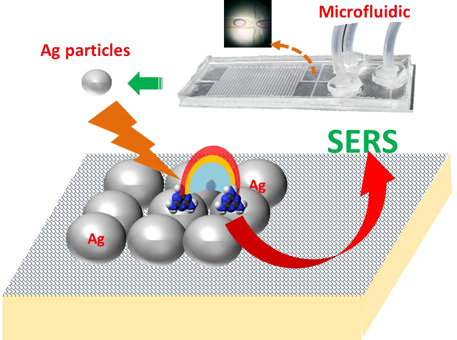
- transform a liquid resin into a solid plastic. When exposed to laser radiation with an appropriate wavelength, the short molecular chains in photocurable resins polymerize to form rigid or flexible solid geometries. As the printing limit of the 3D line dimension suggested by the Formlabs 3 printer



In situ magnesiothermic reduction synthesis of a Ge@C composite for high-performance lithium-ion batterie anodes
Beilstein J. Nanotechnol. 2023, 14, 751–761, doi:10.3762/bjnano.14.62
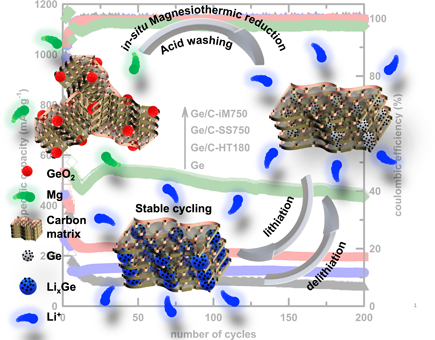
- performance of Ge-based anodes, a carbon matrix is the most popular choice to disperse nanoparticles, avoiding their aggregation and reducing the internal stress induced by volume variation, because of its flexible structure and high conductivity [30][31][32]. In our recent study, the combination of Ge


Cross-sectional Kelvin probe force microscopy on III–V epitaxial multilayer stacks: challenges and perspectives
Beilstein J. Nanotechnol. 2023, 14, 725–737, doi:10.3762/bjnano.14.59
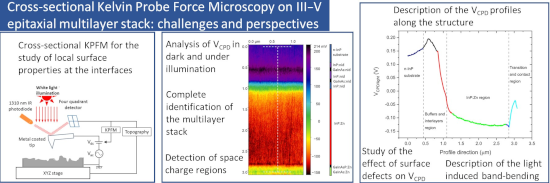
- and continuity equations numerically in two dimensions and includes flexible descriptions of bulk and surface defect distributions. KELSCAN simulates the experimental setup by sequentially moving the AFM tip across the surface of the sample, statically solving the semiconductor equations at each


Suspension feeding in Copepoda (Crustacea) – a numerical model of setae acting in concert
Beilstein J. Nanotechnol. 2023, 14, 603–615, doi:10.3762/bjnano.14.50
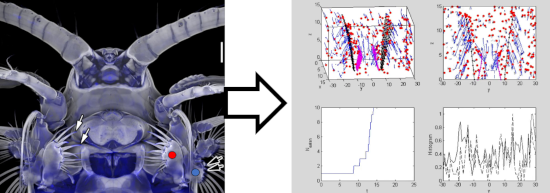
- these tips are also rather soft and flexible, similar to attachment hairs in insects showing high adhesion at the tips [58]; for in-depth reviews, see [59][60][61]. In contrast, the tips of the long setae did not emit blue signals. The simulation presented here takes into account the actual physical
- mechanical properties (flexible or stiff) of the setae segments facilitate the feeding of particles? How does the feeding efficiency change when the setae tips have a high adhesion? How does the feeding efficiency change when the basic segments of each setae are more flexible and allow for a higher bending


Carbon nanotube-cellulose ink for rapid solvent identification
Beilstein J. Nanotechnol. 2023, 14, 535–543, doi:10.3762/bjnano.14.44
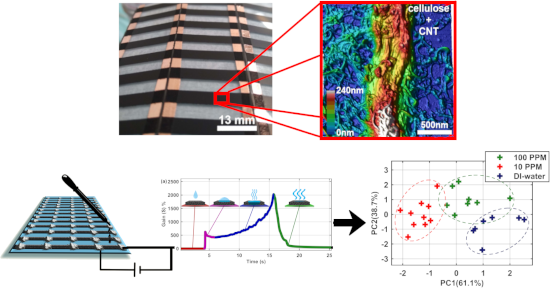
- and flexible devices are paradigms of the current “Industry 4.0”. One can envision applications such as multicomponent liquid and gas sensors, wearables for healthcare, paper-based sensors, and electronic solutions for smart city applications [1][2][3][4][5]. Another area of increasing demand is the
- and other 1D/2D materials have been employed as ink components with great potential for a broad range of applications, for example, in flexible electronics, photoconductors, transparent conductors, and gas sensors [44][45][46][47]. Carbon nanotube ink films have been reported as field-effect
- ) was performed in different devices and on flexible and rigid substrates, providing a step forward towards scale-up and commercialization of the technology. Experimental Materials and apparatus Microfibrillated cellulose (MFC) with a nominal fiber width of 50 nm and several hundred micrometers of


A mid-infrared focusing grating coupler with a single circular arc element based on germanium on silicon
Beilstein J. Nanotechnol. 2023, 14, 478–484, doi:10.3762/bjnano.14.38
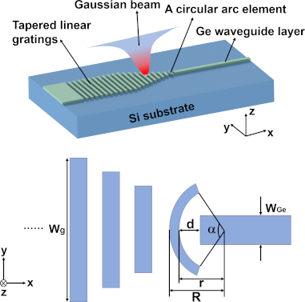
- sensors is of great significance. In 2015, Bai et al. reported a flexible healable transparent chemical gas sensing device that exhibited robust flexibility, good transparency, and reliable water-enabled healability of the gas sensing performance at room temperature [15]. Wang proposed a flexible


Conjugated photothermal materials and structure design for solar steam generation
Beilstein J. Nanotechnol. 2023, 14, 454–466, doi:10.3762/bjnano.14.36
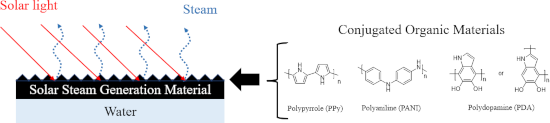
- materials (PTMs) have attracted significant interest because of their advantages over metallic and inorganic PTMs in terms of high light absorption, designable molecular structures, flexible morphology, and solution processability. We review here the recent progress in solar steam generation devices based
- : Polyaniline (PANI) has proven to be an efficient water evaporation material because it is inexpensive, easy to synthesize, flexible, chemically stable, light absorbing, and adhesive [34][35][36][37][38][39][40][41]. PANI cross-linked to hydrophilic soft polymers makes the material as tough and flexible as an
- included for comparison in (c). (d) Schematic illustration of light trapping by surface structures formed on the multilayer PPy nanosheets. Figure 6 was adapted from [32], X. Wang et al., “Multilayer Polypyrrole Nanosheets with Self-Organized Surface Structures for Flexible and Efficient Solar–Thermal


Polymer nanoparticles from low-energy nanoemulsions for biomedical applications
Beilstein J. Nanotechnol. 2023, 14, 339–350, doi:10.3762/bjnano.14.29
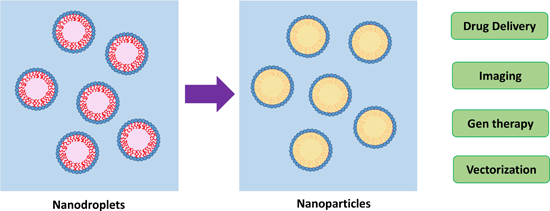
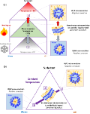
- , the system passes through structures with zero curvature, such as bicontinuous microemulsions or flexible lamellar liquid crystals [15]. The PIC method is amenable for scaling up since it mainly involves a simple dilution process and is suitable for components that cannot withstand high temperatures




Bismuth-based nanostructured photocatalysts for the remediation of antibiotics and organic dyes
Beilstein J. Nanotechnol. 2023, 14, 291–321, doi:10.3762/bjnano.14.26
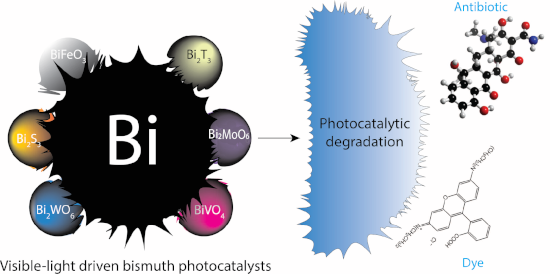
- flexible design and low cost, biological approaches have been used for the treatment of various contaminated effluents. However, the process is time-consuming, can be ineffective when toxic recalcitrant pollutants are present, and may even be irreparably harmful to the environment. Among the water


Antimicrobial and mechanical properties of functionalized textile by nanoarchitectured photoinduced Ag@polymer coating
Beilstein J. Nanotechnol. 2023, 14, 95–109, doi:10.3762/bjnano.14.11
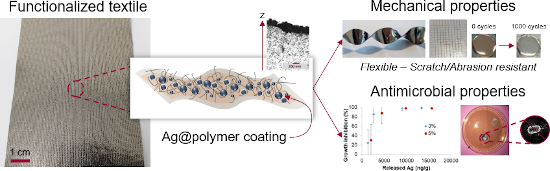
- the textile support. After assessing their optical and mechanical properties, the antimicrobial properties of the functionalized textiles were tested against Escherichia coli (E. coli) and Candida albicans (C. albicans) strains. In addition to being flexible and adherent to the textile substrates, the
- @PEG600DA/PETIA (b) coatings. TEM cross sections of the Ag@PEG600DA (a) and the Ag@PEG600DA/PETIA (b) with the selected area electron diffraction (SAED) patterns. Images of flexible Ag@PEG600DA (a) and Ag@PEG600DA/PETIA (b) samples; inserted post-scratch tests. Influence of 500 and 1000 abrasion cycles on



Double-layer symmetric gratings with bound states in the continuum for dual-band high-Q optical sensing
Beilstein J. Nanotechnol. 2022, 13, 1408–1417, doi:10.3762/bjnano.13.116
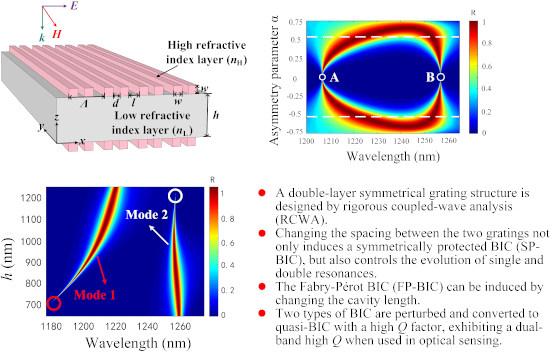
- the cavity to light (Γ decreases from 0.5381 to 0.3782). On the contrary, since most of the light in mode 2 is trapped inside the cavity, the increase of h improves the confinement capacity of the cavity (Γ increases from 0.6344 to 0.7513). Here, the flexible choice of cavity length enables to





