


Search results
Search for "glassy carbon" in Full Text gives 59 result(s) in Beilstein Journal of Nanotechnology.
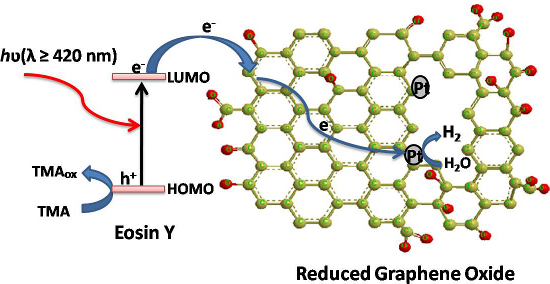
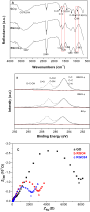
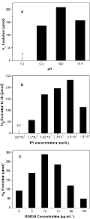
Enhancement of photocatalytic H2 evolution of eosin Y-sensitized reduced graphene oxide through a simple photoreaction
Beilstein J. Nanotechnol. 2014, 5, 801–811, doi:10.3762/bjnano.5.92
- with a glassy carbon electrode (diameter 2 mm) as the working electrode, a platinum wire as the counter electrode, and an Ag/AgCl electrode as the reference electrode. The electrolyte was a solution of 0.1 M phosphate buffer solution (PBS, pH 7), 0.1 M KCl, 10 mM K3Fe(CN)6 and 10 mM K4Fe(CN)6





Constant-distance mode SECM as a tool to visualize local electrocatalytic activity of oxygen reduction catalysts
Beilstein J. Nanotechnol. 2014, 5, 141–151, doi:10.3762/bjnano.5.14
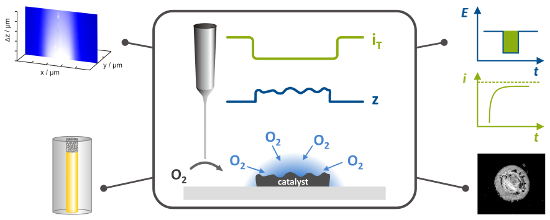
- . Typically, catalyst powders as samples for SECM investigations are immobilized as spots onto conductive plates such as, e.g., glassy carbon or conducting glasses. An example for such an investigation of catalyst libraries can be found in [17] and the local investigation of the activity of catalyst spots at
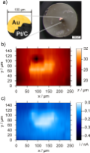
- catalyst spot prepared from a commercially available ORR catalyst (Pt/C with 20 wt % Pt on Vulcan XC72 from ETEK) in a 4D SF/CD-SECM scan is shown in Figure 1b. The linescan started at a position above the glassy carbon plate and was performed towards the centre of the catalyst spot. Beside the formed
- profile obtained during the same linescan is displayed in Figure 1c. The oxygen reduction current at the tip substantially decreases when the tip passes the border between glassy carbon plate and catalyst spot indicative for the ORR activity of the deposited powder catalyst. Variations of the tip current




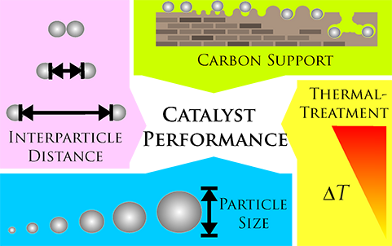
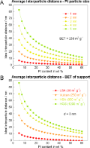
Design criteria for stable Pt/C fuel cell catalysts
Beilstein J. Nanotechnol. 2014, 5, 44–67, doi:10.3762/bjnano.5.5




Ultramicrosensors based on transition metal hexacyanoferrates for scanning electrochemical microscopy
Beilstein J. Nanotechnol. 2013, 4, 649–654, doi:10.3762/bjnano.4.72
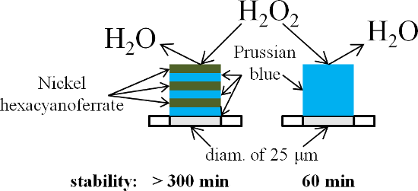
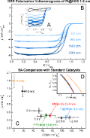
- Sigma-Aldrich. Polishing materials were obtained from Leco Instruments GmbH and Allied High Tech Products Inc. Gold and platinum microwires were purchased from Goodfellow. The micro glassy carbon electrodes were obtained from ESA Biosciences Inc. The electrochemical experiments were conducted in a three


A nano-graphite cold cathode for an energy-efficient cathodoluminescent light source
Beilstein J. Nanotechnol. 2013, 4, 493–500, doi:10.3762/bjnano.4.58
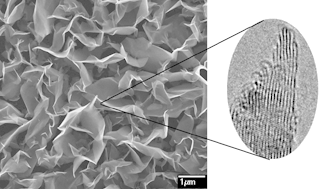
- ], glassy carbon [10], graphite [11], and carbon nanotubes [12]. The low threshold voltage and the intensive emission properties, which are usually observed for these materials, result from the high aspect ratio of emission sites, which are located on the edges of the graphene monoatomic layers. The low


Electrospinning preparation and electrical and biological properties of ferrocene/poly(vinylpyrrolidone) composite nanofibers
Beilstein J. Nanotechnol. 2013, 4, 189–197, doi:10.3762/bjnano.4.19

- demonstrated that the morphologies and diameters of nanofibers could be controlled by adjusting the type of solvents and Fc concentration. These electrospun Fc/PVP nanofibers had bactericidal activity against the Gram-negative bacteria E. coli, and the glassy carbon electrode modified with Fc/PVP nanofibers


Glassy carbon electrodes modified with multiwalled carbon nanotubes for the determination of ascorbic acid by square-wave voltammetry
Beilstein J. Nanotechnol. 2012, 3, 388–396, doi:10.3762/bjnano.3.45
- carbon nanotubes were used to modify the surface of a glassy carbon electrode to enhance its electroactivity. Nafion served to immobilise the carbon nanotubes on the electrode surface. The modified electrode was used to develop an analytical method for the analysis of ascorbic acid (AA) by square-wave
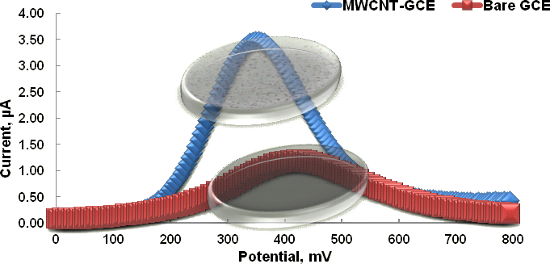
- voltammetry (SWV). The oxidation of ascorbic acid at the modified glassy carbon electrode showed a peak potential at 315 mV, about 80 mV lower than that observed at the bare (unmodified) electrode. The peak current was about threefold higher than the response at the bare electrode. Replicate measurements of
- no significant difference (P = 0.05). Keywords: ascorbic acid; carbon nanotubes; glassy carbon electrode; square-wave voltammetry; Introduction L-ascorbic acid (AA), also known as vitamin C, is a well-known antioxidant, which helps the human body to reduce oxidative damage and protects food quality


Recrystallization of tubules from natural lotus (Nelumbo nucifera) wax on a Au(111) surface
Beilstein J. Nanotechnol. 2011, 2, 261–267, doi:10.3762/bjnano.2.30
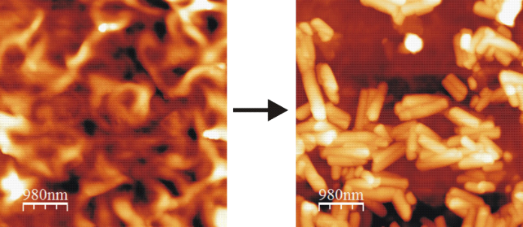
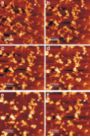
- ., 200, 220, 260, 280 and 300 nm) as observed in our experiments. Such variations in the outer diameter can also be found on a number of different substrates, e.g., glassy carbon, mica, glass, etc., as was also observed in our experiments. Figure 2a shows an initial stage of layer by layer growth of a
- tubule on a glassy carbon surface. A line profile across the layer (Figure 2b) clearly demonstrates that the height of a single layer is about 20 nm (standard deviation 2 nm, number of measurements = 5) which clearly agrees with the stepwise tubule outer diameter variation in multiples of 20 nm. The
- morphological change. Size = 4.9 × 4.9 µm2, scan rate = 0.619 Hz, 256 lines. Initial stage formation of lotus wax tubules on a glassy carbon surface (a) and profile across the marked section (b) showing the average layer height to be about 20 nm (standard deviation 2 nm, number of measurements = 5) in agreement


Electrochemical behavior of dye-linked L-proline dehydrogenase on glassy carbon electrodes modified by multi-walled carbon nanotubes
Beilstein J. Nanotechnol. 2010, 1, 135–141, doi:10.3762/bjnano.1.16
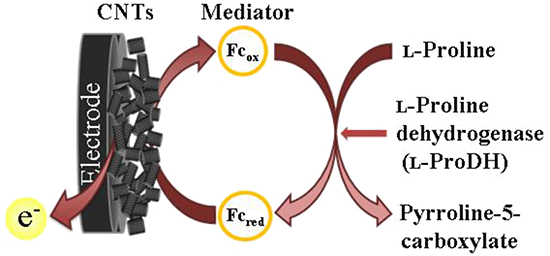
- , Institute of Genetic Resources, Faculty of Agriculture, Kyushu University, Fukuoka 812-8581, Japan Wakasa Wan Energy Research Center, Tsuruga 914-0192, Japan 10.3762/bjnano.1.16 Abstract A glassy carbon electrode (GC) was modified by multi-walled carbon nanotubes (MWCNTs). The modified electrode showed a
- ) was used to observe the surface of MWCNTs-modified electrode. All electrochemical experiments were performed on a potentiostat (CHI-800B, Austin, USA) connected to a personal computer. A typical three-electrode system was used, with a 3 mm diameter of glassy carbon electrode (GC) as the working


Other Beilstein-Institut Open Science Activities



