


Search results
Search for "human health" in Full Text gives 115 result(s) in Beilstein Journal of Nanotechnology.
Solar-light-driven LaFexNi1−xO3 perovskite oxides for photocatalytic Fenton-like reaction to degrade organic pollutants
Beilstein J. Nanotechnol. 2022, 13, 882–895, doi:10.3762/bjnano.13.79
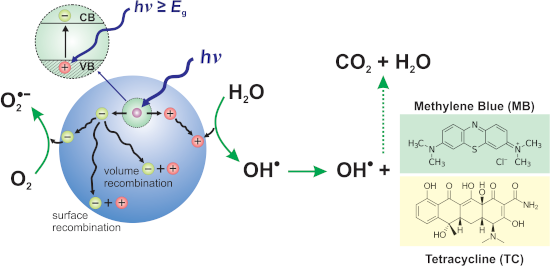
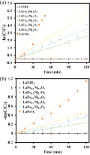
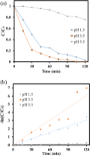
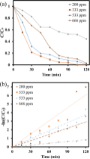
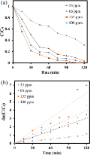
- industry often contains biological drugs, such as antibiotics and pesticides. These drug residues in various industries would enter the drinking water source. It threatens human health and makes bacteria and viruses resistant to drugs, significantly impacting the environment [5]. Notably, wastewater



A nonenzymatic reduced graphene oxide-based nanosensor for parathion
Beilstein J. Nanotechnol. 2022, 13, 730–744, doi:10.3762/bjnano.13.65
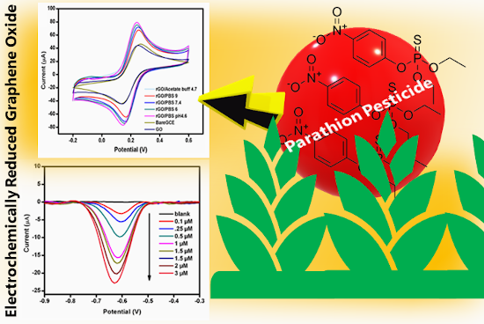
- /bjnano.13.65 Abstract Organophosphate-based pesticides (e.g., parathion (PT)) have toxic effects on human health through their residues. Therefore, cost-effective and rapid detection strategies need to be developed to ensure the consuming food is free of any organophosphate-residue. This work proposed
- ) alkylation or acetylcholinesterase (AChE) phosphorylation, involved in the initiation of the carcinogenic process and acute cholinergic toxicity, respectively [2]. Parathion (PT) is a highly toxic OP-based insecticide, potentially harmful to human health, and it may even cause death upon ingestion


A non-enzymatic electrochemical hydrogen peroxide sensor based on copper oxide nanostructures
Beilstein J. Nanotechnol. 2022, 13, 424–436, doi:10.3762/bjnano.13.35
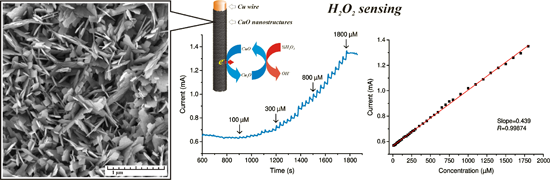
- reactions, has recently attracted widespread research interest. In high concentrations it can cause serious harm to human health and the environment, despite the fact that, in living organisms, H2O2 is a by-product of metabolism for a wide range of biological and chemical processes, occurring under the




Electrostatic pull-in application in flexible devices: A review
Beilstein J. Nanotechnol. 2022, 13, 390–403, doi:10.3762/bjnano.13.32
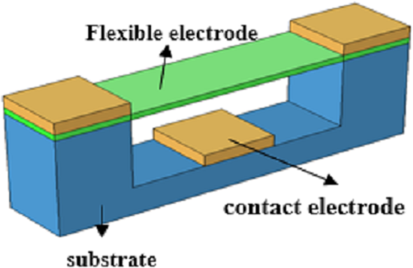
- electrostatic switches. In addition, Cui et al. [92][93][94][95] showed that the self-powered triboelectrification nanogenerator (TENG) can also be used for human health detection and wound healing. Piezoelectric power generation: Piezoelectric materials can produce very precise tiny motions and have


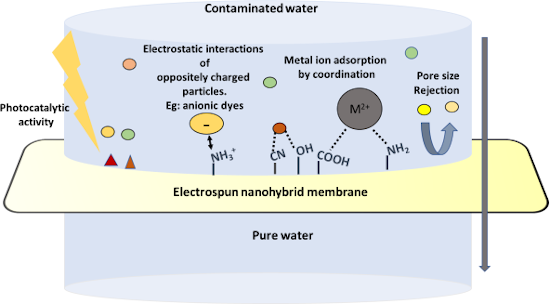
A comprehensive review on electrospun nanohybrid membranes for wastewater treatment
Beilstein J. Nanotechnol. 2022, 13, 137–159, doi:10.3762/bjnano.13.10





Tin dioxide nanomaterial-based photocatalysts for nitrogen oxide oxidation: a review
Beilstein J. Nanotechnol. 2022, 13, 96–113, doi:10.3762/bjnano.13.7
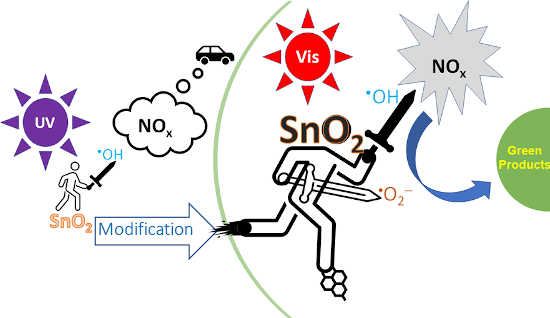
- vehicles (e.g., construction equipment, boats) and industrial sources such as power plants, industrial boilers, cement kilns, and turbines [3]. In addition, diesel vehicles are considered a primary NOx emission source causing adversely impacts on environment and human health, such as acid rain, global


Identifying diverse metal oxide nanomaterials with lethal effects on embryonic zebrafish using machine learning
Beilstein J. Nanotechnol. 2021, 12, 1297–1325, doi:10.3762/bjnano.12.97
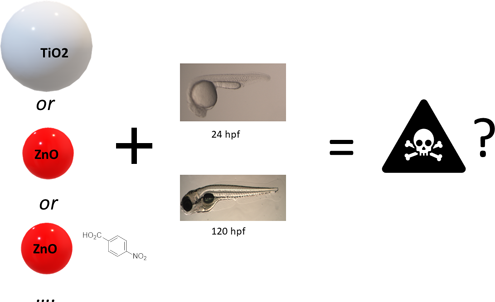
- delivery vehicles), diagnostic tools and medical devices, is a key application area [2][3]. However, as well as recognising the benefits associated with nanotechnology, it is also important to address potential negative impacts upon human health and the environment. Nanosafety concerns are reflected in
- various biomedical applications [10][11][12], as well as applications in other areas, such as in agriculture [13]. Nonetheless, the possibility that novel metal oxide ENMs developed for applications, such as biomedical applications, could be harmful to human health [8][9], means that there is a real need
- (i.e., depending on the exposure medium) physicochemical characteristics [18][19][20]. However, concerns have been raised regarding the human health relevance of the endpoints modelled in many nano-QSAR studies [21]. There is a need for models that can predict human safety relevant endpoints


An overview of microneedle applications, materials, and fabrication methods
Beilstein J. Nanotechnol. 2021, 12, 1034–1046, doi:10.3762/bjnano.12.77
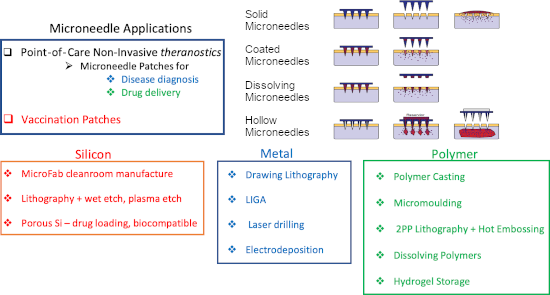
- microelectromechanical systems (MEMS) and provided a platform for microfabrication of compact miniaturized medical devices for human health screening, monitoring, and diagnostic purposes. Microneedles are microstructures that are sharp and robust enough for skin penetration, made using MEMS technology. The application


Nanogenerator-based self-powered sensors for data collection
Beilstein J. Nanotechnol. 2021, 12, 680–693, doi:10.3762/bjnano.12.54
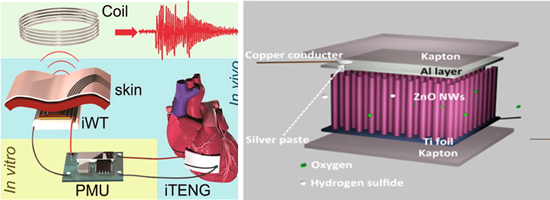
- rehabilitation, sports training, human motion recognition, respiratory monitoring, and human 3D motion modeling [78][79][80]. These data can be used for real-time detection of human health or human–computer interaction [81][82]. Wen et al. [22] manufactured a transparent and stretchable wrinkled (maximum strain
- , and vocal cords [85][86]. Without external power supply, the back-end data processing technology can realize real-time detection and early warning of human health [87]. For example, voice can be recognized by vocal cord vibration, which can be recorded with a biosensor attached to the skin of the
- physiological activities. An important indicator of human health is the composition of body fluids. The large amount of mechanical energy generated by the human body can also be used to drive a self-powered body fluid sensor to collect body fluid data [31][32][33][34][35][36][37][38]. In addition to the real



Characterization, bio-uptake and toxicity of polymer-coated silver nanoparticles and their interaction with human peripheral blood mononuclear cells
Beilstein J. Nanotechnol. 2021, 12, 282–294, doi:10.3762/bjnano.12.23
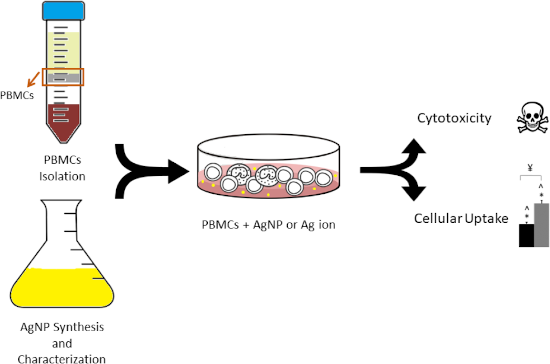
- , Columbia, SC, 29208, United States 10.3762/bjnano.12.23 Abstract Silver nanoparticles (AgNPs) are widely used in medical applications due to their antibacterial and antiviral properties. Despite the extensive study of AgNPs, their toxicity and their effect on human health is poorly understood, as a result
- colonization on different surfaces, such as catheters and prostheses [13][14], which raises concern about Ag release in the body and their potential negative impact on human health. For instance, the silver concentration in the blood of people without any occupational or medicinal exposure is less than 1 µg·L

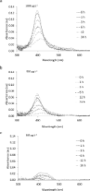


A review on the biological effects of nanomaterials on silkworm (Bombyx mori)
Beilstein J. Nanotechnol. 2021, 12, 190–202, doi:10.3762/bjnano.12.15
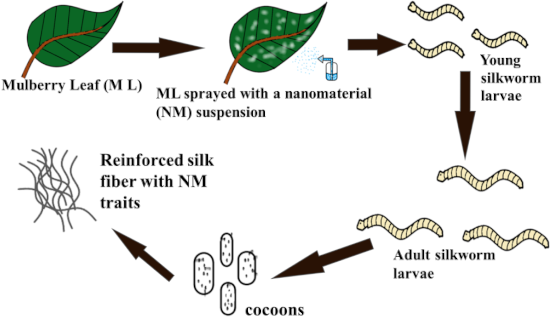
- [36] on farms. As mentioned earlier, nanomaterials are used in various sectors and it is imperative to assess their impact on the environment and on human health. Animal models are extensively used in order to elucidate the mechanisms underlying biological processes, to test the efficacy of new drugs
- . Concentration levels above 50 μg/mL of graphene oxide caused a higher mortality rate, delayed the hatching rate, impaired movements, and delayed embryonic development when compared to oxidized carbon nano-horns. These reports indicate that the exposure to some nanomaterials poses a threat to human health and to


Toward graphene textiles in wearable eye tracking systems for human–machine interaction
Beilstein J. Nanotechnol. 2021, 12, 180–189, doi:10.3762/bjnano.12.14
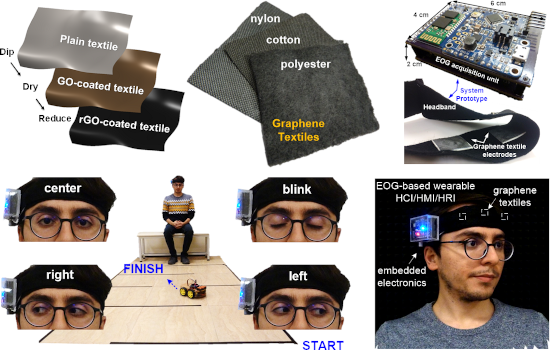
- , there have been many studies on skin-compatible, body-worn devices, collectively referred to as wearable electronics, for applications ranging from energy harvesting to human health and motion monitoring [28][29][30][31][32][33][34]. In a second demonstration, we have investigated the potential of the



Cu2O nanoparticles for the degradation of methyl parathion
Beilstein J. Nanotechnol. 2020, 11, 1546–1555, doi:10.3762/bjnano.11.137
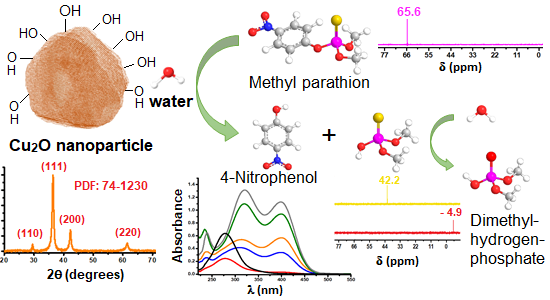
- parathion (MP), is among the most acutely toxic pesticides used in agriculture [4][5][6]. MP includes other risks for human health, such as the induction of changes in tertiary villi of the placenta of women exposed to this OPP [7]. It has been estimated that in the year 2020 about 153,000 metric tons of


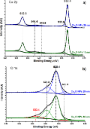
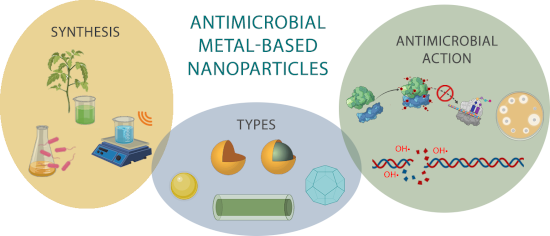
Antimicrobial metal-based nanoparticles: a review on their synthesis, types and antimicrobial action
Beilstein J. Nanotechnol. 2020, 11, 1450–1469, doi:10.3762/bjnano.11.129


Ultrasensitive detection of cadmium ions using a microcantilever-based piezoresistive sensor for groundwater
Beilstein J. Nanotechnol. 2020, 11, 1242–1253, doi:10.3762/bjnano.11.108
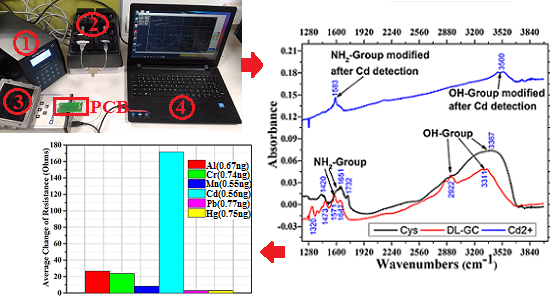
- expanding their deleterious effect on human health and the environment. The proposed technique uses a blend of thin-film and microcantilever (micro-electromechanical systems) technology, which mitigate the disadvantages of the nanoparticle approaches, for the selective detection of Cd(II) with a LOD below


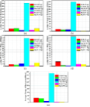


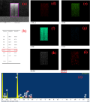
Gram-scale synthesis of splat-shaped Ag–TiO2 nanocomposites for enhanced antimicrobial properties
Beilstein J. Nanotechnol. 2020, 11, 1119–1125, doi:10.3762/bjnano.11.96
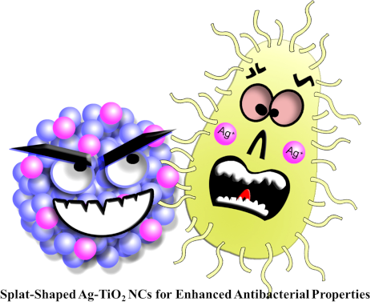
- reproduction rate, such as virus, fungi and bacteria, has an influence on the human health and environment. However, it is a challenge to find remedies against these bacteria to control the permanent adhesive reaction. The Food and Drug Administration (FDA) has approved some potential antibacterial agents


Molecular architectonics of DNA for functional nanoarchitectures
Beilstein J. Nanotechnol. 2020, 11, 124–140, doi:10.3762/bjnano.11.11
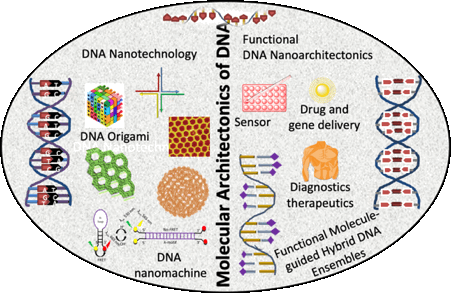
- assembly systems points at potential drug delivery systems for small molecular and gene-based drugs. Mercury is one of the most toxic heavy metals, with a severe impact on human health already at ultralow concentrations [20][72][73][74]. Selective binding of Hg(II) with thymine is a highly feasible


Synthesis and acetone sensing properties of ZnFe2O4/rGO gas sensors
Beilstein J. Nanotechnol. 2019, 10, 2516–2526, doi:10.3762/bjnano.10.242
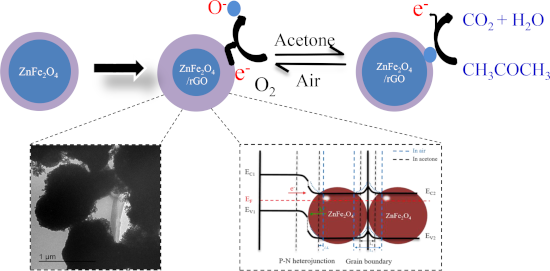
- human health [1][2]. Furthermore, acetone is also a fat metabolite in the human body. According to the related literature, the concentration of acetone in the exhaled gas of healthy people is less than 0.8 ppm, while that in exhaled gas of diabetic patients is higher than 1.8 ppm [3][4]. In this view




Multiwalled carbon nanotube based aromatic volatile organic compound sensor: sensitivity enhancement through 1-hexadecanethiol functionalisation
Beilstein J. Nanotechnol. 2019, 10, 2364–2373, doi:10.3762/bjnano.10.227
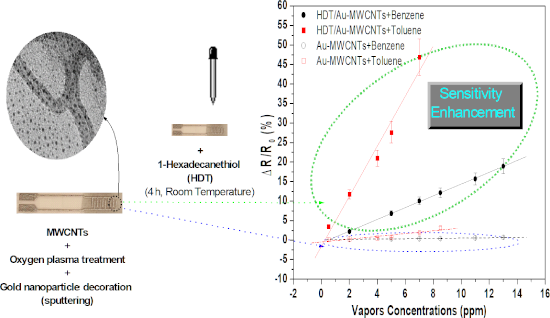
- benzene and toluene are hazardous vapours causing considerable damage to human health upon extended exposure. Benzene, for example, is known to have a carcinogenic effect on exposed humans. Since 2008, toluene and benzene monitoring is mandatory by the European Air Quality Directive, where the upper and





Lipid nanostructures for antioxidant delivery: a comparative preformulation study
Beilstein J. Nanotechnol. 2019, 10, 1789–1801, doi:10.3762/bjnano.10.174
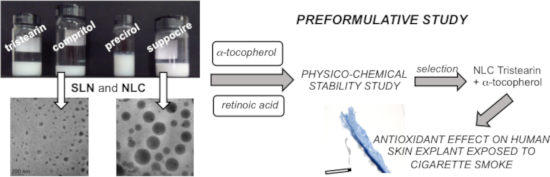
- " University of Bayreuth, Germany Dipartmento di Scienze della Vita e dell'Ambiente, Università Politecnica delle Marche, I-60131 Ancona, Italy NC State University, Plants for Human Health Institute, Animal Science Dept. NC Research Campus, Kannapolis, NC 28081, USA Department of Biomedical and Specialist
- lipid carriers (NLCs); retinoic acid; skin pollution; solid lipid nanoparticles (SLNs); Introduction Air pollution increasingly affects industrialized urban areas in a negative manner with dramatic consequences for the environment and human health. This problem also affects rural areas, worsening the
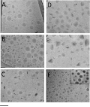
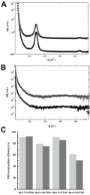

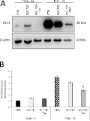
Novel hollow titanium dioxide nanospheres with antimicrobial activity against resistant bacteria
Beilstein J. Nanotechnol. 2019, 10, 1716–1725, doi:10.3762/bjnano.10.167
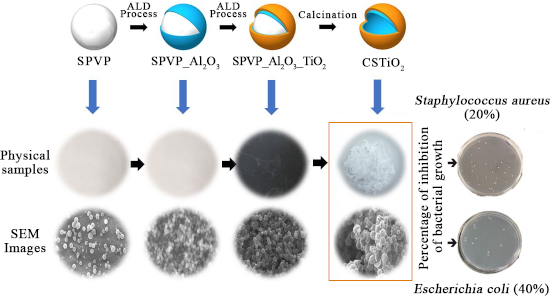
- ; atomic layer deposition; electrospinning; hollow nanospheres; titanium dioxide; Introduction Microbial contamination and the increase of multidrug bacterial resistance have become two major current concerns for food safety and human health due to the number of food-borne diseases and nosocomial


Tailoring the stability/aggregation of one-dimensional TiO2(B)/titanate nanowires using surfactants
Beilstein J. Nanotechnol. 2019, 10, 1024–1037, doi:10.3762/bjnano.10.103
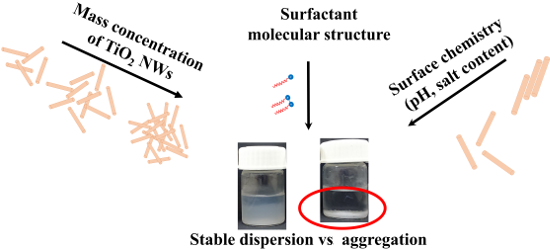
- . Considering that the size of nano- and microaggregates greatly influences their degree of toxicity, and consequently their impact on human health and the environment, the conditions under which aggregation occurs are of interest for environmental but also for biomedical applications [13][14]. The stability of


Layered calcium phenylphosphonate: a hybrid material for a new generation of nanofillers
Beilstein J. Nanotechnol. 2018, 9, 2906–2915, doi:10.3762/bjnano.9.269
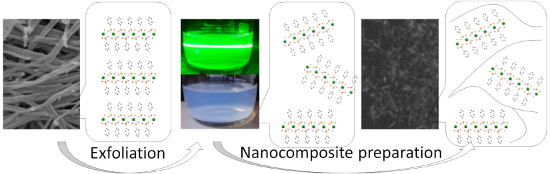
- compounds are used as flame retardant agents as an alternative to halogenated compound, which are effective but, on the other hand, they are considered to be hazardous for the environment and human health [21]. The structure of CaPhP contains a high amount of phosphorus as well as bound water molecules and


Graphene-enhanced metal oxide gas sensors at room temperature: a review
Beilstein J. Nanotechnol. 2018, 9, 2832–2844, doi:10.3762/bjnano.9.264
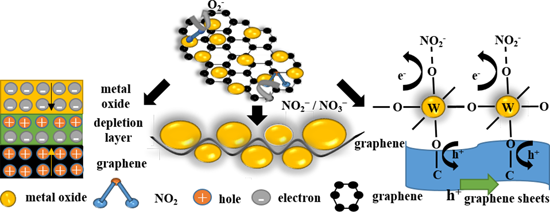
- to explore the ability to detect nonpolar and large molecules, such as volatile organic compounds (VOCs) which are extremely harmful to human health and the environment. The interaction of these molecules with graphene/metal-oxide sensors is different from that of the polar molecules, and graphene



Synthesis of a MnO2/Fe3O4/diatomite nanocomposite as an efficient heterogeneous Fenton-like catalyst for methylene blue degradation
Beilstein J. Nanotechnol. 2018, 9, 1940–1950, doi:10.3762/bjnano.9.185
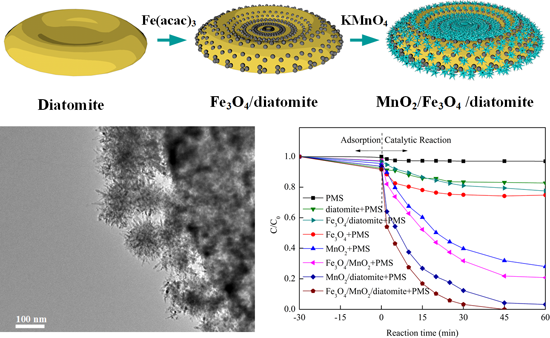
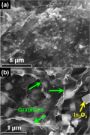
- ) oxide (Fe3O4); manganese(IV) oxide (MnO2); Introduction Organic contaminants are widely distributed in water and soil due to the excessive emissions of industrial processes, which causes a great threat to the ecosystem as well as to human health [1][2][3]. Most of the organic pollutants are toxic and





