Search results
Search for "hydrophilicity" in Full Text gives 135 result(s) in Beilstein Journal of Nanotechnology.
Use of nanosystems to improve the anticancer effects of curcumin
Beilstein J. Nanotechnol. 2021, 12, 1047–1062, doi:10.3762/bjnano.12.78
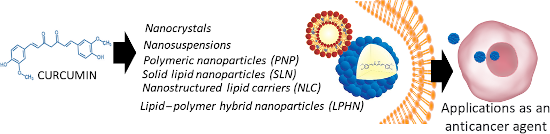
- the surface of CUR nanococrystals with hyaluronic acid to increase its hydrophilicity, which resulted in a better biodistribution. They reported an advantage in the release profile as a function of pH due to a lower CUR release at pH 7.4 (40%) as compared to the acidic pH (pH 5, 80%) which is


An overview of microneedle applications, materials, and fabrication methods
Beilstein J. Nanotechnol. 2021, 12, 1034–1046, doi:10.3762/bjnano.12.77
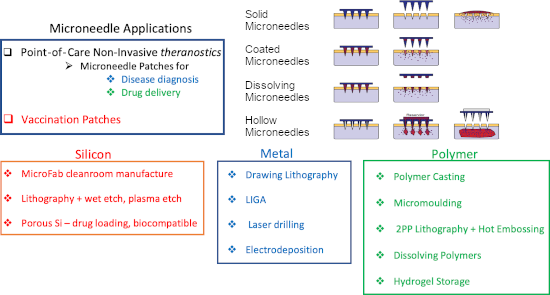
- hydrophilicity and size of drug molecules or vaccines, and the depth of microneedle penetration is particularly important in many applications such as delivery of pharmacological agents where clinical imperatives demand a rapid onset of their action, as in emergency settings. Means of storing and delivering


Comprehensive review on ultrasound-responsive theranostic nanomaterials: mechanisms, structures and medical applications
Beilstein J. Nanotechnol. 2021, 12, 808–862, doi:10.3762/bjnano.12.64


ZnO and MXenes as electrode materials for supercapacitor devices
Beilstein J. Nanotechnol. 2021, 12, 49–57, doi:10.3762/bjnano.12.4
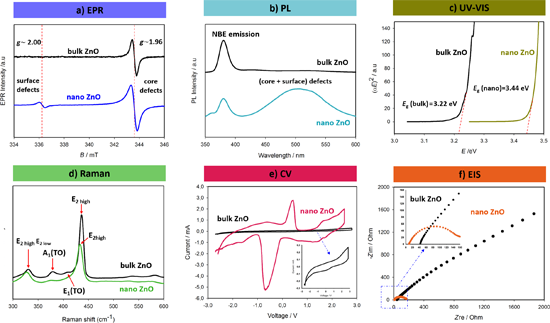
- alternatives to metal oxides are two-dimensional (2D) MXenes. Their properties include environmental sustainability, lamellar structure, high transformation efficiency, high surface hydrophilicity, and good electrical conductivity [14]. Therefore, in the following section we discuss the main properties of
- structure. After the etching process, MXenes have a great number of active groups, such as –OH and =O, which results in superior hydrophilicity, chemical reactivity, and large contact area. This implies a potential of MXenes for the use in supercapacitors [16][18][19][22][23][28]. Moreover, MXenes can be
Gas sorption porosimetry for the evaluation of hard carbons as anodes for Li- and Na-ion batteries
Beilstein J. Nanotechnol. 2020, 11, 1217–1229, doi:10.3762/bjnano.11.106
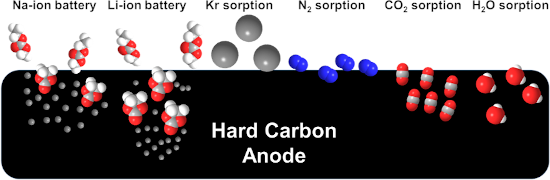
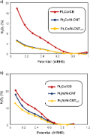
- samples and for RF-1000, but not for RF-1600. The characteristic sigmoidal shapes for the HT samples, however, show different relative adsorption onset pressures, indicating differences in hydrophilicity or average pore size as well as slightly different slopes for the gas uptake (Figure 2d). Similar to
- the pore diameter distribution of the HT samples is at around 1.0 nm for HT4 and HT5, while it is around 1.1 nm for HT2, HT3, and HT6 (Figure 2e). HT1 and RF-1000 lie in between. The very similar synthetic protocols for the different HT materials make hydrophilicity differences appear unreasonable


Uniform Fe3O4/Gd2O3-DHCA nanocubes for dual-mode magnetic resonance imaging
Beilstein J. Nanotechnol. 2020, 11, 1000–1009, doi:10.3762/bjnano.11.84
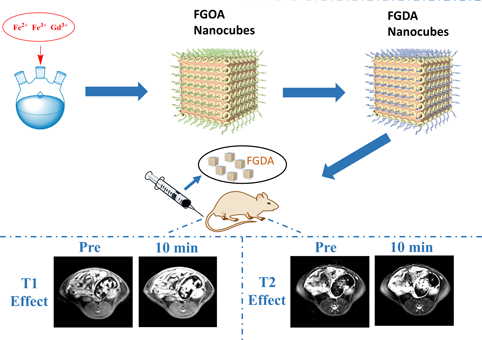
- distributed Fe3O4/Gd2O3 nanocubes for T1–T2 dual-mode MRI contrast agents were successfully designed and synthesized. In order to increase hydrophilicity and biocompatibility, the nanocubes were coated with nontoxic 3,4-dihydroxyhydrocinnamic acid (DHCA). The results show that iron (Fe) and gadolinium (Gd
- distributed Fe3O4/Gd2O3 composites. FGOA nanocubes are hydrophobic since they are covered by oleic acid, which is enriched in alkyl groups. In order to increase the hydrophilicity of FGOA nanocubes so they could be used as a contrast agent in vivo, FGOA was exchanged with DHCA via the ligand-exchange method



Preparation, characterization and photocatalytic performance of heterostructured CuO–ZnO-loaded composite nanofiber membranes
Beilstein J. Nanotechnol. 2020, 11, 631–650, doi:10.3762/bjnano.11.50
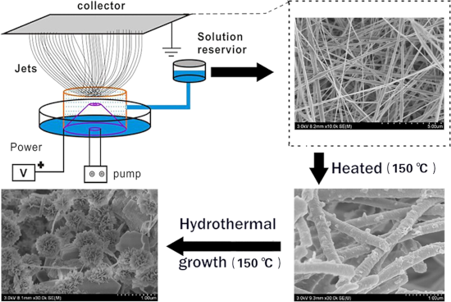
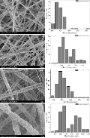
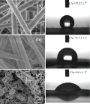
- . The results show that the wettability of the CNFMs changed from hydrophobicity to hydrophilicity after heat treatment and hydrothermal growth. The main reason is that hydrophilic CuO and ZnO grows on the surface of the nanofibers. The corresponding mechanism of hydrophilicity is illustrated in Figure
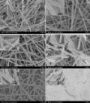
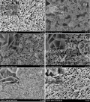
- treatment, and after hydrothermal growth: (a) without heat treatment; (b) with heat treatment; (c) with heat treatment and hydrothermal growth. Mechanism of the hydrophilicity of CNFMs with CuO–ZnO heterostructures. Left: degradation rate of methyl orange solutions using samples A, B, C and D as a function











Adsorptive removal of bulky dye molecules from water with mesoporous polyaniline-derived carbon
Beilstein J. Nanotechnol. 2020, 11, 597–605, doi:10.3762/bjnano.11.47
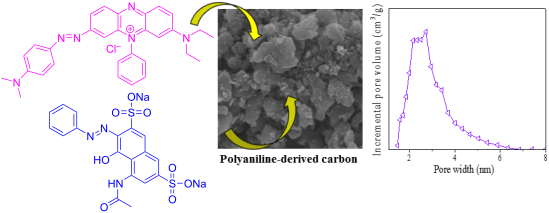
- bulky dye molecules (vide infra). On the contrary, the pore size of activated carbon (AC) is very small (or mainly in microporous region); therefore, it might not be effective in adsorption of bulky dye molecules. The hydrophobicity or hydrophilicity of PDC was estimated by checking the adsorbed


Identification of physicochemical properties that modulate nanoparticle aggregation in blood
Beilstein J. Nanotechnol. 2020, 11, 550–567, doi:10.3762/bjnano.11.44
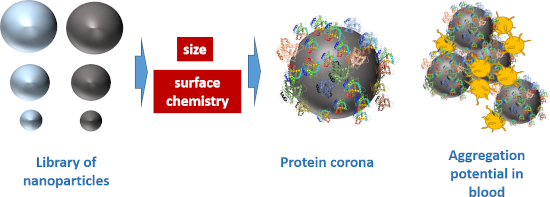
- comparison, therefore, excludes surface charge and hydrophilicity as variables to be investigated. In Figure 12 we summarise the strategy used to unravel possible SARs. This strategy allowed us to identify the surface chemistry as the key factor in the protein corona composition while both surface chemistry
- studies, pyrogenic silica was used. This material is very different to silica produced by sol–gel methods, being formed by large aggregates and having a surface with a lower degree of hydrophilicity [20]. A different arrangement of the fibrinogen molecule at the surface of silica is therefore likely to




Preparation and in vivo evaluation of glyco-gold nanoparticles carrying synthetic mycobacterial hexaarabinofuranoside
Beilstein J. Nanotechnol. 2020, 11, 480–493, doi:10.3762/bjnano.11.39
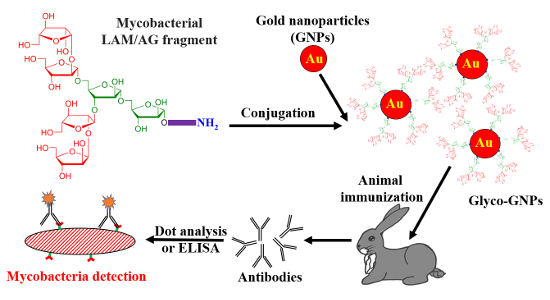
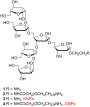
- tuberculosis. In particular, we were interested whether the antibodies generated against Ara6-GNPs would recognize the natural saccharides on the cell surface of different mycobacterial strains. Two synthetic Ara6 glycosides with amino-functionalized spacer aglycons differing in length and hydrophilicity were
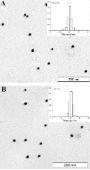
- length and hydrophilicity (Ara6C2NH2 (1) and Ara6C2EG7NH2 (2) [92][93], Figure 1) were conjugated with gold nanoparticles (d = 15 nm) [67][94] to give two sets of Ara6-GNPs (3 and 4, respectively). The latter were used for the generation of antibodies that were then characterized by dot assay and enzyme
- conjugated to a much longer and flexible hydrophilic linker based on heptaethylene glycol (EG7), which was initially expected to allow for a better recognition of the glycan epitope on the surface of Ara6C2EG7NH2-GNPs 4 than on the surface of Ara6C2NH2-GNPs 3. The differences in hydrophilicity and rigidity


Self-assembly of a terbium(III) 1D coordination polymer on mica
Beilstein J. Nanotechnol. 2019, 10, 2440–2448, doi:10.3762/bjnano.10.234
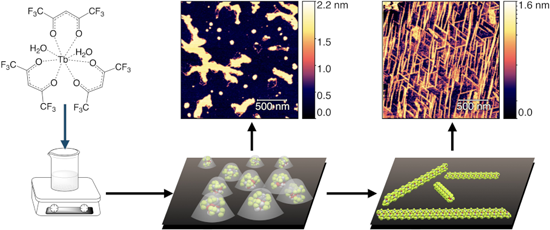
- stability against moisture and air ensure the creation of molecular nanochains of several hundred nanometers length as observed by AFM. This self-assembly of molecules into chains is likely to be triggered by the presence of water on the air-cleaved mica surface. Indeed, the strong hydrophilicity of such
- recall the very hydrophilic nature of freshly air-cleaved mica substrates. In [Tb(hfac)3·2H2O]n@mica, this hydrophilicity is a strong asset to stabilize H-bonded one-dimensional structures on the surface [11]. This strategy could give rise to new multifunctional lanthanide coordination polymers anchored




Ion mobility and material transport on KBr in air as a function of the relative humidity
Beilstein J. Nanotechnol. 2019, 10, 2084–2093, doi:10.3762/bjnano.10.203
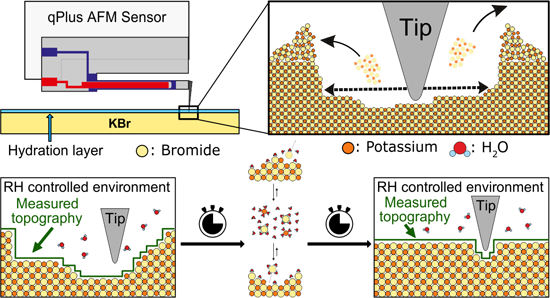
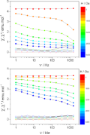
- water layers depends on many factors including the relative humidity, surface roughness, hydrophilicity or hydrophobicity, meniscus formation (as described later) and also air pressure and temperature [2]. In the case of freshly cleaved or dried surfaces the amount of adsorbed water also relates to the
- water film and the water meniscus that forms around the tip–sample contact cause damping forces on the probe, which result in higher noise [7]. The hydrophobicity of sapphire reduces the meniscus effect. The impact that hydrophobicity or hydrophilicity of the tip material can have is demonstrated by


Synthesis of highly active ETS-10-based titanosilicate for heterogeneously catalyzed transesterification of triglycerides
Beilstein J. Nanotechnol. 2019, 10, 2039–2061, doi:10.3762/bjnano.10.200
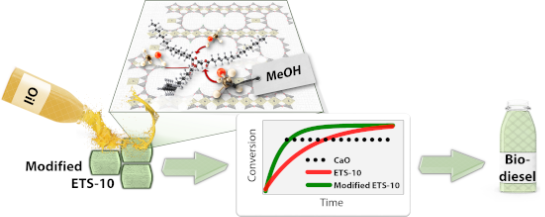
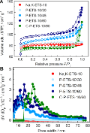
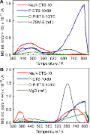
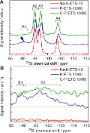
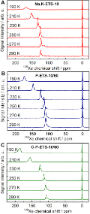
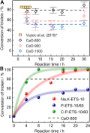
- isotherms to obtain the “hydrophilicity index” according to Thommes et al. [81] are planned. In the case of the calcined hierarchical titanosilicate C-P-ETS-10, a dramatic increase in activity is observed, as compared to Na,K-ETS-10 and P-ETS-10/60, showing full conversion already after 8 h. After 4 h, the








Tuning the performance of vanadium redox flow batteries by modifying the structural defects of the carbon felt electrode
Beilstein J. Nanotechnol. 2019, 10, 1698–1706, doi:10.3762/bjnano.10.165
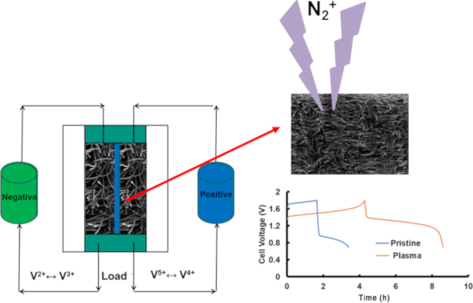
- . More recently, Xu et al. showed, using first-principle calculations, that N-doping (especially the pyridinic and pyrrolic forms) enhances the water adsorption or hydrophilicity of the graphite electrode [24]. Thus, it may be concluded that the pyridinic and pyrrolic nitrogen formed during the N2-plasma


Layered double hydroxide/sepiolite hybrid nanoarchitectures for the controlled release of herbicides
Beilstein J. Nanotechnol. 2019, 10, 1679–1690, doi:10.3762/bjnano.10.163
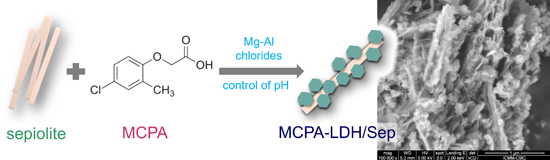
- material was 51.2%, similar to that of other release systems based on the same encapsulation matrix [36]. In the bionanocomposite beads, the hydrophilicity of alginate is reduced by the presence of zein, contributing to a better control over the herbicide release. Figure 8 shows that release of MCPA from


Upcycling of polyurethane waste by mechanochemistry: synthesis of N-doped porous carbon materials for supercapacitor applications
Beilstein J. Nanotechnol. 2019, 10, 1618–1627, doi:10.3762/bjnano.10.157
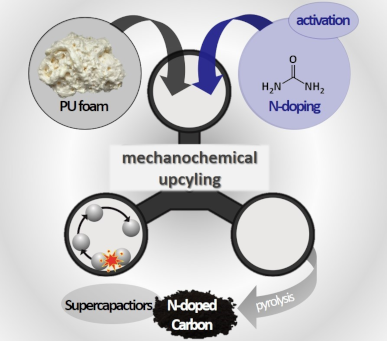
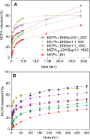
- observed since the uptake is not significantly shifted to lower relative pressures. A reduction of the total amount of adsorbed water is observed for sample PUPC-800-3 and corresponds to a decreased total pore volume and nitrogen content (Table 1, Figure 2B,D). The hydrophilicity of the N-doped carbon


Alloyed Pt3M (M = Co, Ni) nanoparticles supported on S- and N-doped carbon nanotubes for the oxygen reduction reaction
Beilstein J. Nanotechnol. 2019, 10, 1251–1269, doi:10.3762/bjnano.10.125
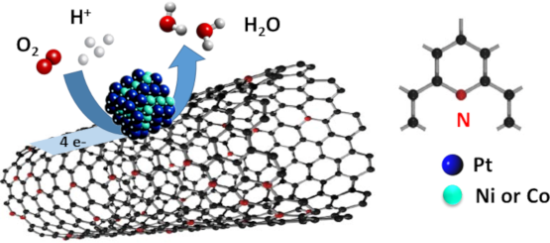
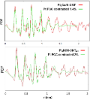
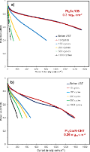
- performance and durability of PEM fuel cells [44][45]. These materials should combine some key characteristics such as: i) an adapted surface chemistry to allow high dispersion of the metallic phase at very high metal loading, ii) a good balance between hydrophobicity and hydrophilicity to allow water







Porous N- and S-doped carbon–carbon composite electrodes by soft-templating for redox flow batteries
Beilstein J. Nanotechnol. 2019, 10, 1131–1139, doi:10.3762/bjnano.10.113
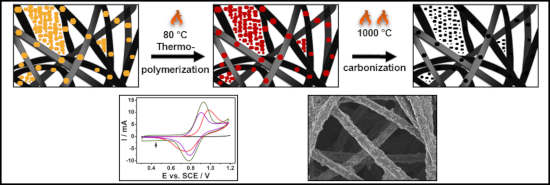
- in the functional groups on the surface of the fibers increases their hydrophilicity and hence their electrochemical performance [28][29]. We refrained, however, from quantitative analysis due to the inherent restrictions of fitting the rather broad C 1s and O 1s peaks with a multitude of individual



Direct growth of few-layer graphene on AlN-based resonators for high-sensitivity gravimetric biosensors
Beilstein J. Nanotechnol. 2019, 10, 975–984, doi:10.3762/bjnano.10.98
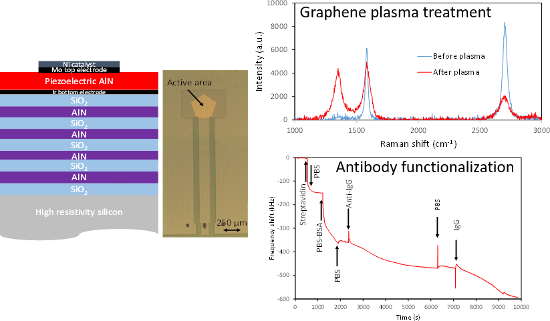
- , indicating the increase of hydrophilicity. This is important as this treatment strongly determines the type of binding of the reagents to the surface in covalent and non-covalent bio-functionalization. Figure 5 shows a schema of the covalent functionalization process. After the plasma treatment, the samples


Hydrophilicity and carbon chain length effects on the gas sensing properties of chemoresistive, self-assembled monolayer carbon nanotube sensors
Beilstein J. Nanotechnol. 2019, 10, 565–577, doi:10.3762/bjnano.10.58
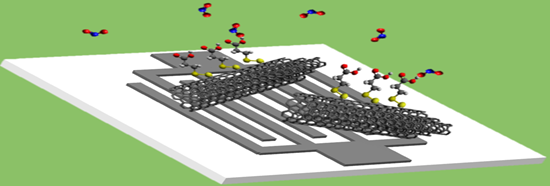
- chain and its hydrophilicity on the gas sensing properties of SAMs formed on carbon nanotubes are studied, and additionally, the gas sensing mechanisms are discussed. Four thiols differing in the length of the carbon chain and in the hydrophobic or hydrophilic nature of the head functional group are
- response and selectivity. This would make the detection of polar and nonpolar gas species employing low-power gas sensors easier, even under fluctuating ambient moisture conditions. Keywords: carbon length chain; gas sensing mechanism; hydrophilicity; hydrophobicity; multiwall carbon nanotubes (MWCNTs
- the gold nanoparticles creating SAMs (see Figure S2, Supporting Information File 1), which differed in their terminal functional groups and in the length of their carbon chain. This enables studying the effects of hydrophilicity or hydrophobicity of terminal functional groups and carbon chain length


Biocompatible organic–inorganic hybrid materials based on nucleobases and titanium developed by molecular layer deposition
Beilstein J. Nanotechnol. 2019, 10, 399–411, doi:10.3762/bjnano.10.39
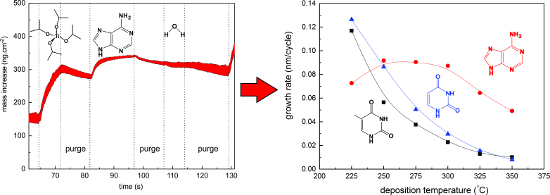
- films were relatively hydrophilic (Ti-thymine (deposited at 225 °C) = 19 ± 2°, Ti-uracil (deposited at 225 °C) = 19 ± 1°, and Ti-adenine (deposited at 250 °C) = 45 ± 3°), Figure 6. This hydrophilicity is highly suitable for cell growth purposes. A similar hydrophilic nature was observed for Ti-glycine




A novel polyhedral oligomeric silsesquioxane-modified layered double hydroxide: preparation, characterization and properties
Beilstein J. Nanotechnol. 2018, 9, 3053–3068, doi:10.3762/bjnano.9.284
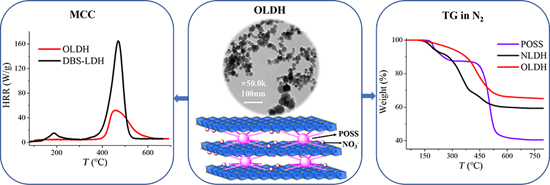
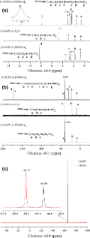
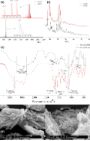
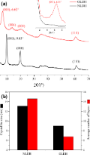
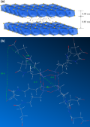
- retardancy of polymers [5][6][7][8][9][10][11][12][13]. Due to size effects, the strong hydrophilicity and the strong affinity between the hydroxide layers, LDHs are difficult to homogeneously and stably disperse in polymer matrices. Therefore organic modification of LDHs is essential before using them as







Electrostatic force microscopy for the accurate characterization of interphases in nanocomposites
Beilstein J. Nanotechnol. 2018, 9, 2999–3012, doi:10.3762/bjnano.9.279
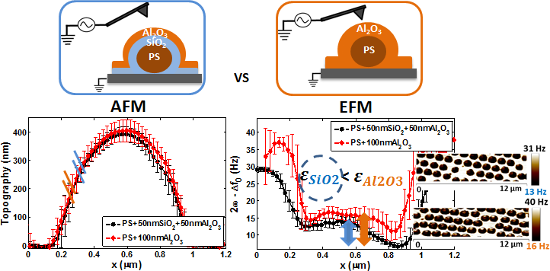
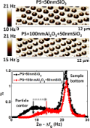
- meniscus can cause dynamic imaging instabilities [47], and an important water adsorption/absorption could explain the surface status difference between Al2O3 and SiO2. The apparently higher SiO2 hydrophilicity could be attributed to the chemistry of the surface states resulting from the deposition method




Graphene-enhanced metal oxide gas sensors at room temperature: a review
Beilstein J. Nanotechnol. 2018, 9, 2832–2844, doi:10.3762/bjnano.9.264
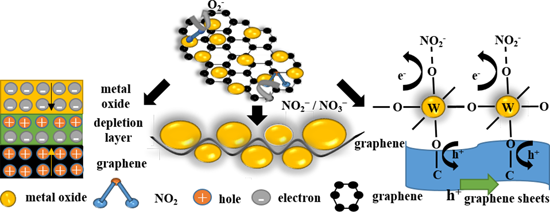
- concentrations of NH3 and responded dramatically, which could be ascribed to the p–n heterojunctions formed between ZnO and rGO. However, the influence of humidity on the sensor response was not negligible due to the residual oxygen (high hydrophilicity) on rGO and the active sites (oxygen vacancies) on ZnO



Impact of the anodization time on the photocatalytic activity of TiO2 nanotubes
Beilstein J. Nanotechnol. 2018, 9, 2628–2643, doi:10.3762/bjnano.9.244
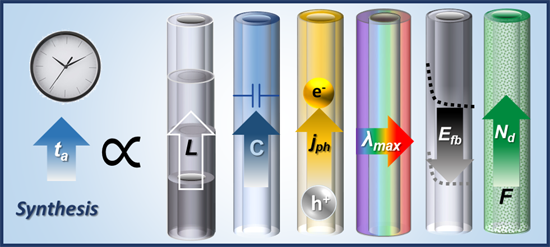
- length, fluorine content, and capacitance of the space charge region increased, affecting the opto-electronic properties (bandgap, bathochromic shift, band-edge position) and surface hydrophilicity of TiO2 NTs. These properties are at the origin of the photocatalytic activity (PCA), as proved with the
- for the MB absorption step, the hydrophilicity of the surface is what it leads to the difference in the aforementioned trends, demonstrating the determining the influence of ta on the morphological, surface chemical and opto-electronic properties of the TNTs. Conclusion The impact of the anodization