Search results
Search for "hydrophobic" in Full Text gives 438 result(s) in Beilstein Journal of Nanotechnology. Showing first 200.
Engineered PEG–PCL nanoparticles enable sensitive and selective detection of sodium dodecyl sulfate: a qualitative and quantitative analysis
Beilstein J. Nanotechnol. 2025, 16, 385–396, doi:10.3762/bjnano.16.29
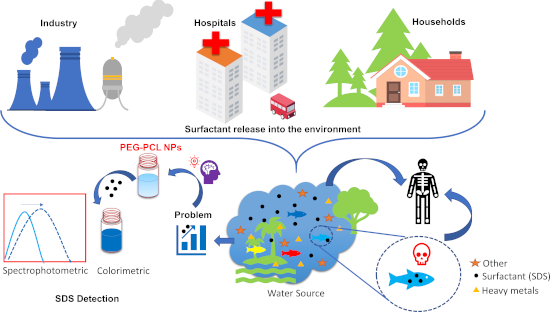
- sulfate group, with sodium as the counter-ion. The amphiphilic structure of SDS, integrating a hydrophobic alkyl chain and a hydrophilic headgroup, confers unique physicochemical properties that are leveraged in various applications. However, the widespread use of SDS in different applications led to the
- and PCL to produce amphiphilic nanoparticles which possess both hydrophilic and hydrophobic segments. PEG, known for its water solubility and biocompatibility, provides the hydrophilic component, while PCL, a biodegradable polyester, contributes with hydrophobicity, enabling the formation of
- alternating addition is crucial for creating the amphiphilic structure, where PEG provides the hydrophilic domains, and PCL forms the hydrophobic domains. The copolymerization reaction can proceed for approximately 24 hours, during which nucleation and growth of the nanoparticles occur. The reaction duration


Enhancing mechanical properties of chitosan/PVA electrospun nanofibers: a comprehensive review
Beilstein J. Nanotechnol. 2025, 16, 286–307, doi:10.3762/bjnano.16.22

- release time of substances by exploiting the surface properties and interactions between hydrophobic and hydrophilic layers [86]. This sequential method of producing composite fibers is generally easier than the other methods as the different materials are electrospun separately, eliminating concerns
- nanofibers with different materials has a significant impact on protecting sensitive drugs through the shell layer, reducing burst release, and controlling the release of both hydrophilic and hydrophobic drugs [188][189]. In recent research, chitosan/PVA nanofibrous scaffolds loaded with active components


Radiosensitizing properties of dual-functionalized carbon nanostructures loaded with temozolomide
Beilstein J. Nanotechnol. 2025, 16, 229–251, doi:10.3762/bjnano.16.18
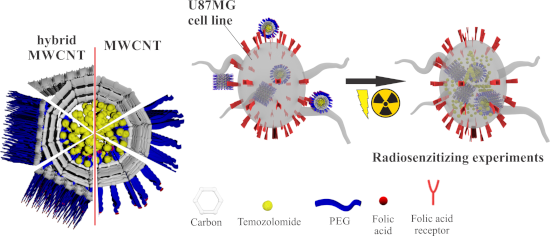
- for active agent loading and functionalization with (intra)cellular component targeting ligands, and extremely small size for crossing the blood–brain barrier (BBB) and targeted delivery to the brain. The hydrophobic nature of the CNs offers good membrane permeability. Through chemical modifications
- (i.e., oxidation) of their surface, CNs with optimal hydrophobic/hydrophilic properties and increased dispersibility can be obtained as preconditions for biocompatibility and low immunogenicity. Also, improved electronic, mechanical, and thermal properties as preconditions for (photo)thermal and
- graphene sheets, formed by interactions between the hydrophobic regions of graphene and the side walls of MWCNTs. Also, in the SEM and TEM images of TMZ-loaded non-modified CNs, entrapment of TMZ into the tubes and wrapping around the CNs was visible [43]. In the present study, the covalent PEGylation and




TiO2 immobilized on 2D mordenite: effect of hydrolysis conditions on structural, textural, and optical characteristics of the nanocomposites
Beilstein J. Nanotechnol. 2025, 16, 128–140, doi:10.3762/bjnano.16.12
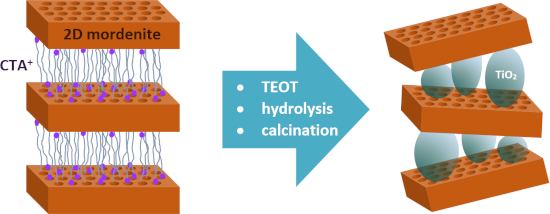
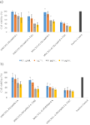
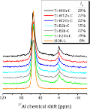
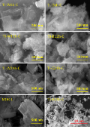
- /hydrophobic properties than the samples hydrolyzed in pure water. It is known that the hydrophilicity of TiO2 depends on the crystalline phase and surface composition, but not on the size [43]. Moreover, it was found that introduction of TiO2 into an amorphous siliceous matrix increases the hydrophilicity of



Comparison of organic and inorganic hole transport layers in double perovskite material-based solar cell
Beilstein J. Nanotechnol. 2025, 16, 119–127, doi:10.3762/bjnano.16.11
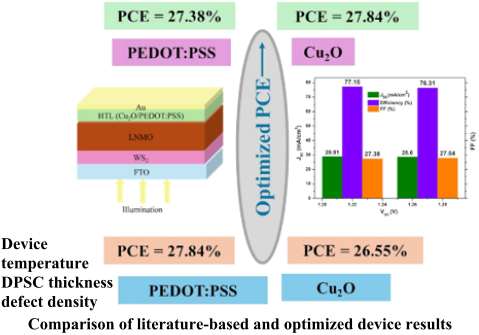
- PEDOT:PSS are the two HTLs that are analyzed concerning the double perovskite material LNMO. The HTL needs better conductivity, better electron blocking, and more hole mobility for better carrier transportation at the perovskite/HTL interface. It is hydrophobic with a wider bandgap and does not easily


Nanocarriers and macrophage interaction: from a potential hurdle to an alternative therapeutic strategy
Beilstein J. Nanotechnol. 2025, 16, 97–118, doi:10.3762/bjnano.16.10
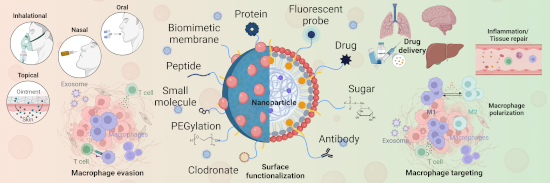
- surface with hydrophilic polymers such as PEG. PEGylation is widely used for its “stealth” effect, hindering protein adsorption on the hydrophobic polymer surface by steric repulsion [36]. However, the long-term use of PEGylated NCs for treating chronic diseases can lead to side effects, such as
- large size (≈25 μm) facilitates the efficient loading of diverse drugs (e.g., hydrophilic or hydrophobic) [55]. As detailed in Section 2, macrophages persist throughout acute and chronic inflammatory phases, broadening their therapeutic applicability across various pathological conditions. This chapter


Bioinspired nanofilament coatings for scale reduction on steel
Beilstein J. Nanotechnol. 2025, 16, 25–34, doi:10.3762/bjnano.16.3

- , which employs micro- and nanostructures to repel water, we investigate the application of silicone nanofilaments (SNFs) as a coating on steel surfaces to mitigate scaling. Silicone nanofilaments, previously successful on polymers, textiles, and glass, are explored for their hydrophobic properties and
- . This reduction is attributed to altered flow dynamics near the super-hydrophobic surface, inhibiting nucleation and growth of scale. Our findings highlight the potential of bioinspired SNF coatings to enhance the performance and longevity of steel surfaces in industrial environments. Keywords
- protrusions that have an overhanging shape and low surface energy can effectively render a surface super-hydrophobic (Figure 1D,F). This texture creates an energy barrier, causing water droplets to rest on the protrusions while trapping air beneath them. In analogy with the texture of Collembola skin, this


Mechanistic insights into endosomal escape by sodium oleate-modified liposomes
Beilstein J. Nanotechnol. 2024, 15, 1667–1685, doi:10.3762/bjnano.15.131
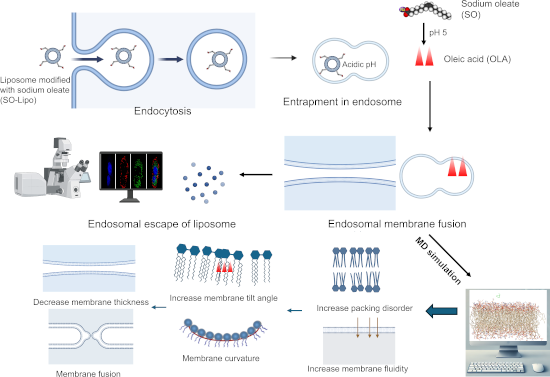
- converts to its protonated form, OLA, enhancing its hydrophobic interactions with the endosomal membrane. This protonation is expected to further increase membrane fluidity, facilitating the release of the liposomal payload into the cytosol. Moreover, its amphipathic nature allows it to form stable
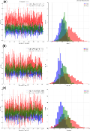
- bilayer. Notably, after 100 ns, OLA is significantly integrated within the membrane. At the end of the simulation (200 ns), OLA is thoroughly embedded, suggesting strong hydrophobic interactions that could potentially disrupt membrane integrity. This deep insertion is indicative of a substantial effect on
- , after 200 ns, it is embedded within the bilayer, albeit less deeply than OLA. This gradual and less disruptive interaction is likely attributable to the amphipathic nature of AUR, which balances hydrophobic and hydrophilic interactions. Further analysis, as shown in Supporting Information File 1, Figure




Biomimetic nanocarriers: integrating natural functions for advanced therapeutic applications
Beilstein J. Nanotechnol. 2024, 15, 1619–1626, doi:10.3762/bjnano.15.127

- electrostatic attraction, leading to spontaneous synthesis [46][47][48]. The process depends on electrostatic and hydrophobic interactions, where modulation of the carrier charge determines the strength of interaction and conjugation efficiency with the membrane vesicle [49][50]. A common technique for merging


Natural nanofibers embedded in the seed mucilage envelope: composite hydrogels with specific adhesive and frictional properties
Beilstein J. Nanotechnol. 2024, 15, 1603–1618, doi:10.3762/bjnano.15.126
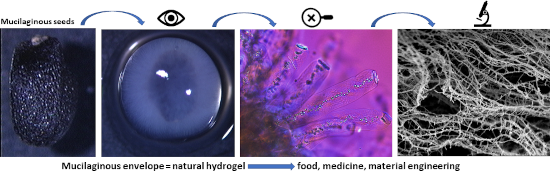
- between mucilage and substrate. Also, very recent studies involving computer simulations demonstrated the influence of different temperatures on hydrophobic–polar and hydrogen bond interactions within the mucilage envelope [150]. The adhesive strength is expressed as the maximum force per unit area [29


Green synthesis of silver nanoparticles derived from algae and their larvicidal properties to control Aedes aegypti
Beilstein J. Nanotechnol. 2024, 15, 1566–1575, doi:10.3762/bjnano.15.123
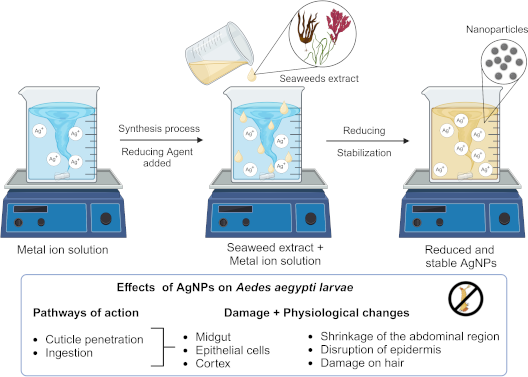
- characteristics such as greater absorption capacity, greater bioavailability, controlled release of active ingredients, improved solubility of hydrophobic substances in water, and good kinetic stability [12][13][14]. Metallic nanoparticles have been investigated as a promising approach for vector control. The


Polymer lipid hybrid nanoparticles for phytochemical delivery: challenges, progress, and future prospects
Beilstein J. Nanotechnol. 2024, 15, 1473–1497, doi:10.3762/bjnano.15.118
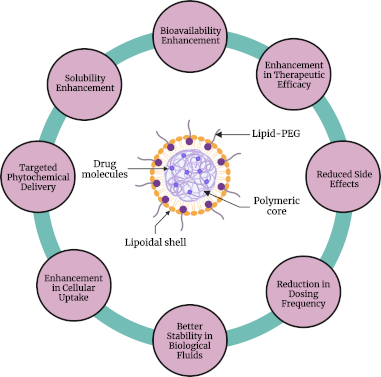
- water solubility. Many phytochemicals are hydrophobic and show poor water solubility, which significantly restricts their absorption in the gastrointestinal tract (GIT) when administered orally. This low solubility leads to low bioavailability, resulting in sub-therapeutic levels of the phytochemical at
- minimizes the interaction with blood components and immune cells. This reduces the risk of immune reactions and increases the half-life of the nanoparticles in the body. Additionally, PEGylation can improve the solubility of hydrophobic drugs, facilitating their delivery. The hybrid structure of these


Nanotechnological approaches for efficient N2B delivery: from small-molecule drugs to biopharmaceuticals
Beilstein J. Nanotechnol. 2024, 15, 1400–1414, doi:10.3762/bjnano.15.113
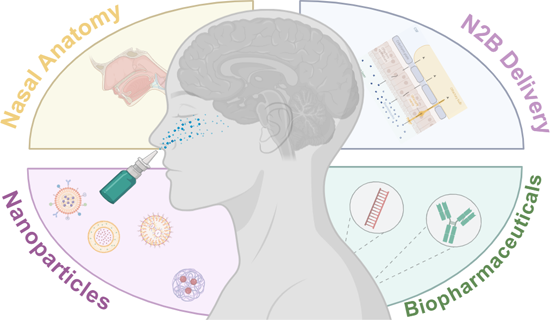
- ]. Liposomes Liposomes are another type of DDS that has been extensively investigated over the years [87][88][89]. The structure of a liposome contains a lipid bilayer surrounding an aqueous core, which offers advantages in encapsulating both hydrophobic and hydrophilic substances [90]. The additional
- microfluidics and high-shear-force homogenization [110]. As DDS, nanoemulsions can be reservoirs for encapsulating hydrophobic substances [111]. Moreover, emulsions of emulsions or double emulsions can be prepared by dispersing the droplets of primary emulsion into another liquid phase. Double emulsions can be


A biomimetic approach towards a universal slippery liquid infused surface coating
Beilstein J. Nanotechnol. 2024, 15, 1376–1389, doi:10.3762/bjnano.15.111
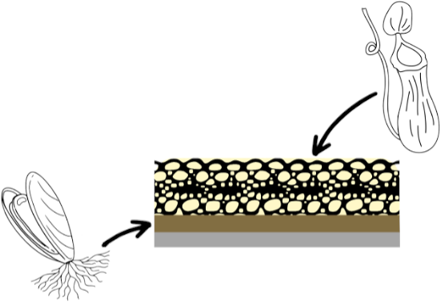
- cyclic olefin copolymer, silicon, and stainless steel substrates, by first growing a PDA film on each substrate. This was followed by a hydrophobic liquid anchor layer created by functionalizing the PDA film with a fluorinated thiol. Finally, perfluorodecalin was applied to the surface immediately prior
- through static water contact angle measurements, the results of which can be found in Figure 2. The observed static water contact angles taken from the three different bare substrates varied slightly, with COC as the most hydrophobic one because of its hydrocarbon chemical structure. As these substrates
- were functionalized with PDA, all three substrates became more wettable. The final functionalization layer (FDT) then coated the surface with electronegative fluorine groups, thereby, creating a more hydrophobic surface [37]. The static water contact angle values collected from the three substrates


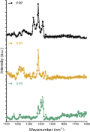


Interaction of graphene oxide with tannic acid: computational modeling and toxicity mitigation in C. elegans
Beilstein J. Nanotechnol. 2024, 15, 1297–1311, doi:10.3762/bjnano.15.105
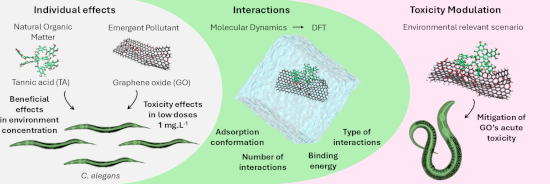
- in hydrogen bonding as well as hydrophobic and electrostatic interactions; also, they are responsible for TA’s high solubility, reactivity to metal cations, binding capacity to molecules and surfaces, and significant reducing and radical scavenging properties [19][21][22][23][24]. This range of


Dual-functionalized architecture enables stable and tumor cell-specific SiO2NPs in complex biological fluids
Beilstein J. Nanotechnol. 2024, 15, 1238–1252, doi:10.3762/bjnano.15.100
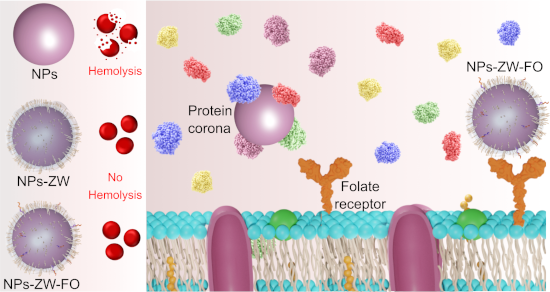
- increase in the hydrodynamic diameter for the SiO2NPs-ZW-FO may be associated with their subtle aggregation after the addition of folate or simply by the change in the dynamic structure of the particle since folate is hydrophobic [35] and can alter the arrangement of water molecules around the NP. Zeta


Synthesis, characterization and anticancer effect of doxorubicin-loaded dual stimuli-responsive smart nanopolymers
Beilstein J. Nanotechnol. 2024, 15, 1189–1196, doi:10.3762/bjnano.15.96
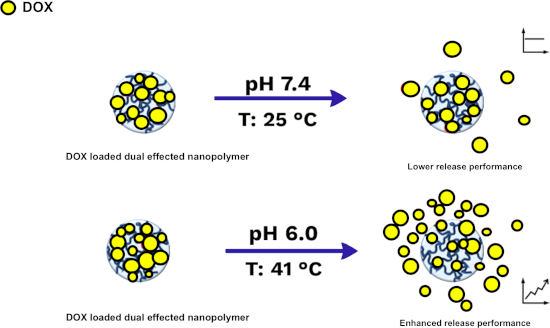
- Belarus, Minsk, Belarus Faculty of Arts and Science, Chemistry Department, Aksaray University, Aksaray, Turkey 10.3762/bjnano.15.96 Abstract Nanopolymers represent a significant group of delivery vehicles for hydrophobic drugs. In particular, dual stimuli-responsive smart polymer nanomaterials might be


AI-assisted models to predict chemotherapy drugs modified with C60 fullerene derivatives
Beilstein J. Nanotechnol. 2024, 15, 1170–1188, doi:10.3762/bjnano.15.95
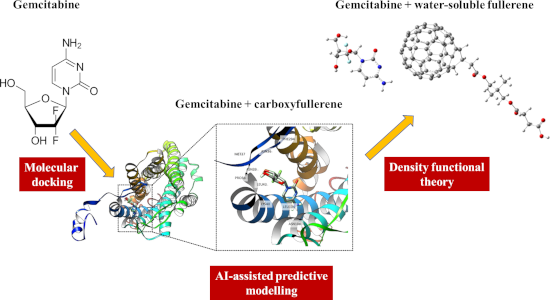
- obtained based on the variables detected by the AI as the most important ones. Workflow diagram of the stages during modeling. Gemcitabine after blind docking with the protein CXCR7. Blue color indicates the most hydrophilic sites and orange-red the most hydrophobic ones. Interacting residues are labeled
- as well. Binding site of gemcitabine–C60 and protein CXCR7. Blue color indicates the most hydrophilic sites and orange-red the most hydrophobic ones. Interacting residues are labeled as well. Binding sites for (a) gemcitabine, (b) dinaciclib, and (c) palbociclib with C60–COOH and protein CXCR7. Blue
- color indicates the most hydrophilic sites and orange-red the most hydrophobic ones. Interacting residues are labeled as well. Ground state structures of (a) doxorubicin and (b) gemcitabine interacting with a water-soluble fullerene. Quantitative descriptors proposed to model the docking score of the


Photocatalytic methane oxidation over a TiO2/SiNWs p–n junction catalyst at room temperature
Beilstein J. Nanotechnol. 2024, 15, 1132–1141, doi:10.3762/bjnano.15.92
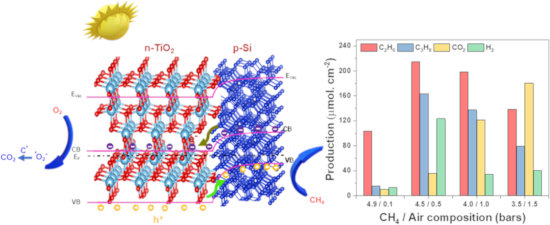
- that the superior wettability of TiO2/SiNWs (hydrophilic surfaces) compared to TiO2/glass (hydrophobic surfaces) enables partial adsorption of water molecules, which facilitates the generation of radicals necessary for photocatalytic reactions. Furthermore, the TiO2 nanostructure and p-type SiNWs are


Recent updates in applications of nanomedicine for the treatment of hepatic fibrosis
Beilstein J. Nanotechnol. 2024, 15, 1105–1116, doi:10.3762/bjnano.15.89
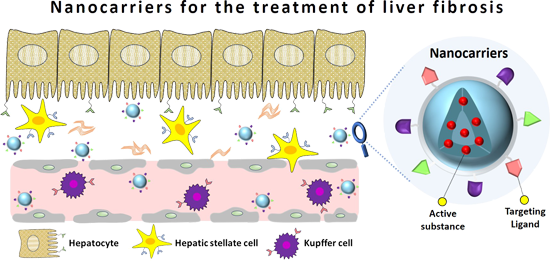
- serum albumin corona to escape Kupffer cells’ clearance, facilitating direct uptake in hepatocytes [40]. Hydrophobic nanocarriers are rapidly cleared from the systemic circulation by Kupffer cells [33]. In the pathophysiological condition of hepatocellular carcinoma, microvascular density and


Unveiling the potential of alginate-based nanomaterials in sensing technology and smart delivery applications
Beilstein J. Nanotechnol. 2024, 15, 1077–1104, doi:10.3762/bjnano.15.88
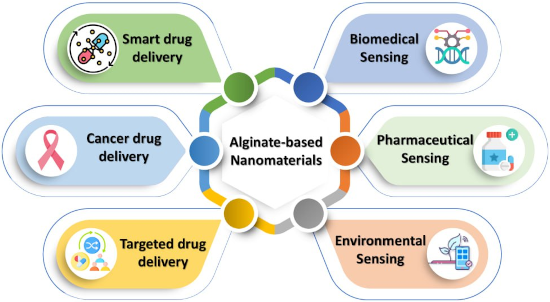
- NPs, yielding sustained release of the medicine and promising results as a transmucosal DDSs for hydrophobic medicines. Another enhanced cancer drug delivery system was developed by Iranian scientists. They conceived a nanoparticles-in-nanofibers DDS, which they called nano-in-nano delivery technique
- promising potential. Alginate can be employed also in the form of pH-responsive nanoparticles. pH-responsive amphiphilic alginate can offer hydrophobic drug loading space as well as controlled drug release. As a good example, Tawfik et al. [19] worked on amphiphilic alginate derivatives and conjugated


Therapeutic effect of F127-folate@PLGA/CHL/IR780 nanoparticles on folate receptor-expressing cancer cells
Beilstein J. Nanotechnol. 2024, 15, 954–964, doi:10.3762/bjnano.15.78
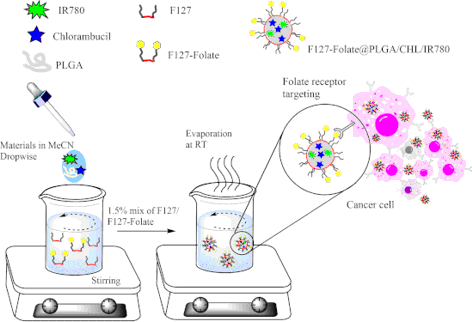
- . The outer PEO corona prevents aggregation, protein adsorption, and recognition by the reticuloendothelial system, while the hydrophobic PPO core may be modified to contain hydrophobic anticancer drugs, fluorophores, or even anchor to the hydrophobic layer of the nanoparticles [8][9]. The F127
- ]. It has been found that PLGA may co-encapsulate a range of hydrophobic and hydrophilic compounds, which, because of the core–shell structures, boosts their therapeutic anti-tumor activity [1][2][3][11][26][27][28][29][30][31][32][33]. In this study, we would want to combine all of the advantages of
- materials. The polymers used in our study were made of pluronic F127. The polymers consist of three polymer blocks, including two PEO blocks and one PPO block. Because of the presence of F127 on the particles’ surface, the nanoparticles were effectively disseminated in our study. The hydrophobic block PPO



Electrospun nanofibers: building blocks for the repair of bone tissue
Beilstein J. Nanotechnol. 2024, 15, 941–953, doi:10.3762/bjnano.15.77
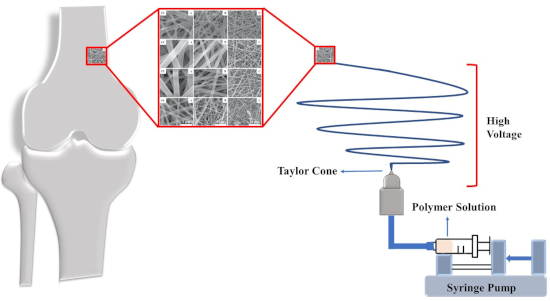
- ][90]. In cases where the burst effect is not desired, hydrophobic polymer blends need to be used. Furthermore, either core–shell or laminated nanofibers can be produced [32][91]. The degradation of polymers, the diffusion of the active material, or both of them may affect the extended release phase


Exploring surface charge dynamics: implications for AFM height measurements in 2D materials
Beilstein J. Nanotechnol. 2024, 15, 767–780, doi:10.3762/bjnano.15.64
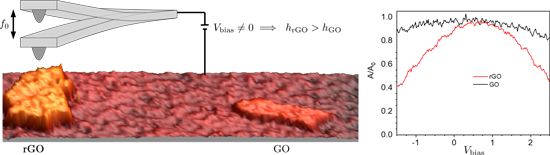
- amplitude. Consequently, in this mode, highly hydrophilic materials may appear thicker than their hydrophobic counterparts [39][40]. Erroneous height measurements are especially important in AFM studies of 2D materials [8][44][45][46]. The use of dynamic modes enhanced the problem; measured heights tend to
- , GO is a hydrophilic insulating material [72], while rGO exhibits a hydrophobic and more conductive nature [69][73][74][75], both dependent on the degree of reduction. This stark contrast provides an ideal heterogeneous sample to study the tip–sample interaction of co-deposited GO and rGO on
- ]. However, despite rGO being hydrophobic and both GO and the SiO2 substrate being hydrophilic, the rGO sheet is observed as thicker than the GO sheet, where the formation of liquid necks between the tip and the sample should be more favorable [37]. It is worth noting that the measurements in Figure 1 were


Effect of repeating hydrothermal growth processes and rapid thermal annealing on CuO thin film properties
Beilstein J. Nanotechnol. 2024, 15, 743–754, doi:10.3762/bjnano.15.62
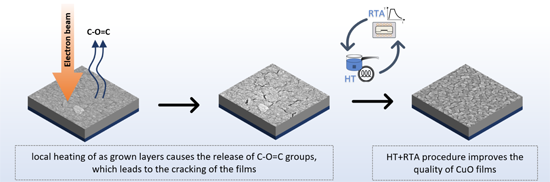
- apart and have sparked growing attention on CuO. As a result, CuO has become the focus of both fundamental research and efforts aimed at its practical application across various areas. Nowadays, CuO thin films showing strong hydrophobic properties are tested, among others, in the context of self