


Search results
Search for "indentation" in Full Text gives 109 result(s) in Beilstein Journal of Nanotechnology.
Preparation and characterization of polycarbonate/multiwalled carbon nanotube nanocomposites
Beilstein J. Nanotechnol. 2017, 8, 2026–2031, doi:10.3762/bjnano.8.203
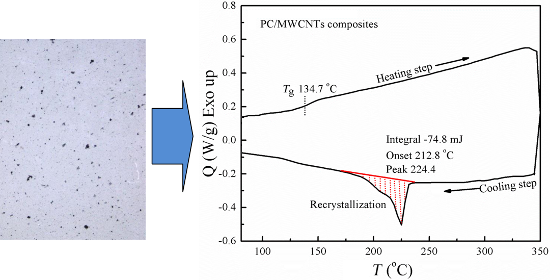
- used p-xylene and dichloromethane solvent to mix MWCNTs and prevent their agglomeration induced by strong van der Waals forces. Previous work carried out on PC/MWCNT composites with focus on the mechanical properties showed an increase in the storage modulus obtained from indentation measurements at


α-Silicene as oxidation-resistant ultra-thin coating material
Beilstein J. Nanotechnol. 2017, 8, 1808–1814, doi:10.3762/bjnano.8.182
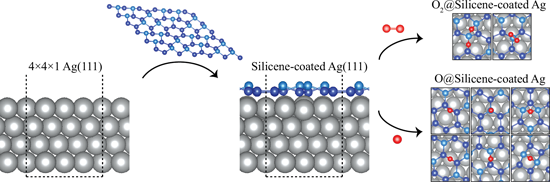
- focused on oxidation scenario of silver in the presence of α-silicene. A large energy barrier for oxidation was obtained by performing indentation calculations. In conclusion, it was found silicene exhibits good performance in the protection of a Ag(111) surface against oxidation. Results and Discussion
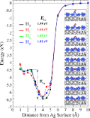
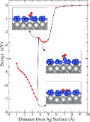
- the application of silicene as an oxidation barrier, indentation calculations with oxygen were performed. Since O atoms and O2 molecules strongly interact with silicene, the diffusion of O/O2 in the lateral direction is not possible and the hollow sites of the hexagonal lattice are the only possible
- sites for the penetration into the structure. Therefore, the hollow sites are considered for the indentation simulation. There are four different hollow sites in the silicene structure on Ag(111), as shown in Figure 3b. The sites are denoted as H1, H2, H2’ and H3. H2 and H2’ sites coincide to the fcc


Nanotribological behavior of deep cryogenically treated martensitic stainless steel
Beilstein J. Nanotechnol. 2017, 8, 1760–1768, doi:10.3762/bjnano.8.177
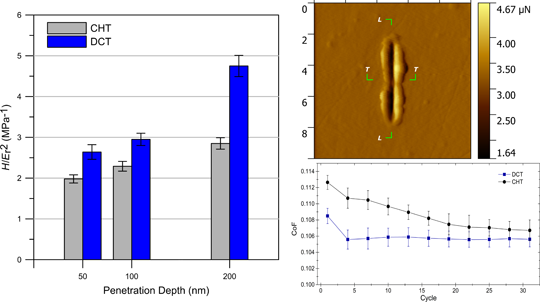
- slope of the unloading curve (∂P/∂h), evaluated at the point of maximum force. Both P and S and can be determined without knowledge of the exact geometry of the diamond tip or the shape and size of the indentation. The values of P and S are related through the following equation [32]: where Er is the


Assembly of metallic nanoparticle arrays on glass via nanoimprinting and thin-film dewetting
Beilstein J. Nanotechnol. 2017, 8, 1049–1055, doi:10.3762/bjnano.8.106
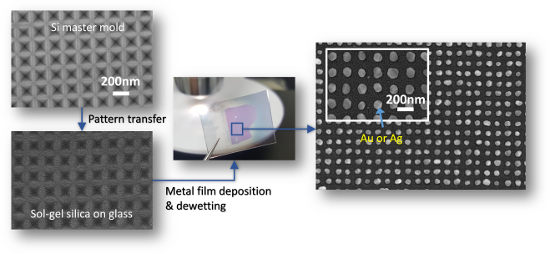
- function of the indentation depth (h). The Young’s modulus rapidly decreased as the indentation depth increased to ≈20 nm. In the nanoindentation measurements, the Young's modulus (Er) is given by Er = (√π/2β)(dP/dh)/√A where β is a constant, (dP/dh) is the slope of the load–displacement curve at the
- sharply increase the contact area (A) at the beginning of indentation and decrease the modulus [33]. Nonetheless, both the modulus and the hardness of all annealed resists, with the exception of the modulus behavior at extremely small indentation depths, increased as the indentation depth increased. This
- hardness increased with increasing annealing temperature, reaching the maximum at 550 °C. The composite hardness and modulus of the resist–glass system annealed at 550 °C were 5.6 and 58 GPa, respectively, at the indentation depth of tf/2. Considering the properties of the Pyrex glass substrate, which has


Scaling law to determine peak forces in tapping-mode AFM experiments on finite elastic soft matter systems
Beilstein J. Nanotechnol. 2017, 8, 968–974, doi:10.3762/bjnano.8.98
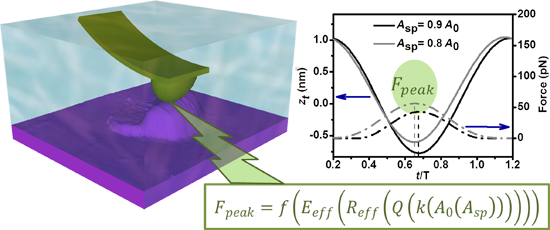
- variables and where the indexes “t” and “s” stand for tip and sample, respectively, in the above equations, δ is the indentation, ν is the Poisson coefficient (νt = 0.3 and νs = 0.4) and E is the Young’s modulus with Et = 170 GPa. The effective Young’s modulus Eeff and radius Reff are described elsewhere


Bio-inspired micro-to-nanoporous polymers with tunable stiffness
Beilstein J. Nanotechnol. 2017, 8, 906–914, doi:10.3762/bjnano.8.92
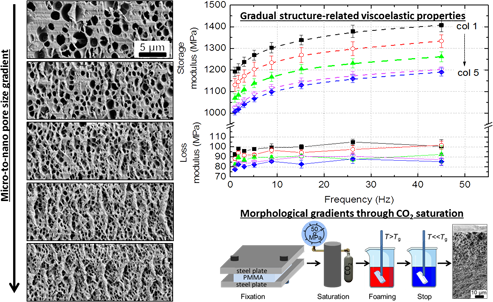
- regime by dynamic flat-punch indentation. Interestingly, the storage modulus was observed to increase with increasing pore-area fraction. Conclusion: This outcome appears counterintuitive at first sight, but can be rationalized by an increase of the pore wall thickness as determined by our quantitative
- ). Prior to SEM analysis the samples were sputtered with silver for 100 s at 25 mA with a sputter-coater (K575X, Emitech) in order to avoid charging effects and ensure a good resolution. SEM images of the surface of interest were taken before and after the indentation experiments. For the quantitative
- -specific characterisation routine yields the complex modulus E* = E' + iE'' as a function of the frequency for a specific indentation, with E' and E'' being the storage modulus and the loss modulus of the material, respectively. The ratio E''/E', also known as the loss factor tan δ = α, represents the


Dispersion of single-wall carbon nanotubes with supramolecular Congo red – properties of the complexes and mechanism of the interaction
Beilstein J. Nanotechnol. 2017, 8, 636–648, doi:10.3762/bjnano.8.68
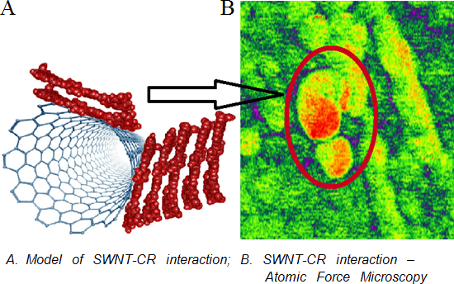
- ), deformation (the indentation of the surface under the tip), dispersion (dissipation, loss of energy of microcantilever of scanning probe when passing through different areas on the sample surface). Absorption spectra of free Congo red (A) and SWNT-bound Congo red (D) (0.05 M Tris/HCl buffer, pH 7.4); Congo


Analysis and modification of defective surface aggregates on PCDTBT:PCBM solar cell blends using combined Kelvin probe, conductive and bimodal atomic force microscopy
Beilstein J. Nanotechnol. 2017, 8, 579–589, doi:10.3762/bjnano.8.62
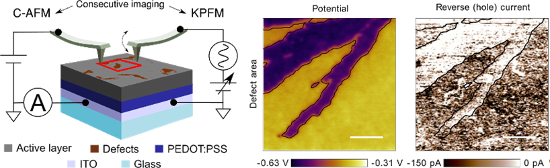
- aggregates with KPFM does not work for fresh samples. Thus, we apply controlled bimodal AFM indentation [35][36] to the surface aggregates of fresh samples in order to demonstrate the modification process. Since the aggregates are very thin, we vary the peak force of bimodal AFM just enough to break the
- the spring constant of the third eigenmode is ca. 308 times the spring constant of the first mode [18], the indentation depth and peak force of the bimodal treatment are mainly controlled by the higher eigenmode [36]. The small free amplitude of the third eigenmode (ca. 3 nm, Figure S7, Supporting
- Information File 1) ensures controlled shallow indentation into the surface. Since the volume of aggregates in the scan area is about 0.58·10−18 L (with a total mass less than 1·10−15 g) [39], calculated from the dark region (36%) in Figure 6e and the thickness of aggregates previously obtained (ca. 0.8 nm


Anodization-based process for the fabrication of all niobium nitride Josephson junction structures
Beilstein J. Nanotechnol. 2017, 8, 539–546, doi:10.3762/bjnano.8.58
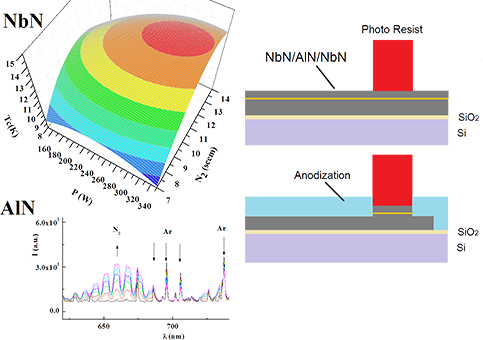
- compliance voltage to obtain a controlled and stable oxidation of a NbN thin film. Auger electron spectroscopy and nano-indentation analysis has been employed to verify respectively the complete oxidation of the surface and the mechanical stability of the film. We have also found a relationship between the


Structural and tribometric characterization of biomimetically inspired synthetic "insect adhesives"
Beilstein J. Nanotechnol. 2017, 8, 45–63, doi:10.3762/bjnano.8.6


When the going gets rough – studying the effect of surface roughness on the adhesive abilities of tree frogs
Beilstein J. Nanotechnol. 2016, 7, 2116–2131, doi:10.3762/bjnano.7.201
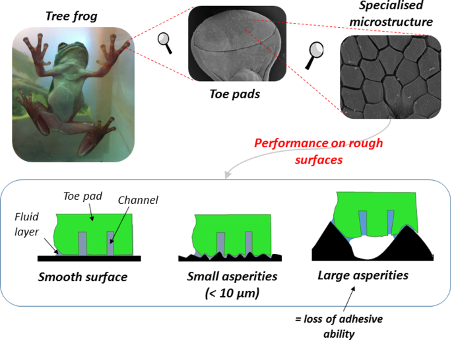
- difficult. The pads of tree frogs are very soft and so should deform to mould around rough surfaces, as is seen in smooth padded insects [17]. The Young’s modulus of the toe pads has been measured in several studies, an elastic modulus of 40–55 kPa based on AFM indentation being the most recent estimate [18
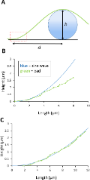
- indentation depth of h (i.e., bead diameter) and bead radius R, leading to Uelastic = 4/3E*R1/2h5/2. Since the glass bead is taken to be infinitely stiff, here 1/E* = (1 – ν2)/E where ν is Poisson’s ratio of the toe pad (taken to be 0.5), the surface term is given by the circular opening that is produced by
- the results of indentation experiments carried out on tree frogs by Barnes et al. [19] and Barnes et al. [18] which showed equivalently low toe pad elastic modulus values (in the 5–40 kPa range). Although our results are consistent with prior reports, we note that there are a few points regarding our




Annealing-induced recovery of indents in thin Au(Fe) bilayer films
Beilstein J. Nanotechnol. 2016, 7, 2088–2099, doi:10.3762/bjnano.7.199
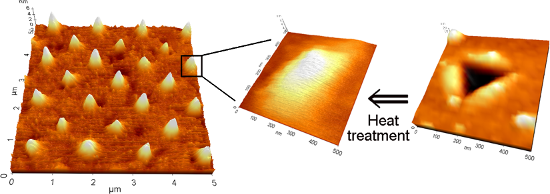
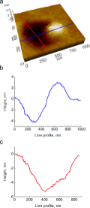
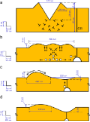
- dissipation and the formation of shallow depressions nearby after subsequent annealing treatments. This annealing-induced evolution of nanoindents was interpreted in terms of annihilation of dislocation loops generated during indentation, accompanied by the formation of nanopores at the grain boundaries and
- strain in thin films. Here, we present the results of a study investigating the recovery of indentation-induced defects in Au(Fe) bilayer films. The motivation for our work is two-fold: (i) to explore the concept of thermo-mechanical treatment of thin films by combining localized plastic strain
- microstructural changes and phase transformations induced by nanoindentation and annealing in Ni [1] and Ag thin films [2] on Si substrates. They revealed that the distortion of the crystalline structure induced by indentation enhances the diffusivity of metal atoms and prompts the formation of nickel and silver





A new approach to grain boundary engineering for nanocrystalline materials
Beilstein J. Nanotechnol. 2016, 7, 1829–1849, doi:10.3762/bjnano.7.176
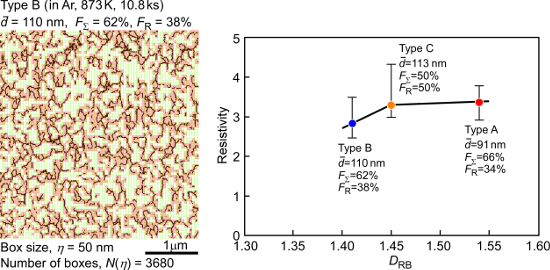
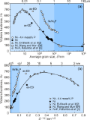
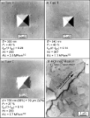
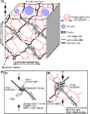
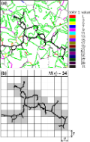
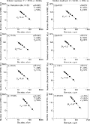
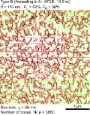
- micrographs of the propagation path of cracks produced by Vickers indentation tests at a load of 1.96 N for the sulfur-doped submicrometer-grained Ni specimens with different grain boundary microstructures [85]. Type A and Type B specimens had different fractions of low-Σ CSL boundaries (including low-angle
- boundaries) of 49 and 40%, but almost the same average grain size of 300 and 340 nm, respectively. It was found that the crack length from the tip of indentation in the Type A specimen with a higher fraction of low-Σ CSL boundaries (FΣ = 49%) was shorter than in the Type B specimen with a lower fraction of
- low-Σ CSL boundaries (FΣ = 40%). The fracture toughness KIC measured by indentation fracture (IF) method for the Type A and the Type B specimens were 2.5 MPa m1/2 and 1.1 MPa m1/2, respectively. Evidently, the fracture toughness of the Type A specimen with a higher fraction of low-Σ CSL boundaries is







Functional diversity of resilin in Arthropoda
Beilstein J. Nanotechnol. 2016, 7, 1241–1259, doi:10.3762/bjnano.7.115
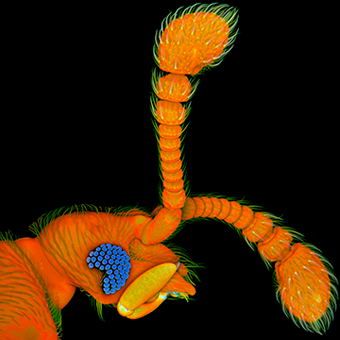
- layer as well as a higher density of rods than those of T. viridissima (Figure 6A–D). In addition, indentation experiments revealed a higher effective Young’s modulus and a lower work of adhesion for L. migratoria pads (Figure 6F,G). The lower adhesive properties of L. migratoria pads can be explained


Advanced atomic force microscopy techniques III
Beilstein J. Nanotechnol. 2016, 7, 1052–1054, doi:10.3762/bjnano.7.98

- indentation in UHV to quantitatively determine the hardness and deformation mechanisms by Arnaud Caron and Roland Bennewitz [22]. Santiago Solares and Enrique A. López-Guerra presented different approaches to model such viscoelastic properties within AFM simulations [23]. Sliding contact properties like
Generalized Hertz model for bimodal nanomechanical mapping
Beilstein J. Nanotechnol. 2016, 7, 970–982, doi:10.3762/bjnano.7.89
- and loss moduli, as they cannot be distinguished from changes in indentation depth. In tapping mode, only the ratio of the storage to loss modulus can be measured [10][21][22]. The same limitation applies to many other parametric techniques, such as force modulation [6][7] and other single-frequency
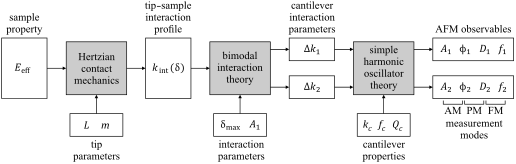
- interaction stiffness for both resonant modes, each yielding a simple analytical expression. These two independent pieces of information are refactored to provide information about modulus and indentation depth. While the theory is generally applicable to a wide range of tip–sample interaction models, the
- theory presented in the following three sections. Methods Hertzian contact mechanics The Hertzian contact model involves the interaction stiffness kint versus indentation depth δ between a paraboloidal tip of radius R and a flat sample as where the effective Young’s modulus Eeff combines deformation of


![[Graphic 4]](/bjnano/content/inline/2190-4286-7-89-i40.png?max-width=637&scale=1.18182) approximation applied to Equation 6 i...
approximation applied to Equation 6 i...


Nanoscale effects in the characterization of viscoelastic materials with atomic force microscopy: coupling of a quasi-three-dimensional standard linear solid model with in-plane surface interactions
Beilstein J. Nanotechnol. 2016, 7, 554–571, doi:10.3762/bjnano.7.49
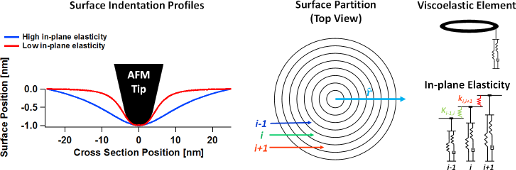
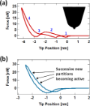
- indentation profiles and tip–sample interaction force curves, as well as their implications with regards to experimental interpretation. A variety of phenomena are examined in detail, which highlight the need for further development of more physically accurate sample models that are specifically designed for
- axis of the indentation. Second, at the scale of an AFM measurement, the surface layer mechanical properties (which often differ from the bulk properties, as discussed below) may play a prominent role. Specifically, as the tip compresses the sample, it is easy to imagine how the indentation leads to an
- free energy and elastic energy effects are often neither isotropic nor uniform, as there is generally a variation in the structure and morphology of most viscoelastic surfaces (e.g., polymers) in the horizontal direction (examples are provided below). Furthermore, at the scale of an AFM indentation it


Synthesis and applications of carbon nanomaterials for energy generation and storage
Beilstein J. Nanotechnol. 2016, 7, 149–196, doi:10.3762/bjnano.7.17















Nanoscale rippling on polymer surfaces induced by AFM manipulation
Beilstein J. Nanotechnol. 2015, 6, 2278–2289, doi:10.3762/bjnano.6.234
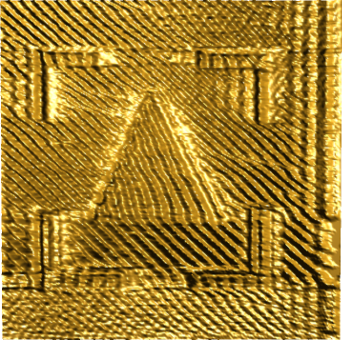
- evolution in single scratch tests. In this model, the atomic structure of the substrate is not considered. This makes the continuum model more suitable for polymeric materials that are amorphous and have fully entangled molecules, i.e., for Mw >> Mc. They have also introduced an indentation rate N, varying
- or v fall below the critical values of vc and kc, respectively (Figure 7). A transition from stick–slip to gliding can be also predicted for an indentation rate below a critical value or, alternatively, for large values of the sliding velocity, the lateral stiffness or the tip width. It is suggested
- also that this approach might be used to describe the evolution of similar rippling processes, by simply employing a proper indentation law. This analytical model could be also useful in order to understand phenomena such as the rippling of unpaved roads, ski slopes and rail tracks. A model fully




A simple and efficient quasi 3-dimensional viscoelastic model and software for simulation of tapping-mode atomic force microscopy
Beilstein J. Nanotechnol. 2015, 6, 2233–2241, doi:10.3762/bjnano.6.229
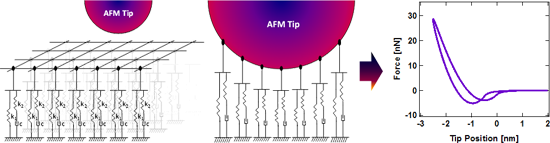
- analytical tip–sample interaction expressions in which the force is expressed as the sum of a Hertzian conservative interaction plus an indentation- and velocity-dependent dissipative interaction. Such 1-dimensional (1D) models have, for example, been used in the characterization of polymers [8][9
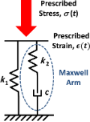
- contact at a fixed stress, the model must exhibit a time-dependent relaxation of the position of the sample directly under the tip. That is, the sample must yield, allowing the tip to gradually increase the depth of indentation. Furthermore, if the tip is quickly removed following yielding of the surface
- terms of a real 3D tip interacting with a flat surface, and thus makes it impossible to extract approximate parameters such as the Young’s modulus [12]. It is clear in Figure 1a that the geometry of the tip and its indentation depth into the surface have absolutely no effect on the nature of the tip



Development of a novel nanoindentation technique by utilizing a dual-probe AFM system
Beilstein J. Nanotechnol. 2015, 6, 2015–2027, doi:10.3762/bjnano.6.205
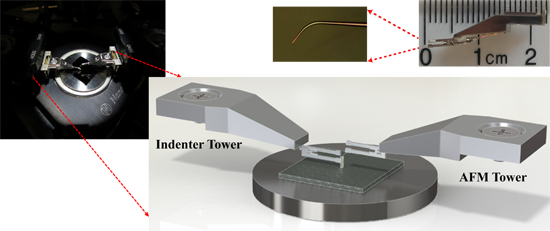
- nanoindentation is described that exhibits improved resolution and depth sensing. The approach is based on a multi-probe scanning probe microscopy (SPM) tool that utilizes tuning-fork based probes for both indentation and depth sensing. Unlike nanoindentation experiments performed with conventional AFM systems
- . An indenter probe fabricated with a known tip geometry is used to penetrate into the sample. By utilizing the force and small amount of depth information measured during indentation, material properties such as elastic (Young’s) modulus of the sample can be estimated. For example, a growing
- constants below 500 N/m. Depending on the material hardness, the applied load could result in bending of the cantilever. With optical lever method, the displacement is measured by laser deflection, which includes laser deflection caused by both the indentation depth (motion in Z) and the cantilever bending


A simple method for the determination of qPlus sensor spring constants
Beilstein J. Nanotechnol. 2015, 6, 1733–1742, doi:10.3762/bjnano.6.177
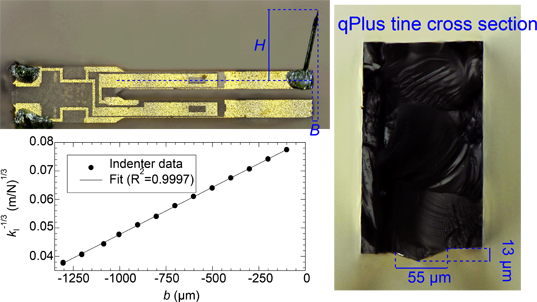
- System of Units (SI) [19][21][37], measures a force vs displacement curve by pressing a sharp indenter tip into the qPlus sensor surface at a known axial distance from the distal edge of the tine. From the indentation curve, a stiffness kI is inferred, taking care to remove the machine compliance and
- contact compliance by performing additional measurements at the base of the sensor. Applying this method at two or more distinct locations along the axis of the tine determines the flexural rigidity EI and effective cantilever length Leff of the qPlus sensor. Moreover, the indentation data provides
- were acquired along the axis of the tine and additionally at the base of the sensor in order to remove the contact stiffness and machine compliance from the spring constant prediction. To avoid interference with the indenter tip, tips were not attached to the tine. Figure 7 shows the indentation


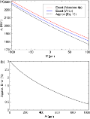


![[Graphic 9]](/bjnano/content/inline/2190-4286-6-177-i28.png?max-width=637&scale=1.18182) vs b is plotted where kI is the spring constan...
vs b is plotted where kI is the spring constan...
Lower nanometer-scale size limit for the deformation of a metallic glass by shear transformations revealed by quantitative AFM indentation
Beilstein J. Nanotechnol. 2015, 6, 1721–1732, doi:10.3762/bjnano.6.176
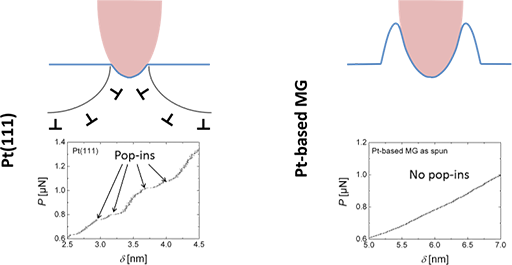
- Abstract We combine non-contact atomic force microscopy (AFM) imaging and AFM indentation in ultra-high vacuum to quantitatively and reproducibly determine the hardness and deformation mechanisms of Pt(111) and a Pt57.5Cu14.7Ni5.3P22.5 metallic glass with unprecedented spatial resolution. Our results on
- mechanisms are not activated by indentation. In the case of metallic glass, we conclude that the energy stored in the stressed volume during nanometer-scale indentation is insufficient to account for the interfacial energy of a shear band in the glassy matrix. Keywords: AFM indentation; dislocation
- the projected area of the remaining indent is evaluated by optical microscopy and hardness measurements are limited to the macro-scale. With the development of depth-sensing indentation techniques such as instrumented nanoindentation, the recording of load–displacement curves has been recognized as a



Atomic force microscopy as analytical tool to study physico-mechanical properties of intestinal cells
Beilstein J. Nanotechnol. 2015, 6, 1457–1466, doi:10.3762/bjnano.6.151
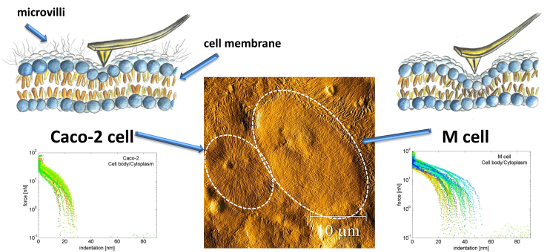
- topographies of Caco-2 cells and M cells. Furthermore, cell elasticity (i.e., the mechanical response of a cell on a tip indentation), was elucidated by force curve measurements. Besides elasticity, adhesion was evaluated by recording the attraction and repulsion forces between the tip and the cell surface
- against the plasma membranes. As a consequence, indentation occurs. The amount of force acting on the cantilever as a function of indentation enables an estimation of the nanomechanical properties of living cells, such as elasticity and adhesion [21][25][26][27]. To get a basic understanding regarding
- developed brush border (Figure 3A). In contrast, F-actin staining at the apex of M cells was markedly decreased due to a reduced or absent brush border (Figure 3B–D). Elasticity (force-indentation) measurements of Caco-2 cells and M cells Villin is not only involved in the formation and/or regulation of the


Nano-contact microscopy of supracrystals
Beilstein J. Nanotechnol. 2015, 6, 1229–1236, doi:10.3762/bjnano.6.126
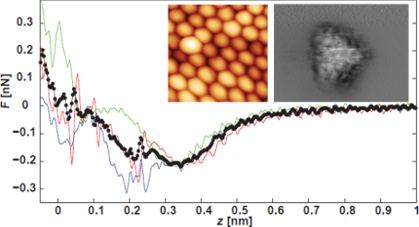
- increasing tip indentation in the same region (Figure 3A). We only began to detect comparable tunnel current signals to the STM setpoint at indentations of −1 to −1.5 nm closer to the sample than the constant height imaging position (Figure 3B), which we previously established was already at a tip–sample
- separation corresponding to the repulsive branch of the short range force curve. The simultaneously acquired Δf curve also shows strongly repulsive behaviour, but we note that the quantitative short range force cannot be extracted in this case as at this level of indentation there is no complementary “off

![[Graphic 1]](/bjnano/content/inline/2190-4286-6-126-i1.png?max-width=637&scale=1.18182) = 20 pA, ...
= 20 pA, ...





