Search results
Search for "ion" in Full Text gives 949 result(s) in Beilstein Journal of Nanotechnology. Showing first 200.
Shape, membrane morphology, and morphodynamic response of metabolically active human mitochondria revealed by scanning ion conductance microscopy
Beilstein J. Nanotechnol. 2025, 16, 951–967, doi:10.3762/bjnano.16.73
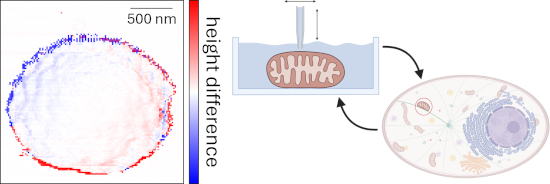
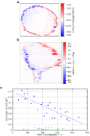
- . Consequently, the outer membrane, which separates the mitochondrion from the cytoplasm, has become a focus of investigation. We analysed metabolically active mitochondria from HeLa cells using scanning ion conductance microscopy to generate nanoscopically resolved, three-dimensional topographies. Our
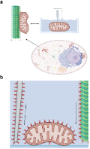
- local environment. The similarities between the nanopipette in the measurement setup and the microtubules in the cellular context are discussed as the basis for the hypothesis. Keywords: HeLa; metabolically active; mitochondria; morphodynamics; scanning ion conductance microscopy; Introduction
- study of metabolically active organelles [26]. Scanning ion conductance microscopy (SICM) enables three-dimensional visualisation of living cells in their native state [27]. Pioneered by Hansma et al. [28], the method has been continuously refined since the 1990s [27][29][30]. SICM utilises a



Tendency in tip polarity changes in non-contact atomic force microscopy imaging on a fluorite surface
Beilstein J. Nanotechnol. 2025, 16, 944–950, doi:10.3762/bjnano.16.72
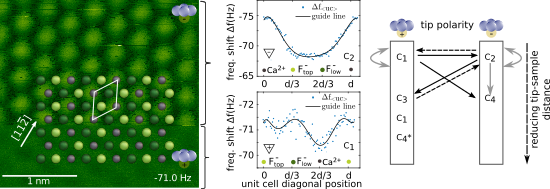
- -ordered CaF2(111) [24][25], see [26] for further preparation details. RT experiments were performed with a UHV 750 AFM system (RHK, Troy, MI USA) operated at a base pressure of 7.0 × 10⁻¹¹ mbar. An Ar+ ion-sputtered silicon cantilever with an eigenfrequency of around 300 kHz and a quality factor of 22000
- forming tip cluster in both cases. A tentative explanation for the positive-to-negative tip change is a pickup of a fluorine ion from the surface by the tip, resulting in a negative tip termination. As a consequence, the tip interacts strongly attractively with the surface Ca2+ ions, explaining the
- changes and tip changes associated with a change in tip polarity. Experimental evidence of both cases is found, with a tendency for negative tip termination to be the more stable configuration. We tentatively interpret this finding as a result of picking up a surface fluorine ion by the tip. Distance


Synthesis of biowaste-derived carbon-dot-mediated silver nanoparticles and the evaluation of electrochemical properties for supercapacitor electrodes
Beilstein J. Nanotechnol. 2025, 16, 933–943, doi:10.3762/bjnano.16.71
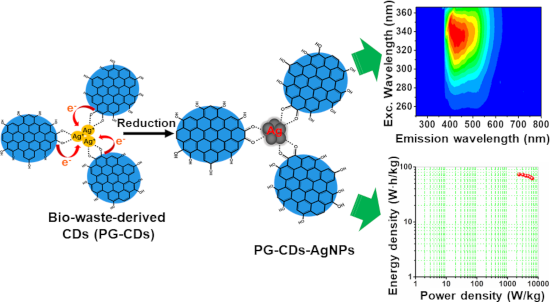
- devices store charge across the electric double layers [3]. Supercapacitors are highly sought-after energy storage devices, as their high power density, ultrastability, and rapid charge–discharge capability render them irreplaceable by traditional metal-ion batteries [4]. Typically, the functioning of
- electrode surface, resulting in reduced electrode flux compared to that of higher scan rates. This occurs because current densities are influenced by the rate of scanning [37]. The higher current density at 200 mV/s suggests that, at this specific scan rate, the ion transport rate and the reactions for the
- the real axis [37][41]. The minimal interfacial resistance is confirmed by the PG-CDs-AgNPs reduced RESR value. Easy electrolyte ion transport through highly conducting CDs is the primary cause of the decreased RESR and Rct for PG-CDs-AgNPs. Above all, the fact that the straight line in the case of PG


Focused ion beam-induced platinum deposition with a low-temperature cesium ion source
Beilstein J. Nanotechnol. 2025, 16, 910–920, doi:10.3762/bjnano.16.69
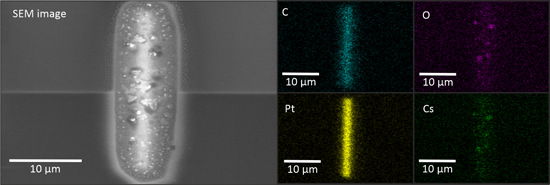
- surface is a frequently used process of focused ion beam (FIB) systems. Here, we report on the deposition of platinum (Pt) with a new kind of cesium (Cs) FIB, in which the cesium ions are produced by a low-temperature ion source. Platinum was deposited at different acceleration voltages and ion beam
- conditions, but the deposit has lower Pt content for Cs+. The electrical resistivity of the deposit is found to be higher for Cs+ than for Ga+ and decreasing with increasing acceleration voltage. Keywords: cesium ion source; cold atom ion source; focused ion beam (FIB); FIB-induced deposition (FIBID
- ); Introduction The deposition of material at a certain spot on a sample surface is a powerful and useful feature of focused ion beam (FIB) systems. At first, the deposition was used for circuit editing and as a protection layer before milling. Nowadays, the process is more far-reaching, and three-dimensional


Characterization of ion track-etched conical nanopores in thermal and PECVD SiO2 using small angle X-ray scattering
Beilstein J. Nanotechnol. 2025, 16, 899–909, doi:10.3762/bjnano.16.68
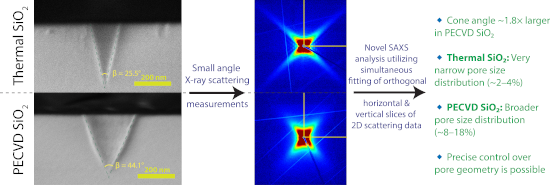
- Helmholtzzentrum für Schwerionenforschung, Planckstr. 1, 64291 Darmstadt, Germany Technische Universtät Darmstadt, 64289 Darmtadt, Germany 10.3762/bjnano.16.68 Abstract Conical nanopores in amorphous SiO2 thin films fabricated using the ion track etching technique show promising potential for filtration, sensing
- –4%, while PECVD SiO2 shows a higher variation ranging from 8% to 18%. The impact of different ion energies on the size of the nanopores was also investigated for pores in PECVD SiO2 and shows only negligible influence. These findings provide crucial insights for the controlled fabrication of conical
- nanopores in different materials, which is essential for optimizing membrane performance in applications that require precise pore geometry. Keywords: etched ion tracks; SiO2; small angle X-ray scattering (SAXS); swift heavy ion irradiation; track-etched nanopores; Introduction Solid-state nanopores have


Ar+ implantation-induced tailoring of RF-sputtered ZnO films: structural, morphological, and optical properties
Beilstein J. Nanotechnol. 2025, 16, 872–886, doi:10.3762/bjnano.16.66
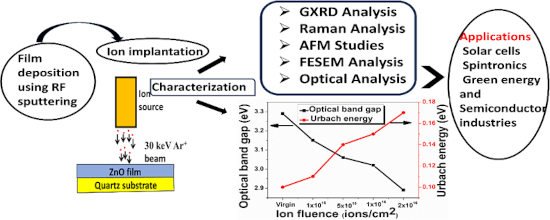
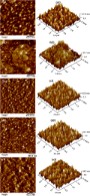
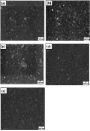
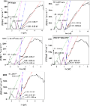
- . Raman spectra reveal the presence of the E2 (low), E2 (high), and A1 (LO) Raman modes in pristine and implanted ZnO films. A gradual fall and rise in peak intensity of, respectively, the E2 (high) and A1 (LO) Raman modes is observed with increases in ion fluence. However, the E2 (low) mode broadens and
- merges completely with disorder-induced broad band at higher fluences. Moreover, the deconvolution of the A1 (LO) Raman peak affirms the presence of defect-related Raman modes in the implanted samples. A gradual reduction in crystallinity of the implanted ZnO films with increasing ion fluence is observed
- deposition rates and uniform growth of films with good reproducibility [4]. The physical properties of grown ZnO films can be tuned by altering various growth parameters and employing post-deposition treatments such as ion implantation and thermal annealing. Ion implantation has proven a versatile tool to






Synchrotron X-ray photoelectron spectroscopy study of sodium adsorption on vertically arranged MoS2 layers coated with pyrolytic carbon
Beilstein J. Nanotechnol. 2025, 16, 847–859, doi:10.3762/bjnano.16.64
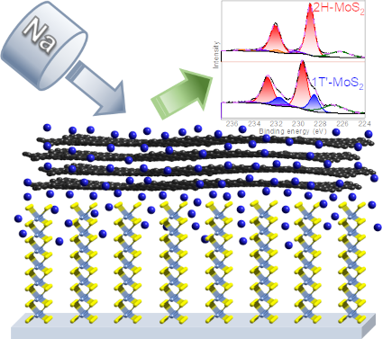
- Berlin, Germany Helmholtz-Zentrum Berlin für Materialien und Energie, 14109 Berlin, Germany 10.3762/bjnano.16.64 Abstract Hybrid materials consisting of molybdenum disulfide (MoS2) and graphitic-like carbon have great potential for practical application as anodes in high-performance sodium-ion batteries
- /desorption; sodium vapor; XPS; Introduction Sodium-ion batteries (SIBs) attract increasing interest as a low-cost alternative to lithium-ion batteries due to the abundance and wide availability of sodium. Research in this field is currently focused on developing new electrode materials to increase the
- capacity and cycle life of SIBs. Molybdenum disulfide (MoS2) has a layered structure and a high theoretical capacity of 669 mAh·g−1, so it is considered as a promising anode material for SIBs [1][2]. The large sodium ion can diffuse with a low energy barrier between the S−Mo−S layers due to the interlayer


Facile one-step radio frequency magnetron sputtering of Ni/NiO on stainless steel for an efficient electrode for hydrogen evolution reaction
Beilstein J. Nanotechnol. 2025, 16, 837–846, doi:10.3762/bjnano.16.63
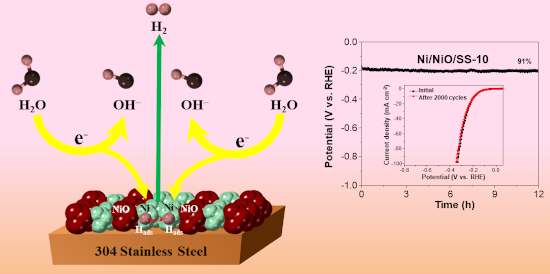
- (30.75 Ω), Ni/NiO/SS-5 (9.79 Ω), Ni/NiO/SS-15 (10.58 Ω), and Ni/NiO/SS-20 (19.87 Ω). The lowest Rct of Ni/NiO/SS-10 indicates the best electron/ion transfer kinetics for HER, consistent with the Tafel slope analysis. In general, the electrochemical surface area (ECSA) can be predicted by measuring the


Morphology and properties of pyrite nanoparticles obtained by pulsed laser ablation in liquid and thin films for photodetection
Beilstein J. Nanotechnol. 2025, 16, 785–805, doi:10.3762/bjnano.16.60
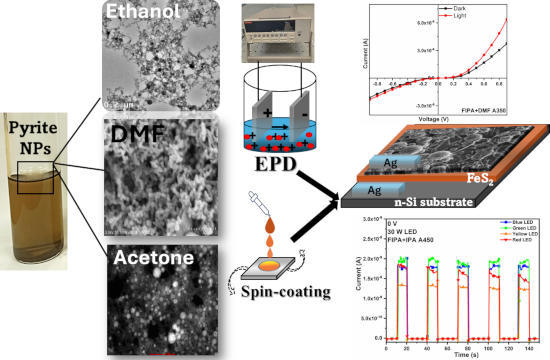
- is that the productivity and morphology/size of the NPs generated can be regulated by carefully managing the input parameters [16]. Due to the challenges in obtaining phase-pure FeS2 by PLAL, this is a much less explored material despite its high potential. A strong reducible ferric ion and an
- oxidizable sulfide ion coexist in iron sulfides, making their synthesis more difficult than that of iron oxide [17]. Unlike FeS2, there are reports on the synthesis of other iron-based oxides via PLAL. These studies have demonstrated the successful production of Fe3O4 nanoparticles by ablating iron plates in
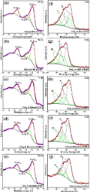
- needs fitting as it exhibits broadening in high-spin Fe3+ and Fe2+ compounds compared to Fe(0) metal or low-spin Fe2+ [48]. In our analysis, where pyrite (FeS2) is a high-spin Fe2+ complex due to the weak field ligand (sulfur) around the Fe2+ ion, a fitting approach similar to the one outlined in their






Changes of structural, magnetic and spectroscopic properties of microencapsulated iron sucrose nanoparticles in saline
Beilstein J. Nanotechnol. 2025, 16, 762–784, doi:10.3762/bjnano.16.59
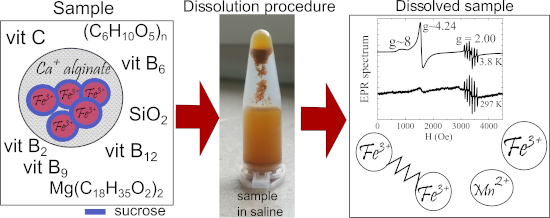
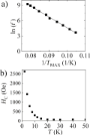
- to . Assuming that the volume of the 4 nm diameter nanoparticle is ≈351 × 10−21 cm3, and the average number of Fe3+ ion per cm3 for all FeO(OH) polymorphs is ≈2.5 × 2022 Fe3+·cm−3 [16], the obtained values were as follows: n ≈ 880, ≈ 30, to ≈ 10. The quantities of the uncompensated spins calculated
- ]. Possibly, the alginate–cellulose structures are visible in the TEM images from the FST sample. On the other hand, another explanation could be an ion exchange mechanism (Ca→Fe) and chemical interactions between the carboxylate groups of alginate and iron Fe3+ ions, which tend to bind alginate more strongly
- contribution decreased almost twofold. At first glance, according to Table 2, it may be concluded that the dissolution process in physiological saline contributed to the destruction of the calcium alginate shell, as the Ca ion concentration significantly decreased. It should be mentioned that calcium alginate





Synthesis of a multicomponent cellulose-based adsorbent for tetracycline removal from aquaculture water
Beilstein J. Nanotechnol. 2025, 16, 728–739, doi:10.3762/bjnano.16.56
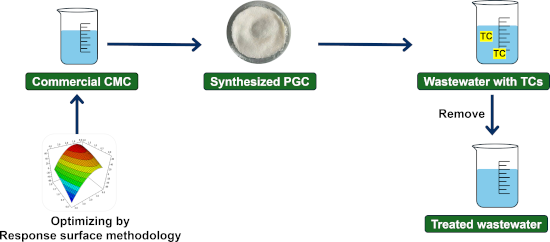
- interactions with functional acidic and basic groups, the cross-linking agent glutaraldehyde (GA), and an inorganic ion mixture (Ca2+ and Zn2+), which enhances the mechanical properties of the material by promoting the formation of a controlled hydrogen bonding network, thereby reinforcing the polymer matrix
- Field-emission SEM analysis was performed using a Merlin Compact instrument (Carl Zeiss, Jena, Germany) with an SE2 detector. The sample was mounted on a clean silicon wafer and coated with a nanoscale platinum layer using an ion sputter coater (Q150T Plus, Quorum Technologies, UK). EDX analysis was
- equipped with a Turbo Ion Spray source, which was operated in both positive mode and negative mode (QTRAP®4000, AB SCIEX, Framingham, MA, USA). The analyses of the tetracyclines were performed using a Sunfire C18 column (150 × 2.1 mm i.d., 5.0 mm particle size) from Waters (Milford, MA, USA), and the


High-temperature epitaxial growth of tantalum nitride thin films on MgO: structural evolution and potential for SQUID applications
Beilstein J. Nanotechnol. 2025, 16, 690–699, doi:10.3762/bjnano.16.53
- and independently pumped by ion and Ti sublimation pumps. Every chamber has a base pressure of about 10−9 Torr. A Nd:YAG laser with a fourth-harmonic generator (266 nm), was focused onto a 99.999% Ta target (purchased from Kurt J. Lesker Company) with 4 ns and hv = 1.5 eV. The laser was operated at a
- frequency of 7.5 Hz, the substrate-to-target distance was 5 cm, and the incident energy density was 4.88 J·cm−2. We studied the stoichiometry and properties of the thin films as a function of gas pressure by introducing N2 to realize RPLD. At this time, the ion pumps were closed and isolated from the PLD
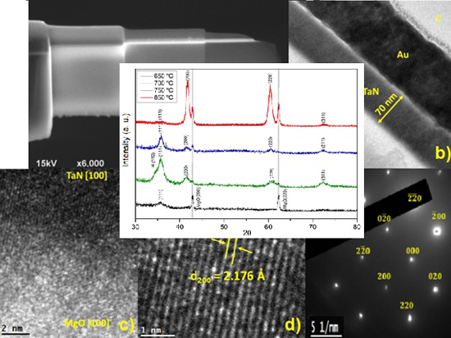
- focused ion beam (FIB) for SEM observation; Au films were evaporated on the TaN samples before the FIB process to protect the samples (Figure 6a). The sample in Figure 6b shows a film thickness of 70 nm, and one can distinguish the Au protective layer used for the FIB process. Figure 6c shows the


The impact of tris(pentafluorophenyl)borane hole transport layer doping on interfacial charge extraction and recombination
Beilstein J. Nanotechnol. 2025, 16, 678–689, doi:10.3762/bjnano.16.52
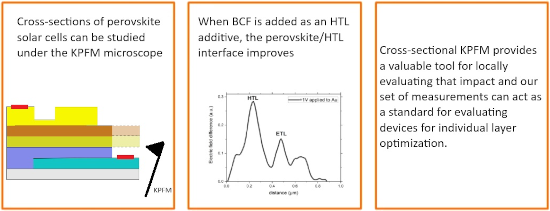
- -sections by means of argon ion polishing. To get results that closely simulate the operation of working devices, we used a comprehensive static KPFM measurement protocol (See Supporting Information File 1, Section 2) and measured potential profiles across all layers while applying a voltage or under
- illumination. Our results indicate that the inclusion of BCF has a passivating effect on iodide defects within the devices. Particularly, a major improvement on the diode character of the HTL/perovskite interface was observed, in both spiro-OMeTAD and PTAA cells. The details of device fabrication, ion milling
- of each batch. A slow scan rate of 60 mV/s was used for the current density–voltage (J–V) curves so as the ion distribution within the cell is under quasi-equilibrium [39]. We notice that BCF had a beneficial effect on both spiro-OMeTAD and PTAA in terms of photovoltaic parameters. Whilst the


Colloidal few layered graphene–tannic acid preserves the biocompatibility of periodontal ligament cells
Beilstein J. Nanotechnol. 2025, 16, 664–677, doi:10.3762/bjnano.16.51
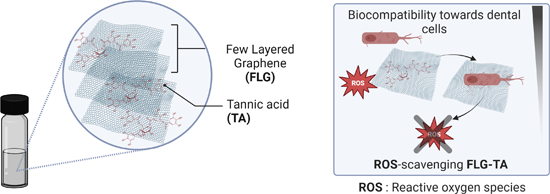
- metal ion chelation. Chromatin contains copper ions, which readily participate in redox reactions and bind strongly to DNA. These ions can form complexes with TA. Within cancer cells, for instance, this interaction can trigger ROS production and DNA damage [17]. However, when TA is complexed with





Nanoscale capacitance spectroscopy based on multifrequency electrostatic force microscopy
Beilstein J. Nanotechnol. 2025, 16, 637–651, doi:10.3762/bjnano.16.49

- study materials such as perovskite solar cells [18][19][20] and Li-ion batteries [21][22][23]. AFM enables simultaneous acquisition of topographic and electronic data by applying AC or DC voltages across the tip–sample gap, allowing for the detection of capacitive forces [24][25] or contact potential
- nanospectroscopy experiments. The microcapacitors were produced by focused ion beam (FIB) milling on a silicon wafer with a 300 nm layer of SiO2 and a 14 nm sputtered layer of Pt on it (Figure 2). Results and Discussion To investigate whether the C″-sensitive detection leads to an improved spatial resolution of
- Nanolab FIB apparatus with a dual Ga+ ion beam. Multifrequency heterodyne electrostatic force microscopy MFH-EFM was measured on an Oxford Instruments/Asylum Research MFP-3D Infinity AFM in a nitrogen glovebox (level of humidity below 0.3%, level of oxygen below 0.1%). The typical resonance frequency of




Focused ion and electron beams for synthesis and characterization of nanomaterials
Beilstein J. Nanotechnol. 2025, 16, 613–616, doi:10.3762/bjnano.16.47

- Aleksandra Szkudlarek Academic Centre for Materials and Nanotechnology, AGH University of Krakow, av. Mickiewicza 30, 30-059, Krakow, Poland 10.3762/bjnano.16.47 Keywords: deposition; etching; focused electron beams; focused ion beams; lithography; milling; nanofabrication; 3D nanostructures; It
- underdeveloped technology at that time. In his visionary address, he proposed techniques such as direct ion lithography using focused beams and introduced the concept of combined photo-electron lithography. Feynman's contribution was not limited to his visionary approach of advancing technology through
- the best of times, it was the worst of times" [2] – onto a 200 × 200 micron square of plastic using an electron beam. This achievement prompts a reflection: is nowadays the best or the worst of times for the development of electron and ion beam technologies? With the hope to contribute addressing this

Polyurethane/silk fibroin-based electrospun membranes for wound healing and skin substitute applications
Beilstein J. Nanotechnol. 2025, 16, 591–612, doi:10.3762/bjnano.16.46
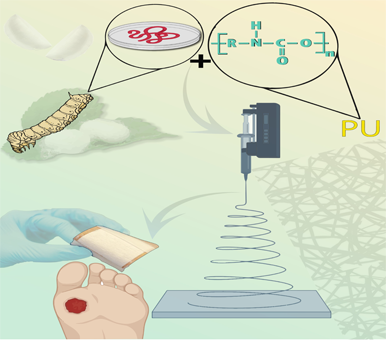
- the injury and helped increase the production of VEGF, which aids in vasculogenesis. At the same time, the heat produced by NIR-II light activated specific ion channels of the nerve cells. These channels were permeable to calcium, and the influx of this ion triggered the release of important growth



Nanomaterials in targeting amyloid-β oligomers: current advances and future directions for Alzheimer's disease diagnosis and therapy
Beilstein J. Nanotechnol. 2025, 16, 561–580, doi:10.3762/bjnano.16.44
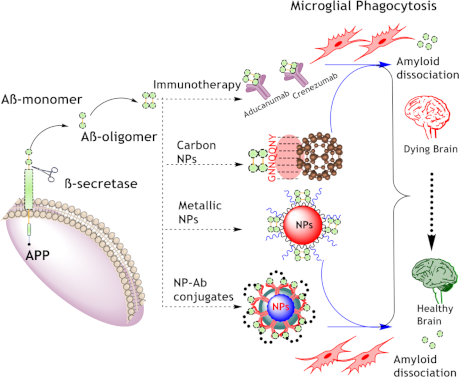
- complex, together with the co-activation of the mGluR5 receptor, leads to the activation of intracellular Fyn kinase. This activation causes dysregulation of calcium ion homeostasis, hyperphosphorylation of tau protein, and disruption of synaptic functions. Together, these processes, as depicted in Figure


Retrieval of B1 phase from high-pressure B2 phase for CdO nanoparticles by electronic excitations in CdxZn1−xO composite thin films
Beilstein J. Nanotechnol. 2025, 16, 551–560, doi:10.3762/bjnano.16.43

- as an effective tool. Exposure to 120 MeV silver ion irradiation results in the complete amorphization of the B2 phase in CdO nanoparticles, while the crystalline hexagonal wurtzite phase of zinc oxide (ZnO) remains intact. In contrast, 80 MeV oxygen ion irradiation preserves the B2 phase and
- facilitates the reemergence of the B1 phase. The partial damage caused by electronic energy loss during oxygen ion irradiation in the willemite Zn2SiO4 phase is identified as a trigger for the B1 to B2 phase transformation in CdO nanoparticles, enabling the recovery of the B1 phase. The diminishing local
- pressure exerted by the Zn2SiO4 phase on CdO nanoparticles during oxygen ion irradiation leads to the coexistence of both B1 and B2 phases. X-ray absorption near-edge spectra (XANES) reveal minimal changes in the intensity of the spike-like Zn L3,2 pre-edge feature associated with the Zn2SiO4 phase under


Zeolite materials with Ni and Co: synthesis and catalytic potential in the selective hydrogenation of citral
Beilstein J. Nanotechnol. 2025, 16, 520–529, doi:10.3762/bjnano.16.40
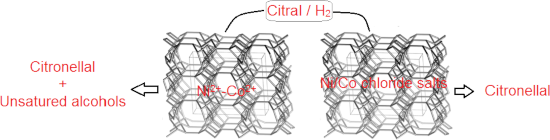
- with Ni2+ and Co2+ chloride solutions through traditional ion exchange (IE) and impregnation (Imp) processes. Special attention was given to analyzing the cationic and anionic composition of the resulting materials. The catalytic potential was evaluated in the selective hydrogenation of citral, focused
- produce unsaturated alcohols, suggesting that synergistic Ni–Co interactions played a role in their formation. Keywords: citral hydrogenation; cobalt–nickel mixture; impregnation; ion exchange; natural zeolite; Introduction Numerous publications in the literature highlight zeolites modified with
- metallic species for various applications, leading to the invention of new functional materials for sustainable development, such as catalysts [1][2][3]. Among the various methods used to modify zeolites, ion exchange is the most widely employed. Different ion exchange methods are known, such as ion


Water in nanoporous hexagonal boron nitride nanosheets: a first-principles study
Beilstein J. Nanotechnol. 2025, 16, 510–519, doi:10.3762/bjnano.16.39
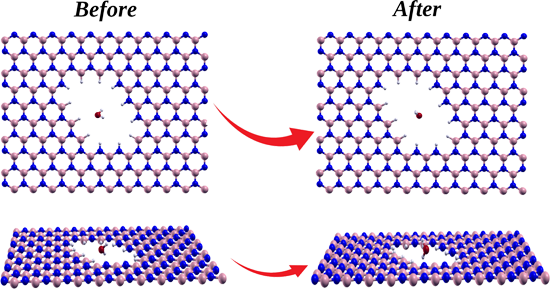
- as a molecular sieve [22][23][24][25]. Theoretical studies using molecular dynamics simulations analyzed the impact of the partial charge on the h-BN membrane surface on water molecules and salt ion transport [26]. They noted that the Coulomb interaction between water molecules/ions and the channels
- in both water and ion flow [27]. h-BN membranes can feature pores of various types and sizes, which play a crucial role in the flow of water. The difference in the electroaffinity of B and N atoms gives these pores edges with asymmetric charge distributions, resulting in fields that affect the




N2+-implantation-induced tailoring of structural, morphological, optical, and electrical characteristics of sputtered molybdenum thin films
Beilstein J. Nanotechnol. 2025, 16, 495–509, doi:10.3762/bjnano.16.38
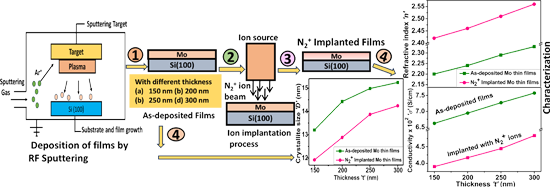
- Usha Rani Kafi Devi Divya Gupta Sanjeev Aggarwal Ion Beam Centre, Department of Physics, Kurukshetra University, Kurukshetra-136119, India 10.3762/bjnano.16.38 Abstract Molybdenum (Mo) thin films have extensive applications in energy storage devices and photovoltaic solar cells because of their
- sputtering allows for precise control of film thickness, shape, and stoichiometry, making it a key method for preparing films with specific characteristics [12]. Numerous approaches exist to improve the performance of thin films, including ion implantation techniques that enable precise alteration of
- material characteristics. Ion implantation is one of the most attractive techniques because it introduces considerable changes in the surface morphology and composition of the films [13][14]. The uses of implanted Mo thin films cover a broad range of applications including microelectronics and


Performance optimization of a microwave-coupled plasma-based ultralow-energy ECR ion source for silicon nanostructuring
Beilstein J. Nanotechnol. 2025, 16, 484–494, doi:10.3762/bjnano.16.37

- generating ion beams in a microwave-coupled plasma-based ultralow-energy electron cyclotron resonance ion source, generally used for nanostructuring solid surfaces. The investigation focuses on developing, accelerating, and extracting Ar ions from a magnetron-coupled plasma cup utilizing a three-grid ion
- extraction composed of molybdenum. The study systematically examines the dependence of ion beam current on critical parameters, such as gas pressure, magnetron power, extraction voltage, and ion energies. The Gaussian nature of the beam profile is scrutinized and elucidated within the context of grid
- extraction-based ion sources. Plasma physics principles are employed to interpret the observed variations in the beam current with various parameters. The optimized beam current is used to investigate the inert ion-induced nanopatterning of silicon surfaces, at various ion fluences and incidence angles. The


Effect of additives on the synthesis efficiency of nanoparticles by laser-induced reduction
Beilstein J. Nanotechnol. 2025, 16, 464–472, doi:10.3762/bjnano.16.35
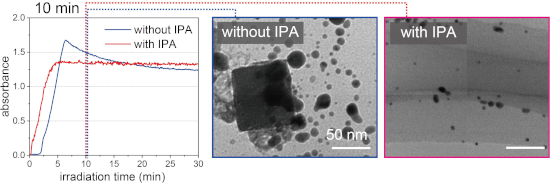
- target source material is a ‘solid’ or a ‘metal ion’. Methods for synthesizing particles using solid materials include laser ablation in liquid (LAL) [13][14][15], laser fragmentation in liquid (LFL) [16], and laser melting in liquid (LML) [17], and many excellent reports have been published on the
- 2 min after laser irradiation, reaches a maximum after 6 min, and then decreases to a constant value at 26 min. This is assumed to be based on the following mechanism. 1) From the start of laser irradiation to 2 min: equilibrium between nucleation due to ion reduction and atom re-dissolution due to
- compatibility. We will conduct additional experiments to clarify the specific mechanism of reaction and attempt to select the optimal radical scavenger. Increasing the efficiency of nanoparticle synthesis by changing solution concentration with radical scavengers When the precursor ion concentration is


Quantification of lead through rod-shaped silver-doped zinc oxide nanoparticles using an electrochemical approach
Beilstein J. Nanotechnol. 2025, 16, 422–434, doi:10.3762/bjnano.16.33
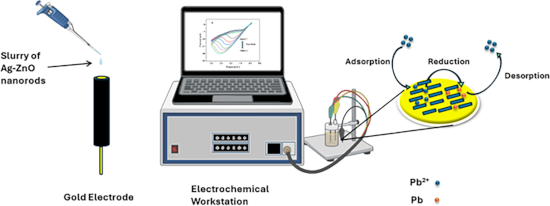
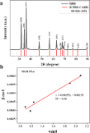
- the ZnO crystal lattice results in a decrement in the peak position values because Ag+ ion (12.2 nm) has a larger ionic size compared to that of the Zn2+ ion (7.4 nm). Consequently, the given data aligns with the decrease in the highest location of the point, indicating a reduction in the c-axis
- lattice. This implies that the Ag ion has filled the spaces between the atoms in the ZnO structure. Also, Ag functions as an amphiprotic dopant, meaning it can both donate and accept protons. It tends to occupy interstitial sites and also substitute for Zn [15][16]. Debye–Scherrer’s relation is used to