


Search results
Search for "lead" in Full Text gives 1359 result(s) in Beilstein Journal of Nanotechnology. Showing first 200.
Ultrathin water layers on mannosylated gold nanoparticles
Beilstein J. Nanotechnol. 2025, 16, 2183–2198, doi:10.3762/bjnano.16.151
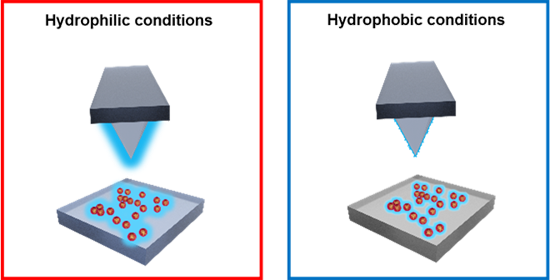
- dominant driver of particle motion, and strong particle–substrate interactions may lead to particle attachment before they are transported to the contact line, thereby preventing the formation of a “coffee ring” [34]. Detailed height measurements of adsorbed particles in water vapor AFM under variable RH
- . Previous studies have shown such clusters for PEG AuNPs in solution [41], and their size is strongly reduced by adding albumin. In our case, the addition of dimannose would lead to the case of the dimanno-AuNPs, for which we do find much decreased agglomeration. Generally, nanoparticles produced inside a



Missing links in nanomaterials research impacting productivity and perceptions
Beilstein J. Nanotechnol. 2025, 16, 2168–2176, doi:10.3762/bjnano.16.149
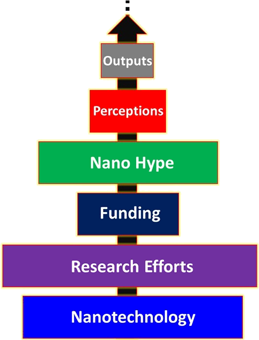
- could potentially lead to fatal genetic mutations. Funding realities in nanotechnology research Over the past decade, discussions at major scientific conferences, in scholarly commentaries, and among policymakers have increasingly questioned the tangible returns of decades of investment in nanomaterials
Microplastic pollution in Himalayan lakes: assessment, risks, and sustainable remediation strategies
Beilstein J. Nanotechnol. 2025, 16, 2144–2167, doi:10.3762/bjnano.16.148
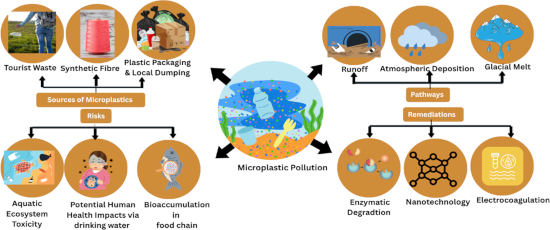
- technologies are also required since it is challenging to transport samples to well-equipped laboratories from distant locations. Another challenge is that natural particulate matter such as minerals, biological debris, and glacial silt can lead to the interference of MP detection. MPs must be separated by
- citizen-led initiatives among others are single-use plastic prohibitions at the local government level and waste management programs. Sikkim took the lead as the first Indian state to prohibit single-use plastics back in 1998, and later Ladakh, Himachal Pradesh, and Bhutan followed suit [126]. The


Electron transport through nanoscale multilayer graphene and hexagonal boron nitride junctions
Beilstein J. Nanotechnol. 2025, 16, 2132–2143, doi:10.3762/bjnano.16.147
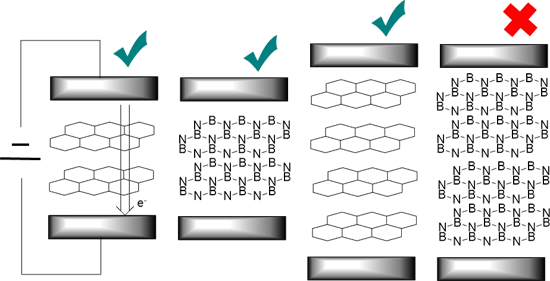
- graphene has focused on in-plane conductivity, and only very few studies have reported data on the electron transport properties between the adjacent planes [9][10][11][12][13]. Defects in graphene can alter its electronic states and lead to deviations from its intrinsic properties. We look at two common


Toward clinical translation of carbon nanomaterials in anticancer drug delivery: the need for standardisation
Beilstein J. Nanotechnol. 2025, 16, 2092–2104, doi:10.3762/bjnano.16.144

- main issues is the wide variety of methods that can be used to synthesise CNMs, which can lead to variations in their properties and performance. For example, carbon nanotubes can be synthesised using arc discharge, laser ablation, and chemical vapour deposition, among others [30]. Each method can
- division and DNA synthesis. However, they can also affect healthy cells in the body that divide rapidly, such as cells in the hair follicles, bone marrow, digestive system, and reproductive system. This can lead to a range of side effects, some of which can be severe. Take the chemotherapeutic agent
- makes the drug clearly visible during intravenous administration, but also from its high potency and the wide range of severe side effects it can cause. These side effects include myelosuppression, where reduced blood cell production in the bone marrow can lead to anaemia, bruising, and higher infection




Molecular and mechanical insights into gecko seta adhesion: multiscale simulations combining molecular dynamics and the finite element method
Beilstein J. Nanotechnol. 2025, 16, 2055–2076, doi:10.3762/bjnano.16.141
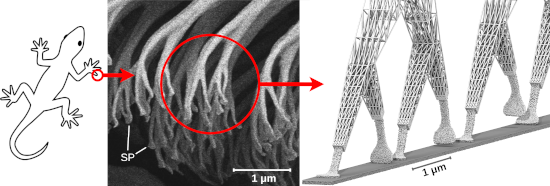
- natural hierarchy of real gecko setae, which includes finer branches, varying cross sections, and region-specific material anisotropy. Real setae possess complex cross-sectional shapes and non-uniform branching angles, which could lead to variations in force distributions. Nonetheless, this idealized
- constant during each FEM run, the mesh deformation may not fully reflect interactions where forces evolve dynamically based on spatula behavior. In particular, during loading simulations such as multiscale seta pull-off, this can lead to excessive FE mesh deformation due to missing dynamic contributions






Stereodiscrimination of guests in chiral organosilica aerogels studied by ESR spectroscopy
Beilstein J. Nanotechnol. 2025, 16, 2034–2054, doi:10.3762/bjnano.16.140
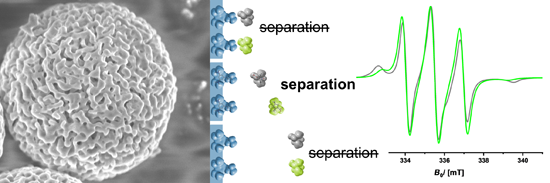
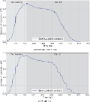
- Kotov and coworkers [4]. Chiral optical materials have unique optical activity, displaying phenomena such as circular dichroism and optical rotation. These characteristics are harnessed in applications like sensors, optical devices, and polarized materials. Material chirality can also lead to unusual
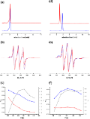
- ). One sees in Figure 13b that already for x > 0.05, the distance between the TEMPO units is around 1.4 nm. One may assume that a larger number of amines/x does not necessarily lead to a higher degree of functionalization in the post-functionalization step. The introduction of phenyl spacers in the oSIL
- materials is expected to lead to a larger distance between the amine functionalities. The latter assumption is confirmed by the ESR measurements performed on TEMPONHyoSIL. The spectrum for a material containing 10% of the amine groups looks the same as for the lower functionalization degrees and indicates a




Beyond the shell: exploring polymer–lipid interfaces in core–shell nanofibers to carry hyaluronic acid and β-caryophyllene
Beilstein J. Nanotechnol. 2025, 16, 2015–2033, doi:10.3762/bjnano.16.139
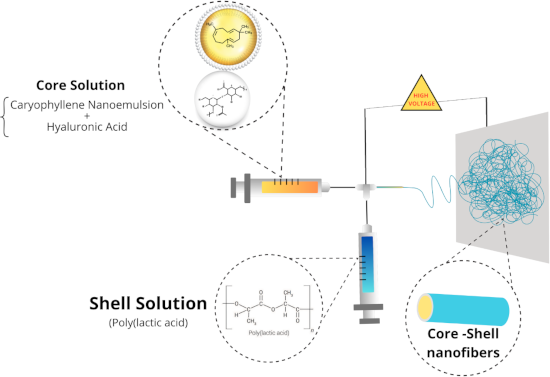
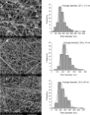
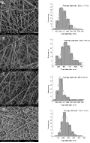
- ]. As reported by da Silva et al. (2019), inadequate flow rates during the production of coaxial nanofibers can lead to incomplete core incorporation, resulting in monolithic fibers that are identifiable by their spectral signatures [61]. To evaluate the surface composition of nanofiber membranes, ATR




The cement of the tube-dwelling polychaete Sabellaria alveolata: a complex composite adhesive material
Beilstein J. Nanotechnol. 2025, 16, 1998–2014, doi:10.3762/bjnano.16.138
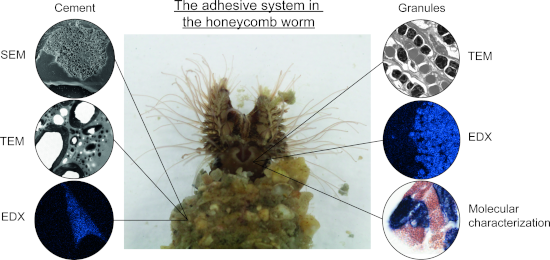
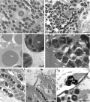
- blue in 1% sodium tetraborate and 1% aqueous solution of azur II. Ultrathin sections, 70 nm thick, were then obtained using a Leica Ultracut UCT ultramicrotome fitted with a diamond knife. These sections were contrasted with uranyl acetate and lead citrate and observed using a Zeiss LEO 906E



Laser ablation in liquids for shape-tailored synthesis of nanomaterials: status and challenges
Beilstein J. Nanotechnol. 2025, 16, 1963–1997, doi:10.3762/bjnano.16.137
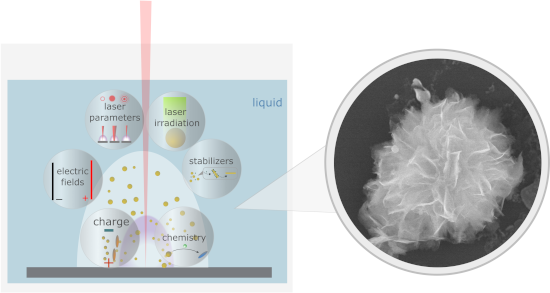
- relatively short periods of time, produces spherical NPs that act as seeds during the growth of nonspherical nanostructures. Such approach has been demonstrated in [26] for the production of PbO nanosheets with thickness less than 15 nm by laser ablation of a lead target in water. After the initial stage




Quantum circuits with SINIS structures
Beilstein J. Nanotechnol. 2025, 16, 1931–1941, doi:10.3762/bjnano.16.134
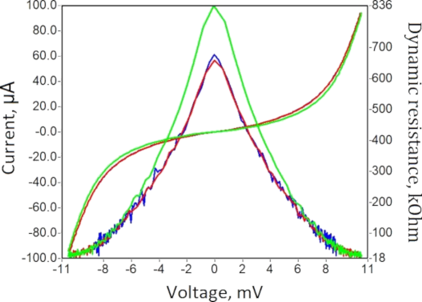
- tunnel junction In tunnel structures, the barrier is a dielectric layer between two metal films (often the oxide layer on the surface of the first metal layer is used as a dielectric). The first experimental study of a tunnel junction was carried out in 1960 [21] for an aluminum–aluminum oxide–lead


PEGylated lipids in lipid nanoparticle delivery dynamics and therapeutic innovation
Beilstein J. Nanotechnol. 2025, 16, 1914–1930, doi:10.3762/bjnano.16.133
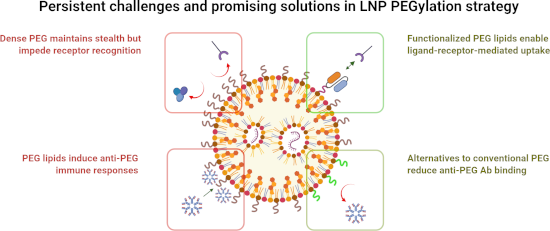
- challenges; for instance, it can lead to faster immune clearance upon repeated dosing [5]. These characteristics highlight the critical role of PEG lipids in achieving a balance between stability and functionality in LNP formulations [6]. To overcome persistent challenges and extend the utility of PEGylation



Low-temperature AFM with a microwave cavity optomechanical transducer
Beilstein J. Nanotechnol. 2025, 16, 1873–1882, doi:10.3762/bjnano.16.130
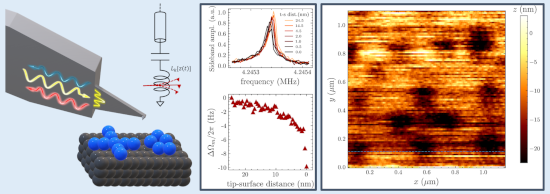
- of roughly 67 s/line. The choice of the integral gain is crucial for optimal surface tracking. Too large values of integral gain result in an overly responsive feedback that introduces noise on the topographic image and feedback oscillations. Too low values can lead to instability or loss of surface


Current status of using adsorbent nanomaterials for removing microplastics from water supply systems: a mini review
Beilstein J. Nanotechnol. 2025, 16, 1837–1850, doi:10.3762/bjnano.16.127
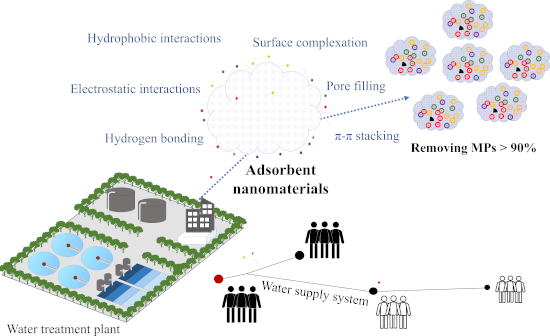
- (MPs) related to public health and environmental risks have gained significant attention [1]. Because of their small size, high surface area, and hydrophobic properties, MPs can act as vectors for toxic chemicals, including heavy metals (lead, cadmium, or mercury) and persistent organic pollutants like
- nanomaterials. Numerous adverse health effects, such as inflammation, gastrointestinal disorders, cellular toxicity, and genetic damage, are linked to nanomaterial accumulation, as shown in many studies [115]. Furthermore, the application of biosolids containing nanomaterials to agricultural soils can lead to


Piezoelectricity of layered double hydroxides: perspectives regarding piezocatalysis and nanogenerators
Beilstein J. Nanotechnol. 2025, 16, 1812–1817, doi:10.3762/bjnano.16.124

- ceramics are lead-based, which can cause serious environmental damage if such compounds are widely used [2]. Among the new alternatives found in recent years is a group of layered double hydroxides (LDHs), whose piezoelectric properties were not previously known and systematically studied. Natural and

Electrical, photocatalytic, and sensory properties of graphene oxide and polyimide implanted with low- and medium-energy silver ions
Beilstein J. Nanotechnol. 2025, 16, 1794–1811, doi:10.3762/bjnano.16.123
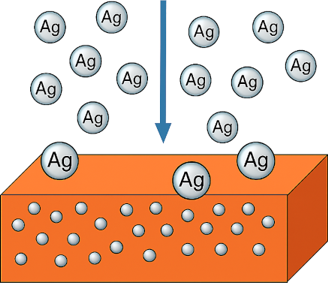
- chemical changes occurring during ion implantation. In reality, Ag+ implantation into GO and PI induces carbonization, changes in local density, and possible diffusion or agglomeration of Ag atoms, which can lead to a redistribution of silver compared to the initial ballistic projection. Moreover, surface
- the ID/IG ratio reaching values of 1.06, which is higher than in the previous case. Ag ion irradiation causes more defects in GO when 1.5 MeV energy ions were used. By comparing of the Figure 7a and Figure 7b, we can see that both ion fluences lead to a narrowing of the D and G bands with respect to
- to deeper ion penetration. While higher fluences also distort the surface, the resulting densification or redistribution of defects may lead to a decrease in roughness at the highest fluence. The findings for PI suggest that the application of low-energy 20 keV Ag (Figure 10) ion implantation results


Advances of aptamers in esophageal cancer diagnosis, treatment and drug delivery
Beilstein J. Nanotechnol. 2025, 16, 1734–1750, doi:10.3762/bjnano.16.121
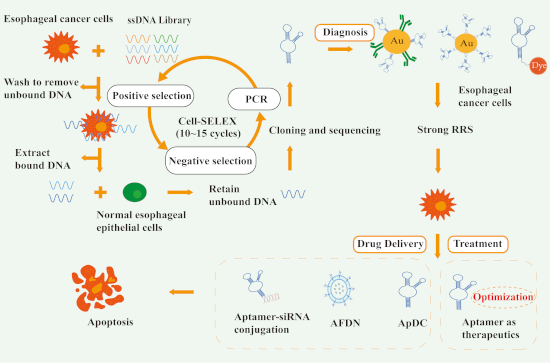
- drugs from clearance, improve their accumulation at tumor sites, and potentially lead to more positive clinical feedback. Paclitaxel (PTX) was approved by the FDA in 1992 for the treatment of a variety of solid tumors. Poor water solubility is a major obstacle limiting its anticancer activity. PTX


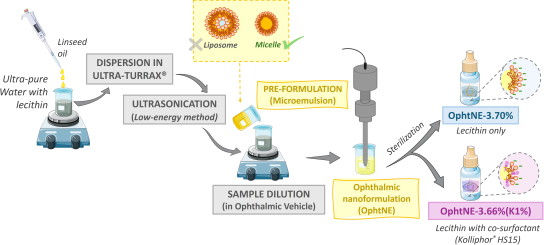
Multifunctional anionic nanoemulsion with linseed oil and lecithin: a preliminary approach for dry eye disease
Beilstein J. Nanotechnol. 2025, 16, 1711–1733, doi:10.3762/bjnano.16.120



Beyond the bilayer: multilayered hygroscopic actuation in pine cone scales
Beilstein J. Nanotechnol. 2025, 16, 1695–1710, doi:10.3762/bjnano.16.119
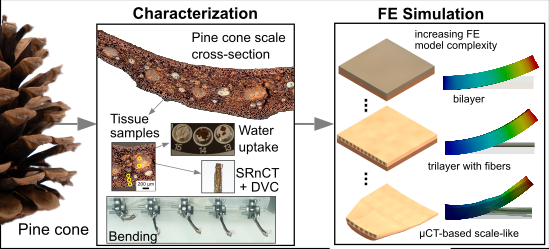
- arrangement impact the bending motion, can therefore benefit the development and improvement of novel bioinspired technical applications. At present, some characteristics of pine cones have been described that help to explain how their individual tissues can deform under desiccation/hydration and thus lead to


Ambient pressure XPS at MAX IV
Beilstein J. Nanotechnol. 2025, 16, 1677–1694, doi:10.3762/bjnano.16.118
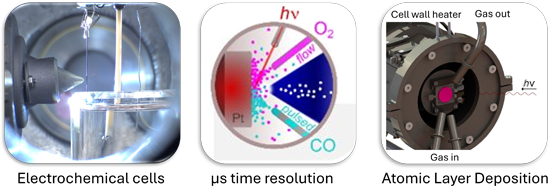
- , is where solid–electrolyte interphases (SEIs) form. Having stable SEIs formation is critical for the performance of a battery. A stable SEI stops the electrode from degrading, but uncontrolled growth can, in the extreme case, lead to short-circuit conditions inside the cell. Dip-and-pull XPS has been





Energy spectrum and quantum phase transition of the coupled single spin and an infinitely coordinated Ising chain
Beilstein J. Nanotechnol. 2025, 16, 1668–1676, doi:10.3762/bjnano.16.117
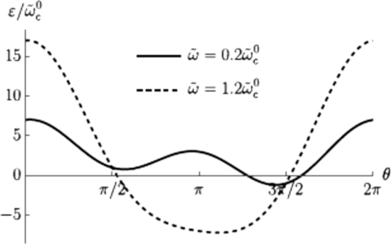
- projectors on states via projectors on . Up to the second order in : The Hamiltonians now can be written as: One can see that the leading order is expressed via projectors on the eigenstates of . The extra terms, when substituted in the effective Hamiltonian, will lead to higher order corrections and will

![[Graphic 39]](/bjnano/content/inline/2190-4286-16-117-i63.svg?max-width=637&scale=1.18182)


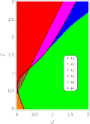
![[Graphic 51]](/bjnano/content/inline/2190-4286-16-117-i75.svg?max-width=637&scale=1.18182)
Prospects of nanotechnology and natural products for cancer and immunotherapy
Beilstein J. Nanotechnol. 2025, 16, 1644–1667, doi:10.3762/bjnano.16.116

- , durability, and innate immune responses [149][150]. In addition, gold nanoparticles lead to more selective oncological treatments with biocompatibility and low toxicity and their use in association with natural products is promising [151][152]. The patent KR20220169108 (2022) claims that gold nanoparticles


Nanotechnology-based approaches for the removal of microplastics from wastewater: a comprehensive review
Beilstein J. Nanotechnol. 2025, 16, 1607–1632, doi:10.3762/bjnano.16.114
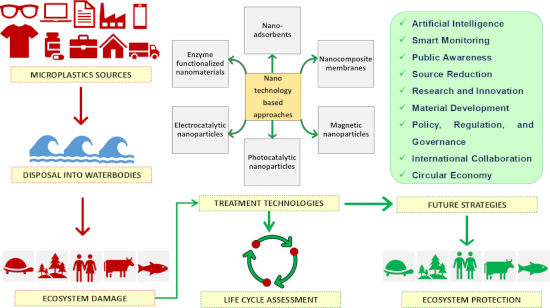
- biotechnology have further enabled the development of genetically modified organisms to enhance MP degradation. However, a significant concern with microbial biodegradation is the potential ecological impact of introducing these organisms into non-native environments, which may lead to unforeseen consequences


Bioinspired polypropylene-based functionally graded materials and metamaterials modeling the mistletoe–host interface
Beilstein J. Nanotechnol. 2025, 16, 1592–1606, doi:10.3762/bjnano.16.113
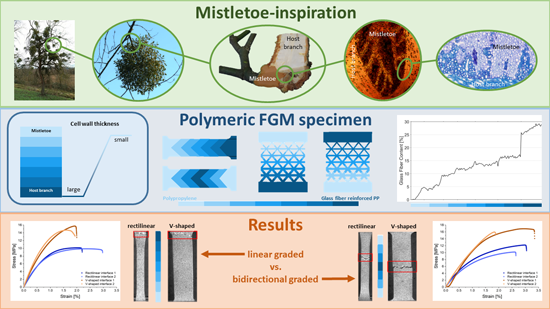
- showed that both Young’s modulus (by 38%) and ultimate tensile strength (by 62%) could be increased by introducing V-shaped interfaces. Digital image correlation analysis and the fracture images showed that the positioning of the area with the highest glass fiber content can lead to spatial control over
- fiber–matrix interface [51], particularly in areas of imperfect fabrication, which can quickly become overcritical for crack initiation and, thus, lead to failure of the specimen at reduced stresses. Similar to the trend for the Young’s modulus, the mean strength values for the linearly graded V-shaped


Few-photon microwave fields for superconducting transmon-based qudit control
Beilstein J. Nanotechnol. 2025, 16, 1580–1591, doi:10.3762/bjnano.16.112
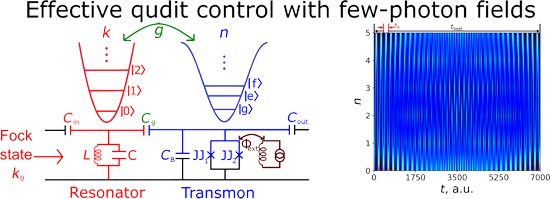
- be large enough to lead to some overlapping and interference patterns in the distribution (see Figure 3a,b). Physically, these lateral peaks occur in other settings when not only the desired state is involved in the excitation, but also some other neighbors. In this case, the average interaction





