


Search results
Search for "magnetic resonance imaging" in Full Text gives 81 result(s) in Beilstein Journal of Nanotechnology.
Review on nanoparticles and nanostructured materials: history, sources, toxicity and regulations
Beilstein J. Nanotechnol. 2018, 9, 1050–1074, doi:10.3762/bjnano.9.98

- ]. Generally, biocompatible magnetite (Fe3O4), iron oxide, iron sulfides and maghemite (Fe2O3) are synthesized using magnetotactic bacteria [156][157] that helps in targeted cancer treatment via magnetic hyperthermia, magnetic resonance imaging (MRI), DNA analysis and gene therapy [158]. Moreover, surface


Heavy-metal detectors based on modified ferrite nanoparticles
Beilstein J. Nanotechnol. 2018, 9, 762–770, doi:10.3762/bjnano.9.69
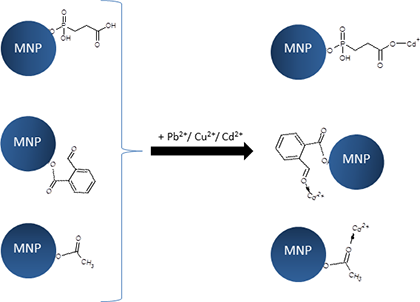
- nanoparticles can be widely used in medicine for drug delivery, implants manufacture, as components of contrast agents in magnetic resonance imaging (MRI) as well as active centers in hyperthermia treatment [1]. The use of magnetic nanoparticles in drug delivery allows for a significant reduction of the amount


Magnetic properties of optimized cobalt nanospheres grown by focused electron beam induced deposition (FEBID) on cantilever tips
Beilstein J. Nanotechnol. 2017, 8, 2106–2115, doi:10.3762/bjnano.8.210
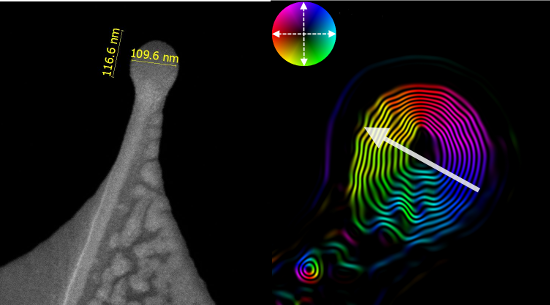
- investigation of spin dynamics at the nanoscale [41]. This near field scanning probe technique allows magnetic resonance imaging (MRI) with nanometer spatial resolution and extreme spin sensitivity [42] and the investigation of spin waves at the sub-micrometer scale [43][44][45]. In these applications, very


Self-assembly of chiral fluorescent nanoparticles based on water-soluble L-tryptophan derivatives of p-tert-butylthiacalix[4]arene
Beilstein J. Nanotechnol. 2017, 8, 1825–1835, doi:10.3762/bjnano.8.184
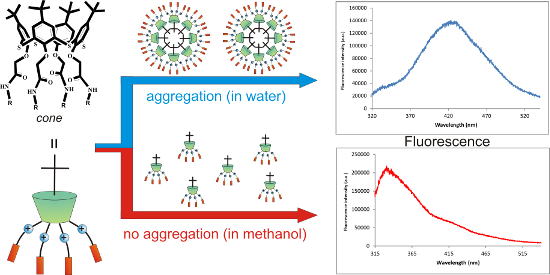
- properties [3][4]. Water-soluble stable fluorescent nanoparticles open up new opportunities for the design of particles that can be traced throughout the body, for example, for the delivery of therapeutic agents [5], synthetic vectors for gene therapy [6] and contrast agents for magnetic resonance imaging [7



Synthesis and functionalization of NaGdF4:Yb,Er@NaGdF4 core–shell nanoparticles for possible application as multimodal contrast agents
Beilstein J. Nanotechnol. 2017, 8, 1815–1824, doi:10.3762/bjnano.8.183
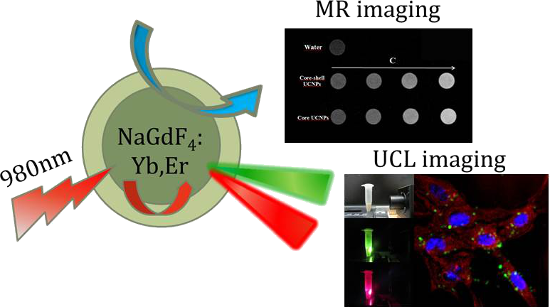
- still no information has been presented about uptake of these nanoparticles into different types of cancer cells [22]. Although different gadolinium chelates are widely used in clinics as contrast agents for magnetic resonance imaging (MRI), the literature for the last two years shows increased


Calcium fluoride based multifunctional nanoparticles for multimodal imaging
Beilstein J. Nanotechnol. 2017, 8, 1484–1493, doi:10.3762/bjnano.8.148
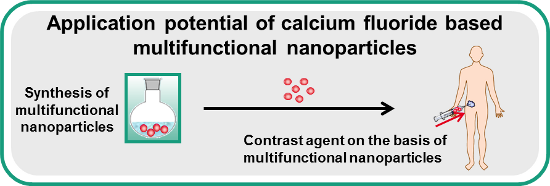
- different imaging techniques, such as photoluminescence (PL) microscopy and magnetic resonance imaging (MRI), open new possibilities for medical imaging, e.g., in the fields of diagnostics or tissue characterization in regenerative medicine. The focus of this study is on the synthesis and characterization
- nanoparticles; magnetic resonance imaging (MRI); multifunctional nanoparticles; multimodal imaging; photoluminescence; Introduction In recent years, medical imaging has become an important approach in the fields of diagnostics, therapy and regenerative medicine. Besides the classical technology of X-ray
- examination, contrast-rich methods such as computed tomography (CT), magnetic resonance imaging (MRI), positron emission tomography (PET) and ultrasonic techniques are being used increasingly for imaging soft tissue, e.g., cartilage imaging in progressive osteoarthritis. Advantages of different imaging


Biomechanics of selected arborescent and shrubby monocotyledons
Beilstein J. Nanotechnol. 2016, 7, 1602–1619, doi:10.3762/bjnano.7.154
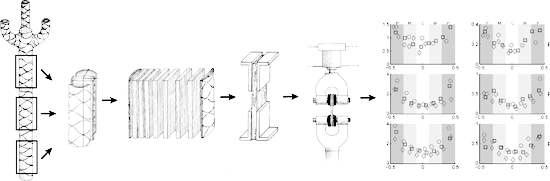
- consisting of stiff fibres embedded in a more flexible matrix. Finally, the technical implementation of the functional principles of such plants can be aided by finite element modelling [7]. Further studies using in vivo magnetic resonance imaging allow for revealing the internal stress–strain relationships



Multiwalled carbon nanotube hybrids as MRI contrast agents
Beilstein J. Nanotechnol. 2016, 7, 1086–1103, doi:10.3762/bjnano.7.102
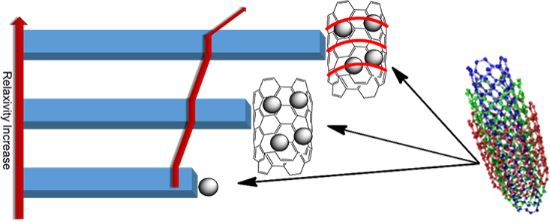
- Nikodem Kuznik Mateusz M. Tomczyk Silesian University of Technology, Faculty of Chemistry, M. Strzody 9, 44-100 Gliwice, Poland 10.3762/bjnano.7.102 Abstract Magnetic resonance imaging (MRI) is one of the most commonly used tomography techniques in medical diagnosis due to the non-invasive
- agent candidates based on the studies presented here and supported by appropriate theories. Keywords: carbon nanotube hybrids; contrast agent; molecular probe; multiwalled carbon nanotubes (MWCNT); magnetic resonance imaging (MRI); relaxation; Introduction The interdisciplinary character of
- carbon nanotubes (CNT) drug and genetic material delivery, immunotherapy or photothermal cancer therapy [1][2]. The 'quantum leap' [3] of bionanomaterials has also affected magnetic resonance imaging (MRI). This technique, which has already matured into a basic diagnostic tool in medicine, has an edge



Improved biocompatibility and efficient labeling of neural stem cells with poly(L-lysine)-coated maghemite nanoparticles
Beilstein J. Nanotechnol. 2016, 7, 926–936, doi:10.3762/bjnano.7.84
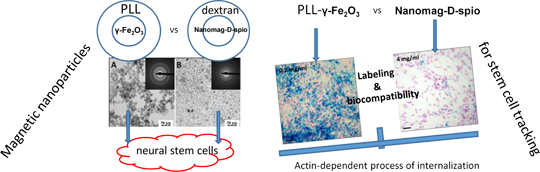
- track stem cells by magnetic resonance imaging (MRI) [11], and superparamagnetic iron oxide nanoparticles are particularly used for this purpose [12][13][14][15]. The efficient cellular uptake of nanoparticles, which would not interfere with the labeled cell activities is crucial for reliable cell




Novel roles for well-known players: from tobacco mosaic virus pests to enzymatically active assemblies
Beilstein J. Nanotechnol. 2016, 7, 613–629, doi:10.3762/bjnano.7.54
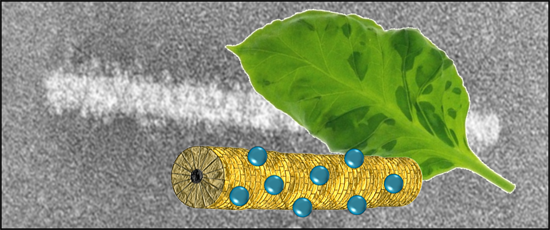
- , energy conversion, plasmonics or magnetic resonance imaging [82][92][100][114][115][116][117][118][119][120][121], and as carrier rods for effector peptides for distinct purposes from affinity binding, intravital targeting up to cell-culture supports [105][111][117][122][123][124], or as antigens for


Simultaneous cancer control and diagnosis with magnetic nanohybrid materials
Beilstein J. Nanotechnol. 2016, 7, 121–125, doi:10.3762/bjnano.7.14
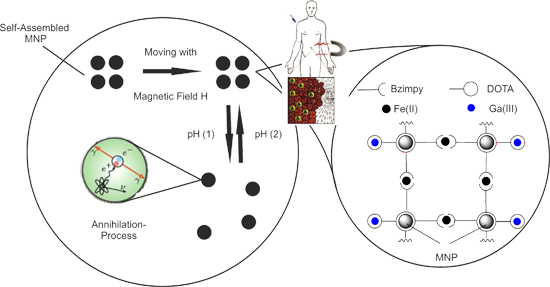
- nanotechnology have been recently gaining more and more importance [1][2]. In the last 30 years the positron emission tomography (PET) has acquired relevance among the current conventional imaging methods such as X-ray, computed tomography (CT) or magnetic resonance imaging (MRI) [3]. PET gives insights in the


An adapted Coffey model for studying susceptibility losses in interacting magnetic nanoparticles
Beilstein J. Nanotechnol. 2015, 6, 2173–2182, doi:10.3762/bjnano.6.223
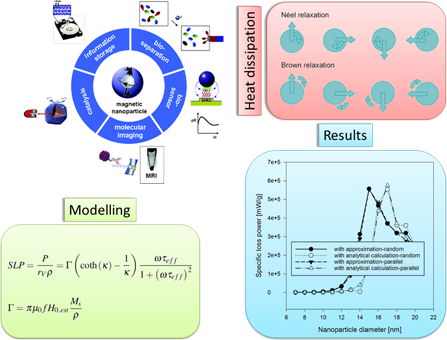
- Calabria, Italy 10.3762/bjnano.6.223 Abstract Background: Nanoparticles can be used in biomedical applications, such as contrast agents for magnetic resonance imaging, in tumor therapy or against cardiovascular diseases. Single-domain nanoparticles dissipate heat through susceptibility losses in two modes


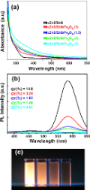
A facile method for the preparation of bifunctional Mn:ZnS/ZnS/Fe3O4 magnetic and fluorescent nanocrystals
Beilstein J. Nanotechnol. 2015, 6, 1743–1751, doi:10.3762/bjnano.6.178
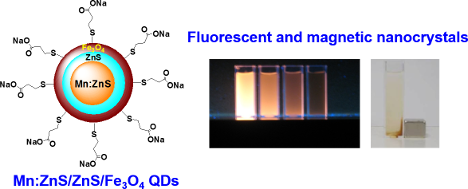
- applications. They can, for example, be used as a contrast agent in magnetic resonance imaging or as therapeutic agents in magnetic fluid hyperthermia [9][10]. Several successful applications such as targeted drug delivery, bioseparation, biodetection, and labelling and sorting of cells [11][12][13][14] are




Synthesis, characterization and in vitro biocompatibility study of Au/TMC/Fe3O4 nanocomposites as a promising, nontoxic system for biomedical applications
Beilstein J. Nanotechnol. 2015, 6, 1677–1689, doi:10.3762/bjnano.6.170
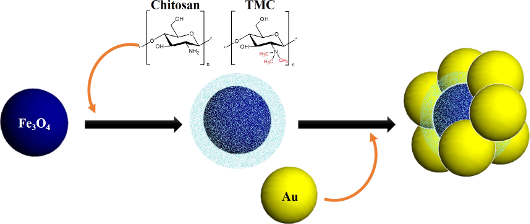
- paramagnetism, super saturation, and having free electrons, magnetic nanoparticles have emerged as promising candidates for various medical and biological applications including magnetic resonance imaging (MRI) (as a contrast agent), smart drug delivery (as drug carriers), gene therapy, hyperthermia and tissue


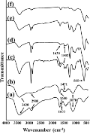


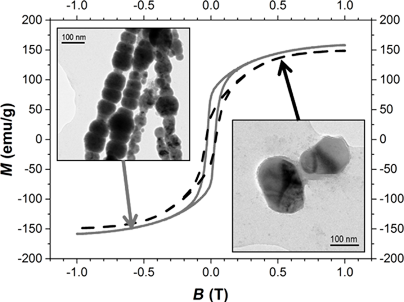
Structural and magnetic properties of iron nanowires and iron nanoparticles fabricated through a reduction reaction
Beilstein J. Nanotechnol. 2015, 6, 1652–1660, doi:10.3762/bjnano.6.167
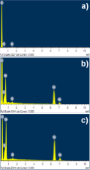
- inexpensive, a lot of them are biocompatible and low-toxic, it makes them very interesting from an application point of view. So far, they have been applied in many biomedical applications including magnetic resonance imaging (MRI) contrast enhancements [1], direct drug delivery systems [2], hyperthermia



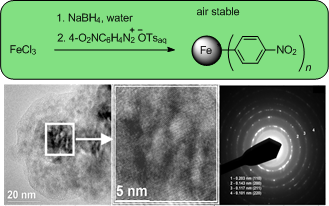
The convenient preparation of stable aryl-coated zerovalent iron nanoparticles
Beilstein J. Nanotechnol. 2015, 6, 1192–1198, doi:10.3762/bjnano.6.121
- ], magnetic resonance imaging [5], targeted drug delivery [6], catalysis [7] and controlled local hyperthermia [8]. Iron is one of the most abundant metals on earth [9]; therefore, the price of precursors for obtaining magnetic iron NPs is inexpensive, thus the modification and synthesis of functionalized


Silica micro/nanospheres for theranostics: from bimodal MRI and fluorescent imaging probes to cancer therapy
Beilstein J. Nanotechnol. 2015, 6, 546–558, doi:10.3762/bjnano.6.57
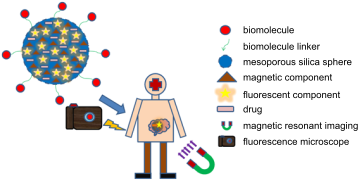
- sites in vivo. In this sense, bimodal imaging probes that simultaneously enable magnetic resonance imaging and fluorescence imaging have gained tremendous attention because disease sites can be characterized quick and precisely through synergistic multimodal imaging. But such hybrid nanocomposite
- multimodal imaging probes for magnetic resonance imaging (MRI) and optical imaging are the most popular and interesting, since they provide high spatial resolution (MRI) and allow for a rapid screening of the disease site (optical imaging) simultaneously. But such hybrid nanocomposites have certain
- that the particles retain their characteristic properties even after their conjugation inside the MPTS-coated silica corona. Again, Selvan et al. [43] reported the synthesis of multifunctional silica-capped magnetic and fluorescent NPs that can be used for biolabelling, magnetic resonance imaging


Hematopoietic and mesenchymal stem cells: polymeric nanoparticle uptake and lineage differentiation
Beilstein J. Nanotechnol. 2015, 6, 383–395, doi:10.3762/bjnano.6.38
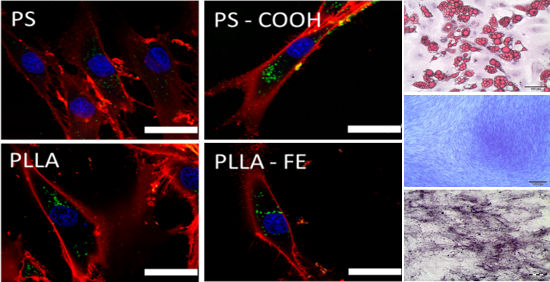
- cells, including stem cells, in order to study homing and engraftment [1][2] or to deliver drugs. Labeling with iron-containing particles provides the possibility to track the cell fate in vivo by using noninvasive magnetic resonance imaging (MRI). Superparamagentic iron oxide particles (SPIONs) are


Caveolin-1 and CDC42 mediated endocytosis of silica-coated iron oxide nanoparticles in HeLa cells
Beilstein J. Nanotechnol. 2015, 6, 167–176, doi:10.3762/bjnano.6.16
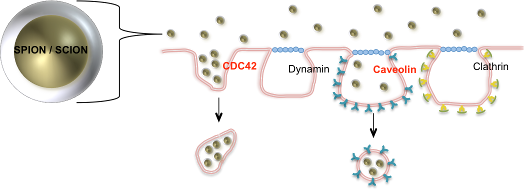
- applications. Nowadays they are already in use in magnetic resonance imaging [6][7][8] and the thermotherapy of tumors [9][10][11]. Also for the investigation of applications in theragnostic and drug delivery iron oxide nanoparticles are promising tools for the future [12][13][14][15][16][17][18]. Despite the


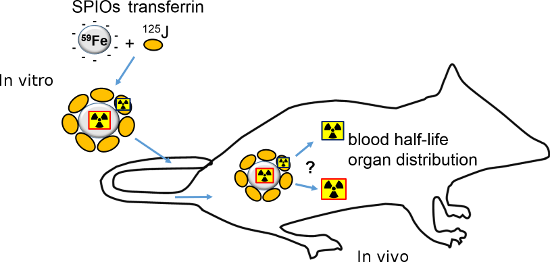
The distribution and degradation of radiolabeled superparamagnetic iron oxide nanoparticles and quantum dots in mice
Beilstein J. Nanotechnol. 2015, 6, 111–123, doi:10.3762/bjnano.6.11
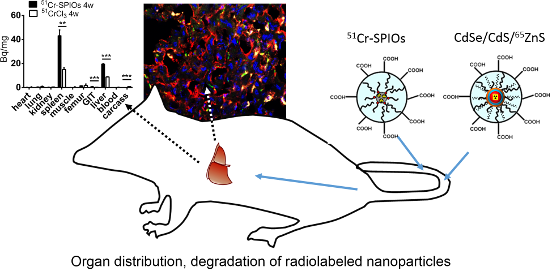
- nanomedical applications because of their magnetic properties that allow specific targeting of early tumor or arteriosclerotic lesions, which can be closely monitored by magnetic resonance imaging (MRI). In contrast to Qdots, iron-based nanoparticles are known to be less toxic given that iron is an essential

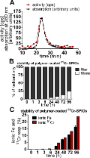
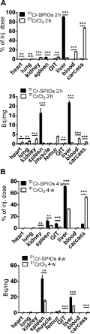


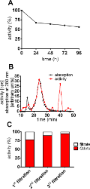
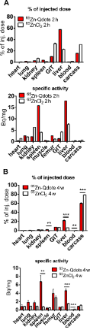


The fate of a designed protein corona on nanoparticles in vitro and in vivo
Beilstein J. Nanotechnol. 2015, 6, 36–46, doi:10.3762/bjnano.6.5
- diagnostic using functionalized SPIOs in magnetic resonance imaging. Experimental Synthesis of nanoparticle The superparamagnetic iron oxide nanoparticle was synthesized according to reported procedures with slight modifications [24]. In brief, a mixture of 0.178 g FeOOH (2.0 mmol), 2.26 g oleic acid (8.0


Nanoencapsulation of ultra-small superparamagnetic particles of iron oxide into human serum albumin nanoparticles
Beilstein J. Nanotechnol. 2014, 5, 2259–2266, doi:10.3762/bjnano.5.235
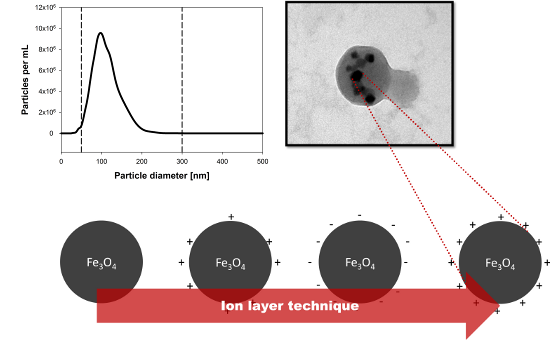
- particles of iron oxide (USPIO) are used as contrast agents in magnetic resonance imaging, their encapsulation into the protein matrix enables the synthesis of diagnostic and theranostic agents by surface modification and co-encapsulation of active pharmaceutical ingredients. The present investigation deals
- the present study, nanoparticles consisting of HSA were formed by ethanolic desolvation [9]. These nanocarriers were used matrix system for the encapsulation of USPIO. USPIO have been efficiently applied as contrast agents for magnetic resonance imaging and allow the tracking of nanoparticles in vivo


The surface properties of nanoparticles determine the agglomeration state and the size of the particles under physiological conditions
Beilstein J. Nanotechnol. 2014, 5, 1774–1786, doi:10.3762/bjnano.5.188
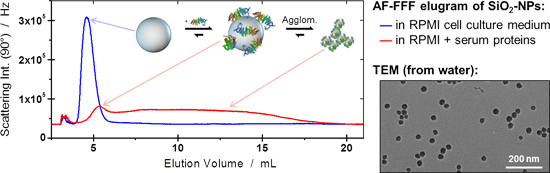
- . Hence, they are highly suitable for tailored biomedical applications, for example, as drug carrier systems, as agents in hyperthermia, or as contrast agents for magnetic resonance imaging (MRI) [52][53]. Silica nanoparticles: As most of the common crystalline SiO2 particles are not in the nanometer-size


Influence of surface-modified maghemite nanoparticles on in vitro survival of human stem cells
Beilstein J. Nanotechnol. 2014, 5, 1732–1737, doi:10.3762/bjnano.5.183
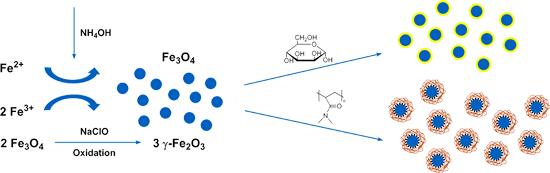
- ., dextran [18][19] (in Feridex® and Endorem® developed as contrast agents for magnetic resonance imaging, MRI), poly(ethylene glycol) (PEG) [1], poly(N,N-dimethylacrylamide) (PDMAAm) [20], poly(L-lysine) [21][22], protamine sulfate [23], or layer-by-layer polyelectrolyte complexes [24]. The aim of this
- stealth particles with reduced opsonization in biological fluids. These properties can be exploited in magnetic resonance imaging and tracking of iron oxide-labeled cells, for the magnetic separation of cells, nucleic acids and proteins and in medicine for treatments by using targeted drug delivery


The cell-type specific uptake of polymer-coated or micelle-embedded QDs and SPIOs does not provoke an acute pro-inflammatory response in the liver
Beilstein J. Nanotechnol. 2014, 5, 1432–1440, doi:10.3762/bjnano.5.155
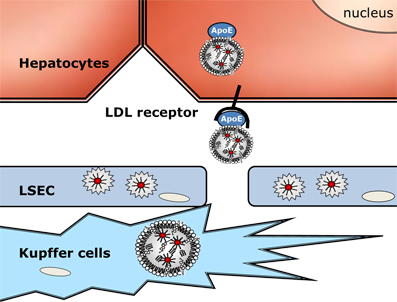
- employing various cell culture systems described toxic effects of QDs [3][4]. Iron-containing superparamagnetic iron oxide nanocrystals (SPIOs) used for magnetic resonance imaging (MRI) have a relative good reputation given that iron is an essential trace element and it can be assumed that iron from





