


Search results
Search for "mechanical" in Full Text gives 1136 result(s) in Beilstein Journal of Nanotechnology. Showing first 200.
Beyond the shell: exploring polymer–lipid interfaces in core–shell nanofibers to carry hyaluronic acid and β-caryophyllene
Beilstein J. Nanotechnol. 2025, 16, 2015–2033, doi:10.3762/bjnano.16.139
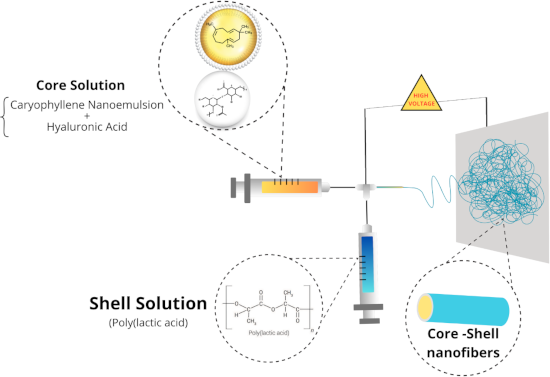
- advancements in the controlled release of diverse bioactive compounds [5][6][7][8][9][10]. Among the various nanostructured platforms explored for these purposes, nanofibers have gained attention due to their high surface area, adjustable porosity, and robust mechanical properties, which set them apart from
- concentration, surface tension, conductivity, and solvent volatility, alongside careful consideration of electrospinning conditions, such as temperature and humidity [18][19]. The polymer selection of nanofibers intended for biomedical applications must prioritize not only mechanical strength, controlled
- mechanical strength, assist in managing wound exudates, and maintain a moist wound bed. Its properties can also be tailored through blends with different forms of PLA or other biopolymers to achieve desired tensile strength, release profiles, or biodegradation characteristics [24][25]. The growing commercial




The cement of the tube-dwelling polychaete Sabellaria alveolata: a complex composite adhesive material
Beilstein J. Nanotechnol. 2025, 16, 1998–2014, doi:10.3762/bjnano.16.138
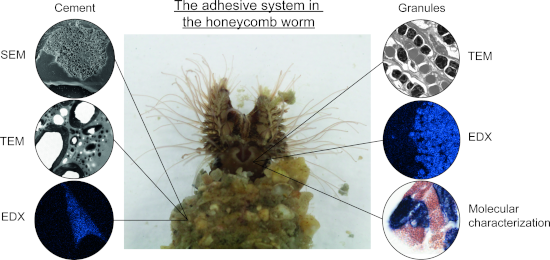
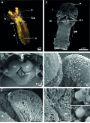
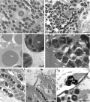
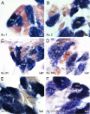
- cement spots treated with EDTA compared to untreated spots [39]. Moreover, EDTA treatment had a strong effect on the mechanical properties of the cement [39]. Proteins involved in the adhesive system In S. alveolata, the localization of the adhesive proteins Sa-1 and Sa-3 in cement cells with



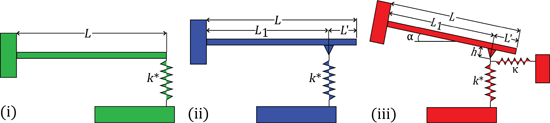
Mechanical property measurements enabled by short-term Fourier-transform of atomic force microscopy thermal deflection analysis
Beilstein J. Nanotechnol. 2025, 16, 1952–1962, doi:10.3762/bjnano.16.136
- Thomas Mathias Roland Bennewitz Philip Egberts Department of Mechanical and Manufacturing Engineering, University of Calgary, 2500 University Drive NW, Calgary, AB, T2N 1Y6, Canada INM-Leibniz Institute for New Materials, Campus D2 2, 66123 Saarbrücken, Germany 10.3762/bjnano.16.136 Abstract
- ); mechanical property measurements; surface science; Introduction Atomic force microscopy (AFM) has become an indispensable tool for imaging the surface topography on a variety of surfaces [1]. Since the invention of the AFM [2], several other modes of AFM have been developed, including friction force
- bring physical values or interpretation to the data that is collected by the AFM, allowing operators of the technique to compare their measurements across fields [6]. CR-AFM is a technique that was established in 2008, allowing for the measurement of mechanical properties (elastic modulus and




Evaluating metal-organic precursors for focused ion beam-induced deposition through solid-layer decomposition analysis
Beilstein J. Nanotechnol. 2025, 16, 1942–1951, doi:10.3762/bjnano.16.135
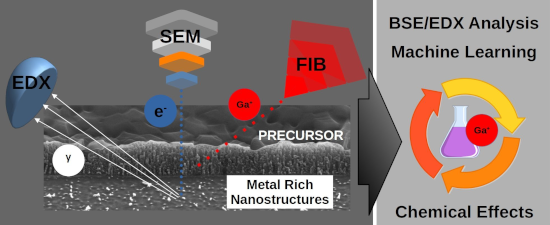
- deposition, chemical mechanical polishing, and laser nanopatterning, enable the creation of nanostructures and nanoscale devices. However, a major limitation of these methods is their inability to effectively produce high-resolution three-dimensional nanostructures [1][2][3][4]. In contrast, focused electron


Targeting the vector of arboviruses Aedes aegypti with nanoemulsions based on essential oils: a review with focus on larvicidal and repellent properties
Beilstein J. Nanotechnol. 2025, 16, 1894–1913, doi:10.3762/bjnano.16.132
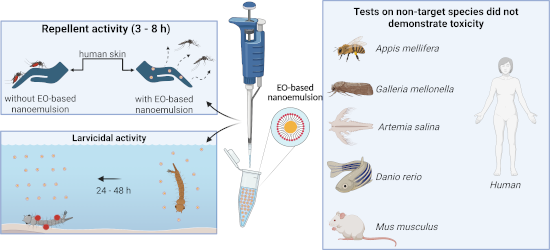
- Bacillus thuringiensis israelensis (Bti); mechanical control, based on improving basic sanitation and infrastructure to eliminate breeding sites; and behavioral control, which promotes the adoption of practices such as the use of traps to capture mosquitoes at different life stages [9][10][11][12]. In this
- trichomes, which are the secretory tissues present in different vegetative parts of plants, such as leaves, flowers, roots, fruits, or stems [67]. These can be obtained by distillation with water or steam, microwave or ultrasound assisted extraction, or from the epicarp of fruits by a mechanical process, or


Low-temperature AFM with a microwave cavity optomechanical transducer
Beilstein J. Nanotechnol. 2025, 16, 1873–1882, doi:10.3762/bjnano.16.130
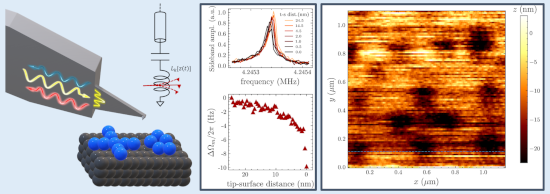
- causing significant wideband mechanical vibrations, which can propagate through the cold stages down to the measurement apparatus. However, force sensors with integrated position detectors, as the one presented in this work, do not require free-space optical alignment with a long optical path length. They
- features in a 1 µm scan field, but has not been tested to atomic resolution. Results and Discussion Force sensitivity and imaging The microcantilever in dynamic AFM operates as a resonant force transducer. Each individual eigenmode is described by a mechanical susceptibility χ, expressing cantilever
- -independent added noise of the detection SVV [V2/Hz], which is converted to an equivalent deflection noise via the detector responsivity α [V/m]: Neglecting back action, the noise-equivalent force for a given measurement bandwidth Δf is given by This quantity is minimized at the mechanical resonance


Self-assembly and adhesive properties of Pollicipes pollicipes barnacle cement protein cp19k: influence of pH and ionic strength
Beilstein J. Nanotechnol. 2025, 16, 1863–1872, doi:10.3762/bjnano.16.129
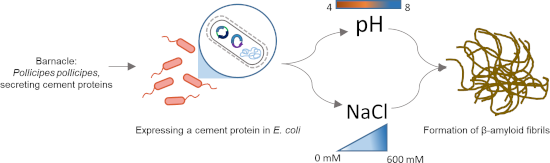
- bond formation, metal chelation, and covalent interactions [6]. The byssal threads display a mechanical gradient, with regions proximal to the animal more elastic and distal regions stiffer and tougher [7]. This design allows for effective dissipation of hydrodynamic forces and maintains attachment of
- (basic pH with high salt concentration) or proposed gland-like (acidic pH with low salt concentration) conditions [28][29][30][31], however, with much still unknown about their structural properties or mechanical function under varied environmental conditions. Among P. pollicipes cement proteins, cp19k


On the road to sustainability – application of metallic nanoparticles obtained by green synthesis in dentistry: a scoping review
Beilstein J. Nanotechnol. 2025, 16, 1851–1862, doi:10.3762/bjnano.16.128
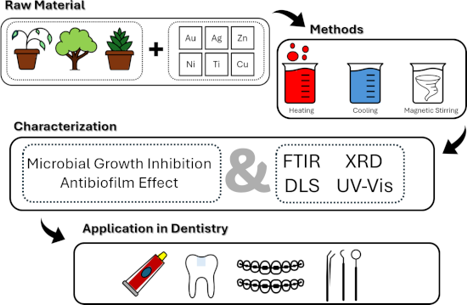
- containing biogenic AgNPs are being investigated as adjunctive therapies to improve oral hygiene in patients with fixed orthodontic appliances [8][37][44]. These strategies aim to balance microbial control while preserving the mechanical performance of orthodontic devices. Green-synthesized nanoparticles


Further insights into the thermodynamics of linear carbon chains for temperatures ranging from 13 to 300 K
Beilstein J. Nanotechnol. 2025, 16, 1818–1825, doi:10.3762/bjnano.16.125
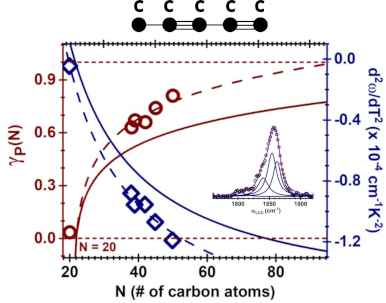
- gradients), and mechanical (e.g., pressure variations) stimuli [1][2][3][4][5][6][7][8][9][10][11][12][13][14][15][16][17][18][19][20][21][22][23]. These responses are directly connected with electronic and transport properties, which in turn depend on the equilibrium between emission and absorption of
- materials as well as the understanding of how such phonons relate to thermal and mechanical properties of the materials become of fundamental importance [1][2][3][4][5][6][7][8][9][10][11][12][13][14][15][16][17][18][19][20][21][22][23][24][25][26][27][28][29][30]. One important point to keep in mind is
- allows thermal and mechanical properties of materials to be described by semi-classical theories (such as the Debye’s theory that describes the behavior of materials with T), and their phonon frequencies might be directly connected with relevant parameters such as the Young’s modulus, the Grüneisen


![[Graphic 23]](/bjnano/content/inline/2190-4286-16-125-i25.svg?max-width=637&scale=1.18182)
Piezoelectricity of layered double hydroxides: perspectives regarding piezocatalysis and nanogenerators
Beilstein J. Nanotechnol. 2025, 16, 1812–1817, doi:10.3762/bjnano.16.124

- environmental sources is a priority. Piezoelectric materials have the ability to convert mechanical energy into electrical energy due to the arrangement of dipoles in their structure, thus providing sustainable electrical energy for low-power-consuming and self-powered devices [1]. The most common piezoelectric
- current output. The piezoelectric potential generated in the ZnO nanosheets functions as an applied voltage, facilitating charge storage within the LDH layers, which act as capacitors. This mechanism leads to enhanced voltage and current pulses under mechanical stimulation. LDHs can also enhance the
- emerging area of catalysis utilizes the ability of piezoelectric materials to convert mechanical energy into electrical energy for subsequent electrochemical reactions [13]. Liu et al. suggested that ultrathin Ni/Fe-LDH modified with polyethylene glycol (PEG) for better water solubility and

Electrical, photocatalytic, and sensory properties of graphene oxide and polyimide implanted with low- and medium-energy silver ions
Beilstein J. Nanotechnol. 2025, 16, 1794–1811, doi:10.3762/bjnano.16.123
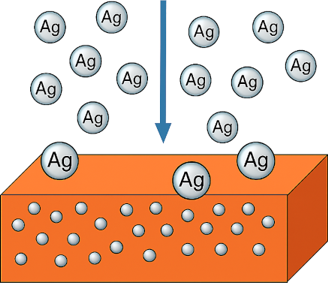
- analysis. The surface morphology and roughness of the non-implanted and implanted samples were measured using AFM (Dimension ICON, Bruker) in quantitative nanoscale mechanical (QNM) mode under ambient conditions. A SCANASYST-AIR tip made of nitride with an elastic constant of 0.4 N·m−1 was utilized for the


Exploring the potential of polymers: advancements in oral nanocarrier technology
Beilstein J. Nanotechnol. 2025, 16, 1751–1793, doi:10.3762/bjnano.16.122
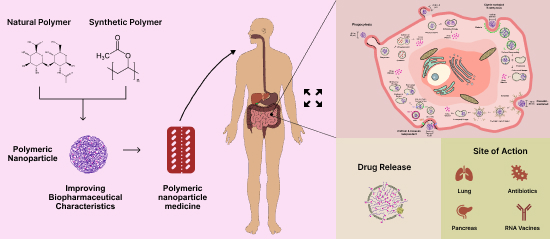
- unique spatial attributes, with monomeric structures and functional groups, hydrophobic or hydrophilic, that determine its properties [60]. The nature of monomers correlates with polymer crystallinity, which, in turn, defines mechanical strength, swelling, hydrolysis, and biodegradation rates
- transfer throughout the entire polymer matrix. However, in NPs, a balance between amorphous and crystalline states is necessary to optimize mechanical strength and drug release rates. The glass transition temperature reflects the polymer chain’s permeability and mobility, influencing its susceptibility to


Beyond the bilayer: multilayered hygroscopic actuation in pine cone scales
Beilstein J. Nanotechnol. 2025, 16, 1695–1710, doi:10.3762/bjnano.16.119
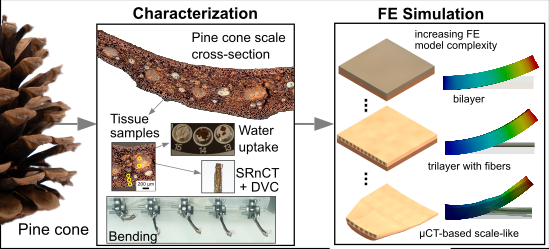
- properties and tissue arrangements for predicting pine cone scale bending in silico. By contributing to a deeper understanding of pine cone scale biomechanics, these results also support the development of bioinspired technical applications. Future studies should refine tissue mechanical properties and
- in the following. To analyze the influence of the mechanical properties, in another simulation of the bilayer, the value of the Young's modulus of the sclerenchyma fibers was adjusted to that of the brown tissue (from 500 to 50 MPa). To analyze the influence of the Young's modulus of the brown tissue
- opening angle than those from the basal part. This may be attributed to variations in tissue composition or mechanical and hygroscopic properties along the cone. In the case of basal scales, our measured opening angle is underestimated due to the chosen method of angle calculation and the strong curvature


Nanotechnology-based approaches for the removal of microplastics from wastewater: a comprehensive review
Beilstein J. Nanotechnol. 2025, 16, 1607–1632, doi:10.3762/bjnano.16.114
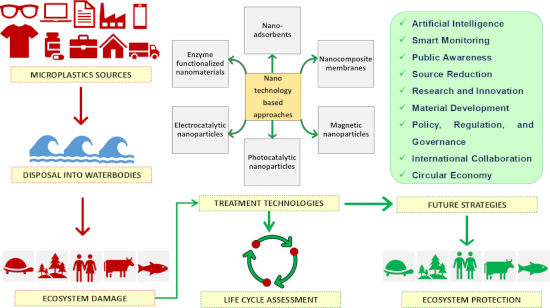
- associated modules. The efficiency of a membrane system is primarily governed by the material used in its construction. Enhancing membranes with functional nanomaterials provides a promising path to boost permeability, reduce fouling, and increase both mechanical and thermal durability, while also enabling
- from aquatic systems. MXenes have emerged as promising materials for antibacterial applications and have shown strong potential for the use in water purification membranes due to their excellent film-forming ability and enhanced mechanical strength. These properties also support their application in
- nanomaterials present several benefits for removing MPs from water. Their exceptionally large surface area and distinct structural features contribute to effective microplastic capture. Materials like CNTs also offer excellent mechanical strength and can be engineered for durability under extreme conditions


Bioinspired polypropylene-based functionally graded materials and metamaterials modeling the mistletoe–host interface
Beilstein J. Nanotechnol. 2025, 16, 1592–1606, doi:10.3762/bjnano.16.113
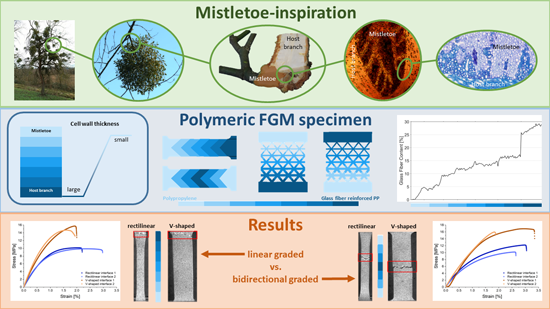
- striking example is the hemiparasitic European mistletoe (Viscum album), which forms a lifelong (over 20 years) connection with its host tree, providing physiological supply and mechanical anchorage. The V-shaped interface between mistletoe and host is characterized by a lignification and cell wall
- gradient that bridges the mechanical differences between the adjacent tissues. These characteristics of the mistletoe–host interface can be transferred to functionally graded polymeric materials. Using extrusion molding and hot pressing, we developed a material system that combines pure and glass-fiber
- failure locations can be introduced, which should have little or no effect on the overall mechanical properties in the regular product environment. A class of materials characterized by a high degree of flexibility and distribution of material properties, which enables locally adapted behavior and, thus


Transient electronics for sustainability: Emerging technologies and future directions
Beilstein J. Nanotechnol. 2025, 16, 1545–1556, doi:10.3762/bjnano.16.109

- transient systems must be optimized to balance electrical performance, biodegradation kinetics, and mechanical integrity. Moreover, to transcend basic sensing and stimulation functions, and to enable capabilities such as computation, memory, and autonomous decision-making, the development of high
- bioresorption in vivo [14]. Zinc has been proposed for use in bioabsorbable vascular stents, demonstrating ideal degradation behavior and mechanical integrity in animal models [51]. AZ31B, along with molybdenum and tungsten, have been investigated as a substrate and conductive layer in transient electronics due
- but also of electrical and mechanical performance. For instance, Mg-3Zn, which suffers from phase separation in bulk form, can be synthesized as a uniform alloy in thin films, offering improved corrosion resistance [61]. Moreover, bioresorbable amorphous metal (metallic glass) films have demonstrated


Influence of laser beam profile on morphology and optical properties of silicon nanoparticles formed by laser ablation in liquid
Beilstein J. Nanotechnol. 2025, 16, 1533–1544, doi:10.3762/bjnano.16.108
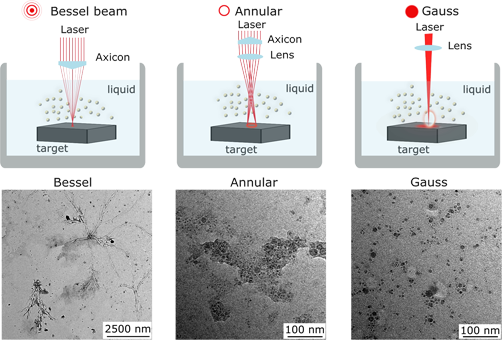
- number of benefits from the mechanical and chemical stability of the carbon cloth material, which, together with its low cost and large surface area, make it especially promising for the flexible devices. The results of these experiments are the subject of upcoming works. Conclusion In summary, laser


Dendrimer-modified carbon nanotubes for the removal and recovery of heavy metal ions from water
Beilstein J. Nanotechnol. 2025, 16, 1522–1532, doi:10.3762/bjnano.16.107

- dendrimers on a solid support can also improve the dispersibility, accessibility of binding sites, chemical recyclability, and mechanical stability [16][17]. In fact, dendrimers have been supported by various nanomaterials such as silica, graphene oxide, and carbon nanotubes (CNTs), broadening their
- application in numerous fields [18][19][20][21][22][23]. CNTs are particularly attractive as support materials due to their high specific surface area, mechanical strength, and excellent electrical and thermal conductivity [24][25][26][27]. CNTs themselves have been utilized as adsorbents for removing heavy


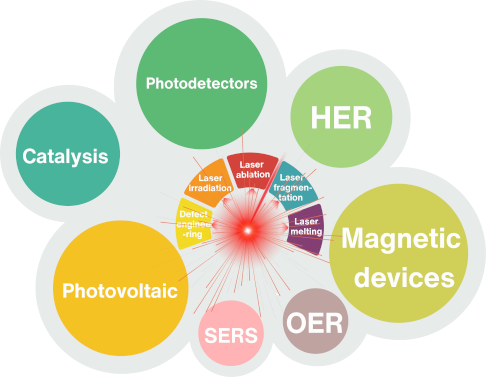
Laser processing in liquids: insights into nanocolloid generation and thin film integration for energy, photonic, and sensing applications
Beilstein J. Nanotechnol. 2025, 16, 1428–1498, doi:10.3762/bjnano.16.104
- obtained. These mechanisms play a crucial role in determining the characteristics of the final products, whether they be spherical NPs, QDs, or other nanostructures, depending on the specific goals of the synthesis. NPs exhibit distinct mechanical and physicochemical properties that are influenced by






Parylene-coated platinum nanowire electrodes for biomolecular sensing applications
Beilstein J. Nanotechnol. 2025, 16, 1392–1400, doi:10.3762/bjnano.16.101
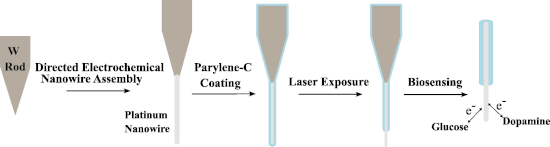
- -C monomer, where an Edwards E2M1.5 mechanical vacuum pump was used to maintain the vacuum in the 0.133 to 1.33 Pa range during the process. A CPS VG200 vacuum gauge was used for monitoring the pressure. Usually, 4–6 DENA-grown platinum nanowires on the tips of tungsten rods were placed 45° (from


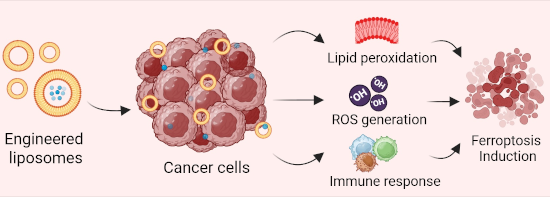
Ferroptosis induction by engineered liposomes for enhanced tumor therapy
Beilstein J. Nanotechnol. 2025, 16, 1325–1349, doi:10.3762/bjnano.16.97


Acrocomia aculeata oil-loaded nanoemulsion: development, anti-inflammatory properties, and cytotoxicity evaluation
Beilstein J. Nanotechnol. 2025, 16, 1277–1288, doi:10.3762/bjnano.16.93
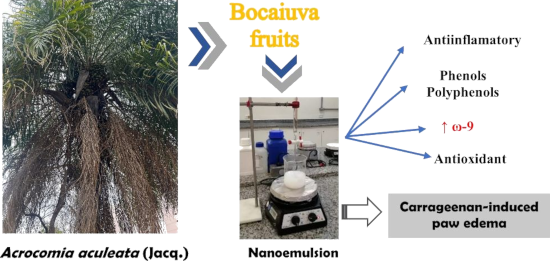
- under mechanical agitation [48]. Nevertheless, while these conditions favor the formation of smaller nanodroplets, temperatures above 60 °C may compromise emulsion stability, potentially triggering phase separation or degradation of labile components. This highlights the necessity for stringent
- °36'45.7" W) after the natural fall of the first ripe fruits. The fruit pulp was manually separated from the seeds and preserved until oil extraction. Bocaiúva oil extraction One kilogram of fresh fruit pulp was placed in an Erlenmeyer flask and extracted with n-hexane (1000 mL) by mechanical agitation for
- a 75% ethanol solution. The mixture was stirred on a mechanical shaker for 2 h and allowed to stand in the dark for 24 h. The liquid was then centrifuged at 5000 rpm (LKP, Brazil). Aliquots of 1 mL of the ethanolic phase were used for analysis. The calibration curve was constructed using the


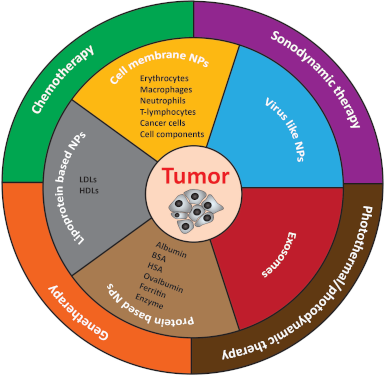
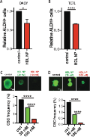
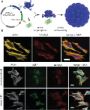
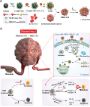
Better together: biomimetic nanomedicines for high performance tumor therapy
Beilstein J. Nanotechnol. 2025, 16, 1246–1276, doi:10.3762/bjnano.16.92






Functional bio-packaging enhanced with nanocellulose from rice straw and cinnamon essential oil Pickering emulsion for fruit preservation
Beilstein J. Nanotechnol. 2025, 16, 1234–1245, doi:10.3762/bjnano.16.91
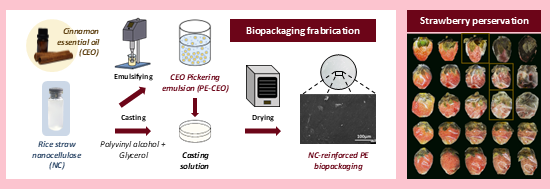
- cosmetic industries. The current major gaps in research regarding these biopackaging materials are their low mechanical strength and the introduction of functional additives to enhance their range of applications. In this paper, a biopackaging material is formulated using polyvinyl alcohol with glycerol as
- a plasticizer, rice straw-derived nanocellulose as a mechanical property enhancer and cinnamon essential oil Pickering emulsion as the main functional ingredient for strawberry preservation. With the combination of nanocellulose and Pickering emulsion, this study finds that the packaging material
- exhibits good heat-resistance, mechanical, and water-barrier properties. At an emulsion concentration as low as 10% (v/w) in the casting solution, high UV absorbance capacity (up to 100% UVC), high antibacterial activity (92.4% Escherichia coli inhibition), and good antioxidative properties (up to 43% DPPH



Hydrogels and nanogels: effectiveness in dermal applications
Beilstein J. Nanotechnol. 2025, 16, 1216–1233, doi:10.3762/bjnano.16.90
- properties to a gel previously composed of a more rigid and brittle network, a double network gel with an IPN structure is obtained. This approach significantly contributes to improving the mechanical properties and stability of the system [43][52]. Synthetic polymers, including acrylates [53], acrylamide
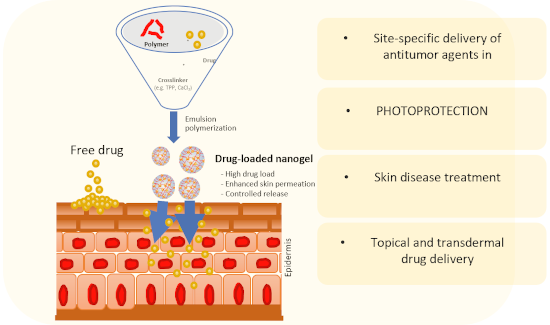
- regeneration due to their environment, which allows the modulation of cellular behavior [181][182][183]. The three-dimensional structure, along with cell permeability and mechanical stability, also qualifies hydrogels as useful drug carriers. Hydrogels have been used for dermal applications due to their
- mechanical strength [53], high drug upload [40], controlled drug release [100], and site-specific drug delivery [184] for both topical [48] and transdermal administration [116]. Some examples of the dermal application of hydrogels as drug carriers include cutaneous wound healing [40][41][42] and autoimmune





