


Search results
Search for "morphological changes" in Full Text gives 93 result(s) in Beilstein Journal of Nanotechnology.
Comparative study of sculptured metallic thin films deposited by oblique angle deposition at different temperatures
Beilstein J. Nanotechnol. 2018, 9, 954–962, doi:10.3762/bjnano.9.89
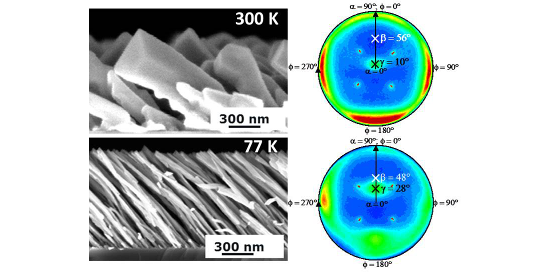
- those columns grown at 77 K, the columnar diameter is about 36 ± 10 nm, which is a reduction by a factor of approximately three. To understand these remarkable morphological changes, the influence of surface diffusion on the growth process of metallic columns has to be taken into account. For Al, it is



Electron interactions with the heteronuclear carbonyl precursor H2FeRu3(CO)13 and comparison with HFeCo3(CO)12: from fundamental gas phase and surface science studies to focused electron beam induced deposition
Beilstein J. Nanotechnol. 2018, 9, 555–579, doi:10.3762/bjnano.9.53


Laser-assisted fabrication of gold nanoparticle-composed structures embedded in borosilicate glass
Beilstein J. Nanotechnol. 2017, 8, 2454–2463, doi:10.3762/bjnano.8.244
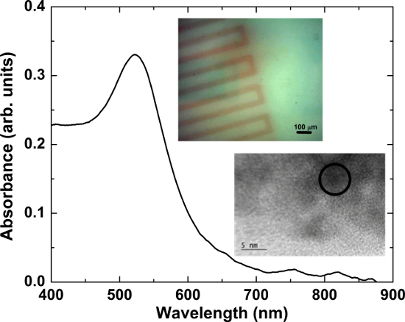
- nanosecond pulses at a wavelength of 266 nm by a specific brown coloration of the irradiated areas. The processed areas show no morphological changes. Such a coloration is not observed for the other wavelengths emitted by the Nd:YAG laser employed. Irradiation by femtosecond laser pulses at a wavelength of


Comparing postdeposition reactions of electrons and radicals with Pt nanostructures created by focused electron beam induced deposition
Beilstein J. Nanotechnol. 2017, 8, 2410–2424, doi:10.3762/bjnano.8.240
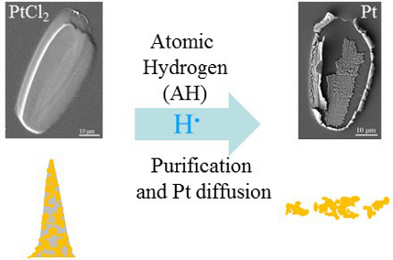
- structure would be expected to form. An analogous mechanism has been previously proposed to account for the formation of stochastic patterns of different sized clusters on surfaces [59]. Most likely, the differences in morphological changes observed for different PtCl2 deposits exposed to AH are caused by
- FEBID structures created from MeCpPtMe3, Pt(hfac)2, and Pt(PF3)4, and no significant morphological changes in the deposits (see Table 1 and Supporting Information File 1, Figures S4–S6). In the scientific literature that shows that AH can chemically etch carbon [61][62] (for example, Botman et. al. [26




Advances and challenges in the field of plasma polymer nanoparticles
Beilstein J. Nanotechnol. 2017, 8, 2002–2014, doi:10.3762/bjnano.8.200
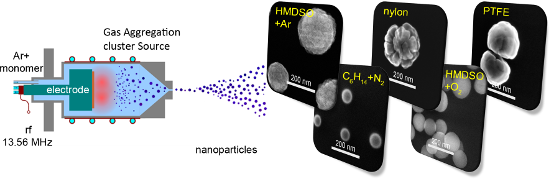
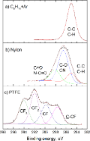
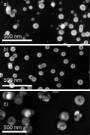
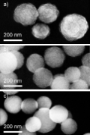
- at elevated pressure in a mixture of HMDSO and Ar with the constant ratio of both components. The process results in the formation of 210 ± 40 nm diameter spherical particles with a more structured surface (Figure 7a). Adding O2 to the working mixture results in morphological changes and produces NPs
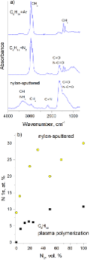
- as not to introduce morphological changes to the surface, unless otherwise required. The layer can be of the same or similar material as the underlying NPs to preserve the surface chemistry. For example, hydrocarbon NPs produced by plasma polymerization of n-hexane in GAS can be fixed on the surface






Optical techniques for cervical neoplasia detection
Beilstein J. Nanotechnol. 2017, 8, 1844–1862, doi:10.3762/bjnano.8.186
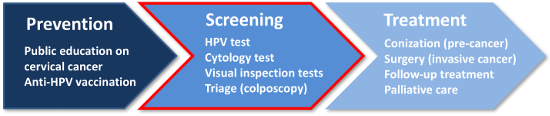
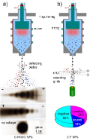
- characterized by morphological changes, such as modified tissue architecture, increased size of cell nuclei and increased nuclear/cytoplasmic ratio. The assessment of these morphological changes is currently done through microscopic histological analysis of biopsies (gold-standard diagnostics). Screening and



Vapor-phase-synthesized fluoroacrylate polymer thin films: thermal stability and structural properties
Beilstein J. Nanotechnol. 2017, 8, 933–942, doi:10.3762/bjnano.8.95
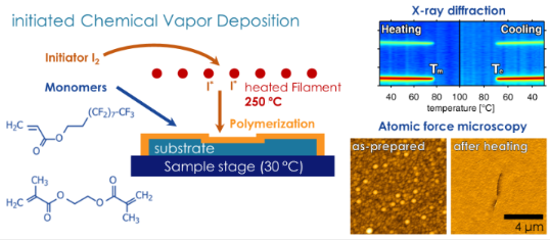
- PFDA homopolymer. For the EGDMA homopolymer, a WCA of 69 ± 1° was ultimately observed. The change in wettability stems from the (relative) increase of carbonyl groups upon addition of EGDMA, which turns the polymer more hydrophilic. Similar to the morphological changes discussed above, heat treatment


Synthesis of graphene–transition metal oxide hybrid nanoparticles and their application in various fields
Beilstein J. Nanotechnol. 2017, 8, 688–714, doi:10.3762/bjnano.8.74
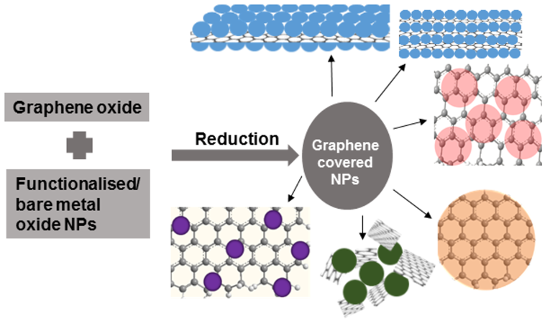
- processes [163]. Su et al. reported the change of dynamic behaviour and the conversion mechanism in LIBs by in situ transmission electron microscopy (TEM) characterisation [164]. Fe2O3 NPs showed volume expansion and morphological changes upon lithiation, and the surface of the electrode was covered by a






Comparison of four methods for the biofunctionalization of gold nanorods by the introduction of sulfhydryl groups to antibodies
Beilstein J. Nanotechnol. 2017, 8, 372–380, doi:10.3762/bjnano.8.39
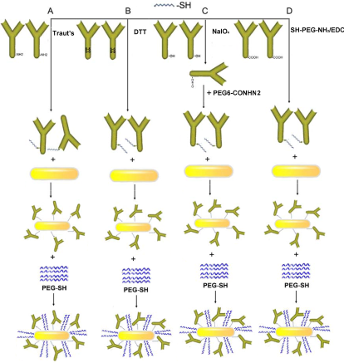
- simple method to functionalize GNRs via covalent Au–S bonds by thiolating antibodies using Traut’s reagent. The resulting conjugation of GNRs and antibodies exhibited stability and superior dispersion in buffer for months without morphological changes and aggregation. Furthermore, our method results in


Chitosan-based nanoparticles for improved anticancer efficacy and bioavailability of mifepristone
Beilstein J. Nanotechnol. 2016, 7, 1861–1870, doi:10.3762/bjnano.7.178
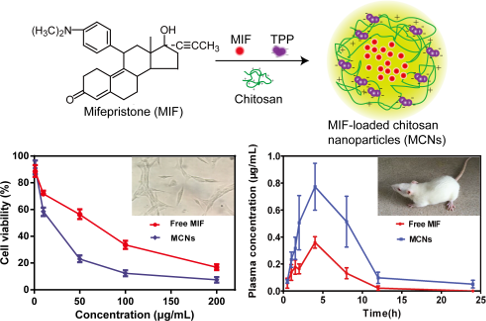
- observed using AFM (Figure 5B). It could be seen that the nanoparticles were spherical in shape with a relatively smooth surface. The tiny dots in the AFM images might be due to the free chitosan. No obvious morphological changes between CNs and MCNs could be found. The results showed that the horizontal


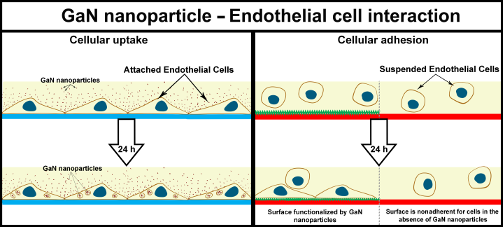
Viability and proliferation of endothelial cells upon exposure to GaN nanoparticles
Beilstein J. Nanotechnol. 2016, 7, 1330–1337, doi:10.3762/bjnano.7.124
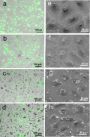
- SEM (e–h) images show the distribution of GaN nanoparticles and the morphological changes to endothelial cells upon exposure to GaN nanoparticles. The cells were exposed to either 10 µg/mL (b,f), 50 µg/mL (c,g), or 100 µg/mL (d,h) of GaN nanoparticles. Images a and e are negative controls treated with



Fast diffusion of silver in TiO2 nanotube arrays
Beilstein J. Nanotechnol. 2016, 7, 1129–1140, doi:10.3762/bjnano.7.105
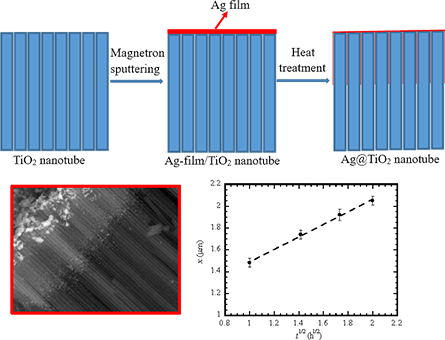
- pattern. The heat treatment can lead to a transition of TiO2 nanotubes from the amorphous phase to a crystalline phase, which has been observed by Jarose et al. [32]. It must be emphasized that the heat treatment with a temperature less than and equal to 500 °C does not cause any morphological changes of


Assembling semiconducting molecules by covalent attachment to a lamellar crystalline polymer substrate
Beilstein J. Nanotechnol. 2016, 7, 784–798, doi:10.3762/bjnano.7.70
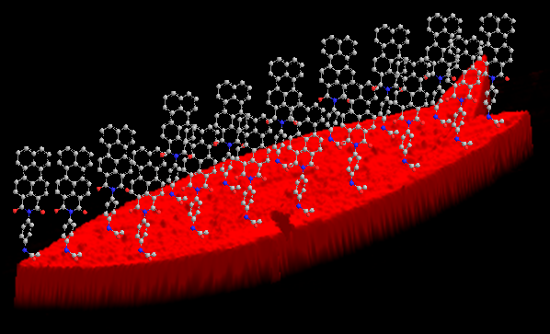
- carboxyl groups was achieved during thermal annealing, which, in turn, was only possible upon inclusion of a layer of carboxyl groups into the stack of crystalline lamellae. A detailed description of the morphological changes that could be observed during thermal annealing, side-group inclusion and
- crystal surface. From AFM images of annealed crystals, we deduced that the thickness of the crystalline object increased by about 2 nm. As an additional consequence of annealing, holes were appearing within the large lamellar crystals, indicative of lamellar thickening [10]. These morphological changes


Bacteriorhodopsin–ZnO hybrid as a potential sensing element for low-temperature detection of ethanol vapour
Beilstein J. Nanotechnol. 2016, 7, 501–510, doi:10.3762/bjnano.7.44
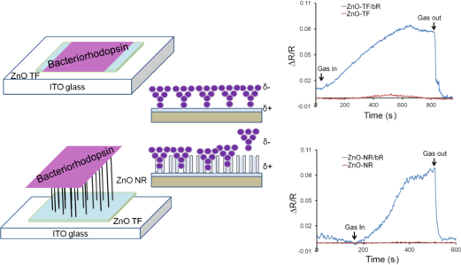
- , which in turn enables the charge transfer in ZnO-TF/bR and ZnO-NR/bR interfaces [10][14]. In order to characterize the morphological changes, the surface of the hybrid structures was investigated by X-ray diffraction (XRD) and scanning electron microscopy (SEM). Figure 1 shows the XRD patterns of the


Hydration of magnesia cubes: a helium ion microscopy study
Beilstein J. Nanotechnol. 2016, 7, 302–309, doi:10.3762/bjnano.7.28
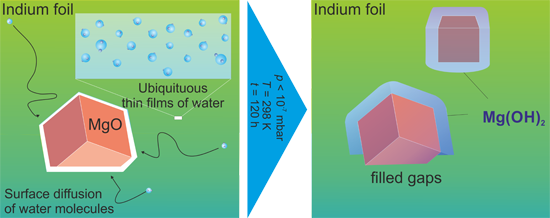
- these oxides are in physical contact with a solid substrate such as the ones used for immobilization to perform electron or ion microscopy imaging. We used helium ion microscopy (HIM) and investigated morphological changes of vapor-phase-grown MgO cubes after vacuum annealing and pressing into foils of
- S1). After analyzing the vacuum-treated sample, it was exposed to de-ionized water for 17 h and then again investigated in the HIM to evaluate the morphological changes. Results and Discussion Reactive water attack on MgO cubes under high vacuum (p < 3·10−7 mbar) Figure 1 shows MgO cubes being
- partially embedded in the untreated indium foil right after the mounting procedure and after four days in the HIM vacuum chamber, respectively. After four days under high-vacuum conditions at a base pressure lower than 3·10−7 mbar, HIM imaging reveals that important morphological changes of the MgO cubes


Atomic force microscopy as analytical tool to study physico-mechanical properties of intestinal cells
Beilstein J. Nanotechnol. 2015, 6, 1457–1466, doi:10.3762/bjnano.6.151
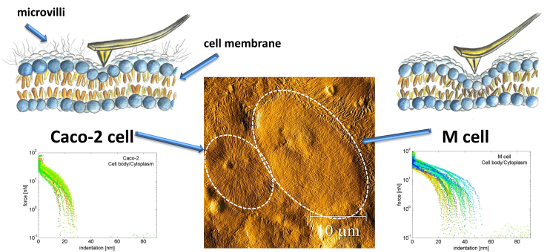
- electron microscopy (SEM) was used to evaluate morphological changes of cell surface architectures and examine protrusive surface structures including microvilli. For this, specimens were prepared similar as described previously [62]. After cultivation in transwell® systems cells were washed twice with PBS


PLGA nanoparticles as a platform for vitamin D-based cancer therapy
Beilstein J. Nanotechnol. 2015, 6, 1306–1318, doi:10.3762/bjnano.6.135
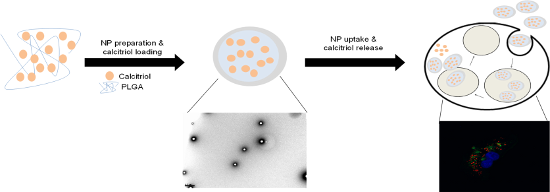
- cell growth, cell cycle arrest and morphological changes. Results Nanoparticle physicochemical properties PLGA NPs were prepared by a single emulsion solvent evaporation method and stabilized with Pluronic®F127. The obtained results for mean the diameter, polydispersity index (PDI) and zeta potential
- calcitriol remained stable at release conditions throughout the experiment period. Cellular uptake of PLGA NPs and calcitriol-induced morphological changes The internalization of fluorescent C6–calcitriol–PLGA NPs by S2-013, hTERT-HPNE and A549 cells was evaluated by confocal microscopy. Counterstaining of
- to the endo-lysosomal escape, with most of the PLGA NPs localized in the cytoplasm. However, it is not possible to distinguish this due to autofluorescence in the pancreatic cells and extensive morphological changes. As can be seen in Figure 3C,F, pancreatic cells treated with calcitriol–PLGA NPs at


Automatic morphological characterization of nanobubbles with a novel image segmentation method and its application in the study of nanobubble coalescence
Beilstein J. Nanotechnol. 2015, 6, 952–963, doi:10.3762/bjnano.6.98
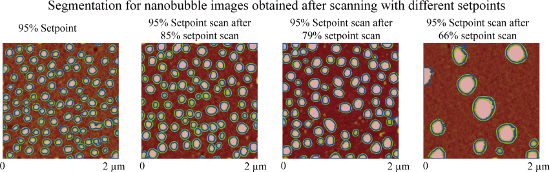
- out. Moreover, the method was applied to evaluate the morphological changes occurring during coalescence. Experimental NB imaging A sample was prepared by spin coating a thin film of PS on a silicon (100) substrate at a speed of 500 rpm. The substrate was cleaned in a sonic bath of acetone and then
- rate of 2 Hz and the scan angle was 90°. To study the morphological changes occurring during NB coalescence, higher scanning loads with setpoints of 85% (6.2 nm), 79% (5.7 nm), and 66% (4.8 nm) were applied for a given 2 × 2 μm scanning area. After each high-load scan, the 95% setpoint was selected to
- of the AFM tip [46]. One can see that tip convolution leads to an overestimation of the radius of curvature. Assuming the NB heights are not influenced by the tip shape, the NB width and contact angle can then be obtained. The proposed method was used to study morphological changes in NBs in terms of


Electron-stimulated purification of platinum nanostructures grown via focused electron beam induced deposition
Beilstein J. Nanotechnol. 2015, 6, 907–918, doi:10.3762/bjnano.6.94
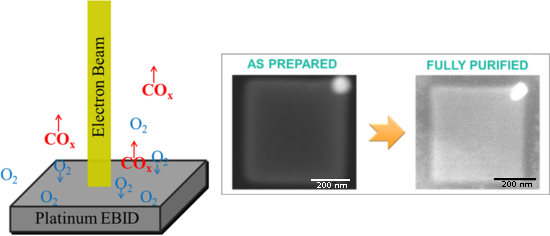
- minimal beam current to prevent morphological changes. Conclusion We have studied the electron-stimulated O2 purification of PtC EBID deposits and have shown that the process can be extended to room temperature. Electron beam current and energy studies suggest the process is governed by a dynamic process




A simple approach to the synthesis of Cu1.8S dendrites with thiamine hydrochloride as a sulfur source and structure-directing agent
Beilstein J. Nanotechnol. 2015, 6, 881–885, doi:10.3762/bjnano.6.90
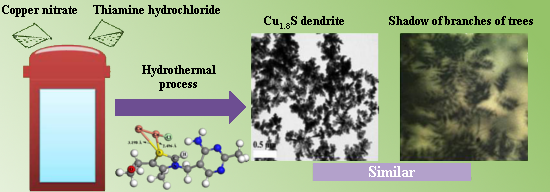
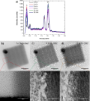
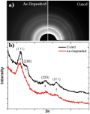
- that the Cu–S bonds exhibit a covalent component. In fact, such an interaction between Cu and S can also be understood from the deformation density, as shown in Figure 3b. The DFT results show that an interaction between Cu and S indeed exists. Figure 4 shows the morphological changes of the Cu1.8S


In situ observation of biotite (001) surface dissolution at pH 1 and 9.5 by advanced optical microscopy
Beilstein J. Nanotechnol. 2015, 6, 665–673, doi:10.3762/bjnano.6.67
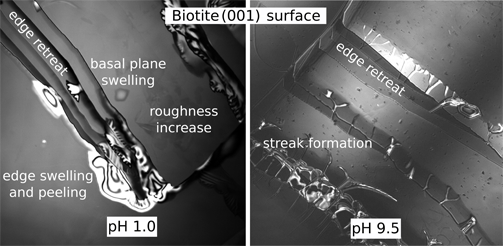
- performed with LCM-DIM with a vertical resolution of about 1 nm over a wide field of view (ca. 0.3–2 mm). Although it only provides qualitative height information [31], morphological changes on mineral surfaces are suitably monitored. Additionally, owing to the relatively fast data acquisition (ca. 9.6 s to


Oxygen-plasma-modified biomimetic nanofibrous scaffolds for enhanced compatibility of cardiovascular implants
Beilstein J. Nanotechnol. 2015, 6, 254–262, doi:10.3762/bjnano.6.24
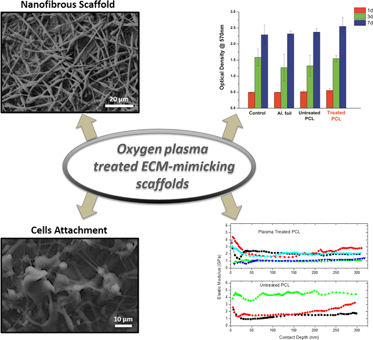
- . These findings, which are in correlation with the morphological changes observed by SEM and AFM imaging, underline the positive effect of the mild power plasma conditions on the nanofibrous scaffolds in terms of surface topography. Chemical characterization of the plasma-treated scaffolds As can be


Boosting the local anodic oxidation of silicon through carbon nanofiber atomic force microscopy probes
Beilstein J. Nanotechnol. 2015, 6, 215–222, doi:10.3762/bjnano.6.20
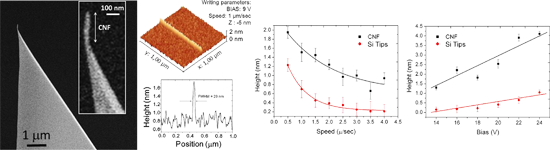
- Figure 4. In the left panel (Figure 4a), a SEM image of the CNF-AFM probe before the line patterning by LAO-AFM depicted in Figure 4b is shown. It is compared against a SEM image of CNF-AFM probe after LAO-AFM in the right panel (Figure 4c). Morphological changes of the CNF could not be noticed by SEM


Increasing throughput of AFM-based single cell adhesion measurements through multisubstrate surfaces
Beilstein J. Nanotechnol. 2015, 6, 157–166, doi:10.3762/bjnano.6.15
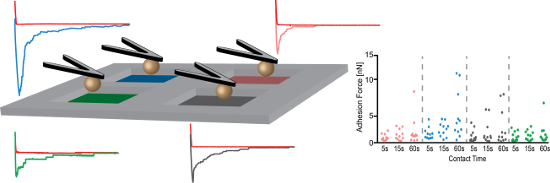
- replaced after characterizing 4 cells on each coating. If a cell showed morphological changes during the experiments, it was discarded. Adhesion forces were extracted from force–distance curves using JPK data processing software. Fluorescence microscopy and UV–vis spectroscopy Fluorescence microscopy was


Morphology, structural properties and reducibility of size-selected CeO2−x nanoparticle films
Beilstein J. Nanotechnol. 2015, 6, 60–67, doi:10.3762/bjnano.6.7
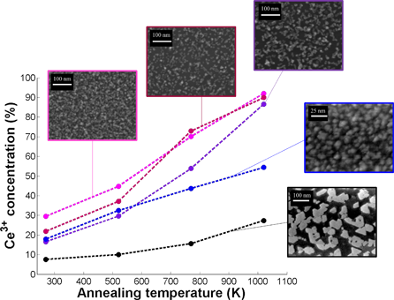
- Ce3+ concentration is lower than in the NPs. This significant difference can be ascribed to structural and morphological changes occurring in the non-epitaxial film at increasing temperature, as shown in Figure 6 in which STM images of the non-epitaxial film before and after the reduction cycle are





