Search results
Search for "nanorods" in Full Text gives 230 result(s) in Beilstein Journal of Nanotechnology. Showing first 200.
Self-assembly of amino acids toward functional biomaterials
Beilstein J. Nanotechnol. 2021, 12, 1140–1150, doi:10.3762/bjnano.12.85
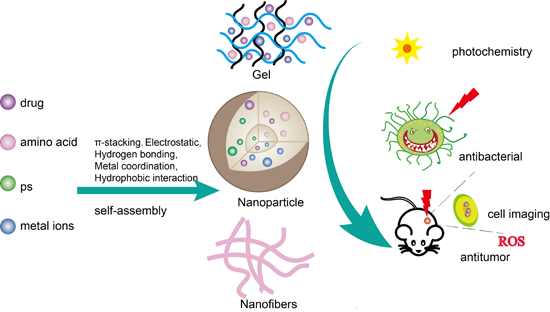
- (Cd2+) to form a three-dimensional crystal of Cys/Cd nanorods. Then, upon the introduction of Na2S, the Cys/Cd template mediates the mineralization of cadmium sulfide (CdS) into a layered CdS quantum dot structure, finally making a simple bionic daylight antenna with sustainable photocatalytic
- mechanisms. Scanning electron microscopy and transmission electron microscopy images show that the assembly is layered and has a three-dimensional spherical structure with porous and stacked nanorods (width 50 nm, length 200 nm). During the self-assembly process, tetrakis(4-sulfonatophenyl)porphine and
- accelerating. The assembly forms of amino acids include nanocapsules, nanoparticles, nanofibers, nanorods, nanoparticles, and hydrogels (Table 1). However, it is still a challenge to make these assemblies the preferred materials for scientific research and application. The difficulties of controlling the size

Assessment of the optical and electrical properties of light-emitting diodes containing carbon-based nanostructures and plasmonic nanoparticles: a review
Beilstein J. Nanotechnol. 2021, 12, 1078–1092, doi:10.3762/bjnano.12.80
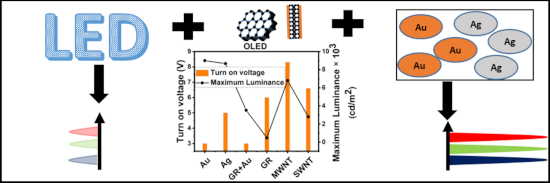
- that the SPR of AuNP positively influences the quantum efficiency of the red emission [44]. In addition, the shape of the MNP exhibiting SPR also plays a crucial role in the enhancement of the wavelength emanating from the LED. They studied the effect of Au nanorods (AuNR) and nanospheres (AuNS) in the
- device configuration of glass/ITO/AuNR and AuNS/CuPc/Alq3 + DCM/Alq3/LiF/Al red LED. The SPR absorption of Au nanorods and nanospheres were approx. 650 and 520 nm, respectively. Therefore, Au nanorods were able to enhance the red emission from the LED with an EQE of 6.8 × 10⁻⁴ at 10 V compared to the
- temperature showing a clear increase in the PL emission. Besides Ag nanorods and nanospheres, other plasmonic nanostructures, such as Ag nanocubes and nanostars tend to enhance LED properties owing to their sharp facets and edges [105][106]. Yu et al. have incorporated Ag nanocube core coated with SiO2 shell


Progress and innovation of nanostructured sulfur cathodes and metal-free anodes for room-temperature Na–S batteries
Beilstein J. Nanotechnol. 2021, 12, 995–1020, doi:10.3762/bjnano.12.75
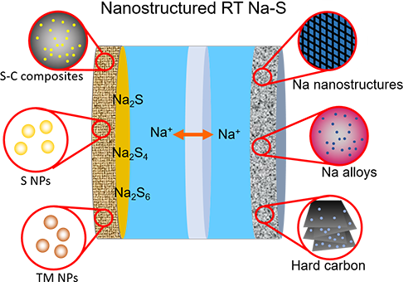
- the nanometer scale in form of nanoparticles, nanorods, nanofibers, nanoarrays, and nanosheets, which are more tolerant to dilative stress [75][76]. In addition, these nanostructures can be incorporated into a flexible carbon matrix for further accommodation of mechanical strain (Figure 10A) [74][77





The role of deep eutectic solvents and carrageenan in synthesizing biocompatible anisotropic metal nanoparticles
Beilstein J. Nanotechnol. 2021, 12, 924–938, doi:10.3762/bjnano.12.69
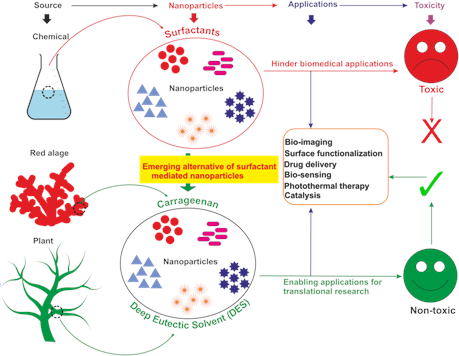
- maintaining high yield and monodispersity. Initially, gold nanorods were synthesized using electrochemical methods using polycarbonate membrane templates or porous alumina for shape control in the presence of surfactants (mostly CTAB) [34][35]. Because of their optical properties, gold nanorods became
- increasingly popular between 1999 and 2003 and a laborious three-step seed-mediated synthesis via a wet chemical route was developed [36]. The emergence of seed-mediated synthesis provided chemists, for the first time, with a versatile and convenient wet chemistry of synthesizing nanorods and several other
- ), dodecyltrimethylammonium bromide (DTAB), hexadecyltrimethylammonium chloride (CTAC), and benzyldimethylhexadecylammonium chloride (BDAC) have been used as structure-directing agents for synthesizing gold nanorods [41][42][43]. Co-mixtures of these quaternary ammonium surfactants are also being used to synthesize


Comprehensive review on ultrasound-responsive theranostic nanomaterials: mechanisms, structures and medical applications
Beilstein J. Nanotechnol. 2021, 12, 808–862, doi:10.3762/bjnano.12.64


9.1% efficient zinc oxide/silicon solar cells on a 50 μm thick Si absorber
Beilstein J. Nanotechnol. 2021, 12, 766–774, doi:10.3762/bjnano.12.60
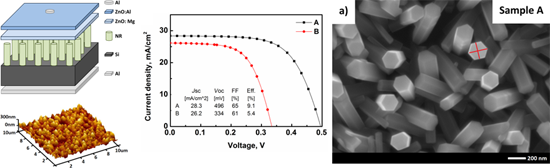
- using zinc oxide nanorods. The efficiency of a textured solar cell structure is compared with the one obtained for a planar zinc oxide/silicon structure. The present results show the possibility to produce efficient solar cells on a relatively thin 50 μm thick silicon substrate. Solar cells with
- structured top electrodes were examined by numerous measuring techniques. Scanning electron microscopy revealed a grain-like morphology of the magnesium-doped zinc oxide film. The size of the grains is closely related to the structure of the nanorods. The external quantum efficiency of the cells was measured
- deposited as a low-resistivity ohmic contact via sputtering. To improve the contact parameters, the samples were annealed at 500 °C for 5 min in argon atmosphere via rapid thermal processing. Si/Al substrates were prepared in two different ways, A and B. On the surface of sample A, zinc oxide nanorods


High-yield synthesis of silver nanowires for transparent conducting PET films
Beilstein J. Nanotechnol. 2021, 12, 624–632, doi:10.3762/bjnano.12.51
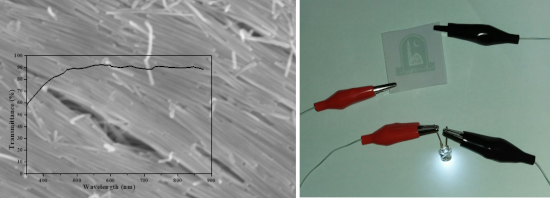
- the growth of rod-like structures, the longitudinal SPR of which might contribute to the advent of a peak at wavelengths shorter than 401 nm. When the reaction approached 20 min, the Ag nanorods further grew in length, and peak intensities continued to rise and become sharp followed by a gradual


Impact of GaAs(100) surface preparation on EQE of AZO/Al2O3/p-GaAs photovoltaic structures
Beilstein J. Nanotechnol. 2021, 12, 578–592, doi:10.3762/bjnano.12.48
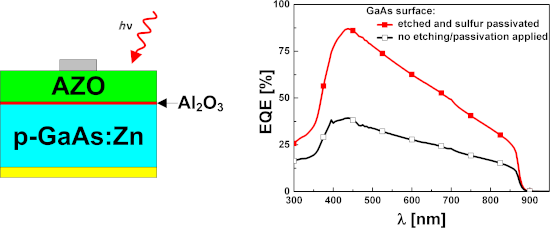
- ; gallium arsenide; photovoltaics; surface passivation; Introduction The atomic layer deposition (ALD) method is used for silicon passivation in photovoltaics. In recent years we proposed the usage of ALD for the construction of simplified Si-based cells [1]. Once zinc oxide (ZnO) nanorods were employed as




Rapid controlled synthesis of gold–platinum nanorods with excellent photothermal properties under 808 nm excitation
Beilstein J. Nanotechnol. 2021, 12, 462–472, doi:10.3762/bjnano.12.37
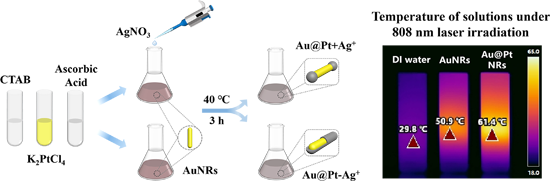
- –Pt nanoparticles with adjustable LSPR wavelength range. In this work, the effects of Ag+ and K2PtCl4 on the deposition of Pt on the surface of gold nanorods (AuNRs) were investigated. A fast, precise, and controlled synthesis of dumbbell-like Pt-coated AuNRs (Au@Pt NRs) under mild conditions is
- the cycle irradiation, the absorption spectra and the morphology of Au@Pt NRs were measured by spectrophotometry and TEM. Statistical analysis Results are expressed as the average ± standard deviation for each size of more than 100 nanorods from at least six different TEM images. Statistical


A review on nanostructured silver as a basic ingredient in medicine: physicochemical parameters and characterization
Beilstein J. Nanotechnol. 2021, 12, 440–461, doi:10.3762/bjnano.12.36
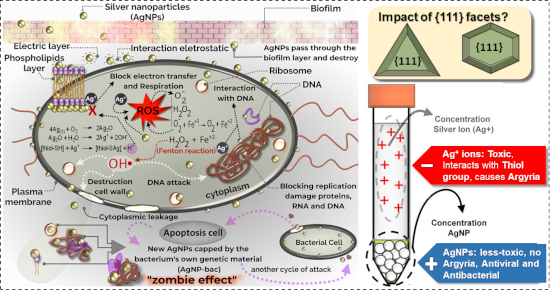
- AgNPs are stronger in particles with predominant {111} facets with high atomic density [29][44]. Thus, truncated triangular nanoplates have greater bactericidal power compared to other morphological forms of AgNPs which contain fewer {111} facets, such as nanospheres, nanorods, and nanocubes. Pal et al
- of AgNPs with different morphologies: (D) nanoplates, (E) mixture of spheres and nanorods, (F) spherical bimetallic core–shell Ag@Fe, silver core with iron shell. Part A reprinted with permission from [37], Copyright 2006 American Chemical Society; part B reprinted with permission from [38


Doxorubicin-loaded gold nanorods: a multifunctional chemo-photothermal nanoplatform for cancer management
Beilstein J. Nanotechnol. 2021, 12, 295–303, doi:10.3762/bjnano.12.24
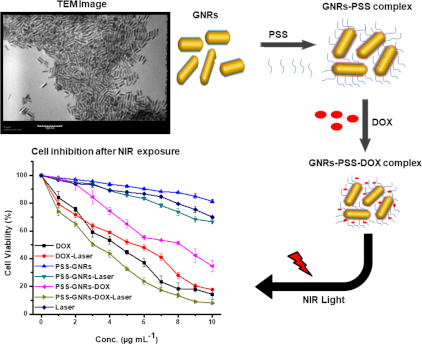
- study was to fabricate biocompatible multifunctional drug-loaded nanoscale moieties for co-therapy (chemo-photothermal therapy) with maximum efficacy and minimum side effects. Herein, we report in vitro anticancerous effects of doxorubicin (DOX) loaded on gold nanorods coated with the polyelectrolyte
- based on chemotherapy and photothermal strategies appears to be a promising platform in cancer management. Keywords: chemotherapy; doxorubicin; gold nanorods; NIR laser; photothermal therapy; Introduction Despite the enormous advances in medical research, cancer is still the second most common cause
- , nanorods, nanoshells, and nanocages) have great potential in photothermal cancer therapy due to plasmonic properties and the ease of biofunctionalization. Gold nanorods (GNRs) are more preferable than other gold nanomaterials because of their photothermal conversion efficiency. Better nanotherapeutics can


A review on the green and sustainable synthesis of silver nanoparticles and one-dimensional silver nanostructures
Beilstein J. Nanotechnol. 2021, 12, 102–136, doi:10.3762/bjnano.12.9
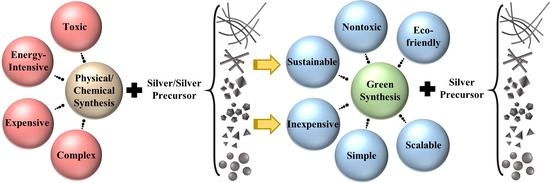
- -field effect and localized surface plasmon resonance (LSPR) [32]. There are several applications in which use of 1D silver nanostructures such as nanowires (NWs) and nanorods (NRs) (at the same concentration) are preferred to other nanostructures due to stronger conductivity. For instance, 1D silver
- ] synthesized AgNPs using the hydrolytic sol–gel method at 400, 600, and 800 °C with particles with an average size of 20 nm and crystalline shape. The sol–gel technique can also be performed at lower temperatures as well. Jadalannagari et al. [143] synthesized silver-doped hydroxyapatite nanorods using the sol


ZnO and MXenes as electrode materials for supercapacitor devices
Beilstein J. Nanotechnol. 2021, 12, 49–57, doi:10.3762/bjnano.12.4
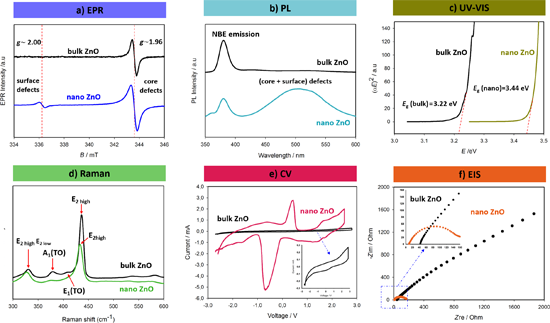
- of N-CuMe2Pc nanorods. The sample M10P2, in which 10 mg of MXene and 2 mg N-CuMe2Pc were used, exhibited high ionic conductivity and the measured value of the specific capacitance was 786 F·g−1 [16]. Li et al. synthesized monolayer wrinkled Ti3C2Tx grafted with HF and decorated with N-doped carbon by
Optically and electrically driven nanoantennas
Beilstein J. Nanotechnol. 2020, 11, 1542–1545, doi:10.3762/bjnano.11.136

- ][51]. A recent example of the strong coupling between silver nanorods and photochromic molecules is demonstrated in [52]. Due to the high local field intensity in the gap of a nanodimer, strong polarization of the particle, and consequently, strong SHG from the particle surface, may be expected
Antimicrobial metal-based nanoparticles: a review on their synthesis, types and antimicrobial action
Beilstein J. Nanotechnol. 2020, 11, 1450–1469, doi:10.3762/bjnano.11.129
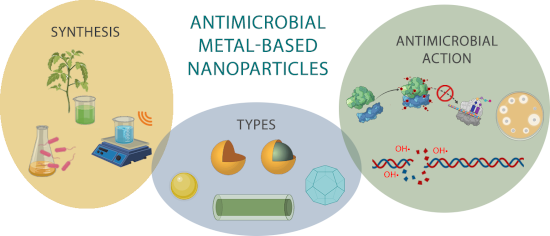
- convenient method for growing NPs. By varying the synthesis parameters, a variety of nanostructures, such as spherical CeO2 NPs [61], lamellar MgO NPs [62], and even ZnO nanorods [69] can be obtained by using this method. In the sonochemical synthesis method, a high-intensity ultrasound produces an acoustic
- ]. Matsuda et al. (2019) have developed a fluoride-containing ZnO–CuO nanocomposite which inhibited the bacterial growth of Streptococcus mutans, showing a potential use in dental materials [124]. CuO nanorods (110 nm in length and 10 nm in diameter) were obtained by the precipitation process. The


Wafer-level integration of self-aligned high aspect ratio silicon 3D structures using the MACE method with Au, Pd, Pt, Cu, and Ir
Beilstein J. Nanotechnol. 2020, 11, 1439–1449, doi:10.3762/bjnano.11.128
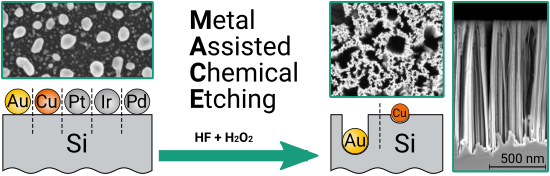
- random structures are typically vertically aligned nanowires, also called nanorods. Silicon nanowire arrays can be designed to have a low reflectance of about 1% in a broad spectral range, depending on their geometry. These silicon structures exhibit efficient light trapping because photons are scattered


Ultrasensitive detection of cadmium ions using a microcantilever-based piezoresistive sensor for groundwater
Beilstein J. Nanotechnol. 2020, 11, 1242–1253, doi:10.3762/bjnano.11.108
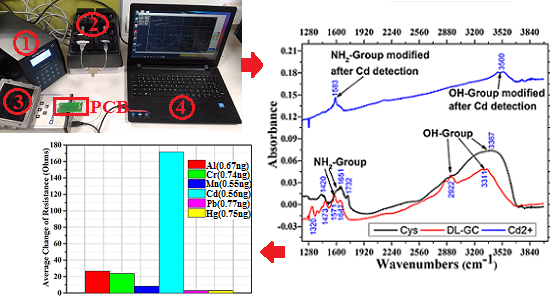
- based on nanotubes, nanorods, nanoneedles, or nanoplates are also used to detect HMIs selectively down to the nanomolar range [8][9][10][11]. Many authors used adsorption methods to extract heavy metal ions from groundwater [12][13][14][15][16]. However, this is only useful when a pollution source has






Magnetic-field-assisted synthesis of anisotropic iron oxide particles: Effect of pH
Beilstein J. Nanotechnol. 2020, 11, 1230–1241, doi:10.3762/bjnano.11.107
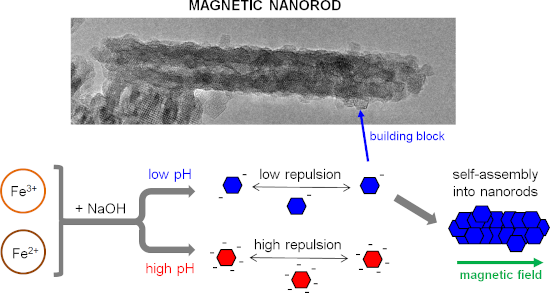
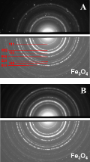
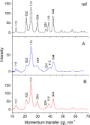
- University, Albert-Einstein-Allee 11, 89069 Ulm, Germany 10.3762/bjnano.11.107 Abstract The synthesis of magnetite (Fe3O4) nanorods using reverse co-precipitation of Fe3+ and Fe2+ ions in the presence of a static magnetic field is reported in this work. The phase composition and crystal structure of the
- synthesized material were investigated using electron diffraction, Raman spectroscopy, and transmission electron microscopy. It was shown that the morphology of the reaction product strongly depends on the amount of OH− ions in the reaction mixture, varying from Fe3O4 nanorods to spherical Fe3O4 nanoparticles
- . Fe3O4 nanorods were examined using high-resolution transmission electron microscopy proving that they are single-crystalline and do not have any preferred crystallographic orientation along the axis of the rods. According to the data obtained a growth mechanism was proposed for the rods that consists of






Photothermally active nanoparticles as a promising tool for eliminating bacteria and biofilms
Beilstein J. Nanotechnol. 2020, 11, 1134–1146, doi:10.3762/bjnano.11.98
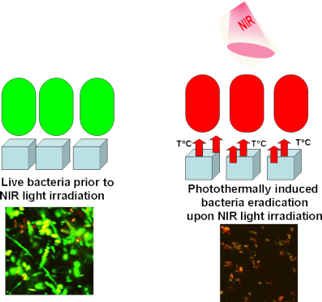
- the main causes of bacterial damage. The polygonally shaped vancomycin-bound gold nanoparticles efficiently killed (>99%) of the targeted bacteria that were submitted to irradiation with 808 nm light for 5 min [48]. In another study, gold nanorods covalently linked with primary antibodies efficiently
- eliminated the pathogenic P. aeruginosa upon NIR irradiation [49]. Gold nanorods were also applied to efficiently ablate (up to 97%) S. aureus upon NIR laser irradiation [50]. In these studies, the results suggested that the thermal damage of the bacterial membranes led to bacterial death. In 2013, the first
- examples in which the photothermal effect was applied on gold nanomaterials (nanorods, nanoshells, silk hydrogel containing spherical gold nanoparticles) to induce antibacterial activity were summarized in a review [51]. Later on, in 2017, another review highlighted the advances in the gold nanoparticle


Highly sensitive detection of estradiol by a SERS sensor based on TiO2 covered with gold nanoparticles
Beilstein J. Nanotechnol. 2020, 11, 1026–1035, doi:10.3762/bjnano.11.87
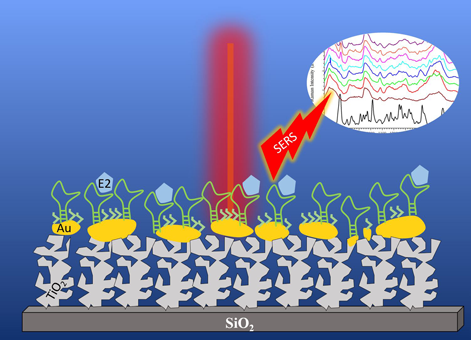
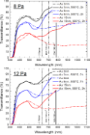
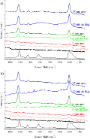
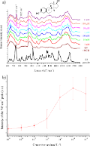
- antireflection abilities [13][14][15]. These composite microstructures have also shown to maximize the path of the Raman excitation laser beam within the substrate, leading to signals with higher intensity. Samransuksamer et al. [16] used TiO2 nanorods decorated with Au NPs, deposited via precipitation by



Microwave-induced electric discharges on metal particles for the synthesis of inorganic nanomaterials under solvent-free conditions
Beilstein J. Nanotechnol. 2020, 11, 1019–1025, doi:10.3762/bjnano.11.86
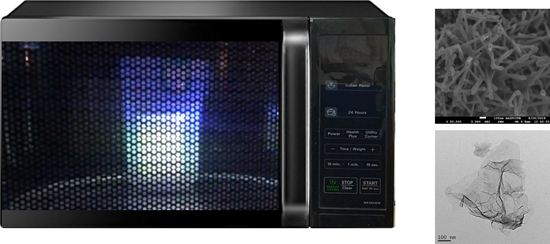
- nanoparticles of Cu and Ni and one-dimensional nanorods of CuS, ZnF2, and NiF2 protected with fluorinated amorphous carbon. We have also synthesized reduced graphene oxide and partially rolled graphene by this method. Keywords: electric discharges; microwave synthesis; nanomaterials; transmission electron
- of Cu, Ni, und Zn nanoparticles from metal particles. Also, we can control the morphology of the nanomaterials, which has not been achieved before. ZnF2, NiF2, and CuS nanorods covered with amorphous fluorinated carbon were synthesized. We have also extended this procedure to synthesize reduced
- (2.54 GHz, power 700 W) and treated for periods of time between 5 s and 2 min. Arcs were generated in the activated metal, which evaporated the metal along with carbon. Carbon-coated metallic nanoparticles formed on the top lid of the reaction vessel. For synthesizing nanorods, sulfur was used as a


Key for crossing the BBB with nanoparticles: the rational design
Beilstein J. Nanotechnol. 2020, 11, 866–883, doi:10.3762/bjnano.11.72
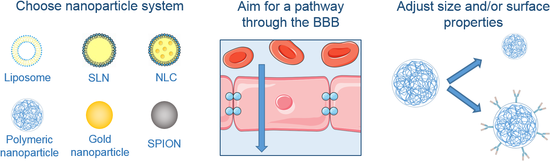
- targeting ligands, such as angiopep-2, TAT or EGF, allows their accumulation to be increased in these specific areas [70][78][107][176]. Although to a lower extent, gold nanorods (AuNRs) have also been used for brain delivery. AuNRs, like AuNPs, exhibit an optical feature called surface plasmon resonance
- , making these particles interesting for tumor treatment by photothermal therapy [178]. Furthermore, nanorods can be internalized more easily by cells as their increased surface allows them to interact more easily with receptors on the cell membranes [181]. AuNRs have been functionalized to increase their


Luminescent gold nanoclusters for bioimaging applications
Beilstein J. Nanotechnol. 2020, 11, 533–546, doi:10.3762/bjnano.11.42
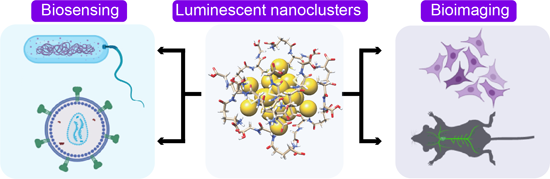
- luminescence phenomenon in detail. The realization by Wilcoxon et al. that AuNPs with sizes of less than 5 nm show luminescence has provided the foundation for extensive investigation on various nanostructures [33]. Since the 1990s, several groups have reported AuNPs, including gold nanorods showing


Multilayer capsules made of weak polyelectrolytes: a review on the preparation, functionalization and applications in drug delivery
Beilstein J. Nanotechnol. 2020, 11, 508–532, doi:10.3762/bjnano.11.41



Evolution of Ag nanostructures created from thin films: UV–vis absorption and its theoretical predictions
Beilstein J. Nanotechnol. 2020, 11, 494–507, doi:10.3762/bjnano.11.40
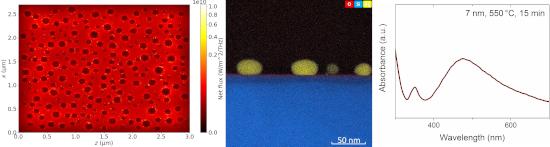
- be observed, corresponding to the illumination in a direction parallel or perpendicular to its major axis [23]. In recent years, many scientific papers have also been devoted to triangular or tetrahedral nanoparticles, or nanorods/nanotubes with complex cross sections [23][24][25]. Plasmon resonance
- at other wavelengths were also attributed to interband transitions [30][33]. The peak at the wavelength at about 350–360 nm could correspond to quadrupole resonance [34][35][36][37][38][39]. Quadrupole resonance is usually observed for nanostructures of larger size, in nanorods with pentagonal cross