Search results
Search for "nanoscale" in Full Text gives 929 result(s) in Beilstein Journal of Nanotechnology. Showing first 200.
Self-assembly and adhesive properties of Pollicipes pollicipes barnacle cement protein cp19k: influence of pH and ionic strength
Beilstein J. Nanotechnol. 2025, 16, 1863–1872, doi:10.3762/bjnano.16.129
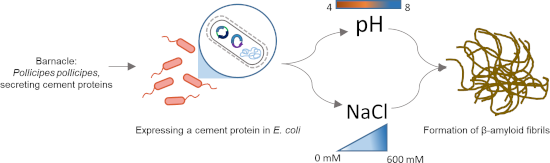
- different conditions, will be further investigated through a detailed macro- and nanoscale study designed to understand the relationship between structural transitions and function of the protein in vivo. Experimental Recombinant protein expression and purification rPpolcp19k-his protein was expressed in E


On the road to sustainability – application of metallic nanoparticles obtained by green synthesis in dentistry: a scoping review
Beilstein J. Nanotechnol. 2025, 16, 1851–1862, doi:10.3762/bjnano.16.128
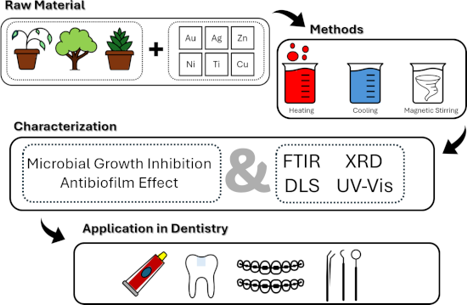
- ; sustainable development; Introduction Nanotechnology is an interdisciplinary field of science that involves the manipulation of materials at the nanoscale, typically ranging from 1 to 100 nm in inorganic nanomaterials, to generate structures with unique physicochemical properties [1][2][3]. Among the most
- immune response and stimulate periodontal tissue repair [72]. In the field of endodontics, biosynthesized AgNPs and ZnO-NPs have been employed as adjuvants to conventional irrigants and intracanal dressings, thereby enhancing the disinfection efficacy of root canal systems [21]. The nanoscale properties


Phytol-loaded soybean oil nanoemulsion as a promising alternative against Leishmania amazonensis
Beilstein J. Nanotechnol. 2025, 16, 1826–1836, doi:10.3762/bjnano.16.126

- nanoscale size, lipid fusion with membrane components, or disruption of the plasma membrane structure [48][49]. However, several studies have also highlighted the remarkable potential of nanoemulsions against intracellular amastigote forms. In addition to enhancing cutaneous penetration, nanoemulsions also


Electrical, photocatalytic, and sensory properties of graphene oxide and polyimide implanted with low- and medium-energy silver ions
Beilstein J. Nanotechnol. 2025, 16, 1794–1811, doi:10.3762/bjnano.16.123
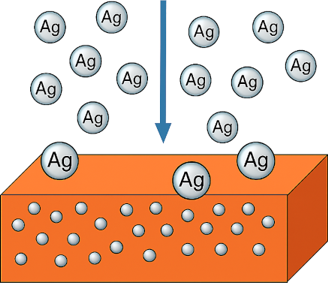
- implantation provides a controllable alternative for tuning surface properties at the nanoscale, enabling the targeted introduction of functional species without chemical reagents. This work investigates the effects of low-energy (20 keV) and medium-energy (1.5 MeV) Ag+ ion implantation on the electrical
- implantation energy. A comparison of these morphological characteristics with the photocatalytic results shows that the highest efficiency is achieved using samples with moderate nanoscale roughness, that is, GO implanted with 20 keV at a fluence of 3.75 × 1012 cm−2 (RMS = 102 nm, k ≈ 0.0033 min−1) and PI
- maximize roughness, but to achieve a balanced nanoscale surface structure that complements the plasmonic and electronic effects of silver, enabling a high density of accessible active sites while maintaining efficient charge separation. Electric and sensory properties The results of electrical property


Multifunctional anionic nanoemulsion with linseed oil and lecithin: a preliminary approach for dry eye disease
Beilstein J. Nanotechnol. 2025, 16, 1711–1733, doi:10.3762/bjnano.16.120



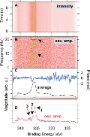
Ambient pressure XPS at MAX IV
Beilstein J. Nanotechnol. 2025, 16, 1677–1694, doi:10.3762/bjnano.16.118
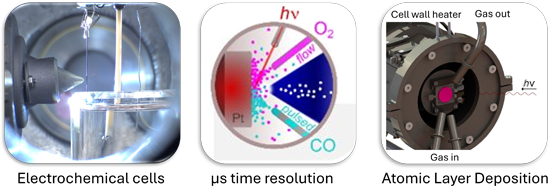
- , even on topologically complex surfaces, making it essential for the fabrication of next-generation devices [46][47][48]. In the semiconductor industry, ALD enables the creation of nanoscale transistors and high-k dielectric materials, essential for shrinking transistor dimensions and enhancing
- , complex materials operating under industrially relevant conditions. Achieving this shift will require further innovations in sample environments, pressure compatibility, and surface sensitivity, especially for systems that exhibit spatial or chemical heterogeneity at the micro- and the nanoscale. A key





Venom-loaded cationic-functionalized poly(lactic acid) nanoparticles for serum production against Tityus serrulatus scorpion
Beilstein J. Nanotechnol. 2025, 16, 1633–1643, doi:10.3762/bjnano.16.115
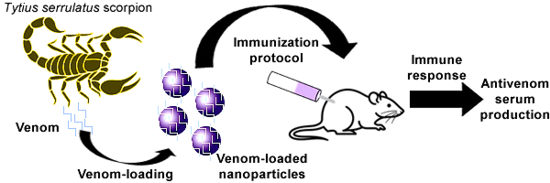
- barriers, their biocompatibility, and low toxicity [18]. Their manipulation at the nanoscale changes specific surface properties, possibly improving the ability to cross biological barriers targeting the affected tissues [18][19]. In this context, nanoparticle controlled release based on biodegradable


Nanotechnology-based approaches for the removal of microplastics from wastewater: a comprehensive review
Beilstein J. Nanotechnol. 2025, 16, 1607–1632, doi:10.3762/bjnano.16.114
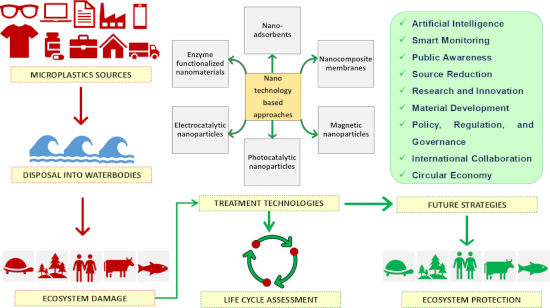
- synthesis and characterisation techniques have enabled the detection of materials at the nanoscale, unlocking new opportunities across various streams. In the field of water treatment, nanotechnology is gaining wide attention due to its enhanced efficiency, effectiveness, affordability, and durability. The
- key properties of nanoparticles include high surface area, extensive functionalization, high reactivity, and size-dependent characteristics. By leveraging these properties, water treatment methods can be refined at the nanoscale to selectively target pollutants [16][17]. This comprehensive review
- explores the potential of nanotechnology in removing MP contamination from water and wastewater. Unlike conventional treatment methods, which are less effective in capturing nanoscale plastic pollutants, nanotechnology-based approaches offer precision, enhanced adsorption, and catalytic degradation


Few-photon microwave fields for superconducting transmon-based qudit control
Beilstein J. Nanotechnol. 2025, 16, 1580–1591, doi:10.3762/bjnano.16.112
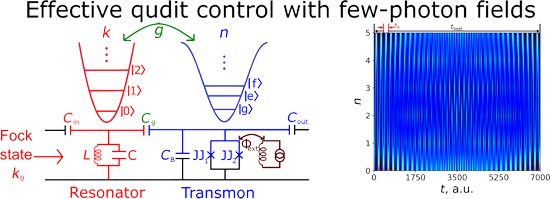
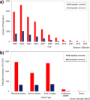
- photon number operator . The transmon is considered as an anharmonic oscillator (with ladder operators and ) with the number of excitations in the solid-state system similarly introduced as . In a transmon, the inductance is created using a nonlinear element, that is, a nanoscale Josephson junction (JJ


Modeling magnetic properties of cobalt nanofilms used as a component of spin hybrid superconductor–ferromagnetic structures
Beilstein J. Nanotechnol. 2025, 16, 1557–1566, doi:10.3762/bjnano.16.110
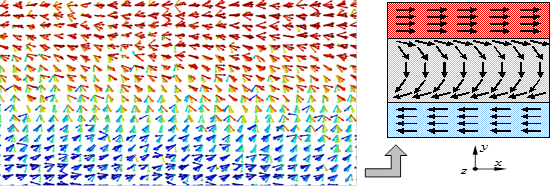
- small nanoscale system (500 atoms) consisting of cobalt atoms was solved. The purpose of this stage of computational experiment was to check the convergence of the solution and compare the obtained data with the results of other studies. The performed calculations and satisfactory correspondence to the
- parameters of the modeled nanoscale systems. It was found that the magnetic energy and magnetization norm of the system change in a nonlinear manner with increasing number of crystalline layers of the nanofilm. The peaks found on the graph of the magnetization rate change can be caused by surface effects in
- the reliability level (i.e., 0.8848). Conclusion The mathematical model considered in this work allows us to investigate the magnetic behavior of a nanoscale system taking into account spin and interatomic interactions. The mathematical model is based on the joint solution of the Langevin and Landau


Transient electronics for sustainability: Emerging technologies and future directions
Beilstein J. Nanotechnol. 2025, 16, 1545–1556, doi:10.3762/bjnano.16.109

- thickness of inorganic layers is typically limited to a few micrometers, imposing structural constraints on vertical integration schemes for wiring and packaging. These physical limitations may inherently restrict the achievable device density. To overcome these constraints, advanced nanoscale integration


Nanomaterials for biomedical applications
Beilstein J. Nanotechnol. 2025, 16, 1499–1503, doi:10.3762/bjnano.16.105
- . Drugs or genetic material can be carried by these cylindrical nanoparticles and directed towards specific cells through external stimuli such as a magnetic field or light [12]. A new nanoscale drug delivery system has been developed by using carbon nanotubes and a carbon nanotube–graphene hybrid to more
- nanoscale features, which can be used to control the way the cells function. Surface patterns, for example, can tell cells when to divide, which way to grow, or what type of tissue they should make. It proves to be valuable in stem cell therapy as well as in the development of artificial organs [27]. In
- silver nanoparticles in joint replacements or dental implants can decrease the chances of infections and support healing [37]. On implants, nanoscale coatings are also being used to mimic natural tissues more closely and to avoid immune rejection from the body. It is possible to make materials that
Laser processing in liquids: insights into nanocolloid generation and thin film integration for energy, photonic, and sensing applications
Beilstein J. Nanotechnol. 2025, 16, 1428–1498, doi:10.3762/bjnano.16.104






The role of biochar in combating microplastic pollution: a bibliometric analysis in environmental contexts
Beilstein J. Nanotechnol. 2025, 16, 1401–1416, doi:10.3762/bjnano.16.102
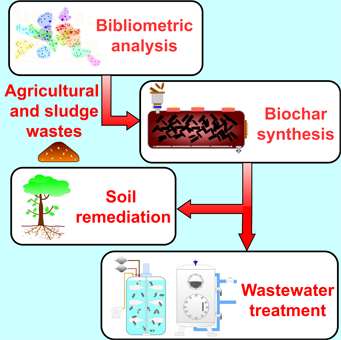
- heightened research focus on biochar's ability to remove nanoscale MPs, given their significant risks to human health. However, detecting nanoplastics (NPs) in environmental matrices remains a challenge, necessitating advanced analytical techniques [30]. Additional keywords emerging from 2022 to 2024, such
- towards nanoscale MP removal due to their hazardous implications. However, NP detection remains complex, requiring state-of-the-art methodologies [30]. For soil matrices, studies aim to enhance soil properties, enzyme activity and beneficial microbial communities, ultimately improving crop productivity
- ]. These findings indicate that while different treatment models exhibit varying efficiency, the removal of nanoscale MPs predominantly depends on functional group interactions within biochar. The presence of functional groups in AZP such as C–H, C–O, C=C, N–H, Al–O, and Si–O, along with its graphite-like



Parylene-coated platinum nanowire electrodes for biomolecular sensing applications
Beilstein J. Nanotechnol. 2025, 16, 1392–1400, doi:10.3762/bjnano.16.101
- University, Baltimore, MD 21234, USA Department of Electrical and Computer Engineering, Morgan State University, Baltimore, MD 21234, USA Department of Electrical and Computer Engineering, Cornell University, Ithaca, NY 14850 USA 10.3762/bjnano.16.101 Abstract Nanoscale biosensors have gained attention in
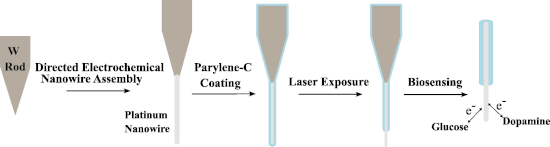
- recent years due to their unique characteristics and size. Manufacturing steps, cost, and other shortcomings limit the widespread use and commercialization of nanoscale electrodes. In this work, a nano-size electrode fabricated by directed electrochemical nanowire assembly and parylene-C insulation is
- testing with glucose and dopamine demonstrate limits of detection of 30 nM and 0.01 mM, respectively. The R-squared values for peak current versus concentration are 0.985 and 0.994, indicating strong linear correlations. These nanoscale electrodes hold great promise for single-cell biosensing applications


Enhancing the therapeutical potential of metalloantibiotics using nano-based delivery systems
Beilstein J. Nanotechnol. 2025, 16, 1350–1366, doi:10.3762/bjnano.16.98
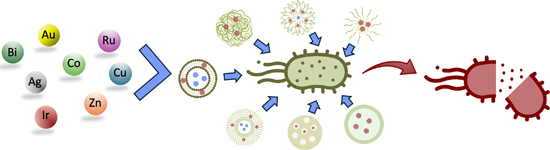
- .; Liu, G. Nanoscale 2025, 17, 5605–5628. doi:10.1039/D4NR04774E ]. This review explores the potential of encapsulated metalloantibiotics as a new frontier in antimicrobial therapy. We address the mechanisms by which drug delivery systems can stabilize and direct metalloantibiotics to their biological


Ferroptosis induction by engineered liposomes for enhanced tumor therapy
Beilstein J. Nanotechnol. 2025, 16, 1325–1349, doi:10.3762/bjnano.16.97
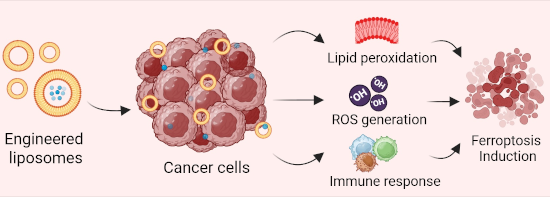
- advantages and impact on cancer therapy and diagnosis [17]. Therapies based on nanotechnology, such as the progressive delivery of nanoscale drugs, can provide precisely targeted treatment of malignant tissue with fewer side effects than traditional approaches [5][18]. Key benefits of nanodrug delivery


Deep-learning recognition and tracking of individual nanotubes in low-contrast microscopy videos
Beilstein J. Nanotechnol. 2025, 16, 1316–1324, doi:10.3762/bjnano.16.96
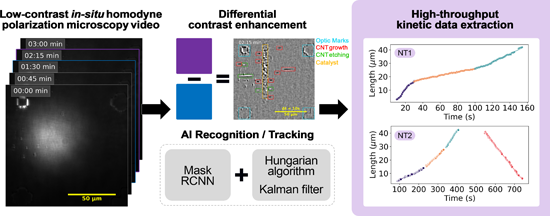
- overall performance, although potentially reducing recognition accuracy. Automating recognition and tracking is essential for high-throughput video analysis, which is critical for understanding and modeling complex nanoscale phenomena. The differential video treatment approach, combined with the deep


Wavelength-dependent correlation of LIPSS periodicity and laser penetration depth in stainless steel
Beilstein J. Nanotechnol. 2025, 16, 1302–1315, doi:10.3762/bjnano.16.95
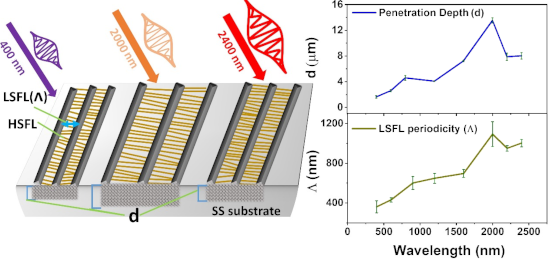
- ); maximum LIPSS; penetration depth; Introduction Nanostructuring on surfaces plays a pivotal role in governing surface properties, and laser-induced periodic surface structures (LIPSS) have emerged as a potent method for achieving nanoscale surface modifications. Over the past decade, LIPSS and laser
- first time, we demonstrated the fabrication of ladder-like LIPSS over a large area, with controllable periodicities ranging from 250 to 1200 nm by selecting the appropriate femtosecond laser irradiation wavelength. These controlled nanoscale LIPSS can be created over a large surface area, limited only




Acrocomia aculeata oil-loaded nanoemulsion: development, anti-inflammatory properties, and cytotoxicity evaluation
Beilstein J. Nanotechnol. 2025, 16, 1277–1288, doi:10.3762/bjnano.16.93
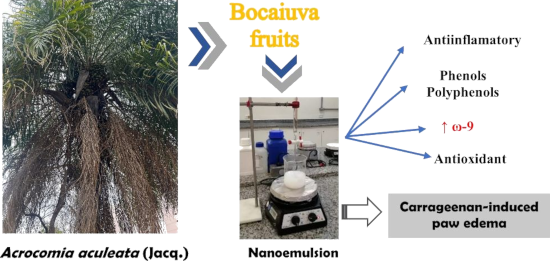
- counterpart [47]. The superior pharmacological response of the nanoemulsion may be attributed to the nanoscale droplet size, which increases the surface area-to-volume ratio, enhances solubility and stability, and promotes rapid absorption and cellular uptake [56]. The nanometric scale facilitates more


Better together: biomimetic nanomedicines for high performance tumor therapy
Beilstein J. Nanotechnol. 2025, 16, 1246–1276, doi:10.3762/bjnano.16.92
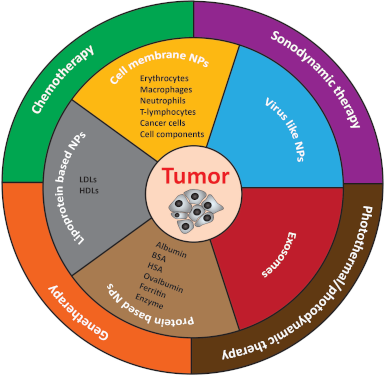
- release behavior, targeting ability, and surface modifications [12][13][14][15]. A variety of nanoparticles have been researched including liposomes, polymer NPs, solid lipid NPs, and hybrid NPs [16]. Nanoscale drug carriers with the advantage of high penetration, long circulation, and significant






Functional bio-packaging enhanced with nanocellulose from rice straw and cinnamon essential oil Pickering emulsion for fruit preservation
Beilstein J. Nanotechnol. 2025, 16, 1234–1245, doi:10.3762/bjnano.16.91
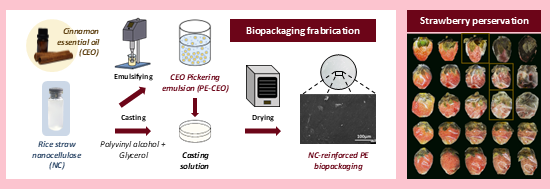
- ]. Encapsulation strategies, like Pickering emulsions (PEs) stabilized by bio-based particles, address these challenges [37]. Nanocellulose is a promising candidate for stabilizing Pickering emulsions because of its high surface area, nanoscale dimensions, and amphiphilic nature [20]. This not only improves the




Hydrogels and nanogels: effectiveness in dermal applications
Beilstein J. Nanotechnol. 2025, 16, 1216–1233, doi:10.3762/bjnano.16.90
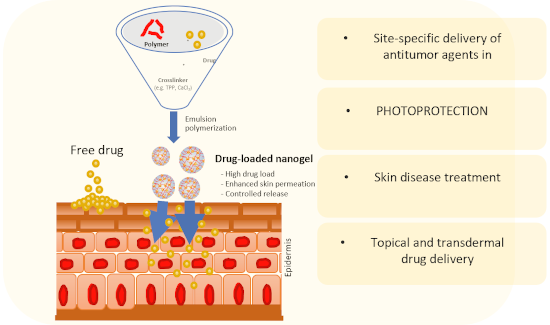
- prevention of the spontaneous combustion of coal [29]. The development of chemically functional materials on the nanoscale appears to be of fundamental importance when it comes to health applications. Nanogels are an excellent alternative for the manufacture of biomaterials due to their physical and chemical
- [158] and surface chemical functionalization [159], which helps to achieve high drug levels at the target site. Several strategies have been developed to obtain nanoscale or micrometric gels instead of macroscopic networks formed by a simple gelation process [20][160][161]. In emulsion polymerization
- polymerization before forming a continuous gel, the formation of small branched polymers at the nanoscale is favored over microgels [163]. This occurs because the growing chains are further apart, which makes bonds between different chains (intermolecular) more difficult and favors bonds within the same chain


Mechanical stability of individual bacterial cells under different osmotic pressure conditions: a nanoindentation study of Pseudomonas aeruginosa
Beilstein J. Nanotechnol. 2025, 16, 1171–1183, doi:10.3762/bjnano.16.86
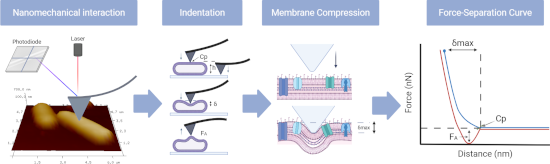
- sample at the nanoscale. The force applied by the AFM tip on the sample is controlled by monitoring the deflection of an extremity of a micrometer mechanical lever onto which the tip is attached. In the study of pathogens, AFM excels in providing high-resolution topographic images while measurements are
- hypertonic conditions. Force–volume AFM demonstrated its capacity for testing the mechanical properties of multiple bacteria at once. This mechanical nanoscale mapping allowed us to successfully discriminate the minute variations in the surface topography of bacteria (h), their mechanical resistance to


Crystalline and amorphous structure selectivity of ignoble high-entropy alloy nanoparticles during laser ablation in organic liquids is set by pulse duration
Beilstein J. Nanotechnol. 2025, 16, 1141–1159, doi:10.3762/bjnano.16.84
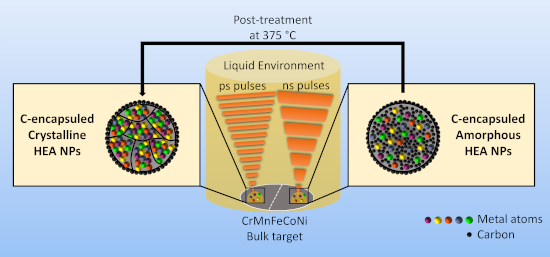
- can be classified as a kinetically controlled synthesis method, with thermodynamic contributions at the nanoscale which set the final NP structure during cooling [68]. Hence, thermodynamically metastable NP structures are generated, which are stable at elevated temperatures [69] and even under harsh
- ]. Those rules are very high cooling rates, the presence of at least three constituting elements, atomic size differences over 12%, a significant negative heat of mixing of major elements, small material dimensions (preferably at the nanoscale, favoring high cooling rates), and post-processing effects