Search results
Search for "nanowires" in Full Text gives 335 result(s) in Beilstein Journal of Nanotechnology. Showing first 200.
Electrostatic pull-in application in flexible devices: A review
Beilstein J. Nanotechnol. 2022, 13, 390–403, doi:10.3762/bjnano.13.32
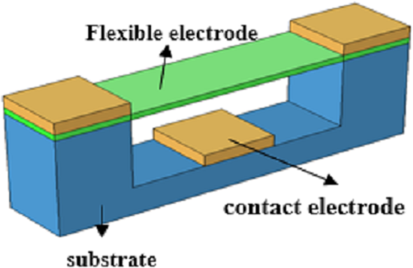
- structure of the flexible devices. Nanoelectromechanical (NEM) switches made of carbon nanotubes (CNTs) [2][3][4], graphene (GR) [5][6][7], nanowires (NWs) [8][9][10], and other flexible materials are the most basic devices for a variety of component and system level applications, such as low-loss switches
- electrode materials include CNTs, GR, and silicon/germanium nanowires. CNT-NEM switches CNTs are an ideal flexible material for NEM electrodes because of the high aspect ratio, current density, and excellent tensile strength. In 2000, Rueckes et al. [13] observed the electromechanical conversion in CNTs for
- can greatly simplify the circuit volume of traditional PN junctions and increase the circuit integration. NWs-NEM switches Single-crystal nanowires are excellent candidates for NEM switches due to their uniform chemical and physical structure, and good reproducibility of structure and composition


Plasma modes in capacitively coupled superconducting nanowires
Beilstein J. Nanotechnol. 2022, 13, 292–297, doi:10.3762/bjnano.13.24
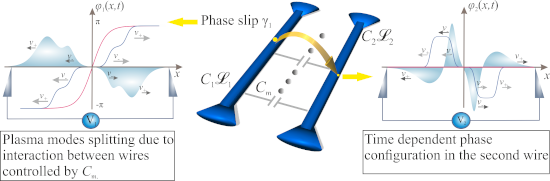
- Moscow, Russia Institute for Quantum Materials and Technologies, Karlsruhe Institute of Technology (KIT), 76021 Karlsruhe, Germany 10.3762/bjnano.13.24 Abstract We investigate plasma oscillations in long electromagnetically coupled superconducting nanowires. We demonstrate that in the presence of inter
- the low-temperature behavior of the systems under consideration. Keywords: plasma modes; quantum fluctuations, quantum phase slips; superconducting nanowires; Introduction Physical properties of ultrathin superconducting nanowires differ strongly from those of bulk superconductors owing to a
- |Δ| in superconducting nanowires one finds [5]: where Rξ is the normal-state resistance of the wire segment of length equal to the superconducting coherence length ξ and Rq = 2π/e2 ≃ 25.8 kΩ is the quantum resistance unit. For generic metallic nanowires one typically has Rξ ≪ Rq, implying that


Investigation of a memory effect in a Au/(Ti–Cu)Ox-gradient thin film/TiAlV structure
Beilstein J. Nanotechnol. 2022, 13, 265–273, doi:10.3762/bjnano.13.21
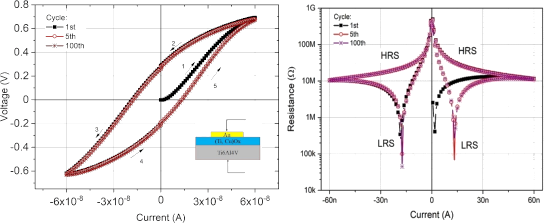
- [2][21][39]. Some examples of resistive switching behavior were also found in structures based on nanowires [40] or nanotubes [25][40], where the resistive switching device is characterized by the presence of a pinched or nonpinched hysteresis loop in the I–V characteristics in the DC plane. Our



Engineered titania nanomaterials in advanced clinical applications
Beilstein J. Nanotechnol. 2022, 13, 201–218, doi:10.3762/bjnano.13.15
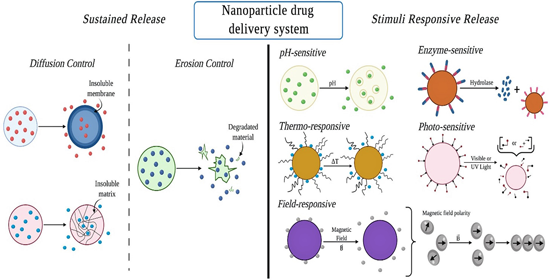
- nanostructures such as nanotubes and nanowires have been utilized in photoelectrochemical sensing for the rapid and precise identification of biological analytes at low concentrations, useful for clinical diagnosis. These nanostructures have been employed for sensing humidity, oxygen, and hydrogen, inclusive of
- , were also used to improve the titania implant properties, and the material showed significant antibacterial activity against Staphylococcus aureus with sustained release of vancomycin [64]. Furthermore, the biological activity of TiO2 nanowires, nanofibres, and nanoneedles, was investigated and
- compared to that of Ti6Al4V, which is typically utilized in implants. Results revealed that more fibroblast cells proliferated on all specimens of nanofibers as well as on the nanowires arrays when the incubation period was increased; however, this behavior was not observed in the case of nanoneedles [65


Topographic signatures and manipulations of Fe atoms, CO molecules and NaCl islands on superconducting Pb(111)
Beilstein J. Nanotechnol. 2022, 13, 1–9, doi:10.3762/bjnano.13.1
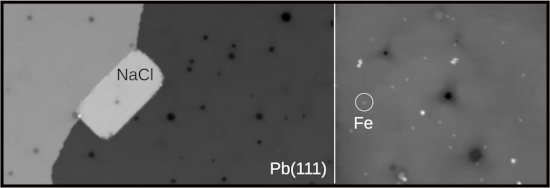
- between two materials, exhibiting particle–hole symmetry and spin–orbit interaction [8]. Among the most promising platforms to realize MZMs are semiconducting nanowires with large spin–orbit coupling [9][10][11][12] or atomic chains [13][14][15][16][17][18] in proximity to an s-wave superconductor. The


Chemical vapor deposition of germanium-rich CrGex nanowires
Beilstein J. Nanotechnol. 2021, 12, 1365–1371, doi:10.3762/bjnano.12.100
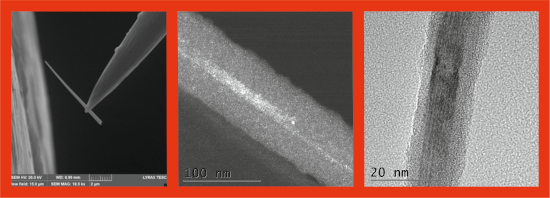
- Sciences, Chaberská 1014/57, 182 51 Prague 8, Czech Republic 10.3762/bjnano.12.100 Abstract Chemical vapor deposition was applied to synthetize nanostructured deposits containing several sorts of nanoobjects (i.e., nanoballs, irregular particles, and nanowires). Analytical techniques, that is, high
- . The nanowires possessed a complex structure, namely a thin crystalline germanium core and amorphous CrGex coating. The composition of the nanowire coating was [Cr]/[Ge] = 1:(6–7). The resistance of the nanowire–deposit system was estimated to be 2.7 kΩ·cm using an unique vacuum contacting system
- reasonable choice for DMS alloys with chromium for the best compatibility with silicon-based industry. However, precipitation of transition metals is the main obstacle; but in low-dimensional semiconductors the precipitation is significantly reduced. Therefore, CrGe nanowires (NWs) were prepared to study



Morphology-driven gas sensing by fabricated fractals: A review
Beilstein J. Nanotechnol. 2021, 12, 1187–1208, doi:10.3762/bjnano.12.88
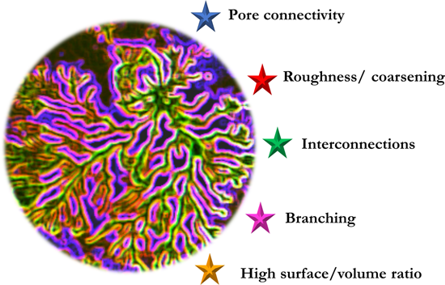
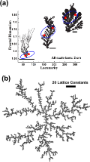
- metal oxide (SMO) sensors are most popular due to their low cost, simplicity, easy fabrication, and wide range of gas detection capabilities [9]. Thin films and nanostructures exhibit better sensing characteristics. Various researchers have reported structures with morphologies such as nanowires (NWs
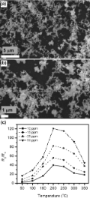
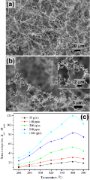
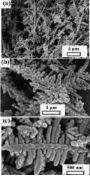
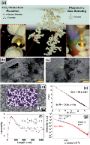
- sample, exhibiting a combination of hillocks and pores, showed the maximum sensitivity (S = 0.29) towards NO2. Another study reported dendritic nanowires (DNWs) of SnO2 on a gold-coated silicon substrate for NO2 sensing [66]. The samples were prepared by evaporation–condensation. Figure 6a and Figure 6b
- not subject to CC BY 4.0. SnO2 dendritic nanowires. SEM images of SnO2 DNWs at low (a) and high (b) magnifications, respectively. (c) The sensitivity versus temperature curve for 10–50 ppm NO2. Figure 6a–c was reprinted from [66], Journal of Alloys and Compounds, vol. 510, by S.H. Mohamed, “SnO2










Self-assembly of amino acids toward functional biomaterials
Beilstein J. Nanotechnol. 2021, 12, 1140–1150, doi:10.3762/bjnano.12.85
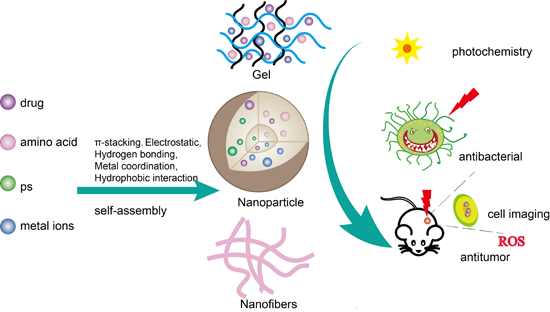
- various nanostructures, such as nanowires [17], nanofibers [18], nanospheres [19], nanovesicles [20], nanogels [21], nanobelts [22], and nanotubes [23]. Self-assembly not only conveys higher stability and mechanical strength to proteins and peptides, but also further enhances their natural activity and

Assessment of the optical and electrical properties of light-emitting diodes containing carbon-based nanostructures and plasmonic nanoparticles: a review
Beilstein J. Nanotechnol. 2021, 12, 1078–1092, doi:10.3762/bjnano.12.80
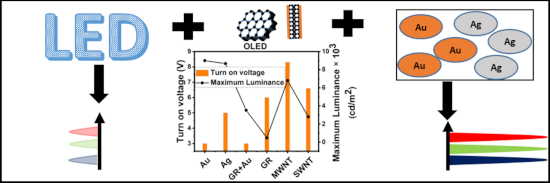
- of ITO. Furthermore, a decrease in sheet resistance (from 500 to 30 Ω) when Ag nanowires are added to graphene increases the ability of graphene to function as a current-spreading layer [43]. Equivalent to Ag, SPR of AuNP can also be applied to the anode in order to enhance the overall EL of the LED


Revealing the formation mechanism and band gap tuning of Sb2S3 nanoparticles
Beilstein J. Nanotechnol. 2021, 12, 1021–1033, doi:10.3762/bjnano.12.76
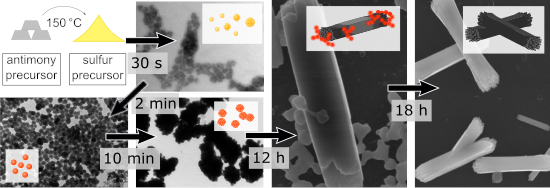
- findings suggest a fiber-like growth at the tips and a layered growth around the individual bristles and the whole rod. However, the particles did not seem to be bundles of nanowires, leading to the assumption that the different, fiber-like growing parts of one particle were fusing. Since the tips remained


Uniform arrays of gold nanoelectrodes with tuneable recess depth
Beilstein J. Nanotechnol. 2021, 12, 957–964, doi:10.3762/bjnano.12.72
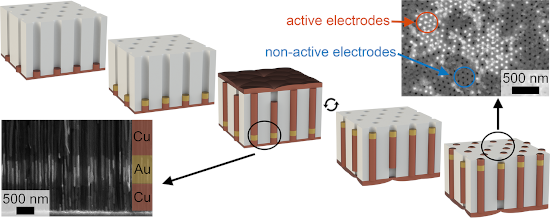
- same time, only a minor part of nanowires is known to grow through the whole thickness of a template when potentiostatic electrodeposition is used [22][23][24][25]. Not only electrodeposition conditions but also thickness and structural defects in the AAO template influence the completeness of the
- surface in the proposed NEAs. At the third stage (Figure 1c), Cu was grown until the nanowires reached the AAO top surface and a continuous metal layer was formed on it. This Cu layer served as current collector during operation of the Au NEAs. Finally, the initial Cu current collector and the first Cu
- surface. Segment 3 – copper At this step, a key quality parameter is the percentage of pores filled by the metals completely from the bottom to the top of the AAO template. Only nanowires in this type of pores can take part in an electrochemical reaction during the operation of the NEAs because only these


The role of deep eutectic solvents and carrageenan in synthesizing biocompatible anisotropic metal nanoparticles
Beilstein J. Nanotechnol. 2021, 12, 924–938, doi:10.3762/bjnano.12.69

- nanowires through a NaBH4-assisted rapid reduction of HAuCl4 in a DES (mixture of reline and ethaline) [94]. The strong coordination of [AuCl4]− in reline exhibited a sixfold enhanced catalytic activity. Apart from the high catalytic activity, nanoparticles produced in DESs showed no cytotoxicity in vitro


The role of convolutional neural networks in scanning probe microscopy: a review
Beilstein J. Nanotechnol. 2021, 12, 878–901, doi:10.3762/bjnano.12.66
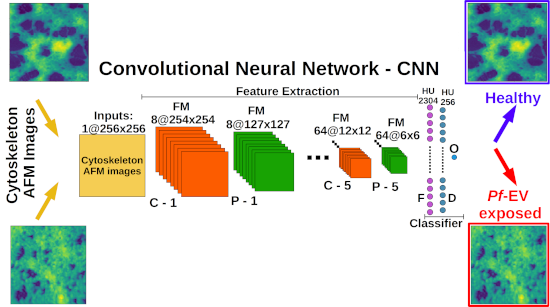
- image types was achieved, such as in images of cells and worms, enabling efficient cell-counting and viability prediction, as well as of silver nanowires. Image classification and segmentation CNNs are popular for cell classification. A CNN model based on actin-labeled fluorescence microscopy images








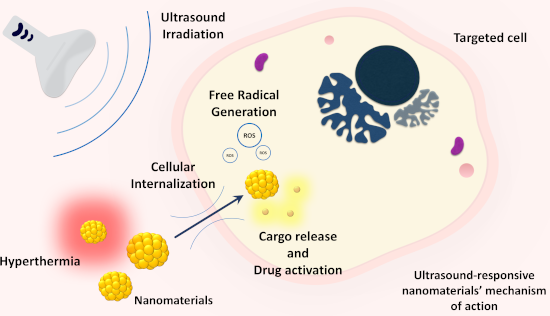
Comprehensive review on ultrasound-responsive theranostic nanomaterials: mechanisms, structures and medical applications
Beilstein J. Nanotechnol. 2021, 12, 808–862, doi:10.3762/bjnano.12.64


Recent progress in magnetic applications for micro- and nanorobots
Beilstein J. Nanotechnol. 2021, 12, 744–755, doi:10.3762/bjnano.12.58
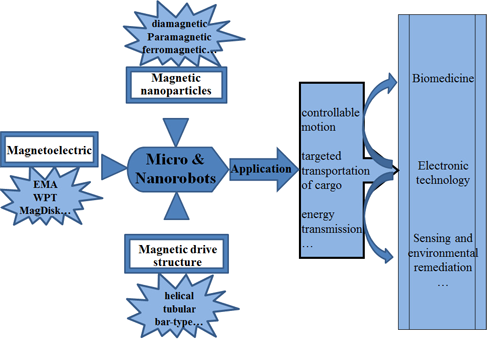
- magnetoelectric core–shell composite nanowires had a magnetostrictive core and a piezoelectric shell, and it exhibited a strain-mediated magnetoelectric effect. In terms of device design and manufacturing, this biphasic core–shell configuration offered greater flexibility than single-phase magnetoelectric
- trigger drug release. The fabrication method of Chen’s team yielded not only easily adjustable length and diameter of the nanowires, but also excellent interface coupling between the piezoelectric and magnetostrictive phases. It enabled precise magnetic manipulation on patterned surfaces and 3D swimming
- also showed greater stability and faster rate of stabilization [87]. There are also differences in the form of the magnetic field. Chen et al. [76] introduced a type of conical rotating magnetic field for actuating a 3D propulsion mode for nanowires, when studying hybrid magnetoelectric nanowires for


Electromigration-induced formation of percolating adsorbate islands during condensation from the gaseous phase: a computational study
Beilstein J. Nanotechnol. 2021, 12, 694–703, doi:10.3762/bjnano.12.55
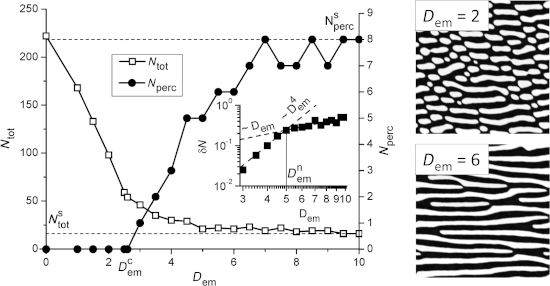
- [42], control of surface roughness [43] and morphology of islands or nanowires [26][44][45][46][47], as well as control of adsorbate transfer to graphene [48]. Thus, the effects of EM induced by the presence of a potential difference on opposite sides of the substrate can significantly affect the


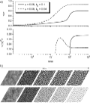


![[Graphic 29]](/bjnano/content/inline/2190-4286-12-55-i36.svg?max-width=637&scale=1.18182) on the adsorption coefficient α ...
on the adsorption coefficient α ...

Nanogenerator-based self-powered sensors for data collection
Beilstein J. Nanotechnol. 2021, 12, 680–693, doi:10.3762/bjnano.12.54
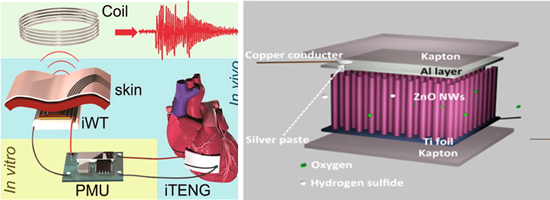
- direction of future medicine. Zhang et al. [31] developed a self-powered implantable blood glucose meter based on the piezo-enzymatic-reaction coupling effect of GOx@ZnO (GOx: glucose oxidase) nanowires. By collecting the mechanical energy generated by human movement, the output voltage provided information
- . Lee et al. proposed a based Hg2+ ion sensor based on ZnO nanowires and carbon nanotubes for detecting toxic pollutants [17]. The ZnO nanowire (NW) array acted as power source. When Hg2+ ions were detected, the system powered a light-emitting diode (LED). Li et al. designed a self-powered heavy metal
- largely influenced by the surface carrier density on the surface of the nanowires. The adsorption of gas molecules can change the surface carrier density by the shielding effect, so the output of the sensor is very sensitive to the gas concentration. Compared with traditional metal oxide semiconductor




A review of defect engineering, ion implantation, and nanofabrication using the helium ion microscope
Beilstein J. Nanotechnol. 2021, 12, 633–664, doi:10.3762/bjnano.12.52
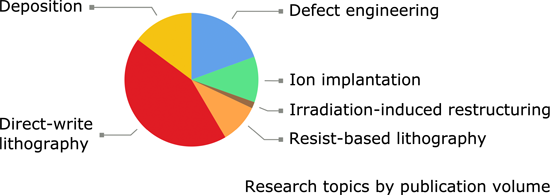
- into the YBCO thin film and thus be used to define precise sample geometries, without material removal. For example, high-dose irradiation over larger areas leaving a narrow gap in between has been used to define YBCO nanowires, which were then line-irradiated at lower dose to form nanowire-based
- properties Further defect engineering studies using the HIM have been concerned with tuning the thermal properties of materials. The first example of this demonstrated site-selective engineering of thermal conductivity along the length of individual nanowires [70]. Here, Zhao et al. irradiated discrete
- sections of free-standing crystalline silicon nanowires of 160 nm diameter to a series of target doses. It was found that a dramatic decrease in thermal conductivity occurred already at relatively low doses, corresponding to point defect concentrations of only a few percent. This result indicated a strong


High-yield synthesis of silver nanowires for transparent conducting PET films
Beilstein J. Nanotechnol. 2021, 12, 624–632, doi:10.3762/bjnano.12.51
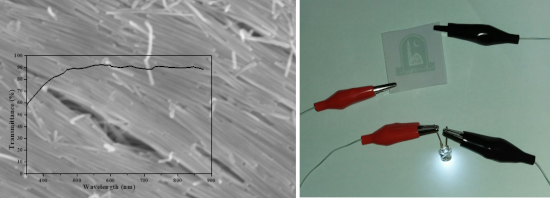
- & Optoelectronics Laboratory (AFMOL), Department of Physics, Faculty of Science, King Khalid University, Abha 9004, Saudi Arabia Center of Research Excellent in Desalination & Water Treatment, King Fahd University of Petroleum and Minerals, Dhahran 31261, Saudi Arabia 10.3762/bjnano.12.51 Abstract Silver nanowires
- optoelectronics. Keywords: silver nanowires; high yield; visible luminescence; PET film; transmittance; sheet resistance; Introduction Several optoelectronic devices, such as solar cells, touch screens, LC displays, organic EL panels, light-emitting diodes, and organic light emitting diodes, use transparent
- , carbon nanotubes (CNT), conductive polymers, and metallic nanowires, have been tested commercially as alternative to ITO films for flexible optoelectronic devices [6][7][8][9]. Amongst them, graphene and carbon materials, particularly CNTs, display low optical transparency and high sheet resistance owing


Properties of graphene deposited on GaN nanowires: influence of nanowire roughness, self-induced nanogating and defects
Beilstein J. Nanotechnol. 2021, 12, 566–577, doi:10.3762/bjnano.12.47
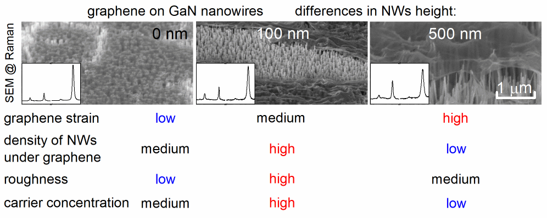
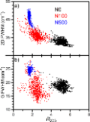
- Institute of Physics, Polish Academy of Sciences, Al. Lotnikow 32/46, 02-668, Warsaw, Poland 10.3762/bjnano.12.47 Abstract We present detailed Raman studies of graphene deposited on gallium nitride nanowires with different variations in height. Our results indicate that different density and height of
- nanowires impact graphene properties such as roughness, strain, and carrier concentration as well as density and type of induced defects. Tracing the manifestation of those interactions is important for the application of novel heterostructures. A detailed analysis of Raman spectra of graphene deposited on
- different nanowire substrates shows that bigger differences in nanowires height increase graphene strain, while a higher number of nanowires in contact with graphene locally reduces the strain. Moreover, the value of graphene carrier concentration is found to be correlated with the density of nanowires in




A review on nanostructured silver as a basic ingredient in medicine: physicochemical parameters and characterization
Beilstein J. Nanotechnol. 2021, 12, 440–461, doi:10.3762/bjnano.12.36
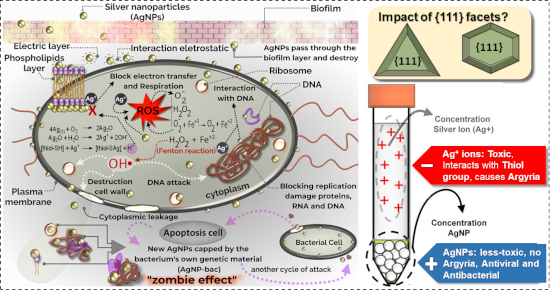
- growth of AgNPs with various morphologies, such as nanocubes, nanowires, and nanospheres, as shown in Table 3 [139][140][142]. Minimum requirements for AgNP quality control The physical and chemical properties of nanoparticles are important for the study of their behavior, biodistribution, safety, and
- interactions with cells and living organisms. Multidisciplinary teams are essential to pave the way for the future use of AgNPs in living beings. Scanning electron microscope (SEM) with different morphologies: (A) bipyramidal, (B) nanowires, (C) nanocubes and transmission electron microscopy (TEM) micrographs


Spontaneous shape transition of MnxGe1−x islands to long nanowires
Beilstein J. Nanotechnol. 2021, 12, 366–374, doi:10.3762/bjnano.12.30
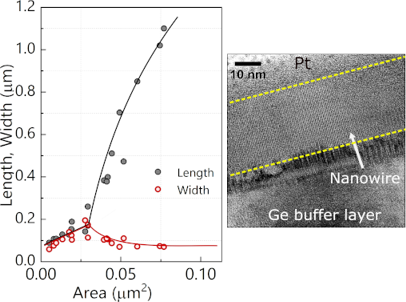
- spontaneous shape transition, from regular islands to elongated nanowires, upon high-temperature annealing of a thin Mn wetting layer evaporated on Ge(111). We demonstrate that 4.5 monolayers is the critical thickness of the Mn layer, governing the shape transition to wires. A small change around this value
- modulates the geometry of the nanostructures. The Mn–Ge alloy nanowires are single-crystalline structures with homogeneous composition and uniform width along their length. The shape evolution towards nanowires occurs for islands with a mean size of ≃170 nm. The wires, up to ≃1.1 μm long, asymptotically
- literature for other heteroepitaxial systems. Our study gives experimental evidence for the spontaneous formation of spatially uniform and compositionally homogeneous Mn-rich GeMn nanowires on Ge(111). The reliable and simple synthesis approach allows one to exploit the room-temperature ferromagnetic


Paper-based triboelectric nanogenerators and their applications: a review
Beilstein J. Nanotechnol. 2021, 12, 151–171, doi:10.3762/bjnano.12.12
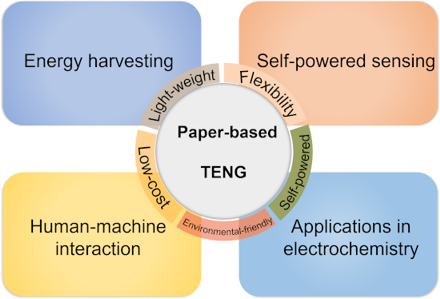
- ., metal nanowires, conducting polymers, carbon nanotube (CNT) inks, multiwall carbon nanotube (MWCNT) inks, and reduced graphene oxide) [69][70][71][72][73][74][75][76][77][78][79][80][81][82], can be easily absorbed or used as a coating layer on the surface of the paper due to its wettability and
- main materials utilized on those P-TENGs were commercial tissue paper and silver nanowires (Ag NWs), which were key to their feasibility. The P-TENGs were built with two conductive paper pieces as the electrodes, which were sandwiched between two commercial tissue paper pieces. Three basic operation






A review on the green and sustainable synthesis of silver nanoparticles and one-dimensional silver nanostructures
Beilstein J. Nanotechnol. 2021, 12, 102–136, doi:10.3762/bjnano.12.9
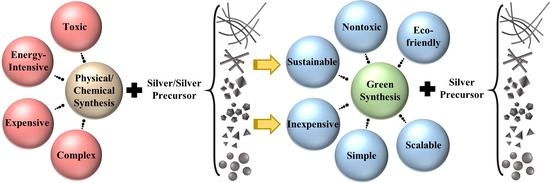
- -field effect and localized surface plasmon resonance (LSPR) [32]. There are several applications in which use of 1D silver nanostructures such as nanowires (NWs) and nanorods (NRs) (at the same concentration) are preferred to other nanostructures due to stronger conductivity. For instance, 1D silver
- nanostructures can provide desired electrical characteristics in conductive adhesives at lower concentrations compared to other silver nanostructures and micrometer-sized ones [88]. The research being conducted on the synthesis of silver nanowires (AgNWs) is currently gaining a lot of attention due to their


Bio-imaging with the helium-ion microscope: A review
Beilstein J. Nanotechnol. 2021, 12, 1–23, doi:10.3762/bjnano.12.1