Search results
Search for "nucleation" in Full Text gives 379 result(s) in Beilstein Journal of Nanotechnology. Showing first 200.
Upscaling the urea method synthesis of CoAl layered double hydroxides
Beilstein J. Nanotechnol. 2023, 14, 927–938, doi:10.3762/bjnano.14.76
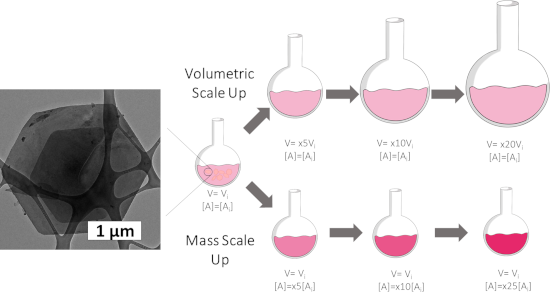
- alkalinization rates and, concomitantly, the precipitation, even under recrystallization at high temperatures. In contrast, for the tenfold mass scale-up, similar morphological features were observed and assigned to changes in nucleation and growth. However, at higher concentrations, simonkolleite-like Co-based
- alkalinization rate, which (mainly) controls the nucleation and growth processes, and therefore particle size, morphology, and crystallinity [33][36][37]. Attempts to upscale the production of LDHs included incrementing the concentration of the reactants [38][39], the use of large-scale reactors [40][41], byway
- differences in the nucleation and growth processes because of increased concentration and ionic strength of the reagents, modifying the whole precipitation process [33]. However, the differences are surprising in the case of the volumetric scale-up approach where the initial concentrations were kept constant


Two-dimensional molecular networks at the solid/liquid interface and the role of alkyl chains in their building blocks
Beilstein J. Nanotechnol. 2023, 14, 872–892, doi:10.3762/bjnano.14.72
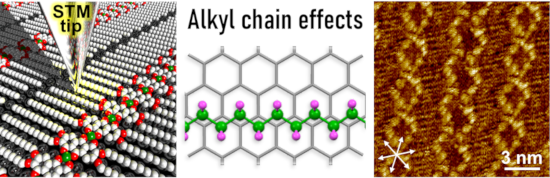
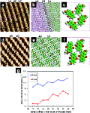
- proposed to act as precursors for nucleation on the surface, resulting in the induction of handedness in the 2D network. Chiral network formation was also demonstrated by installing chiral alkyl chains in the DBA [148][149][150][151] and 5-(benzyloxy)isophthalic acid cores [152]. 7 Other effects 7.1









Control of morphology and crystallinity of CNTs in flame synthesis with one-dimensional reaction zone
Beilstein J. Nanotechnol. 2023, 14, 741–750, doi:10.3762/bjnano.14.61
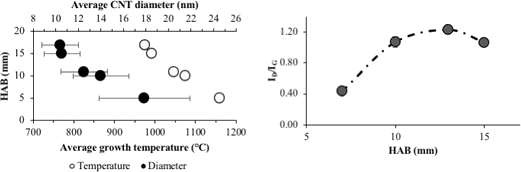
- graphene sheets on the surface [18][19]. In flame synthesis, the rapid heating rate causes catalytic activation and nucleation to occur almost instantaneously by the arrangement of carbon atoms on the surface of catalyst nanoparticles, leading to cap formation and liftoff. Figure 2b and Figure 2d show


ZnO-decorated SiC@C hybrids with strong electromagnetic absorption
Beilstein J. Nanotechnol. 2023, 14, 565–573, doi:10.3762/bjnano.14.47
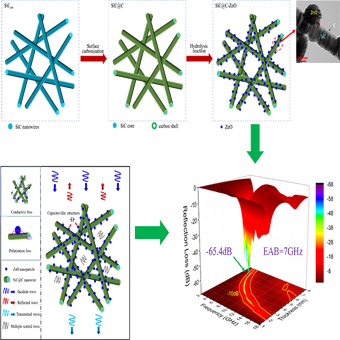
- amorphous state (Figure 2e). The carbon shell may have a positive effect on the nucleation of ZnO particles. This is because oxygen-containing functional groups (such as carboxyl and hydroxy groups) and structural defects are generated on the SiC@C surface during the in situ carbonization [24], which both
- hybrids can be adjusted by changing the dosage of ZnNO3·6H2O. The amorphous carbon shell has a significant effect on the nucleation of crystalline ZnO particles, possibly due to oxygen-containing functional groups (such as carboxyl and hydroxy groups) and defects on the SiC@C surface, which both provide


Plasmonic nanotechnology for photothermal applications – an evaluation
Beilstein J. Nanotechnol. 2023, 14, 380–419, doi:10.3762/bjnano.14.33




Polymer nanoparticles from low-energy nanoemulsions for biomedical applications
Beilstein J. Nanotechnol. 2023, 14, 339–350, doi:10.3762/bjnano.14.29
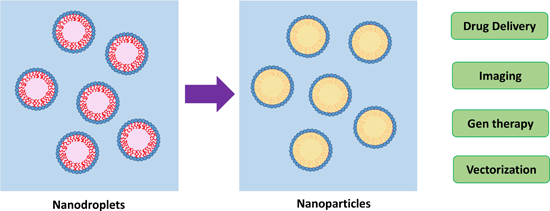
- -emulsification or spontaneous emulsification [16]. Here, one component present in the oil phase diffuses into the aqueous phase, resulting in the formation of metastable oily droplets by local supersaturation produced near the interface followed by oil nucleation. The ouzo effect is an example of this phenomenon




Biocatalytic synthesis and ordered self-assembly of silica nanoparticles via a silica-binding peptide
Beilstein J. Nanotechnol. 2023, 14, 280–290, doi:10.3762/bjnano.14.25
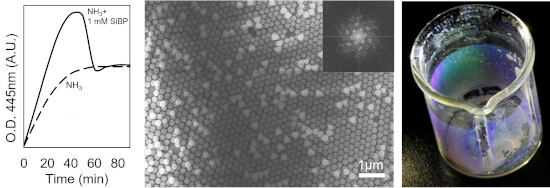
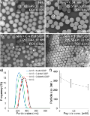
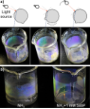
- [17][18]. Because of their interactions with solid surfaces, these peptides have been shown to be able to functionalize nanostructures, catalyze the formation of nanostructures, and modify the nucleation, growth and self-assembly processes [19][20][21][22][23][24]. For this study, we have selected a
- NH3 alone, NH3 + 0.04 mM SiBP, and NH3 + 0.4 mM SiBP, the growth regime followed the classical aggregative growth and monomer addition model [37]. According to this model, at the early stages of the reaction, the dominant regime is homogeneous nucleation of SiO2 particles. The growth continues by
- released silicic acid is then deposited onto particles with larger radius. Evidence of coalescence was observed in our study as well (shown by the arrows in Figure 3 and Figure 4). At later stages of the reaction, when the precursor concentration drops below the nucleation threshold, the dominant regime




Formation of nanoflowers: Au and Ni silicide cores surrounded by SiOx branches
Beilstein J. Nanotechnol. 2023, 14, 133–140, doi:10.3762/bjnano.14.14
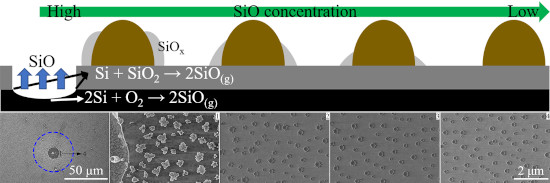
- around particles because they are large enough to provide several nucleation sites [2][3], leading to the shape of flowers. Since SiO vapor can be only formed in the cavities, there is a non-uniform distribution of SiO gas concentration around the cavities. Namely, the closer to the cavities, the higher


Solvent-induced assembly of mono- and divalent silica nanoparticles
Beilstein J. Nanotechnol. 2023, 14, 52–60, doi:10.3762/bjnano.14.6
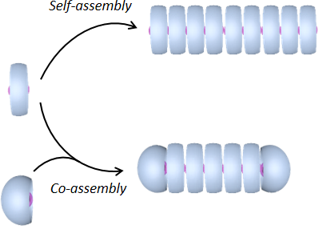
- silica/PS monopods was regrown through successive additions of a small amount of tetraethoxysilane (TEOS) interspersed with centrifugation/redispersion cycles in order to avoid the occurrence of secondary nucleation of silica [30]. Figure 2b–f show the morphology of silica/PS nanoparticles after 1, 2, 4


Two-step single-reactor synthesis of oleic acid- or undecylenic acid-stabilized magnetic nanoparticles by thermal decomposition
Beilstein J. Nanotechnol. 2023, 14, 11–22, doi:10.3762/bjnano.14.2
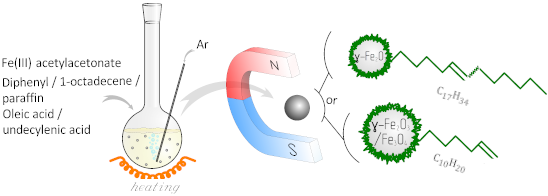
- removal of acetylacetonate ligands, the reaction mixture that undergoes thermolysis contains mixed ligands. The thermal decomposition of such salts at the second stage can significantly affect the processes of particle nucleation, composition, and morphology [26][27]. To estimate the completeness of


Supramolecular assembly of pentamidine and polymeric cyclodextrin bimetallic core–shell nanoarchitectures
Beilstein J. Nanotechnol. 2022, 13, 1361–1369, doi:10.3762/bjnano.13.112
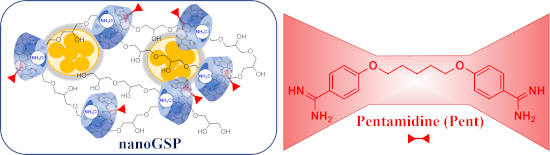
- impressive stability over time and over sterilization procedures, probably due to the colocalization of reduction and nucleation/growing sites during their formation. The stability was maintained or was found to be even higher in PolyCD-capped Au@Ag BMNPs, whereas monometallic Ag NPs produced from PolyCD in
- the same experimental conditions showed poor stability [14]. Although we are currently unable to elucidate the comprehensive mechanism that occurs during the reduction processes, we suppose that the direct reduction of gold ions by PolyCD takes place at sites involved in the nucleation/growing process
- of NPs and that this step is preparatory for the subsequent deposition of the silver shell. Conversely, in the case of monometallic Ag NPs, the reduction of silver ions (usually mediated by ascorbic acid) takes place at sites which are not involved in the nucleation/growing process leading to poorly


Spindle-like MIL101(Fe) decorated with Bi2O3 nanoparticles for enhanced degradation of chlortetracycline under visible-light irradiation
Beilstein J. Nanotechnol. 2022, 13, 1038–1050, doi:10.3762/bjnano.13.91
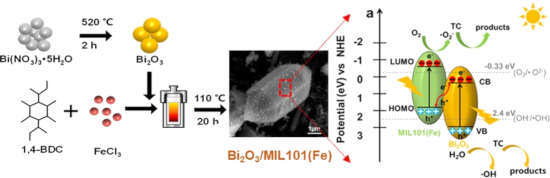
- nucleation rate, (i.e., slow nucleation could increase crystal growth and as a result produce large-sized particles [54]). As a result, Bi2O3 nanoparticles affect the shape and size of MIL101(Fe) and this may be due to the addition of Bi2O3 to the precursor, altering the balance of ligands and simultaneously
- slowing the nucleation rate of MIL101(Fe). To verify the formation of a heterojunction between MIL101(Fe) and Bi2O3, TEM and HRTEM images were obtained. As seen in Figure 3b and Figure 3c, TEM images of BOM-20 confirm that tiny Bi2O3 nanoparticles closely and uniformly adhere to the surface of MIL101(Fe


Electrocatalytic oxygen reduction activity of AgCoCu oxides on reduced graphene oxide in alkaline media
Beilstein J. Nanotechnol. 2022, 13, 1020–1029, doi:10.3762/bjnano.13.89
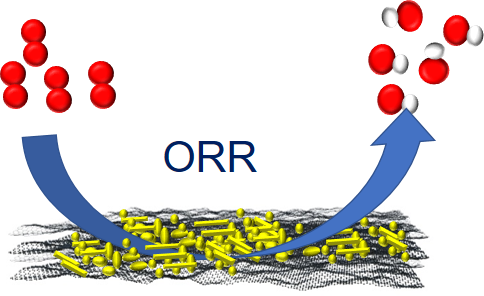
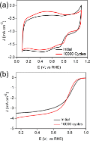
- groups with strong affinity and the scaffolding nature of rGO anchoring trimetallic NPs. The large particle sizes of the trimetallic system could be due to the slower reduction and prolonged nucleation of the constituents. The heterogeneous nature of the electrocatalyst surface is clearly evident from


Hierachical epicuticular wax coverage on leaves of Deschampsia antarctica as a possible adaptation to severe environmental conditions
Beilstein J. Nanotechnol. 2022, 13, 807–816, doi:10.3762/bjnano.13.71
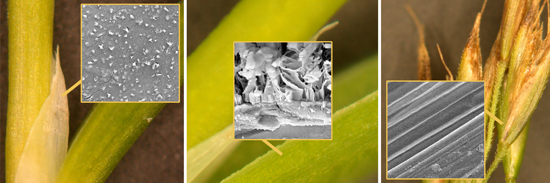
- epicuticular wax structures [36]. It was found that on waxy leaves, icing started from nucleation sites on the surface of wax projections or in nanoscale depressions between them. This is why the real contact area of ice crystals was limited to a few sites at the nanoscale on or between wax projections. After
- . antarctica provides interesting data about surface adaptations in the plant adapted to low temperatures of Antarctica. Two layers of particulate wax observed here may potentially lead to an increase of the freezing time due to the shift of ice nucleation from the cuticle surface to the tips of wax




Recent advances in nanoarchitectures of monocrystalline coordination polymers through confined assembly
Beilstein J. Nanotechnol. 2022, 13, 763–777, doi:10.3762/bjnano.13.67
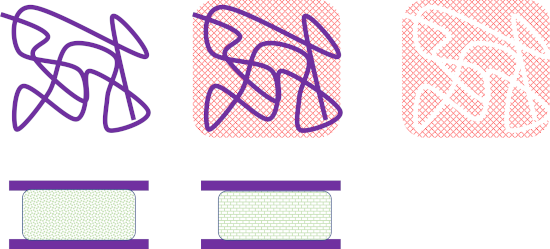
- obtained materials will be evaluated regarding advanced applications in energy, environment, and biology. Review Confined crystallization of monocrystalline coordination polymers Crystallization of single crystals basically involves nucleation and growth stages. During both stages, the assembly of atomic
- ]. The negatively charged biomacromolecules were believed to be one of the key factors to guide nucleation and growth of ZIF-8 crystals. The monocrystalline shells provide specific protection for the relatively weak biomacromolecules. Therefore, the protected biomacromolecules can remain active under
- networks into Prussian blue single crystals, a gradient crystallization environment was built up through using a volatile inhibiting agent [111]. Evaporation of the inhibiting agent naturally forms a vertical gradient in the reactor, forcing nucleation and growth of single crystals inside the network at




Nanoarchitectonics of the cathode to improve the reversibility of Li–O2 batteries
Beilstein J. Nanotechnol. 2022, 13, 689–698, doi:10.3762/bjnano.13.61
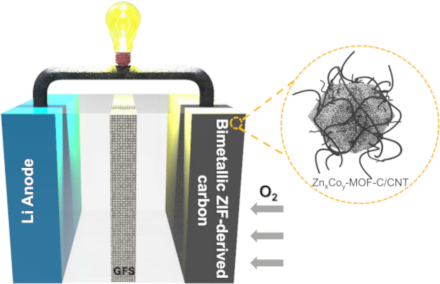
- using Zn and Co acetates, together with 2-methylimidazolate, as described in Figure 1a. The hydrothermal process is beneficial for facilitating the nucleation and growth of bimetallic ZIF as well as reducing the synthesis time. The chemical composition of ZnxCoy particles was controlled by adjusting the
- -step growth mechanism (i.e., nucleation and growth) [39]. The different formation mechanisms are mainly responsible for determining the particle sizes of ZIF-8 and ZIF-67. After carbonization and chemical etching processes, we obtained a series of ZnxCoy–C/CNT composites, as shown in Figure 1e–1g, in
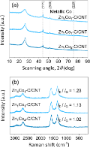


Zinc oxide nanostructures for fluorescence and Raman signal enhancement: a review
Beilstein J. Nanotechnol. 2022, 13, 472–490, doi:10.3762/bjnano.13.40
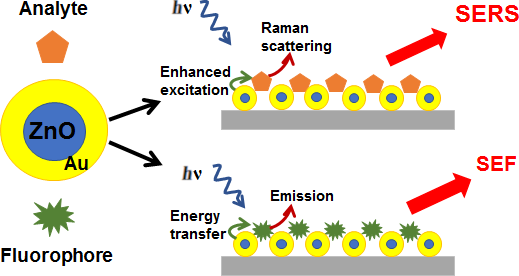
- photochemical reduction [32], pulsed laser-induced photolysis [38], or controlled decoration with Ag NPs using an electroless plating technique [44]. Photochemical synthesis permits the control of nucleation and growth rate without using organic additives. Xu et al. employed laser irradiation of ZnO nanorods in




Investigation of electron-induced cross-linking of self-assembled monolayers by scanning tunneling microscopy
Beilstein J. Nanotechnol. 2022, 13, 462–471, doi:10.3762/bjnano.13.39
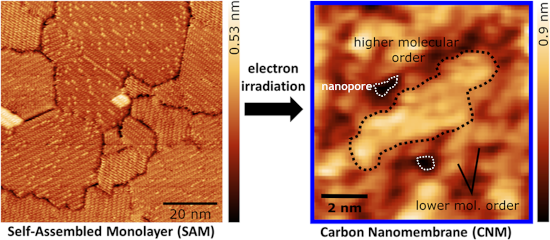
- adatoms exceeds that for critical island nucleation, were observed here. We also found bright features with an apparent height of 1.6 ± 0.2 Å, which does not correspond to the height (≈2.5 Å) of a Au(111) single atomic step. The β-phase is characterized by a mesh of domain boundaries with an apparent


Tubular glassy carbon microneedles with fullerene-like tips for biomedical applications
Beilstein J. Nanotechnol. 2022, 13, 455–461, doi:10.3762/bjnano.13.38
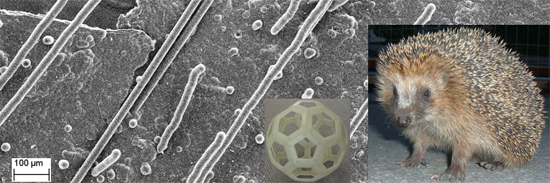
- pyrolysis of methane on a curved alumina surface. The surface provides the catalyst as well as the “strain” required to direct nucleation and growth. Figure 1a is a scanning electron microscopy (SEM) overview image showing a number of glassy carbon microneedles, which grow in the direction of the gas flow
- Figure 2b). Therefore, we consider the most likely growth mechanism to be that proposed by S. Amelinckx and co-workers [16]. Their model explains the formation of multishell closure domes in which nucleation is attributed to the initial formation of fullerene domes. These originate from the “blisters
- pyrolysis. These are transitory species and do not remain in the glassy carbon tubules. The early stages of this process can be seen, in Figure 1b, as the nucleation “blisters” on the surface of the glassy carbon formed on the alumina. These then develop into glassy carbon microneedles. Conclusion In this


A non-enzymatic electrochemical hydrogen peroxide sensor based on copper oxide nanostructures
Beilstein J. Nanotechnol. 2022, 13, 424–436, doi:10.3762/bjnano.13.35
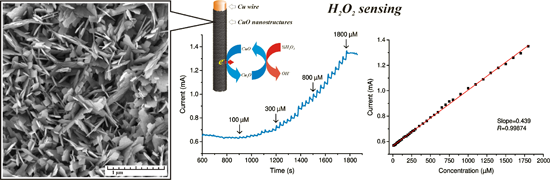
- flower-like nanostructures indicates that their nucleation centre is not located in the plane of the substrate. The formation of spherical structures can be explained as follows: the presence of a large number of OH− ions makes it possible to generate a large number of nucleation centres in solution in a




Interfacial nanoarchitectonics for ZIF-8 membranes with enhanced gas separation
Beilstein J. Nanotechnol. 2022, 13, 313–324, doi:10.3762/bjnano.13.26
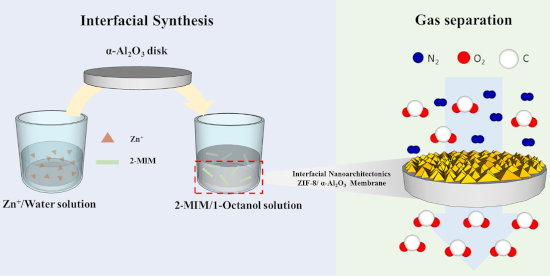
- , the interfacial synthesis method confines the coordination of the MOF to the solvent interface, which ensures good control over MOF nucleation and growth processes [37][38]. Consequently, it is a promising approach to synthesize a defect-free MOF film. In comparison, the counter-diffusion method
- and SEM images of the α-Al2O3 disks are given in Supporting Information File 1, Figure S1. Prior to heterogeneous nucleation of ZIF-8 crystals on the porous α-Al2O3 disks, free-standing ZIF-8 thin films were fabricated to verify the feasibility of continuous ZIF-8 crystal growth via an interfacial
- –f). The formation of a micrometer-thick membrane is consistent with the results of interfacial syntheses of other MOF membranes [39][40]. The crystal growth is known to depend on the solution concentration, which has influence on both the nucleation rate and diffusion rate. As the concentration of 2


Low-energy electron interaction and focused electron beam-induced deposition of molybdenum hexacarbonyl (Mo(CO)6)
Beilstein J. Nanotechnol. 2022, 13, 182–191, doi:10.3762/bjnano.13.13
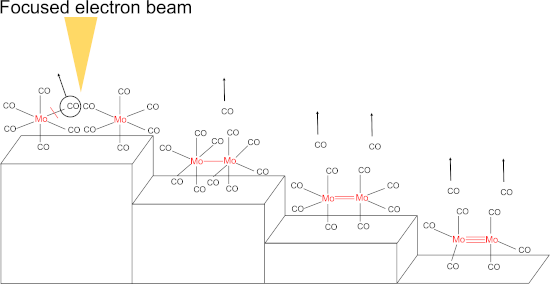
- reduction of the respective compound while ionization through electron removal represents oxidation. Thus, if sufficient proximity is provided, DEA as an initial fragmentation step should provide the prerequisite for metal–metal bond formation and nucleation points for further CO loss as is shown


Thermal oxidation process on Si(113)-(3 × 2) investigated using high-temperature scanning tunneling microscopy
Beilstein J. Nanotechnol. 2022, 13, 172–181, doi:10.3762/bjnano.13.12
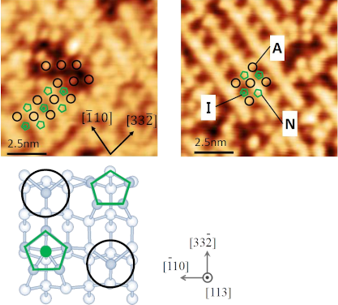
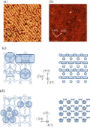
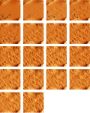
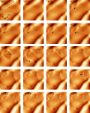
- noted that the nucleation sites of the oxide appear randomly scattered at the middle part of the terrace. There are steps initially both at the upper-left corner and lower-right corner, as indicated by the dotted lines. The circles (b) and (c) also show the initial oxidation sites. The oxide initially
- towards a thin film regime. Conclusion We investigated three oxidation growth modes – oxidation, etching, and transition modes – in the third of which both oxidation and etching occur. Reaction dynamics in the oxidation of Si(113)-(3 × 2) was observed in real time using VT-STM. Nucleation of the oxide and


Sputtering onto liquids: a critical review
Beilstein J. Nanotechnol. 2022, 13, 10–53, doi:10.3762/bjnano.13.2
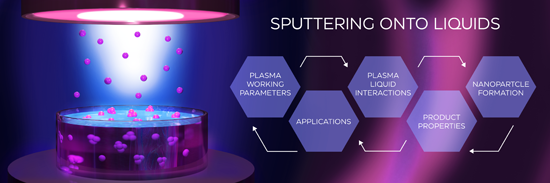
- misunderstanding of physicochemical basics of this technique. For this purpose, a presentation of the underlying processes leading to NP production is first provided. This part is constituted of a brief introduction to (i) sputtering and (ii) the kinetics of NP nucleation and growth in solutions. Then, the
- NPs with desired size, shape, and composition [2]. Colloidal synthesis allows one to obtain metal, oxide, halide, chalcogenide, and other types of NPs but the mechanisms of their formation are different, even though all of them include an initial nucleation step followed by a growth step [77]. In this
- stabilizer [79]. The final amount of NPs in the solution and their final size depend on the kinetics of NP formation and, mainly, on the ratio between the rates of nucleation and growth steps [77]. The stability of obtained NPs depends on many factors but the affinity of the stabilizer reagent to the NP






Morphology-driven gas sensing by fabricated fractals: A review
Beilstein J. Nanotechnol. 2021, 12, 1187–1208, doi:10.3762/bjnano.12.88
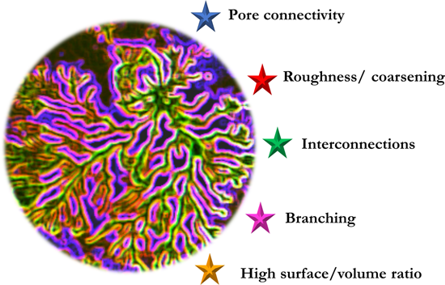
- are used as sensing material [57]. Proposed growth model for fab-fracs This section specifically discusses the various parameters that influence the final shape of a lab-grown fab-frac using the sol–gel technique. Nucleation is a random and probabilistic event that happens on a substrate. As a fluid
- depicts the different stages of fractal formation and conditions that lead to a specific fractal shape. Initially, when the sol starts drying, voids are created due to effusion of gases from the sol. Thereafter, random nucleation and cluster growth takes place. After clusters form on the substrate
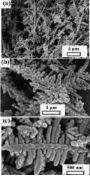
- . using a solvothermal method, was reported [80]. Here, the authors discussed a five-stage growth process comprising polymerization, nucleation, primary growth, secondary growth, and final growth from single nanosheets to final dendritic structures. Figure 18a and Figure 18b show SEM images of