Search results
Search for "photostability" in Full Text gives 68 result(s) in Beilstein Journal of Nanotechnology.
AgCl-doped CdSe quantum dots with near-IR photoluminescence
Beilstein J. Nanotechnol. 2017, 8, 1156–1166, doi:10.3762/bjnano.8.117
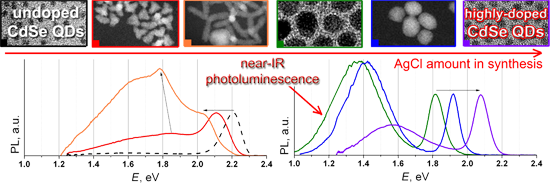
- devices. CdSe QDs deserve special attention because of their bright photoluminescence (PL), photostability, and a considerable number of methods for their synthesis. For many of the practical applications of QDs infrared PL (IR-PL) is very important: for the fabrication of optical fibers, lasers


High photocatalytic activity of Fe2O3/TiO2 nanocomposites prepared by photodeposition for degradation of 2,4-dichlorophenoxyacetic acid
Beilstein J. Nanotechnol. 2017, 8, 915–926, doi:10.3762/bjnano.8.93
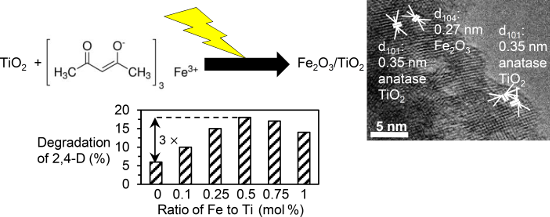
- several cycles of photocatalytic reactions under UV light irradiation for 1 h. The Fe2O3(0.5)/TiO2 (PD) sample gave a similar, comparable activity in a range of 82–88% even after 3 cycles of reactions, suggesting the good photostability of the Fe2O3(0.5)/TiO2 (PD) nanocomposite and its potential
- /pollutant. The photostability of the Fe2O3(0.5)/TiO2 (PD) nanocomposite was investigated by evaluating the photocatalytic activity for removal of 2,4-D over three cycles. After the first run of reaction under 1 h UV irradiation, the photocatalyst was collected from the 2,4-D solution and was washed with


Organoclay hybrid materials as precursors of porous ZnO/silica-clay heterostructures for photocatalytic applications
Beilstein J. Nanotechnol. 2016, 7, 1971–1982, doi:10.3762/bjnano.7.188
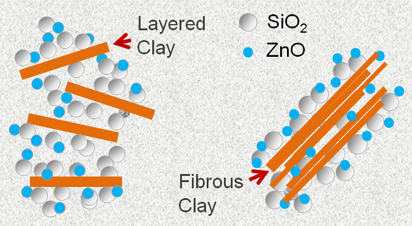
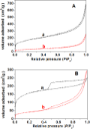
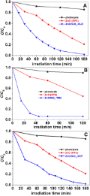
- displays the evolution of the ibuprofen concentration after 6 h of UV irradiation. In absence of catalysts, i.e., the photolysis experiment, there is only 5% of degradation after 360 min, indicating that ibuprofen shows good photostability under UV–vis irradiation. The ZnO/SiO2-clay heterostructures





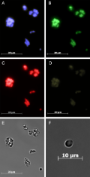
Facile fabrication of luminescent organic dots by thermolysis of citric acid in urea melt, and their use for cell staining and polyelectrolyte microcapsule labelling
Beilstein J. Nanotechnol. 2016, 7, 1905–1917, doi:10.3762/bjnano.7.182
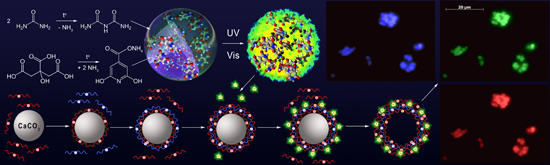
- crystals (quantum dots, Q-dots) are a good alternative to common fluorescent dyes in a variety of biomedical applications, mainly due to their high photostability and relatively large Stokes shift [1][2][3], but Q-dots typically contain heavy metals (lead, cadmium) and chalcogens (selenium, tellurium
- sodium citrate and ammonium bicarbonate at 180 °C for 4 h leads to the formation of O-dots with excellent photostability [22]. When a 0.328 M solution of ammonium citrate was subjected to hydrothermal treatment in an autoclave at 160 °C for 6 h, the resulting dots had a quantum yield of about 13.5% [23




Active and fast charge-state switching of single NV centres in diamond by in-plane Al-Schottky junctions
Beilstein J. Nanotechnol. 2016, 7, 1727–1735, doi:10.3762/bjnano.7.165
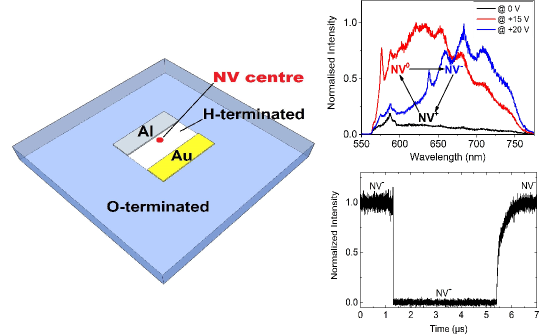
- and NV+ state). Compared to the positive and the neutral charge state, the negative state (NV−) shows superior properties for electron-spin related applications in quantum physics, namely a perfect photostability [1], an optical initialization and read-out of its ground state electron spin [2] and an


Novel ZnO:Ag nanocomposites induce significant oxidative stress in human fibroblast malignant melanoma (Ht144) cells
Beilstein J. Nanotechnol. 2015, 6, 570–582, doi:10.3762/bjnano.6.59
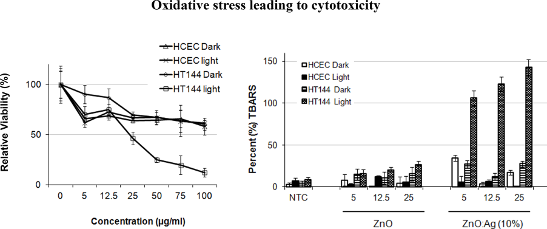
- exhibit an improved photocatalytic activity [26][27] and photostability [28] compared to the ZnO NPs. Nanoscale Ag2+ itself exhibits antimicrobial and anticancer activity [29], therefore it might be a very interesting and useful addition to the ZnO NPs as it not only enhances the photocatalytic activity


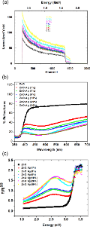


Silica micro/nanospheres for theranostics: from bimodal MRI and fluorescent imaging probes to cancer therapy
Beilstein J. Nanotechnol. 2015, 6, 546–558, doi:10.3762/bjnano.6.57
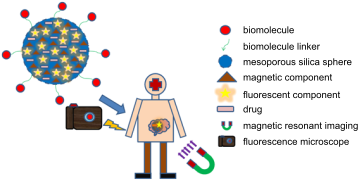
- properties of synthesized nanotubes were studied by TEM and the results suggested that the thickness of fluorescent layer was 1–2 nm. It was also observed that the photostability of RhB was higher in the silica matrix compared to that in the nanotubes voids. The presence of magnetic NPs was reported to have


Palladium nanoparticles anchored to anatase TiO2 for enhanced surface plasmon resonance-stimulated, visible-light-driven photocatalytic activity
Beilstein J. Nanotechnol. 2015, 6, 428–437, doi:10.3762/bjnano.6.43
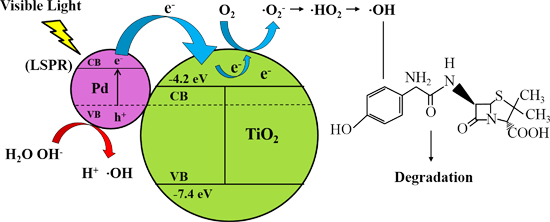
- reusability trend proved the photostability of the prepared photocatalysts. Hence, the study provides a new insight about the modification of TiO2 with noble metals in order to enhance the absorption in the visible-light region for superior photocatalytic performance. Keywords: endocrine disrupting compound
- Honda in 1972 [1]. To date, TiO2 is still the most favorable choice owing to its versatility and robust advantages that include photostability, non-toxicity, low cost, chemical and biological inertness, high photocatalytic activity and favorable optoelectronic properties [2][3][4][5]. TiO2 also
- the as prepared 0.5 wt % Pd/TiO2 photocatalyst maintains a high level of degradation efficiency after three times of recycling. An efficiency of 92.3% was achieved after the 3rd run, which indicates an excellent photostability of the synthesized photocatalyst. The kinetics of the photocatalytic


Overview about the localization of nanoparticles in tissue and cellular context by different imaging techniques
Beilstein J. Nanotechnol. 2015, 6, 263–280, doi:10.3762/bjnano.6.25
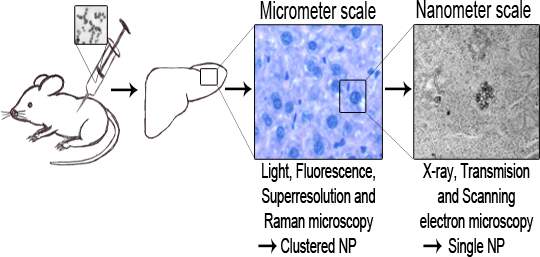
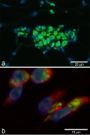
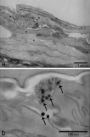
- ]. In this regard, the increased brightness and photostability of a fluorescent dye when incorporated into the core of SiO2-NP are particularly welcome [83]. Of note, some specifically engineered NP may hold inherent fluorescent properties, such as inorganic quantum dots (QD) [76]. QD used in
- size-dependent optical properties possess great potential as probe for biomedical imaging applications, as previously shown for the mapping of lymph node structures [87]. Their superior photostability, their broad excitation and narrow emission spectra offer additional advantages [85] that even allow



The distribution and degradation of radiolabeled superparamagnetic iron oxide nanoparticles and quantum dots in mice
Beilstein J. Nanotechnol. 2015, 6, 111–123, doi:10.3762/bjnano.6.11
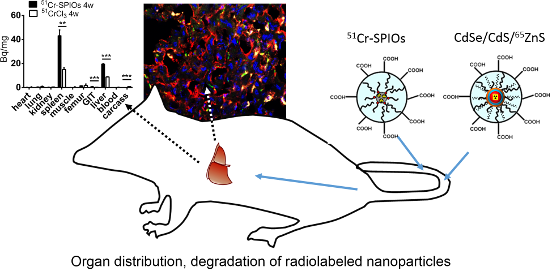
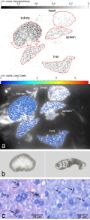
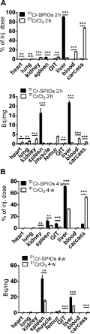
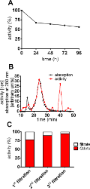
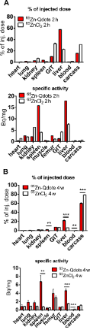
- /CdS/ZnS-Qdots in the liver. Keywords: biodistribution; chromium(III); 51Cr; quantum dots; SPIOs; zinc metabolism; 65Zn; Introduction Quantum dots (Qdots) are semiconductor nanocrystals (2–100 nm in diameter) that combine a strong, size-tunable photoluminescence with robust photostability, which





Poly(styrene)/oligo(fluorene)-intercalated fluoromica hybrids: synthesis, characterization and self-assembly
Beilstein J. Nanotechnol. 2014, 5, 2450–2458, doi:10.3762/bjnano.5.254
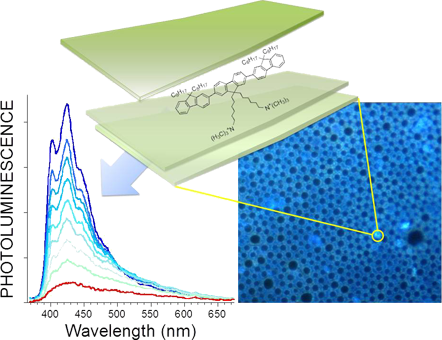
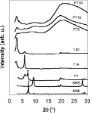
- with homogeneous distribution of the hybrids exhibit ultraviolet–blue photoluminescence with a significantly enhanced photostability compared to the bare oligo(fluorene)s. Finally, under specific conditions, the polymer hybrid with higher oligo(fluorene) content spontaneously assembles into highly
- ordered microporous films. Keywords: breath figures; fluoromica; layered silicates; oligo(fluorene); photostability; self-assembly; Introduction The functionalization of inorganic structures is an effective approach for enriching the potential applications of existing nanomaterials [1][2][3][4][5][6][7
- hierarchical organization of this material by the BF approach is feasible. Photostability The intercalation of the oligo(fluorene) molecules within the lamellae interlayers of the inorganic scaffold has dramatically improved their photophysical stability, a critical issue for fluorene-based materials [35




An insight into the mechanism of charge-transfer of hybrid polymer:ternary/quaternary chalcopyrite colloidal nanocrystals
Beilstein J. Nanotechnol. 2014, 5, 1235–1244, doi:10.3762/bjnano.5.137
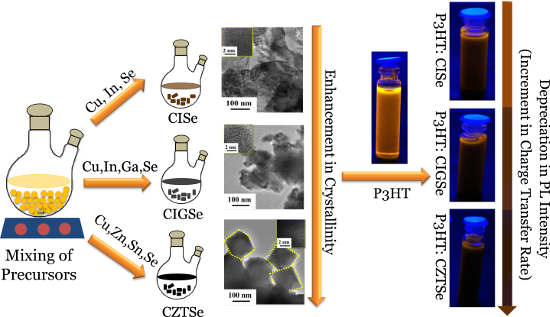
- recrystallization. The quaternary chalcopyrites, particularly CZTSe nanocrystals, facilitate an increased crystallinity and thus an increased local order, which provides better steric stability against coagulation, homogeneity and photostability to their respective polymer (P3HT):CZTS composites. The TOPO/TOP


Optimizing the synthesis of CdS/ZnS core/shell semiconductor nanocrystals for bioimaging applications
Beilstein J. Nanotechnol. 2014, 5, 919–926, doi:10.3762/bjnano.5.105
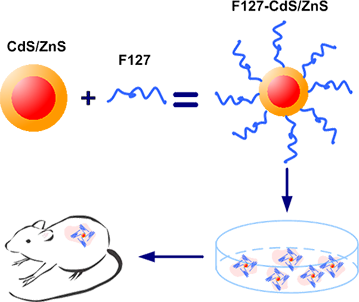
- intensity, stronger stability and exhibited a longer lifetime compared to uncapped CdS. The CdS/ZnS nanocrystals were stabilized in Pluronic F127 block copolymer micelles, offering an optically and colloidally stable contrast agents for in vitro and in vivo imaging. Photostability test exhibited that the
- core/shell structured QDs showed high QYs, outstanding physical and chemical stability, this strongly enhanced QY could be attributed to the wide band gap ZnS shell providing surface trap states that enhance the photostability. Photostability test Photobleaching is an effective method for improving the
- bioimaging applications of nanocrystals especially for core/shell structured QDs. We carried out photostability experiments of F127-CdS/ZnS irradiated by continuous-wave (CW) laser with a wavelength of 447 nm and power density of 0.5 W/cm2. PL tests with different irradiate times were carried out. As Figure


Nanostructure sensitization of transition metal oxides for visible-light photocatalysis
Beilstein J. Nanotechnol. 2014, 5, 696–710, doi:10.3762/bjnano.5.82
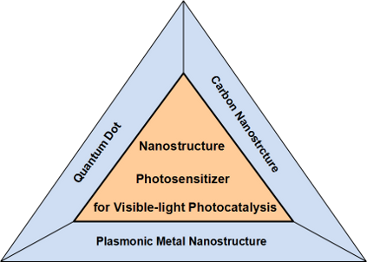
- size, and higher photostability [8], which qualifies quantum dots as good candidates for the photosensitization of wide-band transition metal oxides. CdS is a fascinating material with ideal band gap energy (Eg = 2.4 eV) for visible light applications. As early as 1987, Spanhel et al. confirmed that




Effects of the preparation method on the structure and the visible-light photocatalytic activity of Ag2CrO4
Beilstein J. Nanotechnol. 2014, 5, 658–666, doi:10.3762/bjnano.5.77
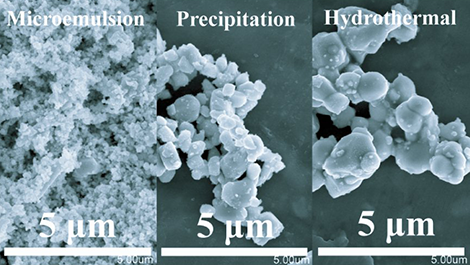
- photocatalysts during the past decades. TiO2 is most widely studied because of its low cost, non-toxicity, high efficiency and long-time photostability [6][7][8][9][10][11]. However, due to its large band gap of about 3.2 eV, TiO2 is only active in the ultraviolet (UV) region that corresponds to 3–4% of the


Enhanced photocatalytic activity of Ag–ZnO hybrid plasmonic nanostructures prepared by a facile wet chemical method
Beilstein J. Nanotechnol. 2014, 5, 639–650, doi:10.3762/bjnano.5.75
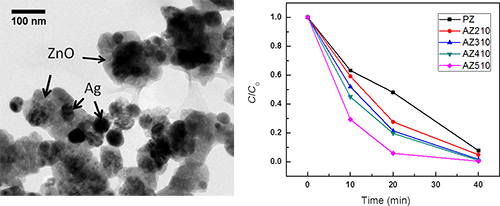
- nanostructures of various morphology have shown considerable increase in the photocatalytic efficiency for the degradation of organic dyes [19][23][29][30][31][32][33][34]. Xie et al. [23] have shown that Ag loading on ZnO nanostructures improves its photostability and enhances the photocatalytic activity due to


Femtosecond time-resolved photodissociation dynamics of methyl halide molecules on ultrathin gold films
Beilstein J. Nanotechnol. 2011, 2, 618–627, doi:10.3762/bjnano.2.65
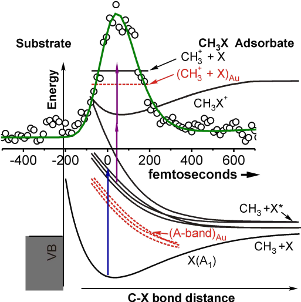
- great importance in several research areas and applications connected to surface chemistry and catalysis. Photostability, photooxidation, and photocatalysis are important concepts in this respect that attract considerable interest in the fields of nanotechnology and surface engineering [1][2]. The


Room temperature excitation spectroscopy of single quantum dots
Beilstein J. Nanotechnol. 2011, 2, 516–524, doi:10.3762/bjnano.2.56

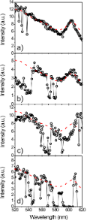
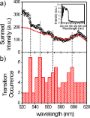
- photostability compared to organic fluorophores. These properties make quantum dots promising nanomaterials in various fields of research, ranging from in vivo probes in the life-sciences [10][36][37] to single photon light sources in telecommunications [38] or quantum computing [30][35]. We demonstrate here how