Search results
Search for "physiological conditions" in Full Text gives 66 result(s) in Beilstein Journal of Nanotechnology.
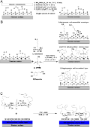
Self-assembled anchor layers/polysaccharide coatings on titanium surfaces: a study of functionalization and stability
Beilstein J. Nanotechnol. 2015, 6, 617–631, doi:10.3762/bjnano.6.63
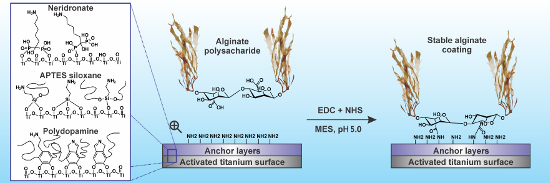
- the set prerequisites. This polysaccharide is biocompatible and degradable under normal physiological conditions [40] and has been used in various biomedical applications [41][42]. The presence of carboxyl groups in the structure of β-D-mannuronate and α-L-guluronate monomer units can be utilized for
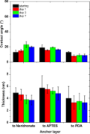
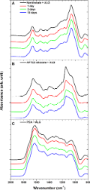
- nanoparticle aggregates may have a physisorbed fraction of loosely bound ALG chains that are a potential source of instability and defects when these surfaces are exposed to physiological conditions. Stability of alginate films The stability of the anchor layers and anchored ALG films is crucial for their


The effect of surface charge on nonspecific uptake and cytotoxicity of CdSe/ZnS core/shell quantum dots
Beilstein J. Nanotechnol. 2015, 6, 281–292, doi:10.3762/bjnano.6.26
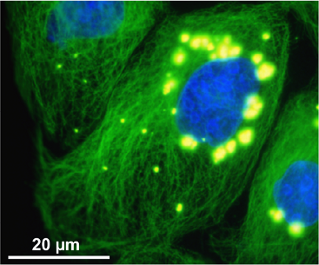
- , Germany) was used. In this case, the excitation light was delivered from an Ar+ gas laser operating at 488 nm and the emission light detected by a sensitive Andor iXon EM-CCD camera (Andor Technology, Belfast, Northern Ireland). MDCKII cells were maintained at physiological conditions throughout the

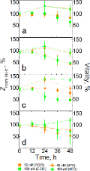


Mechanical properties of MDCK II cells exposed to gold nanorods
Beilstein J. Nanotechnol. 2015, 6, 223–231, doi:10.3762/bjnano.6.21
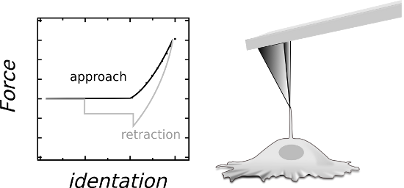
- migration, proliferation and tissue formation [19][20]. Mechanical behavior of living cells can be monitored spatially resolved in a concentration and time dependent manner using scanning probe techniques. It is possible to investigate local cellular elastic properties under physiological conditions using


Caveolin-1 and CDC42 mediated endocytosis of silica-coated iron oxide nanoparticles in HeLa cells
Beilstein J. Nanotechnol. 2015, 6, 167–176, doi:10.3762/bjnano.6.16
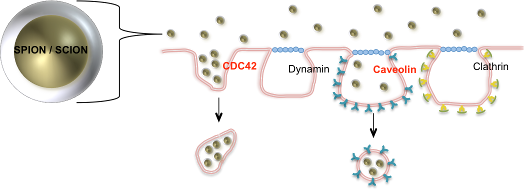
- ). These modifications resulted in different physicochemical properties referring to SPIONs surface charge and their size distribution under physiological conditions (Table 1). The primary particle size was determined by transmission electron microscopy (EM906, Zeiss). The zeta potential and the average


Increasing throughput of AFM-based single cell adhesion measurements through multisubstrate surfaces
Beilstein J. Nanotechnol. 2015, 6, 157–166, doi:10.3762/bjnano.6.15
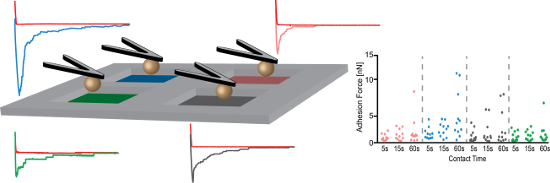
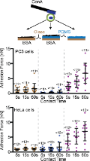
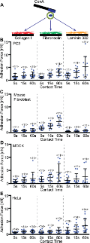
- adherence to various ECM proteins, necessitating the investigation of the adhesive properties of the cells. Atomic force microscopy (AFM)-based single-cell force spectroscopy (SCFS) provides a versatile tool to quantify the adhesion of single cells in near-physiological conditions [14][15][16]. In AFM-based


The distribution and degradation of radiolabeled superparamagnetic iron oxide nanoparticles and quantum dots in mice
Beilstein J. Nanotechnol. 2015, 6, 111–123, doi:10.3762/bjnano.6.11
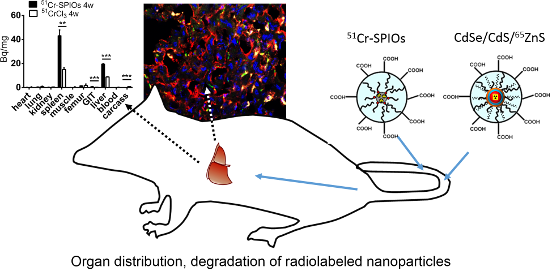
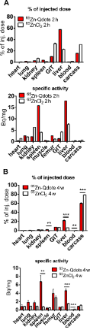
- various Qdots in cell culture [7][8][9][10][11][12]. However, when dosing was applied under physiological conditions in mice and rats, no abnormal behavior or tissue damage was observed over the period of months after systemic administration of Qdots [13][14][15]. Therefore, the relevancy of the in vitro





Mammalian cell growth on gold nanoparticle-decorated substrates is influenced by the nanoparticle coating
Beilstein J. Nanotechnol. 2014, 5, 2479–2488, doi:10.3762/bjnano.5.257
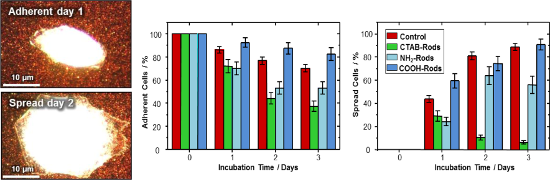
- with the negatively charged membrane [21][22], and to the sedimentation behavior of the particles which is related to their colloidal stability under physiological conditions [33]. The uptake was likely caused by non-specific endocytosis or macropinocytosis. Therefore, we expected an even stronger


PVP-coated, negatively charged silver nanoparticles: A multi-center study of their physicochemical characteristics, cell culture and in vivo experiments
Beilstein J. Nanotechnol. 2014, 5, 1944–1965, doi:10.3762/bjnano.5.205

- particle interaction with the environment. The persistence of such a coating under physiological conditions emerges as an important aspect for understanding interactions between nanoparticles and biological entities in general [70]. Polymer coatings are frequently stable under such conditions but other


The surface properties of nanoparticles determine the agglomeration state and the size of the particles under physiological conditions
Beilstein J. Nanotechnol. 2014, 5, 1774–1786, doi:10.3762/bjnano.5.188
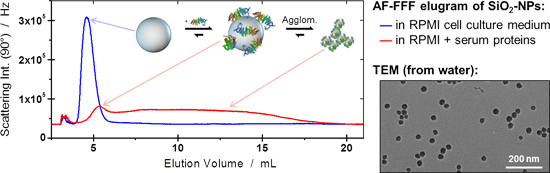
- comprehensive and accurate characterization of the material under physiological conditions is crucial to correlate the observed biological impact with defined colloidal properties. As promising candidates for biomedical applications, two SiO2-based nanomaterial systems were chosen for extensive size
- characterization to investigate the agglomeration behavior under physiological conditions. To combine the benefits of different characterization techniques and to compensate for their respective drawbacks, transmission electron microscopy, dynamic light scattering and asymmetric flow field-flow fractionation were
- the particles and therefore their effective size, especially under physiological conditions. Thus, the biological identity of a nanomaterial is clearly influenced by differentiating surface properties. Keywords: nanomaterial characterization; physiological conditions; surface properties; silica


Current state of laser synthesis of metal and alloy nanoparticles as ligand-free reference materials for nano-toxicological assays
Beilstein J. Nanotechnol. 2014, 5, 1523–1541, doi:10.3762/bjnano.5.165
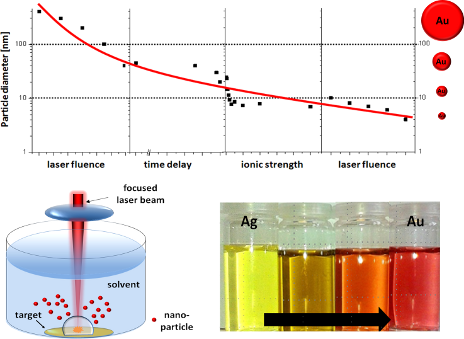
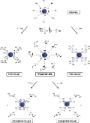
- release ions under physiological conditions. Hence, in contrast to gold atom clusters [33], gold nanoparticles are known to have a comparably low toxicity [34][35]. Hence, all adverse effects probably originate from the nanoscopic dimensions of the material, e.g., causing the formation of reactive oxygen


Molecular biology approaches in bioadhesion research
Beilstein J. Nanotechnol. 2014, 5, 983–993, doi:10.3762/bjnano.5.112
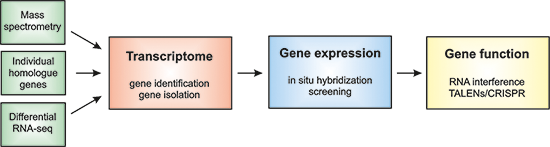
- achieved by amputation, regeneration, collection of different developmental stages, or manipulation of the cellular (for instance by RNAi, see section 4) or physiological conditions. Successful collection of the starting material completely relies on an in-depth knowledge of the morphology of the adhesive


Biocalcite, a multifunctional inorganic polymer: Building block for calcareous sponge spicules and bioseed for the synthesis of calcium phosphate-based bone
Beilstein J. Nanotechnol. 2014, 5, 610–621, doi:10.3762/bjnano.5.72
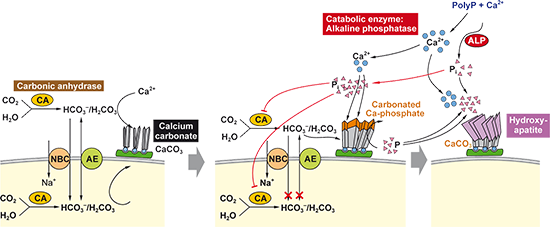
- physiological conditions a thermodynamically possible reaction can be initiated or prevented [30]. Almost exclusively, alterations of the heights of the activation energy barriers are adjusted by enzymes or by the surface architecture of membranes separating two phases. The recent findings that in animals the
- , is targeted in intact cell systems under certain physiological conditions to the cell membrane [36][37]. Among the phylogenetically oldest animals that have a skeleton based on calcium carbonate are the calcareous sponges with Sycon raphanus as an example (Figure 2A), the CA enzyme was cloned
- synthesis of calcium carbonate is to accelerate the reaction velocity, an essential feature of any enzyme. Furthermore, the CA allows the process of calcium carbonate deposition to occur at ambient physiological conditions. Two morphologically different deposits are formed in the in vitro assay in the



Mapping mechanical properties of organic thin films by force-modulation microscopy in aqueous media
Beilstein J. Nanotechnol. 2012, 3, 464–474, doi:10.3762/bjnano.3.53
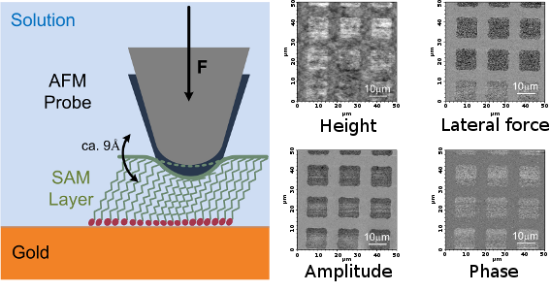
- take place in an aqueous environment or under physiological conditions. Here we show that FMM is able to provide high-contrast amplitude and phase maps of micropatterned biomolecular thin films in an aqueous environment. The biological material of interest in our FMM experiments is the IgG-binding



Magnetic-Fe/Fe3O4-nanoparticle-bound SN38 as carboxylesterase-cleavable prodrug for the delivery to tumors within monocytes/macrophages
Beilstein J. Nanotechnol. 2012, 3, 444–455, doi:10.3762/bjnano.3.51
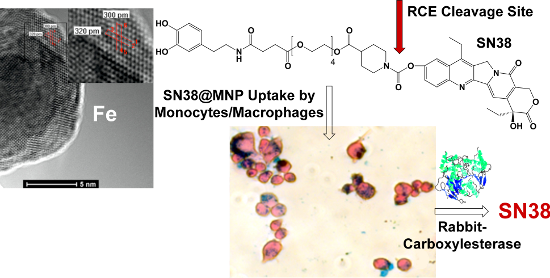
- physiological conditions, which is highly desired for a cell-based delivery system. We have established that when Mo/Ma cells are used as carriers, the tumor-homing process takes about one day. Their robust stability will ensure the integrity of the MNPs after delivery to the tumor site. The uptake efficiency


Drive-amplitude-modulation atomic force microscopy: From vacuum to liquids
Beilstein J. Nanotechnol. 2012, 3, 336–344, doi:10.3762/bjnano.3.38
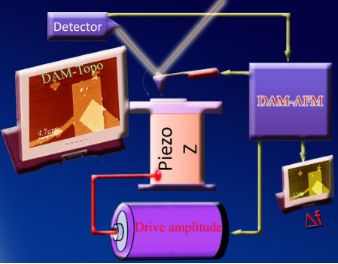
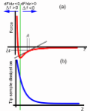
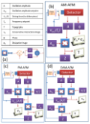
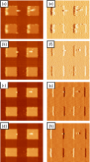
- , which is very common when measuring biological samples under physiological conditions, the interaction curve is not monotonic, resulting in instabilities in the FM feedback. Figure 7a shows the dependence of the frequency shift and the dissipation for a clean AFM tip immersed in a buffer solution. Both


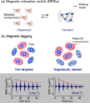
Magnetic nanoparticles for biomedical NMR-based diagnostics
Beilstein J. Nanotechnol. 2010, 1, 142–154, doi:10.3762/bjnano.1.17
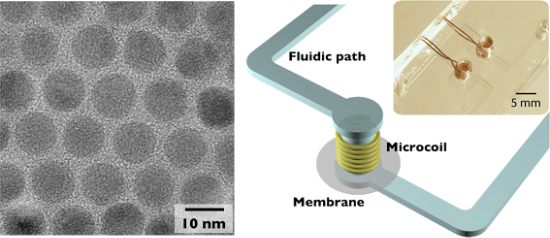
- biocompatible surface coating that stabilizes the particle in physiological conditions. By applying suitable surface chemistry, functional ligands can be integrated and confer the MNP with molecular specificity. Synthesis of magnetic nanoparticles Synthetic methods for MNPs have been recently reviewed [15][16