Search results
Search for "self assembly" in Full Text gives 337 result(s) in Beilstein Journal of Nanotechnology. Showing first 200.
Recent advances in nanoarchitectures of monocrystalline coordination polymers through confined assembly
Beilstein J. Nanotechnol. 2022, 13, 763–777, doi:10.3762/bjnano.13.67
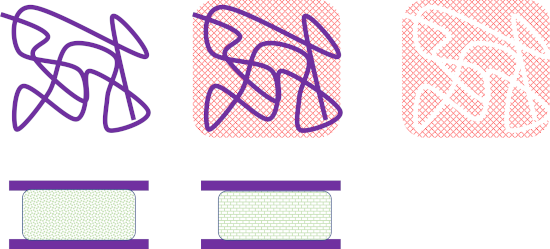
- through self-assembly [130]. The assembly process is usually driven by thermodynamics to form entropy-favored periodic arrangements. The periodically assembled monocrystalline coordination polymers have unique features. For instance, the assembly of polyhedral coordination polymers can form a more complex
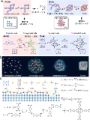
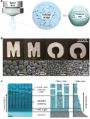
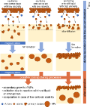
- . Figure 6 was adapted from [134] (© 2020 S. Wang et al., published by Springer Nature, distributed under the terms of the Creative Commons Attribution 4.0 International License, https://creativecommons.org/licenses/by/4.0). a) Schematic illustration of the self-assembly of ZIF-8 particles via spray drying




Zinc oxide nanostructures for fluorescence and Raman signal enhancement: a review
Beilstein J. Nanotechnol. 2022, 13, 472–490, doi:10.3762/bjnano.13.40
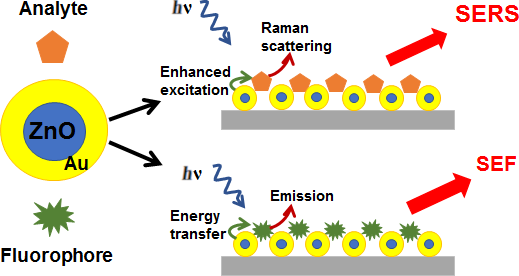
- on the tips of the nanorods by photodeposition or galvanic reduction [47][48]. Another facile method included layer-by-layer self-assembly deposition of chemically synthesized Au NPs, ZnO, and analyte molecules and resulted in dispersedly distributed ZnO particles onto a Au NP monolayer surface [49




Investigation of electron-induced cross-linking of self-assembled monolayers by scanning tunneling microscopy
Beilstein J. Nanotechnol. 2022, 13, 462–471, doi:10.3762/bjnano.13.39
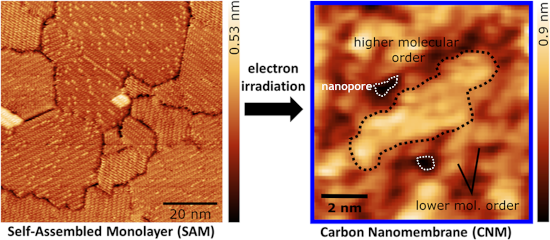
- general concept of self-assembly allows for the preparation of SAMs from the liquid or gas phase. Highly ordered TPT SAMs spontaneously form on Au(111) due to the formation of bonds between sulfur and gold atoms, which is accompanied by van der Waals interactions between the aromatic rings. The TPT SAMs
- in a less dense but more ordered structure over a large area with very few defects. During the self-assembly process, gold adatoms are ejected from the surface layer due to the relaxation of the herringbone reconstruction [68]. Several gold adatom islands, which would build up if the density of


Micro- and nanotechnology in biomedical engineering for cartilage tissue regeneration in osteoarthritis
Beilstein J. Nanotechnol. 2022, 13, 363–389, doi:10.3762/bjnano.13.31
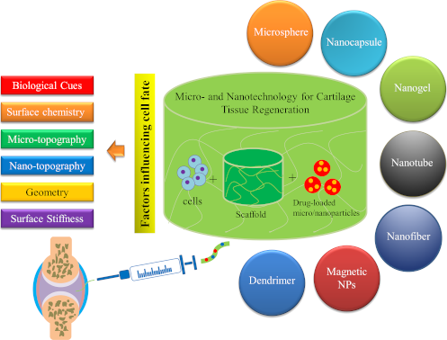
- different characteristics and kinds of behavior of compounds on submicrometer and nanometer scales and resulted in the development of new methods such as electrospinning, self-assembly, phase separation, nano-imprinting, and photolithography for the generation of new biomaterials with improved properties
- candidates for biomedical applications (Table 1). Collagen fibril and fibrous proteins are naturally occurring nanofibers whose fiber diameters range between 50 and 150 nm, depending on tissue type and function. Various techniques to fabricate nanofibers include 3D printing, molecular self-assembly


Alcohol-perturbed self-assembly of the tobacco mosaic virus coat protein
Beilstein J. Nanotechnol. 2022, 13, 355–362, doi:10.3762/bjnano.13.30
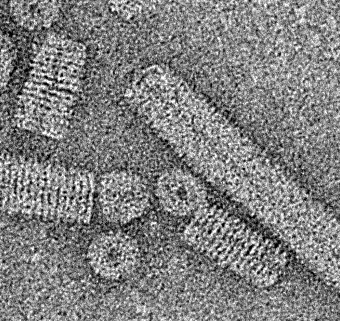
- Ismael Abu-Baker Amy Szuchmacher Blum Department of Chemistry, McGill University, Montréal, Québec, Canada 10.3762/bjnano.13.30 Abstract The self-assembly of the tobacco mosaic virus coat protein is significantly altered in alcohol–water mixtures. Alcohol cosolvents stabilize the disk aggregate
- alcohol having the strongest effect and methanol the weakest. We discuss several effects that may contribute to preventing the protein–protein interactions between disks that are necessary to form helical rods. Keywords: alcohol; hydrophobic effect; protein assembly; self-assembly; tobacco mosaic virus
- been the main method employed to control TMV-cp self-assembly, with numerous mutants designed to stabilize either the disk or rod forms [24][25][26][27]. Herein we describe a simple cosolvent-based method to modify the assembly characteristics of TMV-cp. The use of dipolar molecules to control the


Coordination-assembled myricetin nanoarchitectonics for sustainably scavenging free radicals
Beilstein J. Nanotechnol. 2022, 13, 284–291, doi:10.3762/bjnano.13.23
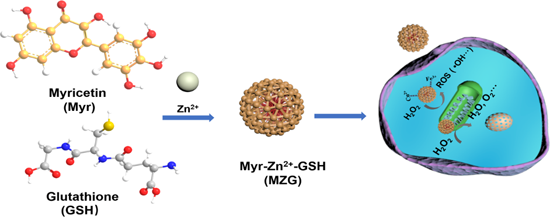
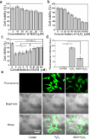
- interaction (Myr/GSH = 1:2) [32][33][34]. The nanoparticles were formed by coordination self-assembly of Zn2+, Myr, and GSH (Figure 1a). They were expected to show good antioxidant activity to protect cells from the ROS-induced damage (Figure 1b). The transmission electron microscopy (TEM) image in Figure 2a
- component co-assembles with Myr and GSH. Fourier-transform infrared (FTIR) spectra were used to further confirm the self-assembly of the MZG nanoparticles. In Figure 2d, the two bands at 2522 cm−1 and 3350 cm−1 were assigned to the mercapto group (–SH) and the stretching vibration of the amino group (–NH2


Systematic studies into uniform synthetic protein nanoparticles
Beilstein J. Nanotechnol. 2022, 13, 274–283, doi:10.3762/bjnano.13.22
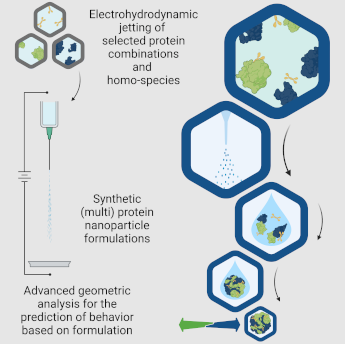
- ]. Nanoparticles made of proteins [6] hold significant promise in this respect and different methods have been adopted to fabricate protein-based nanoparticles including nab technology [1], desolvation methods [2], and self-assembly [3]. The protein human albumin is a natural carrier of endogenous hydrophobic
- protein structure (sometimes fully denaturing the protein) and to cause subsequent precipitation of protein aggregates [18]. Self-assembly strategies also provide access to a variety of structurally diverse [19] protein nanoparticles. With the advent of in silico design and subsequent production of de
- novo protein nanoparticle systems, the number of specific protein building blocks that can be designed for self-assembly strategies has increased in recent years. If a protein system can successfully be designed, these synthetic proteins allow for tunable functionality and/or stability profiles [19


Sputtering onto liquids: a critical review
Beilstein J. Nanotechnol. 2022, 13, 10–53, doi:10.3762/bjnano.13.2
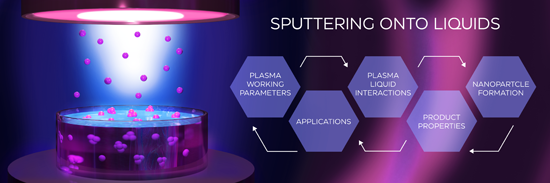
- production starts from bulk materials that leach out systematically, leading to the generation of NPs. The starting material can be reduced in size using either a physical or a chemical route. On the other hand, the “bottom-up” approach, or self-assembly, refers to building up a structure atom-by-atom or






Topographic signatures and manipulations of Fe atoms, CO molecules and NaCl islands on superconducting Pb(111)
Beilstein J. Nanotechnol. 2022, 13, 1–9, doi:10.3762/bjnano.13.1
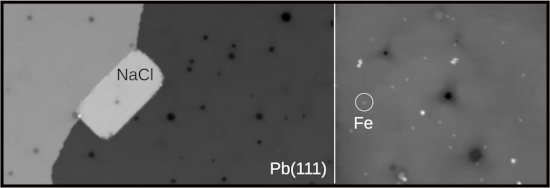
- by one with an STM tip in an one-dimensional fashion on an s-wave superconductor [10], this strategy has been primarily postponed in favor of self-assembly processes on Pb(110) surfaces [13][14][15][36]. Only recently, the successful manipulation of tens of Fe atoms has been reported on


Self-assembly of amino acids toward functional biomaterials
Beilstein J. Nanotechnol. 2021, 12, 1140–1150, doi:10.3762/bjnano.12.85
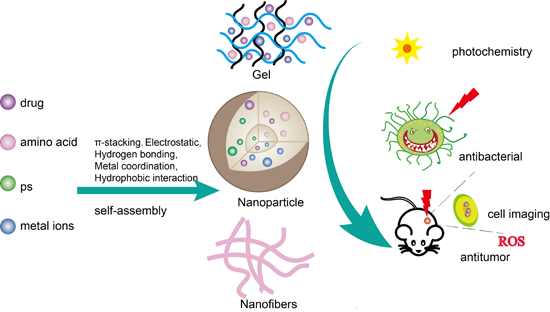
- . However, the self-assembly of proteins and peptides has disadvantages, such as difficulty in obtaining high quantities of materials, high cost, polydispersity, and purification limitations. The difficulties in using proteins and peptides as functional materials make it more complicate to arrange assembled
- nanostructures at both microscopic and macroscopic scales. Amino acids, as the smallest constituent of proteins and the smallest constituent in the bottom-up approach, are the smallest building blocks that can be self-assembled. The self-assembly of single amino acids has the advantages of low synthesis cost
- acids. Most of the review articles about self-assembly focus on large molecules, such as peptides and proteins. The preparation of complicated materials by self-assembly of amino acids has not yet been evaluated. Therefore, it is of great significance to systematically summarize the literature of amino

Progress and innovation of nanostructured sulfur cathodes and metal-free anodes for room-temperature Na–S batteries
Beilstein J. Nanotechnol. 2021, 12, 995–1020, doi:10.3762/bjnano.12.75
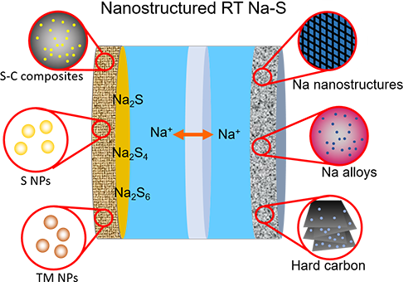
- physical and chemical impregnation, mechanical mixing and self-assembly. Straightforward approaches are sulfur melt and vapor impregnation of suitable matrices. These routes require heating to temperatures above the melting (115 °C) and boiling (446 °C) point of sulfur, respectively. While the former




Molecular assemblies on surfaces: towards physical and electronic decoupling of organic molecules
Beilstein J. Nanotechnol. 2021, 12, 950–956, doi:10.3762/bjnano.12.71

- layer; molecular self-assembly; scanning probe microscopy; surface science; Over the past two decades, organic molecules adsorbed on atomically defined metal surfaces have been intensively studied to obtain an in-depth understanding of their self-assembly behavior, on-surface reactivity, as well as
- space. Molecular adsorption and self-assembly are significantly altered compared to metals due to an often weak interaction between organics and bulk insulators. In contrast to face-on adsorption on metals, a tilted and edge-on adsorption becomes possible for planar aromatic molecules on bulk insulators
- due to the lattice mismatch between 2D material and its substrate might serve as structural templates for molecular adsorption and self-assembly [79][80][81][82]. The electronic decoupling depends on the electronic properties of the 2D materials as they can be insulators, semiconductors, semimetals
Self-assembly of Eucalyptus gunnii wax tubules and pure ß-diketone on HOPG and glass
Beilstein J. Nanotechnol. 2021, 12, 939–949, doi:10.3762/bjnano.12.70
- that ß-diketone tubules are formed by self-assembly and confirmed that ß-diketone is the shape-determining component for this type of tubules. Keywords: ß-diketone tubules; eucalyptus; plant wax; recrystallization; self-assembly; Introduction The plant cuticle, which is the largest biological
- morphologies are formed by a self-assembly process. On artificial surfaces, waxes recrystallize in three-dimensional structures with similar morphology and related properties as on plant surfaces [14]. Additionally, recrystallization of isolated wax components revealed that usually the main compounds determine
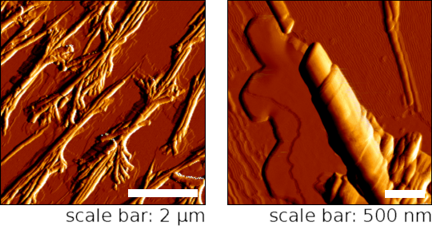
- AFM images of real-time investigation of wax recrystallization on HOPG were captured 10 to 13 min after the evaporation of the solvent. The AFM examination of wax self-assembly on HOPG showed platelets (Figure 3) as seen in SEM analysis. In AFM micrographs, two types of platelets with varying sizes


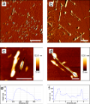


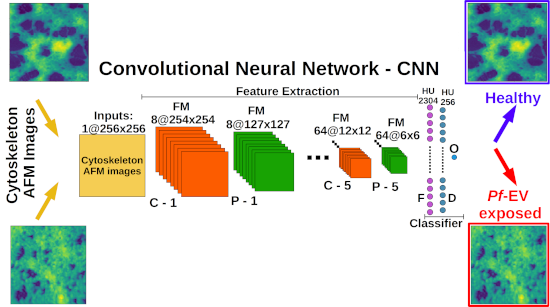
The role of convolutional neural networks in scanning probe microscopy: a review
Beilstein J. Nanotechnol. 2021, 12, 878–901, doi:10.3762/bjnano.12.66


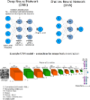







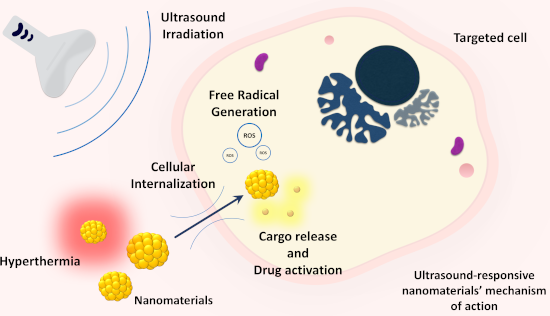
Comprehensive review on ultrasound-responsive theranostic nanomaterials: mechanisms, structures and medical applications
Beilstein J. Nanotechnol. 2021, 12, 808–862, doi:10.3762/bjnano.12.64


Physical constraints lead to parallel evolution of micro- and nanostructures of animal adhesive pads: a review
Beilstein J. Nanotechnol. 2021, 12, 725–743, doi:10.3762/bjnano.12.57
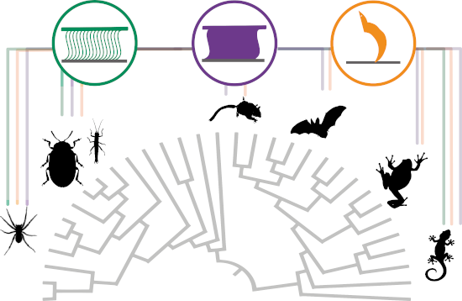
- in the AMS is high and different AMS types coexist in the same groups, the adaptation to the corresponding natural surfaces probably took place in a comparatively short period of time [163]. Using a mathematical model, the potential of self-assembly of the structures observed in the AMS of phasmids


On the stability of microwave-fabricated SERS substrates – chemical and morphological considerations
Beilstein J. Nanotechnol. 2021, 12, 541–551, doi:10.3762/bjnano.12.44
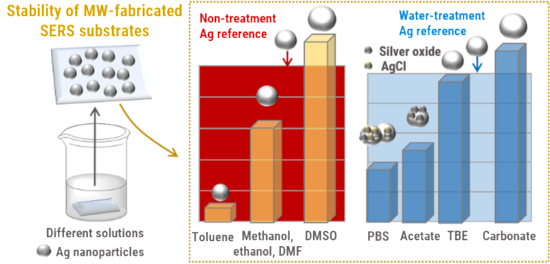
- drop-coating and self-assembly procedures [20][21][22]. Alternatively, monolayers of nanoparticles can be formed directly on substrates by a microwave-assisted one-step fabrication process [23][24] on glass and silicon-based substrates with different shapes (e.g., on flat substrates as well as inside
- the Raman spectroscopic performance of the SERS substrates. After self-assembly of 4-ATP from an ethanolic solution, the substrates were carefully cleaned with ethanol to ensure a complete removal of molecules that were non-specifically attached to the surface. The formation of a monolayer is ensured
- by utilizing a thiol-functionalized test molecule to form a defined monomolecular dense layer of analyte on the surface. Additionally, 4-ATP only binds to silver nanoparticles and does not bind to the underlying glass substrate. The self-assembly time for 4-ATP solutions was kept short to avoid any


Colloidal particle aggregation: mechanism of assembly studied via constructal theory modeling
Beilstein J. Nanotechnol. 2021, 12, 413–423, doi:10.3762/bjnano.12.33
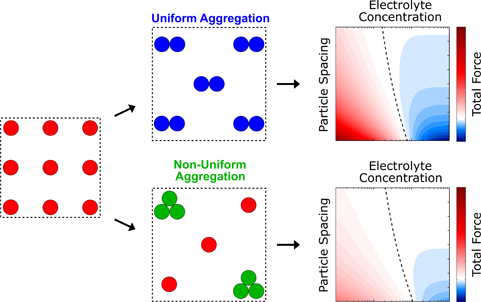
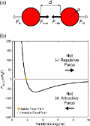
- with respect to van der Waals and double layer interactions. Preliminary results show that the particle aggregation behavior depends on the initial lattice configuration and solvent properties. Ultimately, our model provides the first constructal framework for predicting the self-assembly of particles
- and could be expanded upon to fit a range of colloidal systems. Keywords: colloids; constructal law; DLVO theory; interparticle interactions; nanomaterials; self-assembly; tunable systems; Introduction Constructal theory has been used to describe a number of naturally evolving processes/phenomena
- increase in the coordination number. We should note that the results presented here assume the self-assembly of monodisperse spherical particles suspended in a monovalent salt solution arranged in a uniform starting configuration. Given the Brownian nature of colloidal particles, future simulations should




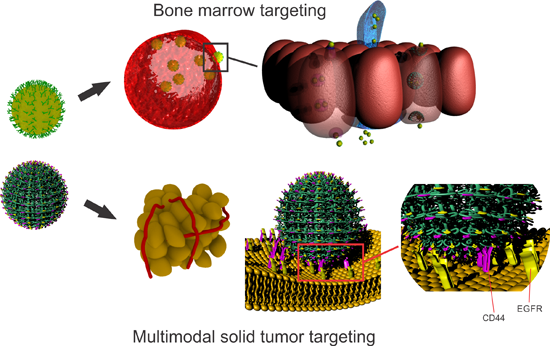
The impact of molecular tumor profiling on the design strategies for targeting myeloid leukemia and EGFR/CD44-positive solid tumors
Beilstein J. Nanotechnol. 2021, 12, 375–401, doi:10.3762/bjnano.12.31


Extended iron phthalocyanine islands self-assembled on a Ge(001):H surface
Beilstein J. Nanotechnol. 2021, 12, 232–241, doi:10.3762/bjnano.12.19
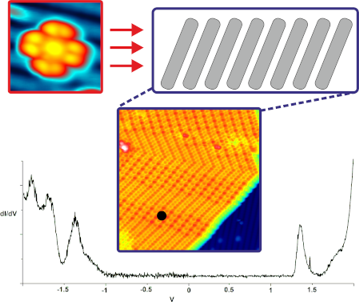
- Rafal Zuzak Marek Szymonski Szymon Godlewski Centre for Nanometer-Scale Science and Advanced Materials, NANOSAM, Faculty of Physics, Astronomy, and Applied Computer Science, Jagiellonian University, Łojasiewicza 11, PL 30-348 Kraków, Poland 10.3762/bjnano.12.19 Abstract Self-assembly of iron(II
- ; iron phthalocyanine (FePc); scanning tunneling microscopy; self-assembly; Introduction The development of molecular circuitry requires the preparation of nanostructures isolated from the influence of the underlying substrate. This is of crucial importance for atomic and single-molecule prototypes, but
- holds also for layered materials. Single-molecule prototypes or molecular nanostructures are often prepared on metals, which usually provide a sufficiently low diffusion barrier for efficient self-assembly and simultaneously allow for in-depth analysis through atomically precise tools from the family of
TiOx/Pt3Ti(111) surface-directed formation of electronically responsive supramolecular assemblies of tungsten oxide clusters
Beilstein J. Nanotechnol. 2021, 12, 203–212, doi:10.3762/bjnano.12.16
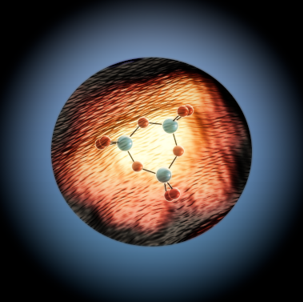
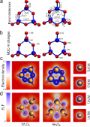
- ]. One possibility to achieve this is to create substrate surfaces, whose characteristics would give rise to the nanostructured metal-oxide self-assembly formation. Herein, we demonstrate the potential of this approach using thermal evaporation of WO3 powder under ultra-high vacuum (UHV) on ultrathin



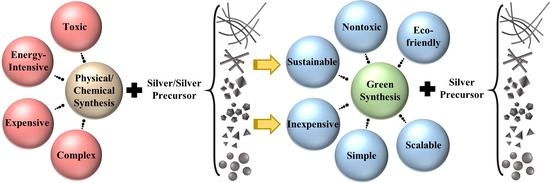
A review on the green and sustainable synthesis of silver nanoparticles and one-dimensional silver nanostructures
Beilstein J. Nanotechnol. 2021, 12, 102–136, doi:10.3762/bjnano.12.9


Electrokinetic characterization of synthetic protein nanoparticles
Beilstein J. Nanotechnol. 2020, 11, 1556–1567, doi:10.3762/bjnano.11.138
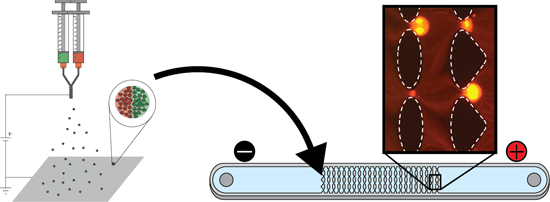
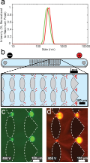
- for producing subcompartments within particles. By localizing proteins at the nanoscale, PNPs could be used to control the release and delivery of therapeutics, theragnostics, and enzymatic cascades [10]. Although previously developed methods to produce PNPs, such as coacervation, self-assembly, and



Optically and electrically driven nanoantennas
Beilstein J. Nanotechnol. 2020, 11, 1542–1545, doi:10.3762/bjnano.11.136
- top-down approaches such as thin film deposition and nanopatterning, as well as bottom-up approaches such as chemical synthesis and self-assembly [38]. Gap sizes may range from a few tens of nanometers down to sub-nanometer tunnel junctions, where the classical description of the plasmonic behavior
- to a sharp tip is refined to a two-step procedure with high throughput. A self-assembly approach to create a dumbbell antenna consisting of a 40 nm and an 80 nm Au nanoparticle at a scanning tip is shown in [48] and applied for single molecule sensitivity imaging. The advantage of applying TERS for
Adsorption and self-assembly of porphyrins on ultrathin CoO films on Ir(100)
Beilstein J. Nanotechnol. 2020, 11, 1516–1524, doi:10.3762/bjnano.11.134
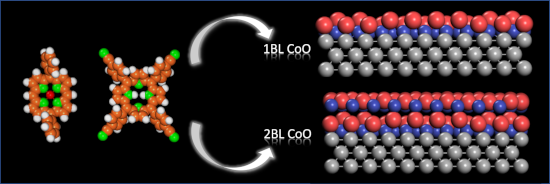
- films on Ir(100) by scanning tunneling microscopy (STM) and density functional theory (DFT). The two substrates differ greatly with respect to their structural and potential-energy landscape corrugation with immediate consequences for adsorption and self-assembly of the molecules studied. On both films
- , due to the rather flat potential landscape, molecular rotation is thermally activated, which effectively prevents self-assembly. The situation is different for 2H-TCNPP, which, due to the additional functional anchoring groups, does not self-assemble on the 1BL film but forms self-assembled compact
- islands on the 2BL film. The findings demonstrate the guiding effect of the cobalt oxide films of different thickness and the effect of functional surface anchoring. Keywords: adsorption energy; molecular rotors; porphyrins; self-assembly; transition metal oxides; Introduction Due to their variability