


Search results
Search for "silver ions" in Full Text gives 61 result(s) in Beilstein Journal of Nanotechnology.
Green preparation and spectroscopic characterization of plasmonic silver nanoparticles using fruits as reducing agents
Beilstein J. Nanotechnol. 2015, 6, 293–299, doi:10.3762/bjnano.6.27
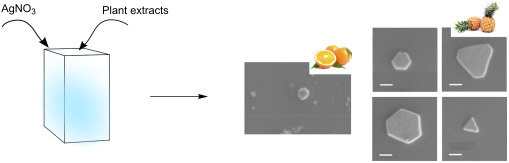
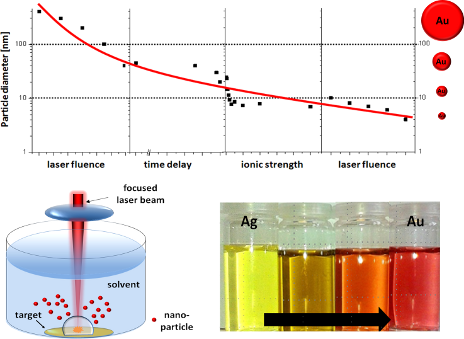
- process such as laser ablation have the advantage of being “chemically clean” with no impurities on their surfaces introduced by the chemical preparation process. In the bottom up approach, nanoparticles are created from even smaller structures such as silver ions, which are the outcome of a chemical


Interaction of dermatologically relevant nanoparticles with skin cells and skin
Beilstein J. Nanotechnol. 2014, 5, 2363–2373, doi:10.3762/bjnano.5.245
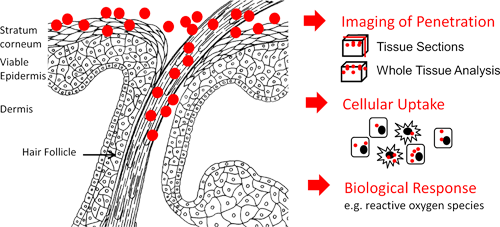
- ROS were formed compared to AgNP which were produced and stored in an argon atmosphere. The oxygen in the ambient atmosphere is responsible for the formation of Ag+ ions by oxidation of the metallic silver nanoparticles. Silver ions are probably responsible for the induction of oxidative stress. In
- the argon atmosphere (in the absence of oxygen), the release of silver ions is strongly suppressed [46]. Taking the results of the uptake and cell viability into account, the data indicate that the silver ions formed during production and/or storage are mainly responsible for the induced oxidative


Effect of silver nanoparticles on human mesenchymal stem cell differentiation
Beilstein J. Nanotechnol. 2014, 5, 2058–2069, doi:10.3762/bjnano.5.214
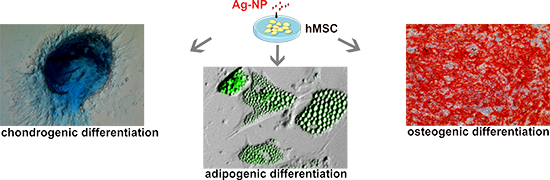
- through clathrin-dependent endocytosis and by macropinocytosis and that silver agglomerates were formed in the cytoplasm following the uptake of these nanoparticles [11]. There is a general consensus that dissolved silver ions are responsible for the majority of the biological effects on various cells and
- that the generation of reactive oxygen species is involved in the silver-induced cell response [9][12][13][14][15][16]. Previously, we have shown that silver ions are more toxic to hMSCs than Ag-NP (in terms of the absolute concentration of silver) [9][10]. This effect is approximately three times
- higher for silver ions than for Ag-NP; however, the biological effects induced by both nanoparticulate and ionic silver occurred in the same respective concentration ranges for eukaryotic cells and microorganisms [17][18][19]. We and others have studied the mechanisms underlying silver ion release from


PVP-coated, negatively charged silver nanoparticles: A multi-center study of their physicochemical characteristics, cell culture and in vivo experiments
Beilstein J. Nanotechnol. 2014, 5, 1944–1965, doi:10.3762/bjnano.5.205
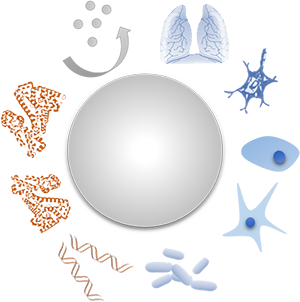
- types (alveolar epithelial cells, macrophages, and dendritic cells), adverse effects were also only found at high silver concentrations. The silver ions that are released from silver nanoparticles may be harmful to skin with disrupted barrier (e.g., wounds) and induce oxidative stress in skin cells
- undergo dissolution in water due to oxidation by dissolved oxygen [30][31][32][33]. This leads to the release of silver ions, which are the toxic agent towards cells and bacteria [20][29][33][34][35][36]. The dissolution of silver nanoparticles in water and other media has been studied by a number of
- assume that this is due to a strong binding of the thiol group to the silver metal surface, which prevents the dissolution by passivation. Glucose, which is often used in syntheses to reduce silver ions to silver metal, has a decelerating effect but leads to a similar fraction of silver being finally


Current state of laser synthesis of metal and alloy nanoparticles as ligand-free reference materials for nano-toxicological assays
Beilstein J. Nanotechnol. 2014, 5, 1523–1541, doi:10.3762/bjnano.5.165
- were both more pronounced in the presence of albumin. These findings may be attributed to the reduction of silver ions by surface bound citrate. The latter is frequently applied during the synthesis of silver nanoparticles [152][153], which in this case may reduce ion release and hence toxicity. In


Protein-coated pH-responsive gold nanoparticles: Microwave-assisted synthesis and surface charge-dependent anticancer activity
Beilstein J. Nanotechnol. 2014, 5, 1452–1462, doi:10.3762/bjnano.5.158
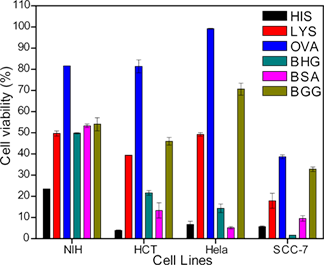
- AuNPs. Conclusion For the first time, six different protein-coated AuNPs were prepared by using a single, rapid and green synthetic protocol that utilized microwave irradiation in an aqueous medium. The addition of silver ions to the reaction mixture enhanced the yield of AuNPs, which was confirmed by a


Mimicking exposures to acute and lifetime concentrations of inhaled silver nanoparticles by two different in vitro approaches
Beilstein J. Nanotechnol. 2014, 5, 1357–1370, doi:10.3762/bjnano.5.149
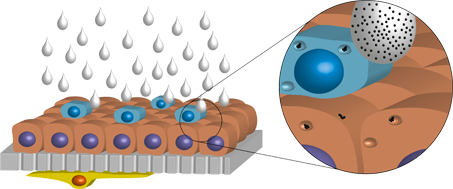
- . Therefore, it can be assumed that the amount of free silver ions (i.e., neither precipitated nor complexed by proteins) from silver nanoparticles in biological media is small, in any case smaller than during dissolution in pure water [66]. Conclusion The exposure of Ag NPs at the air–liquid interface



Injection of ligand-free gold and silver nanoparticles into murine embryos does not impact pre-implantation development
Beilstein J. Nanotechnol. 2014, 5, 677–688, doi:10.3762/bjnano.5.80
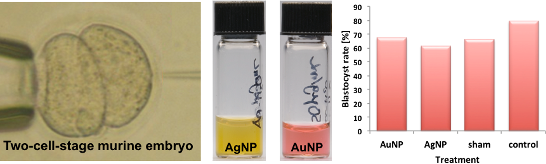
- to the cytotoxicity of silver ions [42]. In order to exclude any cross-effects of stabilizers or reducing agents, which are difficult to exclude in precursor-based chemically produced gold and silver nanoparticles, the particles for this study were synthesized by laser ablation of a bulk solid target
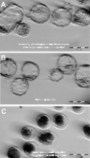
- Ag+-ions resulted in an immediate arrest of development (Figure 3C). Silver ions were included in the dose study by adding 25 µM of AgNO3 to the culture medium, which is equivalent to approximately 50% of the Ag mass concentration inside the AgNP injected blastomere – given that 10 pL of a 463 µM [50
- for a protective mechanism can possibly be drawn from a control experiment performed in the course of the current trial. Since the toxicity of silver nanoparticles is to a large extend attributable to silver ions dissolving from nanomaterial compounds [77], we controlled this effect by co-incubating




Cytotoxic and proinflammatory effects of PVP-coated silver nanoparticles after intratracheal instillation in rats
Beilstein J. Nanotechnol. 2013, 4, 933–940, doi:10.3762/bjnano.4.105
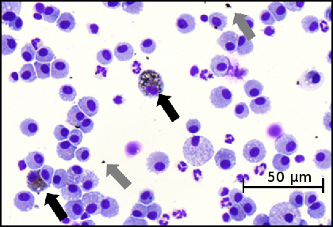
- metabolization of silver ions. Thus, the dissolution of AgNP and release of silver ions as well as the subsequent biochemical transformations are an important issue in AgNP toxicity [27]. However, most of the information available about the mechanisms of AgNP toxicity has been derived from in vitro studies. The
- were not due to a high AgNP dose per epithelial cell or alveolar macrophage, but are in good agreement with the toxicity mechanisms of dissolved Ag ions described above. Another crucial point in the discussion about the toxicity of AgNP is the release of silver ions. Kittler and co-workers noted that
- the rate of the dissolution of AgNP depends on the surface functionalization, concentration and temperature [37]. They found an increasing toxicity to human mesenchymal stem cells during the storage of AgNP solutions, explained by the increasing release of silver ions over time. The authors emphasized




Photocatalytic antibacterial performance of TiO2 and Ag-doped TiO2 against S. aureus. P. aeruginosa and E. coli
Beilstein J. Nanotechnol. 2013, 4, 345–351, doi:10.3762/bjnano.4.40
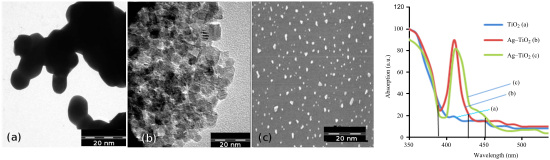
- photocatalytic efficiency [8][9]. However, silver nanoparticles have prospective applications including biosensing, biodiagnostics, optical fibers, and antimicrobial and photocatalytic uses. Silver ions are known to cause denaturation of proteins present in bacterial cell walls and slow down bacterial growth [5
- ]. The simplest photocatalytic mechanism of silver ions is that it may take part in catalytic oxidation reactions between oxygen molecules in the cell and hydrogen atoms of thiol groups, i.e., two thiol groups become covalently bonded to one another through disulfide bonds (R–S–S–R), which leads to
- not found with gold nanoparticles [12]. Previously, it was observed that doping of a TiO2 matrix with silver ions moved the absorption to a longer wavelength, i.e., to the visible region in comparison with pure TiO2, due to the change in electronic and optical properties of TiO2 [13]. On the other


Parallel- and serial-contact electrochemical metallization of monolayer nanopatterns: A versatile synthetic tool en route to bottom-up assembly of electric nanocircuits
Beilstein J. Nanotechnol. 2012, 3, 134–143, doi:10.3762/bjnano.3.14
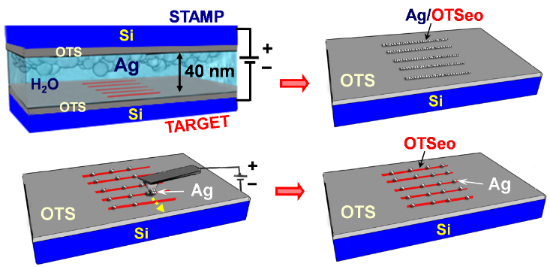
- larger metal grain [52] is, thus, not possible unless a critical number of silver atoms are simultaneously generated through the reduction of an equal number of closely located silver ions. This can be accomplished at a target surface covered by a silver-binding monolayer such as OTSeo, in which the
- pristine OTS surface is not possible because of the very low probability of nucleation and growth of metal grains on such a surface devoid of ion-binding functions [53]. Since the local concentration of hydrated silver ions in solution in front of an OTS monolayer should be much lower than that of Ag+ ions





