


Search results
Search for "single cell" in Full Text gives 58 result(s) in Beilstein Journal of Nanotechnology.
Current state of laser synthesis of metal and alloy nanoparticles as ligand-free reference materials for nano-toxicological assays
Beilstein J. Nanotechnol. 2014, 5, 1523–1541, doi:10.3762/bjnano.5.165
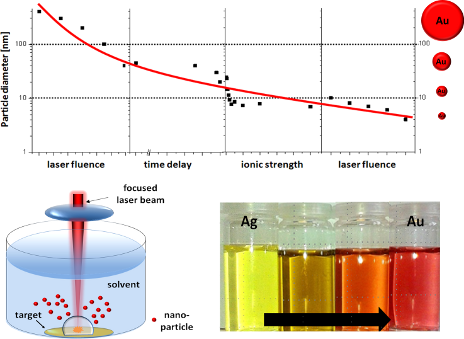
- reference materials is of paramount importance in reproduction biology, as fertilization is a highly sensitive process where a single cell counts. Influence of laser pulse length on particle size distribution. A) Representative normalized weight frequency of nanoparticle diameter of gold nanoparticles


Hydrophobic interaction governs unspecific adhesion of staphylococci: a single cell force spectroscopy study
Beilstein J. Nanotechnol. 2014, 5, 1501–1512, doi:10.3762/bjnano.5.163
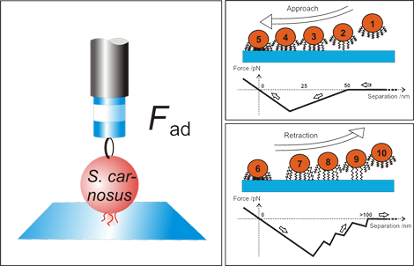
- surface, single cell force spectroscopy is applied: A single cell of the apathogenic species Staphylococcus carnosus isolate TM300 is used as bacterial probe. With the exact same bacterium, hydrophobic and hydrophilic surfaces can be probed and compared. We find that as far as 50 nm from the surface
- hydrophobic (hydrophilic) surfaces. Keywords: atomic force microscopy (AFM); force spectroscopy; hydrophobic interaction; single cell; Staphylococcus carnosus; Introduction Members of the genus Staphylococcus are known to form extremely resistant biofilms, some of which can cause severe infectious diseases
- measuring bacterial adhesion forces has been introduced: single-cell force spectroscopy is a special mode of an atomic force microscope (AFM) [16] and is optimized to investigate adhesion forces [17][18] of single bacterial cells in a very controlled manner: By using AFM-cantilevers functionalized with


Molecular biology approaches in bioadhesion research
Beilstein J. Nanotechnol. 2014, 5, 983–993, doi:10.3762/bjnano.5.112
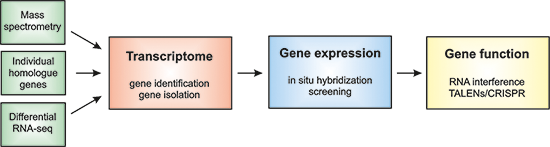
- information for evaluating gene function. However, these technologies require genomic information of the target organism or the gene of interest. Also, the microinjection delivering system in single-cell embryos are compulsory for these technologies. Nevertheless, TALENs and CRISPR appear to work in principle


Optical modeling-assisted characterization of dye-sensitized solar cells using TiO2 nanotube arrays as photoanodes
Beilstein J. Nanotechnol. 2014, 5, 895–902, doi:10.3762/bjnano.5.102
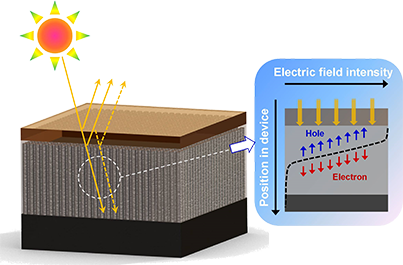
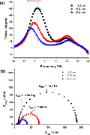
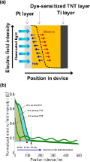
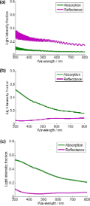
- fabricated active area in the single cell was 0.16 cm2 (4 × 4 mm2). Characterization of TNT-based DSSCs The photovoltaic performances of the DSSCs were measured using a Keithley 2400 source measure unit under a calibrated AM 1.5 solar simulator (Oriel) at 100 mW·cm−2 light intensity. Incident photon-to


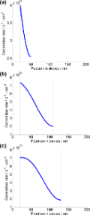
The softening of human bladder cancer cells happens at an early stage of the malignancy process
Beilstein J. Nanotechnol. 2014, 5, 447–457, doi:10.3762/bjnano.5.52
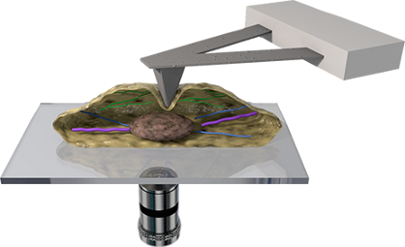
- progression. This makes the cell stiffness a powerful biomarker for detecting cancer-related alterations in human bladder tumors. Conclusion Nanomechanical measurements performed with a force microscope at the single cell level have been applied to characterize the elastic properties of human bladder cancer


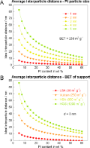
Design criteria for stable Pt/C fuel cell catalysts
Beilstein J. Nanotechnol. 2014, 5, 44–67, doi:10.3762/bjnano.5.5




Combining nanoscale manipulation with macroscale relocation of single quantum dots
Beilstein J. Nanotechnol. 2012, 3, 324–328, doi:10.3762/bjnano.3.36
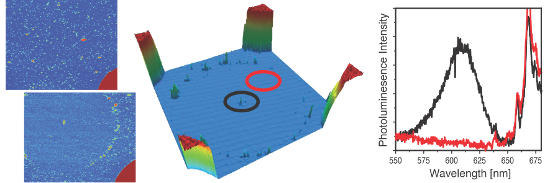
- capability, the sapphire substrate was patterned by using a grid of gold pillars as shown in Figure 1a. The center-to-center distance of the pillars is 5 μm and the pillar height 75 nm. Four pillars form a single cell, which can be repeatedly addressed in both an optical microscope and by AFM by simply


Magnetic nanoparticles for biomedical NMR-based diagnostics
Beilstein J. Nanotechnol. 2010, 1, 142–154, doi:10.3762/bjnano.1.17
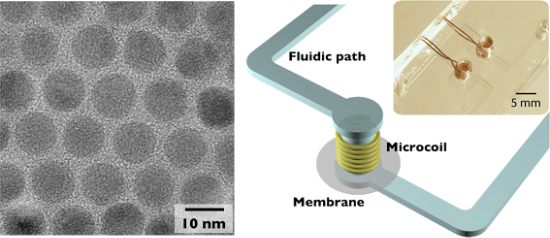
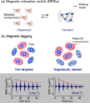
- and the highly magnetic MnFe2O4 nanoparticles, detection sensitivity for cell sensing was remarkably improved (Figure 7a) [15]. Notably, as shown in Figure 7b, the detection threshold was reduced to approximately single-cell level, far surpassing the sensitivity seen in either previous DMR experiments


Other Beilstein-Institut Open Science Activities



