


Search results
Search for "stress" in Full Text gives 570 result(s) in Beilstein Journal of Nanotechnology. Showing first 200.
Multifunctional properties of bio-poly(butylene succinate) reinforced with multiwalled carbon nanotubes
Beilstein J. Nanotechnol. 2025, 16, 1014–1024, doi:10.3762/bjnano.16.76
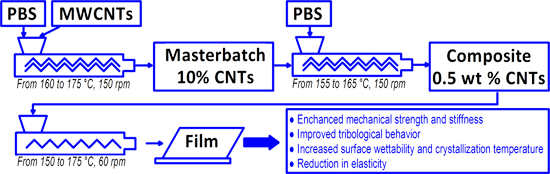
- precise positioning of the hardness tester at a right angle to the specimen surface. Mechanical properties tests under static tension were conducted using a TIRAtest 27025 testing machine (TIRA Maschinenbau GmbH, Schalkau, Germany). Maximum stress (Rm), stress at break (Rb), tensile modulus (Et), strain
- at maximum stress (δm), and strain at break (δb) were determined according to PN-EN ISO 527-3:2019-01 “Plastics – Determination of Tensile Properties – Part 3: Test Conditions for Films and Plates”. The tests were conducted at an extension rate of 1 mm·min−1 for tensile modulus measurements and 100



Time-resolved probing of laser-induced nanostructuring processes in liquids
Beilstein J. Nanotechnol. 2025, 16, 968–1002, doi:10.3762/bjnano.16.74
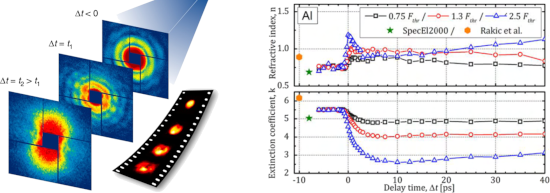
- to melting, reshaping (Figure 1B,C), evaporation, and phase explosion near the critical point (Figure 1H) [39][46][47][48]; (ii) stress-induced decompositions, where competition between heating and expansion leads to spallation or cavitation [36][49][50] (Figure 1I); (iii) non-thermal processes


Shape, membrane morphology, and morphodynamic response of metabolically active human mitochondria revealed by scanning ion conductance microscopy
Beilstein J. Nanotechnol. 2025, 16, 951–967, doi:10.3762/bjnano.16.73
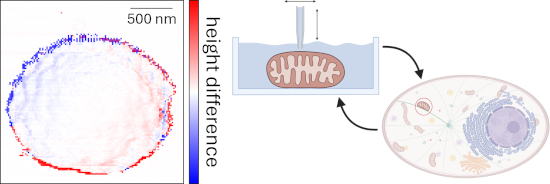
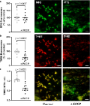
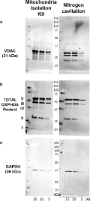
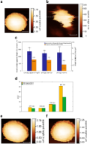
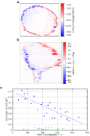
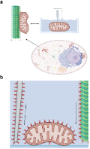
- membranes but not the mitochondrial outer membrane, was used to disrupt the cells. Mechanical shear forces associated with the Dounce homogeniser, as well as the stress from freezing and thawing, were avoided to minimise the formation of submitochondrial particles [36]. Regardless of the isolation method



Characterization of ion track-etched conical nanopores in thermal and PECVD SiO2 using small angle X-ray scattering
Beilstein J. Nanotechnol. 2025, 16, 899–909, doi:10.3762/bjnano.16.68
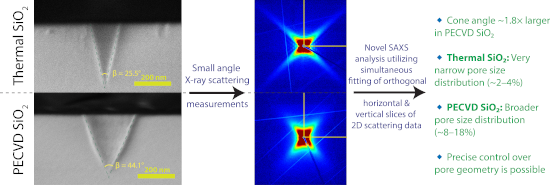
- can only be grown on a Si substrate. PECVD, in contrast, allows for the deposition at much lower temperatures on many different substrates with control over the film properties, such as stoichiometry, density, refractive index, and residual stress. As these fabrication methods involve fundamentally


Ar+ implantation-induced tailoring of RF-sputtered ZnO films: structural, morphological, and optical properties
Beilstein J. Nanotechnol. 2025, 16, 872–886, doi:10.3762/bjnano.16.66
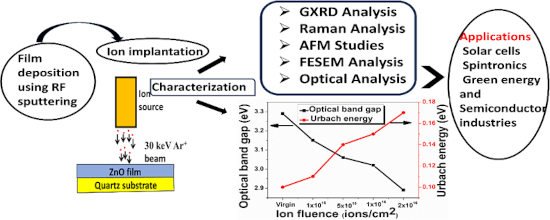
- shorter with the rise in argon ion fluence, which can be correlated with the emergence of the defect-induced band. Moreover, phonon softening relates to tensile stress, while phonon stiffening relates to compressive stress. Thus, all argon ion-implanted ZnO films show phonon softening, which indicates
- that tensile stress is produced in the films with an increase in argon ion fluence. This can be ascribed to expansion in volume due to implanted ions since argon ions are inert in nature, which prevents them from reacting with host ions. This leads to the accumulation of inert ions at the interstitial
- sites of ZnO, which produces stress in the material [14]. Additionally, it is observed that the intensity of the disorder-induced band rises with the rise in Ar+ fluence. This is attributed to the fact that ion implantation produces lattice disorder or lattice damage, which is studied in terms of the






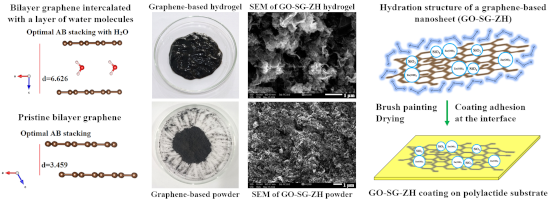
Supramolecular hydration structure of graphene-based hydrogels: density functional theory, green chemistry and interface application
Beilstein J. Nanotechnol. 2025, 16, 806–822, doi:10.3762/bjnano.16.61
- GO-SG-ZH/PLA films are described in Figure 12 and summarized in Table 4. Additional data of measurement values and stress–strain curves are given in Supporting Information File 1, Table S1, Figure S4, Table S2, and Figure S5. Our previous paper presented that GO-ZnO coating on PLA film led to an
- days in aqueous solutions. (c, d) Initial SG/PLA film (c) and GO-SG-ZH/PLA film (d). (e, f) Pictures of SG/PLA films after 10 days (e) and GO-SG-ZH/PLA films after 30 days (f) in aqueous environments. (a) Graph of tensile strength, elastic modulus, and tensile elongation. (b) Typical stress–strain


Thickness dependent oxidation in CrCl3: a scanning X-ray photoemission and Kelvin probe microscopies study
Beilstein J. Nanotechnol. 2025, 16, 749–761, doi:10.3762/bjnano.16.58
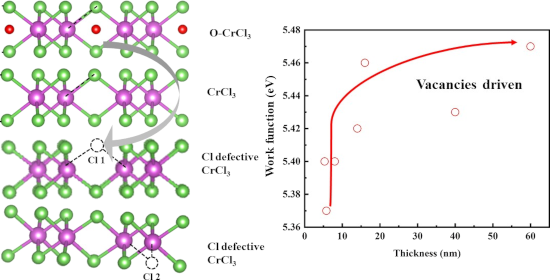
- , which can be significantly different from those of the bulk [13][1]. A central question remains whether modified structures and compositions arise from stress during cleaving, affecting surface terminations [10], or from the exfoliation process itself, which differs from cleaving. Regarding the bulk, we
- , where such a formation was very much hindered compared to thick flakes prepared in air [8]. It is nevertheless important to stress that here the modification is mostly driven by Cl vacancies alone. A strong evidence from this study and previous studies [8] is that only in case of bulk samples cleaved in





Efficiency of single-pulse laser fragmentation of organic nutraceutical dispersions in a circular jet flow-through reactor
Beilstein J. Nanotechnol. 2025, 16, 711–727, doi:10.3762/bjnano.16.55
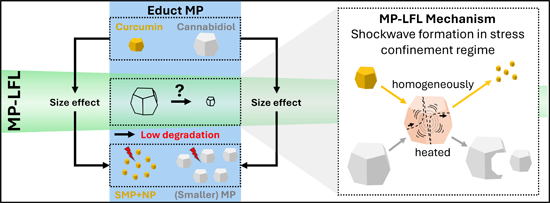
- inorganic IrO2 [14] based on shock wave formation caused by stress confinement. The conditions for stress confinement are fulfilled if the pulse duration is shorter than the acoustic relaxation time and thus a maximum pressure increase occurs in the particle. For curcumin and CBD, this is the case with a
- formation of thermoelastic stress and finally to the formation of shock waves, promoting mechanical fragmentation. For curcumin, the mean optical penetration depth is 32 µm (dopt, 1 µm = 39 µm, dopt, 10 µm = 27 µm), and for CBD, the mean optical penetration depth is 170 µm. The mean absorption coefficients
- , and (II) differences in the MP dissociation pathways, which may hinder the formation of the desired SMPs and NPs when educt particles are too large. For both MP material systems we confirmed, based on the calculation of the acoustic relaxation time, that the stress confinement condition for the use of


Colloidal few layered graphene–tannic acid preserves the biocompatibility of periodontal ligament cells
Beilstein J. Nanotechnol. 2025, 16, 664–677, doi:10.3762/bjnano.16.51
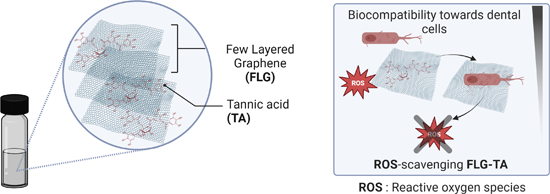
- , particularly antioxidant effects [16][17][18]. Bioactive antioxidants reduce oxidative stress by inhibiting unstable oxygen radicals [17]. Oxidative stress occurs when reactive oxygen species (ROS) damage cellular components because of an imbalance in the normal redox state of cells [17][19]. ROS, which
- reactions, leading to oxidative stress [17]. Studies have shown that TA exhibits significant antioxidant properties by suppressing hydroxyl radical formation and neutralizing both superoxide anion radicals and hydrogen peroxide. However, its antioxidant efficacy is concentration-dependent. While it shows
- viability observed at 48 h may be related to changes in the stability of TA molecules within the culture medium, potentially resulting in dissociation of TA from FLG particles. The subsequent presence of unbound TA molecules may induce oxidative stress responses and compromise cellular viability




A formulation containing Cymbopogon flexuosus essential oil: improvement of biochemical parameters and oxidative stress in diabetic rats
Beilstein J. Nanotechnol. 2025, 16, 617–636, doi:10.3762/bjnano.16.48
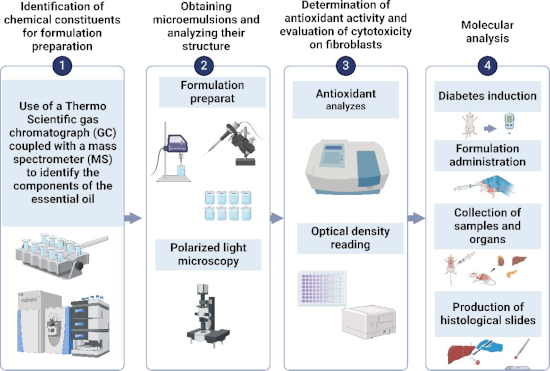
- temperatures (25 and 37 °C) was analyzed. The results were expressed in rheograms (Figure 2) and represent the relationship between the shear stress and the shear rate. The data were analyzed using the power law (τ = k⋅γn), where τ is the shear rate, k is the consistency index (viscosity), γ is the shear
- stress, and n is the flow index. The flow curves showed a linear correlation (n close to 1). For 25 °C, n was 1.08, while for 37 °C, it was 0.99 (i.e., Newtonian behavior). R2 was greater than 0.996 for both tests, indicating that the data fit this model. This is expected for a microemulsion system [18
- study, room temperature was used, which may also explain why the antioxidant action was maintained. EOCF, on E. coli and S. Aureus bacteria, showed antioxidant activity and control in pathogenic species resistant to oxidative stress. The authors also emphasized that EOCF acted as a potent attenuator of




Polyurethane/silk fibroin-based electrospun membranes for wound healing and skin substitute applications
Beilstein J. Nanotechnol. 2025, 16, 591–612, doi:10.3762/bjnano.16.46



Nanomaterials in targeting amyloid-β oligomers: current advances and future directions for Alzheimer's disease diagnosis and therapy
Beilstein J. Nanotechnol. 2025, 16, 561–580, doi:10.3762/bjnano.16.44
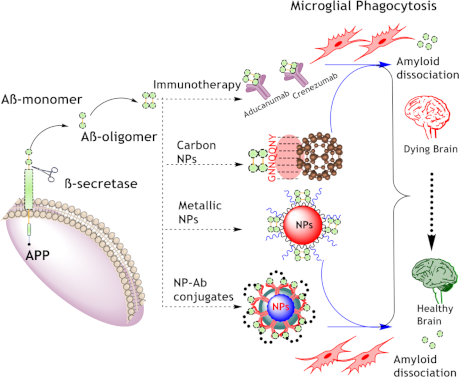
- internalized, AβOs activate N-methyl-ᴅ-aspartate-type glutamate receptors (NMDARs) located on neuronal membranes. This activation triggers endoplasmic reticulum (ER) stress through the stimulation of phospholipase C, leading to an influx of calcium ions (Ca2+) into the cytosol [15]. Elevated Ca2+ levels result
- in the accumulation of reactive oxygen species (ROS) and reactive nitrogen species, contributing to oxidative stress within the cell [16]. The increase in cytosolic Ca2+ also promotes the phosphorylation of ATP proteins, which, in turn, leads to the enhanced production of Aβ42 and AβOs, creating a
- Bcl-2-associated death promoter (BAD). This process, coupled with oxidative stress pathways originating from mitochondrial dysfunction, facilitates the release of cytochrome c from the mitochondria. This release is a key event that promotes caspase activation, initiating pro-apoptotic signaling that


N2+-implantation-induced tailoring of structural, morphological, optical, and electrical characteristics of sputtered molybdenum thin films
Beilstein J. Nanotechnol. 2025, 16, 495–509, doi:10.3762/bjnano.16.38
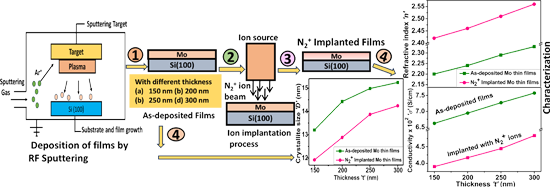
- generation in Mo thin films with a low-energy argon ion beam (1 keV) across different ion fluences (1016–1018 ions·cm−2). Thornton et al. [16] examined a transition from tensile to compressive stress in argon-ion-implanted Mo thin films as the sputtering gas pressure decreased. Sun et al. [17] also analyzed
- the properties of argon-ion-implanted Mo thin films deposited via ion beam sputtering, varying deposition parameters such as accelerating voltage, incidence angle, and chamber pressure. Films deposited at near-normal incidence exhibited compressive stress and a nearly linear increase with the
- accelerating voltage. At grazing incidence, the observed stress is either minimal or slightly tensile and is mostly unaffected by the accelerating voltage. Tripathi et al. [18] examined the temperature-dependent surface alterations in Mo films induced by He+ ion irradiation within the 773–1073 K range as a


Impact of adsorbate–substrate interaction on nanostructured thin films growth during low-pressure condensation
Beilstein J. Nanotechnol. 2025, 16, 473–483, doi:10.3762/bjnano.16.36

- (r) = . It should be noted that the term Uel is important when the bonding between adatoms and substrate is strong (for example Cu atoms deposited onto Ti, Ta, or Mo substrates) [30][31]. For sufficiently small lattice mismatch between adsorbate and substrate, elasticity and stress effects may be


Quantification of lead through rod-shaped silver-doped zinc oxide nanoparticles using an electrochemical approach
Beilstein J. Nanotechnol. 2025, 16, 422–434, doi:10.3762/bjnano.16.33
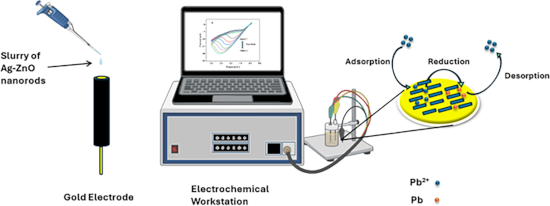
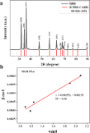
- expressed as is 0.001275. The total broadening of the peak (βT) caused by the crystalline size and strain in the lattice is given by: where βD is broadening of the peak due to crystal size and βε is broadening due to lattice strain. For analyzing stress and strain resulting from X-ray diffraction
- a consequence of Ag doping, which also results in peaks broadening. The wurtzite structure of ZnO is characterized by dominant peaks at approximately 96 and 473 cm−1, the peak at 473 cm−1 represents the E2H mode corresponding to oxygen, and this mode is sensitive to internal stress. Ag doping





Tailoring of physical properties of RF-sputtered ZnTe films: role of substrate temperature
Beilstein J. Nanotechnol. 2025, 16, 333–348, doi:10.3762/bjnano.16.25
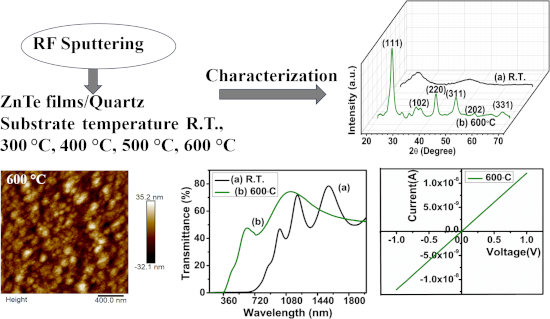
- substrate, which ultimately lead to the development of stress and strain within the film. At a substrate temperature of 600 °C, the lattice constant value is the same as in the bulk material. The strain in films occurs due to lattice mismatch between film and bulk. The microstrain in films was calculated




Graphene oxide–chloroquine conjugate induces DNA damage in A549 lung cancer cells through autophagy modulation
Beilstein J. Nanotechnol. 2025, 16, 316–332, doi:10.3762/bjnano.16.24
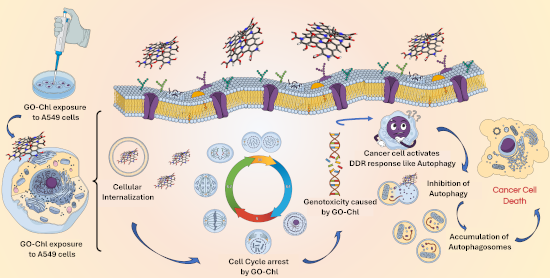
- oxidative stress and autophagy modulation [14]. Graphene oxide (GO) due to its unique physicochemical properties has attracted vast scientific attention as an efficient drug delivery carrier and modulator of biological activities, including autophagy, DDR, and intracellular transportation of therapeutics
- lung cancer cells Cells upon exposure to external stress and endogenous metabolic changes produce a variety of DNA lesions. Those can give rise to genomic instability via gene mutations and chromosomal damage, leading to tumor progression and metastasis [60]. In a healthy cell, various DNA-damage



Enhancing mechanical properties of chitosan/PVA electrospun nanofibers: a comprehensive review
Beilstein J. Nanotechnol. 2025, 16, 286–307, doi:10.3762/bjnano.16.22

- stress on that fiber and weaken the overall structure [25]. With advancements in technology for producing nanofibers through electrospinning, various methods and techniques have been developed to enhance the mechanical properties of electrospun nanofibers. The objective of this review is to explore
- measures the maximum stress a material can withstand while being stretched before breaking and is one of the most critical mechanical properties of nanofibers. Tensile strength is usually tested using a universal testing machine (UTM), also known as tensile testing machine or tensile strength instrument
- membrane can be tricky in terms of handling and thickness measurements used for stress calculations [132]. Preparation of specimens requires attention to prevent damage, pretension, or slipping from grips during testing. Maccaferri et al. [133] demonstrated the use of a paper frame to hold the specimen in


Radiosensitizing properties of dual-functionalized carbon nanostructures loaded with temozolomide
Beilstein J. Nanotechnol. 2025, 16, 229–251, doi:10.3762/bjnano.16.18
- publications contain information on the potential mechanisms of CNs’ cytotoxicity, pointing to physical destruction, oxidative stress/ROS generation, DNA damage, cell autophagia and lysosomal membrane damage followed by mitochondrial dysfunction, pyroptosis followed by activation of inflammasomes, apoptosis
- necrosis was observed, with the involvement of toll-like receptor-, transforming growth factor β-, tumor necrosis factor α-, and mitogen-activated protein kinase-dependent pathways in the signaling pathway network and oxidative stress playing a crucial role in these pathways [75][76]. However, all
- observed when FA was applied to breast cancer cells through induced oxidative stress as the driver of cytotoxicity, cell cycle arrest in the S and/or G1/G0 phases, and significantly increased apoptosis [94][95]. The mechanisms behind the cancer protection and potential carcinogenic effect of FA are in




Probing the potential of rare earth elements in the development of new anticancer drugs: single molecule studies
Beilstein J. Nanotechnol. 2025, 16, 187–194, doi:10.3762/bjnano.16.15
- agreement with the OT results since the concentration used in the sample to obtain this image was 1 μM of neodymium. Finally, for erbium (Figure 3c) the complexes also appears compacted/condensed for 1 μM of the rare earth, also in agreement with the OT results. We stress that the intent of the AFM


A review of metal-organic frameworks and polymers in mixed matrix membranes for CO2 capture
Beilstein J. Nanotechnol. 2025, 16, 155–186, doi:10.3762/bjnano.16.14
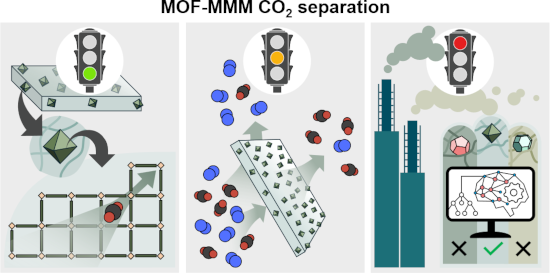
- possess greater mechanical strength, they are more prone to deformation under mechanical stress [75][76]. Membranes used for gas separation must have sufficient mechanical strength to resist plastic deformation under high gas pressures [77]. Although inorganic membranes appear more advantageous for gas




Nanocarriers and macrophage interaction: from a potential hurdle to an alternative therapeutic strategy
Beilstein J. Nanotechnol. 2025, 16, 97–118, doi:10.3762/bjnano.16.10

- delivery route despite the potential advantages of local approaches [6]. Once in the bloodstream, NCs are exposed to a wide range of forces, such as fluid shear stress, blood flow, opsonization, excretion, and interaction with the MPS, all of which influence NC stability and delivery. This challenging and
- ferroptosis inhibitor Fer-1. These liposomes promoted M2 polarization via the CaSR/AKT/β-catenin pathway while protecting macrophages from ferroptosis. In murine models of IBD, CLF reduced oxidative stress, inhibited ferroptosis, and restored intestinal homeostasis by increasing the M2/M1 macrophage ratio [66
- , with various damaging mediators, including ROS and other oxidative stress-related compounds, playing a critical role in perpetuating fibrosis [88]. It has been found by Beljaars et al., that both M1- and M2-like macrophage subsets coexist in fibrotic lesions in both human and mouse livers, highlighting


Characterization of ZnO nanoparticles synthesized using probiotic Lactiplantibacillus plantarum GP258
Beilstein J. Nanotechnol. 2025, 16, 78–89, doi:10.3762/bjnano.16.8
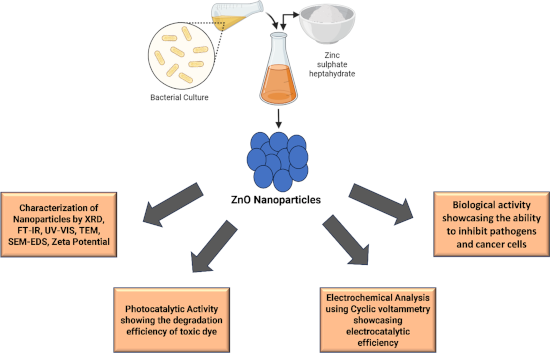
- . ZnO NPs are known to generate reactive oxygen species (ROS), including hydroxyl radicals and superoxide ions, upon interaction with bacterial cells. These ROS disrupt bacterial cell membranes, cause oxidative stress, and damage cellular components, ultimately leading to cell death. Additionally, ZnO



Bioinspired nanofilament coatings for scale reduction on steel
Beilstein J. Nanotechnol. 2025, 16, 25–34, doi:10.3762/bjnano.16.3

- stability on steel. Our study demonstrates the successful coating of stainless steel with SNFs, achieving super-hydrophobicity and resilience under high shear stress and explosion/decompression tests. Scaling experiments reveal a 75.5% reduction in calcium carbonate deposition on SNF-coated steel surfaces
- coat stainless steel (Type 316) with nanofilaments, discuss stability test of the coatings, and the results of scaling experiments. Results and Discussion Nanofilamant performance and stability on steel Shear stress test of SNF coatings on steel Previous applications of SNF technology have been focused
- damage the coating visibly. Yet, most paintings and coatings will sustain damage when mechanically scratched. To evaluate shear stability under realistic operating conditions, we constructed a medium-temperature, medium-pressure, constant shear stress device (Figure 2A and Figure 2B). Our design is an


Heterogeneous reactions in a HFCVD reactor: simulation using a 2D model
Beilstein J. Nanotechnol. 2024, 15, 1627–1638, doi:10.3762/bjnano.15.128
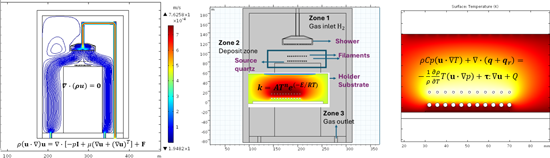
- ), (∇u)T is the transposed velocity gradient tensor, τ is the viscous stress tensor (Pa), μ is the dynamic viscosity (Pa·s), Q includes heat sources other than viscous dissipation (W·m−3), and δij is the Kronecker delta symbol. All equations in this section were taken from [26], except Equation 5, which





