Search results
Search for "surface topography" in Full Text gives 138 result(s) in Beilstein Journal of Nanotechnology.
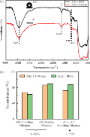
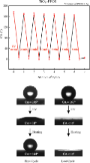
Rapid, ultraviolet-induced, reversibly switchable wettability of superhydrophobic/superhydrophilic surfaces
Beilstein J. Nanotechnol. 2019, 10, 866–873, doi:10.3762/bjnano.10.87
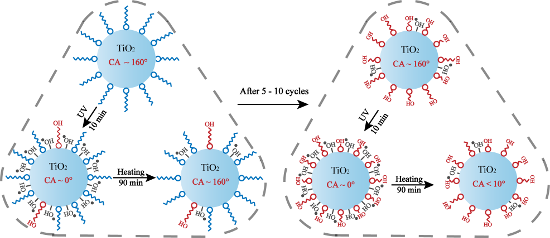
- solid surfaces governed by surface chemistry and surface topography [1][2] and has found significant applications in various fields [3][4][5][6][7][8]. Controllable wettability that can be enabled through external stimuli, such as illumination, electric fields or heating, can be applied in chemical



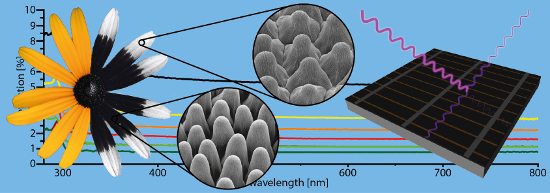
Ultraviolet patterns of flowers revealed in polymer replica – caused by surface architecture
Beilstein J. Nanotechnol. 2019, 10, 459–466, doi:10.3762/bjnano.10.45
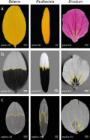
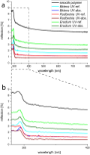
- is described in Koch et al. [39] and is a suitable technique for the transfer of the surface topography of soft and fragile plant material to a rigid material in high precision down to the nanometer scale. Results and Discussion Images of flowers under environmental conditions were taken in the VIS
- also provide new data for the development of technical surfaces with well-defined optical specifications. For this purpose the UV-reflection of the flowers of approximately 8,000 angiosperms was systematically recorded and published [36][37][38]. To determine the possible influence of the surface
- topography on the appearance of UV-patterns, we investigated the interaction between UV-light and the surface structures of three different plant species in this study. To consider several diverse surface structures we chose three species with distinct UV-patterns and different surface structures, for


Biocompatible organic–inorganic hybrid materials based on nucleobases and titanium developed by molecular layer deposition
Beilstein J. Nanotechnol. 2019, 10, 399–411, doi:10.3762/bjnano.10.39
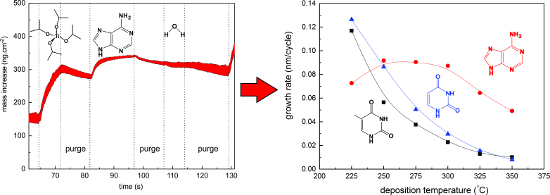
- density of the systems were measured after 15 minutes of water treatment (Table 3), indicating some variations in index of refraction, but relatively small variations in film density between the different systems. The surface topography of films as-deposited on Si(100) and after being immersed in water
- increase during growth measured by QCM using TTIP and thymine (at 225 °C) (top graph), uracil (at 225 °C) (top graph), or adenine (250 °C) (bottom graph), and water. The shaded area represents the statistical variation during 16 cycles. Surface topography as measured by AFM for films deposited using TTIP




Contact splitting in dry adhesion and friction: reducing the influence of roughness
Beilstein J. Nanotechnol. 2019, 10, 1–8, doi:10.3762/bjnano.10.1
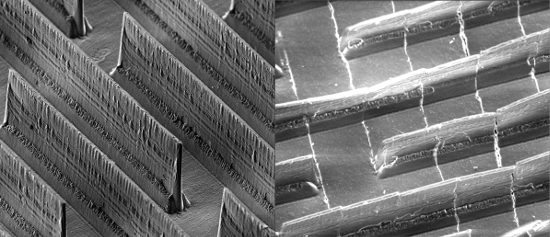
- adaptability of the split microstructure to wavy surfaces allows it to form larger contact area (Figure 3) on the surfaces with intermediate roughness, thus leading to a better attachment. In addition to its better ability to adapt to uneven surface topography, a split microstructure may also demonstrate
- statistically equal fractions of the split flap peel at angles θ − α and θ + α, respectively, with α being a small perturbation angle defined by the surface topography. In this case, solving the Kendall equation ((2) in [44]) yields where F is the peeling force, b is the film width, d is the film thickness, E
- that splitting the adhesive microstructure in parallel to the peeling force may improve the attachment ability not only due to better adaptation to surface topography, but also due to the effective decrease of the peeling angle. The friction force measured at the point of sliding inception on all


In situ characterization of nanoscale contaminations adsorbed in air using atomic force microscopy
Beilstein J. Nanotechnol. 2018, 9, 2925–2935, doi:10.3762/bjnano.9.271
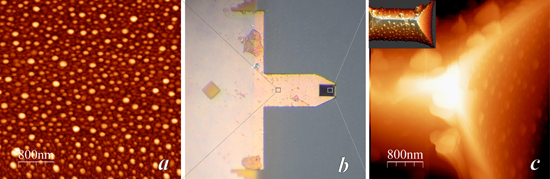
- order to access material properties (“chemical information”, thus the name spectroscopy) [12]. AFM allows not only the measurement of surface topography, but also the determination of other physical characteristics; in particular electrostatic [13][14][15] and magnetic properties [16][17]. For reliable


Biomimetic surface structures in steel fabricated with femtosecond laser pulses: influence of laser rescanning on morphology and wettability
Beilstein J. Nanotechnol. 2018, 9, 2802–2812, doi:10.3762/bjnano.9.262
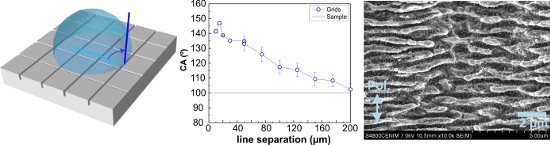
- surface topography needs to be mimicked, but often also a specific function of the structure. An alternative approach to laser direct writing of complex structures is the generation of laser-induced periodic surface structures (LIPSS), which is based on directed self-organization of the material and
- objective to reproduce not only the geometry and morphology of structures found in natural systems, but – most importantly – their specific functionality. Biomimetic applications that aim to control the wetting properties of a material surface must take into account the surface topography, since it strongly

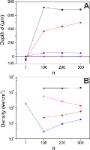


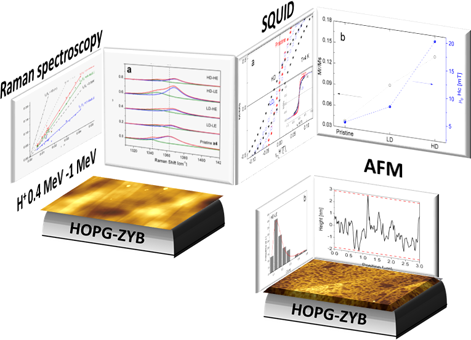
Disorder in H+-irradiated HOPG: effect of impinging energy and dose on Raman D-band splitting and surface topography
Beilstein J. Nanotechnol. 2018, 9, 2708–2717, doi:10.3762/bjnano.9.253


Characterization of the microscopic tribological properties of sandfish (Scincus scincus) scales by atomic force microscopy
Beilstein J. Nanotechnol. 2018, 9, 2618–2627, doi:10.3762/bjnano.9.243
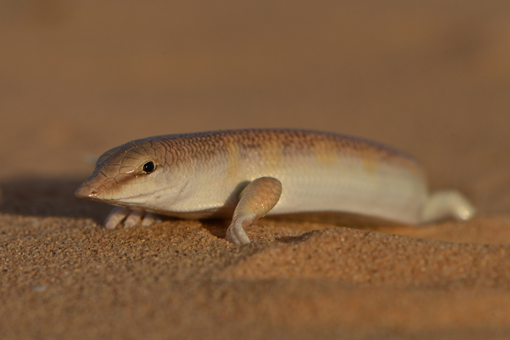
- caused by submicron topography features present on these surfaces. Such components with a high wave vector of the power spectral density of a surface topography are most likely to have more influence on the nanoscale compared to the microscale [25]. Conclusion We analysed the tribological properties


High-throughput micro-nanostructuring by microdroplet inkjet printing
Beilstein J. Nanotechnol. 2018, 9, 2372–2380, doi:10.3762/bjnano.9.222
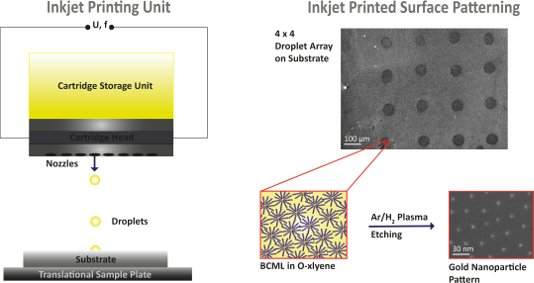
- surfaces and the generated patterns were found to depend on the material type and surface topography. Based on the presented strategy, we were able to achieve patterning times of a few seconds and produce quasi-hexagonal micro-nanopatterns of gold nanoparticles on smooth surfaces. Hence, this method is a
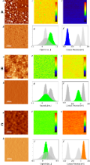
- maximum and minimum. Apparently, the micelle-containing o-xylene solution spreads out most reproducibly on silicon and less on NiTi. To explain the differences in the droplet diameters of our different materials, the surface topography of the samples was measured using atomic force microscopy (AFM). As
- (NiTi) foil and a 200 nm thick nickel–titanium thin film sputtered on a 4 µm thick copper layer (sputtered NiTi) have a broad distribution with a mean value of around 60 µm. Surface topography imaged by atomic force microscopy for: (A) poly-silicon, (B) amorphous silicon of 400 nm thickness, (C


Direct AFM-based nanoscale mapping and tomography of open-circuit voltages for photovoltaics
Beilstein J. Nanotechnol. 2018, 9, 1802–1808, doi:10.3762/bjnano.9.171
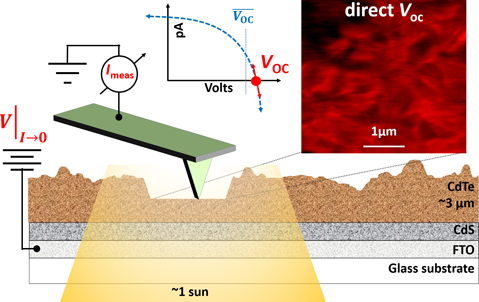
- otherwise uncorrelated behavior. The product of ISC* and VOC* is shown in (d) indicative of the theoretical power (PT*, log scale). (e) The simultaneously acquired true surface topography and (f) deflection data (essentially an edge-filtered height image to identify any topographic steps or other


Preparation of micro/nanopatterned gelatins crosslinked with genipin for biocompatible dental implants
Beilstein J. Nanotechnol. 2018, 9, 1735–1754, doi:10.3762/bjnano.9.165
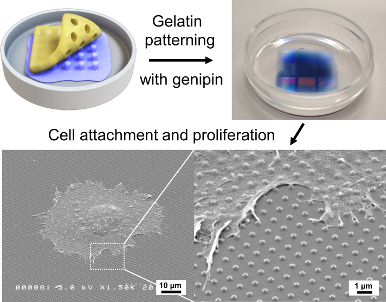
- after 4 days of culture [69]. These studies support the hypothesis that surface topography and chemical composition influence cell proliferation. Furthermore, the spatial arrangement of surface patterns with respect to cell size also appears to be important [59][67]. It has been shown that the amount of






Friction force microscopy of tribochemistry and interfacial ageing for the SiOx/Si/Au system
Beilstein J. Nanotechnol. 2018, 9, 1647–1658, doi:10.3762/bjnano.9.157
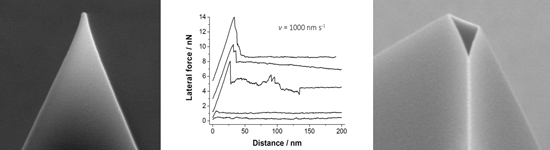
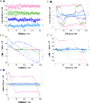
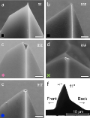
- scanning sequences (Figure 4), surface topography images recorded before and after the sliding sequences (Figure 5), and electron microscopy images of the tips before and after the experiments (Figure 6). In general, the onset of tip activation was evident by a sudden increase in friction (Figure 3a,b
- friction of about 0.01 nN (blue dots in Figure 3a, section 1) and modification of surface topography by displacement of surface atoms (Figure 5i,j). To compare tribochemical reactions of SiOx/Si and Au/Si tips with the Au(111) surface, a sputter-cleaned Au/Si tip was activated by leaving it in stationary
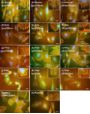
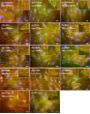
- . Surface topography of the same area before (upper row) and after (lower row) the friction sequences were recorded in the center of the frames. Scale bars: 200 nm. a, b) Control experiment with an intact Au/Si tip on an oxidized Si(100) surface. Eleven frames were scanned in the center of the scan. The




Correlative electrochemical strain and scanning electron microscopy for local characterization of the solid state electrolyte Li1.3Al0.3Ti1.7(PO4)3
Beilstein J. Nanotechnol. 2018, 9, 1564–1572, doi:10.3762/bjnano.9.148
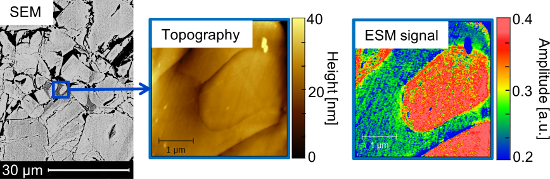
- shows a smoother transition from one grain to the other over a distance of about 0.7 µm to 0.8 µm. This finding indicates low crosstalk between the topography of the sample and the ESM amplitude signal. However, it is conceivable that the surface topography influences the observed ESM amplitude signal
- also indicates what was previously demonstrated in Figure 2 and Figure 3, that is, significant contributions of the surface topography on the ESM amplitude signal are not likely to influence the results for the material studied here. Assuming that a larger ESM amplitude signal corresponds directly to


Formation mechanisms of boron oxide films fabricated by large-area electron beam-induced deposition of trimethyl borate
Beilstein J. Nanotechnol. 2018, 9, 1282–1287, doi:10.3762/bjnano.9.120
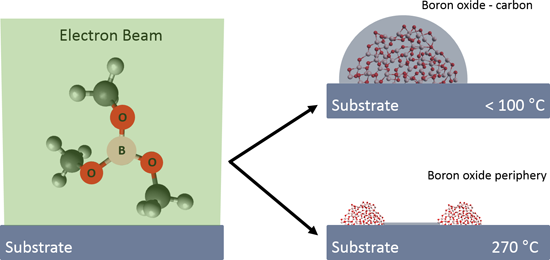
- . The surface topography of the resulting deposits was measured by a Keyence VK-X100 laser scanning confocal microscope [23] (LCSM, specified height measurement resolution of 5 nm and measurement repeatability of 0.02 μm) and analyzed using the VK Analyzer software package (version 3.3.0.0). The



Tuning adhesion forces between functionalized gold colloidal nanoparticles and silicon AFM tips: role of ligands and capillary forces
Beilstein J. Nanotechnol. 2018, 9, 660–670, doi:10.3762/bjnano.9.61
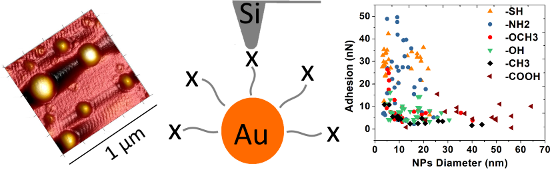
- between tip and sample surface, Young’s modulus (according to either DMT or Sneddon model), deformation and energy dissipation along with the surface topography (Supporting Information File 1). Etched silicon probes RTESPA-300 with a nominal spring constant k ≈ 40 N/m for QNM were provided by Bruker. All


Facile synthesis of ZnFe2O4 photocatalysts for decolourization of organic dyes under solar irradiation
Beilstein J. Nanotechnol. 2018, 9, 436–446, doi:10.3762/bjnano.9.42
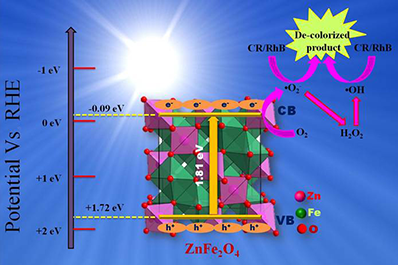
- microscopy (FESEM) provides surface morphology and topography of the prepared materials. Figure 2 shows the surface topography of ZFO-500. The sample consists of agglomerated nanoparticles with smooth surface. The agglomeration of ZFO-500 is accompanied with the formation of small crystallites [28]. TEM The


Blister formation during graphite surface oxidation by Hummers’ method
Beilstein J. Nanotechnol. 2018, 9, 407–414, doi:10.3762/bjnano.9.40
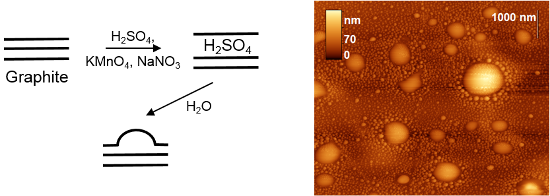
- additional experiment was conducted in which the time of the treatment with the oxidation mixture was 3 minutes. Sample characterization AFM measurements were carried out using a FemtoScan multifunctional scanning probe microscope produced by the Advanced Technologies Center. The surface topography was


Nematic topological defects positionally controlled by geometry and external fields
Beilstein J. Nanotechnol. 2018, 9, 109–118, doi:10.3762/bjnano.9.13
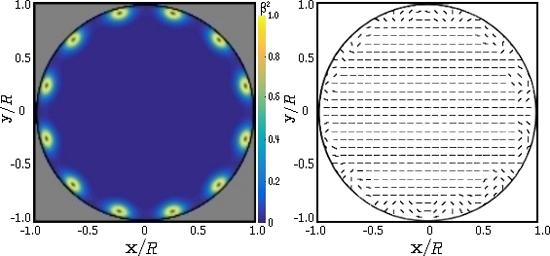
- uniaxial nematic structures defined by Equation 10 and assume . (b) In the “cylindrical” cells we impose a boojum topological defect at the top plate and assume . (a) Typical scribed surface topography enforcing the m = 2 topological defect. (b) Schematic representation showing the AFM-scribed director


![[Graphic 25]](/bjnano/content/inline/2190-4286-9-13-i36.svg?max-width=637&scale=1.18182) with the largest positive eigenvalue, corresponding to the 2D biaxi...
with the largest positive eigenvalue, corresponding to the 2D biaxi...


Robust procedure for creating and characterizing the atomic structure of scanning tunneling microscope tips
Beilstein J. Nanotechnol. 2017, 8, 2389–2395, doi:10.3762/bjnano.8.238
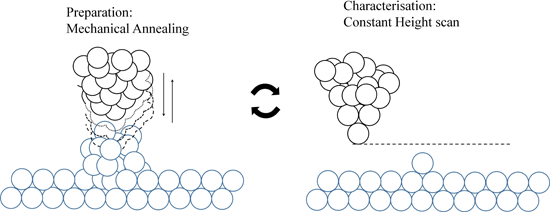
- of the surface with atomic resolution. STM has found its applications in many fields of science. Apart from studying surface topography, STM has been used for, e.g., manipulating single atoms [3][4][5], for doing spectroscopy [6], for fabricating nano-structures with novel engineered electronic


Increasing the stability of DNA nanostructure templates by atomic layer deposition of Al2O3 and its application in imprinting lithography
Beilstein J. Nanotechnol. 2017, 8, 2363–2375, doi:10.3762/bjnano.8.236
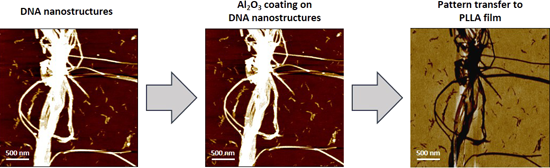
- nanotubes are collapsed after deposition onto a silicon wafer, showing an average height (n = 10) of 3.4 ± 0.1 nm by atomic force microscopy (AFM). The surface topography of the DNA nanotube master template before (Figure 2a) and after (Figure 2b) deposition of a ca. 2 nm thick Al2O3 layer and the
- process. To quantify the degree of conservation of the surface topography, height/depth and full width at half maximum (FWHM) were measured in four different locations in the AFM images and compared at the same locations throughout the fabrication process (Figure 2f,g). Taking location 1 as an example
- analysis were scanned in the same location of the template at the beginning and the end of this period (Figure S4a,b, Supporting Information File 1). Not surprisingly, the 40 days of aging in air did not alter the surface topography of the DNA nanostructure master template. While the height of the DNA



Surfactant-induced enhancement of droplet adhesion in superhydrophobic soybean (Glycine max L.) leaves
Beilstein J. Nanotechnol. 2017, 8, 2345–2356, doi:10.3762/bjnano.8.234
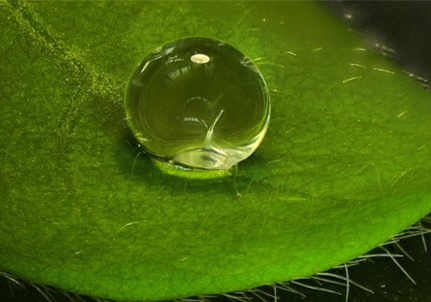
- epicuticular wax chemical composition might also show differences in the alteration of their wax by surfactants. Conclusion The presented data on the surface topography and chemistry of soybean leaf surfaces show that the hydrophobic compound of the leaves are three-dimensional epicuticular waxes, composed


A comparative study of the nanoscale and macroscale tribological attributes of alumina and stainless steel surfaces immersed in aqueous suspensions of positively or negatively charged nanodiamonds
Beilstein J. Nanotechnol. 2017, 8, 2045–2059, doi:10.3762/bjnano.8.205
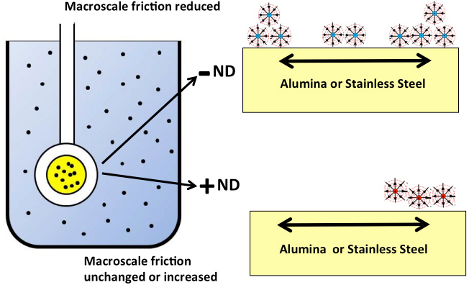
- measurement experiments were complemented by AFM and SEM measurements of the surface topography before and after the ND exposure, as well as macroscale measurements of µk. The materials were inspired by Liu et al.’s suggestion that differences in the tribological properties between +ND and −ND suspensions


(Metallo)porphyrins for potential materials science applications
Beilstein J. Nanotechnol. 2017, 8, 1786–1800, doi:10.3762/bjnano.8.180
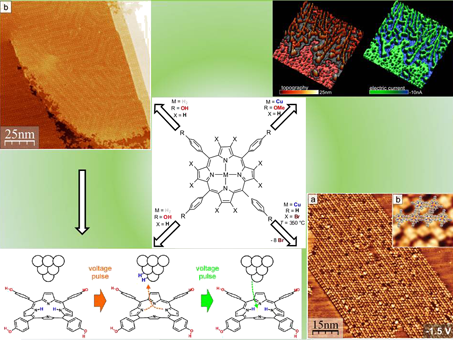
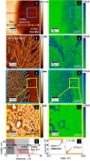
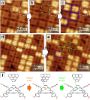
- appear, may stimulate joint approaches of material scientists to further explore their application potential. Surface topography determined by AFM as a function of thickness. Cu-TMPP (= CuTPP(OMe)4) (a) 35 nm, (b) 82 nm, and (c) 117 nm thick. Organic films are deposited on a 30 nm thick Ni substrate






Oxidative stabilization of polyacrylonitrile nanofibers and carbon nanofibers containing graphene oxide (GO): a spectroscopic and electrochemical study
Beilstein J. Nanotechnol. 2017, 8, 1616–1628, doi:10.3762/bjnano.8.161
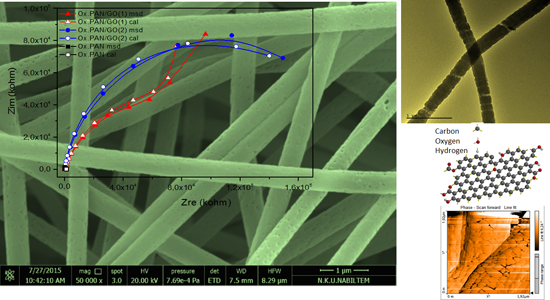
- (Princeton Applied Research, Tennessee, USA). The surface topography of the fibers was observed by atomic force microscopy (AFM) with Nanosurf Easy-Scan2TM software. AFM analyses were performed with a non-contact mode by using NCLR-10 model Al-coating silicon tips with 7 μm thickness, 225 μm length, 38 μm


A review of demodulation techniques for amplitude-modulation atomic force microscopy
Beilstein J. Nanotechnol. 2017, 8, 1407–1426, doi:10.3762/bjnano.8.142
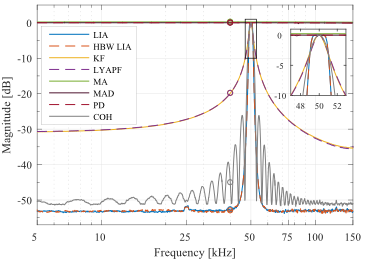
- objects and materials properties for both research and industry [11][12]. Dynamic operating modes of the AFM can map the surface topography of a specimen with high spatial resolution by scanning a sharp tip located at the end of an actively driven microcantilever over the surface of a sample. Due to the