Search results
Search for "Fe2O3" in Full Text gives 115 result(s) in Beilstein Journal of Nanotechnology.
Nanocrystalline ZrO2 and Pt-doped ZrO2 catalysts for low-temperature CO oxidation
Beilstein J. Nanotechnol. 2017, 8, 264–271, doi:10.3762/bjnano.8.29
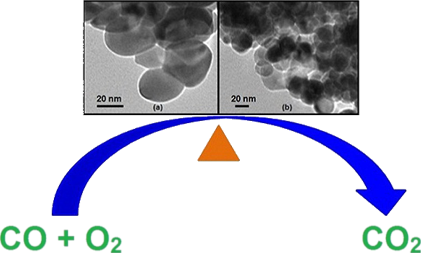
- anthropogenic activities. The catalytic CO oxidation is a very well established and exploited process. So far, noble metals such as Pt, Pd, Rh and Au dominated as catalysts for CO oxidation [10][11][12]. Various supports such as Al2O3, TiO2, SiO2, CeO2, Fe2O3 and carbon nanotubes (CNTs) have also been used for


Photo-ignition process of multiwall carbon nanotubes and ferrocene by continuous wave Xe lamp illumination
Beilstein J. Nanotechnol. 2017, 8, 134–144, doi:10.3762/bjnano.8.14
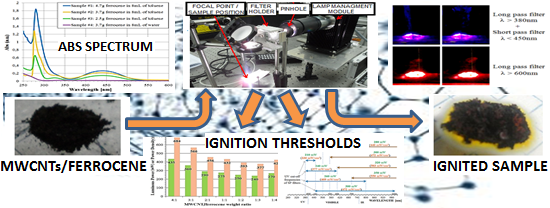
- mW/cm2 was required [1][2]. Braidy et al. [3] focused their studies on the analysis of the post-ignition of the sample, after exposing the SWCNTs to the camera flash. By means of X-ray diffraction analysis of the residual dust, they found that this solid material is mainly composed of Fe2O3, with




From iron coordination compounds to metal oxide nanoparticles
Beilstein J. Nanotechnol. 2016, 7, 2074–2087, doi:10.3762/bjnano.7.198
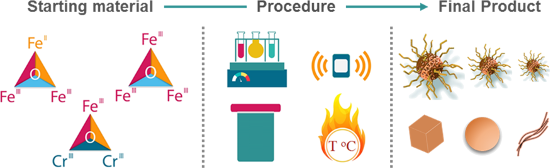
- present any peaks, indicating that both samples are amorphous, while the diffractogram of sample NPT2 (Supporting Information File 1, Figure S9) shows diffraction peaks, which coincide with those from the JCPDS 04-0755 database and are characteristic for maghemite (γ-Fe2O3). The morphology of the
- sample was assigned to α-Fe2O3 (JCPDS 300664). TEM images (Figure 5) and size distribution histograms (Supporting Information File 1, Figure S14) provide information on the shape and size of particles analyzed. The NPS1 sample (Figure 5a) shows irregularly shaped nanoparticles with diameters of 7–44 nm
- (467) and 384 cm−1 in the IR spectra of NPC1 and NPC3 are typical for Fe–O from hematite (α-Fe2O3) [30] (Supporting Information File 1, Figure S18). The additional band at 584 cm−1 in the IR spectrum of NPC2, which was not found in samples NPC1 and NPC3, was assigned to the Cr–O bond. The iron oxide


Microwave synthesis of high-quality and uniform 4 nm ZnFe2O4 nanocrystals for application in energy storage and nanomagnetics
Beilstein J. Nanotechnol. 2016, 7, 1350–1360, doi:10.3762/bjnano.7.126
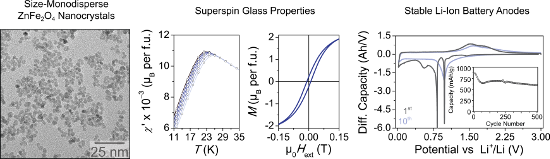
- kept at about 3.0 V with respect to Li+/Li and the other was lithiated until a potential of 0.85 V was reached, which is within the main plateau. FeO (wüstite), Fe3O4 (magnetite) and α-Fe2O3 (hematite) were used as the reference materials for Fe(II) in cubic and cubic/spinel and Fe(III) in trigonal


Multiwalled carbon nanotube hybrids as MRI contrast agents
Beilstein J. Nanotechnol. 2016, 7, 1086–1103, doi:10.3762/bjnano.7.102
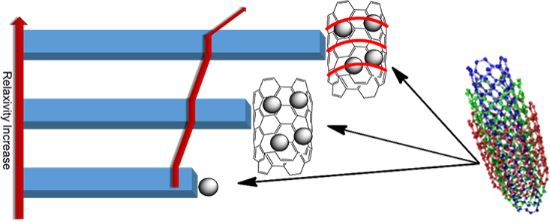
- form (i.e., γ-Fe2O3 and Fe3O4 in the hybrids with SPIO). Fourier transform infrared spectroscopy (FTIR) and thermogravimetric analysis (TGA), supported again by TEM, were applied to monitor the effects of wrapping with organic moieties. Infrared spectroscopy has commonly been used to follow the
- covalent transformations, e.g., the data were shown to couple oxidized SWCNT with hyaluronic acid containing amino groups [44]. Liu described interesting mass growth during the heating of SPIO–MWCNT hybrids above 400 °C in TGA, which was explained as oxidation of iron(II) in Fe3O4 to iron(III) in Fe2O3



Improved biocompatibility and efficient labeling of neural stem cells with poly(L-lysine)-coated maghemite nanoparticles
Beilstein J. Nanotechnol. 2016, 7, 926–936, doi:10.3762/bjnano.7.84
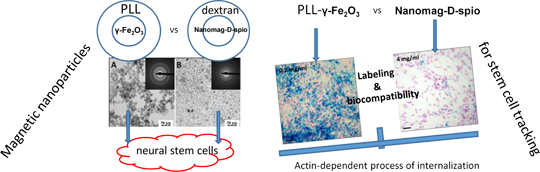
- efficiency, cellular viability, cytotoxicity, behavior after labeling, and the mechanism of internalization was determined and compared. Results Characterization of the nanoparticle morphology To compare the morphology of PLL-γ-Fe2O3 nanoparticles with commercially available nanomag®-D-spio particles
- , transmission electron microscopy (TEM) and dynamic light scattering (DLS) were used (Figure 1, Table 1). The average size of the PLL-γ-Fe2O3 nanoparticles (Figure 1A) was larger than that of nanomag®-D-spio nanoparticles (Figure 1B). The latter particles had a broader particle size distribution due to presence
- of tiny particles (Figure 1E,F). The smaller average particle size corresponded to low intensity diffraction rings (compare insets in Figure 1A,B). Moreover, TEM micrographs indicated different morphologies of the nanoparticles. While the PLL-γ-Fe2O3 were smooth and compact, the nanomag®-D-spio




Hemolysin coregulated protein 1 as a molecular gluing unit for the assembly of nanoparticle hybrid structures
Beilstein J. Nanotechnol. 2016, 7, 351–363, doi:10.3762/bjnano.7.32
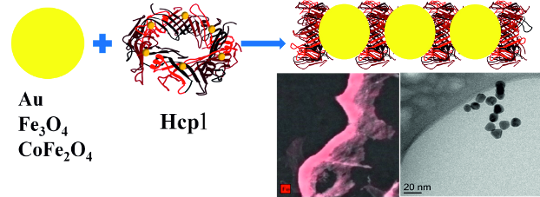
- γ-Fe2O3 NPs cores with increasing SiO2 shell thickness leads to increasing interparticle distance [38]. In our case, the increase of interparticle distance supports the theory that the Hcp1_cys3 is located between the NPs, as is visible in the HRTEM image (Figure S6, Supporting Information File 1




Surface coating affects behavior of metallic nanoparticles in a biological environment
Beilstein J. Nanotechnol. 2016, 7, 246–262, doi:10.3762/bjnano.7.23
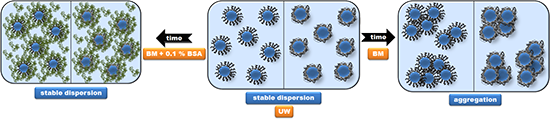
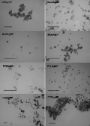
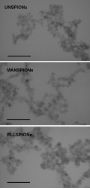
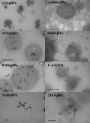
- albumin (BSAAgNPs), Brij 35 (BrijAgNP) and Tween 20 (TweenAgNP). The SPIONs were prepared as uncoated γ-Fe2O3 NPs (UNSPIONs), and coated with D-mannose (MANSPIONs) or poly(L-lysine) (PLLSPIONs). Three media for NP dispersion were investigated: ultrapure water (UW), biological cell culture medium without




NanoE-Tox: New and in-depth database concerning ecotoxicity of nanomaterials
Beilstein J. Nanotechnol. 2015, 6, 1788–1804, doi:10.3762/bjnano.6.183
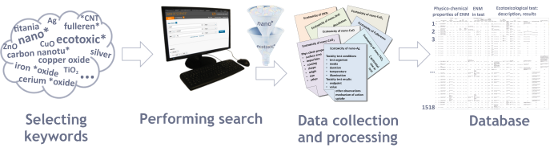
- oxide (CuO), and iron oxide (FeOx; Fe2O3, Fe3O4). Altogether, NanoE-Tox database consolidates data from 224 articles and lists altogether 1,518 toxicity values (EC50/LC50/NOEC) with corresponding test conditions and physico-chemical parameters of the ENMs as well as reported toxicity mechanisms and
- : carbon nanotubes (CNTs), fullerenes, silver (Ag), titanium dioxide (TiO2), zinc oxide (ZnO), cerium dioxide (CeO2), copper oxide (CuO), and iron oxide (FeOx; Fe2O3, Fe3O4). Furthermore, all these ENMs, except CuO, are listed by the Organisation for Economic Co-operation and Development (OECD) Working


A facile method for the preparation of bifunctional Mn:ZnS/ZnS/Fe3O4 magnetic and fluorescent nanocrystals
Beilstein J. Nanotechnol. 2015, 6, 1743–1751, doi:10.3762/bjnano.6.178
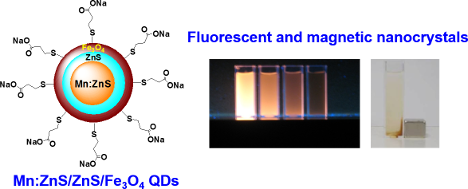
- the nanocomposite particles are rather large (70–200 nm), limiting their use in biological applications. Epitaxial heterocrystalline growth is generally conducted by coating a ferro- or ferri-magnet that has an ordering temperature well above 300 K (e.g., FePt, Fe2O3, or Fe3O4) with a semiconductor
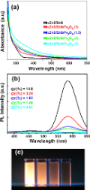
- hematite α-Fe2O3 (JCPDS record number 99-100-0140) can also be observed [26]. Since the surface of finely divided materials is highly reactive, partial oxidation of Fe3O4 into Fe2O3 may have taken place during the handling of the nanocrystals [28][29]. The crystallites sizes of the Mn:ZnS/ZnS/Fe3O4
- from the contribution of the hematite (α-Fe2O3) impurity in the Mn:ZnS/ZnS/Fe3O4 (3) sample, as observed in the XRD pattern. Among bulk iron oxides (Fe3O4, α-Fe2O3 and γ-Fe2O3), hematite exhibits the lowest saturation magnetization of 0.3 emu/g with a relatively large coercivity of 0.17 T at room




Radiation losses in the microwave Ku band in magneto-electric nanocomposites
Beilstein J. Nanotechnol. 2015, 6, 1700–1707, doi:10.3762/bjnano.6.173
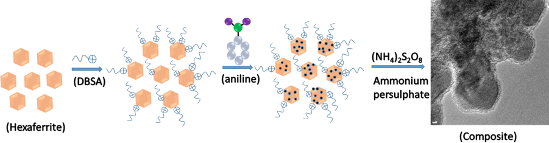
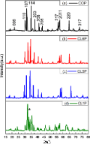
- (except sample CL1P). The peaks shown in Figure 1 [19] confirm the hexagonal structure of composites and are identical to the peaks in the standard pattern (JCPDS-391433). This proves that the substituted ions have occupied crystal sites. A peak of α-Fe2O3 appears in Figure 1d (shown as *). This hints to


Synthesis, characterization and in vitro biocompatibility study of Au/TMC/Fe3O4 nanocomposites as a promising, nontoxic system for biomedical applications
Beilstein J. Nanotechnol. 2015, 6, 1677–1689, doi:10.3762/bjnano.6.170
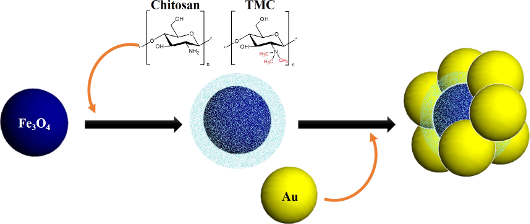
- ) and maghemite (γ-Fe2O3). The increasing number of studies that report the successful use of Fe3O4 nanoparticles for industrial (e.g., as synthetic pigments or as catalyst), biomedical (in vivo and in vitro), environmental, and analytical applications, demonstrate their versatility. Since it is




Structural and magnetic properties of iron nanowires and iron nanoparticles fabricated through a reduction reaction
Beilstein J. Nanotechnol. 2015, 6, 1652–1660, doi:10.3762/bjnano.6.167
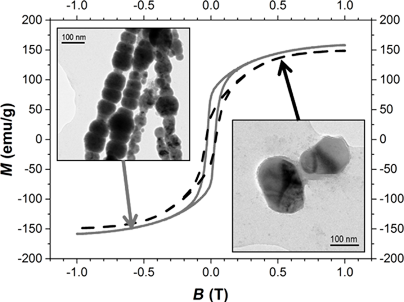
- well-known that iron nanomaterials in the presence of even small quantities of oxygen tend to be oxidized immediately. The increasing temperature leads to progressive oxidation of iron to Fe3O4 (large nanostructures) or γ-Fe2O3 (small nanostructures) and following transformation to α-Fe2O3 [12][15
- ]. Above 550 °C, it seems that the studied nanowires as well as nanoparticles consist of crystalline α-Fe2O3 located on the surface of the investigated nanomaterials and an α-Fe core, which do not change the structural properties during further heating. The effects of iron oxidation and the following phase

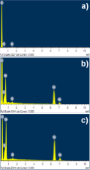


Thermal treatment of magnetite nanoparticles
Beilstein J. Nanotechnol. 2015, 6, 1385–1396, doi:10.3762/bjnano.6.143
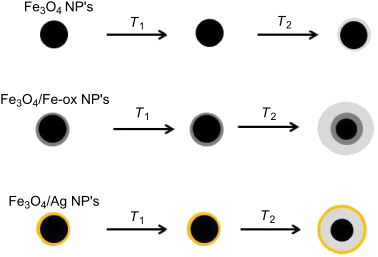
- nanoparticles oxidize to a mixture of iron oxides (γ-Fe2O3 and α-Fe2O3) even at 200 °C [19]. However, this temperature can vary due to the high surface area and various activity of the nanoparticles, which results in a more exothermic heat process during oxidation at low temperature. In general, it can be
- assumed that phase transformation in nano-granular systems occurs from 200 to 600 °C with different contribution from both oxides, γ-Fe2O3 and α-Fe2O3 [20]. It should also be underlined that the data regarding the behavior of nanosystems at elevated temperatures are very different and generalizations






Silica micro/nanospheres for theranostics: from bimodal MRI and fluorescent imaging probes to cancer therapy
Beilstein J. Nanotechnol. 2015, 6, 546–558, doi:10.3762/bjnano.6.57

- former nanocomposites. Likewise, Ruhland et al. [42] reported the synthesis of size-controlled magnetic and fluorescent core–shell hybrid NPs coated with a protective silica sheath through a thermal decomposition process. The synthesis involved the incorporation of Fe2O3 and CdSe/ZnS NPs into silica that
- , and UV–vis and fluorescence spectroscopy studies. The TEM micrographs and EDX studies clearly indicate the encapsulation of both Fe2O3/CdSe(ZnS) NPs inside the silica shell. In cryo-TEM studies CdSe(ZnS)/SiO2/PNIPAAm NPs displayed a fuzzy corona-like structure. All these studies lead to the conclusion
- , single-electron transistors, lasers and light emitting diodes. The synthesis of magnetic QDs (MQDs) involved the simultaneous addition of CdO, stearic acid and Fe2O3 NPs in trioctylphosphine medium. These MQDs were then capped with silica by using APS (as stabilizer) and tetramethylammonium hydroxide


The distribution and degradation of radiolabeled superparamagnetic iron oxide nanoparticles and quantum dots in mice
Beilstein J. Nanotechnol. 2015, 6, 111–123, doi:10.3762/bjnano.6.11
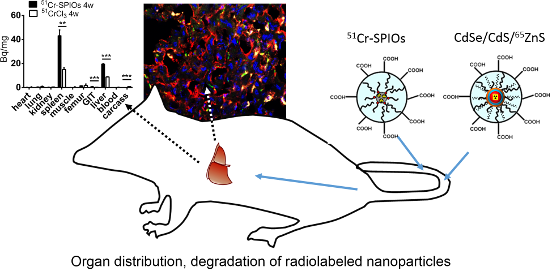
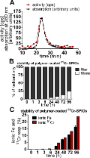
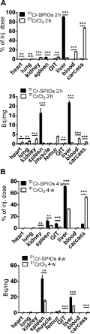
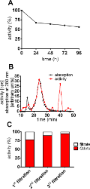
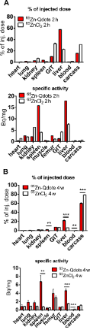
- a sonification method as described in [24]. From the measured iron content, the diameter of the core (11 nm) and the assumed core material (Fe2O3), the molar concentration of an aqueous solution was calculated. CdSe/CdS/ZnS (core/shell/shell) quantum dots with red (7 nm diameter) or green (5.5 nm





Synthesis of boron nitride nanotubes and their applications
Beilstein J. Nanotechnol. 2015, 6, 84–102, doi:10.3762/bjnano.6.9
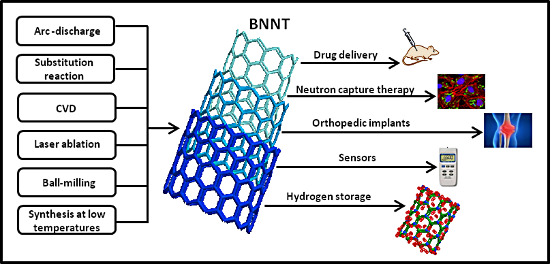
- that large-scale production of BNNTs can be obtained using a mixture of B/V2O5/Fe2O3 and B/V2O5/Ni2O3 as precursors. In this experiment, the diameter and length of BNNTs was controlled and various BN nanostructures were obtained [57]. Recently, our group synthesized BNNTs from a boron ore, colemanite
- (Ca6B6O11∙5H2O), for the first time by means of CVD [58]. The reaction parameters such as type of catalyst, colemanite/catalyst ratio, reaction temperature and duration were optimized. ZnO, Al2O3, Fe3O4 and Fe2O3 catalysts were investigated with respect to their differences in performance. It was found that
- only Fe2O3 was effective as a catalyst. Figure 2 shows the SEM images of the results of the BNNT synthesis under several experimental conditions. The synthesized MWBNNTs were in the range of 10–30 nm in diameter, with a 5 nm wall thicknesses and 0.34 nm between walls. This simple method can be used to




Inorganic Janus particles for biomedical applications
Beilstein J. Nanotechnol. 2014, 5, 2346–2362, doi:10.3762/bjnano.5.244
- active component toward metal-organic reactions. For instance, this enhanced catalytic activity in comparison to the single component nanoparticles was demonstrated for Ni@Fe2O3 [45] or Pt@Fe3O4 [46]. Furthermore, the magnetic anisotropy and coercivity of Fe3O4 was significantly increased due to
- evidence of an enormous progress regarding the efficient synthesis of a plethora of pseudobinary metal–metal oxide hetero-nanoparticles [35][52], such as Pt@Fe3O4 [46], Pd@Fe3O4 [55], Au@Fe3O4 [36][37][38][56], Ag@Fe3O4 [47], Cu@Fe3O4 [57], FePt@MnO [43], Au@MnO [39][58], Ni@Fe2O3 [45], and Co@Fe2O3 [59
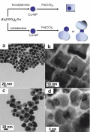
- the formation of the heterodimers, cube shape or cloverleaf shape particles were obtained (Figure 12); the iron oxide phase was always Fe3O4, independent of the domain morphology. The wet chemical approach was utilized as well to control the formation of either Co@Fe2O3 or CoFe2O4 [59]. As displayed






Biopolymer colloids for controlling and templating inorganic synthesis
Beilstein J. Nanotechnol. 2014, 5, 2129–2138, doi:10.3762/bjnano.5.222

- . [5] prepared chitosan/silica composite microspheres by mixing an aqueous solution of the biopolymer with commercial nanosized silica particles. The obtained microparticles were dried afterwards. In further examples, chitosan matrices have also been used to immobilize CdSe quantum dots [6] and γ-Fe2O3
- , biopolymers have also been used as controlling agents or additives in the precipitation/crystallization of other inorganic systems, such as ZnO [34], metal particles [13], silica [35], or Fe2O3 [15]. To investigate the effects of proteins in mineralization, synthetic oligopeptides with sequences of defined
- metal chalcogenides, including metallic silver [46], Pt [47], Fe2O3 [48], and CdS [49][50][51][52]. Pu et al. [52] reported the deposition of DNA chains on silica particles. After mineralization of the DNA to CdS as shell and subsequent removal of the silica core by dissolution with HF, hollow inorganic


Cathode lens spectromicroscopy: methodology and applications
Beilstein J. Nanotechnol. 2014, 5, 1873–1886, doi:10.3762/bjnano.5.198

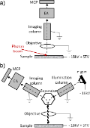
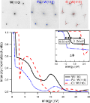
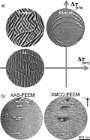
- . In the above example of FeOx growth on Ru(0001), further oxidation by using NO2 as atomic oxygen source resulted in the transformation of the FeO wetting layer to hematite (α-Fe2O3) and the triangular Fe3O4 islands to maghemite (γ-Fe2O3) [71]. In an independent study, the real-time observation of



Influence of surface-modified maghemite nanoparticles on in vitro survival of human stem cells
Beilstein J. Nanotechnol. 2014, 5, 1732–1737, doi:10.3762/bjnano.5.183
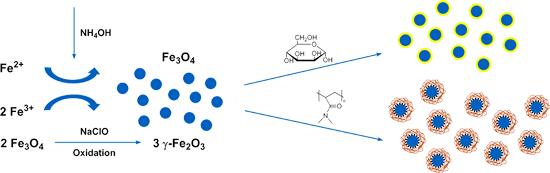
- Molecular Biology and Genetics, NAS of Ukraine, Zabolotnogo 150, 03143 Kiev, Ukraine 10.3762/bjnano.5.183 Abstract Surface-modified maghemite (γ-Fe2O3) nanoparticles were obtained by using a conventional precipitation method and coated with D-mannose and poly(N,N-dimethylacrylamide). Both the initial and
- -mannose- and poly(N,N-dimethylacrylamide)-coated γ-Fe2O3 particles exhibit much lower level of cytotoxicity than the non-coated γ-Fe2O3. Keywords: maghemite; magnetic; MTT assay; nanoparticles; stem cells; Introduction One of the most important applications of nanoparticles in biomedicine is the direct
- (magnetite Fe3O4 or maghemite γ-Fe2O3) are their simple preparation and their magnetic properties, which are necessary for detection. Moreover, it is convenient that iron oxides are readily metabolized in the body. From this point of view, quantum dots are disqualified due to their toxicity. Like in every


A sonochemical approach to the direct surface functionalization of superparamagnetic iron oxide nanoparticles with (3-aminopropyl)triethoxysilane
Beilstein J. Nanotechnol. 2014, 5, 1472–1476, doi:10.3762/bjnano.5.160
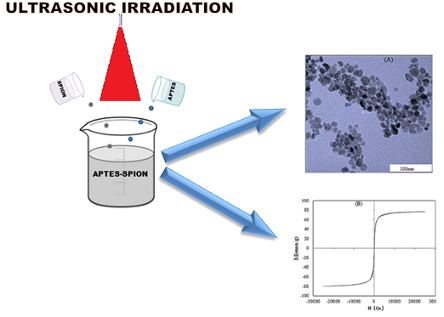
- the band of Fe 2p3/2 and Fe 2p1/2 (Supporting Information File 1, Figure S5) that appears at 725.25 eV and 711.85 eV, respectively. The difference in their energy is 13.4 eV, which corresponds to 13.6 eV of Fe2O3 or Fe3O4. However, the XPS result alone cannot be used to determine the oxidation state
- of Fe in Fe2O3 or Fe3O4. This is due to similarity in the oxidation state of both iron oxide compounds. The chemical shifts observed in all the bands can be ascribed to the binding of the APTES on the SPION. The XRD pattern of the silanized SPION is shown in Figure 3. It corresponds to the JCPDS


Functionalized nanostructures for enhanced photocatalytic performance under solar light
Beilstein J. Nanotechnol. 2014, 5, 994–1004, doi:10.3762/bjnano.5.113
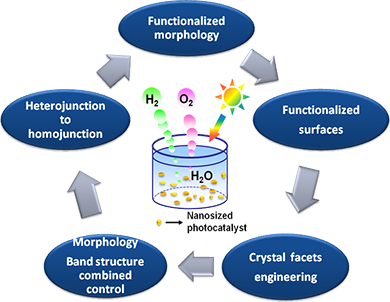
- the QE for the photocatalytic hydrogen formation to 62% because of the improved efficiency in charge separation [73]. These dense homojunctions are clearly superior to the single homojunction formed by introduction of a thin p-type layer on n-type α-Fe2O3 and creating a built-in field as reported in


Manipulation of isolated brain nerve terminals by an external magnetic field using D-mannose-coated γ-Fe2O3 nano-sized particles and assessment of their effects on glutamate transport
Beilstein J. Nanotechnol. 2014, 5, 778–788, doi:10.3762/bjnano.5.90
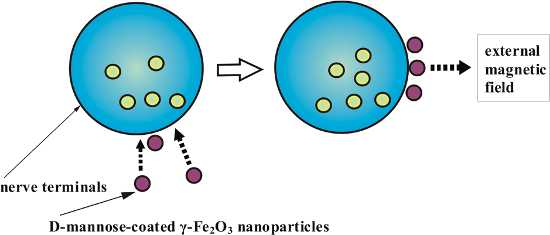
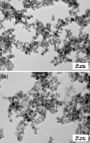
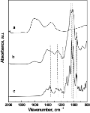
- in nano-neurotechnology. D-Mannose-coated superparamagnetic nanoparticles were synthesized by coprecipitation of Fe(II) and Fe(III) salts followed by oxidation with sodium hypochlorite and addition of D-mannose. Effects of D-mannose-coated superparamagnetic maghemite (γ-Fe2O3) nanoparticles on key
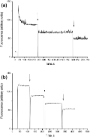
- characteristics of the glutamatergic neurotransmission were analysed. Using radiolabeled L-[14C]glutamate, it was shown that D-mannose-coated γ-Fe2O3 nanoparticles did not affect high-affinity Na+-dependent uptake, tonic release and the extracellular level of L-[14C]glutamate in isolated rat brain nerve terminals
- (synaptosomes). Also, the membrane potential of synaptosomes and acidification of synaptic vesicles was not changed as a result of the application of D-mannose-coated γ-Fe2O3 nanoparticles. This was demonstrated with the potential-sensitive fluorescent dye rhodamine 6G and the pH-sensitive dye acridine orange



Nanostructure sensitization of transition metal oxides for visible-light photocatalysis
Beilstein J. Nanotechnol. 2014, 5, 696–710, doi:10.3762/bjnano.5.82
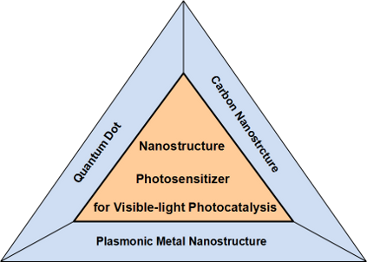
- nanoparticles–Fe2O3 [69][82][83], gold nanoparticle–ZnO nanorods [68], gold nanorod–TiO2 [70][71][84], gold nanoparticles–TiO2 nanotube [66][72]. For more details, readers may refer to recent excellent reviews for basic principle and detailed effects of localized surface plasmons on transition metal oxides [85
- broad spectrum of sunshine. Based on a similar mechanism carbon nanodots can also be combined with Cu2O, Ag3PO4 or Fe2O3 for the photocatalytic degradation of methyl blue, methyl orange, and toxic gases of benzene and methanol, respectively [134][135][136]. The merits of carbon nanostructures, and